Intake of sugar-sweetened beverages as a risk factor for central obesity in women of reproductive age. We have decided on your submission to Jurnal Gizi Indonesia (The Indonesian Journal of Nutrition), “Intake of Sugar Sweetened Beverages as Risk Factor Central Obesity Among Women in Reproductive Age”. Intake of sugar-sweetened beverages as a risk factor for central obesity in women of reproductive age.
This study aimed to analyze the intake of sugar-sweetened beverages (SSBs), physical activity and sleep duration as a risk factor for central obesity among women of reproductive age. Several risk factors can cause central obesity in fertile women, such as consumption of sugar-sweetened beverages (SSBs) 7,8 , lack of physical activity 9 and short duration of sleep 10 . Lack of physical activity increases 1.2 times the central obesity risk 13. Regular physical activity or exercise reduces body fat, even without losing body weight.
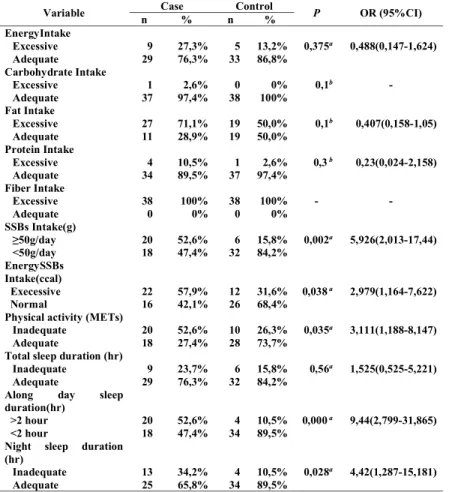
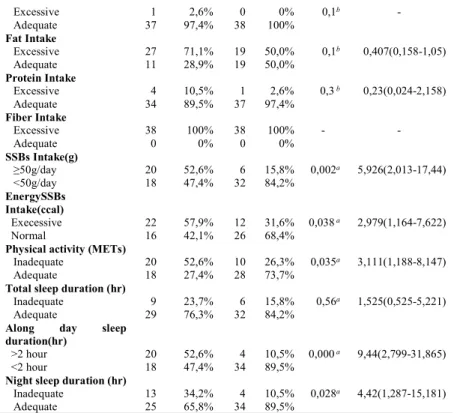
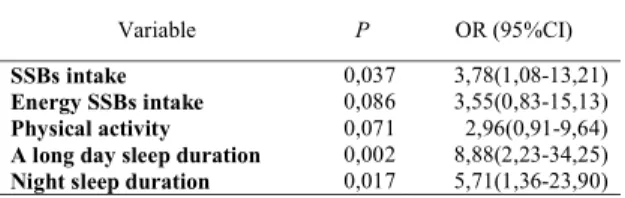
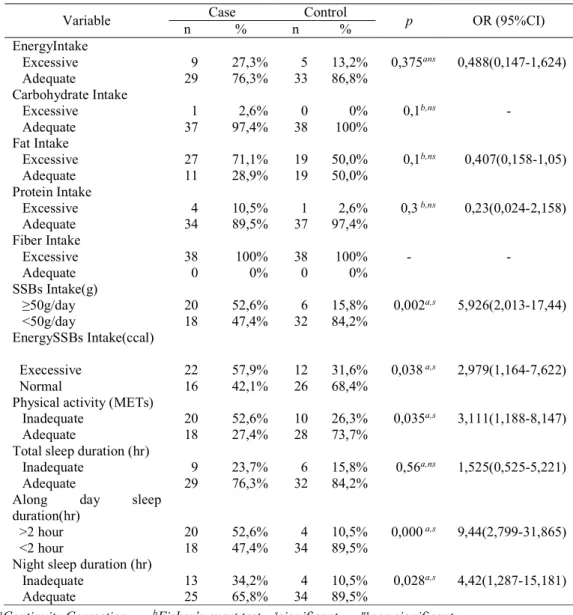
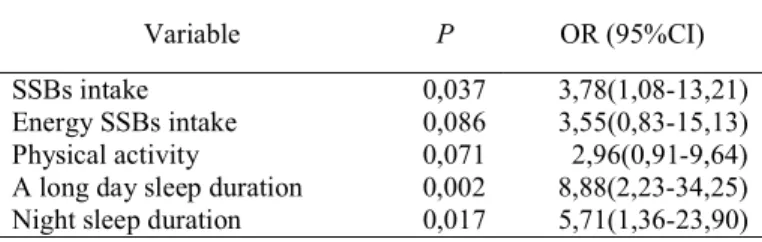
Short duration of night sleep was also a risk factor for increasing the prevalence of central obesity by 4.42 times. There are several studies that have begun to look at the link between physical activity and central obesity. Risk factors for central obesity are 10% total energy intake, physical activity, longer napping duration and less sleep duration.
Risk factors for central obesity in adults aged 25–65 years in Indonesia (2013 Basic Health Survey data analysis). Factors Associated with Central Obesity in Adult Women (30-50 Years) in Lubuk Sikaping District 2008. Sweetened Beverage Intake as a Risk Factor Central Obesity in Women of Childbearing Age Nabila RifkaAnnisa1, Fillah Fithra Dieny1, Choirun Nissa1, A.
Several risk factors that may cause central obesity in fertile women, such as the use of sugar-sweetened beverages (SSBs) (Diana, Yuliana, Yasmin, & Hardinsyah, 2013; Mirmiran, Ejtahed, Zahra Bahadoran, Bastan, & Azizi, 2015), lack of physical activity (Sudikno, Syarief, Dwiriani, & Riyadi, 2015) and short duration of sleep (Theorell-Haglöw, Berne, Janson, Sahlin, & Lindberg, 2010). Lack of physical activity increases 1.2 times the central obesity risk (Sugianti, Hardinsyah, & Afriansyah, 2009). Regular physical activity or exercise reduces the fat in the body, even without reducing body weight. This study aimed to analyze the intake of sugar-sweetened beverages (SSBs), physical activity and sleep duration as risk factors for central obesity among women of reproductive age.
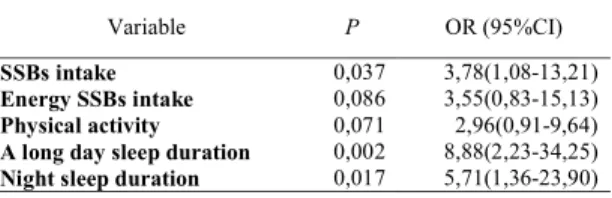
Conclusion: High intake of sugar-sweetened beverages, short duration of night's sleep and the duration >2 hours/day of a long day's sleep are risk factors for increasing the incidence of central obesity among women of reproductive age. Several risk factors that can cause central obesity in fertile women, such as the consumption of sugar-sweetened beverages (SSBs)7,8, lack of physical activity9 and short sleep time10. Lack of physical activity increases 1.2 times the central obesity risk13. Regular physical activity or exercise reduces the fat in the body, even without reducing body weight.
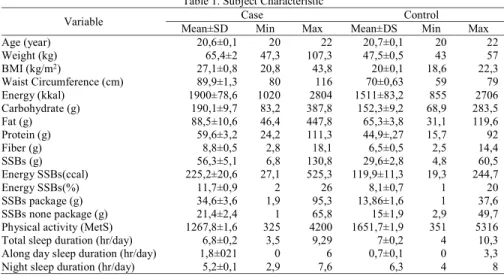
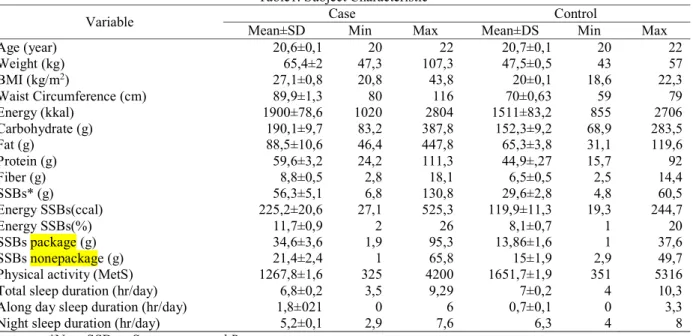
Physical activity and sleep duration were lower in the case group than in the control group. SSB intake was ≥50 g/hour, SSB energy intake was > 10% of total energy intake, physical activity, longer nap duration and shorter night time duration are risk factors for central obesity.
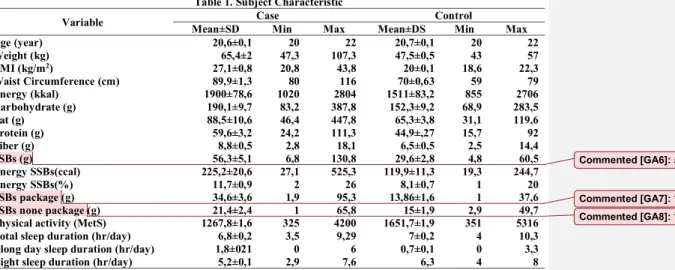
Therefore, the statistical test cannot demonstrate a difference in the proportion of central obesity events in the group of respondents who consume insufficient and sufficient fiber. The case group had a mean variable of SSBs intake, energy intake from sugar-sweetened beverages, and nap duration was higher than the control group. The most important risk factors for central obesity in WRA are sleep duration, nap duration and SSB intake.
The risk of central obesity in women of childbearing age can be controlled by limiting the consumption of sugar intake from drinks and food to a maximum of ≥50 g/hour, performing physical activity by routinely performing daily activities plus physical activity or sports activities at least once a week for 1 hour or 3 times a week for 20-30 minutes of activity, as well as having enough sleep > 5 hours a night to lower the risk of central obesity. Sugar-sweetened beverage consumption and risk of general and abdominal obesity in Iranian adults: Tehran Lipid and consumption and risk of general and abdominal obesity in Iranian adults: Tehran Lipid and Glucose Study. The CDC Guideline for Strategies to Reduce Consumption of Sugar-Sweetened Beverages.2010 Consumption of Sugar-Sweetened Beverages.2010.
Low physical activity, excessive television viewing, and poor sleep duration occur in overweight and obese adults; a cross-sectional cluster of television viewing and poor sleep duration in overweight and obese adults; a cross-sectional study among 398,984 participants from the UK Biobank. Chan, T.-F., Lin, W.-T., Huang, H.-L., Lee, C.-Y., Wu, P.-W., Chiu, Y.-W, et al. Consumption of sugar-sweetened beverages is associated with components of the metabolic syndrome and with components of the metabolic syndrome in adolescents. Liquid and solid sucrose intake in relation to changes in body fat over six years in children aged 8 to 10 years. Liquid and solid sucrose in relation to changes in body fat over six years in children aged 8 to 10 years: the European Adolescent Heart Study.
Determinants of physical activity and sedentary behavior in college students: a qualitative study using focus group discussions. Prevalence of obesity, central obesity and its associated factors in the urban population aged 20-70 years, in northern Iran: a population-based study and regression in the urban population aged 20-70 years, in northern Iran: a population-based study based study and regression approach. The effect of physical activity on sleep quality, well-being and effect during academic stress periods.
Ramadhaniah, Julia, M., & Huriyati, E. Energy intake and physical activity with obesity in healthcare workers. Americans' Sleep and Technology Use: Findings from the National Sleep Foundation's 2011 Sleep and Americans' Technology Use: Findings from the National Sleep Foundation's 2011 Sleep in America Poll. Sedentary lifestyle as a risk factor for obesity prevention in a left-behind high school student in Semarang city.
Keputusan Hasil Review Naskah
Jurnal Gizi Indonesia (The Indonesian Journal of Nutrition)