
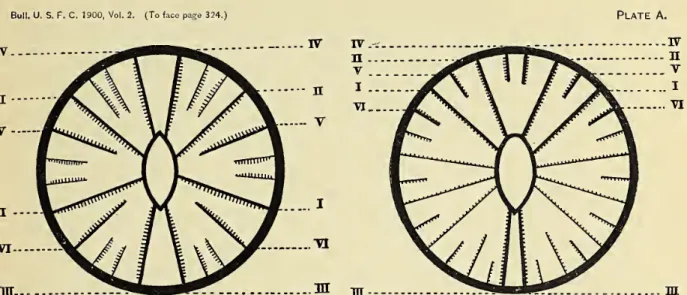
Before continuing with the description of the species, a few remarks are necessary about the major changes currently undergoing the classification of Actiniaria. In Cerianthece only four of the six pairs of protoenemes appear to be developed; the fifth and sixth pairs, which often remain incomplete in other Actiniae. According to van Beneden (1897), however, the development of primary intermediates in Cerianthece does not admit of comparison with that in the other two groups.
The mesenteries and other organs of the ceriantheca and zoantheca retain a strong bilaterality in adults, while in most ilexactines they usually eventually attain biradial symmetry. The Zoanthece and Ilexactinice were now elevated to a group of Actinozoa equal in value to the groups Alcyonaria and Antipatharia. The most important feature among ceriantharia is the occurrence of metacnema in bilateral pairs on only one area of the polyp.
Included under the former are representatives from each of the two major divisions, Actinince and Stichodactylince.1. This is once evident in the necessity of the subdivision of the hitherto sharply defined Stic/ioddetylince.
THE ACTINIANS OF PORTO RICO. 329
LIST OF
SPECIES
UST OF SPECIES ARRANGED ACCORDING TO LOCALITIES
CERIANTHARIA
330 BULLETIN OF THE UNITED STATES FISH COMMISSION
THE ACTINIANS OE PORTO RICO. 331
332 BULLETIN OF THE UNITED STATES FISH COMMISSION
THE ACTINIA NS OF PORTO RICO. 833
334 BULLETIN OE THE UNITED STATES EISH COMMISSION
Polyps that live on the upper surface of the stones are usually short and cylindrical, while those on the sides and under cracks or crevices, become more elongated, with distinct triggers. In any large group of polyps, the expanding individuals rise to practically the same level, however they are annihilated based on each other. The lower part of the column is usually sand-colored, the upper part dark green or bluish; The tentacles are yellowish green, blue green, or brown.
The ectoderm is strongly vacuolated below, but less so above, and contains oval nematocysts; its mesogloeal border is not well defined due to the connecting mesogloeal strands, mesogloeal vacuoles and cell inclusions. The ectoderm of the tentacles is devoid of cuticle and subcuticle, and contains numerous small oval nematocysts in its lower parts. The mesogloea is thin and finely braided on its endodermal edge for the support of the musculature.
A kind of intermediate layer appears between the ectoderm and the mesoglia, in which there are many oval granular cells, the long axis of which is perpendicular to the axis of the ectodermal columnar cells. In most cases, the basal canal appears at a short distance from the insertion of the mesenteries into the wall of the column, but it is not present in all.
336 BULLETIN OF THE UNITED STATES FISH COMMISSION
THE ACTINIANS OE PORTO RICO. 387
338 BULLETIN OF THE UNITED STATES FISH COMMISSION
THE ACTINIAE'S OF PORTO RICO. 339
340 BULLETIN OF THE UNITED STATES FISH COMMISSION
THE ACTEN1ANE OF PORTO RICO. 341 Among the abundance of Jamaica material which has passed under my examination I have only
342 BULLETIN OF THE UNITED STATES FISH COMMISSION
THE ACTINIANS OF PORTO RICO. 343
344 BULLETIN OF THE UNITED STATES FISH COMMISSION
345 The ectoderm of the tentacle is broadly layered, usually very wrinkled in preserved specimens; tentacle ectoderm is broad-layered, usually very wrinkled in preserved specimens; nematocysts are small and distributed in the peripheral zone. The bare part of the disc shows the ectodermal and endodermal muscles, which are strongly developed on the mesogloeal processes. The ectoderm of the stomodreum is strongly ciliated throughout and shows a wide area of deeply stained, elongated nuclei, among which are numerous glandular cells and long nematocysts.
All are complete for the greater part of the length of the stomodeum, but all but the primary cycle become free before completion of the stomodeum is reached, and the third cycle becomes free before the second (Fig. 32). Only twenty-four mesenteries were present in the small polyp, all of which were complete in the upper part. The retractor muscle is equally developed on the twelve pairs of mesenteries that make up the first.
29 the mesentery is seen on its ectocoelic face, and the parieto-basilar muscle is indicated, extending practically the whole length of the polyp. Both internal and external stomata occur, the former large and the latter unusually small situated some distance from the periphery. Appelof (1900, p. 77) has recently shown that, contrary to the generally accepted opinion, the mesenteric stomata originate in the intheembryo by resorption of the mesenteric tissue.
Appelof found in TJrtidna that at first the mesenteries are entire, and that it is. In Asteraclis the outer stomata appear to be disappearing, or rather to cease to appear. The spermaria were arranged in roughly parallel rows, but owing to their congested condition the cycle or cycles of mesenteries on which they were borne could not be.
346 BULLETIN OP THE UNITED STATES FISH COMMISSION
THE ACTINIANS OF PORTO RICO. 347
This common West Indian Actinian is represented by numerous specimens in the Puerto Rican collection, sometimes with the light and dark longitudinal columnar bands still recognizable. The entire surface of the column is covered with subspheroidal vesicles, so that the actual body wall is visible only during complete expansion, in which condition the upper part of the column becomes very thin and transparent. With partial expansion of the polyp, each row may appear double, and in large polyps there are actually 192 rows present.
Alargeacroragus, alternating with the outer part of the tentacles, occurs in the mesenterial topofeachentocoelic division, and corresponds to the two upper rows of verrux; smaller acrorhagus with each of the larger, and the position isexochoelicin, these are the most cyclic corresponding to the tentacles. The base is yellowish gray, with thin radiating red bands; the column wall is usually a brick red color, becoming dark brown above.
THE ACTINIANS OF PORTO RICO. 349
850 BULLETIN OE THE UNITED STATES FISH COMMISSION
THE ACTINIAE'S OF PORTO RICO. 351
352 BULLETIN OF THE UNITED STATES FISH COMMISSION
THE ACTINIANS OF PORTO RIOO. 353
354 BULLETIN OF THE UNITED STATES FISH COMMISSION
THE ACTINIANS OF PORTO RICO. 855
356 BULLETIN OF THE UNITED STATES FISH COMMISSION
THE ACTINIANS OF PORTO RICO. 357
358 BULLETIN OF THE UNITED STATES FISH COMMISSION
THE ACTINIANS OF PORTO RICO. 359
360 BULLETIN OE THE UNITED STATES FISH COMMISSION
361 The coloring is very complex in character, often somewhat brilliant, and very variable The coloring is very complex in character, often somewhat brilliant, and very variable. Narrower light bands of variable length occur throughout the interstices, beginning at the base of the column; irregular light-colored spots may also appear at the top of the column. The tentacles are grey, usually with faint purplish-brown transverse bands or spots on their oral aspect; five or six of these are present on the larger tentacles, but only two or three on the smaller ones.
Often a row of small transparent white or yellow spots extends almost the entire length of the inner side of each tentacle; larger opaque white spots may also be present. A circle of twelve, opaque, white, V-shaped markings is also present about midway between the tentacles and the mouth, the markings corresponding to the third cycle of twelve tentacles, and another cycle of six may be present nearer the mouth, opposite the second cycle of six tentacles. Anatomy and Histology.—The basal wall is very thin compared with that of the column, the difference being determined by the relative development of the mesogloea.
The columnar wall in the retracted state is often very thick, primarily due to the increased development of the intermediate layer. This latter is best developed below and about the middle of the column, and at the insertion of the mesenteries becomes mesoglceal. The sphincter is a strong mesoglceal representative (Fig.45)* Above it is very broad and extends almost across the thick mesogloea, while below it gradually diminishes to its extremity, viz.
In the first part the mesogloeal muscle-containing cavities are so close together that the sphincter region, as a whole, appears finely reticular in character, but the chambers are soon distinctly separated from each other. Moseley(Q..1.M.Sc.,vol.xvn,1877, p. 4) investigated the dye of Adamsia obtained from the Philippines.
362 BULLETIN OF THE UNITED STATES FISH COMMISSION
THE ACTINIA NS OF PORTO RICO. 363 The mesenterial filaments occur on all the mesenteries except the members of the last cycle,
864 ' BULLETIN OF THE UNITED STATES FISH COMMISSION
THE ACTINIANS OF PORTO RICO. 365
366 BULLETIN OF THE UNITED STATES FISH COMMISSION
THE ACTINIANS OF PORTO RICO. 367
368 BULLETIN OF THE UNITED STATES FISH COMMISSION
THE ACTINIANS OF PORTO RICO. 369
370 BULLETIN OF THE UNITED STATES FISH COMMISSION
THE ACTINIANS OF PORTO RICO. 371
372 BULLETIN OF THE UNITED STATES FISH COMMISSION
EXPLANATION OF PLATES
THE ACTINIANS OF PORTO RICO. 373
374 BULLETIN OF THE UNITED STATES FISH COMMISSION


