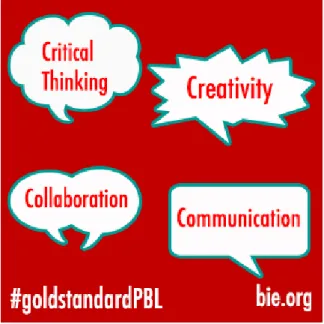
This report states that the most positive perception of the STEAM initiative came from the one-on-one tutoring support provided by Discovery Education consultants. Teachers and principals found that the STEAM initiative and student learning benefited from the district's learning framework focused on creativity, collaboration, critical thinking and communication.
Executive Summary
Key Findings
The biggest difficulty in creating support for STEAM professional development has been the lack of advance planning. Teachers were surprised in August 2017 when they were selected to participate in the STEAM Initiative and disappointed to discover that the first professional development day was widely inapplicable to their content and context.
Recommendations
The STEAM Movement
Details of the analysis process of interview data, site visits, and documentation review are provided in Appendix A. How did instructional leadership, professional development, school culture and climate, and organizational capacity influence the implementation of the STEAM initiative.
Metro Nashville Schools: Contextual Analysis
School District
The STEAM plan included school-wide implementation of Discovery Education curricula, increased interdisciplinary teacher collaboration, new honors courses, a refreshed growth mindset, and an accessible and well-equipped physical STEAM space. STEAM resources in the planning stages included one computer for every two students, five district instructional technology specialists, three district STEAM coaches, a STEAM advisory council, a STEAM A-team that fosters community partnerships, and finally a website that provides curriculum (David Williams, personal communication, June 11, 2018).
Discovery Education
In addition to the products, Discovery Education also offered in-person and online professional development for teachers and principals using the Discovery Educator Network. For teachers, Discovery Education provided professional development in person, at conferences, online, and through on-the-job instruction and leadership coaching.
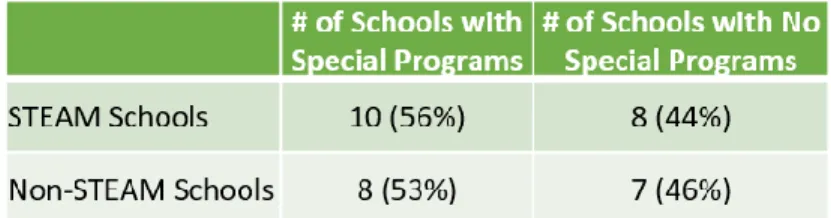
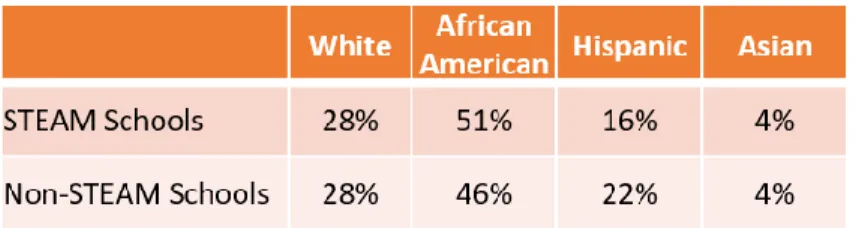
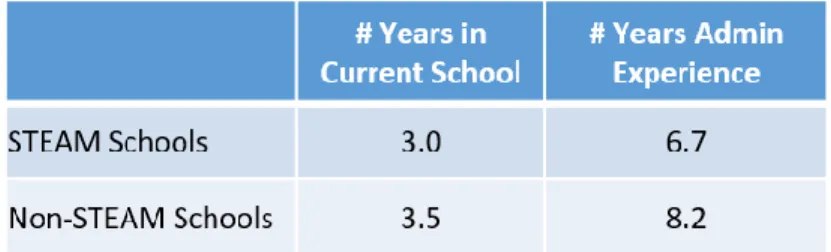
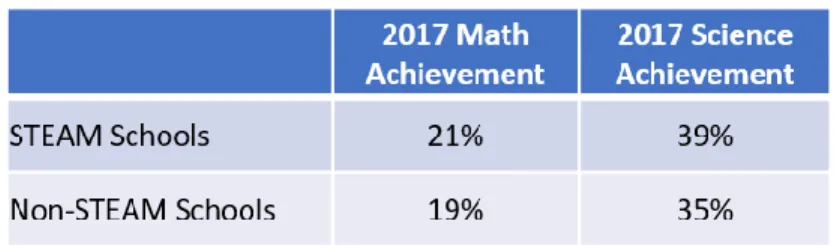
STEAM and Non-STEAM Middle Schools
At the culmination of Phase 1 in the summer of 2018, budget cuts forced a hiatus for the STEAM initiative. This break allowed district leaders to reflect on the first year of implementing the STEAM initiative before deciding whether to invest in a future one.
STEAM Schools’ Selected for this Study
Findings
Finding 1: Unfolding the Initiative
Regardless of contractual obligations and district expectations, many of the initiative's stakeholders (teachers, principals, and district staff. Finally, in reviewing all STEAM plans, it was noted that there was little or no mention of the promised expectations.
Finding 21: Instructional Leadership
That was confusing for many teachers about what the expectation was or how this actually works.” One teacher agreed, recalling the initial introduction to the initiative, saying, “We just looked at each other like, what is this?”. STEAM innovators were to lead STEAM change at the school level, supported by professional development (PD) and one-on-one consulting.
Finding 2.2: Professional Development
This led to responses such as that of a science teacher who reported that several PD sessions were “useful” for her classroom because they helped her know how to integrate important STEAM terminology into her lesson plans. Part of the difficulty was that “[they] spent five or six PDs explaining what STEAM meant.
Finding 2.3: School Culture and Climate
Another teacher reported that she participated in the STEAM initiative during her first year at her school. Every teacher in the building became a "STOOM" teacher every other Friday afternoon during the STEAM period.
Finding 2.4: Organizational Capacity
One principal noted the emptiness of the initiative's structures: "It was very fast, very fast. In November 2018 (next school year), their STEAM technology finally arrived at the STEAM study day.
Finding 3: Stakeholder Perceptions
Discussion
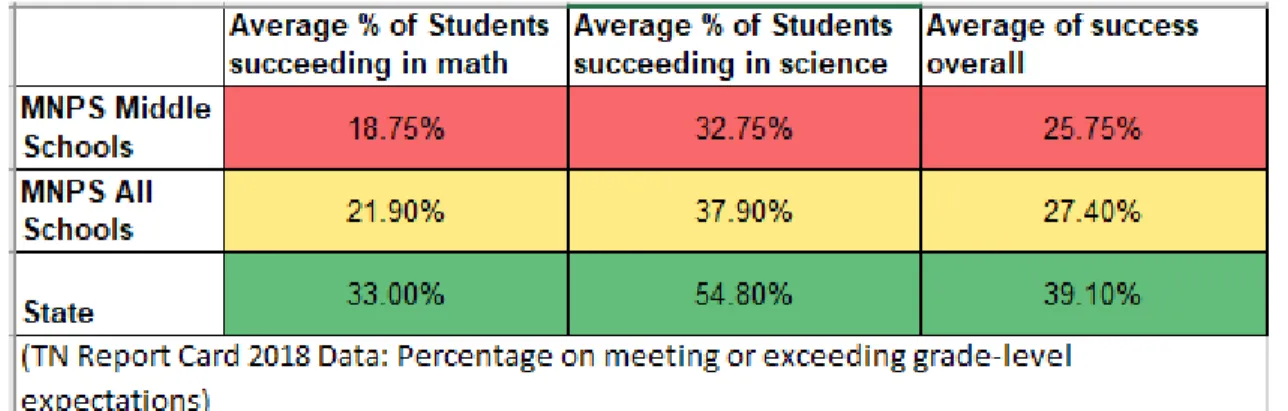
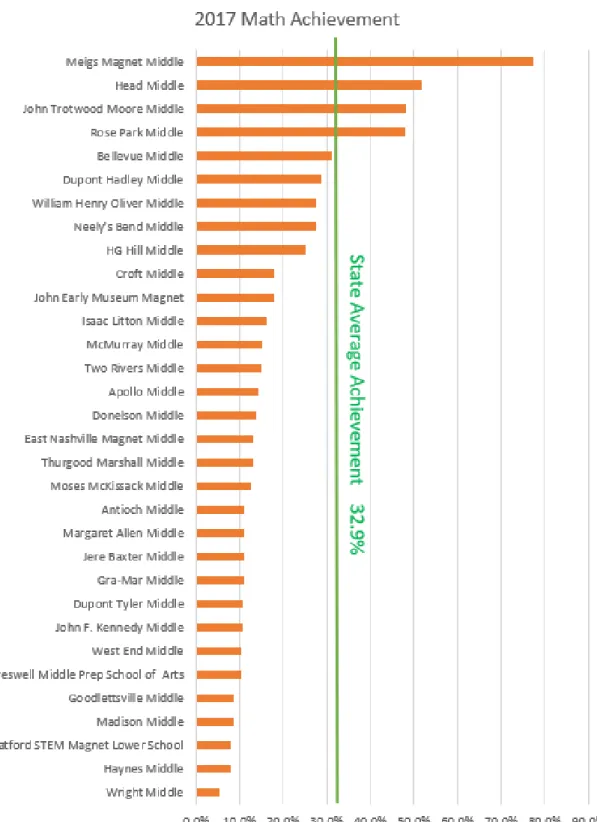
It's easy to imagine how a hospital would respond to a massive emergency, such as an explosion or a bus accident. Given the problem MNPS faced with the low academic performance of their high schools and declining population, the STEAM initiative was designed to respond to an emergency. The emergency at MNPS high schools included the loss of student populations to private and charter schools, low performance on state exams, a perceived lack of rigor in the curriculum, and an ever-increasing expectation to give students 21st century skills in the areas of collaboration, critical thinking, communication, and creativity to better prepare them for college and careers.
It was imperative that MNPS leaders no longer ignore the issues surrounding the middle school experience and implement a triage plan to save.
Takeaway 1: Needed Collaboration, Critical Thinking, Communication, Creativity
Leading the STEAM initiative were principals who were the only ones asked to complete a very short triage assessment with a key question: Did their schools feel ready for STEAM. Based on a survey and some political considerations, 18 schools were selected to benefit from the STEAM initiative. Next in line as responders were teachers, as they will be implementing the STEAM initiative curriculum and interacting directly with high school students.
I like to say that STEAM is not just science, technology, engineering, art and math, its students and teachers attract active minds.” Many teachers speculated about what needs the STEAM initiative would address.
Takeaway 2: Needed Goals and Outcomes
Although the number of teachers who actually participated is unknown, many teachers returned to their schools believing that the STEAM initiative would not meet the needs of their students or address the middle school emergency. Unfortunately, many professional development experiences are also considered ineffective (Darling, Hyler, & Gardener, 2017), which is exactly what happened during Phase 1 of the STEAM initiative. Unfortunately, this was the case before the start of the STEAM initiative and throughout the duration of Phase 1.
MNPS wanted to address the middle school emergency, but with all of these issues compounded, the STEAM schools were in a precarious position and ultimately set up for different levels of performance and success.
Takeaway 3: Personalized support
Recommendations
Recommendation 1: Collaborative Mission and Vision
Recommendation 2: Stability and Clarity in Goals, Outcomes, and Teams
This instructional leadership support focuses directly on improving core curriculum, pedagogy, and assessment, as well as developing a support network for teachers and principals (King & Bouchard, 2011). Discovery Education's individual advisors have been the most valued professional development of the STEAM initiative, and they or a similar organization would be a necessary addition to its continued success. MNPS could consider seeking external funding sources to generate stable funding for the initiative.
They embrace the potential of the 4Cs, would support the development of STEAM team-based goals, and would benefit from STEAM team-based planning and implementation teams.
Recommendation 3: Target Support to Specific Needs
Conclusion
The focus of this report, and therefore also of the recommendations, is on the implementation of the initiative. The research team found that the overall implementation of the STEAM initiative was haphazard, lacking clearly communicated objectives and measurable results. Research Question 2: How did instructional leadership, professional development, school culture and climate, and organizational capacity influence the implementation of the STEAM initiative.
Finally, in terms of organizational capacity, it was evident from the interviews that a lack of planning and resources had a significant impact on the implementation of the initiative.
Limitations and Future Research
Limitations
Future Research
Organizational learning capacity, evaluative inquiry and readiness for change in schools: educators' views and perceptions. Finding the joy in the unknown'': implementing STEAM teaching practices in middle school science and mathematics classrooms.
Appendices
Appendix A: Methods for Gathering and Analyzing Qualitative Data
The research team used three main strategies to analyze and organize the qualitative data: 1) individually completed analytic notes, 2) listening visits for each interview, and 3) conceptual matrices. After completing our interviews at each school and with district staff, the research team wrote analytical notes reflecting on the experience as a whole. Third, the researchers noted illustrative quotes and other forms of evidence, such as observations and documents, for each theme that emerged from the interviews.
Between listening cycles, the research team continued to collect the consistent ideas that emerged in and among the interviews.
Appendix B: Master Matrix
Appendix C: Teacher Interview Protocol
UNDERSTANDING IMPLEMENTATION: Before you started, did you feel like you had enough training to know WHY you were implementing a STEAM initiative? Did you feel like you had enough training to know WHAT to implement? EXPLICIT BUY-IN: How much resistance did you encounter from other team members when you started the implementation.
IMPLEMENTATION TEAMS: Did you feel supported by your team during the implementation of the STEAM Initiative?
Appendix D: Principals’ Interview Protocol
IL: SUPPORT/OVERSIGHT: Who (person position, not name) did you talk to when you encountered challenges with the implementation of the STEAM Initiative. DP: UNDERSTANDING IMPLEMENTATION: In general, before you started, did you feel you had enough training to know WHY you were implementing a STEAM Initiative. DP: SUPPORT: To what extent did you as a teaching leader receive feedback during the preparation process.
SC: EXPRESS INVOLVEMENT: How much resistance did you perceive from other team members when you started the implementation.
Appendix E: District Personnel’s Interview Protocol
SUPPORT/OVERSIGHT: Who (not the name, just the position in the district) did you talk to when you ran into challenges training teachers during the STEAM initiative. IMPLEMENTATION TEAM: Did you feel supported by your team when you trained under the STEAM initiative. EXPLICIT BUY-IN: How did you handle concerns or questions about your new STEAM initiative.
How much resistance did you encounter from other team members when you started the implementation?
Appendix F: Development of Interview Items based on Meyers, Durlak, and Wandersman (2012)
Who did you talk to if you wanted to change a part of the STEAM plan? Did you feel like that person knew how to apply STEAM practices more than you did? Overall, before you started, did you feel you had enough training to know WHY you were implementing a STEAM initiative.
Did you feel like you were implementing the STEAM initiative on your own or did you feel part of a team.
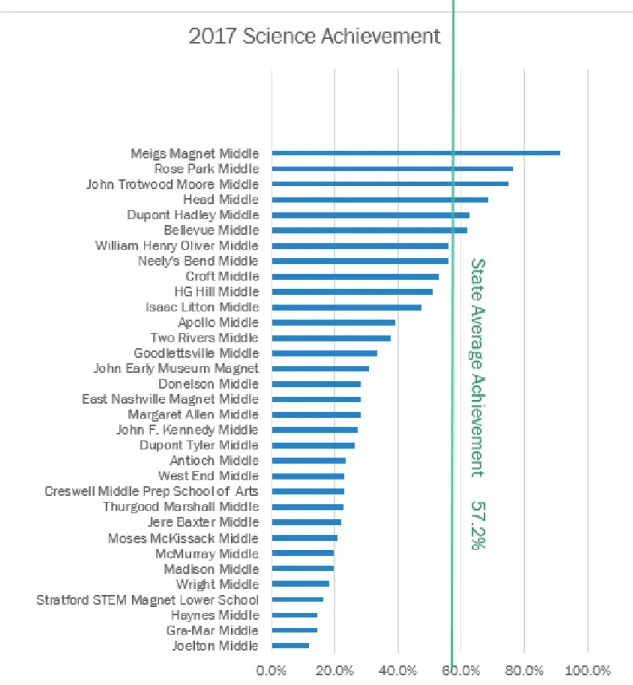
Appendix G: Data Comparison of all Metro Middle Schools
In early fall 2018, interviews and emails were exchanged with the MNPS Director of Curriculum and Instruction, who was the primary liaison/contact for the research team with district central office staff, the research department, and school principals. This STEAM study was appreciated because the district invested significant resources, time, and professional development and support in the initiative during the 2017-18 school year. Sustained cash and local support was planned for at least three years to allow the initiative to continue to grow to cover all MNPS high schools.
Interview elements designed to elicit interviewees' perceptions of the initiative's host setting, its structures for initial implementation, structures to support ongoing implementation, and the enhancement of future applications.
Appendix Study Initiation Details
Appendix I: Data Comparison of all STEAM Middle Schools
Appendix J: Participants