However, in the interest of completing my thesis by the end of the year, I would like to single out the people who have had the greatest impact. Rob, for showing me the ropes of the roof lab, and for being a good friend.
List of Tables
Chapter 1 Introduction
SOA can account for as much as 80% of the mass concentration of organic aerosol in the environment [Turpin & Huntzicker, 19951. Additionally, a campaign to Big Bear, CA, in which the composition of the gas and aerosol phases in a pine forest was investigated .
Organic Aerosol Formation from the Oxidation of Biogenic Hydrocarbons
Introduction
Averaged over the United States, biogenic emissions are estimated to be of the same order of magnitude as those from Fkom anthropogenic sources [Lamb et al., 19931. In a Canadian forest, the formation and growth of new particles is attributed to the oxidation of biogenic organic substances. [Leaitch et al., 19991.
Mechanism of Secondary Organic Aerosol Formation
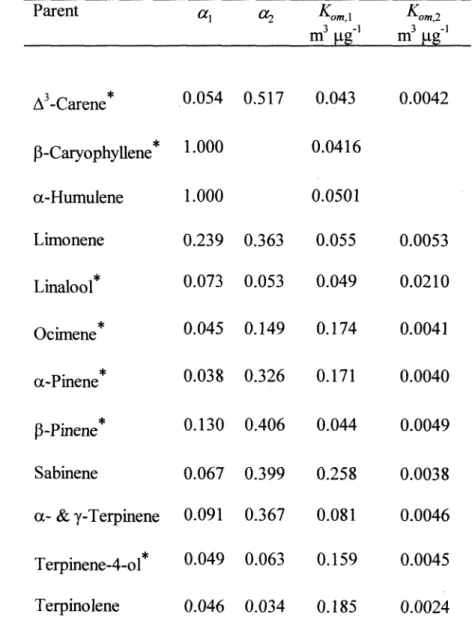
The fraction of each product that partitions into the aerosol phase can be described in terms of an equilibrium coefficient K,. In principle, if the molecular nature of each product, as well as that of the organic aerosol phase, were known, KOmsi could be calculated from first principles.
Fractional Aerosol Yield
Equation (2.3) indicates that this new equilibrium constant is a function of the mass of available organic phase into which a semi-volatile product can be absorbed. In this case, the threshold amount of parent compound that must react to form SOA in the chamber is defined as AHc*.
Chamber Studies
Propene, NO, NO, hexafluorobenzene (C6F,) and a hydrocarbon were then injected into each side of the chamber through Teflon tubing. Typically, three hydrocarbon readings were taken from each side of the chamber using the GC method described above.
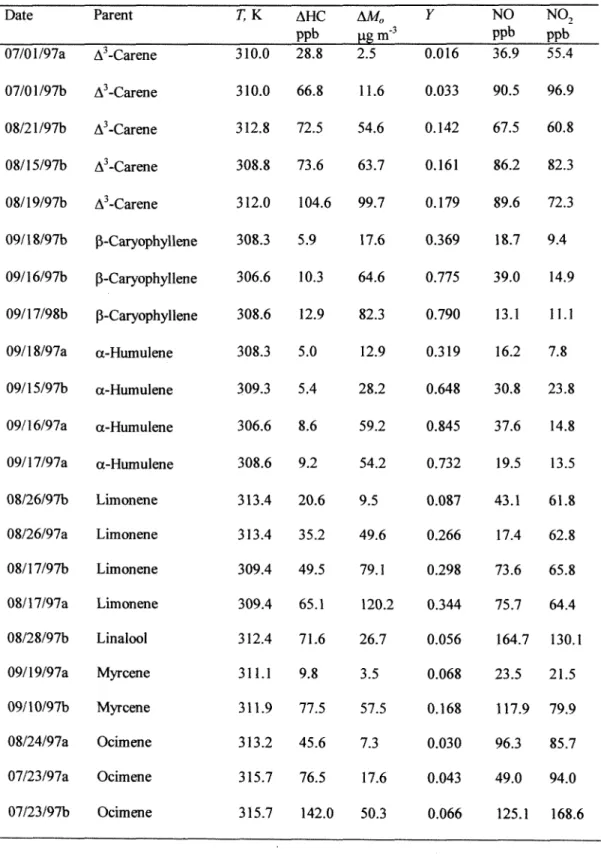
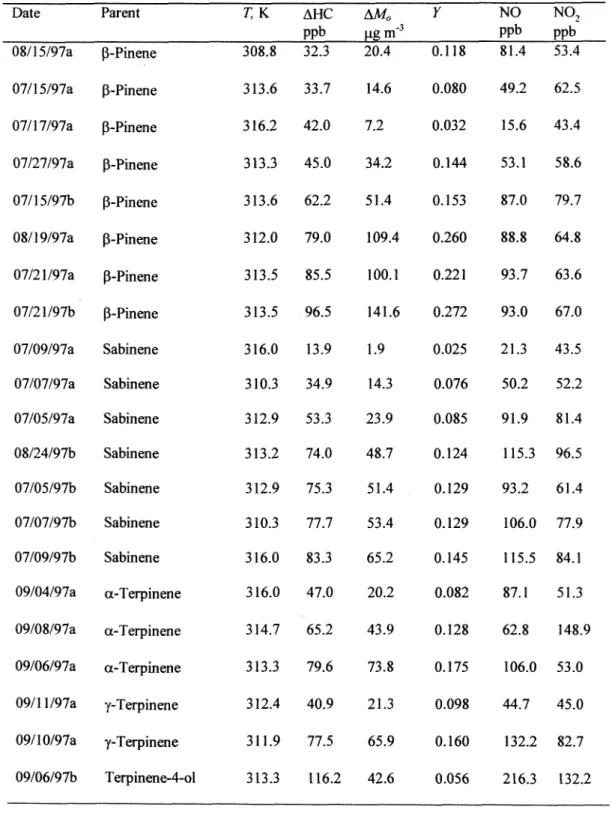
Yields of Biogenic Organics in Photooxidation Experiments
This is probably the result of the fact that the OH group replaces the more reactive double bond. This difference cannot be explained by the slight difference in boiling point of the parent compounds.
Yields of Biogenic Organics in Ozonolysis and Nitrate Radical Experiments
However, it may possibly be explained by a mechanism resulting in cleavage of both rings in the sabine, as open-chain compounds tend to be more volatile than cyclic ones. The corresponding mechanism for the P-pin is much less likely to result in cleavage of both rings.
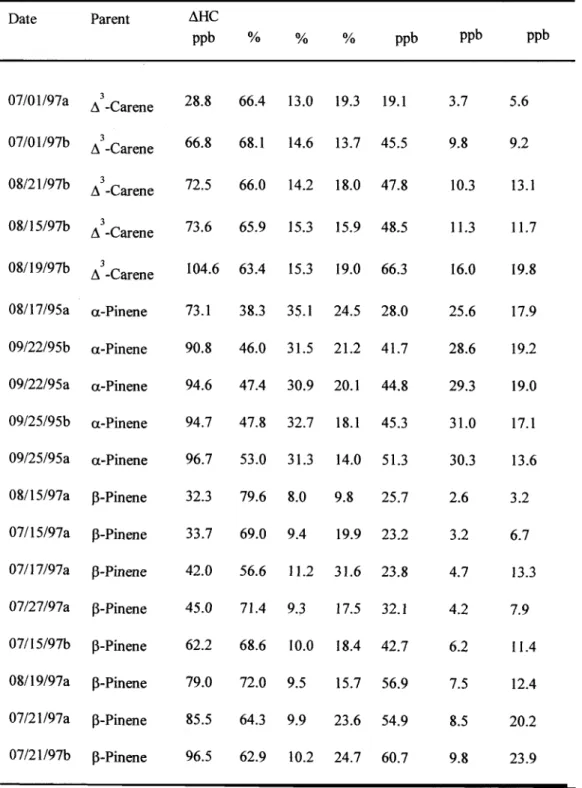
Contribution of Individual Oxidants to Aerosol Formation
Some scatter can be observed in the data sets associated with each type of experiment. It can be seen that the contribution of each oxidant varies between compounds and within a set of compounds for each oxidant.
Conclusions
Gas phase chemistry modeling, combined with yield parameters from individual oxidant experiments, allows the contribution of each oxidant to aerosol formation to be determined.
Secondary organic aerosol yields for tested bicyclic olefins as a function of organic mass concentration in photooxidation experiments. Secondary organic aerosol yields (data and fitted curves) for tested cyclic diolefins as a function of organic mass concentration in photooxidation experiments.

Hygroscopic Properties of Pasadena, California, Aerosol
Experimental Procedure
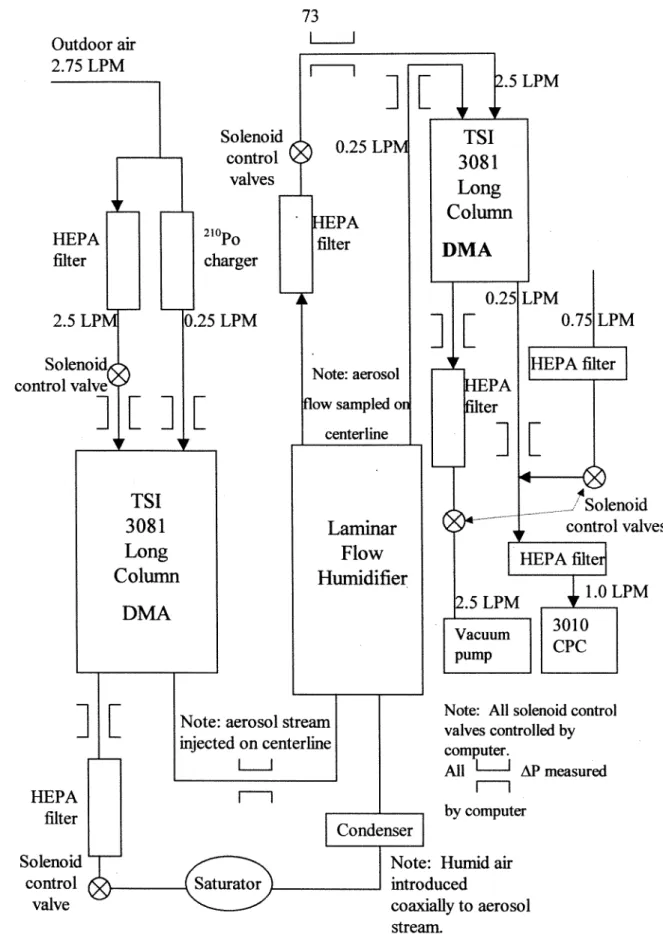
The Reynolds number of the flow in this tube was 90, so the length required to achieve fully developed flow and uniform distribution of water vapor is approximately 150 mm. By introducing particles into the center of the flow, variations in residence time caused by the parabolic velocity profile are minimized. The flow from the outer ring of the humidifying tube is filtered before being introduced as sheath flow into DMA2.
Precision TDMA measurements of particle growth require that all four streams entering and leaving each of the DMAs be precisely monitored. This control system maintains all flows at the desired level without aerosol passing through the flow control valves.
- Hygroscopic behavior of 50 nm particles
- Hygroscopic behavior of 150 nm particles
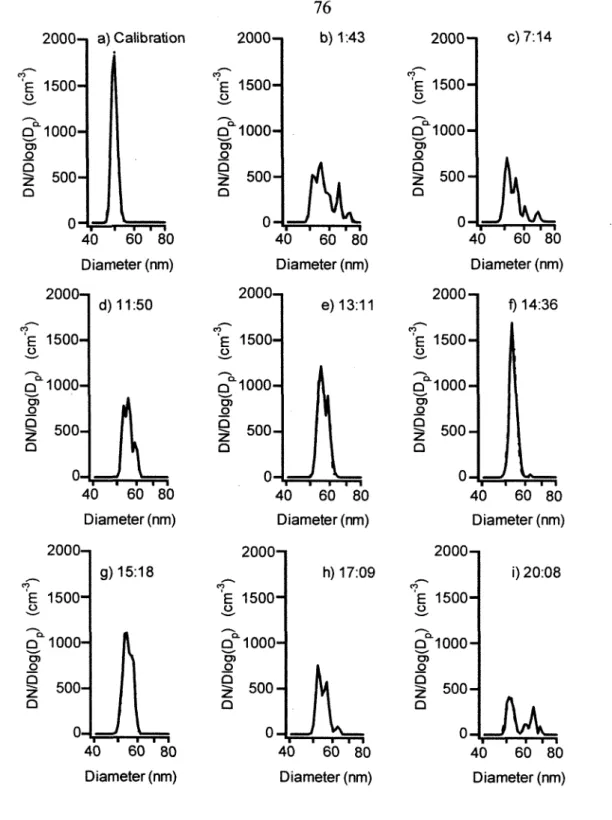
First, the locations of the first few peaks indicate that the aerosol hygroscopic growth factor does not change much during the week for these modes. The peak time of the monomodal distribution varies from 1-2 hours, The hygroscopic growth of 50 nm particles increased slightly during the fires, but the size distribution pattern remained constant. In the late afternoon and evening, aerosol transport dominated by inorganic salts increases the hygroscopicity of the Pasadena aerosol.
Fewer peaks are observed in the middle of the night, while the largest number occur during the day. The presence of forest fires in the vicinity of the sampling location led to an increase in the hygroscopicity of the aerosols.
A Third peak x Fourth peak
First peak Second peak
State-of-the-Art Chamber Facility for Studying Atmospheric Aerosol Chemistry
Introduction
Laboratory chambers are indispensable in the study of gas-phase atmospheric chemistry and atmospheric aerosol formation and growth. Because of the difficulty in isolating chemical and microphysical processes in the atmosphere from flow and mixing effects, chamber studies provide a way to develop mechanistic understanding of such processes. Indoor chambers offer precise control of temperature and humidity; but artificial lights may not simulate natural sunlight as closely as desired in parts of the sun's p e c t r u ~ ~, which results in rates of certain photolysis reactions differing between the natural and.
The system is particularly suitable for the quantification of secondary organic aerosol (SOA) formed by the oxidation of one or a group of parent hydrocarbons. Details of aerosol formation and evolution experiments investigating the effects of relative humidity and aerosol phase follow.
Facility Overview
The gas is then flushed into the chamber with ultra-pure air through a FEP Teflon line and stainless steel port. Wet, liquefied aerosols are injected by holding the RH of the injection line and chamber above the efflorescent RH of the salt. A Hewlett-Packard 5890 Series I1 Plus gas chromatograph (GC) equipped with a flame ionization detector (FID) monitors hydrocarbon concentrations in the gas phase in the chamber.
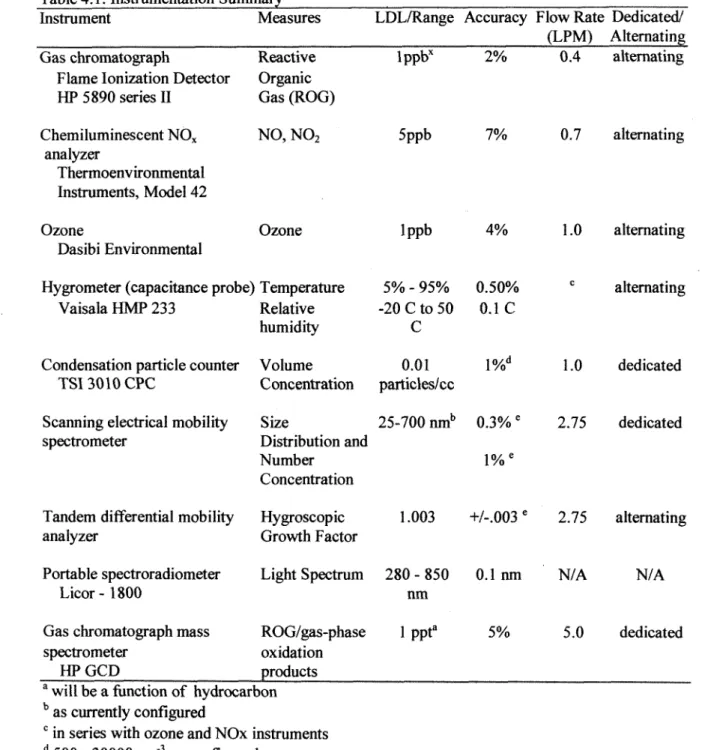
A pump draws the sample from the chamber through a 10 mL stainless steel sample loop at a rate of 0.4 LPM. The ozone analyzer takes samples at a rate of 1 LPM, pulling from alternating sides of the room at ten minute intervals.
Aerosol Instrumentation
Volumetric flow rates and the potential applied to the inner rod of the DMA must be carefully controlled for accurate mobility measurements. We examined the reproducibility and stability of SEMS measurements by continuously monitoring 198 nm mobility-graded polystyrene latex (PSL) beads (to extract dissolved particles) for 64 h. A Tandem Differential Mobility Analyzer (TDMA) provides measurement of the hygroscopic behavior of an aerosol.
An aerosol sample drawn from the centerline of the humidification tube is then passed through a second DMA operating in scanning mode, i.e., like a SEMS, to measure the particle size distribution after humidification. To minimize disturbances in particle size during TDMA measurements, the temperature of the sampling lines and the entire TDMA instrument is maintained internally.
Aerosol Formation and Evolution Experiments
To keep the seed particles dry, the R)-I in these experiments cannot exceed the liquefaction RH of the inorganic salt that composes it. Several studies have shown that the liquefaction of the RH of the inorganic salt is not disturbed by organic coatings (Cruz and Pandis, 2000). Therefore, if the inorganic core of the aerosol remains dry, the SOA yield can be measured as the final aerosol volume minus the initial seed volume and water content (all corrected for wall losses).
The state of the aerosol can be verified by TDMA measurements of the particle hygroscopic growth factor. The water content of inorganic seeds can be estimated based on thermodynamic theory (Nenes et al., 1998).
Aerosol Dynamics
In seeded experiments, at typical seed aerosol size (ca. 100 nm in diameter) and number concentrations (ca. 1 o4 cmm3), the time scale for coagulation is ca. 74 hours; therefore, coagulation can be neglected as a cause of the drop in aerosol number concentration when seed aerosol is used. Therefore, the number of particles in the chamber can be described by the first-order weight loss rate as N= ~, e.g. Thus, the total organic material produced is estimated to be the sum of that still suspended in the aerosol phase plus that deposited on the wall.
34;Ratios of kEl calculated for the spectral distribution for zenith angle from to calculated using the spectral solar distribution at ground level for zenith angle zero. Solid line represents Sylvania 350BL; the dotted line is the solar light intensity at zenith angle = 0; the dotted line is the solar light intensity at zenith angle = 60.
Pressure transducer
Signal to comjuter
HEPA filter
Experimental Description
- Dry Seed, Dry Conditions
- Dry Seed, Elevated Relative Humidity
- Dry Seed and No Seed With Humid Conditions
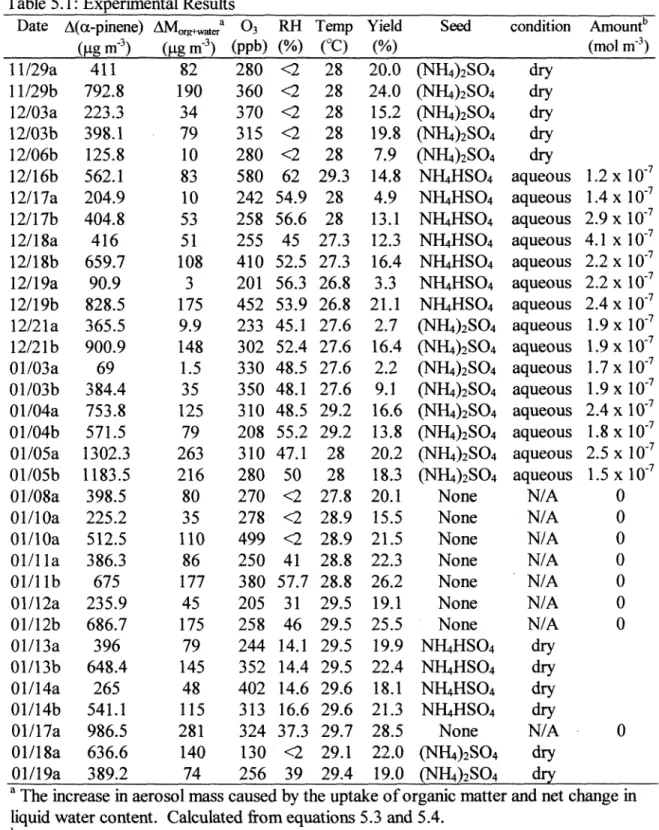
- Aqueous Salt Solutions Effect on SOA Yield
The water content of the wet aerosol is estimated from the dry and wet diameters measured in the TDMA angle. In this system, the relative humidity in the chamber is increased prior to the injection of the seed aerosol. Therefore, the water present in the aerosol is associated only with the organic phase of the aerosol.
The presence of electrolytes clearly reduces the action of the organic separation of the aerosol from the gas in the aerosol phase. No apparent differences were seen in the growth factors of 136 nm and 235 nm diameter particles.
Thermodynamic Modeling of Organic-Inorganic-Water Equilibria
- Salt Aerosols
For aqueous solutions of ionic compounds, the water activity of the solution, a, can be written as (Robinson and Stokes, 1959). The osmotic coefficients, a , of the mixture (so, iteratively, the water content) are estimated using equation (5.3) of Clegg et al. The main explanation for the behavior of the predicted yields shown in Figure 5.9 is that the water associated with the salt seed provides an environment in which the organic compounds dissolve.
The result also implies that the molar yields of the product compounds obtained by Yu et al. The second liquid phase, on the other hand, contains most of the salt, but very little organic matter.
Existence of Multiple Phases
We already know that the presence of the salt can increase the activity of an organic material in solution.). Reducing the formation of these heavier organic compounds will effectively increase the vapor pressure of the aerosol when salts are present, leading to a measurable reduction in aerosol formation when electrolytes are present. The presence of a dry inorganic salt has no measurable effect on the aerosol formation potential of the α-pinenel03 system.
Then, the water uptake of the oxidation products of a-pinenel03 was predicted using Raoult's Margules law. Growth factors (Gf) for a-pinene/03 SOA from dry conditions at 85% RH (experiment 12/6/99) as a function of aerosol organic fraction.
Chapter 6
- Hygroscopic Properties of m-Xylene and 1,3,5-TMB Aerosol Oxidation Products The hygroscopic behavior of an aerosol is a measure of its physical response to
Aromatic hydrocarbons, an important component of the organic compounds in the gas phase in the urban atmosphere, when oxidized form ozone and secondary organic aerosol (SOA). 1999) identified some gas-phase products of aerosol-forming photooxidation of toluene, p-xylene, and 1,3,5-trimethylbenzene, but did not report specific molecular composition of the aerosol. Next, the hygroscopic nature of the oxidation products of m-xylene and 1,3,5-TMB is compared with that of a-pinene oxidation products.
An evaluation of the SOA formation potential for m-xylene and 1,3,5-TMB for various experimental conditions follows. Hydrocarbon, NO and ozone concentrations were measured before the start of the experiment. hydrocarbon measurements were taken for each chamber.