
The first is to find any small-scale changes that have occurred within the timeline of the conflict itself. The political landscape of the area east of the Mississippi River was directly affected by the outcomes of these conflicts. In the body chapters of the thesis I examine the three conflicts in detail; in the conclusion I look at various themes and how they have changed over time as seen through these conflicts.
The early Spanish conquistadors had a tremendous impact on the status of the Mississippian chiefdoms. King Philip's War pitted the English colonies in the northeast against a loose coalition of indigenous peoples under Metacomet. In the next chapter on King Philip's War I will start with some background information about the causes of the war.
In all of the conflicts I examine, Euro-American powers attempted to exert control over native land. Most of the changes I focus on occurred over the broad spectrum of time and will come in the conclusion of this piece.
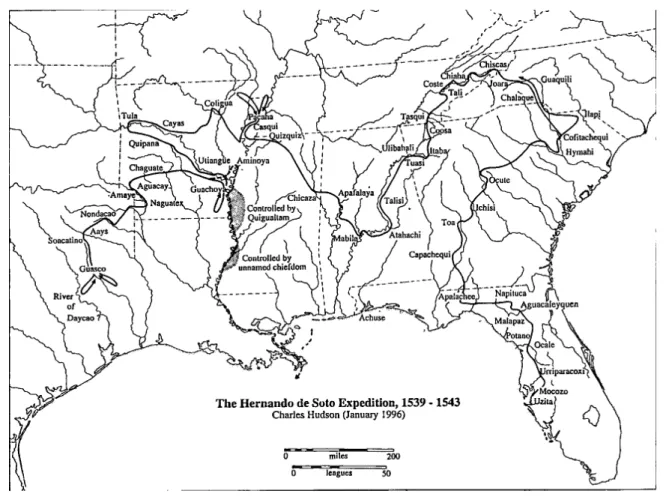
HERNANDO DE SOTO EXPEDITION…
Some of the chiefdoms and groups they encountered fared better against the Spanish than others. 20 Although the arquebus was an important part of the Spanish conquests, it was not always the most successful weapon. Vigil, “The Expedition of Hernando de Soto and the Spanish Struggle for Justice,” in The Hernando De Soto Expedition ed.
During the Battle of Fort Alibamo, there was a head-to-head clash between the Spanish and the Alibamo Indians. Source: Charles Hudson, “The Historical Significance of the Soto Route,” in The Hernando De Soto Expedition, ed. Also while De Soto was in Florida, the native Napituca Indians attacked the Spanish.
However, a native interpreter warned De Soto of the plan before the battle began, so the Spanish troops were ready for battle. The captive natives used everything in their power to harm the Spaniards; they even managed to successfully injure De Soto. The Battle of Mabila was the first formal battle used against the Spanish east of the Mississippi River.
One can only imagine De Soto's disappointment when the native warriors fled across the footbridge, leaving the Spanish behind in an empty fort.
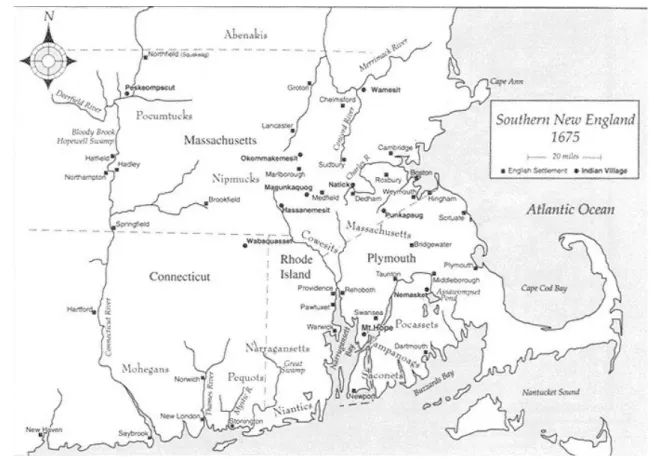
KING PHILIP’S WAR
The rumors that their leader had died at the hands of the English sent the Wampanoags into a frenzy. Of the English involved, there are two individuals I would like to introduce: Benjamin Church and Josiah Winslow. His leadership and decision making in the campaign is important to understanding the English side of the war due to his use of English chains of command and tactics.
At the beginning of the war, the English used the matchlock in battle because it was the legal weapon at the time. By the time the English forces actually got close to Philip's village, however, most of the Indians had crossed the bay to the Poccassett shore. The English were cautious about approaching the peninsula, which gave King Philip enough time to retreat across the bay.
The Narragansett made promises to remain on the side of the English during the war. After the English took control of the fort, they began to set fire to the wigwams, but Winslow ordered a tactical retreat, allowing the Narragansett to recapture the fort. This implies that the Native groups learned from the English long before the war broke out.
There are also some questions about what was the true purpose of the unfinished opening through which the English entered the fort. Narragansett Territory, the English forced the hand of the Narragansett to join Philip's side. The addition of the Narragansett only added to the English misery, who suffered a further series of defeats at their hands.
The success of their attack on Philip helped convince the English of the usefulness of native allies. Although the English command was aware of a significant Indian force in the Marlborough/Sudbury area, they did so anyway. The rest of the English reinforcements only left afterwards. news of the battle had spread.
To explain the quick response of the English reinforcements, it is necessary to understand the English militia system. The waning months of the conflict saw two separate but linked campaigns by the English.
NORTHWEST INDIAN WAR
236 The weapons they provided, known as Northwest fusils, were available to most Native groups in the Ohio Territory. Due to economic constraints, the United States Congress had to disband most of its military shortly after the end of the American Revolution. General Anthony Wayne led perhaps one of the best-trained but short-lived armies in United States history: the Legion.
One of the most important details of the Northwest Indian War was the ability of the Natives to form a multi-tribal defense against the United States. The main camp was not in a particularly defensible position.316 Early in the morning a group of warriors surprised the militia on the north side of the river. The population of the combined tribes in the Northwest Territory was much larger, but neither tribe had sufficient numbers to resist Americans.
325 Barbara Alice Mann, "Fractal Massacres in the Old Northwest: the example of the Miamis," Journal of Genocide Research 15, no. The Northwest Indian War is a clear example of the state of war in the eastern forests in the late eighteenth century. On the native side of the conflict, I'll discuss the use of omens, native alliance ambush tactics, fortifications, and more.
King Philip's War shows much the same picture, partly because of the short duration of the conflict. By the time of the Northwest Indian War, firearms had become a staple of native life. By the time of the Northwest Indian War, it was well established that Indians did not fare well in combat against cavalry; therefore American forces utilized cavalry.
The fortifications that existed at the time of King Philip's War were similar to those of southeastern Mississippi. In the case of the Great Swamp Fight, we see a fort influenced by the English colonists. By the time of the Northwest Indian War, there were no major native fortifications left.
A comparative analysis of the accounts of De Soto on the way to Mabila and the events therein, in the edition of Searching for Mabila. Fractal Massacres in the Old Northwest: the example of the Miamis”, Journal of Genocide Research 15, no.

