A Comprehensive Examination of the Pharmacist’s Role in Mental Illness By
Kaleb Barnes
A thesis submitted to the faculty of The University of Mississippi in partial fulfillment of the requirements of the Sally McDonnell Barksdale Honors College
Oxford May 2018
Approved by
__________________________________
Advisor: Professor Erin Holmes
__________________________________
Reader: Professor Meagen Rosenthal __________________________________
Reader: Professor T. Kristopher Harrell
© 2018 Kaleb Barnes
ALL RIGHTS RESERVED
ACKNOWLEDGEMENTS
This study could not have been possible without my adviser, Dr. Erin Holmes. Without her constructive criticism and seemingly infinite patience, this project would have not been possible. I would also like to thank my committee members, Dr. Rosenthal and Dr.
Harrell for taking time to review this study. A debt of gratitude is owed to the Pharmacy Administration Department for their help in seeing this project to completion. Lastly, I could not have completed this endeavor without the never-ending support and
encouragement of my friends and family. I am eternally grateful to everyone that aided in the completion of this study.
ABSTRACT
The number of people receiving mental illness diagnoses has increased in the last two decades. As one of the most accessible healthcare professionals, pharmacists need to be prepared to assist in the management of patients with mental illness. In this study, the objective was to see how pharmacists’ mental illness knowledge, acceptable social distance, familiarity, and perceived barriers may predict pharmacists’ attitude toward patients with mental illness and also their willingness to provide care to patients with mental illness. The secondary objectives of this study were to test for differences in knowledge, attitude, perceived barriers, and willingness to provide care based on type of degree type of pharmacy, gender, and location. This study utilized a descriptive, cross- sectional survey design to collect study data from a sample of 196 pharmacists. The respondents seemed to have an overall positive attitude towards patients with mental illness. Nearly 60% of pharmacists reported that their pharmacy education adequately trained them to work with patients with mental illness. In regard to education,
pharmacists with a PharmD more strongly attributed physical symptoms to mental illness than did BSPharm-trained pharmacists. Most of the pharmacists perceived time available for pharmacist to give attention to patients as one of the most significant barriers. In terms of social distance, most pharmacists expressed that they would be willing to work alongside a person with mental illness than have same person as a babysitter for their child. Although, pharmacists held a somewhat positive perception of patients’ mental illness, there was still a stigma assessed. Due to this, there might be a need for
educational interventions that will improve future pharmacists’ willingness to provide care to patients with mental illness.
TABLE OF CONTENTS
List of Tables...vii
Background...1
Methods………...8
Results………...12
Discussion ...24
References………..30
LIST OF TABLES
Table 1 Demographic Characteristics………13 Table 2 Mental Illness Familiarity……….15 Table 3 Attitude toward Individuals with Mental Illness………..17 Table 4 Acceptable Social Distance………..19
Table 5 Perceived Barriers……….20
Table 6 Willingness to Provide Care for Mental Illness Patients…21
BACKGROUND The Scope of Mental Illness
According to the National Alliance on Mental Illness, a mental illness is a condition that affects a person’s thinking, feeling, or mood. Mental illness can be influenced by a variety of factors such as genetics, environment, and lifestyle. The number of people receiving mental illness diagnoses has increased in the last two decades, as recent reports suggest that nearly 20% of Americans suffer from mental illness (National Institute of Mental Health, 2017). In fact, according to the National Alliance on Mental Illness, approximately one in five adults in the United States experience some form of mental illness in a given year (National Institute of Mental Health, 2017). Similarly, one in five youth in the age category of 13-18 have experienced a severe mental disorder during their lifetime (National Institute of Mental Health, 2017).
Young adults in the age category of 18-25 have the highest prevalence of mental illness (National Institute of Mental Health, 2017). Mental illness affects the population as a whole and not just a specific age category.
With increasing populations being diagnosed with mental illnesses each year, there has been an increase in access to health services to treat mental illness.
Interestingly enough, only about 40% of adults with a mental illness received treatment in the past year (National Institute of Mental Health, 2017). Additionally, only about 50%
of children ages 8-15 with a mental illness received mental health services (National
Institute of Mental Health, 2017). Lack of treatment has many negative consequences on individuals who suffer with mental illness, but it also has many consequences on greater society. According to The American Journal of Psychiatry, mental illness costs America
$193.2 billion in lost earnings per year. There is an obvious need for better access to effective treatment for mental illness.
The Pharmacist’s Role in Mental Illness
Over the last decade, the pharmacist’s role in healthcare has evolved to a more patient-centered role. Traditionally, a pharmacist’s key responsibilities were limited to managing the production and dispersion of medications. As healthcare is continuously evolving, it is important that pharmacists use their extensive body of knowledge and skills to more effectively educate patients on their specific medications. In a recent study, it was found that pharmacist-provided education leads to more positive health outcomes in chronically ill patients (Avalere Health, 2014). In addition to the positive impact on the patient, pharmacist-provided education can also contribute to better health outcomes in the entire population (Avalere Health, 2014).
In the United States, medication is a common treatment for a wide array of mental illnesses. Given the prevalence of mental illness, pharmacists need to be prepared to assist in the management of these patients. Accessibility to mental health services is currently a heavily debated topic. There are many people in the United States who do not have access to quality mental health services. Specifically, residents of rural
geographical locations demonstrate a greater need for mental health services. These same residents were also recorded as having lower rural office-based mental health use and a much higher rate of prescription use. (Ziller EC, Anderson NJ, Coburn AF, 2010) Even
in more populous geographical regions, there are many barriers to quality mental health services. For instance, financial barriers can be a clearly defined problem when it comes to treating mental illness. In addition, U.S. Department of Health and Human Services cites having a shortage of mental health professionals in the United States. (Department of Health and Human Services) As one of the most accessible healthcare professionals, pharmacists can significantly and positively affect the health outcomes of patients with mental illness. Previous studies have shown that when a pharmacist helped with monitoring antidepressant medication therapy, there were increased levels of patient adherence to the medication. (Bultman DC, Syarstad BL. 2002) But management of patients with mental illness requires more than just knowledge of the symptoms of mental illness and treatments, it requires a level of comfort and willingness to work with these patients.
Literature Review of the Pharmacist’s Role in Mental Illness
During the literature review process, we found there is not a substantial amount of literature that explored the community pharmacist’s role in a patient’s mental illness.
There are several studies that have been conducted that do, however, study how attitudes toward mental illness patients affected pharmacists’ intentions to provide care to patients with mental illness. (Cates, Burton & Woolley, 2005; Rickles, Dube, McCarter, &
Olshan, 2011). However, these studies were conducted with regional samples (pharmacists in Northeastern or Southeastern United States) and did not assess other factors that may influence willingness to provide care to patients with mental illness.
In the first study, a survey was implemented to examine the attitudes of Alabama pharmacists towards patients who were diagnosed with mental illness. The study found
that over 90% of the pharmacists disagreed with the statement that stated, “It is easy to recognize someone with mental illness.” Additionally, over 90% of the pharmacists in the sample disagreed with the statement that stated, “People with mental illness are not intelligent.” Most of the pharmacists also agreed “mental illness is nothing to be ashamed of.” Overall, the study indicated that pharmacists expressed a somewhat positive attitude toward mental illness. This particular study only used a regional sample of Alabama pharmacists and focused more on the attitudes of the mental illness instead of the attitudes on the pharmaceutical care of mental illness. These could potentially limit the validity of the results as a national survey might give a larger, more representative data set. (Cates, Burton & Woolley, 2005)
In 2010, there was a study conducted that compared how community pharmacists perceived individuals with depression and schizophrenia and whether or not these
attitudes affected their ability and/or willingness to provide services to these patients.
Similarly to the previous study, the data collected from this study was also received from a regional sample (Northeastern United States). In contrast, this study distinguished the difference between two particular mental illnesses (schizophrenia and depression). Being more specific allowed the researchers to better understand if pharmacists might have differing attitudes on different mental illnesses. Interestingly enough, the results showed that the pharmacists sampled seemed to have a more negative attitude towards patients with schizophrenia than those patients with depression. The results also indicated that pharmacists would feel more comfortable treating a patient with asthma than a patient with a mental illness. To reduce these negative attitudes, it is pertinent for educational interventions to take place that will allow pharmacists to more comfortably counsel
patients diagnosed with a specific mental illness. In addition to reducing those negative attitudes, the study revealed it is important to increase the pharmacists’ perceived value of counseling their patients. (Rickles, Dube, McCarter, & Olshan, 2011)
A study published by the University of Toronto in 2004 designed a questionnaire that encompassed pharmacist attitudes and barriers to providing adequate care for
patients diagnosed with mental illness. The study focused on how to eliminate the stigmatization given by healthcare providers (pharmacists) to their patients who use psychiatric medications. The survey also indicated that pharmacists reported having generally positive attitudes towards patients who use psychiatric medications.
Interestingly, the same pharmacists who demonstrated these positive attitudes also reported feeling more uncomfortable discussing mental illness with a patient than discussing cardiovascular disorders with a patient. The study also indicated that many pharmacists perceived lack of adequate education on mental illness as a barrier to quality care. The study also cited lack of privacy as a barrier to quality career. Lack of privacy makes it difficult for pharmacists to provide quality patient counseling for patients with mental illness. (Phokeo, Sproule, & Raman-Wilms, 2004)
In a seemingly different approach, the College of Psychiatric and Neurologic Pharmacists (CPNP) and the National Alliance on Mental Illness (NAMI) collaborated on a study that surveyed a sample of individuals with a mental health condition. Instead of studying the pharmacists’ attitudes, the researchers attempted to characterize the
relationship between the patient and the pharmacist by examining the attitudes of individuals with mental illness. One of the key findings from the study was that 91% of individuals taking medications for their illness feel comfortable visiting their community
pharmacist. The survey approximated 25-30% of individuals with mental illness have seldom or rarely received information on their current medication from their pharmacist.
Similar to other studies, one of the clear barriers to quality patient counseling in a pharmacy is lack of privacy. This particular study mentioned that the individuals who participated in the survey viewed pharmacists as slightly disinterested in patient care because they seem to not have time for questions. The study concludes that there is a great need to strengthen the role of a community pharmacist in mental health. (Caley CF, Stimmel GL, 2012)
In conclusion, there have been several studies that assessed the roles of a
pharmacist in mental health. However, a national survey sample may enhance the overall understanding of pharmacists’ attitudes toward patients diagnosed with mental illness.
Study Objectives
Due to the lack of studies that thoroughly examine multiple facets of pharmacists’
experience with mental illness in a national sample, the objectives of this study are to:
1. Measure pharmacists’ mental illness knowledge;
2. Measure pharmacists’ acceptable social distance from someone with a mental illness;
3. Measure pharmacists’ familiarity with individuals with mental illness;
4. Measure pharmacists’ attitude toward individuals with mental illness;
5. Measure pharmacists’ perceived barriers to providing care to individuals with mental illness; and
6. Measure pharmacists’ willingness to provide care to individuals with mental illness.
The secondary objectives of this study were to test for differences in knowledge,
(Bachelor’s Degree in Pharmacy versus Doctor of Pharmacy Degree), type of pharmacy (independent pharmacy versus retail chain pharmacy), gender (male or female), and location (rural or urban).
METHODS Design
This study employed a descriptive, cross-sectional survey design to collect study data from pharmacists. Qualtrics was used as an electronic survey platform for
pharmacists. University of Mississippi IRB exemption was obtained before the study commenced.
Sample & Data Collection
We targeted a nationally representative convenience sample of 200 community pharmacists to meet study objectives. Community pharmacists included pharmacists that work for independent pharmacies as well as retail chain pharmacies (such as Walmart, Walgreens, Kroger, CVS, Fred’s, Rite-Aid, etc.). The goal was to obtain 100 pharmacists from each category. Pharmacists were recruited from Delta Marketing Dynamics
(http://deltamarketingdynamics.com/). The pharmacists were sent an email invitation to complete the survey, with a link survey included in the email. Pharmacists were
continually recruited to participate until 196 responses were obtained.
Measures
Demographic variables. Demographic variables collected in this study included 1) gender, 2) age, 3) race/ethnicity, 4) practice site, 5) position, 6) years practicing, 7) year of graduation, 8) pharmacy degree, 9) state of practice, 10) rural/urban practice, 11) percentage of patients in practice with a mental health condition, 12) number of
continuing education programs in mental health completed in the last 5 years, and 13) perceived adequacy of education in mental health.
Mental illness knowledge. Following Swami, Persaud & Furnham (2011), pharmacists were asked to rate their lifetime knowledge of mental illnesses on a 7-point linear numeric scale where 1=not at all knowledgeable and 7=very knowledgeable.
Mental illness familiarity. Familiarity was measured using a 12-item measure developed by Holmes, Corrigan, Williams, Conor, & Kubiak, 1999. Respondents were asked to check all situations on a list that they have experienced in their life. Their score on this measure was to be the most intimate situation indicated by the participant. For example, as quoted by Holmes, “a person who checked ‘A friend of the family has a severe mental illness’ (rank order score = 9), ‘I have watched a documentary on television about mental illness’ (rank order score = 4), and ‘My job includes providing services to persons with a severe mental illness’ (rank order score = 7) would receive a score of 9 because ‘A friend of the family has a severe mental illness’ is the most intimate of checked situations.”
Attitude toward individuals with mental illness. Attitude was measured with the Mental Illness: Clinician’s Attitude Scale (MICA-4) by Kassam, Glozier, Leese, Henderson C, Thornicroft G (2010) to assess respondents attitudes toward individuals with mental illness. This is a 16-item measure using a linear numeric scale where 1=strongly disagree and 7=strongly agree. An example item reads, “People with severe mental illness are dangerous more often than not.”
Acceptable social distance. Acceptable social distance was measured with the
Social Distance Scale (SDS) by Bell, Johns, & Chen (2006) whereby respondents indicated their willingness to associate with a person with a mental illness. This scale is comprised of 7 items on 4-point linear numeric scales where 1=definitely willing and 4=definitely unwilling. Higher scores represent greater distance. An example item includes: Have one of your children marry that person.
Perceived barriers. Perceived barriers were measured by combining and modifying two measures from pharmacy studies (Rickles, Dube, McCarter, & Olshan, 2011; Scheerder, De Coster & Van Audenhove, 2008). The final measure is composed of 11 items on a 5-point linear numeric scale where 1=very insignificant and 5=very
significant. An example item includes: “Availability of a private counseling area in the pharmacy to discuss sensitive issues.” Because this measure was modified, it was successfully pretested among registered pharmacists in Mississippi.
Willingness to provide care for mental illness patients. Willingness to provide care was measured with a scale used by Rickles, Dube, McCarter, & Olshan (2011) in a sample of pharmacists. It is a 9-item, 5-point linear numeric scale where 1=strong
disagree, and 5-strongly agree. An example item includes: “I would be willing to ask the patient questions about how the medication is helping his/her symptoms.”
Analysis
Data was analyzed using IBM SPSS Statistics 25. The following procedures were utilized to analyze study data.
Sample description. The pharmacist sample was described by calculating frequencies, means, and percentages for the demographic characteristics of the pharmacist respondents.
Mental health measures. Means and standard deviations were used to assess mental health measures including knowledge, social distance, familiarity, attitude, perceived barriers, and willingness to provide care.
Differences testing. To meet the secondary objective of this study, Independent Samples t Tests were conducted at a .05 level of significance to test for differences in knowledge, attitude, perceived barriers, and willingness to provide care based on type of degree (Bachelor’s Degree in Pharmacy versus Doctor of Pharmacy Degree), type of pharmacy (independent pharmacy versus retail chain pharmacy), gender (male or female), and location (rural or urban).
RESULTS Sample Description
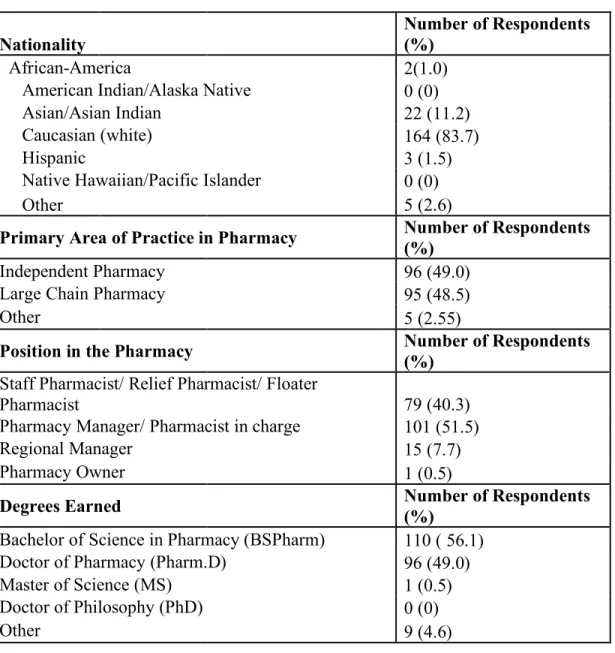
In order to better understand some of the characteristics of respondents, multiple demographic questions were assessed. Of the 196 completed surveys, 109 (55.6%) were completed by males, and 87 (44.4%) were completed by females. Participant ages ranged from 26 to 76 years of age, with an average age of about 46 years old (SD = 11.2). On average, respondents had been practicing pharmacy for about 21 years (SD = 11.74).
There was a large amount of variation as one respondent reported having practiced pharmacy for 49 years and one reported having practiced only one year. In the overall sample, there was a relatively even distribution of respondents that worked in an
independent pharmacy and respondents that worked in a large chain pharmacy (Table 1).
Other participants in the survey recorded being employed by a Federally Qualified Health Center and a HMO Outpatient pharmacy. The majority of participants practice in an urban area (58.2%), while 41.8% of respondents practice in a rural setting. The
respondents also approximated that an average of 31% (SD = 18.46) of their patients are treated for some type of mental illness.
Table 1: Demographic Characteristics Nationality
Number of Respondents (%)
African-America 2(1.0)
American Indian/Alaska Native 0 (0)
Asian/Asian Indian 22 (11.2)
Caucasian (white) 164 (83.7)
Hispanic 3 (1.5)
Native Hawaiian/Pacific Islander 0 (0)
Other 5 (2.6)
Primary Area of Practice in Pharmacy Number of Respondents (%)
Independent Pharmacy 96 (49.0)
Large Chain Pharmacy 95 (48.5)
Other 5 (2.55)
Position in the Pharmacy
Number of Respondents (%)
Staff Pharmacist/ Relief Pharmacist/ Floater
Pharmacist 79 (40.3)
Pharmacy Manager/ Pharmacist in charge 101 (51.5)
Regional Manager 15 (7.7)
Pharmacy Owner 1 (0.5)
Degrees Earned
Number of Respondents (%)
Bachelor of Science in Pharmacy (BSPharm) 110 ( 56.1)
Doctor of Pharmacy (Pharm.D) 96 (49.0)
Master of Science (MS) 1 (0.5)
Doctor of Philosophy (PhD) 0 (0)
Other 9 (4.6)
Mental Illness Knowledge
Nearly 60% of respondents (59.2%) reported that their pharmacy education adequately trained them to work with patients with mental illness. Additionally the respondents indicated their lifetime knowledge of mental illness was slightly above average on a scale from 1 to 7 where 1 = not at all knowledgeable and 7 = very knowledgeable (M = 4.56, SD = 1.04).
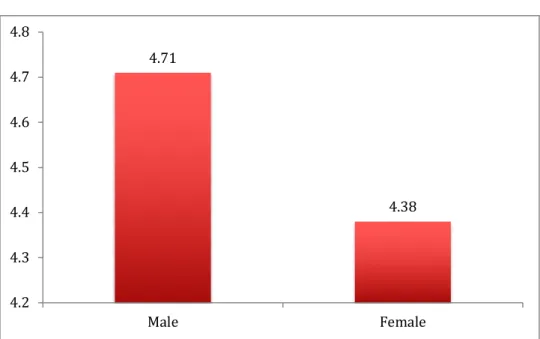
There were no statistical differences when comparing pharmacists with a PharmD versus a BSPharm, independent pharmacists and retail chain pharmacists, or rural and urban pharmacists with regard to knowledge. Males (M = 4.71; SD = 1.01) reported having more knowledge than females (M = 4.38; SD = 1.05) when it comes to mental illness (t = 2.21; p = 0.03) (Figure 1).
Figure 1: Male and Female Reported Mental Illness Knowledge
4.71
4.38
4.2 4.3 4.4 4.5 4.6 4.7 4.8
Male Female
Mental Illness Familiarity
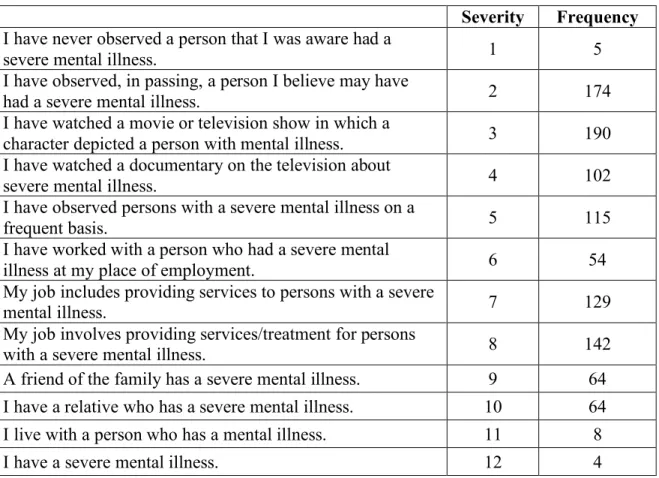
Respondents were asked to indicate how familiar they were with mental illness by indicating “yes” or “no” to the items listed in Table 2. Five (5) pharmacists reported that they had never observed a person with a severe mental illness. Four (4) pharmacist respondents reported actually having a severe mental illness. The highest frequency of respondents reported watching a movie or television show that depicted a character with a severe mental illness (n = 190). Another high frequency of respondents (n = 174) had at least observed a person that had a severe mental illness.
Table 2: Mental Illness Familiarity
Severity Frequency I have never observed a person that I was aware had a
severe mental illness. 1 5
I have observed, in passing, a person I believe may have
had a severe mental illness. 2 174
I have watched a movie or television show in which a
character depicted a person with mental illness. 3 190 I have watched a documentary on the television about
severe mental illness. 4 102
I have observed persons with a severe mental illness on a
frequent basis. 5 115
I have worked with a person who had a severe mental
illness at my place of employment. 6 54
My job includes providing services to persons with a severe
mental illness. 7 129
My job involves providing services/treatment for persons
with a severe mental illness. 8 142
A friend of the family has a severe mental illness. 9 64 I have a relative who has a severe mental illness. 10 64
I live with a person who has a mental illness. 11 8
I have a severe mental illness. 12 4
Attitude toward Individuals with Mental Illness
On a scale from 1 to 5 where 1 = strongly disagree and 5 = strongly agree,
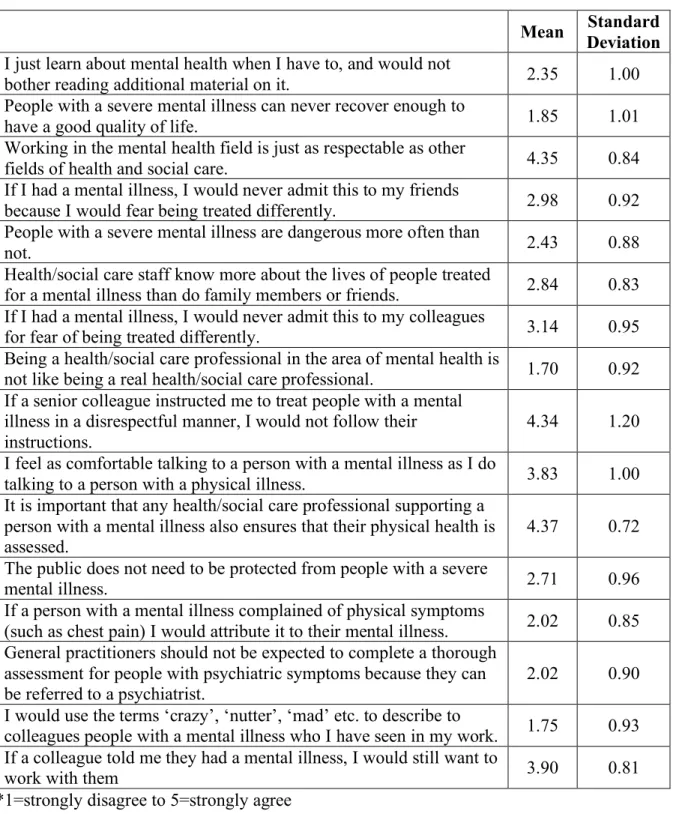
respondents reported being just as comfortable talking to a patient with a mental illness as a patient with a physical illness (M = 3.83; SD = 1.00). Respondents also agreed that mental health professions are just as respectable as other fields of health and social care (M = 4.35; SD = 0.84). Respondents generally disagreed that being a health/social care professional in the area of mental health is not like being a real health/social care professional (M = 1.70; SD = 0.92). Respondents disagreed with using terms such as
‘crazy’ or ‘nutter’ to describe people with mental illness that he/she might have seen at work (M = 1.75; SD = 0.93). Additional findings can be found in Table 3.
Table 3: Attitude toward Individuals with Mental Illness
Mean Standard Deviation I just learn about mental health when I have to, and would not
bother reading additional material on it. 2.35 1.00
People with a severe mental illness can never recover enough to
have a good quality of life. 1.85 1.01
Working in the mental health field is just as respectable as other
fields of health and social care. 4.35 0.84
If I had a mental illness, I would never admit this to my friends
because I would fear being treated differently. 2.98 0.92 People with a severe mental illness are dangerous more often than
not. 2.43 0.88
Health/social care staff know more about the lives of people treated
for a mental illness than do family members or friends. 2.84 0.83 If I had a mental illness, I would never admit this to my colleagues
for fear of being treated differently. 3.14 0.95
Being a health/social care professional in the area of mental health is
not like being a real health/social care professional. 1.70 0.92 If a senior colleague instructed me to treat people with a mental
illness in a disrespectful manner, I would not follow their
instructions. 4.34 1.20
I feel as comfortable talking to a person with a mental illness as I do
talking to a person with a physical illness. 3.83 1.00
It is important that any health/social care professional supporting a person with a mental illness also ensures that their physical health is
assessed. 4.37 0.72
The public does not need to be protected from people with a severe
mental illness. 2.71 0.96
If a person with a mental illness complained of physical symptoms
(such as chest pain) I would attribute it to their mental illness. 2.02 0.85 General practitioners should not be expected to complete a thorough
assessment for people with psychiatric symptoms because they can
be referred to a psychiatrist. 2.02 0.90
I would use the terms ‘crazy’, ‘nutter’, ‘mad’ etc. to describe to
colleagues people with a mental illness who I have seen in my work. 1.75 0.93 If a colleague told me they had a mental illness, I would still want to
work with them 3.90 0.81
*1=strongly disagree to 5=strongly agree
Participants with a PharmD reported more agreement (M = 2.17; SD = 1.93) than those with a BSPharm (M = 1.88; SD = 0.74) that, “if a person with mental illness complained of physical symptoms (such as chest pain) I would attribute it to their mental illness” (t = -2.40; p = 0.02). Although both groups expressed low levels of agreement with the statement. There was no statistical differences found between independent and retail chain pharmacies with regard to attitude towards mental health.
Females (M = 2.60; SD = 0.88) reported to agree more with the statement “people with a severe mental illness are dangerous more often than not” than their male (M = 2.29; SD = 0.85) counterparts (t = -2.44; p = 0.02).
Participants in the study who practice in urban areas (M = 3.11; SD = 0.85) more strongly agree with the statement, “If I had a mental illness, I would never admit this to my friends because I would fear being treated differently” than respondents practicing in rural areas (M = 2.80; SD = 0.99) (t = 2.29; p = 0.02). Similarly, participants in the study who practice in urban areas (M = 3.25; SD = 0.94) more strongly agreed with the
statement that, “If I had a mental illness, I would never admit this to my colleagues for fear of being treated differently” than respondents practicing in rural areas (M = 2.98; SD
= 0.94) (t = 2.05; p = 0.04). Participants who practiced in urban areas (M = 1.87; SD = 1.04) were more likely to “use the terms ‘crazy’, ‘nutter’, ‘mad’, etc. to describe to colleagues people with a mental illness who I have seen in my work” than rural pharmacists (M = 1.59; SD = 0.72) (t = 2.12; p = 0.04).
Acceptable Social Distance
Where 1 = definitely willing and 4 = definitely unwilling, respondents were more willing to work alongside someone who was just hospitalized for a mental illness or have that person for a neighbor. Respondents were less willing to have that same person babysit their child or marry their child (Table 4).
Table 4: Acceptable Social Distance
Mean Standard Deviation
Share an apartment with that person 3.03 0.88
Work alongside that person 2.12 0.85
Have that person as a neighbor 1.97 0.87
Have that person as a babysitter for your child 3.46 0.74 Have one of your children marry that person 3.12 0.82 Introduce to friend as relationship partner 2.82 0.92
Recommend that person for a job 2.37 0.88
* 1 = definitely willing to 4 = definitely unwilling
Perceived Barriers
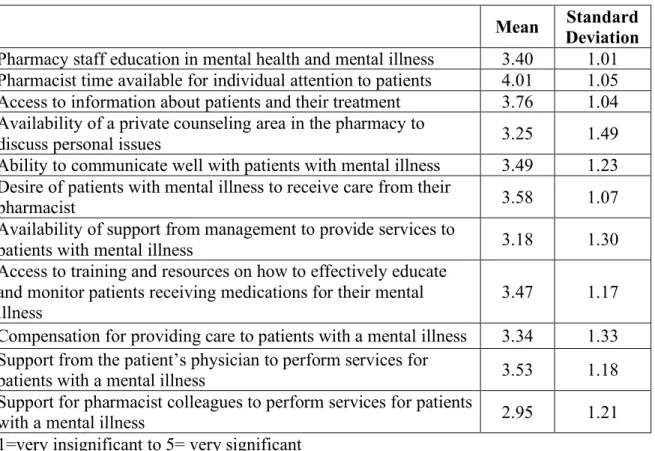
Respondents reported that time available for pharmacists to give individual attention to patients with mental illness as the most significant barrier (M = 4.01 where 1
= a very insignificant barrier and 5 = a very significant barrier). The least significant barrier appear to be support from pharmacy colleagues (M = 2.95) (Table 5).
Table 5: Perceived Barriers
Mean Standard Deviation Pharmacy staff education in mental health and mental illness 3.40 1.01 Pharmacist time available for individual attention to patients 4.01 1.05 Access to information about patients and their treatment 3.76 1.04 Availability of a private counseling area in the pharmacy to
discuss personal issues 3.25 1.49
Ability to communicate well with patients with mental illness 3.49 1.23 Desire of patients with mental illness to receive care from their
pharmacist 3.58 1.07
Availability of support from management to provide services to
patients with mental illness 3.18 1.30
Access to training and resources on how to effectively educate and monitor patients receiving medications for their mental
illness 3.47 1.17
Compensation for providing care to patients with a mental illness 3.34 1.33 Support from the patient’s physician to perform services for
patients with a mental illness 3.53 1.18
Support for pharmacist colleagues to perform services for patients
with a mental illness 2.95 1.21
*1=very insignificant to 5= very significant
Female participants (M = 3.56; SD = 0.99) perceived pharmacy staff education in mental health and mental illness as a more significant barrier to providing care to patients with mental illness than male participants (M = 3.28; SD = 1.01) (t = -2.01; p = 0.046) There was no statistically significant differences found between degree, type of practice,
Willingness to Provide Care for Mental Illness Patients
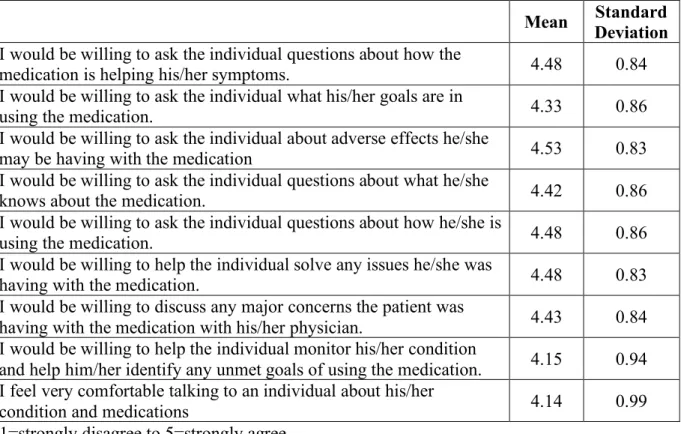
Data collected to assess willingness to provide care for patients with mental illness did not demonstrate much variability. The highest mean level of agreement (4.53) showed that most respondents strongly agreed that he/she would be willing to ask the individual about adverse effects that the patient may be having with their specific medication. The lowest mean level of agreement (4.14) indicated that respondents also felt comfortable talking to an individual about his/her condition and medications.
Table 6: Willingness to Provide Care for Mental Illness Patients
Mean Standard Deviation I would be willing to ask the individual questions about how the
medication is helping his/her symptoms. 4.48 0.84
I would be willing to ask the individual what his/her goals are in
using the medication. 4.33 0.86
I would be willing to ask the individual about adverse effects he/she
may be having with the medication 4.53 0.83
I would be willing to ask the individual questions about what he/she
knows about the medication. 4.42 0.86
I would be willing to ask the individual questions about how he/she is
using the medication. 4.48 0.86
I would be willing to help the individual solve any issues he/she was
having with the medication. 4.48 0.83
I would be willing to discuss any major concerns the patient was
having with the medication with his/her physician. 4.43 0.84 I would be willing to help the individual monitor his/her condition
and help him/her identify any unmet goals of using the medication. 4.15 0.94 I feel very comfortable talking to an individual about his/her
condition and medications 4.14 0.99
*1=strongly disagree to 5=strongly agree
There were no statistically significant differences found between degree types when it comes to willingness to provide care for patients with mental illness.
Respondents who worked in independent pharmacies (M = 4.29; SD = 0.87) reported being more comfortable talking to a patient about his/her condition and medications than respondents who worked in retail chain pharmacies (M = 4.00; SD 1.06) (t = 2.07; p = 0.04).
Male respondents (M = 4.30; SD = 0.88) reported to feel more comfortable talking to a patient about condition and medications than female respondents (M = 3.93;
SD = 1.09) (t = 2.65; p = 0.01).
Respondents practicing in a rural area (M = 4.63; SD = 0.66) reported to be more willing to ask patients questions about how their medication is helping their symptoms than respondents who practice in an urban area (M = 4.37; SD = 0.93) (t = -2.21; p = 0.03).
Respondents who practice in rural areas (M = 4.51; SD = 0.72) reported to be more willing to ask the individual diagnosed with mental illness their goals in using their medication than respondents who practice in an urban area (M = 4.19; SD = 0.92) (t = - 2.61; p = 0.01).
Respondents who practice in rural (M = 4.68; SD = 0.63) areas agreed more strongly with the statement, “I would be willing to ask the individual about adverse effects he/she may be having with the medication” than those respondents who practiced in urban areas (M = 4.42; SD = 0.93) (t = -2.21; p = 0.03).
Respondents who practice in rural areas (M = 4.59; SD = 0.68) agreed more strongly with the statement, “I would be willing to ask the individual questions about
what he/she knows about the medication” than those who practice in urban areas (M = 4.31; SD = 0.95) (t = -2.62; p = 0.03).
Respondents who practice in rural areas (M = 4.62; SD = 0.70) reported that they would be more willing to help the patient solve any issues they were having with the medication relative to pharmacists practicing in urban areas (M = 4.38; SD = 0.90) (t = - 2.064; p = 0.04).
DISCUSSION
As mental illness diagnoses become more prevalent in the United States, the demand for more community pharmacists in mental healthcare is also increasing. Recent studies have shown that a pharmacist can have a positive impact on a patient’s adherence to their medication for their particular mental illness. (Bultman DC, Syarstad BL. 2002) This increased adherence to medication can lead to positive health outcomes for
individual patients diagnosed with mental illness. There are few studies on a community pharmacist’s role in community healthcare, and the few that are available are regional samples. The importance of this study indicates that a national survey sample will lead to an overall better understanding of pharmacists’ attitudes toward patients diagnosed with mental illness. From this more representative sample, we may be able to better predict trends for community pharmacist’s role in mental healthcare.
Interpretation of Results
Respondents approximated that around 31% of their patients in the community setting are being treated for some type of mental illness. This finding appears somewhat consistent with reports that 20% of Americans suffer from a mental illness (National Institute of Mental Health, 2017). It is not surprising that higher rates may be seen in the healthcare setting (in this case, a pharmacy) where patients are actually pursuing
treatments for their illnesses.
Nearly 60% of pharmacists reported that their pharmacy education adequately trained them to work with patients with mental illness. While this indicates that a little of over 40% of pharmacists felt that their education in mental illness was inadequate, it is important to consider that responses to this question could be a function of how long ago a respondent graduated. Regardless, these finding may call for more emphasis on mental illness training for pharmacy students. Indeed, the University of Mississippi School of Pharmacy, moving forward, will dedicate a course to central nervous system disorders and mental illness.
Of those pharmacists responding, males reported having more knowledge than females when it comes to mental illness knowledge. Whether this result is an actual representation of knowledge or a function of over-reporting, can be addressed in future research by administering an objective measure of mental illness knowledge, such as a quiz.
With regard to mental illness familiarity, most respondents reported lower severity ratings in terms of their familiarity with mental illness (i.e., watched a movie in which a character had a mental illness, etc.). As expected, very few (n=5) reported never observing a person with a severe mental illness, and few reported living with a person with a mental illness (n=8) or having a severe mental illness themselves (n=5). These findings may be attributed to the difference in the terms “mental illness” and “severe mental illness” (see Table 2).
Overall, pharmacists demonstrated a positive attitude toward individuals with mental illness. This finding may be indicative of less stigmatization of mental illness (particularly as it relates to depression and anxiety) from a societal perspective. As with
any self-report survey, however, there is always risk of self-report bias. Future research in the area of mental illness attitude measure may mitigate this bias by having respondents answer on behalf of themselves and their colleagues as a means of comparison.
Pharmacists with a PharmD more strongly attributed physical symptoms to mental illness than did BSPharm-trained pharmacists. While neither set of pharmacists felt strongly about this statement, it could be the greater emphasis in clinical training associated with the PharmD degree that resulted in this finding. Female respondents more strongly agreed the statement “people with a severe mental illness are dangerous more often than not” than their male counterparts. Such a finding may be indicative of a greater perception of vulnerability among the female pharmacists as compared to the male pharmacists.
There were several statistically significant differences identified between
pharmacists who practice in rural communities compared to pharmacists who practice in more urban communities. Pharmacists in urban areas reported to be less willing to admit they had a mental illness to friends and colleagues, and were more likely to use slang terms to describe people with mental illness to their colleagues. Such findings may be indicative of a cultural difference between rural and urban settings, particularly as it relates to social norms and stigmas.
In terms of social distance, most pharmacists expressed that they would be willing to work alongside a person with mental illness, or have that person as a neighbor, but they would be unlikely to have that same person as a babysitter for their child or marry their child. Such findings are similar to those found in other studies using this measure, and being a pharmacist doesn’t appear to change these perceptions.
There were many perceived barriers that respondents assessed as an obstacle to providing quality mental healthcare. Most of the pharmacists perceived time available for pharmacist to give attention to patients as one of the most significant barriers. This finding is consistent with other studies that cite time as one of the most significant barriers to providing patient services. Our findings also suggest that access to information about patients and their particular treatment as a significant barrier.
Pharmacy literature notes this to be a challenge for most patients, however.
Female respondents reported staff education in mental health or mental illness as a more significant barrier than males did. Perhaps this finding is due to perceptual differences between men and women with regard to available training in mental illness.
Not surprisingly, pharmacists indicated the strongest levels of agreement with items that outlined willingness to assist a patient with problems or issues specific to a medication they were taking. Also not surprisingly, they indicated their lowest level of agreement with the ideas of asking patients about their condition and medications and also willingness to monitor the patient’s condition for the purpose of meeting unmet medication goals. It is not surprising that pharmacists are comfortable dealing with medications for a patient with mental illness. Perhaps pharmacists are less comfortable with an overall mental illness “condition” because they are less trained in the disease state of mental illness than they are in the medications that will treat the illness. It is also possible that some stigma was communicated in the word “condition”. Future research will be needed to clarify why pharmacists were less willing to fulfill healthcare goals that included the word “condition”.
Another finding suggested that respondents who worked in independent
pharmacies reported feeling more comfortable talking to individuals about their condition and medication than respondents who worked in retail chain pharmacies. This difference can be attributed to the close nature of the relationship between independent pharmacists and their patients. The pharmacist at independent pharmacies typically know their patients better which could lead to an increased in willingness to provide care.
Male respondents reported to be more at east talking to individuals about their condition and medication than female. Perhaps this finding is related to the earlier finding that female respondents were more likely to perceive mental illness patients as dangerous than did male respondents.
There were several statistically significant differences found between rural pharmacists and urban pharmacists in regard to their willingness to provide care for mental illness patients. Respondents practicing in rural communities were generally more willing to consult with mental illness patients on the medicines they were using to treat their conditions. This can possibly attributed to the small-town effect of living in a rural community where the pharmacists might know more of his or her patients,
therefore, feeling more willing to provide care by asking these questions. It could also be attributed to the fact that urban pharmacies might have a higher prescription volume and therefore be busier and not have as much time to address these specific concerns by asking these questions.
Limitations
Given the topic of this research, social desirability emerges as one of the most significant limitations to the findings of this study. It is very possible that although
respondents were anonymous to the study investigators, that there still was risk in responding more positively. Some studies have addressed this limitation by having respondents respond on behalf of themselves and their colleagues, therefore offering some type of comparison by which to assess social desirability bias. However, a balance between risk of social desirability bias and respondent burden must be considered especially for more complex survey items.
Future Research
Future research should expand on the work done on this study by evaluating how pharmacists’ mental illness knowledge, acceptable social distance, familiarity, and perceived barriers may predict pharmacists’ attitude toward patients with mental illness and also their willingness to provide care to patients with mental illness. Additionally, measuring these variables in a pharmacy student population may provide earlier insight into attitudes on mental illness from future pharmacists, when educational interventions can still be made.
Study Implications
While pharmacists had a somewhat positive perception of patients with mental illness, findings still corroborate existing literature that some stigma exists with mental illness when compared to other conditions like diabetes or asthma. This, combined with a large number of respondents who indicate inadequate preparation for pharmacy practice in mental illness, suggest educational interventions in the form of modular learning approaches, active learning, service learning, skills labs, problem-based learning, and experiential education may be important to improve future pharmacists comfort level and expertise in mental illness
REFERENCES
Avalere Health LLC (2014). Exploring Pharmacist’s Role in a Changing Healthcare Environment. Avalare Health 2014; (4-5).
Bell JS, Johns R, Chen TF. Pharmacy students’ and graduates’ attitudes towards people with schizophrenia and severe depression. Am J Pharm Educ. 2006;70(4):Article 77.
Bultman DC, Syarstad BL. Effects of pharmacist monitoring on patient satisfaction with antidepressant medication therapy. J AM Pharm Association 2002 Jan-Feb;42(1):36-43 Caley CF, Stimmel GL. Characterizing The Relationship of Individuals with Mental Health Conditions and Community Pharmacists. CPNP Foundation and NAMI, Dec 2012.
Cates ME, Burton AR, Woolley TW. Attitudes of Pharmacists Toward Mental Illness and Providing Pharmaceutical Care to the Mentally Ill. Ann Pharmacother 2005;39:1450- 5.
Holmes EP, Corrigan PW, Williams P, Conor J, Kubiak MA. Changing attitudes about schizophrenia. Schizophr Bull, Vol. 25, No. 3, 1999
Insel, TR (2008). Assessing the Economic Costs of Serious Mental Illness. The Am Journal of Psychiatry. 165-166, 663-665
Kassam A, Glozier N, Leese M, Henderson C, Thornicroft G. Development and responsiveness of a scale to measure clinicians' attitudes to people with mental illness (medical student version). Acta Psychiatrica Scandinavica. 2010;122(2):153-161.
National Institute of Mental Health. Any Mental Illness (AMI) Among Adults. Retrieved April 6, 2017, from https://www.nimh.nih.gov/health/statistics/mental-illness.shtml.
Phokeo V, Sproule B, Raman-Wilms L, Community Pharmacists’ Attitudes Toward and Professional Interactions with Users of Psychiatric Medication. Psychiatr Serv. 2004 Dec;55(12):1434-6.
Rickles NM, Dube GL, McCarter A, Olshan JS. Relationship between attitudes toward mental illness and provision of pharmacy services. J Am Pharm Assoc. 2010;50:704–
713.
Scheerder G, De Coster I, Van Audenhove C. Pharmacists’ role in depression care: A survey of attitudes, current practices, and barriers. Psych Serv. 2008;59(10):1155-1161.
Swami V, Persaud R, Furnham A. The recognition of mental health disorders and its association with psychiatric scepticism, knowledge of psychiatry, and the Big Five personality factors: an investigation using the overclaiming technique. Soc Psychiatry Psychiatr Epidemiol. 2011;46:181–189.
U.S. Department of Health and Human Services. Data Warehouse: Shortage Areas.
Retrieved February 2, 2018, from
https://datawarehouse.hrsa.gov/topics/shortageAreas.aspx.
Ziller EC, Anderson NJ, Coburn AF, Access to Rural Mental Health Services: Service Use and Out-of-Pocket Costs Journal of Rural Health. 2010; 7-8.