Thomas Reilly is Professor of Sports Science and Director of the Research Institute for Sport and Exercise Science at Liverpool John Moores University and Chair of the World Commission on Science and Sport. This book presents the proceedings of the Sixth International Conference on Sport, Leisure and Ergonomics, held in November 2007 at Burton Manor, Cheshire.
Introduction
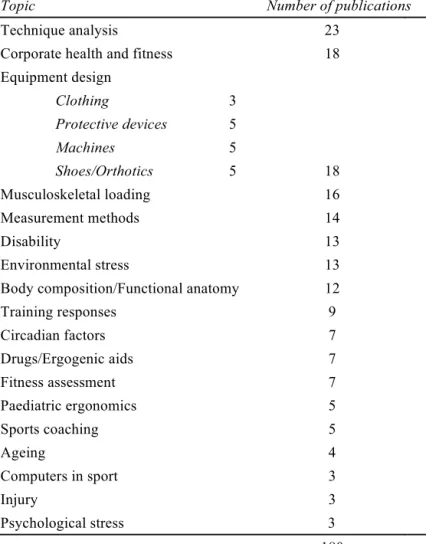
An alternative configuration of the material could have highlighted other areas, for example particular populations. Breakdown of content from the course of the six series of international conferences on sport, leisure and ergonomics.
Musculoskeletal loading
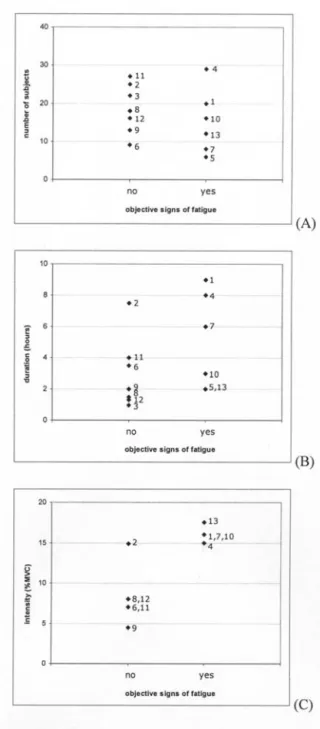
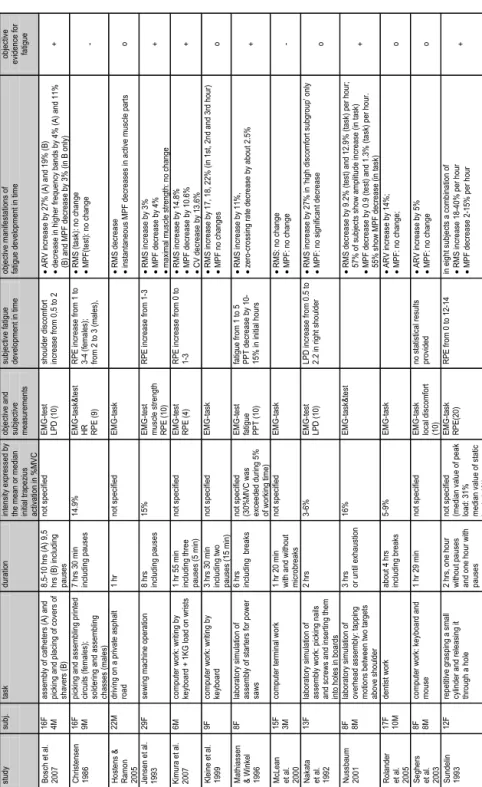
Manifestations of shoulder fatigue in prolonged activities involving low-force
- INTRODUCTION
- METHODS
- RESULTS
- DISCUSSION
- Objective signs of fatigue
- Subjective experiences of fatigue
- Changes in muscle activation
- Other measures
- CONCLUSION
Gerdle, B., et al., 1991, Dependence of the average power frequency of the electromyogram on muscle strength and fiber type. Kimura, M., et al., 2007, Electromyogram and perceived fatigue changes in the trapezius muscle during typing and recovery.
Low-back problems in recreational self- contained underwater breathing apparatus
Data collection
A random selection of 10 clubs was performed from a total of 138 Flemish diving clubs, all members of the Dutch League for Underwater Research and Sports (NELOS v.z.w. ® ). Further information and arrangements were then made with the heads of the diving clubs.
Data analysis
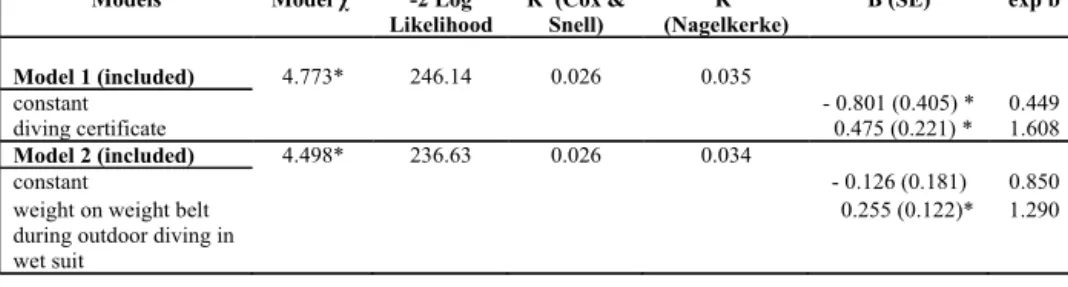
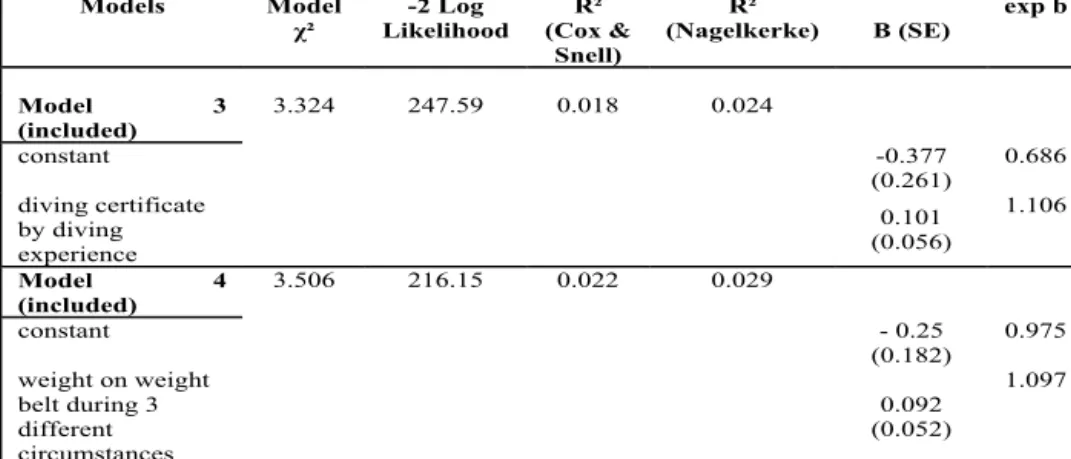
All participants received a standardized explanation of the objectives of the research project and consent was obtained upon completion of the written self-assessment questionnaire. Subsequently, based on the outcome of the comparison between the two groups, a binary logistic regression analysis (i.e., a backward stepwise logistic regression method) was performed to examine the strongest sport-specific predictors of low back pain in divers.
Reliability of the self-assessment questionnaire
The correlation coefficients Contingency and Spearman's Rho were used to reveal significant correlations between sport-specific characteristics of diving and general characteristics of low back pain.
Study population
Scuba diving
Low-back problems
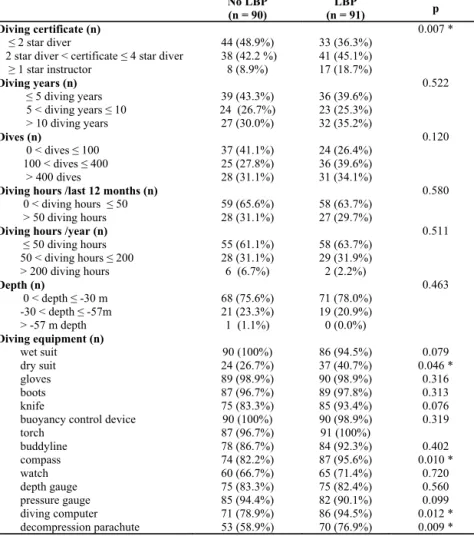
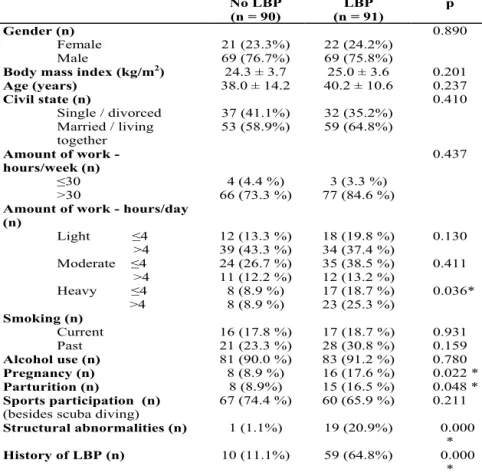
A comparison between the group of scuba divers without LBP (n = 90) and the group of scuba divers with LBP (n = 91) for general subject characteristics is shown in Table 5. Scuba divers with LBP were exposed to more hours of heavy work per day than scuba divers without LBP (P = 0.036).
Prevalence of LBP
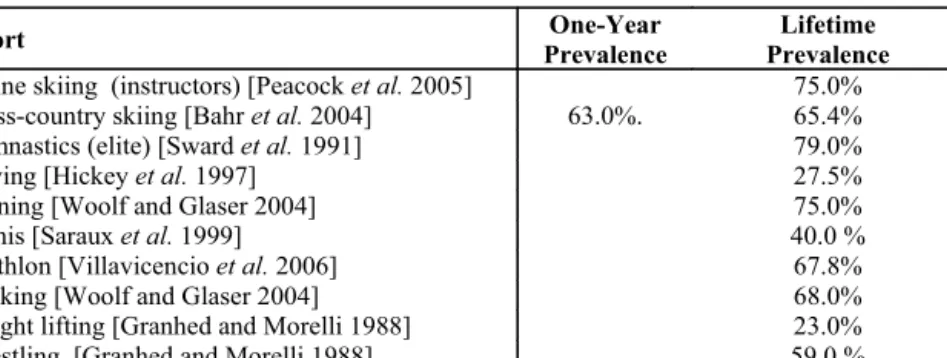
However, when comparing these data, one again needs to be careful because they are highly dependent on the definition and classification of the LBP used, the methodology of the study design, the gender, type and level of the sport, the training intensity, the training frequency or technique. However, because 'low back injuries/complaints/problems' are (intentionally) not well defined in the questionnaire and low back pain is, it is possible that subjects did not initially consider their low back to be an injury.
Characteristics of LBP
Most LBP in divers was non-specific and characterized by primary disability such as pain, stiffness, disability and lower back strain. This does not support the hypothesis that during the dive itself, unique static and dynamic biomechanical characteristics of the diver place the lower back at a higher level of stress and thus create a higher risk of low back pain.
General characteristics in relation to LBP
This observation is consistent with findings from the general population where LBP is predominantly mechanical or nonspecific (Kerr et al., 2001; Ehrlich, 2003a, 2003b). This is consistent with findings from the general population, where repetitive handling of heavy loads is also associated with LBP (Pope et al., 1995; Matsui et al., 1997; Hoogendoorn et al.
Sport-specific characteristics in relation to LBP
The conflicting findings from the literature and the results from the current study support the recent theory that risk factors are multidimensional and that there are complex interactions between low back pain risk factors as they may play a role as determinants, confounders or effect modifiers (Zinzen, 2002). ; Robin, 2007). Some significant overall risk factors for low back pain (i.e., history of low back pain, structural abnormalities, heavy workload, pregnancy and delivery, general fatigue, and bending forwards or backwards) identified in this study are corroborated by collective findings on risk factors for low back pain. low back pain in the literature: history of LBP (Papageorgiou et al., 1996; Thorbjornsson et al., 1998;.
Study limitations
Santos-Eggiman, B., et al., 2000, One-year prevalence of low back pain in two regions of Switzerland. Saraux, A., et al., 1999, Are tennis players at increased risk for low back pain and sciatica.
A single bout of cold water immersion therapy has no beneficial effect on recovery
- Participants and Design
- Exercise-Induced Muscle Damage
- Assessment of Exercise-Induced Muscle Damage
- Creatine Kinase Activity
- Functional Muscle capacity
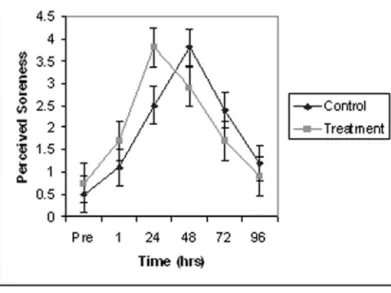
- Perceived Soreness
- Cold Water Immersion Treatment
- Analysis
- Perceived Soreness
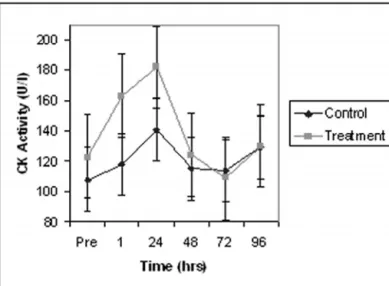
- Creatine Kinase Activity
- Concentric Muscle Strength
Bailey, D.M., et al., 2007, Influence of cold water immersion on indices of muscle damage after prolonged intermittent commuting. Vaile, J., et al., 2008b, Effect of cold water immersion on repeated cycling performance and thermoregulation in the heat.
Towards a better understanding of ulnar wrist paraesthesia and entrapments in
Dissection
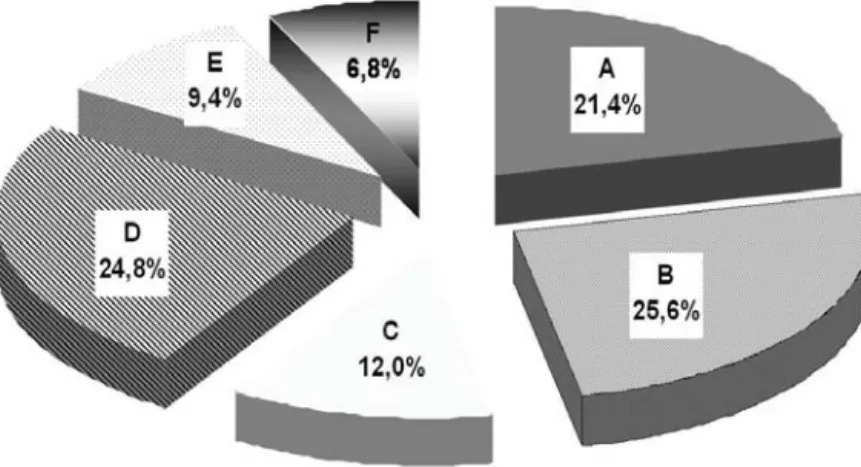
The roof of the canal was reinforced in 17 cases by muscular variants at the level of entrance. An additional head of one of the intrinsic hypothenar muscles (or a radial extension) was seen in nearly 20% of cases.
Bibliographic search
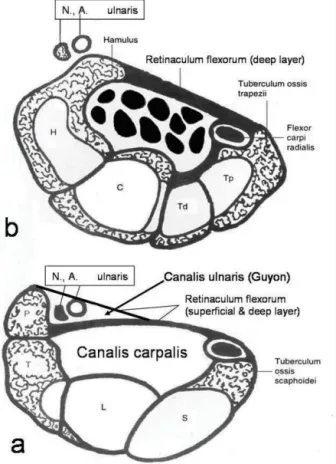
In their study they showed that Guyon's canal is not connected to the hook of the hamate bone (but Guyon did not present this statement). Both canalis carpi (carpal tunnel) and canalis ulnaris (Guyon) are oriented to extend the forearm (and A., V., N. ulnaris).
DISCUSSION AND CONCLUSION
The complexity of the anatomy of the ulnar nerve challenges clinical reasoning (Wu et al., 1985). Guyon, F., 2006, Note on the anatomical condition affecting the lower part of the wrist not previously reported. Pleet, A.B., and Massey, E.W., 1978, Palmaris brevis sign in neuropathy of the deep palmar branch of the ulnar nerve.
Electromyographic comparisons of the rectus femoris, vastus lateralis and vastus
- Participants
- Procedure
- Lifting Procedures
- Measurement of Muscle Activity
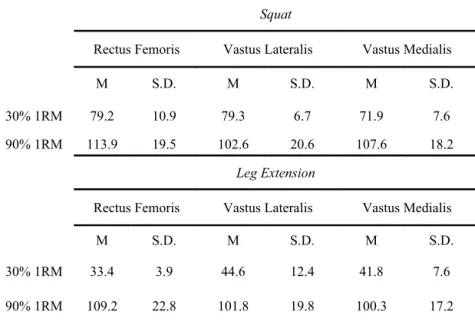
Therefore, the aim of this study was to investigate muscle activity of the rectus femoris, vastus lateralis and vastus medialis during the squat and leg extension at high and low exercise intensities. However, there were no significant differences in rectus femoris, vastus lateralis and vastus medialis muscle activity during the squat and leg extension at 90% 1RM. However, both the squat and the leg extension elicit similar muscle activation profiles at high intensity.
The influence of scapula position on the function of shoulder girdle muscles
Study design and protocol
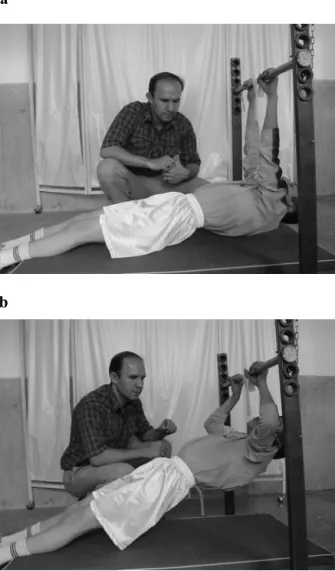
Kibler's Lateral Scapula Slide Test (LSST) (Corrie et al., 2001) was used to measure the distance between the vertebrae and the inferior angle of the scapula. This test assesses the position of the scapula in relation to a fixed point on the spine. Measurements from the point of change in the spine to the medial angle of the scapula were taken on both sides.
Statistical analysis
The present study showed a significant correlation between scapular position and modified pull-up performance. This investigation focused primarily on the performance of shoulder girdle muscles which can be affected by scapular position. These muscles also fix the scapula in adduction when the shoulder joint muscles adduct or extend the arm.
The impact of ankle taping upon range of movement and lower-limb balance before
- Subjects
- Design
- Protocols
- Lower-limb balance tests
- Clinical implications, limitations and further research
- CONCLUSIONS
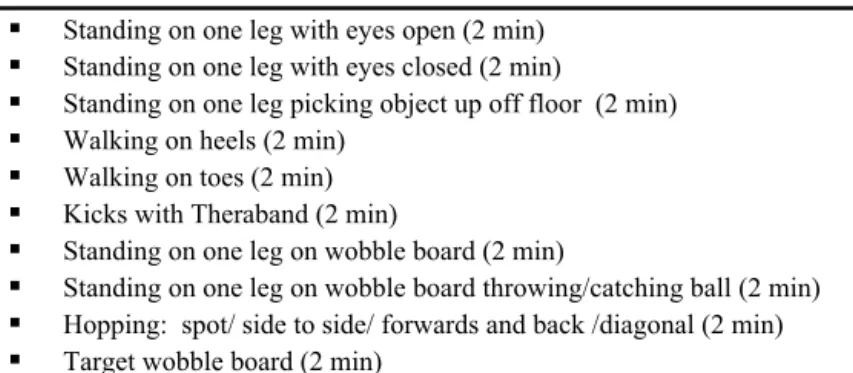
Overall, anterior-posterior and medial-lateral stability scores were not different on repeat testing in the CON or TAPE study at the simplest levels (Level 8). Analysis of the overall stability index revealed a non-significant main effect for group (P=0.433), a significant main effect of time (P=0.018), and a non-significant interaction effect (P=0.293). Wilkerson, G.B., 1991, Comparative biomechanical effects of the standard ankle taping method and a taping method designed to improve subtalar stability.
Occupational ergonomics
A practical cooling strategy for reducing the physiological strain associated with
- Experimental design
- Statistical analysis
- Core temperature
- Mean skin temperature
- Heart rate
- Subjective measurements
- Sweat Loss
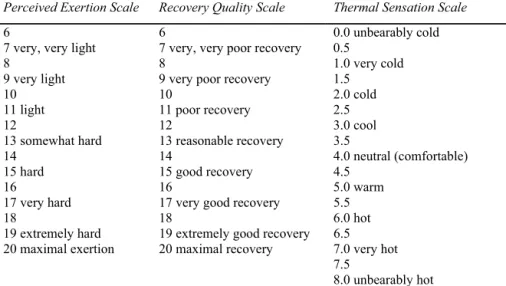
Core temperature responses of firefighters during the work and recovery periods under cool (o) and control (Ŷ) conditions (n = 9, mean ± s). Mean skin temperature responses of firefighters during work and recovery period under cool (o) and control (Ŷ) conditions (n = 9, mean ± s). Heart rate responses of firefighters during the work and recovery period under cool (o) and control (Ŷ) conditions (n = 9, mean ± s).
Effects of simulated firefighting on the responses of salivary cortisol, alpha-
- Approach to the Problem
- Participants
- Measurement of Maximal Aerobic Power
- Psychological measures
- Saliva samples
- Simulated firefighting rescue intervention
- Statistical Analysis
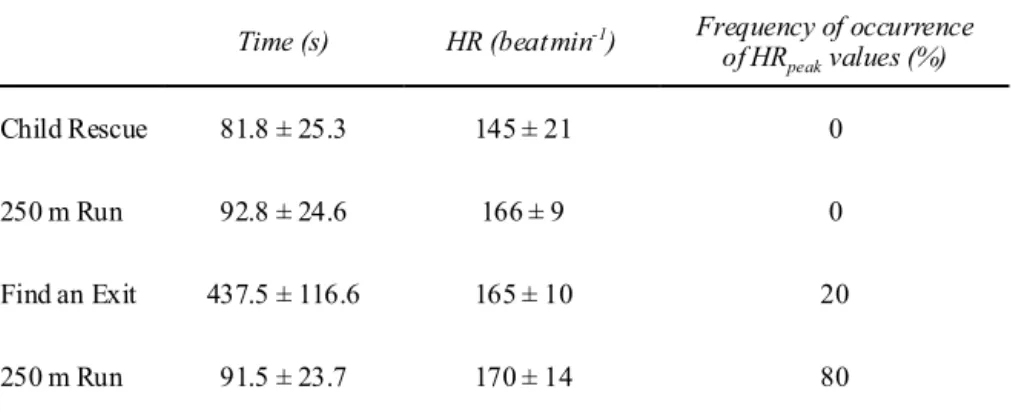
Firefighting is a profession with great variability and unpredictability of work demands (Bos et al., 2004, Kales et al., 2007). The joint or dissociated activation of the hypothalamic-pituitary-adrenal and sympathetic nervous system is still unresolved (Kiviglan and Granger, 2006; Granger et al., 2007). In fact, the sample collection strategy of the current study was specifically designed for sC and it could be possible that early sA-A peaks were missed (Gordis et al., 2006).
Relationships between leisure-time energy expenditure and individual coping
METHOD
- Research Design
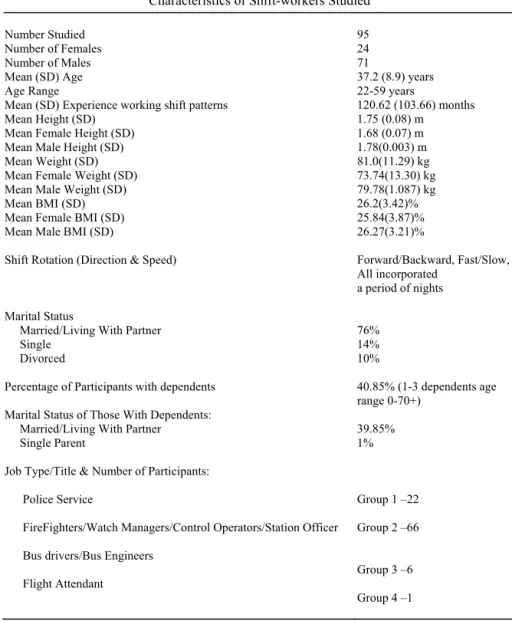
Such coping could be related to the relatively new personality construct associated with shift work tolerance: "hardness." This allows one to develop a method that suits the changing difficulties of shift work and those of shift workers. It is clearly possible that male shift workers in this study used physical activity in their spare time as a means of distancing themselves from household issues over which they could not influence due to shift work.
Sports
Effects of blinded differences in ambient conditions on performance and
- Pilot study
- Main Experiment
- Incremental cycle ergometer test
- Time trial performance
- Thermoregulatory responses
- Subjective responses
- Heart rate and body mass
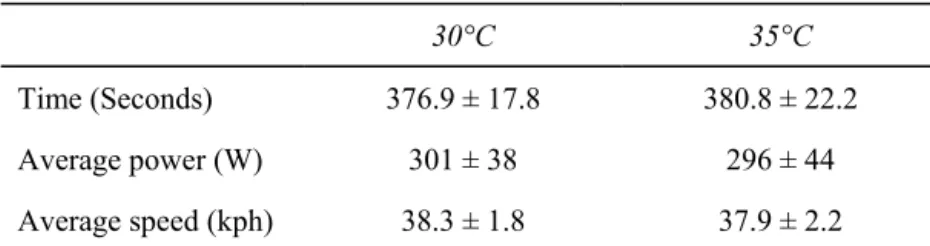
In our lab, the 4 km time trial has been found to exhibit a standard measurement error of 6.1 s and 8 W (coefficients of variation: 1.6% and 3.2%) for performance time and average power, respectively (Altareki et al. , 2006). The delineated smallest value difference in power is similar to the differences of 6.4% and 6.25% observed between temperature conditions studied by Tatterson et al. Lee, S., Williams, W., and Schneider, S. , 2000, Core temperature measurement during supine exercise: esophageal, rectal and intestinal temperatures.
Lower limb function in the maximal instep kick in soccer
- Data reduction
- The kicking leg
- The pelvis
- The support leg
- Performance issues
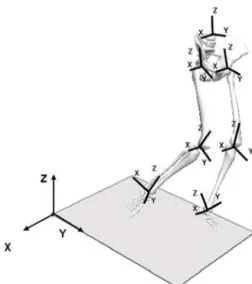
The rotations of the tibia and femur about their longitudinal axes (Figure 4) indicate that during the pre-contact phase the foot inverts (3°) and then tilts (10°) relative to the shank, the shank internally rotates (8°) in two stages relative to the thigh, and the thigh rotates externally (10°) and then rotates internally (2°) relative to the pelvis. The term refers to the flexion of the knee as the thigh is brought forward during the pre-contact phase (Nunome et al., 2002). This elevation of the kick bone in turn allows the foot to clear the ground and.
Polymorphisms of the angiotensin- converting enzyme (ACE/ID) and
Study design, subjects and active control group
To maintain group homogeneity, subjects were selected from a larger cohort of players by the Director of Rugby on the basis of current playing performance and potential to play at senior level. Many of the players had previously competed at their respective age group at international level (U16, U18, U19, U20 and U21). The study was approved by the university ethics committee and written informed consent obtained from individuals.
ACE genotyping
Statistics
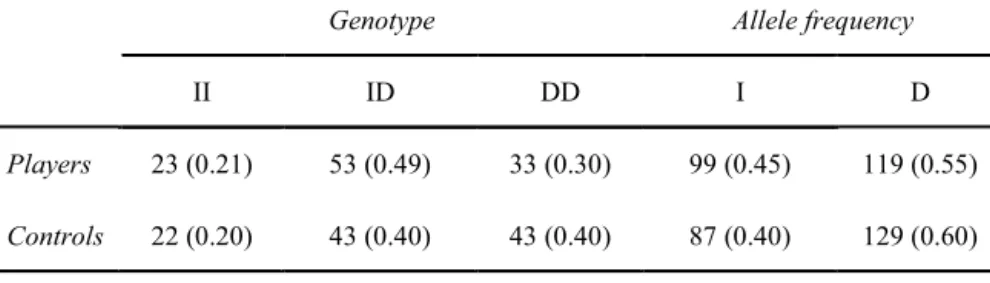
Results showed no significant differences in genotype or allele frequency between rugby players and active controls. There was a tendency for the proportion of the D allele to be slightly greater than the ID.
The aim of this study was to determine the distribution of the ACE genotype (I/D) in developing young adult rugby players. Our immediate concern was to determine the distribution of genotype and allele frequency in young adult players and to consider the relevance of ACE (I/D). Tiret, L., Rigat, B., Visvikis, S., Breda, C., Corvol, P., Cambien, F., and Soubrier, F., 1992, Evidence from combined segregation and linkage analysis that gene variant for angiotensin I-converting enzyme (ACE) controls plasma ACE levels.
The stress and attraction of cross-country running
Questionnaire
Participants were asked to either write an answer; choose the most appropriate answer; ranks group responses in order of importance, with 1 being the most important and 5 the least; or rate their agreement with the given statements on a Likert-type scale ranging from 0 (strongly disagree) to 10 (strongly agree). Topics included demographic information; participation and reasons for different forms of running; physical abilities and injuries; psychological well-being; and.
Statistical Analyses
Despite agreement with the greater cardiovascular benefits of cross-country running compared to road running, respondents in the current study also reported enjoyment of the health benefits associated with running in general, rating it highly compared to other forms of exercise. In the present study, the beauty of the countryside and improved air quality showed highly as motives for cross-country running. The use of cross-country running in the present sample increased, in both proportional and absolute terms, the higher the level of running performance.
The effect of breast support on kinetics during overground
METHODS 1 Participants
- Experimental Design