TO DONATE IS GLORIOUS: THE CCP, CHINESE CIVIL SOCIETY, AND THE WENCHUAN EARTHQUAKE
© 2017
James Joseph DeMarshall II
A thesis presented in partial fulfillment of the requirements for completion Of the Bachelor of Arts degree in International Studies
Croft Institute for International Studies Sally McDonnell Barksdale Honors College
The University of Mississippi
University of Mississippi May 2017
Approved by
Advisor: Dr. Gang Guo
Reader: Dr. Joshua Howard
Reader: Dr. Oliver Dinius
© 2017
James Joseph DeMarshall II ALL RIGHTS RESERVED
iii
ACKNOWLEDGEMENTS
I would just like to take a moment and thank Dr. Guo for his constant help and guidance over the course of the past year. Without his help, I wouldn’t have been able to complete this paper. I’d also like to thank my wonderful parents Joseph and Denise DeMarshall for all their love and support throughout this long and tedious process. Mom and Dad, thank you for everything, especially your willingness to help grow my love of reading. Your investment in my education and development as a person means the absolute world to me.
ABSTRACT
Through the examination of charitable contributions in the wake of the 2008 Wenchuan earthquake, this paper strives to comment on donation tendencies among individuals in Mainland China. The data analysis portion of this paper employs the use of both binary logistic and linear regression models to determine the effects of carefully discerned influential variables on an individual’s donation decision and extent of
donation respectively. Said variables were chosen by a combination of their frequency in preexisting research and speculative causal theory. In addition to the importance of obvious demographic and economic indicators, findings suggest that political status has a pronounced effect on the extent of an individual’s donation amount. Consequently, this finding also readily supports prior literature detailing the role of government in the most recent and rapid development of Chinese civil society.
v
TABLE OF CONTENTS
LIST OF TABLES AND FIGURES………...vi
SECTION 1 INTRODUCTION………...1
CHAPTER 1: REVIEW OF LITERATURE………...6
SECTION 2 CHAPTER 2: CIVIL SOCIETY AND POLITICAL STATUS………16
CHAPTER 3: ECONOMIC STATUS………...24
CHAPTER 4: AGE AND HEALTH CARE SPENDING……….29
CHAPTER 5: GENDER………33
SECTION 3 CHAPTER 6: DATA AND THE STATISTICAL MODEL……….37
CHAPTER 7: FINAL REMARKS………51
BIBLIOGRAPHY………..54
LIST OF TABLES AND FIGURES
FIGURE 1 Global participation in donating money, by gender………...34
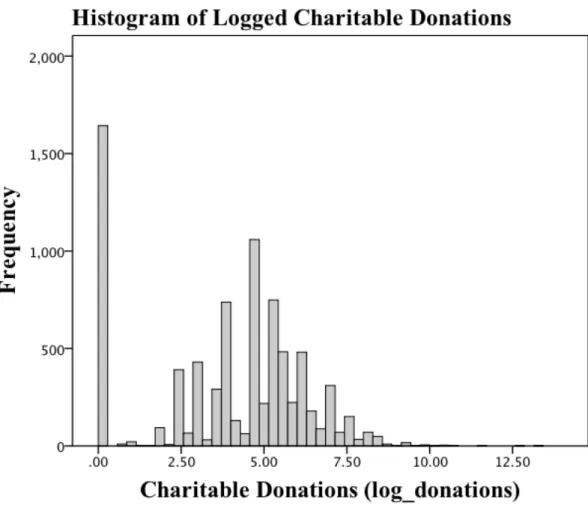
FIGURE 2 Histogram of the dependent variable, (log_donations)………..39
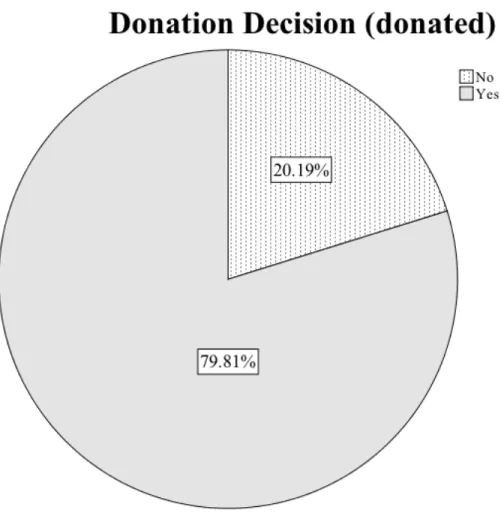
FIGURE 3 Distrubtion of the dependent variable, (donated)………..40
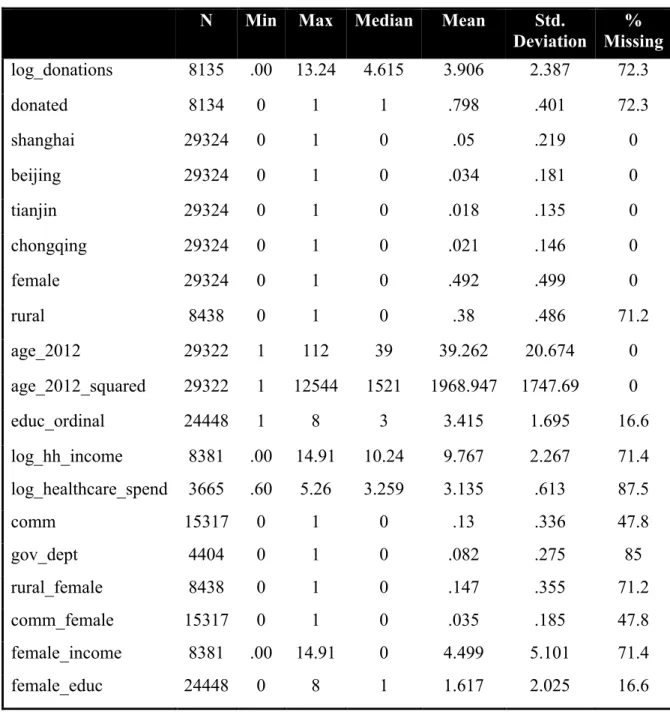
TABLE 1 Descriptive Statistics………..43
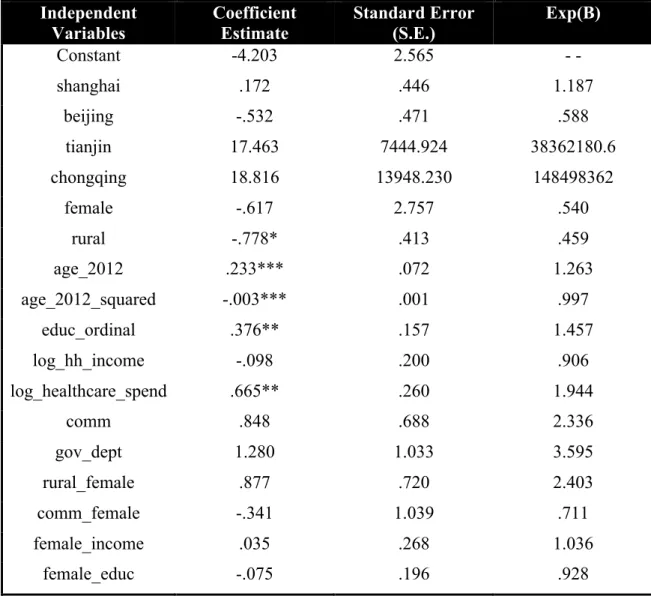
TABLE 2 Binary Logistic Regression Results………...45
TABLE 3 Linear Regression Results………..48
1 Introduction
On May 12th, 2008, China suffered one of its most severe natural disasters since the infamous 1976 Tangshan Earthquake. A near 8.0 magnitude quake struck the country’s Southwestern Sichuan Province, originating in the small county (by China standards) of Wenchuan. The Great Wenchuan earthquake (wenchuan dadizhen), or Sichuan earthquake, as it has come to be known, claimed the lives of tens of thousands of people. Since the earthquake struck during the early afternoon hours, many of the
casualties were children in attendance at school. Within the months immediately following the natural disaster, reports from investigative news outlets sought to explain this monumental loss of life among young students. In particular, the Chinese magazine Caijing uncovered evidence implicating local cadres for mismanagement of public funds that led to the shoddy construction of schools in the 1990s.1 For a number of school buildings, bamboo had been substituted in place of steel from the original designs – the schools (and the children within them) never stood a chance.2 The Chinese Communist Party (CCP) was unwilling to openly admit responsibility for the gross negligence committed, and even took efforts to silence the discussion of it in the media. Famous yet controversial artist Ai Weiwei was met with much resistance from the Ministry of Civil Affairs when he launched a citizens’ investigation to discover and document the names of all the children lost in the earthquake.3 Like much else in China, the CCP wanted to control the narrative.
1 Evan Osnos, Age of Ambition: Chasing Fortune, Truth, and Faith in the New China (New York: Farrar, Straus and Giroux, 2014), 129-130.
2 Ibid.
3 Ibid, 183-185.
This outbreak of civil consciousness in response to the Wenchuan earthquake went well beyond risky news stories and the actions of well-known figures. The national tragedy spurred a charitable renaissance of sorts, where individual donation levels soared for the first time in modern Chinese history. Supposedly having had its ‘heartstrings tugged,’ the CCP was at the very front of this movement both accepting donations and encouraging Party members to donate on their own. The result was staggering, so much so that 2009 (the year directly following the quake) has since come to be known as the country’s “year of philanthropy.”4 Because of this outpouring of philanthropic
contributions, the Sichuan earthquake is widely regarded as the single event that has forever altered the landscape of charitable giving in contemporary China.5 The donation behavior witnessed in the aftermath of the earthquake stands in stark contrast to trends from the previous Maoist and post-Mao eras. In comparison, China then and now bears almost no resemblance. When China reopened its doors to the world in 1978, the country as a whole was extraordinarily poor. Only a select few could have possibly envisioned the path their nation was about to embark upon, but even fewer would have willingly bet on its degree of success. Impoverished, internally divided and still reeling from the deaths of beloved revolutionary stalwarts Mao Zedong and Zhou Enlai (1976), the average Chinese person was in no position to worry about philanthropy and matters of civil society.
Fast forward to present day, wealth in China is seemingly ubiquitous. Forbes Magazine now annually publishes a “China Rich List” (Zhongguo fuhao bang), and the
4 Leslie Lenkowsky, “As Charities Grow in China, They Challenge Government’s Dominance,” Chronicle of Philanthropy 22, no. 8 (2010): 24.
5 Yuan Zheng, “Charitable Contribution in China’s Single-Child Generation: How and Why Do They Give” (master’s thesis, University of Pittsburgh, 2011), 31. <http://d-
scholarship.pitt.edu.umiss.idm.oclc.org/8695/1/YuanZhengMasterThesis.pdf>
3
latest one from 2016 identified an increase of 35 new billionaires (and or billionaire families) in the previous year alone with an estimated 400 total.6 The country’s growing number of billionaires coupled with its rising middle class means that the Chinese population is more than capable of achieving global relevance in regard to charitable behavior. The Wenchuan earthquake is direct proof of this possibility.
Though much has changed, one constant has been the Chinese Communist Party.
The CCP has been instrumental in the growth and development of civil society in Modern China, often opting for a “hands-on” approach in the monitoring of it. However, China’s version of civil society is distinctly complex in the sense that its actors don’t conform to the traditional roles prescribed by European philosophers. There is no clear separation between the ‘state’ and ‘civil society’ that is a hallmark of Hegelian thinkers, and civil society most definitely is not a “source of political change” that supporters of Marx and Engels allude to.7 Hegel’s idea that the state is simultaneously linked to different societal groups and individual members in one shared “individual national community” cannot be applied to China.8 In the Leninist tradition, the Party is the vanguard of the people, and the people don’t have a say in determining a shared conception of the common good. To a certain extent, Chinese people still define themselves individually in terms of the their role in the greater group or collective. They generally avoid using the term citizen (gongmin) and disregard the notion of inherent rights (renquan) that is often associated with citizenship. Consequently, the individual’s influence on civil society is negligible, which has allowed the CCP to fashion its role and purpose in society. Not unlike the
6 Russell Flannery, “Inside The 2016 Forbes List of China’s 400 Richest People: Wang Jianlin Repeats At No. 1,” Forbes Asia, November 2016.
7 Z.A. Pelczynski, The State and Civil Society: Studies in Hegel’s Political Philosophy (Cambridge; New York: Cambridge University Press, 1984), 1-2.
8 Ibid, 265-267.
country’s state-led market economy, China’s civil society must ultimately answer to the government.
The background story of the Wenchuan earthquake grants unique insight into the interplay of the state and civil actors in China. May 12th, 2008 irrevocably changed the dynamic of Chinese philanthropy and civil society, which makes it an ideal jumping-off point for research on individual donation behavior. A better understanding of said donation behavior witnessed in the wake of the Wenchuan earthquake could help predict future individual donation trends, as well as comment on the nature of civil society in China. Thus, understanding characteristics of those who did (and did not) contribute, as well as the extent to which those characteristics may have influenced contribution amounts becomes necessary knowledge. Through the completion of this paper, it
becomes clear that the CCP’s control over Chinese civil society is quasi~ paternalistic in the sense that the state is continuing its monopoly over charitable behavior, but doing so in a way that seemingly grants autonomy to the actors involved.
Outline
Section one is composed of the introduction, as well as a review of pertinent literature in chapter 1. Section two consists of chapters 2-5 and primarily focuses on theories behind the four most intriguing causal mechanisms—political status/civil society, economic status, age/healthcare spending, and gender respectively. Essentially, each chapter in this section is a different factor that could significantly impact an individual’s willingness to donate and/or extent of donation. The causal stories for the
5
remaining variables are explored in the literature review portion of this paper. A full list of hypotheses is included at the end of this section. Section 3 examines the data model (in its entirety) in chapter 6 and concludes with final remarks in chapter 7.
Chapter 1—Literature Review
The word “philanthropy” can assume any number of slightly different meanings.
In both of his influential works on the subject, Robert Payton prescribes to a simple yet widely encompassing definition of ‘philanthropy’ as “voluntary action for the public good.”9 Adapting Payton’s definition and contextualizing it in terms of charitable
contributions, Mike Martin defines ‘philanthropy’ more specifically as “voluntary private giving for public purpose.”10 With regard to examining a predominantly non-religious and morally ambiguous present-day Chinese society, I find Martin’s “value-neutral” yet all-encompassing definition of philanthropy to be particularly fitting.11 However, understanding philanthropy and its role in Chinese society goes well beyond a simple definition. More specifically, many individuals speculate that China’s historical development under the leadership of the Chinese Communist Party (CCP) post-1949 revolution has been one of the major obstacles to the nation’s attempts to cultivate a civil society today. In the 2015 edition of Asian Studies Review 39 no. 4, Elaine Jeffreys’s paper “Celebrity Philanthropy in Mainland China” briefly examines the significance of philanthropy and charity in the Mao and post-Mao era. Jeffreys notes that “philanthropy”
and “charity” (as we understand them today) were nonexistent in China up until the
9 Robert L. Payton, Philanthropy: Voluntary Action for the Public Good (New York: American Council on Education/Macmillan Pub. Co, 1988).
10 Mike W. Martin, Virtuous Giving: Philanthropy, Voluntary Service, and Caring (Bloomington, Ind:
Indiana University Press, 1994), IX.
11 Ibid.
7
government began market reforms in the late 1970s.12 Although philanthropy didn’t exist in terms of private donations, similar types of state-provided welfare existed “rather as services (fuwu) relating to care (guanhuai zhaogu), welfare (fuli), relief (jiuji) and allowances (buzhu).”13 Through the utilization of the “state enterprise” and labor
relations in particular, the Chinese government under Mao Zedong effectively made “the shift from asceticism to paternalism.”14 Andrew G. Walder further explicates that a key trope of this new “paternalistic approach to labor relations” was “the provision of collective services and benefits.”15 These collective services and benefits ran the gamut from health insurance/medical care to pensions and childcare to education; the state was the largest provider of basic consumer goods.16 In other words, the government’s
paternalistic attitude hindered the natural need-based development of a charitable consciousness, especially when considering the Marxist narrative that viewed organized charity “as the means by which elite groups attempted to prevent class struggle by placating the proletariat.”17 In an ironic yet most likely intentional twist of fate, the CCP became an elite group that relied on this paternalistic behavior to maintain political legitimacy of sorts.
12 Elaine Jeffreys, “Celebrity Philanthropy in Mainland China,” Asian Studies Review 39, no. 4 (2015): 573.
13 Ibid.
14 Andrew G. Walder, Communist Neo-Traditionalism: Work and Authority in Chinese Industry (Berkeley:
University of California Press, 1988), 227.
15 Ibid.
16 Ibid, 16.
17 Elaine Jeffreys, “Celebrity Philanthropy in Mainland China,” 573.
Political and Economic Status
After China adopted its “reform and open up” (gaige kaifang) policy in 1978, the nation’s lack of a civil society started to become increasingly more obvious as market conditions took hold. Even then, modern conceptions of philanthropy only really began to set in from the mid-1990s onward.18 Coincidentally, for around the same period of time, Dali Ma and William L. Parish discovered a unique linkage of private business and the government in China necessitated by a desire from entrepreneurs to improve social status that met with the government’s desperate need to adequately fund public works and welfare projects.19 As a result, Ma and Parish argue that “Chinese private entrepreneurs gave considerable charitable contributions because these contributions elicited social and political benefits in return” (as measured by appointments to local political councils), which resembles the previous private business and government linkages via ‘charity’ in the late 18th century France as classified by Tocqueville.20
A few years later in 2001, CCP leader Jiang Zemin formally lifted the ban in place since August 1989 that prevented these same private entrepreneurs from officially entering the ranks of the party.21 In this expansion of party membership, Jiang Zemin married the public societal elite (previous CCP members) with the private societal elite (entrepreneurs). Consequently, he solidified the eventual base group of those most likely to take an active role in the development of China’s civil society through philanthropic
18 Ibid, 574.
19 Dali Ma and William L. Parish. "Tocquevillian Moments: Charitable Contributions by Chinese Private Entrepreneurs." Social Forces 85, no. 2 (2006): 948, accessed November 13, 2016,
<https://muse.jhu.edu/>.
20 Ibid, 944.
21 Bruce J. Dickson, Red Capitalists in China: The Party, Private Entrepreneurs, and Prospects for Political Change (Cambridge: Cambridge University Press, 2003), 1.
9
tendencies. This later becomes increasingly more obvious, specifically with party and local government support of quasi-NGO led charitable initiatives. For example, in their book Paying for Progress in China: Public Finance, Human Welfare and Changing Patterns of Inequality, Vivienne Shue and Christine Wong make reference to one of China’s education focused quasi-NGO charities called “Project Hope” (Xiwang
Gongcheng).22 Shue and Wong found that it was not uncommon for localities to mandate cadre donations to a Project Hope local branch, and even discovered that “finding
external benefactors became an important part of their officially assessed contribution to local development.”23 Even dating back to as early as 2005, the central government through its Ministry of Civil Affairs has annually been recognizing individuals for exemplary philanthropic behavior (Zhonghua Cishan Jiang), “with private entrepreneurs and leaders of state-owned enterprises receiving awards for the recorded extent of their donations.”24
It then makes sense that party members and other elites should be among the most willing to contribute and most generous in their contributions in the realm of Chinese civil society today. Not only do they have legitimate motivations and benefits from their own charitable contributions, but as Bruce J. Dickson puts it in his book Red Capitalists in China: The Party, Private Entrepreneurs, and Prospects for Political Change, “the more you have, the more you can give.”25 Dickson’s regression model examined
“Determinants of Community Contributions by Entrepreneurs” and his multivariate analysis unsurprisingly found a strong positive correlation between ‘years in business,
22 Vivienne Shue and Christine Wong, Paying for Progress in China: Public Finance, Human Welfare and Changing Patterns of Inequality (London: Routledge, 2007), 87-88.
23 Ibid.
24 Elaine Jeffreys, “Celebrity Philanthropy in Mainland China,” 575.
25 Bruce J. Dickson, Red Capitalists in China, 119.
family income, and enterprise revenue’ with ‘level of donations.’26 However, on a more interesting note, Dickson’s model found that “level of development (of an area/place) is negatively correlated with charitable giving.”26 In other words, affluent areas were associated with less charitable giving from entrepreneurs. The wealthiest areas by far in China are Tier 1 Cities.
Tier 1 Cities
In recent years, cities across China have been stratified into five different ‘tiers’
based on their level of development with ‘Tier 1’cities being the most developed. It goes without saying, the wealthiest strata of Chinese society predominantly live in Tier 1 cities. Although one would expect higher levels of contributions from more developed areas like Tier 1 cities, Dickson speculates that the explanation behind his opposite finding may have something to do with local community need being higher in less developed areas.27 To some extent, this may reflect an interesting attitude towards donations where the motivation for Chinese to donate mostly stems from the belief that there is a true need in a certain place. That being said, disaster relief donations are usually made because the need of the disaster-stricken area is pretty apparent, but it would not be wrong to assume level of donations may be higher to places closer to the impact zone with greater need. Understanding the severity of the damage caused by the Wenchuan earthquake in 2008, the Chinese central government implemented its “Post-Wenchuan Earthquake Recovery and Reconstruction Counterpart Aid Program” (Wenchuandizhen
26 Ibid.
27 Ibid, 120.
11
Zaihou Huifuchongjian Duikouzhiyuan Fang’an) with the slogan “one province helps one severe disaster affected area, using the entire country’s strength, to accelerate recovery and reconstruction” (yishengbangyixian, juquanguozhili, jiakuaihuifuchongjian).28 As its name indicates, the program paired twenty or so different provinces (or Tier 1 cities) with various disaster-stricken counties in Sichuan province to increase charitable relief
donations with the hopes of speeding up the recovery and reconstruction process.
Because of this government initiative, one would logically assume that donations would be higher for individuals residing in Tier 1 cities.
Gender
With regard to gender and philanthropic behavior, the research is anything but conclusive. In their paper “Gender Differences in Charitable Giving,” (Mesch, Brown, Moore and Hayat) examined the universally accepted claim that “female-headed
households are more likely to give and give more to charity than male-headed households across all charitable subsectors and income levels,” which was put forth in a recent study done by Debra J. Mesch at Indiana University’s Women’s Philanthropy Institute.29 Through analyzing two national datasets and creating their own empathetic concern index, (Mesch, Brown, Moore and Hayat) found that women quite significantly outscored men in terms of ‘empathetic concern’ and ‘principle of care,’ and when controlling for these two motives (as well as other additional influencing factors) their results confirmed
28 Miaofeng Xie and Yanyan Liu, “Yifangyounan Bafangzhiyuan,” Nanfang Ribao A16ban: “Wenchuan Da Dizhen San Zhounian Chong Zheng Heshan,” last modified May 12, 2011,
<http://epaper.southcn.com/nfdaily/html/2011-05/12/content_6959134.html>.
29 Debra J. Mesch, Women Give 2010, Center on Philanthropy: Indianapolis, IN, 2010, accessed November 27, 2016. <http://www.philanthropy.iupui.edu/womengive/docs/womengive2010report.pdf>.
that women “are more likely to give and give more” in comparison to men.30 Interesting enough though, the November 2016 Charities Aid Foundation’s (CAF) report found identical donation behavior for both men and women just a calendar year after men surpassed women in terms of money donated globally.31 The CAF also found that women only tended to donate more in advanced developed economies, while men usually
donated slightly more in transitioning economies (developing countries).31 This poses an interesting quandary for China, which does not quite fit either description. Parts of China are significantly more developed than others, and it would depend almost entirely upon individuals surveyed in the data to make a somewhat accurate prediction. Women have certainly experienced a general rise in their socioeconomic status, but they still have a long way to ago. For more on gender, please refer to chapter 5.
Age
Another traditional determinant of philanthropic behavior is age, and the research is rather straightforward. Since the inception of the CAF’s World Giving Index in 2010, likelihood of donation has always increased in tandem with age, and that holds true in their latest report released in 2016.31 Specifically, 30-49 year olds in the mid age group have seen a constant increase in donation level while the age group of 15-29 year olds has seen their level of donation drop after five previous years of gradual growth.31 However, as Pamala Wiepking and Russell James III found in their 2012 research article Why Are
30 Debra J. Mesch, Melissa S. Brown, Zachary I. Moore, and Amir Daniel Hayat, “Gender Differences in Charitable Giving,” International Journal of Nonprofit & Voluntary Sector Marketing 16, no. 4 (2011):
351, accessed November 27, 2016. <Business Source Complete, EBSCOhost>.
31 Charities Aid Foundation. CAF World Giving Index 2016. Charities Aid Foundation (CAF): 20-21, 2016.
<http://admin.issuelab.org/permalink/resource/25787>.
13
the Oldest Old Less Generous? Explanations for the Unexpected Age-Related Drop in Charitable Giving, the oldest individuals in the elderly age group tend to donate less in large part due to a simultaneous worsening in health conditions met with more expensive and burdensome healthcare costs.32 Much of China’s newly minted wealth is in the hands of what would be considered the younger and mid age groups, but ruling out accumulated wealth among the elderly would be naïve. The nature of China’s social safety net and health care system may have some influence over the relationship between age and donation. For a more in-depth look at this relationship, please refer to chapter 4.
General Statement of Hypotheses
Political Status
All else being equal, CCP affiliation will have a positive relationship with both willingness to donate and extent of donation.
All else being equal, a position in a government department will have a positive relationship with both willingness to donate and extent of donation.
Economic Status
All else being equal, level of household income will have a positive relationship with extent of donation, but not necessarily willingness to donate.
Age and Health Care Spending
32 P. (Pamala) Wiepking and R.N. (Russell) James III, “Why Are the Oldest Old Less Generous?
Explanations for the Unexpected Age-Related Drop in Charitable Giving,” Ageing and Society Vol. 2012:
503-504. 2012. <http://repub.eur.nl/pub/38236>
All else being equal, age will have an initial positive relationship with both willingness to donate and extent of donation, then eventually reverse.
All else being equal, amount of health care spending will have a positive relationship with both willingness to donate and extent of donation.
Gender
All else being equal, being a female head of household will have a positive relationship with both willingness to donate and extent of donation.
Gender Interaction
All else being equal, being a female head of household and living in a rural area will have a negative relationship with both willingness to donate and extent of donation.
All else being equal, the interaction of being a female head of household and affiliated with the CCP will have a positive relationship with both willingness to donate and extent of donation.
All else being equal, the interaction of being a female head of household and having a higher level of household income will have a positive relationship with both willingness to donate and extent of donation.
All else being equal, the interaction of being a female head of household and having a higher level of education will have a positive relationship with both willingness to donate and extent of donation.
Education
All else being equal, level of education will have a positive relationship with both willingness to donate and extent of donation.
Tier 1 City
15
All else being equal, living in a Tier 1 city will have a positive relationship with both willingness to donate and extent of donation.
Chapter 2—Civil Society and Political Status
Throughout much of the developed Western world, the autonomous function of
‘civil society’ from the state is not only to be expected, but also encouraged. However, a deeper understanding of civil society beyond its typical separation from the state is necessary to understand philanthropic behavior in China. In analyzing the current Chinese civil society, B. Michael Frolic refers to four perspectives on civil society that have emerged since the fall of communism in the early 1990s: “civil society as a parallel polis,” “civil society as citizenship,” “civil society as political development,” and “civil society as governance.”33 The concept of “civil society as a parallel polis” is associated with the creation of opposition structures outside of the state by active dissidents and intellectuals standing against weakened totalitarian regimes that have wronged the people.34 “Civil society as citizenship” involves a virtuous and elitist community of citizens that operates in conjunction with the state on behalf of the common good, while
“civil society as political development” is the Western-based model that provides individuals the space to politically define themselves and the freedom to pursue private interests.35 “Civil society as governance” operates on the assumption that civil society is the principal “lubricator” that both facilitates and links all the different parts
33 B. Michael Frolic, “State-Led Civil Society,” in Civil Society in China, ed. Timothy Brook and B.
Michael Frolic (Armonk, N.Y.: M.E. Sharpe, 1997), 46-67.
34 Ibid, 49-50.
35 Ibid, 51-54.
17
operating simultaneously yet independently in the political sphere.36 In other words, civil society is much more complicated than the hackneyed oversimplified understanding of it as simply “against the state.”
Although arguments can be made relating certain characteristics of China’s emerging civil society to the four aforementioned models, none of them quite accurately depict the interplay between the Chinese government and the groups operating within the very narrow space afforded to them by the Chinese Communist Party (CCP). Similar in function to the nation’s state-led market (or capitalist) economy, the China model is better understood from the perspective of a “state-led civil society.” Essentially, China has cultivated its civil society through the creation and development of numerous organizations that “serve as the support mechanisms to the state.”37 Fearing the
democratizing forces that have traditionally accompanied the growth of civil societies in former authoritarian and totalitarian states, the CCP adeptly chose to facilitate an
interdependent “marriage of convenience rather than a catalyst for citizens resistance.”38 This “marriage of convenience” that Frolic speaks of bears striking resemblance to the “Tocquevillian moments” documented by both Ma and Parish where private business and the government linked up in the 1990s.39 Later party membership expansion to include capitalists (private entrepreneurs) in the early 2000s shows the CCP’s desire to rein in and control potentially influential forces (i.e. the societal elite). A move that was both politically convenient, and economically useful. This play to control influential forces becomes even more apparent when examining the CCP’s post-1978 recruitment
36 Ibid.
37 Ibid, 56-58.
38 Ibid.
39 Dali Ma and William L. Parish. "Tocquevillian Moments,” 948.
strategies, which aimed to form a consolidated technocratic elite through the targeting of highly educated urban professionals.40 The changing focus of the Communist Party was by no means a coincidence, but rather Chinese officials recognized the role that
intellectuals (zhishifenzi) and the economic elite play in traditional Western civil society and the development of democracy. As Randy Kluver argues, Chinese leaders have no problem with elites acting on behalf of “the people’s interest” and claiming
representation, but only if it benefits the state.41 Consequently, Kluver asserts that the difference between the nation’s emerging civil society and Western liberal tradition has to do with China’s tendency towards “elite-based civic discourse” due to the association of status and its ensuing responsibility of representation, as opposed to individuals simply voicing out on their own behalf.42 Quite simply, the Chinese elite has relative discretion in dictating the scope and direction of the country’s civil society. However, it is important to note that the societal elite generally support the Party, or happen to be Party members themselves.
The government undoubtedly has a vested interest in an effective civil society, especially given China’s inadequate and seriously overburdened social safety net. A well- functioning civil society can decrease the government’s welfare burden. Providing for the general welfare of the Chinese population (just below 1.4 billion people) presents the Communist Party with a problem that has only been exacerbated by the onset of capitalistic market conditions and the nation’s embrace of global markets. Although
40 Yanjie Bian, Xiaoling Shu, and John R. Logan, “Communist Party Membership and Regime Dynamics in China,” Social Forces 79 (3) (2001): 805.
41 Randy Kluver, “Elite-Based Discourse in Chinese Civil Society,” in Civic Discourse, Civil Society, and Chinese Communities, ed. Randy Kluver and John H. Powers (Stamford, Conn: Ablex Pub. Corp, 1999), 20.
42 Ibid.
19
many Chinese have seen a noticeable rise in their standard of living since the country re- opened its doors in 1978, globalization has produced a growing number of “losers” in China as foreshadowed by former Chairman Deng Xiaoping’s famous quote, “let some people get rich first” (rang yibufen ren xian fuqilai). For a CCP that has staked a large portion of its legitimacy on the promise of continual economic growth, an inability to perform basic social welfare duties is a potentially destabilizing force and a potent rallying point of discontent. Amidst further concerns of inequality, the Party internally finds itself in a rather precarious position. Understanding the risks associated with this possibility, Chinese government officials have taken an active role in the cultivation of the country’s civil society in the hopes of partially alleviating the ever-increasing social welfare burden on the state. Ironically, the argument can be made that the Party is acting on behalf of its concern for legitimacy while at the same time giving birth to a
conceivable mouthpiece for future criticism if left unchecked.
The CCP’s role in the support and development of Chinese civil society is difficult to comprehend without a requisite knowledge and understanding of the Party’s proclivity towards the use of its traditional weapon, the “model” (biaoshuai). The practice of emulating models not only has an established philosophical Chinese background, but also is inherent to the traditional Chinese understanding of Marxist doctrine that prioritizes the teaching of material through the application or practice of it.43 Particularly revealing is the fact that the Chinese language has two famous idioms
(chengyu) often utilized to espouse this principle: “teaching by word of mouth is inferior to teaching by example” (yanjiao buru shenjiao) and “teaching by example is better than
43 Donald J. Munro, The Concept of Man in Contemporary China (Ann Arbor: University of Michigan Press, 2000), 135.
teaching by word of mouth” (shenjiao shengyu yanjiao). As Donald J. Munro explicates,
“Chinese believe that people of all ages learn by imitation,” which elucidates the deeply ingrained meaning and purpose of models in Chinese society.44 Furthermore,
Confucianism teaches that man should strive to attain model status since respect and honor hails from being worthy of imitation.45 Functionally speaking, models are propagandized for the purpose of inculcating virtues, values, and or attitudes deemed desirable by leaders for the greater public to learn.46 The era of Chairman Mao saw the ideal Communist Lei Feng worthy of emulation through his model of “serving the people” (weirenminfuwu), while the reform era under Deng Xiaoping adopted Zhang Haidi as the preferred societal model of choice due to her “pursuit of knowledge, help to people, and unique individuality.”47
The Chinese Communist Party’s use of societal models is well documented, and usually reflects the grander goals of the Party at a given period of time. Although the CCP’s propagandizing of models is not nearly as overt as it was during the Maoist and Deng’s reform eras, it would be naïve to overlook the connection between modern-day CCP models and the policy goals they serve to support. For example, shortly after the Wenchuan earthquake occurred, reports surfaced that the widow of former Chairman Deng Xiaoping was so worried about the earthquake victims that she donated her entire life savings, and encouraged family members to make contributions as well.48 A local
44 Ibid.
45 Ibid, 136.
46 Ibid, 140.
47 Mei Zhang, “From Lei Feng to Zhang Haidi: Changing Images of Model Youth in the Post-Mao Reform Era,” in Civic Discourse, Civil Society, and Chinese Communities, ed. Randy Kluver and John H. Powers (Stamford, Conn: Ablex Pub. Corp, 1999), 112-115.
48 Xiaoyi Wang, “Juan Chu Pingsheng Jixu 10 Wan Yuan Jiuzhu Wenchuan Dizhen Zaiqu,”
Xinwenchenbao (Shanghai) in Wangyi Xinwen, July 30, 2009,
<http://news.163.com/09/0730/07/5FF213L0000120GR.html>
21
newspaper from the city of Jiujiang in the Jiangxi Province even published the names of local cadres and other Party officials who paid “special Party fees” (teshu dangfei) that were used towards earthquake relief efforts at the disaster site in Wenchuan.49 On a more general level, the Chinese central government has also been recognizing private
entrepreneurs and head officials of state-owned enterprises (SOEs) for their on-record charitable contributions since as early as 2005.50 The CCP’s message is crystal clear: the
‘model’ Party member helps “serve the people” by donating generously to charity. In terms of national policy objectives, Elaine Jeffreys asserts that the Chinese government views aiding in the maturation of “professionalized philanthropy” (a byproduct of a strong civil society) as a legitimate solution to help augment the state’s provision of social and welfare services.51 The government’s dedication to this national policy objective is even evident in the PRC’s latest “Charity Law” (cishan fa) passed in 2016, which now officially declared the 5th day of September every year as “China Charity Day” (Zhonghua cishan ri).52
Despite all these moves to “bolster” Chinese civil society, the government has also passed a new law that deliberately complicates operations for foreign non-
governmental organizations (NGOs) (feizhengfu zuzhi). Previously, foreign NGOs found themselves forced to operate under the auspices of the Ministry of Civil Affairs, but China’s new foreign NGO law passed in 2016 now tasks the Ministry of Public Safety
49 “Quanshi Dangyuan He Lingdao Ganbu Xiang Wenchuan Dizhen Zaiqu Jiao Teshu Dangfei,” Jiujiang Ribao in Huaxia Jingwei (Wangluo Xinxi Zhongxin), May 21, 2008,
<http://www.huaxia.com/qljj/2008/00810599.html>
50 Elaine Jeffreys, “Celebrity Philanthropy in Mainland China,” 571-588.
51 Ibid.
52 Charity Law of the People’s Republic of China, The National People’s Congress (12th), 2016, Chairman's Order No. 43, Chapter 1, Article 7. <http://www.gov.cn/zhengce/2016-03/19/content_5055467.htm>
with the registration and management of foreign NGOs.53 The requirement for foreign NGOs to be sponsored by existing government organizations referred to (in the script of the law itself) as “professional supervisory units” (yewu zhuguan danwei) still remains intact.54 These “professional supervisory units” have come to be known as “mothers-in- law,” which grants insight into their “popularity” among those in the foreign NGO community.55 Ideally, China’s government should want its own burgeoning number of domestic-born NGOs to learn from their efficient and well-established foreign
counterparts, but that is hardly the case. The CCP continues its record of rejecting Western influence in the country’s social and civil sphere by intentionally making it difficult to abide by China’s latest foreign NGO law. This is yet another example of the Party’s desire to foster Chinese civil society into a subservient state support apparatus as opposed to an independent and potentially rebellious force.
As a result, an individual’s political status should be a key component in analyzing charitable behavior like donation tendencies in Mainland China. More
specifically, political affiliation with the Chinese Communist Party should reflect both an increased willingness to donate and a larger extent of donation relative to other
characteristics. Given the CCP’s use of model Party members and its desire to supplement the state’s social welfare provision in the name of safeguarding political legitimacy, it is logical to assume that CCP members and individuals working for the government would act in the best interest of the Party when it comes to their donation
53 People’s Republic of China Law on the Management of Foreign Non-Governmental Organizations’
(NGO) Activities within Mainland China, The National People’s Congress (12th), 2016, Chairman's Order No. 44, Chapter 1, Article 6.
<http://www.mps.gov.cn/n2254314/n2254409/n4904353/c5282857/content.html>
54 The National People’s Congress (12th), 2016, Chairman's Order No. 44, Chapter 2, Article 11.
55 Leslie Lenkowsky, “As Charities Grow in China, They Challenge Government’s Dominance,” 24.
23
tendencies. The hands-on role of government officials in China’s state-led civil society should be apparent in the results of this study. If political status is as important as recent history indicates, then one would logically expect Party membership (and/or government job status) to be an accurate predictor for both donation decision and amount.
Chapter 3—Economic Status
Generally speaking, political and economic status are often intimately related in China. As of late, there has been a pervasive belief that admission to the ranks of the Party will open doors previously considered to be locked for those without the proper political connections. Despite ramped up college recruitment efforts by the CCP in the last forty years, surveys indicate that college students generally prioritize their individual career aspirations over commitment to the Party’s orthodox ideology.56 Low salaries of civil servants (Party affiliated more often than not) have traditionally been boosted by lavish meals, fancy gifts, and various other benefits that are now viewed (and punished) by the current administration as graft and corruption.57 Regardless, an individual’s political status (CCP affiliation and/or government job) in the past has more often than not resulted in tangible economic benefits, which means that it is safe to conclude that a significant portion of the economic societal elite have strong political connections. In that case, donation tendencies of the wealthy should be very similar to those with political status.
Wealthier individuals obviously tend to donate more all throughout the world because they have the means to do so. As Bruce J. Dickson writes, “the more you
56 Gang Guo, “Party Recruitment of College Students in China,” Journal of Contemporary China 14 (43) (2005): 393.
57 “Civil Servants: Who Wants to be a Mandarin?” The Economist 411 (8937) (June 2015).
25
have, the more you can give.”58 This insight has not always applied to China though.
While traveling throughout Southwest China interviewing wealthy entrepreneurs, John Osburg frequently heard the phrase “Chinese people have no beliefs” (Zhongguoren meiyou xinyang) offered up as an explanation behind China’s previous dearth of philanthropy.59 Osburg also discovered that many affluent Chengdu entrepreneurs in particular were cautious when it came to “publicly visible forms of expenditure:”
Organized forms of charity and philanthropy were viewed as particularly
problematic because they not only attracted the attention of various state agencies but were also believed to attract even more seekers of handouts and favors.60 To a certain extent, this concern reveals a fatal flaw in the CCP’s “plan” to encourage the development of professionalized philanthropy. Party leaders in the Chinese government want to unleash the philanthropic capabilities of their country’s wealthy elite, but the fact that the government holds a near monopoly on charity creates what seems to be a lack of trust in the government by those societal elites.
Eight full years after the Wenchuan earthquake, this trust issue has only worsened as estimates reveal that “80% of earthquake donations probably transferred through government financial accounts.”61 Some individuals chose to donate directly to the Chinese central government or the Sichuan provincial government, while others chose to donate to foundations like the Red Cross Society of China (Zhongguo hongshizi hui), which is in fact not independent of the Chinese government. Despite firm promises from officials at the Ministry of Civil Affairs to release donation information on a public
58 Bruce J. Dickson, Red Capitalists in China, 119.
59 John Osburg, Anxious Wealth: Money and Morality Among China’s New Rich, (Stanford, CA: Stanford University Press, 2013), 137.
60 Ibid, 127.
61 Zihua Zhang, "Wenchuan Da Dizhen 600 Duoyi Juanzeng Zenme Hua Le?" Sohu Gongzhong Pingtai, last modified May 13, 2016, <http://mt.sohu.com/20160513/n449287502.shtml>
platform, they have yet to follow through.62 Across totaled estimates from all donation platforms (government – central and provincial, Red Cross, Taobao/Tencent, the One Foundation, China Charity, etc…), only “15.1 billion (~23%) RMB (renminbi) of the known 65.2 billion RMB donations have been publically disclosed”, while the other 77%
has still yet to be indentified.63 Clearly, and as always, transparency and corruption are legitimate obstacles that stand in the way of wealthy Chinese donors.
In addition to transparency and corruption concerns, the nature of China’s tax system only serves to complicate matters for those wishing to make charitable
contributions. Donor incentives like tax deductibles usually play a decisive role in the growth and development of civil society’s key players, namely charitable foundations and other non-profit organizations (NPOs). In China though, the lack of “a comprehensive and integrated tax law specific to NPOs or foundations with clearly defined terms and implementation procedures” results in widespread ignorance and confusion with regard to potential tax benefits.64 For instance, as part of his master’s degree thesis at the
University of Pittsburgh, Yuan Zheng conducted interviews in the Southwestern Chinese city of Chongqing to gain a greater understanding behind the motivation to donate for many individuals and discovered that:
Of the 20 people interviewed, only 3 (15%) know about there was a tax deduction policy for charitable donations. However, none of them have ever tried to apply for this preferential policy to reduce their individual income tax. When asked about the reason, “no knowledge on the deduction process”, “the deduction procedures being too complicated and consuming” and “no desire to deal with government agencies” are the major obstacles that have stopped donors to apply for this policy.65
62 Ibid.
63 Ibid.
64 Feng Xiaoming, “China Charitable Foundations: Development and Policy-Related Issues,” Chinese Economy 48, no. 2: 151, accessed March 16, 2017. <Business Source Complete, EBSCOhost>.
65 Yuan Zheng, “Charitable Contribution in China’s Single-Child Generation,” 27-28.
27
China’s tax law may be comparable to other countries around the world, but in truth it does not provide incentives facilitating philanthropic contributions. In terms of the process for collecting a deduction, many of the reasons cited by respondents to avoid applying are legitimate:
In China, there is no social security number that is tied to each individual, and the tax is deducted automatically by his/her employer before paying one’s salary.
Individuals do not complete any form to report taxable income or deductible income from donations. Therefore, when a person makes a donation, he has to get through a very tedious procedure to claim the deduction. When one does apply, it takes several months and a dozen administrative stamps to get the work done.66 There are certainly a number of key barriers that could potentially discourage donations from those with the means to do so, but whether or not these barriers will influence donations in the data portion of this paper is difficult to say. China’s set of relatively immature tax deduction policies for individual donors provides a legitimate policy
explanation for those researching the disparity between donations from China’s economic elite and the rest of the world’s.
Since this study focuses on donations in the wake of the Wenchuan earthquake, where charitable contributions most likely occurred in China’s “year of philanthropy”
(2009), income levels should have a more pronounced effect on individual donation amount.67 If the explosion of philanthropic behavior exhibited in 2009 holds true in the sense that a large portion of the population chose to contribute, one would expect
individuals with higher income levels (or an individuals’ higher household income in this case) to have contributed more. Through our knowledge of the political connections among the Chinese economic elite in conjunction with the role the government played in
66 Xiaoming, Feng, “China Charitable Foundations: Development and Policy-Related Issues,” 151.
67 Leslie Lenkowsky, “As Charities Grow in China, They Challenge Government’s Dominance,” 24.
the collection and dissemination of disaster relief funds/donations, it is logical to assume that Party members and other economic elite may have borne a greater sense of social responsibility in the aftermath of the Wenchuan earthquake. This sense of social responsibility likely would have resulted in increased levels of donation.
29 Chapter 4—Age and Health Care Spending
The ageing of China’s population is a serious concern for the Chinese government that is literally becoming increasingly pronounced. Close to 15% of the current Chinese population is 60 years of age or older, which equates to almost 200 million people.68 For a point of reference, the entire U.S. population is north of 320 million. The nation’s former “one-child policy” has incontrovertibly acted as an effective accelerant of this societal phenomenon, as well as triggered a shift in the population’s gender
demographics as couples in large numbers chose to abort female babies in alignment with their socio-cultural preference for male children. Speaking with any Chinese young adult of single-child status about marriage will reveal the inevitable socioeconomic pressure lingering over their heads when contemplating the prospects of solely caring for two sets of parents into elderly age.
The effects of age and health care spending on philanthropic tendencies are to a certain extent interrelated, and can be evaluated from an economic or financial
perspective. On one hand, as an individual grows older and accumulates wages from all the years in the workforce, he/she should have more ability to donate compared to a younger individual. This line of thinking concurs with findings referred to earlier from the CAF World Giving Index 2016, where the odds of donation
68 Jing-Bao Nie, “Erosion of Eldercare in China: A Socio-Ethical Inquiry in Aging, Elderly Suicide, and the Government’s Responsibilities in the Context of the One-Child Policy,” Ageing International 41 (4) (2016): 351.
have increased almost in concert with an individual’s age over the past five years.69 On the other hand, elderly age usually means the accumulation of more frequent and expensive health care bills that decrease an individual’s means to donate. Prior research on donation tendencies of the elderly confirms this, as donations decreased in the face of rising healthcare costs due to a worsening in health conditions.70
In China, the interplay of these conflicting dynamics is interesting for two reasons. Specifically, the historical memory of the country’s elder generation, and the reality presented by inadequacies of its health care system and social safety net. In the context of nation’s long history, China’s elderly have lived through an incredibly tumultuous period of time. Individuals over the age of 60 have experienced first hand both the horrors of widespread famine during the Great Leap Forward (dayuejin) (1958- 1961) and violent infighting brought on by Chairman Mao’s Great Proletarian Cultural Revolution (wuchanjieji wenhua dageming) (1966-1976). From the Second Sino-
Japanese War (kang ri zhanzheng) (1937-1945) to China’s on-again off-again Civil War (jiefang zhanzheng) (1927-1950) between the Nationalists (guomindang) and the
Communists (gongchandang), individuals age 70 and older can recall growing up in the midst of a perpetual state of war. The legacy of violence, inflation, famine, and social upheaval (land reform/redistribution) will forever be etched in their memories. The China they know is radically different from the one younger generations have grown up in where GDP growth is nonstop and the quality of life is consistently improving. There is even a popular Chinese idiom used almost exclusively to refer to older people and it
69 Charities Aid Foundation, CAF World Giving Index 2016, 21.
70P. (Pamala) Wiepking and R.N. (Russell) James III, “Why Are the Oldest Old Less Generous?” 503- 504.
31
translates as “having experienced the ups and downs of life” (baojingcangsang).
Understandably so, there seems to be a greater cultural emphasis on social or societal stability (shehui wending). This historical memory more or less influences the way people regard political, economic and social developments. In addition to their detailed analysis of various policy implications, Guonan Ma and Wang Yi briefly admit that part of the reason why the Chinese savings rate is so high is because of “historical
experience.”71 Therefore, it is conceivable that historical experience could all together discourage an older individual’s willingness to donate, or at the least decrease their amount of donation.
For the longest time, development of China’s health care system seriously lagged behind the nation’s economic growth. In 2004, The Economist estimated that 90% of those living in the countryside and 60% of urban dwellers were without health insurance, which only fueled out-of-pocket spending.72 With the exception of the extremely well off, fears over the “collapse of affordable health care” contributed to higher rates of saving.73 In the past, it would not be out of the ordinary for individuals to save 40% or more of their disposable income in case of needing emergency medical services, especially migrant workers who are usually uninsured due to China’s household registration system (hukou). On account of typically low salaries for doctors and abysmal wait times to receive medical attention, it is common practice for patients to give doctor’s small bribes in the form of “red packets” (hongbao). After public outcry for health care reform in 2009, the Chinese government implemented measures that have extended public health
71 Guonan Ma and Wang Yi, “Why is the Chinese Saving Rate So High?” World Economics 12 (1) (2011):
1. 72 “China’s Health Care: Where are the Patients?” The Economist 372 (8389) (August 2011): 21.
73 Ibid.
insurance to around 95% of the population.74 However, patients are still forced to pay a significant portion of the costs of services out-of-pocket. Since comprehensive health care reform has only taken place in recent years (after the Wenchuan earthquake), the financial burden of healthcare costs is still relevant, especially for migrant workers and the elderly.
Theoretically, only the very wealthy have the means to both spend lavishly on health care and donate generously to philanthropic causes. As health care spending increases, willingness to donate should increase along with extent of donation. At the same time though, because health care costs rise with age, one would expect willingness to donate and extent of donation to decrease. This would seemingly be exacerbated by the fact that Chinese people often retire early (men at age 60 and women at age 55), which means they are living off a fixed income via a personal pension plan or government disbursed social security (old-age pension, yanglaojin). Either way, as cost of living continually rises, it becomes more challenging to find the means to donate. It is entirely plausible that age might initially increase both donation willingness and amount donated, but I highly doubt that it will be a linear relationship. At a certain point, it most likely will fall. Although it is difficult to definitively predict the effect of these different factors on donation levels, this paper strives to clarify them.
74 “Health-Care Reform: Feeling Your Pain,” The Economist 407 (8833) (April 2013): 41.
33 Chapter 5—Gender
As touched upon briefly in the literature review, there are competing claims surrounding the donation tendencies of males and females. Research supports the fact that women tend to be more charitable than men in the sense that they “are more likely to give and give more” even when controlling for income.75 Mesch attributes this recent growth in female philanthropy to both economic and social gains made in the past thirty to forty years, specifically with regard to income and education.76 However, the datasets that this claim is predicated upon are both national sets containing data from U.S. men and women, making it difficult to directly apply their conclusions to gender-based philanthropy in China.
As figure 1 indicates, global donation behavior for men and women has fluctuated over the past five years with a higher percentage of the female population choosing to donate from 2011-2013 and a higher percentage of the male population donating in 2014:
75 Debra J. Mesch, Melissa S. Brown, Zachary I. Moore, and Amir Daniel Hayat, “Gender Differences in Charitable Giving,” 351.
76 Debra J. Mesch, Women Give 2010, Center on Philanthropy: Indianapolis, IN, 2010.
Figure 1. Global participation in donating money, by gender
Source: Charities Aid Foundation, CAF World Giving Index 2016, Charities Aid Foundation (CAF): 20, 2016. <http://admin.issuelab.org/permalink/resource/25787>.
Most recently though, men and women donated at comparable percentages for data available in the calendar year of 2015 (see figure 1 above). As previously mentioned in the literature review, an interesting divergence occurred between developed and
transitioning economies. The percentage of women donating in developed economies was six percentage points higher than men, while the percentage of men donating in
transitioning economies was on average one percentage point higher than women.77 Therefore, the case becomes an interesting one for China. Although more aptly considered a transitioning economy, countries like the United States have lobbied for China to be considered a developed nation in the eyes of the World Trade Organization (WTO) due to its economic might. One trip to Shanghai or Beijing might leave you in
77 Charities Aid Foundation, CAF World Giving Index 2016, 20.
35
agreement, but seeing rural China in the undeveloped countryside will certainly make you reconsider.
Although Chinese society is infamous for being historically patriarchal, China today has made much progress. To a certain extent though, China still happens to “regard men as superior to women” (zhongnan qingnü) in many facets of society, especially when it comes to wealth. This reality has implications for an individual’s ability to donate.
Women have by and large been left out the country’s massive real estate boom, which has generated an extraordinary amount of residential real estate wealth predominantly for men as Chinese families choose to support men over women when it comes to assisting with down payments on urban homes.78 Culturally speaking, the procurement of housing is considered the responsibility of the man and his family. Consequently, owning a home often becomes the most important requirement to satisfy if a man wishes to find a woman to marry. No house often means that a man will remain a “bare stick” (guanggunr), or an
“unmarried bachelor.” Many women often contribute to paying for houses they share with their spouse, but very rarely do they have their names on the property deeds denoting ownership:
When so many women are raised to believe that it is only fair for their parents to help their brother or male cousin buy a home because they are male, the same women are likely to believe that it is only fair for the boyfriend or husband to have sole ownership of a home, even though the women may have heavily financed the home purchase.79
Citing a 2010 All-China Women’s Federation (ACWF) and National Bureau of Statistics (NBS) survey of over 105,000 people, Fincher claims that “only one in every fifteen single women owned their own home (6.9 percent), compared with one in five single men
78 Leta Hong Fincher, Leftover Women: The Resurgence of Gender Inequality in China, (London, GB: Zed Books, 2014), 75.
79 Ibid, 79.
(21.8 percent).”80 This phenomenon may have greater implications for donation behavior among women in this paper since the data is filtered through by each individual head of household. Conceivably, the number of female heads of households may be so few that gender (being female in this case) as a variable may be unable to cause significant variation in individual donation behavior.
Regardless, gender dynamics in China makes predicting the effect of gender (being female in this case) on donation behavior particularly difficult despite recent progress women have made in education and the workplace. To get a true sense of the significance of gender in determining charitable donations will necessitate controlling for a host of other variables (income, education, etc…) and potentially the use of interaction variables. Data concerns aside, I would expect female heads of households to be both more willing to donate (in line with international trends), and to donate more than their male counterparts.
80 Ibid, 80.
Chapter 6—Data and the Statistical Model
The dataset used for analysis comes from the China Household Finance Survey (CHFS) conducted by the Southwestern University of Finance and Economics in Chengdu, China. Released in 2012, the first wave of the survey had a sample size of 8,438 households, which consisted of approximately 29,463 individuals. The breadth of the survey is extensive, covering nearly 29 provinces, 262 counties, and 1048
communities. Interviews were conducted over the telephone, face-to-face, and with the assistance of a computer (computer assisted personal interview–CAPI). The reported overall refusal rate hovers around 11.6%. The sampling design employed by the CHFS is rather complicated, but it is comprised of two components: The first is an overall
sampling scheme made up of a “stratified three-stage probability proportion to size (PPS) random sampling design.” The second is an onsite mapping scheme developed by the CHFS that utilizes vector maps, GPS/GIS, and remote sensing technologies to aid in the selection of households.81
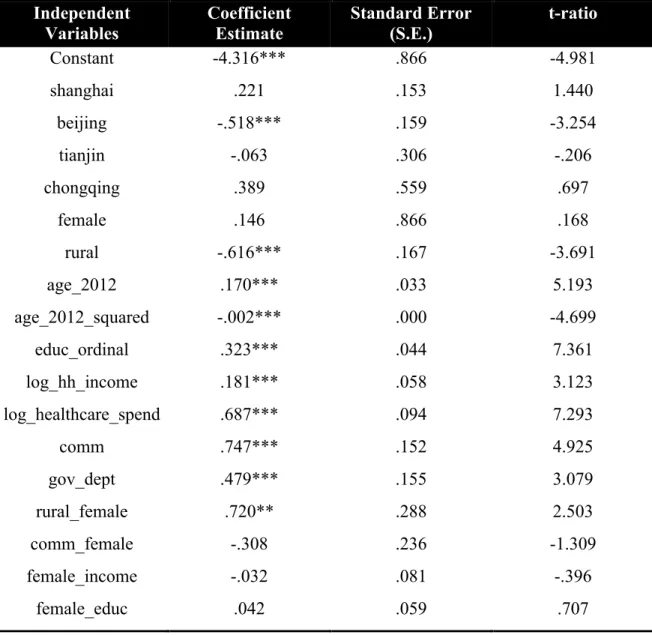
Specifically, the analysis of this paper revolves around a variable for individual contributions (converted to monetary value) in response to the Wenchuan earthquake. In the interest of avoiding potentially skewed regression results, I decided to take the log of this variable. Additionally, I made a separate dummy variable from the original measure
81 *Disclaimer* All information related to the dataset in this paragraph (including statistics and procedure) is the property of the CHFS, and comes directly from their online materials published at
<http://www.chfsdata.org/default.aspx>.