In such an environment, it is critical to have a starting point and reference point to help marketers find their way forward. Marketing 4.0 sets a new stake in scholarship and will be a starting point and an invaluable resource for anyone trying to invent and understand the digital and mobile future.” Kotler and his colleagues have beautifully synthesized today's digital, interactive marketplace and the new role of marketing.” 2 Paradoxes of Marketing to Connected Customers 17 Debunking the Myths of Connectivity 20 Executive Summary: Marketing in the Midst of Paradoxes 28.
4 Marketing 4.0 in the Digital Economy 43 Transition from Traditional to Digital Marketing 47 Integration of Traditional and Digital Marketing 52 Summary: Redefining Marketing in. 8 Human-Centered Marketing for Brand Attraction 107 Understanding People Using Digital Anthropology 110 Building the Six Attributes of human-centric brands 113 Summary: When Brands Become People 118. 9 Content Marketing for Brand Curiosity 119 Content is the New Ad, #hashtag is New Tagline 121.
10 Omnichannel Marketing for Brand Engagement 137 The Rise of Omnichannel Marketing 139 Step-by-Step Omnichannel Marketing 145 Summary: Integrating the best of online and offline. 11 Engagement Marketing for Brand Affinity 151 Enhancing Digital Experiences with Mobile Apps 153 Providing Solutions with Social CRM 156 Driving Desired Behaviors with Gamification 160 Summary: Mobile Apps, Social CRM, and Gamification 165.
PROLOGUE
FROM MARKETING 3.0 TO MARKETING 4.0
The main premise of this book is that marketing must adapt to the changing nature of customer paths in the digital economy. The first part of the book is the result of our observation of the world we live in. Additionally, we take a deeper look at the key digital subcultures of youth, women and internet users that will serve as the foundation for an entirely new breed of customer.
The second and most important part of the book discusses how marketers can increase productivity by understanding customer journeys in the digital age. It introduces a new set of marketing metrics and a whole new way of looking at our marketing practices. We will also dive deep into several key industries and learn how to implement the ideas of Marketing 4.0 in those industries.
In essence, Marketing 4.0 describes a deepening and broadening of human-centered marketing to cover every aspect of the customer journey. We hope you find insight and inspiration from this book and join us in redefining marketing in the years to come.
ABOUT THE AUTHORS
But many of the scenes in the film symbolize the change we are experiencing today. In the online world, social media has redefined the way people interact with each other, enabling people to build relationships without geographic and demographic barriers. Social inclusion can also take the form of fair trade, employment diversity and women's empowerment.
In the past, companies believed that innovation had to come from within; thus they have built a strong research and development infrastructure. Its rival Unilever has moved in the same direction by capitalizing on its large external innovation eco. This inclusivity now allows companies to enter industries that they otherwise would not have entered in the past.
In the future, competitors will come from the same industry as well as from other relevant and related industries. In the past, it was common for companies to broadcast their messages through different advertising media.
Reflection Questions
There is a common thread that connects them: YWN are the most influential segments of the digital era. Compared to that, women are holistic shoppers. The fact that they experience multiple touchpoints in their spiral path to purchase means they are exposed to multiple factors to consider. Their collective strength, especially as the most influential segments in the digital era, has not been fully explored.
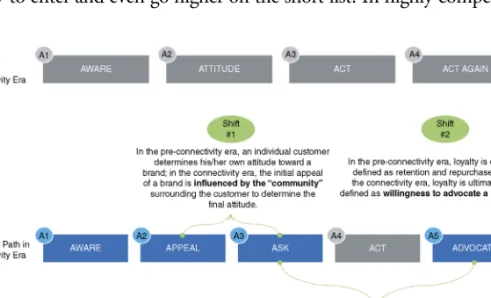
Similar to the mechanism on Facebook, customers will have the decision to either "confirm" or "ignore" the friend requests. Derek Rucker of the Kellogg School of Management offers a modification of AIDA, which he calls the four A's: aware, attitude, act, and act again. In this newer framework, the interest-desire stages are simplified to attitude, and a new stage, act again, is added. In other cases (eg in rare and highly popular categories) loyal advocates are not necessarily actual buyers.
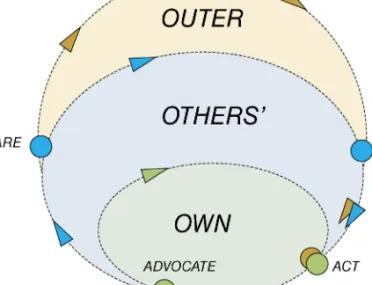
It usually comes by word of mouth from a close circle of friends and family. The influence of others can also come from the wider but independent community to which customers belong. Among the many segments, Youth, Women and Internet Users (YWN) are the most influential. The influence of others coming from them is often the main driver of purchase. Despite a brand's best efforts, it is fundamentally difficult to manage and control the outcome of the influence of others.
On the other hand, when the influence of others is most important, marketers should rely on community marketing activities.
Re fl ection Questions
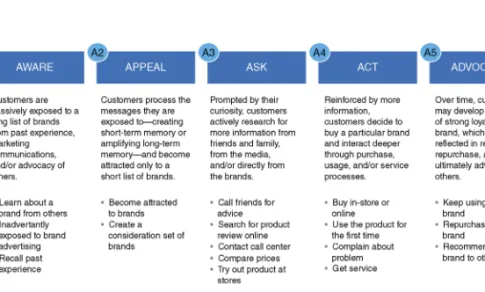
This is true in some industries that have low customer involvement and a short purchase cycle (eg in consumer packaged goods, where awareness alone sometimes leads to purchase). The metrics are useful for tracking a brand's progress and measuring the performance of the brand and the service teams. Ideally for a brand, every customer who interacts with the brand goes through the entire five A's unscathed.
The more people remember a brand, the more likely the brand will be recommended. In the digital age, talking to customers - or influencing others - equals "debt" and advertising - or external influence - equals "equity". Talking to customers provides leverage. However, since the death of founder Anita Roddick, the brand has somewhat lost its "activist" appeal.
The bank recently acquired and launched its own satellite – the first bank in the world to do so – allowing it to better serve customers. The bolder, bolder and more unorthodox the differentiation, the greater the appeal of the brand. In some cases, the branding is obvious and drives traffic to the content.
The customer now tries to buy the brand online, but finds out that it is only available in a store in a remote location. The customer may decide that it is not worth going there and buying the brand. In this scenario, the customer journey ends abruptly because the brand fails to guarantee availability.
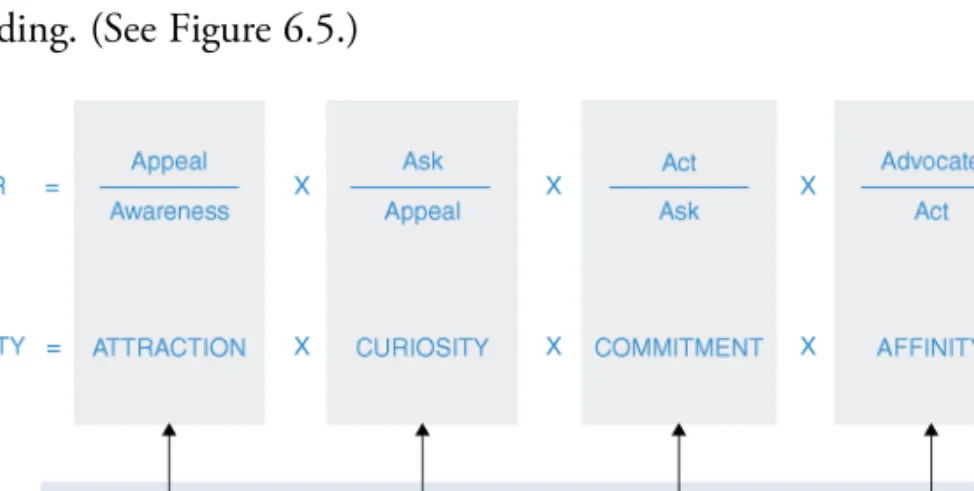
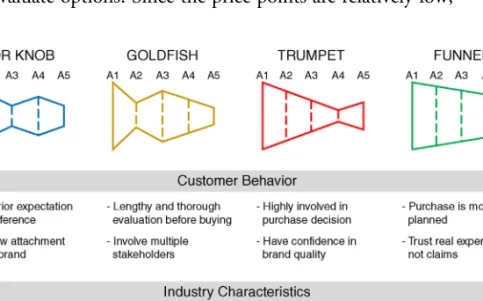
Although customers may not be attracted to the brand, they may end up buying the brand simply because it is the only one available at the point of purchase. Not everyone who is attracted to the brand feels the need to explore further, reflecting a clear positioning and the right level of curiosity. Brands with a trumpet pattern can improve the level of commitment by improving the affordability and accessibility of the channel without reducing the appeal of the brand.

Tactical
As we transition to Marketing 4.0 in an increasingly digital world, we expect a growing importance of human centricity. The Apple Store design is also considered one of the best in the retail industry. Content marketing has been a buzzword for the past few years, and it's being touted as the future of advertising in the digital economy.
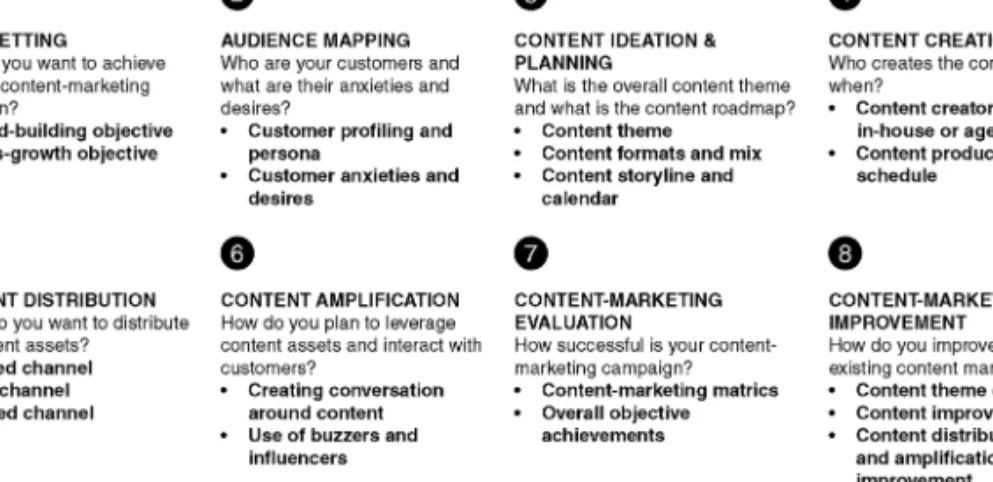
We call it "the five second challenge of the skippable world". If brands or advertisers fail to capture attention within the first five seconds. In the subsections below we list the top eight content marketing steps that marketers should follow. Content can be the vehicle for brands to make a difference and leave a legacy - the ultimate goal of Marketing 3.0.
While it's true that content marketing is most effective early in the customer journey (especially generating attraction and curiosity at the attraction and demand stages), content should be dis. An example of a sponsored post is MasterCard's article titled "The Surprising Cost of Not Taking a Vacation," which goes into detail about eco. In the digital age, the customer journey is not always straightforward and sometimes even spirals.
Enteromnichannel marketing – The practice of integrating multiple channels to create a seamless and consistent customer experience. Marketers should strive to combine the best of both worlds – the immediacy of online channels and the intimacy of offline channels. In fact, this final step in the customer journey is what differentiates digital marketing from traditional marketing.
In such a context, social CRM – the use of social media to manage brand interactions with customers and build long-term relationships – will be an essential tool for cus. Some brands use separate social media accounts, one for content marketing and another for social CRM. If something goes wrong in the social CRM, it can be isolated without damaging the primary social media account.
Gamification – the use of game principles in non-game contexts – is a powerful method for increasing customer engagement. In connection with the customer journey, customer levels act as guideposts for where the customers are along the way.
EPILOGUE
GETTING TO WOW!
In Jiang's case, Krispy Kreme received free publicity and reached 5 million people thanks to its exceptional service. But when the opportunity arises, it's always worth taking advantage of its viral effect. In a Marketing 4.0 world where great products and great services are commodities, the WOW factor is what sets a brand apart from its competitors.
Across customer journeys, companies and brands need to increase their creativity and improve customer interactions. They focus on developing products and services that meet the needs and wants of customers. But those who move beyond that will deliver compelling customer experience beyond products and services.
They improve customer interactions with a service blueprint and design that differentiates between in-store and digital experiences. They design life-changing personalization on top of the customer experience that addresses the concerns and desires of individual customers.
INDEX