Global: Jurnal Politik Internasional Global: Jurnal Politik Internasional
Volume 23 Number 2 Article 1
11-30-2021
Cave! Hic Dragones: Understanding Neocolonialism in China’s Cave! Hic Dragones: Understanding Neocolonialism in China’s Economic Diplomacy towards Angola
Economic Diplomacy towards Angola
Ghina Salsabila
Department of International Relations, Universitas Pertamina, [email protected] Indra Kusumawardhana
Department of International Relations, Universitas Pertamina, [email protected]
Follow this and additional works at: https://scholarhub.ui.ac.id/global
Part of the Defense and Security Studies Commons, International and Area Studies Commons, International Relations Commons, Law Commons, and the Political Theory Commons
Recommended Citation Recommended Citation
Salsabila, Ghina and Kusumawardhana, Indra (2021) "Cave! Hic Dragones: Understanding Neocolonialism in China’s Economic Diplomacy towards Angola," Global: Jurnal Politik Internasional: Vol. 23 : No. 2 , Article 1.
DOI: 10.7454/global.v23i2.645
Available at: https://scholarhub.ui.ac.id/global/vol23/iss2/1
This Article is brought to you for free and open access by the Faculty of Social and Political Sciences at UI Scholars Hub. It has been accepted for inclusion in Global: Jurnal Politik Internasional by an authorized editor of UI Scholars Hub.
153
Ghina Salsabila & Indra Kusumawardhana Department of International Relations
Universitas Pertamina
Email: [email protected], [email protected] Submitted: 29 July 2021; accepted: 6 October 2021
Abstrak
Tiongkok sedang mengalami fase pembangunan ekonomi yang begitu cepat dan dinamis didorong oleh pesatnya laju industrialisasi. Permintaan energi dalam jumlah besar telah membuka jalan bagi Tiongkok untuk mengimpor energi dari negara kaya sumber daya alam. Dalam konteks ini, Tiongkok melakukan diplomasi ekonomi ke berbagai belahan dunia termasuk Angola yang merupakan salah satu negara kaya sumber daya alam di Afrika. Perhatian utama penelitian ini adalah diplomasi ekonomi Tiongkok yang dianggap sebagai bentuk neokolonialisasi di era globalisasi saat ini.
Pertanyaan utama yang akan dijawab dalam penelitian ini adalah mengapa diplomasi ekonomi Tiongkok terhadap Angola merupakan neokolonialisasi. Untuk menjawab hal tersebut, penelitian ini menggunakan teori Neokolonialisme dalam membedah Diplomasi Ekonomi Tiongkok terhadap Angola. Penelitian ini menggunakan metode kualitatif dengan pendekatan studi kasus yang menggunakan data sekunder. Oleh karena itu, interpretasi penulis menjadi dasar dalam penelitian ini. Penelitian ini berkesimpulan bahwa diplomasi ekonomi Tiongkok terhadap Angola merupakan bentuk neokolonialisasi karena sarana ekonomi yang dijalankan Tiongkok terhadap Angola membuat Tiongkok memiliki kontrol atas politik, ekonomi, dan sumber daya alam Angola secara tidak langsung, yang pada akhirnya menimbulkan ketergantungan Angola terhadap Tiongkok.
Kata kunci:
Angola, Tiongkok, Diplomasi Ekonomi, Neokolonialisme Abstract
China is experiencing a fast and dynamic phase of economic development driven by its fast pace of industrialisation. The vast energy demand has pushed China to import energy from other countries with plentiful natural resources. To this aim, China conducts economic diplomacy worldwide, including Angola, a country with plentiful natural resources in Africa. The main concern of this research is China's economic diplomacy which is considered as a form of neocolonialism in this globalisation era. Therefore, the research question of this research is why China's economic diplomacy towards Angola constitutes neocolonialisation. To this aim, this study utilises the Neocolonialism theory in dissecting China's Economic Diplomacy against Angola. This study uses qualitative method with a case study approach using secondary data.
Thus, the basis for this research is the author's interpretation. This research concludes that China's economic diplomacy towards Angola constitutes neocolonialisation since the economic means that China exerts on Angola enables China to indirectly control Angola's politics, economy and natural resources, which in turn leads to Angola's dependence on China.
Keywords:
Angola, China, Economic Diplomacy, Neocolonialism
Ghina Salsabila & Indra Kusumawardhana
INTRODUCTION
In the economic globalisation era, neocolonialism is one of many essential discourses regarding great countries’ activities within the global economy. By implementing a critical and in-depth analysis, there is an underlying effort to maintain neocolonialism activities behind the notion of globalisation, especially in the economic aspect.
Neocolonialism in the globalisation era can be exemplified by the increased dependency of the inferior countries toward the superior ones. The dependency may take many forms, such as politics, development, investment, technology, and economy. We can trace such asymmetrical relations back to Western colonialism in underdeveloped countries. Even today, the ex-colonised countries are constantly trapped within the structure, which causes them to be reliant on the superior countries.
However, today’s colonialism does not involve physical violence or colonies’
establishment. Instead, it seeks domination through simpler means by using economic instruments, which are recognised as neocolonialism. we understand neocolonialism as further capitalist practices and globalisation to impose control, instead of indirect military and political domination. The control takes in many shapes: economy, cultural promotion, language, or media in the colonised territories (Nkrumah, 1965). However, the control is aimed at economic dominance, as showed by the inferior country’s dependency on capital owned by the superior ones. Their poor economic structure indeed causes dependency. Prominent countries seek to fulfil their domestic needs and achieve their national interests through economic instruments.
In international relations, neocolonialist practices correlate with the concept of economic diplomacy, which is utilised to accomplish national interests. The term economic diplomacy has existed since World War II, when colonising countries were losing their dominance while the colonised countries needed economic support. The superior countries, therefore, sought to sustain its position through various means, mainly by providing economic help (Jati, 2013). Economic diplomacy is an important part of the country’s economic foreign policy to improve its economic capacity and maintain its position at the international stage. Economic diplomacy practices include attracting foreign investment, increasing export, and taking part in an international economic organisation (Baranay, 2009). Today, economic diplomacy has become more significant for countries as it could maximise the benefit of globalisation. Whereby,
States’ interactions pursue economic interest as top priority, achieved either by formal or informal diplomacy.
Neocolonialism is usually carried out through economic or monetary instruments such as development assistance and support, technological and scientific assistance, as well as foreign aid or foreign direct investment (Nkrumah, 1965). In the current era of globalisation, foreign capital could be camouflaged as a part of economic diplomacy, which becomes a tool for Neocolonialisation. The result of neocolonialisation, camouflaged as economic diplomacy, is that foreign capital is used for exploitation rather than for the economic development of less developed countries.
Foreign aid and investment provided to neocolonial countries often made them subject to the economic and (sometimes) political will of foreign donors. In other words, the practice of neocolonialism in economic diplomacy have increased (rather than reduced) the gap between rich and poor countries (Nkrumah, 1965).
To further understand neocolonialism within economic diplomacy practices, this paper discusses cooperation between China and Angola as a study case. China's economic surge has been significantly affecting its energy demand to fulfil its domestic industrial needs since the economic growth is linear with energy consumption. Hence, China is required to rethink its foreign policy comprehensively and strategically in order to both meet its energy demand and expand its market (Holslag, 2010). Natural resources potential within a country has been industrial countries' strategic interest, including China. Developing countries are commonly the leading destinations for energy exploration. In Africa, China has engaged Angola as its strategic partner as Angola has abundant natural resources, especially crude oil. Furthermore, most people in Angola are considered as middle-income, which is beneficial for China's market expansion effort (Oktapiani, 2015).
The writers see that China’s intensively used economic diplomacy towards Angola shows a symptom colonialism. China has intensified its support for many African countries for the last decades by offering interest-free loans, investment in the monetary sector, automotive, mining, and telecommunication (Mlambo, 2018). As a country facing a lack of technological support for natural resources processing and national development, Angola has inevitably become dependent on China’s investment. Thus, this paper mainly focuses on Angola’s continuous dependency on China. As China’s mission in Angola has great significance and its growing influence
Ghina Salsabila & Indra Kusumawardhana
shows that the emerging economic power would be a dominant player on the continent, including in Angola. China’s influence can be considered as a firm statement for China’s spread of global influence (Holslag, 2010). China’s rapid involvement within Angola’s national development and its success to influence the latter’s political elitists have posited China as a dominant foreign influence in Angola. This issue is important to be examined deeper because Angola consequently sees China as an economic success and as a trustworthy partner in tackling poverty as well as improving welfare.
Unfortunately, China considers Angola as a potential exploitation territory that is important to be subjugated for China’s domestic needs, which the author will show in the discussion part.
Against this background, the authors proposed a research question, “why is China’s economic diplomacy towards Angola considered as neocolonialist practice in this globalisation era?” We divided this article into three parts. First, the theoretical framework explains the general concepts of economic diplomacy, neocolonialism, and the relationship between the two. Second, we explained the research method. Third, the results and analysis sections that explain China’s economic diplomacy towards Angola and its assessment utilising the concept of neocolonialism.
ANALYTICAL FRAMEWORK
This article needs critical approach to analyse China’s economic diplomacy toward Angola. We have to build a theoretical framework and method to map out and address the research question. This research uses the concept of economic diplomacy that combined with neocolonialism concept. In this section, we will explain our theoretical basis to analyse our topic.
Economic Diplomacy
Economic diplomacy is a crucial factor of a country's economic development as an attempt to accomplish foreign policy objectives (Baranay, 2009). However, the exact definition of the concept remains uncertain. Economic diplomacy refers to a series of activities by states and non-state actors in the real world which involves process and method within international decision-making related to trans-boundaries economic activities, such as investment, loan, aid, export, import, and migration (Bergeijk &
Moons, 2009). Another scholar argues that economic diplomacy is considered as a negotiation process and policy formulation to exchange goods, services, labour,
production, and investment in other countries (Rashid, 2005). Moreover, policies regarding the exchange of money, information, and foreign aid is also identified as economic diplomacy (Odell, 2000). In brief, economic diplomacy discusses diplomatic relations, cooperation, multifaceted trade, and ways to influence external economic policy.
Combining those scholars’ definitions of economic diplomacy, this paper perceives economic diplomacy in general as practices and strategies of a country’s foreign relations that involve trade cooperation activities, foreign investment, foreign aid and loan to accomplish foreign policy objectives. These three instruments of economic diplomacy will be utilised in assessing China's economic diplomacy activities to Angola.
Export-Import activities play a vital role in preserving international business position. Not only in terms of foreign exchange flows, but also for its significant contribution to national income. The massive growth of international trade is one of the many consequences of globalisation. A country can easily import its needs from other countries and export its products abroad (Friedman, 2002). Furthermore, economic development obliges strategic roles of capital creation. This capital formation originates from foreign investment activities which is the primary key of international economic integration since foreign investment enables long-term and stable economic relations between countries. Besides, it is also crucial for governments to provide and receive foreign economic assistance for their national development. For the creditor country, bilaterally, granting foreign loans can be used as a mean to influence the debtor country’s policy so that it favours the creditor’s interest (Nye, 2004). This relation is executed within economic diplomacy activities. Hence, economic diplomacy is defined as 'the use of political means as leverage in international negotiations to enhance national economic prosperity and the use of economic leverage to increase the political stability of the nation’ (Okano-Heijmans, 2011).
Neocolonialism
The history of structural colonialism has led to the development of many novel ideas and perspectives regarding world order. Along with the dynamics of international interactions, colonialism emerges in various forms and continually transforms and develops. This paves the way for the study of International Relations to expand its research to adapt with the current dynamics, including constructing new theories. One of
Ghina Salsabila & Indra Kusumawardhana
the theories that emerge in the contemporary world related to colonialism is neocolonialism theory.
The terminology of 'neocolonialism' was first introduced by Kwame Nkrumah, the first post-independence president of Ghana (1960-1966) and has been discussed by many scholars and philosophers in the 20th century, including Jean-Paul Sartre and Noam Chomsky. Kwame Nkrumah coined the term, which appeared in the preamble of the African Union Charter in 1963, and became the title of his book, Neo-Colonialism: The Last Stage of Imperialism (1965). Nkrumah theoretically developed and extended the post-War socio-economic and political arguments advanced by Lenin in the Imperialism:
The Highest Stage of Capitalism (1917).
According to Nkrumah, neocolonialism refers to the new practice of conquest within African economic, social, cultural, and political life in which the idea is to impose foreign control over the economy and politics in the territory. However, the foreign control is invisible-- countries seem like they are independent and have complete control over its own domestic affairs (Nkrumah, 1965). In the guise of providing development support, technological, as well as scientific assistance, the former colonial rulers impose political control and cultural hegemony that create neocolonialism (Serequeberhan, 1998). Neocolonialism is a kind of modern colonialism, which is a mechanism used to maintain one’s dependency. Therefore, the authors conclude that there are three main characteristics of neocolonialist practices, namely indirect economic and political control through the enforcement of economic and monetary means, such as economic aid or investment, and also a constant dependency of inferior countries towards its superiors.
These characteristics of the neocolonialism concept will direct this research to reveal the neocolonialist practices within China's economic diplomacy towards Angola.
Neocolonialist countries practice indirect control, mainly through economic policy, monetary policy, transnational trade of companies, global institutions, or multilateral relations (Halperin, 2007). A nation can be consequently enslaved by the shackles of neocolonialism and simultaneously considered itself as theoretically independent. However, it is trapped by international sovereignty thus it is directed by external power politically and economically. Therefore, neocolonialism produces a situation where a party possesses economic control, resulting in indirect power in a particular territory or state. Generally, such practice evidently involves a well- coordinated effort by the former colonial administration and the developed countries to
hinder the growth of the developing countries that will enable them to maintain their power over the developing countries’ raw materials and cheap labours (Nkrumah, 1965).
As mentioned earlier, neocolonialism is usually conducted through economic and monetary means. This type of neocolonialist practice is undertaken by providing foreign aid or foreign direct investment which involves strict regulations enforcement. These regulations ultimately cause the recipient countries to be more vulnerable to neocolonialism, thus the donors can easily penetrate their economic and political influence. Furthermore, investment under neocolonialism apparently contributes to the wider gap between rich and poor countries instead of minimising it (Nkrumah, 1965).
Neocolonialism, therefore, has been broadly understood as the further development of capitalism which enables the capitalists (either from state or non-state actors) to dominate their subjects through international capitalism practice rather than through direct governance. As mentioned by Serequeberhan:
“Neocolonialism method and practice lie within its guise to command the independent colonies' leaders to accept development assistance and support through which imperial power tends to continue penetrating and controlling their former colonies. With development assistance and support, technological and scientific assistance in cover, the former colonial rulers impose their hegemonic control over the colonies' politics and culture in the shape of neocolonialism”
(Serequeberhan in Afisi, 2017).
In his book, Neo-Colonialism: the Last Stage of imperialism, Nkrumah highlighted the dependency phenomena that constantly occurred among newly independent countries in Africa (Nkrumah, 1965). The term of neocolonialism was initially used after World War II to refer to the perpetual dependency of the colonies towards foreign power. Nonetheless, the understanding of the concept is expanded to where the developed countries try to build influence like the colonial era. Most of African states are considered neocolonial states, concerning their high dependency on international capital due to their vulnerable economic structures (Attah, 2013). The colonisers are the capitalists, aiming to gain and exploit the land of their colonies, dominating the indigenous people and implementing new production methods. These practices can be traced back to the period of trans-Atlantic slavery and colonialism.
Through neocolonialism, countries with advanced technological capacity ensure their
Ghina Salsabila & Indra Kusumawardhana
involvement within the low-income countries' activities. Thus, this relation practically ruin the potential of further development of smaller countries and contribute to the capital acquisition of the developed countries (Parenti, 2011).
Neocolonialism is the new form of traditional colonialism that is intended to obtain benefit from the considerably weak and newly independent countries—and decolonisation to attain cultural, economic, and political benefits by inflicting political power towards the elitists (Haag, 2011). This means that the countries are not only economically dependent on primary goods, the impact of foreign loan and aid, but also on economic domination by a great multinational corporation. Critics argue that neocolonialism is operating through multinational corporation investment, which temporarily enriches the developing countries, ultimately causes the developing countries to become fully dependent on foreign parties. Such investments also serve to cultivate underdeveloped countries as a source of cheap labour raw materials.
The Relation Between Neocolonialism and Economic Diplomacy
Neocolonialism is not limited to great colonial powers. Today, it would rather expand to any rich and developed country that tries to penetrate its influence through policy enforcement on poor countries and less-developed countries (Nkrumah, 1965).
Neocolonialism possesses a general character as the deviation of national power—
politics, economy, or military—which used corruptly by dominating power to cleverly force the dominated sectors of the conquered society to do their bidding. In other words, neocolonialism is characterised by a new shape of imperial ruling in which there is a game dominated by foreign capital (Attah, 2013). In many cases, African countries voluntarily allow their countries to be highly dependent on foreign capital, a necessary legitimation for neocolonialism. Nkrumah states that neocolonialism is generally done through economic or monetary means, such as foreign loans or foreign direct investments (Nkrumah, 1965). In today’s globalisation era, foreign capital is wrapped in economic diplomacy activities as a further instrument of neocolonialism.
Such cases can be exemplified by relations between China and Venezuela when Venezuela was governed by Hugo Chavez in 1999 to Nicola Maduro in 2013. In 2001, the connection between the two countries was increasingly intensified, signified by a strategic partnership of joint development. China offered many agreements in various sectors and loans through China Development Bank (CDB). Additionally, the loans
provided by China were expected to be paid by exporting Venezuela's oil to China.
China-Venezuela relations were further strengthened to the 2013 Nicolas Maduro administration.
During the oil price crisis in 2014, Venezuela was not prepared for such an event because of its high dependence on the oil industry (Amelie, 2014). Hence, during the crisis, China was willing to provide Venezuela with a foreign loan. In exchange, Venezuela was required to pay by exporting its oil to China (Tiezzi, 2015). Not only did China enforce such policy to Venezuela for its oil needs, but China also intended to expand its market, particularly in the agricultural and transportation sectors. Intense cooperation between China and Venezuela indicates China's presence to dominate Venezuela and become dominant power (Troush, 1999).
Economic diplomacy refers to transnational activities related to economic activities, either trade or loan (Bergeijk & Moons, 2009). Economic diplomacy is closely tied to the use of economic instrument towards other countries. Even though it seems very positive, if the relation between the parties involved works asymmetrically, it could possibly lead to neocolonialism, since what is at stake within these economic diplomacy activities are broad national interests. This also includes political and strategic dimensions and achieving economic security in the anarchical system. If economic security is understood as economic welfare and political stability, then a government's economic diplomacy will involve instruments that are either relatively economic or more political in nature. In other words, economic diplomacy consists of economic logic (business-end) and political logic (power-play end). Hence, economic diplomacy can be concluded as the use of political means as leverage in international negotiations to enhance national economic prosperity and the use of economic leverage to increase the political stability of the nation (Okano-Heijmans, 2011).
Economic diplomacy's success lies in the consolidation of influence optimisation, asset utilisation, and control over political climate (Bergeijk & Moons, 2009). These aspects are what makes economic diplomacy towards the host country may change to neocolonialism considering the presence of effort to generate influence and control the host country by various economic instruments. Neocolonialist practice turns into reality once a country experience intensified dependency on international financial capital due to its vulnerable economic structure (Attah, 2013). According to this reason, neocolonialism can be categorised as a new form of exploitation and colonial rule over the newly independent African states, and other African states with ill economic
Ghina Salsabila & Indra Kusumawardhana
structure. Through neocolonialism, states with advanced technology ensure their involvement within the activities of the low-income states. Hence, this relation practically ruins any development potential of the less-developed countries and contributes to the capital acquisition of the developed ones (Parenti, 2011). Involvement as such is conducted through development aid and support, as well as technological and scientific assistance to impose political control and cultural hegemony in the form of neocolonialism (Serequeberhan, 1998).
As the result of neocolonialism through economic diplomacy, foreign capital is considerably used as an effective tool of exploitation rather than as development support for the underdeveloped countries. Fundamentally, the loans and investments provided for neocolonial countries often subject them to the foreign donors' economic and sometimes political will. In other words, neocolonialism activities within economic diplomacy is widen up the gap between the rich and poor countries, instead of reducing the world’s disparities (Nkrumah, 1965).
RESEARCH METHOD
China chose Angola as a strategic partner to obtain its energy supply because Angola is one of the African countries with abundant natural resources, especially oil, and most of the population has lower middle income, which means it is a potential market for China export (Oktapiani, 2015). In addition, Angola is one of the largest oil-producing countries on the African continent. Angola also has high-quality oil (light crude) with low sulfur and contains hydrocarbons, which makes Angolan oil special (Oktapiani, 2015).
Researchers must be able to explore the substance and facts both in details and holistically. The lack of discussion regarding the neocolonialism concept has encouraged the researchers to explore the topic thoroughly. This makes this study explorative in character. This research is conducted qualitatively which aims to explain and examine the hypothesis of the research variables. Qualitative research with an explorative pattern intends to unpack the underlying causes of the inconsistencies between facts and existing norms.
This aligns with Creswell’s argument that qualitative research highly depends on the information either from the object or participants, such as common questions, broad scope, collecting data from participants, and analysing, explaining words, as well as conducting research subjectively (Creswell, 2014). First, this method is well-suited in
explaining the issue regarding the reality of China's economic diplomacy towards Angola to achieve its national interests. Second, the theoretical constraints to explain the development of the neocolonialism concept. Third, a deeper understanding regarding neocolonialism in the globalisation era through economic diplomacy practices by a particular state is necessary. Fourth, variables of social phenomena, such as neocolonialist practices within this study, cannot be described and quantified through numerical forms such as in quantitative research. However, the presence of such a social phenomenon persists, and the result is in descriptive data.
This research is conducted using a case study approach that explores the limited system or in-depth specific case, detailed information, and data collection about neocolonialist practices within economic diplomacy (Creswell, 2014). Robert K. Yin, an American political scholar, defined the case study approach as empirical examination regarding contemporary phenomena once there is a faint line between phenomenon and context (Yin, 2013). The descriptive method is directed to describe, find, or analyse the critical phenomenon, patterns, or different impacts of different practices over a certain period (Dudovskiy, 2016).
The case study approach is apt to provide a better understanding of neocolonialist practices within economic diplomacy. The selected case should be perceived as a critical case, which enables analytical generalisation, meaning if a theory is not valid for that case, it will not also be valid for other cases. Ultimately, the objective of a critical study case is to verify the theory’s success used in the selected case (Patton, 2014). Therefore, if the theory being used to examine the Angola case fails to provide validation, then it is likely for the approach to be invalid of other cases of African countries.
Data Collection Method
In this research, the data collection technique emphasises secondary data, based on already available data by conducting a literature review or study of previous research relevant to the problem being analysed. This secondary data is not only consisted of other data collected by other researchers, but also official statistics collected by governmental institutions. These data are accumulated through a literature review which is aimed at obtaining a theoretical basis and secondary data that can be used in answering research questions. The secondary data are obtained from books, study cases of academics, scientific journals, non-governmental organisations’ (NGO) reports, political documents, and institutions' website. This research also uses publication media, such as news articles
Ghina Salsabila & Indra Kusumawardhana
and other related credible articles from the internet. It is worthy to note that arguments, facts, and opinions regarding the secondary data will further shape our understanding and interpretation of the behaviour of China's relation and involvement in Angola.
Furthermore, the collected data was analysed using the Miles and Huberman model, namely data reduction, data presentation, and conclusion drawing/verification.
The data that has been analysed is then explained and interpreted in the form of words to describe the facts in the field, meaning or to answer research questions which are then taken from the essence.
DISCUSSION
Trade Cooperation as an Instrument of Economic Diplomacy
Over the past six years, China has become the second largest oil importer from Angola after the United States, representing about 9.3 to 30% of Angola's total oil exports (Banco Nacional de Angola, 2007). Although the US is leading in Angolan oil imports, since 2002 Angolan oil exports to China have increased sevenfold, compared with only 3.5 times to the United States (Portugal News, 2007). Angola's oil exports to China totalled US$3.9 billion in 2004, making it a major supplier and ranking third after Saudi Arabia and Iran. In 2005, Angola surpassed Iran with total exports of 17.46 million tons, 45.5%
of China’s African oil imports (Xinhua, 2006). During the first six months of 2006, Angola temporarily leapfrogged Saudi Arabia as the largest crude oil supplier to China, with 23.45 million tonnes of crude shipped from the country of Angola that year. Oil imports from Angola now represent more than 18% of China's total oil imports, and this proportion is increasing.
In recent years, Chinese exports to Angola have also experienced a significant increase. In 2004, China became Angola's fourth-largest trading partner with US$194 million, up from being the seventh-largest trading partner the previous year. In 2006, China maintained its position even though Chinese exports to Angola quadrupled, with steel and iron bars, batteries, cement, and automobiles being the main goods (AICEP, 2007).
After entering OPEC, Angola exported about 465,000 barrels of oil per day to China in the first six months of 2007 and oil from Angola could account for 16% of China's oil imports. China imports crude oil from Angola, while Angola imports transportation, steel, electricity, and electronic products. Compared to other countries,
Angola accounts for 16% or 788,000 barrels per day of the total oil supply from outside China.
Angola has consistently experienced a large trade surplus with China, due to the rapidly increasing pace of China's oil imports. Currently, it has accounted for almost 50%
of Angola's oil exports to China which beat Saudi Arabia as China's single largest supplier. In 2014, Angola exported around 1.65 million barrels per day of crude oil of which about half was exported to China and the increase in the number of Angola's oil exports to China continued to consistently increase in the following years.
Foreign Investment as an Instrument of Economic Diplomacy
China's investment portfolio concentrates fully on energy and raw materials, infrastructure, and high technology. For China, energy and raw materials are needed to sustain economic growth. Meanwhile, roads, bridges, and dams are also very important for the growth of developing countries. Therefore, investment in infrastructure allows China to win over resources from developing countries. Although China's largest operations in Angola are concentrated in oil exploration and construction, there has also been an increase in Chinese non-oil FDI to Angola as a whole.
Figure 1. China’s FDI to Angola by Sector (2005–2007), Oil and Diamonds excluded
Source: The Angolan National Agency for Private Investment (ANIP) (2007). Retrieved 3 January 2020 from https://www.csis.org/analysis/angola-and-china-pragmatic-partnership
By December 2007, 51 Chinese companies were registered with The Angolan National Agency for Private Investment (ANIP). More than 50% of these companies are
Sector Investment (in thousands
of US$) Construction 41,301 Industry 21,573 Commerce 1,204 Transport 7,070 Real Estate 510 Extractive
Industry
500 Fisheries 1,478
Ghina Salsabila & Indra Kusumawardhana
engaged in construction and others are involved in the retail trade of food products, manufacture of rubber products, bottled mineral water, and other light industries (Campos & Vines, 2007). Between 2005 and 2007, 50 projects worth US$73.6 million were approved by ANIP and are being worked on by Chinese companies.
Foreign Loan Assistance as an Instrument of Economic Diplomacy
After the conflict in Angola, China began to pay attention to providing foreign aid to Angola. Although the direct capital flows coming from oil exploitation are high, it is not sufficient to meet the expenditure needs of Angola. Therefore, the Angolan government struggled to secure a sustainable flow of loans from international financial institutions.
At the time when Angola was experiencing financial problems, China came up with the characteristics of preferential loans granted without these traditional conditions. China only needs recognition, granting 70% of contracts funded with Chinese loan money to Chinese construction companies (Corkin & Burke, 2006), and the right to exploit Angolan oil (Tukumbi, 2011). The large amount of credit granted by China to Angola was carried out under an oil-backed loan agreement, which means that the credit was paid by Angola in the form of oil exports to China (Alves, 2010).
The development and infrastructure programs of Angola have been financed directly by the Chinese government through the Export-Import Bank of China (Exim Bank), CDB, CITIC Group Corporation, and Chinese public and private sector agencies and corporations, which are soft power instruments of China's foreign policy with the aim of obtaining natural resources (Eberling, 2017). The cooperation that had been agreed between China and Angola was immediately followed by the provision of foreign aid in the form of loans by China through the Export-Import Bank of China (Exim Bank) in the first quarter of 2004 amounting to US$2 billion to fund the reconstruction of Angola's infrastructure which was destroyed in the entire country due to civil war (Alves, 2010).
This funding continued in the following years, US$2 billion in 2006, US$500 million in 2007, and US$6 billion in 2010 (Corkin, 2011).
In 2005, the Angolan government and Exim Bank signed 12 individual credit agreements related to the US$2 billion loans. The agreement was intended to support various projects (Corkin & Burke, 2006). In January 2005, Exim Bank extended a US$1 billion oil-backed credit line to Angola, before it increased to US$3 billion in March 2006, making China the largest player in Angola's post-war reconstruction process
(Corkin & Burke, 2006). The payable loan at 1.7% interest rate over 17 years, which is managed by Angola, is intended to help rebuild critical infrastructure. In exchange, Angola will provide China with 10,000 barrels of oil per day (Tukumbi, 2011). This agreement is important, especially because Angola at the time of the agreement, had difficulty in obtaining capital from international financial institutions such as the Paris Club, IMF, and World Bank (Corkin & Burke, 2006).
Indirect Control over Angola’s Economy and Politic through China’s Economic Diplomacy Instrument
China's increased presence in Africa intends to exercise various diplomatic instruments and substantial state's finances to facilitate the access and operation for Chinese business (Gu et al., 2016). For instance, oil and gas state-owned enterprises are usually perceived as political instruments to seek benefit in a potential country through foreign direct investment. As state-owned companies, they are prone to be controlled by the government for both international and domestic agenda (Victor et al., 2012). Such network later facilitates the flow of information, encourages collaboration in policy formation and implementation, and offers considerable incentives for the leaders within the system. Gu et al. (2016) argued that business’ success eventually leads to political achievement and vice versa. Therefore, China-dominated corporations in Africa possess their own interests and more accessible information on a country’s state hydrocarbon resource and its world market valued sources.
Many of China's state-owned and private corporations in Angola intend to gain access to national development assistance projects—directed for their own personal interests—through contacts with local politicians and other political elites in Angola (Corkin, 2012). This leads to foreign intervention in Angola’s internal politics as verified by an MFL official and a former Angolan diplomat (Corkin, 2012). Hence, China has been penetrating its influence within Angola’s domestic affairs, which is now growing significantly.
Built from 1991 to 2010, Angola had an interim democratic constitution. In 2012, Angola’s constitution started to comprise of dictatorial elements (Aidoo, 2013).
Henceforth, Angolan people are unable to elect their own president and vice president because the election is determined by the most of political parties in the parliament.
Angola’s president, José Eduardo dos Santos from MPLA (1979-2017), had controlled Angola since he and the MPLA took over the administration in Angola (Vasquez, 2019).
Ghina Salsabila & Indra Kusumawardhana
Democratic development in the country has been on the decline since then. Nonetheless, China's official press agency, Xinhua News Agency, described the new constitution as democratic, modern, and positive, thereby supporting Angola's president, dos Santos, despite him being an authoritarian ruler. This indicates that China supports Angola’s authoritarian leader because it can benefit China's interests in the country.
Dos Santos fully controlled Angola’s strategic energy resources, which are considered the second-largest oil reserve in the African sub-Sahara and the most significant natural gas reserve in Africa (Thompson, 2012). There is an idea that China may possibly support whoever controls this vital resource. These resources are very important for China thus states should be wary of China's significant support towards their country's constitution, institutions, or authoritarian leaders. The intensification of Chinese political interference was widely observed to be low. However, the reality has shown otherwise. China is proved to be able to influence local political decision-makers by asking them to do a little favour for China as China promises to provide little political support for the Angolan leaders.
According to Walter Russel Mead, a country’s economic success directly results in increased political influence and mutual trust from other countries. Mead also argued that economic power is naturally more binding because countries that adopt the same economic policies and systems will find it more difficult to leave the system (Kuchins, 2009). In China's case, the state is experiencing economic robustness, which is used as the primary instrument to gain developing countries' confidence. Welfare and money are more appealing and, referring to Nye, can turn into a normative force as well as a tool for penetrating ideas and culture. Persuasion is always more effective than coercion (Nye, 2004).
This characteristic of neocolonialism explains that control over less-developed countries is carried out through indirect means. Neocolonial rule is seen to be operated through indirect control, primarily through economic and monetary policy, trade of transnational corporations, and other global and multilateral institutions (Halperin, 2007).
This is usually done by indirectly controlling the economic and political practices of newly independent states, instead of imposing military control as it was during the colonial era. Neocolonialism, therefore, is defined as the sustained colonial systems in independent African countries by transforming these countries into victims of political,
mental, economic, social, military, and technical domination through subtle and non- violent means (Parenti, 2011).
In 2005, Angola proposed US$2 billion loan from China. China, however, was willing to fulfil Angola’s request under several requirements: China was to hold the rights to 10.000 barrels of oil per day and 70% of all contracts must be held by Chinese companies (Tukumbi, 2011). China's strategy to provide a large amount of loan is aimed at widening its opportunities as well as benefits of Angola’s natural resources exploitations. Simultaneously, China intended to improve its own economy (Tukumbi, 2011). Once these features are understood, it is easier to unpack the sense of China’s interests in offering valuable capital to Angola without any demanding preconditions, unlike the Western Countries. This also clarifies how Angola replaced Saudi Arabia’s position in 2010 as China’s biggest crude oil supplier (Tukumbi, 2011). China-owned Exim Bank granted a loan for Angola through a bilateral government agreement. The bank extended credit flow supported by resource for the Angolan government and for sustaining China’s business in Angola (Worldfolio, 2014).
The problem that emerged from this credit flow is the lack of locals’ participation.
This situation is due to the nature of ownership, not only from the infrastructure financing mechanism, but also from the Chinese contractors themselves (Corkin, 2012). Corkin (2012) later added that because of this situation, many Angola-based construction firms and Angolan professionals feel that Chinese companies are given an immense advantage due to the credit flow policies. This definitely produces disparity and hinders the national development process since it has significant impacts on the country's competitiveness level in international trade, resulting in the weakening of a country's sovereignty. Hence, Angola has become more accessible to be controlled by a foreign power. The situation aptly pictures the central concept of neocolonialism. In addition, systematic control of Chinese business enterprises which conducted intentionally and indirectly also indicates the presence of neocolonialist practices in Angola.
It is evident that Chinese companies or contractors, both state-owned and private- owned, are unlikely to increase local participation (Corkin, 2012). In contrast, Exim Bank, which finances China's construction projects, is the actor who is obliged to control prospective rates of job, services, and material acquisition in Angola (Corkin, 2012).
Nevertheless, Chinese companies have a negative reputation for refusing to employ local workers and prioritising Chinese labours. Some independent estimates suggested that
Ghina Salsabila & Indra Kusumawardhana
there are more than one hundred thousand Chines workers in Angola now (Tukumbi, 2011).
Figure 2. Number of Visas Issued for Chinese Nationals (2004–2007).
Year Work Visas Dependents TOTAL
2007 22,043 57 22,100
2006 14,283 39 14,322
2005 1,952 18 1970
2004 192 49 241
Source: Ministry of Internal Affairs of Angola (2007). Retrieved 30 December 2020 from https://csis-website- prod.s3.amazonaws.com/s3fs-public/legacy_files/files/media/csis/pubs/080306_angolachina.pdf
The Ambassador of Angola to China, João Manuel Bernardo, publicly stated that his consulate had issued more than forty thousand visas for Chinese Nationals in 2008 alone (Baah & Jauch, 2009). In a single project of Kilamba Kiaxi social housing development in Luanda’s suburb, China International Trust and Investment Corporation employed ten thousand Chinese workers and only a small number of Angolans. This state-owned enterprise built up to 710 apartment buildings, including its supporting infrastructures, in a thirty-eight-month project worth US$3.53 billion (Corkin & Burke, 2006). The number of Chinese workers in Angola is going to be increased to twelve thousand at the peak of the project. The most of Chinese labours in Angola are involved in reconstruction projects. However, thousands have been observed expanding their careers as real estate developers, retailers, photocopy shop owners, street vendors, or masseurs (Brautigam, 2009). In the end, the Chinese presence ultimately dominates all sectors of life in Angola.
Therefore, there has been an increase in dissatisfaction among Angolan labourers regarding the intensified presence of Chinese business enterprises since it does not help improve Angola's employment rate. Consequently, the situation has created tensions between Angolans and the Chinese as resentment towards Chinese people has grown among many Angolan people (Corkin, 2012), similar to Africans’ behaviour towards colonial rulers during the colonial era. This is considered as one of the biggest criticisms related to China's involvement in Angola and other African countries. It is noteworthy that the Angolan government plays a significant role here since they are the ones who authorise Chinese companies to majorly employ Chinese labours, instead of the locals, to accelerate the infrastructure projects. It is evident that the Angolan government is more
concerned about the short-term consequences of China's presence in Angola i.e., accelerating national development, public goods logistics, and increased foreign direct investment. Meanwhile, the long-term result has been lost out of sight, especially related to job vacancies for Angolan people and skills training for the residents. This condition can be understood as China's method to 'buy' or influence the Angolan government in terms of generating economic growth, as such change will mainly benefit the country's corrupt leaders rather than Angolan people themselves (Corkin, 2012). Thus, this can be attributed as one of neocolonialism's key instruments for economic influence as the Angolan government 'provides' favourable treatment for Chinese enterprises.
Unfortunately, the government is also seen to make it difficult for residents and business to participate in the process.
Figure 3. Unemployment, total (% of total labour force) (modelled ILO estimate) – Angola 1991-2020
Source: The World Bank (2021).
In financial terms, China does not impose strict controls on Angola's finances or monetary. Angola, since 1977, has had its own currency called Kwanza and an independent economic policy. Angola has also had its own monetary reserves named Angola National Bank. China, however, has a way of influencing Angola's economic policy indirectly. Since 2015, the Kwanza can and will be accepted by China nonetheless (Forum China Plp, 2015). This actively demonstrates that Angola is now less dependent on the dollar and thus allows for more imported goods from China. Furthermore, this causes Angola to hold a monetary agreement with China by making China's currency,
Ghina Salsabila & Indra Kusumawardhana
Yuan, as the second legal currency used in Angola (Agence Ecofin, 2015). This enables China to exercise enormous influence in Angola.
Regarding China's foreign aid policy, a study from 2007 found that 66% of Chinese aid contained credit or concessional loans, 5% of which was eligible for cancellation of debt or donation and 29% were credited for government investments. The study also found that 95% of all China's aid was based on the idea and provision that the assistance was only used to employ Chinese workers and purchase of Chinese products and equipment (Tukumbi, 2011). This factor can be associated with neocolonialism because of its elements based on control possession and large influence, which refers to prioritising Chinese labourers rather than local workers. Another factor that is related to neocolonialist elements is the unfair agreement between Angola and China. For instance, referring to the data stated before, China's assistance should only be used to purchase Chinese manufactured goods, not locally manufactured ones. Moreover, most of China's aid is concentrated on China-initiated development project in Angola which indicates the neocolonialist aspect as China has direct physical control over these national development contracts and plans. This notion of exercising control indirectly serves China’s interests since they can force Angola to buy Chinese products and employ Chinese workers (Sagoe, 2012). China's foreign aid policy, which can be considered as an indirect form of what this paper calls as neocolonialism, is consequently correlated with China's national interest.
Furthermore, foreign aid is firmly attached to the interests of donor countries (Layton & Nielson, 2009). The empirical evidence shows that China provides more foreign assistance to oil-rich countries in sub-Sahara, such as Angola, rather than to countries with very few number of resources. Half of top ten China’s foreign aid recipients within the last decade have provided China with various access to their oil fields and contracts. China is said to be gaining crude oil in return (Amusa, 2016). Taking this aspect into account, roads, railways, telecommunications, transportations, government buildings, hospitals, and other energy and infrastructure sectors are now being built and repaired in Angola, which accounts to 70% of China's aid. However, these facilities only exist in places directly related to China's national interest and Chinese workers, which must be hired by the African local companies in Angola as China's preconditions of the assistance it provides. It can lead to more profound inequality in access to jobs and services between Angolans and Chinese migrants. This too can be seen
as a neocolonialist feature in expanding monopolistic access to certain area and business (Sagoe, 2012).
The Angolan government has lifted some trade barriers for Chinese business, offering promising incentives or tax reduction to fifty Chinese corporations in Angola through The National Agency for Private Investment (ANIP), per December 2005. The purpose of this tax cut is to promote private investment in Angola by providing foreign countries, such as China, better conditions to invest in Angola (Baah & Jauch, 2009).
This eventually allows China’s economic domination towards multinational corporations in Angola, as it is capable of isolating and discouraging small local business in Angola.
This neocolonialism trend consequently benefits the corrupt government in Angola and the China’s government as well.
In 2009, the Angolan government decided to remove tariffs on imported construction materials that would be used for the national reconstructions. As a result, this regulation has lowered all construction costs in Angola and made Angola's local construction materials challenging to develop (Corkin, 2012). Because China's major exports to Angola are based on construction-related goods, such a decision has made Chinese companies gain a considerable amount of profits in return (Sandrey & Edinger, 2010).
China has also expanded its market in Angola to sell its cheap manufacturing goods. It has caused the collapse of many Angola’s local business as China’s business enterprises has taken over the local market. This can be attributed to economic domination within neocolonialism since the stronger states, like China, can interfere in a country's national economy by maintaining flows of goods, with price and conditions favouring China. Several Chinese corporations which have been permitted to operate in Angola, such as China Sonangol Engineering and Construction, China Sonangol Natural Resource, China Sonangol Exploration and Production, and many others (Burgos & Ear, 2012), evidently neglect the basic safety and health regulations, environmental law, and the welfare of local labours (Power & Alves, 2012). This is another example of negative consequences of China's neocolonialism tendency in Angola—by exercising its economic power. Powerful states can dominate and influence those in charge of power in less-developed countries to manipulate legitimate laws. In return, those corrupt leaders are promised favourable treatment.
“Apples and Dragon Fruits: The Determinants of Aid and Other Forms of State Financing from China to Africa” is a study conducted by Aid Data from Harvard
Ghina Salsabila & Indra Kusumawardhana
University, Heidelberg University, and William & Mary College. The objective of their study is to trace China's funding or aid to 50 African countries, including Angola, during the 2000-2013 period. This study found that African countries which are the recipient of Chinese aid or funding tend to vote in favour of China at the UN General Assembly (AidData, 2015). This is interrelated with donor and recipient aspect, African countries that receive funding assistance from China, will vote in line with the Chinese government's interests.
One of China's top eight debtors in Africa is Angola, which has signed Chinese Resources-For-Infrastructure (R4I) swaps. This mechanism allows China to take control over its debtors' exports and trade flows. China is also said to be able to manipulate their market because these debtors owe the Chinese government billions of dollars in natural resources. However, new problems arose when the loan was given to Angola. The country’s Economic Complexity Index (ECI) is not ranked by the three major credit rating agencies, Fitch ́s, Moody ́s, dan S&P. Angola’s ECI further declined when they decided to do business with China. Due to those factors, Angola has become the main target for low-interest and risky loans for China, which would be paid off by offering China most of their natural resources, instead of by cash that they have in low amount.
By doing so, China can capitalise on its prominent and vital role in Angola by gaining control over Angola's substantive economy and crude oil resources, instead of genuinely assisting Angola in pursuing its financial recovery (Kelly, 2017).
Massive Use of Economic Instruments by China based on Cooperation, Investment, and Loans through Economic Diplomacy Practices
Since the end of the Cold War, the world economy keeps improving, leading to other countries' economic stimulation. The advancement of information and technology, increased cooperation between states, greater transparency of the government, and trans- boundaries movement of workers due to globalisation. Today's economic globalisation has become an irreversible trend and no country can refrain from being involved in the globalised world activities. Economic globalisation is a process of integrating the national economy into a global economic system, one of which signed by an increase in the openness of a country's economy to international trade (Fakih, 2002). These international trade activities will affect the country's economic growth since all countries compete in the international market (Todaro & Smith, 2006). The foundation of economic
globalisation is the blurry line within the economic activities or market, both nationally, and regionally. Nonetheless, as the world is getting more globalised, it becomes a process that involves many more countries. This development has significantly increased the degree of interdependence as well as intensified competition between countries not only in international trade, but also in the financial, production, and investment fields.
Friedman (2002) argued that globalisation consists of three dimensions. First, the ideological dimension or idea, namely "capitalism". It includes a set of values embedded within, such as individualism, democracy, and human rights. Second, the economic dimension which refers to free market, meaning there are no obstacles to the flow of goods and services. Third, technological dimension, particularly technology of information which may generate vague national borders so that the states seem to be borderless. In the economy, globalisation phenomena generally can be seen from the rapid growth of economic activities across countries conducted in various forms. There are two forms of economic activities that are considered increasingly global, namely international capital flows and trade flows (Zaroni, 2015). Therefore, globalisation, world investment, as well as international trade are taking place simultaneously.
However, such a global economy trend also perpetuates neocolonialism, even though it is not widely acknowledged. In Africa, at the beginning of the 21st century, Ali Mazrui argued that globalisation is the new form of neocolonialism. Similar to how neocolonialism is interpreted in diverse ways, Mazrui also illustrated how globalisation allows itself to be the servant of ruthless capitalism, increase the vulnerability of remote- controlled warfare, widen the disparity gap between the rich and the poor, and accelerates environmental degradation (Mazrui, 2002). These negative perspectives of globalisation, specifically about extreme capitalism, basically strengthen Michael Maduagwu’s statement that globalisation is merely the last stage of worldwide economic domination which begins with colonialism, through imperialism and now has reached the stage of globalisation (Maduagwu, 1999). Moreover, Afisi (2011) also argued that globalisation has been recognised as an imposition of specific cultures and system of values on other nations with the aim of direct exploitation. This demonstrates that globalisation is indeed an engine for spreading neocolonialist practices in African land.
In addition to the impact of the present globalisation, the focus of global attention has shifted. In the past, one's power was solely determined by its military capacity, ability to colonise other countries, and ability or influence to speak at the international level.
Meanwhile, today, to determine one's power, other elements must be put into account as
Ghina Salsabila & Indra Kusumawardhana
well, such as its economic growth compared to other countries, how many allies it has, its policies and attitudes towards foreign affairs, the moral level of its people, and the greatness of its public health (Friedman, 2002). In sum, the excellence and strength of a country are not merely seen through its materials possession and military capacity.
Instead, it also depends on its ability to influence other countries’ policies regarding world phenomena.
This development is influential and is very much considered by China. China used to represent the Third World, and that changed due to its economic robustness that has made its position in the international level even more important. What has happened to China now could trigger other countries to move towards the same path, including Angola. The significance of economic growth, national interest accomplishment, public opinion towards China, and other complex things that must be dealt with have pushed China to utilise soft power at the domestic and international levels. This can be exemplified by China's augmented economic incentives (Nye, 2004). For China, soft power is the key to China's effort to spread its influence worldwide.
Since the beginning of the 1990s, China has expanded its relations with Angola in many areas, such as finance, investment, trade, development assistance, transfer of technology and training, tourism, and cultural exchange (Eberling, 2017). China can enter Angola's territory easily because of Angola's need for funds and infrastructure, yet it is rich in natural resources. On the other hand, China is flooded with cash, seeking greater investment opportunities for its fast-growing private sectors that requires a large infusion of natural resources to meet its economic growth (Taylor, 2007). The combination of these respective assets and liabilities has cultivated a more profound interdependency between China and Angola in the economic sector.
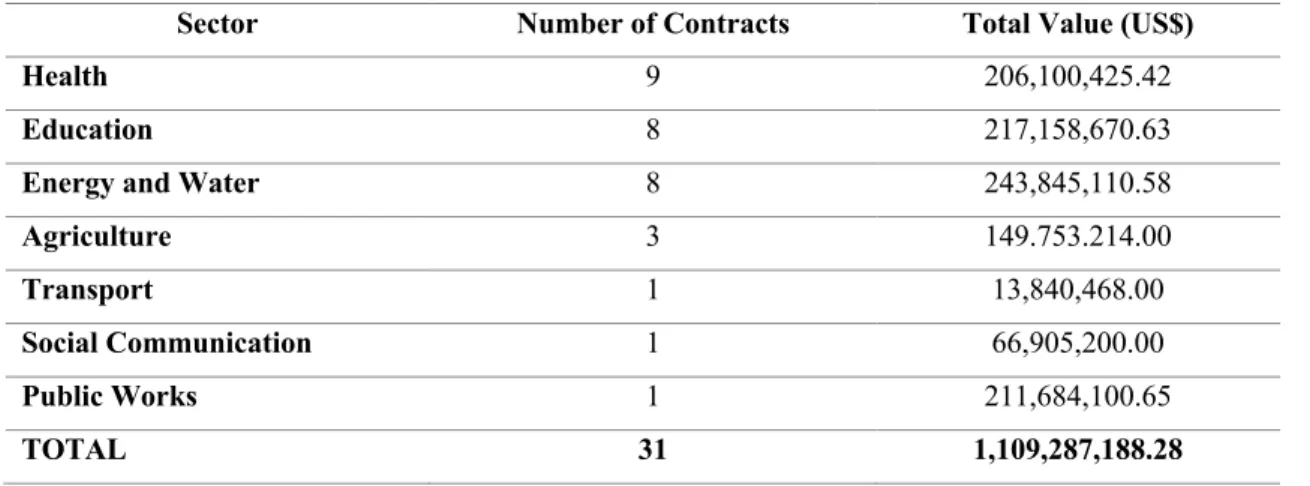
Figure 4. Projects funded by EximBank (Phase I).
Sector Number of Contracts Total Value (US$)
Health 9 206,100,425.42
Education 8 217,158,670.63
Energy and Water 8 243,845,110.58
Agriculture 3 149.753.214.00
Transport 1 13,840,468.00
Social Communication 1 66,905,200.00
Public Works 1 211,684,100.65
TOTAL 31 1,109,287,188.28
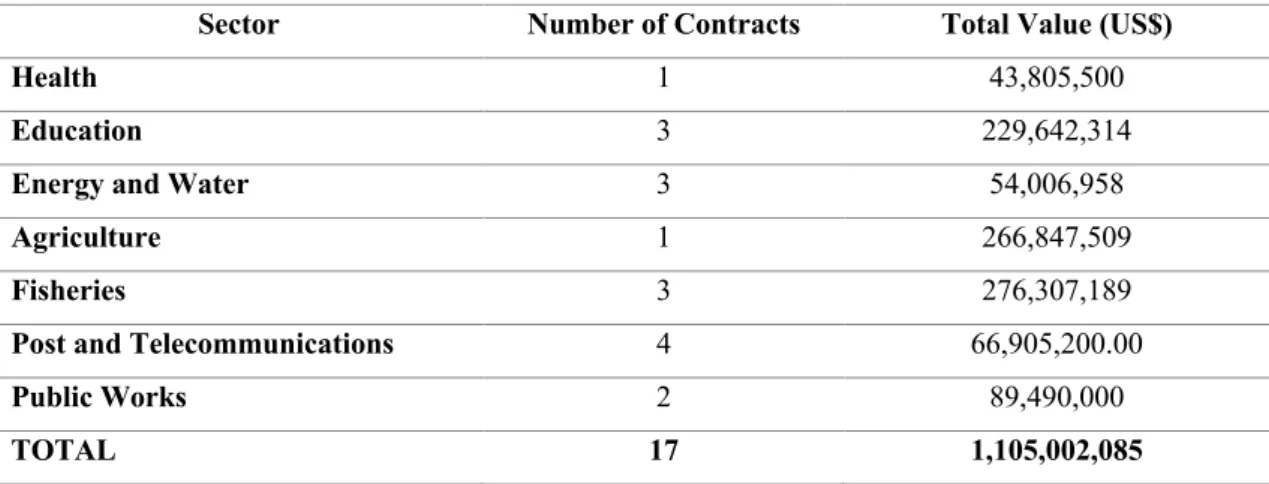
Figure 5. Projects Funded by EximBank (Phase II)
Sector Number of Contracts Total Value (US$)
Health 1 43,805,500
Education 3 229,642,314
Energy and Water 3 54,006,958
Agriculture 1 266,847,509
Fisheries 3 276,307,189
Post and Telecommunications 4 66,905,200.00
Public Works 2 89,490,000
TOTAL 17 1,105,002,085
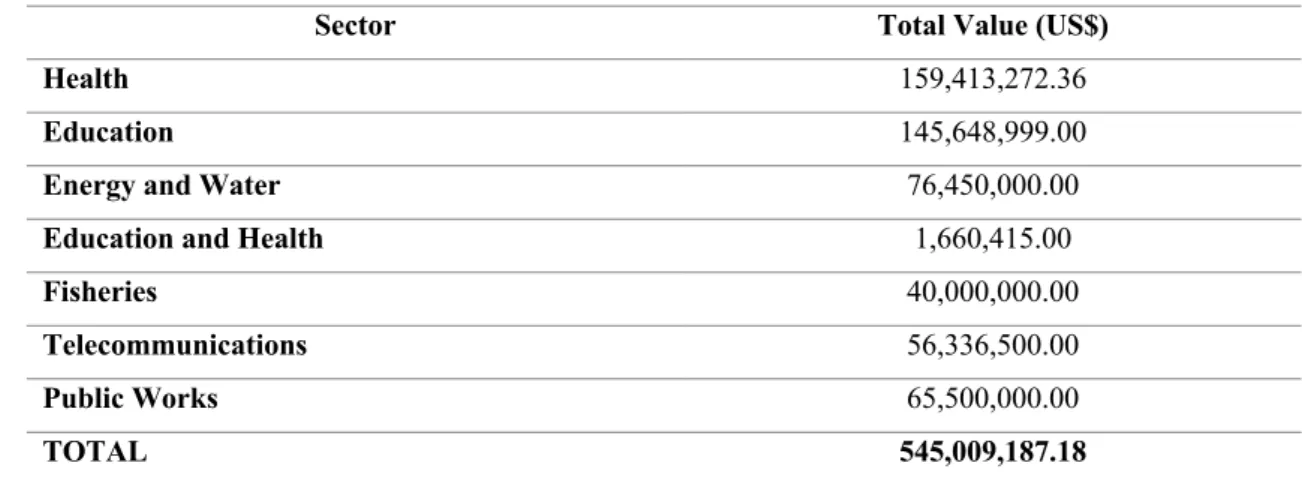
Figure 6. "Complementary Action" Projects of EximBank
Sector Total Value (US$)
Health 159,413,272.36
Education 145,648,999.00
Energy and Water 76,450,000.00
Education and Health 1,660,415.00
Fisheries 40,000,000.00
Telecommunications 56,336,500.00
Public Works 65,500,000.00
TOTAL 545,009,187.18
Source: Ministry of Finance of Angola (2007). Retrieved 30 December 2020 from https://www.csis.org/analysis/angola-and-china-pragmatic-partnership
Moreover, it is worth noting that China's involvement in Angola's domestic affairs is not perceived as threats to Angola because China does not have a colonial legacy in African territory (Haroz, 2011). African countries, therefore, consider China as an African ally and savior that can be trusted in partnering to provide required funding without any 'attachments'. Such confidence is optimally used by China to deepen the exercise of its economic means to Angola.
Investment and Loan Assistance as Instruments Creating Angola’s Continuous Dependency on China
China implements two ways to increase Angloa’s dependence: by providing development assistance and by making a long-term investment so that the oil-supplying countries will not easily interrupt the oil supply (Oktapiani, 2015). China's provision of development
Ghina Salsabila & Indra Kusumawardhana
assistance to Angola is made through the Loan for Oil mechanism, which requires creditors to pay with its oil reserves. Therefore, China's assistance for Angola is also acknowledged as an oil-backed loan or the Angolan Model (Alves, 2010). For instance, Angola has been paying its debt to China by exporting 10.000 barrels of oil to China per day (Tukumbi, 2011).
All the Chinese economic diplomacy mechanisms are initiated and ran subtly through the loan assistance mechanism. Of the five largest recipients of China's loans in Africa, during the 2000 to 2014 period, only two were oil producers i.e., Angola and Sudan. As it has previously stated, they received loans with oil as a condition to repay (Vasquez, 2019). As a result, Angola became an African country that received the largest loan from China during that mentioned period.
Figure 7. Top China’s Loan Recipients from Africa in 2000-2014.
Country Billion US$
Angola 21.20
Ethiopia 12.30
Sudan 5.60
Kenya 5.20
DRC 4.90
Source: Vasquez (2019). Retrieved 30 December 2020 from https://journals.openedition.org/poldev/3174?lang=en
China, with its rapid growth of industrialisation is undoubtedly in need of an abundant oil supply to support its domestic industry. Hence, in 2011, China imported large quantity of crude oil from Angola, which amounted to 5.1 million barrels per day.
However, due to increasing demand, the number grew about 6.3% since 2011 (Burgos &
Ear, 2012). At least in 2009, Bloc 15, 17, and 18 have been partially acquired by China.
The area is said to contain 3.2 billion barrels of oil reserves and is capable of producing around 150.000 barrels per day (Oktapiani, 2015). Thus, to strengthen its relations with African countries, China does it in three main ways i.e., investment, cooperation, and assistance. In the Angolan oil bloc itself, China's present and activities include (Zhao, 2011):
a. Bloc 3/80: In 2004, Sinopec, a China’s oil company, attempted to obtain production rights in Bloc 3/80. Sinopec’s offer also included EximBank credit