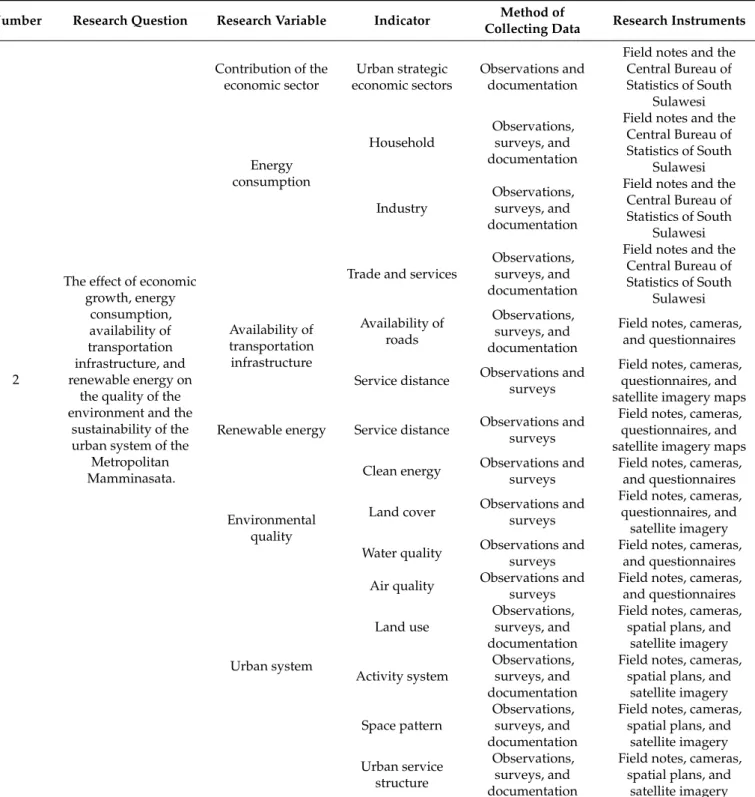
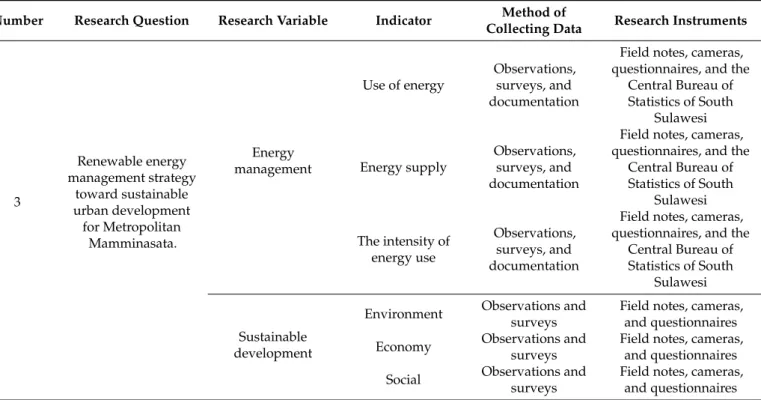
The government of Indonesia has formulated and implemented several strategic programs compiled under several binding frameworks, i.e. the National Energy Policy and the General Plan for National Energy [16]. The use of renewable energy to ensure the sustainability of urban development is important to maintain energy stability and security in the development of the Metropolitan Mamminasata system. Furthermore, the development of the Mamminasata Metropolitan urban area has a direct relationship with the fulfillment of the distribution of energy services based on the service range of developing city activities, that is, the distribution of energy services refers to urban service activities based on developing land use and spatial functions [27 ].
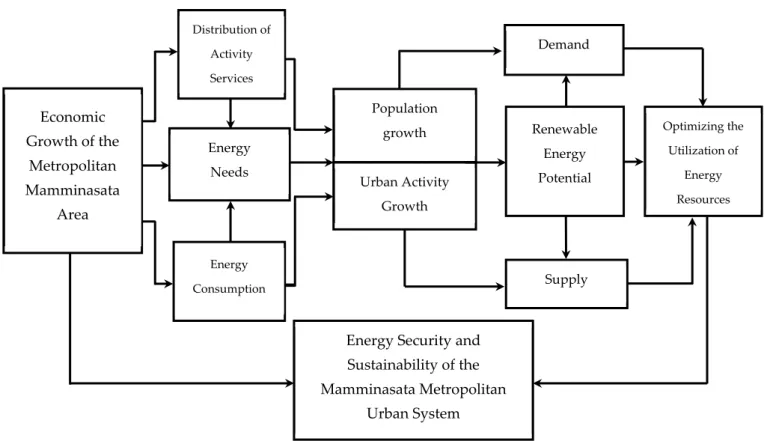
In the context of the development of the Metropolitan Mamminasata area, the energy sector plays an important role in realizing national resilience [40,41]. These three factors have an impact on the inequalities in energy services in the development of the Metropolitan Mamminasata area. The development of the Metropolitan Mamminasata area, which is dominant in the concentration of socio-economic activities, has a direct impact on the distribution pattern of energy demand.
(2) Use of non-renewable energy has an impact on reducing the quality of the urban environment for Metropolitan Mamminasata;. The sustainability of the Metropolitan Mamminasata system is directly related to the pattern and distribution of energy services. An excessive use of energy will result in a scarcity of energy resources and a decrease in the quality of the urban environment of Metropolitan Mamminasata.
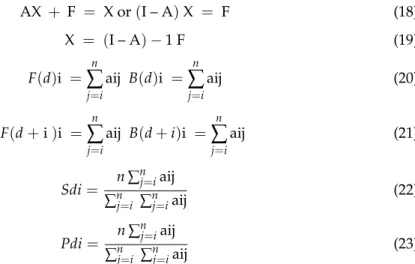
Multiplier analysis was used to determine the impact of changes in endogenous variables, i.e. certain sectors when there is a change in exogenous variables ie. final demand.
Quadrant I
Result
The limited supply and depletion of fossil energy resources and the tendency of energy consumption to increase intermittently threaten the sustainability of the Metropolitan Mamminasata area. The use of renewable energy is a necessity to support environmental sustainability towards the effectiveness and efficiency of natural resource use [89,90]. The index of linkage of the Metropolitan Mamminasata economic sector is shown in Figure 5.
High dependence on fossil energy is positively associated with a decline in the quality of the urban environment. High dependence on fossil energy is positively associated with a decline in the quality of the urban environment. The fulfillment of the energy needs of the Metropolitan Mamminasata area is related to the area's ability to provide service functions that are accessible to residents.
The previous section explains the dependence of the Metropolitan Mamminasata area on fossil energy sources in relation to the development of the Metropolitan Mamminasata area. The previous section explains the dependence of the Metropolitan Mamminasata area on fossil energy sources in relation to the development of the Metropolitan Mamminasata area. Energy resources relate to potential natural resources that can be used to support the development of the Metropolitan Mamminasata area.
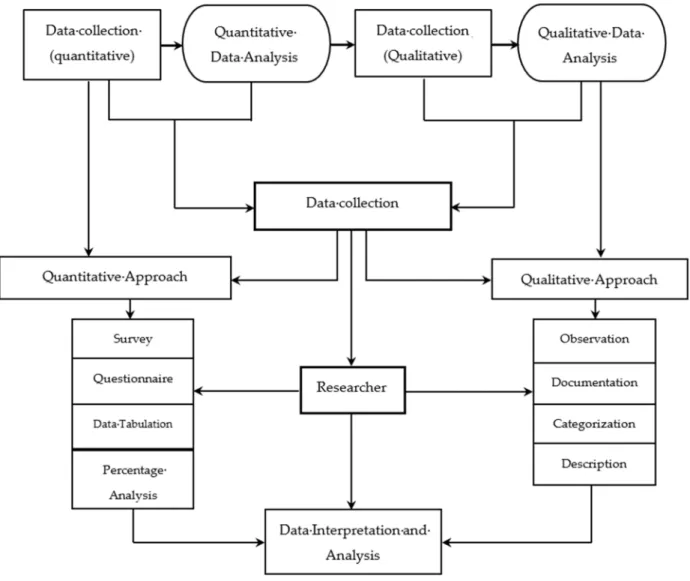
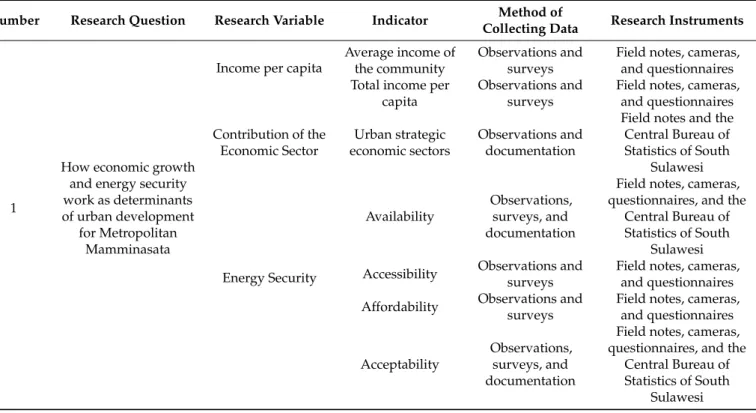
Field observations provide an overview of (1) the energy consumption of the community, (2) the support for the availability of infrastructure, and (3) the use of renewable energy. Field observations provide an overview of (1) the energy consumption of the community, (2) the support for the availability of infrastructure, and (3) the use of renewable energy. The effect of economic growth, energy consumption savings, availability of infrastructure and renewable energy on the environmental quality of the Metropolitan Mamminasata city is shown in Table 10.
The effects of economic growth, energy consumption savings, infrastructure availability and renewable energy on the sustainability of the Metropolitan Mamminasata system are shown in Table 11. For example, economic growth, energy consumption savings, infrastructure availability and renewable energy have a positive impact on the sustainability of the Metropolitan Mamminasata system, with a coefficient of determination of 75.7%. Economic growth that focuses on the excessive use of fossil energy to support the development of the Metropolitan Mamminasata area will cause environmental degradation.
This means that strategic steps are needed in the management of renewable energy resources to support the sustainable development of the Metropolitan Mamminasata system. Government policy interventions, use of renewable energy and sustainable development of the Metropolitan Mamminasata system.
Discussion
The use of renewable resources must be aimed at optimal use of new energy sources, namely air, wind, geothermal, gas and solar energy. Five energy sources have potential for sustainable use of electricity in the Mamminasata Metropolitan area. Optimal use of renewable energy must be supported by government policies with public and private participation (investors).
Government policies on the use of renewable energy can be translated into strategic programs according to targets set by all stakeholders and mutually agreed upon [130]. Bioenergy is a key strategy for mitigating climate change, and the government plays an important role in developing renewable energy policies [131,132]. This grouping refers to the types of conventional fuel oil from non-renewable energy sources and it is possible to replace biofuel with biofuel.
The use of this energy will require various steps and measures: (1) Enforcing mandatory standards, in this case related to health, safety, security and the environment. The goal is to reduce the cost of exploiting renewable energy in the direction of increasing the variety and quantity of renewable energy reserves and to be able to compete with fossil energy. Renewable energy sources will promote regional independence and reduce the greenhouse effect and gas emissions, and are used to achieve the market share of renewable energy [133,134].
Optimizing the use of renewable energy to support the development of the Mamminasata metropolitan area will require efforts and actions towards the integration of the urban system and the determination of program priority scales that are in the short, medium and long term. This effort is carried out by setting prices for electric and non-electric energy from renewable energy followed by special treatment, i.e. fuel from renewable energy. The sustainability of the development of the Metropolitan Mamminasata system is closely related to the optimization of the use of natural resources and the use of renewable energy.
Increasing production towards economic growth that is not compatible with the use of renewable energy will cause environmental degradation. Sustainable development in Metropolitan Mamminasata is oriented towards the formation of a city service structure that effectively and efficiently uses space and distributes energy services, with an emphasis on three main pillars: (i) ensuring sustainable economic growth by restructuring production systems to conserve energy resources, ii) social sustainability, i.e. ensuring social justice in the distribution of wealth and social services, and (iii) environmental sustainability, i.e. maintaining environmental sustainability while remaining comfortable and safe and emitting zero emissions through the use of renewable energy. The sustainability of the Mamminasata Metropolitan system and the distribution of renewable energy services is shown in Figure 11.
Conclusion
Conclusions
Renewable energy management that supports the sustainable development of the Mamminasata Metropolitan area will require a government policy that maximizes sustainable energy use. Income Inequality and CO2 Emissions in Developing Countries: The Moderating Role of Financial Instability. Stability. Effects of energy consumption and national production on CO2 emissions: New evidence from OIC countries using an ARDL panel analysis. Stability.
The complexity of space use and environmental pollution control in the main corridor of Makassar City, South Sulawesi, Indonesia. Sustainability. Slum urban agriculture management and community economic empowerment of Makassar City, South Sulawesi, Indonesia. Sustainability. Integrating functions for a sustainable urban system: an overview of multifunctional land use and circular urban metabolism. Sustainability.
Composite index for energy security evaluation of energy systems: application to the case of Argentina.Energies. Using characteristic energy to study rural ethnic minority household energy consumption and its impact factors in Chongqing, China. Sustainability. Spatial zoning strategy of urbanization based on urban climate co-movement: a case study in mainland Shanghai. Sustainability.
Anthroposizing and growth of the power grid as variables for urban infrastructure analysis. Sustainability. A systematic review of the relationship between energy consumption and economic growth in GCC countries.Sustainability. Hybrid renewable energy microgrids for a residential community: A techno-economic and environmental perspective in relation to SDG7. Sustainability.
The relationship between renewable energy and human development in OECD countries: a panel data analysis. Sustainability. The nexus concept integrating energy and resource efficiency for policy assessments: a comparative approach from three cases. Sustainability. Water quality pollution control and watershed management based on community participation in Maros city, South Sulawesi, Indonesia. Sustainability.