Journal of Enterprise and Development (JED) is licensed under a Creative Commons Attribution- ShareAlike 4.0 International License.
The effect of social media marketing on the growth of business:
evidence from selected Small and Medium Enterprises (SMEs) in Benin City, Nigeria
Eleazar Chibuzor Gbandi1,*, Gloria Osasere Iyamu2 University of Benin, Nigeria1,2
Corresponding e-mail: [email protected]*
ABSTRACT received:
Mar-02, 2022 accepted:
Apr-12, 2022 published:
Jun-01, 2022
Purpose — This research investigated the effect of social media marketing on small and medium-sized business growth in Benin City, Nigeria.
Research method — The study adopted a cross-sectional research design and data was gathered using a specially prepared questionnaire which was scored on a 5-point Likert scale. Four aspects of social media marketing were chosen to be studied: Facebook, Instagram, Twitter, and YouTube. The population of the study includes all SMEs in Benin City, Nigeria. The study's sample size was 500 selected SMEs. The acquired data were analysed using descriptive and inferential statistics.
Result — Facebook, Instagram, Twitter, and YouTube were all found to have a positive and significant impact on the growth of SMEs.
Recommendation — Based on the findings of the study, we urge that SMEs be encouraged to embrace social media marketing in order to compete in the global market. SME owners should also keep their social media accounts updated with content that educates, informs, and persuades customers to buy their products. In addition, SMEs owners should use social media marketing feedback as a catalyst for innovation and expansion.
Keywords: facebook, instagram, twitter, youtube, small medium enterprises
JED | 78
BACKGROUND
Television and outdoor media, as well as public relations, have traditionally been utilised by marketers to reach out to their target market. Unfortunately, most olabaSMEs use social media to overcome some of the medium's limitations.
Simply put, social media is an online platform that allows SMEs to reach out to their intended audience.
Aside from the financial implications of traditional media marketing, social media marketing allows businesses to connect directly with their customers and reach millions of people to promote their products. The way producers and their customers conduct business has changed. Most SMEs find creating customised messages for various platforms to be simple. As a result, social media is an important tool for any business because it allows them to communicate with customers, listen to them, and learn from them in a more efficient and timely manner while using less resources than traditional communication methods (Grewal & Levy, 2020). In addition, many small businesses who have adopted the usage of social media have enhanced their client awareness and accessibility.
Twitter, Facebook, Instagram, YouTube, and LinkedIn are some of the most popular social networking platforms today (Walsh & Lipinski, 2009).
The CBN (2014) defines SMEs as enterprises with annual revenues of less than N 100 million and/or fewer than 300 employees in Nigeria. According to surveys, 96 percent of Nigerian businesses are small and medium-sized, against 53 percent in the US and 65 percent in Europe (Oyelaran-Oyeyinka, 2014).
According to the study, the majority of SMEs in Benin City employ less than 50 people and generate a revenue of N20 million to N50 million each year (Gbandi
& Osifo, 2016).
Despite their dominance and contributions to the national economy, SMEs face fierce competition from large corporations and imported products, goods and services. Because they have been unable to fully use the possibilities of traditional media due to financial constraints, the emergence of social media has been welcomed. Despite the fact that studies on social media and SMEs have been undertaken in other countries and in Nigeria (Oyelaran-Oyeyinka, 2014;
Omotayo et al., 2015; Taiminen and Karjaluoto, 2015).
Onyango (2016) investigated the influence of social media marketing on the success of Kenyan cut flower exporting businesses. According to the data, social media marketing techniques significantly increased revenue, market share, and profitability. In addition, companies that used digital marketing outperformed those that used traditional marketing methods.
Srinivasan, Bajaj, and Bhanot (2016) investigated the notion of social media marketing and its significance in the micro, small, and medium enterprise sector (MSMEs) using a sample of fifty micro, small and medium firms. According to the findings of the study, social media participation has a significant impact on brand visibility and trust, as well as customer acquisition and retention. The study also
JED | 79 found a link between how much time people spend on social media and how much money they make.
Yasmin, Tasneem, and Fatema (2015) investigated the impact of several types of digital marketing on a company's sales. To measure the success of digital marketing, the researchers looked at primary data from 150 organisations and 50 managers who were chosen at random. According to the findings, digital marketing and increased sales have a good association.
Omotayo et al. (2015) investigated how social media marketing affects the performance of small businesses. As part of their research, they delivered 150 questionnaires to managers and employees of selected SMEs in the Ota Metropolis. The data was analysed using descriptive statistics, ANOVA, and the correlation test. Their study revealed that building relationships and networking with other businesses increases brand recognition.
The researchers found no previous study on the impact of social media marketing on SMEs in Benin City. As a result, the goal of this research is to close that information gap. All SMEs in Benin City, Nigeria, were included in the study.
Facebook, Twitter, Instagram, and YouTube will be the platforms examined under the social media marketing for their influence on the growth of SMEs.
The following are the hypotheses that will be tested in this study:
H1 : There is relationship between Facebook marketing on the growth of small and medium-sized businesses in Benin City, Nigeria
H2 : There is relationship between Instagram for marketing on the growth of small and medium-sized businesses in Benin City, Nigeria
H3 : There is relationship between Twitter marketing on the growth of small and medium-sized businesses in Benin City, Nigeria
H4 : There is relationship between YouTube marketing on the growth of small and medium-sized businesses in Benin City, Nigeria
H5 : There is relationship between social media marketing on the growth of small and medium-sized businesses in Benin City, Nigeria
LITERATURE REVIEW
Technology Acceptance Model (TAM)
The Technology Acceptance Model (TAM) was created to investigate the adoption and levels of diffusion of new technology at the individual level, as well as to better understand computer usage behaviour among people. TAM is a term that describes how a user reacts to new technology. TAM identifies elements that may have an impact on how a user adopts and uses technology (Olasanmi, 2019).
Perceived Usefulness (PU) and Perceived Ease of Use (PEU) are the two most important elements in TAM. PU is defined by Davis (1989) as the degree to which a person believes that using a particular system would improve his or her job performance, while PEOU is defined as the degree to which a person believes that using a particular system would be effort-free. It is expected that an entrepreneur attitudes about adopting social media will be influenced by their
JED | 80
perceptions about the growth of their business. This leads to a behavioral intention to utilize such technology, which subsequently leads to the actual usage of social media to market their products. This study is anchored on the theory
Small and Medium Enterprises (SMEs)
SMEs definitions differ from country to country, and there is no universal consensus on what constitutes a small business. The size of the firm, the number of employees, the firm's turnover, and other factors are among the most widely used criteria for defining SMEs (Omotayo et al., 2015; Gbadeyan & Boachie–
Mensah, 2016). However, various government agencies and regulatory entities in Nigeria have provided some definitions. The National Council on Industrial Standards categorised small and medium scale firms (SMEs) as businesses with a total cost (including working capital but excluding land) of N31 million to N150 million and a staff of 11 to 100 employees in 1992 (Omotayo et al., 2015).
According to the Federal Ministry of Industries, a medium-scale firm is one with operating assets of less than N200 million and fewer than 300 employees, while a small-scale enterprise has total assets of less than N50 million and fewer than 100 employees. A small firm is defined by the National Economic Reconstruction Fund (NERFUND) as one with total assets of less than $10 million, however, it makes no mention of annual income or staff count (SMEDAN, 2014). According to the Central Bank of Nigeria, SMEs is defined as enterprises with annual revenues of less than N100 million and/or less than 300 employees. This research is based on the above-mentioned SMEs definitions from the appropriate regulatory authorities in Nigeria.
Social media marketing
Social network marketing is the use of a social media platform to promote a product or service and increase its visibility on the Internet, and it can aid in the development of a social network for exchanging ideas and knowledge (Becker, Nobre, & Kanabar, 2013). On certain social media networks, different communication methods are perceived as more favourable than others.
Facebook is known for its robust platform for customer relationship management (Popp et al., 2016); Twitter is known for its ability to communicate brand messages and quick consumer responses in real-time (Culotta & Cutler, 2016); Instagram is a platform for sharing image-based content (Muñoz &
Towner, 2017) and YouTube is a platform for sharing videos (Indvik, 2011).
According to Salem and Salem (2019), social media allows customers to find useful information about other brands, and if this information meets the customers' expectations for the competitor's product, strong customer satisfaction can develop, leading to the customer choosing or continuing to purchase the item.
Social media marketing is incorporating social media into all phases and components of the marketing mix through social media platforms. It aids in the
JED | 81 promotion of the organization's goods and services as well as the brand (Olabanji et al., 2014) One of the unique advantages of social media marketing is that it allows SMEs to adequately teach and illustrate not only the benefits of their products, but also how to efficiently use them through an online platform with the greatest target audience. Traditional media marketing is being phased out in favour of social media marketing by businesses (Omotayo et al., 2015). In recent years, companies that advertise their products through traditional marketing channels such as television and radio have been urging their clients to visit their social media platforms for more information. This is done to further engage the intended market in a dialogue about the company, its product, price, and location. Customers can follow the organization's activities and further engage with the brand by advertising on social media sites such as Facebook, Twitter, and Instagram, which will affect their purchase intention and advocacy to their network of friends. It is against this background that the research wants to find out if social media marketing has any relationship with the growth of SMEs in Benin City, Nigeria.
SMEs and social media
Facebook, Twitter, Instagram, and YouTube have provided SMEs with a large number of opportunities for both social and business interactions (Gilmore et al., 2001). The majority of SMEs now utilise social media marketing to create and manage their company's fan page, maintain public relations, manage promotions, and conduct marketing research. SMEs also utilise social media to provide customer service and encourage client feedback and discussions (Bettiol, Di Maria & Finotto, 2012). SME networking, which is commonly employed during their establishment, development, and growth, is another key application of social media by SMEs (Walsh & Lipinski, 2009). When it comes to marketing their company, SMEs rely significantly on personal contacts. In contrast to traditional economic arrangements that benefit larger enterprises, this has been made commercially feasible through the usage of social media.
Today's economy, which is characterised by personal interactions, networking, and information collecting, favours SMEs who, rather than relying just on their personal contact network, also rely on consumer networks (Walsh & Lipinski, 2009; Boyd & Ellison, 2007). Despite the benefits of using social media, SMEs are slower to adopt it than consumers (Asuni & Farris, 2011).
SMEs and Facebook
Facebook is a digital communication network developed by Mark Zuckerberg in 2004 at Harvard University (Paquette, 2013). It gave large corporations and small businesses with a variety of options for directly marketing their products to their target market. It is especially beneficial to small businesses since it enables them to grow their operations by selling their products at a low cost, facilitating communication, and expanding their market reach (Paquette, 2013).
JED | 82
SMEs may use Facebook's video feature to advertise their products. This enables SMEs to use video to demonstrate their products. Furthermore, it allows SMEs to explain how to use their products to a specific audience and what sets them apart from the competition.
SMEs can use Facebook to develop a communication strategy for salable brands that will be a key component of the promotional mix. This will be merged as part of a company's integrated marketing communications plan (Mangold & Faulds, 2009). Facebook is important for marketing and, more importantly, for building consumer relationships. It assists in connecting businesses with customers by better understanding their needs and working to address those needs, resulting in the development of a strong relationship. Facebook is also being used as a strategic marketing tool to unearth social injustices, which is important for market development (Zinnbauer & Honer, 2011). This is because Facebook takes into account people's concerns in society, such as moral standards, what is considered beautiful, and fundamental requirements.
Finally, due to the unrestricted flow of information, Facebook has aided SMEs in reaching a wider variety of society. It has also enabled SMEs to remain in constant contact with their customers (Michahelles & Cvijikj, 2013).
SMEs and Instagram
Instagram is a free photo and video-sharing software that allows users to add digital filters, frames, and other effects to their photographs before sharing them on social media networks (Mangold & Faulds, 2009). Organizations and SMEs utilise Instagram as a social media platform to find out what their target audience wants and needs. SME's can utilise the application to learn about their favourite product kind, size, colour, or any other attribute, for example. Consumers are directly involved in free-market research as a result of this. This will allow the SMEs to refocus their marketing approach on effectively and efficiently serving their target market, resulting in a rise in their client base through word-of-mouth referrals. Instagram works by allowing users to create personal and business or brand profiles that are utilised as social media platforms (Boyd & Ellison, 2007).
This will allow users to share personal and professional information, as well as invite friends, submit images, link brands with customers, and promote marketing materials.
According to Neti (2011), Instagram is a great way to connect a brand with a potential customer on a more personal level, and it's also a great way to socialise.
Various businesses use Instagram to interact with a new generation of virtual clients, expanding their reach across marketing platforms. Firms and social media have lately evolved, with many firms turning to Instagram to attract specific categories of customers who display specific behaviours.
Ioanas & Ivona (2014) opined that consumer now have the ability to study items and assess their effectiveness. This may result in criticism and condemnation, particularly if the product fails to deliver on its promises. As a result, many
JED | 83 businesses and small businesses use Instagram to supplement product information already on hand and to solicit input from customers after reading multiple reviews. This gives small businesses the oppurtunity to see what their customers have to say about their goods and services, and to respond appropriately to any of the issues presented. People's perceptions of businesses are changing. Access to open, transparent, and helpful information about a company will give social audiences the sense that the company cares about its current and potential consumers, thus strengthening the tie of trust between the company and its customers (Ioanas & Ivona, 2014).
SMEs and Twitter
Twitter is a microblogging and social networking website that allows Individuals and groups to communicate by sending short status messages with a character limit of 140 (Grewal & Levy, 2020). The Internet and the evolution of information technology has made it simpler for businesses to communicate with their customers, and Twitter has emerged as the most useful (Kirtis & Karahan, 2011).
Twitter is essential for customer relationship building and marketing. Twitter has a low barrier to entry, and as such, small businesses are starting to use it as a marketing tool. Businesses can use Twitter to communicate with customers in order to build relationships and obtain a better understanding of their needs. A company must have a presence where customers congregate in order to optimise their reach. They are increasingly using social media platforms such as Twitter to communicate (Halligan & Shah, 2010). Because of their modest size, small businesses have an edge in terms of getting close to clients and getting useful feedback (Taylor, Strutton, & Thompson, 2012).
Small firms can take use of marketing opportunities provided by networking, such as the usage of Twitter and word-of-mouth marketing, with such an advantage. Businesses can connect with clients on Twitter in a more timely and direct manner, at a lesser cost and with higher efficiency, than they can with more traditional communication techniques. As a result, both large and small firms can benefit from social media (Kaplan & Haenlein, 2010). As a kind of engagement with the brand, Twitter allows customers to leave comments or make inquiries. Managers can use Twitter to also find out what others are saying about their business and communicate with customers (Reyneke, Pitt, &
Berthon, 2011). Tweeting allows SMEs to develop new business, promote, and assist brands. Twitter also play a unique role in Buzz marketing, which is essentially an extension of traditional word-of-mouth communication by allowing customers to chat to one another (Mangold & Faulds, 2009).
SMEs and YouTube
YouTube was launched in 2005 and has since grown to become the most popular online video community on the planet (Edosomwan et al., 2011). Millions of internet users have been able to find, view, and share original video content
JED | 84
because of it. It is used by businesses to promote their products to current and new clients. Furthermore, both large and small businesses utilise YouTube to teach their customers on how to use their products as well as give instructional resources for learning or training (Brightpearl, 2011).
YouTube may help in raising brand awareness, promote a certain product, and boost business sales in a short amount of time. YouTube may also be used to review products in videos and to include referral links in the video description boxes. In general, businesses can use YouTube to promote their products' content (Gerhards, 2019).
RESEARCH METHOD
This study adopted a cross-sectional research design in conjunction with a well- structured questionnaire to gather information from owners of SMEs in Benin City's four local government regions. Cluster and random sampling were utilised to choose 500 Benin City-based SMEs, with the SMEs population being divided into mutually exclusive clusters by local government areas, namely Egor, Ikpoba- Okah, Oredo, and a portion of Ovia North local government.
In order to achieve an acceptable spread and representation of all SMEs in Benin City, 125 SMEs from each local government district were chosen. The researchers created a 5-item variable that was evaluated on a 5-point Likert-type scale ranging from strongly disagree to strongly agree,' allowing for statistical measures of the issues at hand. Respondents' completed questionnaires were gathered as soon as they were completed. As a result, no non-response, early, or late response analyses were not necessary for this study.
The instrument's content validity was verified by the opinions of experts in the fields of marketing and consumer behaviour, and its reliability was determined by Cronbach's alpha coefficient. The data was gathered and analysed using frequency, percentages, and means while the test of research hypotheses was carried out with a linear and multiple regression with the aid of Statistical Package for Social Science (SPSS version 20.0). The specific models that guided the study are stated below:
GSME = β0+β1FBK+Ꜫi………..(1)
GSME = β0+β1INS+Ꜫi………(2)
GSME = β0+β1TWI+Ꜫi………..(3)
GSME = β0+β1YOT+Ꜫi………..(4)
GSME = β0+β1FBK+β2INS+β3TWI+β4YOT+Ꜫi………...(5) Where:
GSME = Growth of SMEs FBK = Facebook INS = Instagram TWI = Twitter YOT = You Tube Ꜫi = Error Term
JED | 85 RESULT AND DISCUSSION
Data presentation and analysis
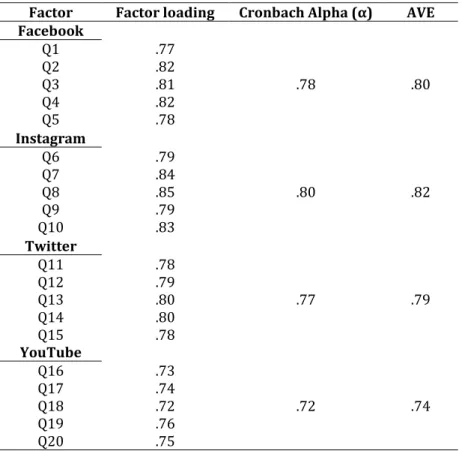
Table 1. Reliability and convergent validity
source: processed data (2019)
The total Cronbach coefficient alpha (α) for the items associated with the construct are Facebook 0.78, Instagram 0.80, Twitter 0.77, and YouTube 0.82, according to Table 1. The high Cronbach's alpha test scores suggested that the measurement's reliability, dependability, and predictability were sufficient for the study.
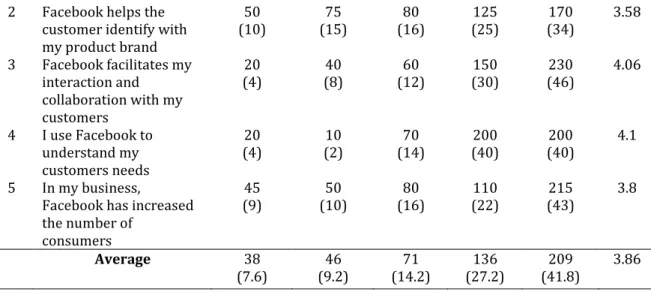
Table 2. Respondents’ opinion on the relationship between Facebook marketing and growth of SMEs in Benin City
S/N ITEMS Strongly
disagree 1
Disagree 2
Neutral 3
Agree 4
Strongly agree
5
Index
f (%) f (%) f (%) f (%) f (%)
1 My products' brand
awareness has risen 55
(11) 55
(11) 65
(13) 95
(19) 230
(46) 3.78 Factor Factor loading Cronbach Alpha (α) AVE
Facebook Q1 Q2 Q3 Q4 Q5
.77 .82 .81 .82 .78
.78 .80
Instagram Q6 Q7 Q8 Q9 Q10
.79 .84 .85 .79 .83
.80 .82
Twitter Q11 Q12 Q13 Q14 Q15
.78 .79 .80 .80 .78
.77 .79
YouTube Q16 Q17 Q18 Q19 Q20
.73 .74 .72 .76 .75
.72 .74
JED | 86
2 Facebook helps the customer identify with my product brand
50
(10) 75
(15) 80
(16) 125
(25) 170
(34) 3.58 3 Facebook facilitates my
interaction and collaboration with my customers
20
(4) 40
(8) 60
(12) 150
(30) 230
(46) 4.06
4 I use Facebook to understand my customers needs
(4) 20 10
(2) 70
(14) 200
(40) 200
(40) 4.1 5 In my business,
Facebook has increased the number of
consumers
45
(9) 50
(10) 80
(16) 110
(22) 215
(43) 3.8
Average 38
(7.6) 46
(9.2) 71
(14.2) 136
(27.2) 209
(41.8) 3.86 source: processed data (2019)
Table 2 above shows an index of 3.86 out of the maximum of 5, which is a strong indication of the relationship between Facebook marketing and the growth of SMEs in Benin City. It also further shows that, a significant proportion of respondents 69 percent out of which 41.8 percent articulated strong agreement and 27.2 percent articulated agreement express that Facebook marketing has contributed to the growth of SMEs in Benin City. On the other hand, 16.8 percent expressed their disagreement while 14.2 percent articulated neutral opinion.
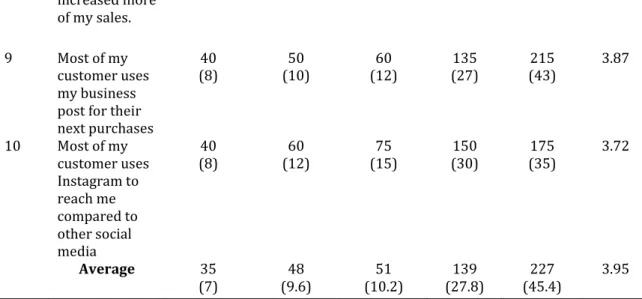
Table 3. Respondents’ opinion on the relationship between Instagram marketing and growth of SMEs in Benin City
S/N ITEMS Strongly disagree
1
Disagree 2
Neutral 3
Agree 4
Strongly agree
5
Index
f (%) f (%) f (%) f (%) f (%)
6 Instagram has enabled me to send samples, adverts, and other items to my customers
30
(6) 40
(8) 30
(6) 135
(27) 265
(53) 4.13
7 Instagram enables my business to connect deeper with my customer
15
(3) 25
(5) 35
(7) 175
(35) 250
(50) 4.24
8 Instagram has influenced my customer buying decision and
50
(10) 65
(13) 55
(11) 100
(20) 230
(46) 3.79
JED | 87
increased more of my sales.
9 Most of my customer uses my business post for their next purchases
40
(8) 50
(10) 60
(12) 135
(27) 215
(43) 3.87
10 Most of my customer uses Instagram to reach me compared to other social media
40
(8) 60
(12) 75
(15) 150
(30) 175
(35) 3.72
Average 35
(7) 48
(9.6) 51
(10.2) 139
(27.8) 227
(45.4) 3.95 source: processed data (2019)
Table 3 above shows an index of 3.95 out of the maximum of 5, which is a strong indication of the use of Instagram marketing to the growth of SMEs in Benin City.
It also further shows that, a significant proportion of respondents, 73.2 percent out of which 45.4 percent articulated strong agreement and 27.8 percent articulated agreement that Instagram marketing has contributed to the growth of SMEs in Benin. On the other hand, 10.2 percent expressed their disagreement while 16.6 percent articulated neutral opinion.
Table 4. Respondent’s opinion on the relationship between Twitter marketing and growth of SMEs in Benin City
S/N ITEMS Strongly
disagree 1
Disagree 2
Neutral 3
Agree 4
Strongly agree
5
Index
f (%) f (%) f (%) f (%) f (%)
11 My customer is influenced to buy my products through Twitter
30
(6) 60
(12) 55
(11) 125
(25) 230
(46) 3.93
12 Using twitter encourage my better understanding of my customers’ needs
75
(15) 50
(10) 125
(25) 100
(20) 150
(30) 3.4
13 The use of Twitter in my business has reduced my operating costs.
60 (12) 90
(18) 75
(15) 100
(20) 175
(35) 3.48
14 My usage of Twitter in my business, has increased the number of my sales.
60
(12) 70
(14) 65
(13) 150
(30) 155
(31) 3.54
JED | 88
15 Twitter has increased my customer
purchasing decision in my business.
25
(5) 65
(13) 55
(11) 175
(35) 180
(36) 3.84
Average 50
(10) 67
(13.4) 75
(15) 130
(26) 178
(35.6) 3.64 source: processed data (2019)
Table 4 above shows an index of 3.64 out of the maximum of 5, which is a strong indication of the use of Twitter marketing to the growth of SMEs in Benin City. It also clearly shows that, a significant proportion of respondents, 61.6 percent out of which 35.6 percent articulated strong agreement and 26 percent articulated agreement that Twitter marketing has contributed to the growth of SMEs in Benin. On the other hand, 23.4 percent expressed their disagreement while 15 percent articulated a neutral opinion.
Table 5. Respondents’ opinion on the relationship between YouTube marketing and growth of SMEs in Benin City
S/N ITEMS Strongly
disagree 1
Disagree 2
Neutral 3
Agree 4
Strongly agree
5
Index
f (%) f (%) f (%) f (%) f (%)
16 YouTube has been able to showcase my products in videos and sound.
(9) 45 40
(8) 80
(16) 160
(32) 175
(35) 3.76
17 I am finding YouTube advertising beneficial for my business
35
(7) 75
(15) 65
(13) 185
(37) 140
(28) 3.64
18 I have influence customers to buy my products through YouTube
25
(5) 55
(11) 115
(23) 155
(31) 150
(30) 3.70
19 YouTube has increased my consumer
purchasing decision in my business
65
(13) 50
(10) 30
(6) 160
(32) 195
(39) 3.74
20 Using YouTube in my business have increased the number of my sales
25
(5) 55
(11) 100
(20) 165
(33) 155
(31) 3.74
Average 39
(7.8) 55
(11) 78
(15.6) 165
(33) 163
(32.6) 3.72 source: processed data (2019)
JED | 89 Table 5 above shows an index of 3.72 out of the maximum of 5, which is a strong indication of the use of YouTube marketing to the growth of SMEs in Benin City.
It also clearly shows that, a significant proportion of respondents, 65.6 percent out of which 32.6 percent articulated strong agreement and 33 percent articulated agreement that Instagram marketing has contributed to the growth of SMEs in Benin. On the other hand, 18.8 percent expressed their disagreement while 15.6 percent articulated a neutral opinion.
Table 6. Respondents opinion on the relationship between social media marketing and growth of SMEs in Benin City
S/N ITEMS Strongly
disagree 1
Disagree 2
Neutral 3
Agree 4
Strongly agree
5
Index
f (%) f (%) f (%) f (%) f (%)
21 Facebook has enabled me to increase the sales of my products
(6) 30 25
(5) 40
(8) 160
(32) 245
(49) 4.13
22 Instagram has helps me to increase my customer base
25
(5) 35
(7) 95
(19) 185
(37) 190
(38) 3.90 23 Twitter has been a
vital tool for marketing and creating of cordial relationship with my customer
(7) 35 40
(8) 75
(15) 185
(37) 165
(33) 3.81
24 YouTube have enabled me to showcase my product and explain the usefulness to my customers
25
(5) 25
(5) 100
(20) 140
(28) 210
(42) 3.97
25 Social media marketing has led to the growth of my business
(5) 25 40
(8) 50
(10) 160
(32) 225
(45) 4.04
Average 28
(5.6) 33
(6.6) 72
(14.4) 154
(32) 207
(41.4) 3.97 source: processed data (2019)
Table 6 above shows an index of 3.97 out of the maximum of 5, which is a strong indication of the use of social media marketing to the growth of SMEs in Benin City. It also clearly shows that, a significant proportion of respondents, 73.4 percent out of which 41.4 percent articulated strong agreement and 30.8 percent articulated agreement that social media marketing has contributed to the growth of SMEs in Benin. On the other hand, 12.2 percent expressed their disagreement while 14.4 percent articulated a neutral opinion.
JED | 90
Hypotheses test
Table 7a. ANOVAon Facebook marketing and growth of SMEs
Model Sum of
Squares df Mean
Square F Sig
1 Regression 176.400 1 176.400 199.201 .000
Residual 440.998 498 .886
Total 617.398 499
a. Dependent Variable: GSME b. Predictors: (Constant), FCBK α = .05, F = 199.201, P = .000, P < .05
Table 7b. Regressionon Facebook marketing and growth of SMEs
Model R R
Square Adjusted
R Square Std. Error of the Estimate
Change Statistics R
Square Change
F
Change df1 df2 Sig. F Change
1 .535a .286 .284 .94103 .286 199.201 1 498 .000
a. Predictors: (Constant), FCBK R = .286, Adjusted R Square = .284
The F value in Table 7a is 199.201, while the P-value is 0.000. The P-value of 0.001 is less than the alpha level when testing at an alpha level of 0.05. As a result of the P<0.05, the null hypothesis that there is no significant association between Facebook marketing and SMEs growth is rejected, indicating that there is a substantial relationship between Facebook marketing and SMEs growth. The results, presented in Table 7b, further show support that Facebook marketing affects the growth of SMEs. The adjusted R-square value of 0.286 (R²=0.286) is an indication that 28.6 percent of SMEs growth was explained by Facebook marketing. Therefore, Facebook marketing significantly affects the growth of SMEs.
Table 8a. ANOVAon Instagram marketing and growth of SMEs
Model Sum of
Squares df Mean
Square F Sig
1 Regression 251.651 1 251.651 342.648 .000b
Residual 365.747 498 .734
Total 617.398 499
a. Dependent Variable: GSME b. Predictors: (Constant), ISTG α = .05, F = 342.648, P = .000, P < .05
JED | 91
Table 8b. Regressionon Instagram marketing and growth of SMEs
Model R R
Square Adjusted
R Square Std. Error of the Estimate
Change Statistics R
Square Change
F
Change df1 df2 Sig. F Change
1 .638a .408 .406 .85699 .408 342.648 1 498 .000
a. Predictors: (Constant), ISTG R = .638, Adjusted R Square = .408
The F value is 342.648, and the P-value is 0.000 in Table 8a. The P-value of 0.001 is less than the alpha level when testing at an alpha level of 0.05. As a result of the P<0.05, the null hypothesis that there is no significant association between Instagram marketing and SMEs growth is rejected, indicating that there is a substantial relationship between Instagram marketing and SMEs growth. The results, presented in Table 8b, further show the support that Instagram marketing affects the growth of SMEs. The adjusted R-square value of 0.638 (R²=0.638) is an indication that 63.8 percent of SMEs growth was explained by Instagram marketing. Therefore, Instagram marketing significantly affects the growth of SMEs.
Table 9a. ANOVAon Twitter marketing and growth of SMEs
Model Sum of
Squares df Mean
Square F Sig
1 Regression 355.084 1 355.084 674.121 .000b
Residual 262.314 498 .527
Total 617.398 499
a. Dependent Variable: GSME b. Predictors: (Constant), TWIT α = .05, F = 674.121, P = .000, P < .05
Table 9b. Regressionon Twitter marketing and growth of SMEs
Model R R
Square Adjusted
R Square Std. Error of the Estimate
Change Statistics R
Square Change
F
Change df1 df2 Sig. F Change
1 .758a .575 .574 .72577 .575 674.121 1 498 .000
a. Predictors: (Constant), TWIT R = .758, Adjusted R Square = .575
The F value is 674.121, and the P-value is 0.000, as shown in Table 9a. The P- value of 0.001 is less than the alpha level when testing at a level of 0.05. As a result of P< 0.05, the null hypothesis that there is no significant association between twitter marketing and SMEs growth is rejected, indicating that there is a meaningful relationship. The results, presented in Table 9b, further show support that Twitter marketing affects the growth of SMEs. The adjusted R- square value of 0.575 (R²=0.575) is an indication that 57.5 percent of SMEs
JED | 92
growth was explained by Twitter marketing. Therefore, Twitter marketing significantly affects the growth of SMEs.
Table 10a. ANOVAon YouTube marketing and growth of SMEs
Model Sum of
Squares df Mean
Square F Sig
1 Regression 507.941 1 507.941 2311.006 .000b
Residual 109.457 498 .220
Total 617.398 499
a. Dependent Variable: GSME b. Predictors: (Constant), YUTB α = .05, F = 507.941, P = .000, P < .05
Table 10b. Regressionon YouTube marketing and growth of SMEs
Model R R
Square Adjusted
R Square Std. Error of the Estimate
Change Statistics Square R
Change
Change F df1 df2 Sig. F Change
1 .907a .823 .822 .46882 .823 2311.006 1 498 .000
a. Predictors: (Constant), YUTB R = .907, Adjusted R Square = .823
The F value of 507.941 and a P-value of 0.000 are shown in Table 10a. The P- value of 0.001 is less than the alpha level when testing at a level of 0.05. As a result of P< 0.05, the null hypothesis that there is no significant association between YouTube marketing and SMEs growth is rejected, implying that there is a meaningful relationship. The results, presented in Table 10b, further show the support that YouTube marketing affects the growth of SMEs. The adjusted R- square value of 0.823 (R²=0.823) is an indication that 82.3 percent of SMEs growth was explained by YouTube marketing. Therefore, YouTube marketing significantly affects the growth of SMEs.
Table 11a. ANOVAon social media marketing and growth of SMEs
Model Sum of
Squares df Mean
Square F Sig
1 Regression 522.030 4 130.507 677.385 .000b
Residual 95.368 495 .193
Total 617.398 499
a. Dependent Variable: GSME
b. Predictors: (Constant), YUTB, FCBK, TWIT, ISTG α = .05, F = 677.385, P = .000, P < .05
JED | 93
Table 11b. Regressionon social media marketing and growth of SMEs
Model R R
Square Adjusted
R Square Std. Error of the Estimate
Change Statistics R
Square Change
F
Change df1 df2 Sig. F Change
1 .920a .846 .844 .43893 .846 677.385 4 495 .000
a. Predictors: (Constant), YUTB, FCBK, TWIT, ISTG R = .920, Adjusted R Square = .846
Table 11a shows that the combinations of Facebook, Instagram, Twitter, and YouTube (social media marketing) have a positive and significant relationship with the growth of SMEs at P<0.05. The F values of 677.385 also indicate that when all of the independent factors are considered together, they explain a large amount of SMEs’ growth. Table11b also reveals that the F value is 677.385 and the P-value is 0.000. The P-value of 0.000 is less than the alpha level when testing at a level of 0.05. As a result, the null hypothesis, that there is no substantial relationship between social media marketing and SMEs' growth is rejected. The R square value of 0.846 implies that social media marketing account for 84.6 percent of the growth of SMEs. Consequently, there is a significant relationship between social media marketing and the growth of SMEs. This means that social media marketing supports the growth of SMEs.
Discussion
The association between social media marketing and the growth of SMEs in Benin City was investigated in this study. The study discovered a link between social media marketing on Facebook, Instagram, Twitter, and YouTube and the growth of SMEs in Benin City. This finding is consistent with Srinivasan, Bajaj, and Bhanot (2016) who found that SMEs' participation in social media marketing had a significant impact on brand awareness and brand trust, as well as customer acquisition and retention.
The study also backs up previous research by Omotayo et al. (2015) who found that social media makes businesses visible to a target audience, allowing them to reach a large number of potential customers, and Kithinji (2014) who found that internet marketing improved SMEs' profitability, market share, and ability to expand their market growth. The findings of the study are also in line with Yasmin, Tasneem, and Fatema (2015) who found a link between digital marketing and increased sales. It also stated that all digital marketing aspects, such as online advertising, SEO, email marketing, and social media, had a favourable impact on a company's sales.
CONCLUSION
The goal of this study was to see if there was a link between social media marketing and the growth of SMEs in Benin City, Nigeria. The study looked at
JED | 94
four aspects of social media marketing: Facebook, Instagram, Twitter, and YouTube as the independent variables, as well as the growth of SMEs as the dependent variable. As a data analysis technique, the study used both descriptive and inferential statistics.
The four variables of Facebook, Instagram, Twitter, and YouTube were found to have a substantial relationship with the growth of SMEs in Benin City, Nigeria.
The combination of the four factors also reveals that social media marketing and SMEs' growth in Benin City have a favourable and substantial link. Based on the findings, the study indicates that social media marketing is highly related to SMEs' growth in Benin City, with social media marketing accounting for 84.6 percent of SMEs' growth. As a result of our findings, we advocate that SMEs embrace social media marketing to help them to compete in the global market.
Second, small business owners should maintain their social media accounts current with material that informs, educates, and persuades customers to buy their items. The National Communication Commission (NCC) should keep an eye on telecommunications companies to make sure they're providing a solid network for SMEs to use for social media marketing. Finally, SME owners should use social media marketing as a foundation for business development, innovation, and improvement.
JED | 95 REFERENCES
Asuni, J. B., & Farris, J. (2011). Tracking Social Media. Yar’Adua Foundation.
https://www.yaraduafoundation.org/files/tracking.pdf
Becker, K., Nobre, H., & Kanabar, V. (2013). Monitoring and protecting the company and brand reputation on social network: When sites are not enough. 15(2/3), 293–308.
Bettiol, M., Di Maria, E., & Finotto, V. (2012). Marketing in SMEs: The role of entrepreneurial sensemaking. International Entrepreneurship and Management Journal, 8(2), 223–248. https://doi.org/10.1007/s11365- 011-0174-3
Boyd, D. M., & Ellison, N. B. (2007). Social Network Sites: Definition, History, and Scholarship. Journal of Computer-Mediated Communication, 13(1), 210–
230. https://doi.org/10.1111/j.1083-6101.2007.00393.x
Brightpearl. (2011). A Practical Guide to Increasing Online Sales through Inbound Marketing. https://www.yumpu.com/en/document/read/7048391/6- strategies-for-attracting-more-shoppers-to-your-brightpearl
Central Bank of Nigeria (CBN). (2014). CBN annual report 2014. Central Bank of Nigeria. www.cbn/annual report/2014
Culotta, A., & Cutler, J. (2016). Mining Brand Perceptions from Twitter Social Networks. Marketing Science, 35(3), 343–362.
https://doi.org/10.1287/mksc.2015.0968
Davis, F. D. (1989). Perceived Usefulness, Perceived Ease of Use, and User Acceptance of Information Technology. MIS Quarterly, 13(3), 319.
https://doi.org/10.2307/249008
Edosomwan, S., Prakasan, S., D., K., Watson, J., & Seymour, T. (2011). The history of social media and its impact on business. The Journal of Applied Management & Entrepreneur, 16(3), 79–91.
Gbadeyan, R. A., & Boachie-Mensah, F. O. (2016). Social Media Marketing Strategies for Small Business Sustainability: A Study on Selected Online Shoppers in Cape Coast, Ghana. FUTA Journal of Management and Technology, 84–99.
Gbandi, E., & Osifo, S. (2016). Diversity Marketing and the Growth of Small and Medium Scale Enterprises (SMEs) in Nigeria. Nigerian Academy of Management Journal, 10(1), 24–32.
Gerhards, C. (2019). Product placement on YouTube: An explorative study on YouTube creators’ experiences with advertisers. Convergence: The International Journal of Research into New Media Technologies, 25(3), 516–533. https://doi.org/10.1177/1354856517736977
JED | 96
Gilmore, A., Carson, D., & Grant, K. (2001). SME marketing in practice. Marketing
Intelligence & Planning, 19(1), 6–11.
https://doi.org/10.1108/02634500110363583
Grewal, D., & Levy, M. (2020). Marketing (Seventh edition). McGraw-Hill Education.
Halligan, B., & Shah, D. (2010). Inbound marketing: Get found using Google, social media, and blogs. Wiley.
Indvik, L. (2011, February). Why Fashion’s Top Brands Are Flocking to Tumblr.
https://mashable.com/archive/fashion-tumblr-kate- spade#ankMZrA0kOq3
Ioanas, E., & Ivona, S. (2014). Social Media and its Impact on Consumers Behavior. International Journal of Economic Practices and Theories, 4(2), 295–303.
Kaplan, A. M., & Haenlein, M. (2010). Users of the world, unite! The challenges and opportunities of Social Media. Business Horizons, 53(1), 59–68.
https://doi.org/10.1016/j.bushor.2009.09.003
Kirtis, A. K., & Karahan, F. (2011). To Be or Not to Be in Social Media Arena as the Most Cost-Efficient Marketing Strategy after the Global Recession.
Procedia - Social and Behavioral Sciences, 24, 260–268.
https://doi.org/10.1016/j.sbspro.2011.09.083
Kithinji, L. W. (2014). Internet Marketing and Performance of Small and Medium Enterprises in Nairobi County [Thesis; en_US, University of Nairobi].
http://hdl.handle.net/11295/76037
Mangold, W. G., & Faulds, D. J. (2009). Social media: The new hybrid element of the promotion mix. Business Horizons, 52(4), 357–365.
https://doi.org/10.1016/j.bushor.2009.03.002
Muñoz, C. L., & Towner, T. L. (2017). The Image is the Message: Instagram Marketing and the 2016 Presidential Primary Season. Journal of Political
Marketing, 16(3–4), 290–318.
https://doi.org/10.1080/15377857.2017.1334254
Neti, S. (2011). Social Media and its Role in Marketing. International Journal of Enterprise Computing and B International Journal of Enterprise Computing and Business Systems Ting and Business Systems Usiness Systems, 1(2), 1–
15.
Olasanmi, O. O. (2019). Online Shopping and Customers’ Satisfaction in Lagos State, Nigeria. American Journal of Industrial and Business Management, 09(06), 1446–1463. https://doi.org/10.4236/ajibm.2019.96095
Omotayo, A., Akinyele, F. A., & Akinyele, S. T. (2015). Effect of Social Media Marketing on Small Scale Business Performance in Ota-Metropolis, Nigeria. International Journal of Social Sciences and Management, 2(3), 275–283. https://doi.org/10.3126/ijssm.v2i3.12721
JED | 97 Olabanji, O. A., Shumba, P. M., & Matiza, T. (2014). The Impact of Social Media-
Based Marketing on the Turnover of Retailers Based in Polokwane, South Africa. Mediterranean Journal of Social Sciences, 5(9), 307–316.
https://doi.org/10.5901/mjss.2014.v5n9p307
Onyango, K. (2016). Influence of Digital Marketing Strategies on Performance of Cutflowers Exporting Firms in Kenya [Thesis, University of Nairobi].
http://hdl.handle.net/11295/98646
Oyelaran-Oyeyinka, B. (2014). SMEs in Nigeria—Issues Challenges And Prospects. Financial System Strategy 2020.
Paquette, H. (2013). Social Media as a Marketing Tool: A Literature Review [Series]. University of Rhode Island.
Pletikosa Cvijikj, I., & Michahelles, F. (2013). Online engagement factors on Facebook brand pages. Social Network Analysis and Mining, 3(4), 843–
861. https://doi.org/10.1007/s13278-013-0098-8
Popp, B., Wilson, B., Horbel, C., & Woratschek, H. (2016). Relationship building through Facebook brand pages: The multifaceted roles of identification, satisfaction, and perceived relationship investment. Journal of Strategic
Marketing, 24(3–4), 278–294.
https://doi.org/10.1080/0965254X.2015.1095226
Reyneke, M., Pitt, L., & Berthon, P. R. (2011). Luxury wine brand visibility in social media: An exploratory study. International Journal of Wine Business Research, 23(1), 21–35. https://doi.org/10.1108/17511061111121380 Salem, S. F., & Salem, S. O. (2021). Effects of Social Media Marketing and Selected
Marketing Constructs on Stages of Brand Loyalty. Global Business Review, 22(3), 650–673. https://doi.org/10.1177/0972150919830863
SMEDAN. (2014). Defintion of SMEs in Nigeria. Micro, Small, and Medium Enterprises (MSMEs) in Nigeria – An Overview.
https://invoice.ng/blog/msmes-in-nigeria-overview/
Srinivasan, R., Bajaj, R., & Bhanot, S. (2016). Impact of Social Media Marketing Strategies used by Micro Small and Medium Enterprises (MSMEs) on Customer acquisition and retention. Iosr Journal of Business and Management, 18(1), 91–101.
Taiminen, H. M., & Karjaluoto, H. (2015). The usage of digital marketing channels in SMEs. Journal of Small Business and Enterprise Development, 22(4), 633–651. https://doi.org/10.1108/JSBED-05-2013-0073
Taylor, D. G., Strutton, D., & Thompson, K. (2012). Self-Enhancement as a Motivation for Sharing Online Advertising. Journal of Interactive
Advertising, 12(2), 13–28.
https://doi.org/10.1080/15252019.2012.10722193
JED | 98
Walsh, M. F., & Lipinski, J. (2009). The role of the marketing function in small and medium sized enterprises. Journal of Small Business and Enterprise
Development, 16(4), 569–585.
https://doi.org/10.1108/14626000911000929
Yasmin, A., Tasneem, S., & Fatema, K. (2015). Effectiveness of Digital Marketing in the Challenging Age: An Empirical Study. The International Journal of Management Science and Business Administration, 1(5), 69–80.
https://doi.org/10.18775/ijmsba.1849-5664-5419.2014.15.1006 Zinnbauer, M., & Honer, T. (2011). How Brands Can Create Social Currency – A
Framework for Managing Brands in a Network Era. Marketing Review St.
Gallen, 28(5), 50–55. https://doi.org/10.1007/s11621-011-0063-8