EJNHS Vol.1, No.1 17
▪ Basic Research
Effect of TheraBite Jaw Rehabilitation System on Trismus Post Maxillofacial Surgeries
, Doaa A.N. Abdel Wahab2
Engy A. R. Khamis1
Lecturer of Medical and Surgical Nursing Department, Faculty of Nursing, Modern University
1
for Information and Technology, Egypt.
rer of Medical and Surgical Nursing Department, Faculty of Nursing, Modern University Lectu
2
for Information and Technology, Egypt.
[email protected] mail:
- e
ABSTRACT
Context: Trismus is a tonic contraction of the muscles of mastication resulting from any abnormal condition or disease with mouth opening of ≤35 mm.
Maxillofacial surgeries cause fibrosis and subsequent scar contracture in the muscles of mastication that lead to a detrimental impact on quality of life; difficulty in activities such as biting, chewing, swallowing.
Aim: The study aims to assess the effects of TheraBite Jaw Rehabilitation System on trisums post maxillofacial surgeries.
Methods: A convenience sample of 20 patients attended to maxillofacial clinic; they suffer from trismus post maxillofacial surgeries. Patients trained of using TheraBite Jaw Rehabilitation for one month. The outcome measured every week by using TheraBite scale of Mouth range of motion, Eat-10 assessment scale and visual analogue scale.
Results: There was improvement of mouth opening (MO) after regular use of TheraBite Jaw Rehabilitation, improvement of score of Eat-10 assessment scale, and decrease of pain dramatically.
Conclusion: Patients suffer from trismus exhibit an improvement of moth opening, score EAT-10 and decrease pain.
Recommendation: Applying educational sessions by nurses for patients to early use of TheraBit Jaw rehabilitation system post maxillofacial surgeries.
Keywords: TheraBite, Rehabilition, Trismus, maxillofacial.
EJNHS Vol.1, No.1 18 1. Introduction
The head and neck region embodies complex anatomical structures essential for breathing, swallowing, voicing and speech. Unfortunately, management of the disease on theses region may also cause extensive functional problems (Dwivedi and et al. 2009).
The most common abnormalities post maxillofacial surgery include reduced retraction of the base of tongue, delay in the swallowing reflex, decreased inversion of the epiglottis, reduced elevation of the larynx, and bolus residue in the valleculae or on the posterior pharyngeal wall after completion of the swallow seems to increase aspiration rate (La Touche and et al. 2011, Michael, Stubblefield, Manfield,& Riedel 2010)
Trismus is a tonic contraction of the muscles of mastication resulting from any abnormal condition or disease with mouth opening of ≤35 mm; caused by elongation of the mandibular coronoid process which strikes against the zygomatic arch during mandibular movement that leads to painless difficulty in opening the mouth; Local anesthesia injection; Infection; Whether odontogenic or non-odontogenic infection; Trauma which may be sufficient to cause fracture of zygomaticomaxillary complex fracture or fracture of zygomatic arch alone or even fracture of the condylar process; Temporomandibular joint disorders;
myofascial pain dysfunction syndrome MPDS; Submucous fibrosis; Dental procedures ,that may be due to inflammation of muscle of mastication or direct trauma to TMJ; Malignancy in the vicinity; Radiotherapy to head and neck; In irradiated patients and Hysteria (psychogenic) (Lee and et al. 2012).
Trismus results from fibrosis and subsequent scar contracture in the muscles of mastication (temporalis, masseter, medial pterygoid and the lateral pterygoid). It causes a detrimental impact on quality of life; difficulty in activities such as biting, chewing, swallowing and speaking and further lead to poor oral hygiene, pain, weight loss and even depression (Angrwal, Kumar,& Rai 2016).
TheraBite Jaw Motion Rehabilitation System, a handheld portable instrument, which has been designed to mechanically assist anatomically correct mandible motion in patients experiencing mandible hypomobility. It is applied to the anterior teeth or arches of the upper and lower jaw, after which the patient can
EJNHS Vol.1, No.1 19 passively move the lower jaw by manually pressing the device (Maloney and et al. 2002).
2. Significance of the study
Trismus being one of the most common and most frequented postoperative sequelae was experienced by patients (Grossi and etal 2007, Balakrishnan & et al. 2017). Patients with trismus often experience difficulties in performing activities of daily living, such as eating, drinking, laughing, and kissing;
adversely affect their quality of life. Moreover, as the access to the oral cavity is restricted, intubation, dental treatment, and follow‐up may become more complicated (Bensadoun and etal 2010).
Due to lack of clarity about the prevalence of trismus and the associated factors, clinicians are uncertain about when to take precautionary measures to prevent trismus (Van Der Geer and etal 2019).
Nurses play an important role in the recovery phase after Maxillofacial surgery, especially when the surgery causes symptoms and alteration of physical function. Hence the study intended to improve trisums by training TheraBite Jaw Rehabilitation System and examine the effect on management of the mouth opening and dysphygia.
TheraBite the effects of
This study intended to examine :
study 3. Aim of the
Jaw Rehabilitation System on trisums post maxillofacial surgeries.
4. Research Hypotheses
Patients with trisums post maxillofacial surgeries who keep trained on TheraBite Jaw Rehabilitation System will exhibit self-reported improvement of mouth opening and dysphagia.
5. Subjects and Methods
5.1. Research design:A quasi experimental; pretest and posttest design are followed to test the effectiveness of the Intervention.
EJNHS Vol.1, No.1 20 5.2. Research setting
This study was conducted at the maxillofacial outpatient clinic affiliated to one of the main university hospitals of Alexandria Faculty of Medicine. The clinic is dedicated to delivering free quality and contemporary care to patients, serving Alexandria, ElBahera, Kafer ElSheikh, and Matruh Governorates. Patients suffered from trisums post maxillofacial surgeries were included who visited the Department of Maxillofacial Surgery between January 2019 and January 2020.
5.3. Subjects:The study included a convenience sample of 20 patients who were suffering from trisums post maxillofacial surgeries; attending maxillofacial department outpatient clinic suffering from decrease opening of mouth. An appointment with the patient to explain the study verbally and in writing.
Patients were then asked to give written informed consent.
5.4. Tools of the study:
5.4.1. Structured interview questionnaire:
It developed by the researcher after reviewing related literature (Steiner and et al 2015, Wetzels and et al 2014), to assess socio-demographic characteristics and clinical condition of patients. The following data were recorded on the registration form: patient identification number; date of birth; sex; dental status, Surgery, reconstruction after surgery (no reconstruction, skin graft, soft tissue flap, plates, or bony tissue flap); radiotherapy (no radiotherapy, radiotherapy, or reirradiation); chemotherapy (yes or no); and trismus treatment (yes or no).
5.4.2 The theraBite scale range of motion scale:
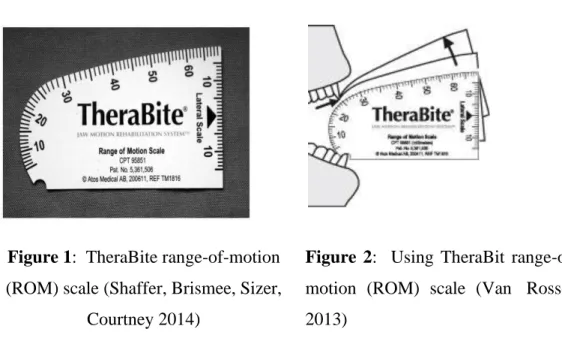
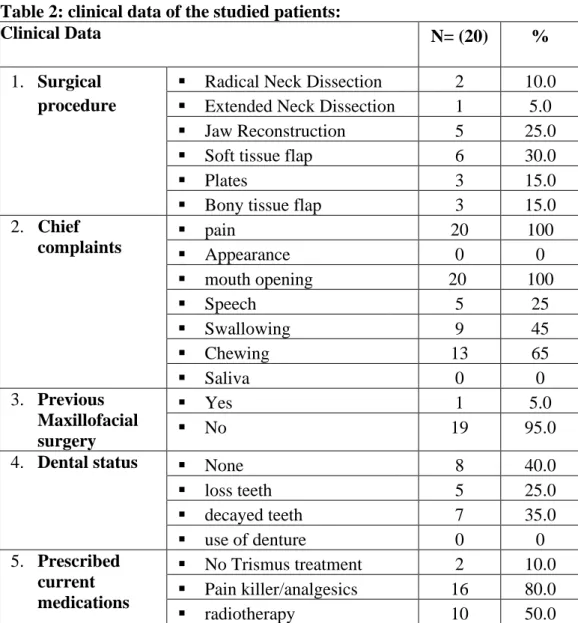
The patient was asked to open mouth as much as possible. Place the theraBite scale between the central incisors and measure the maximum vertical distance during active mouth opening (Figure 1,2). Scale is a disposable paper measurement tool, which measures maximum mouth opening MMO in millimeters (mm), earlier researchs has shown excellent intrarater (0.92 to 0.97) reliability when assessing MMO in 3 different craniocervical positions (Wright Demenech, fisher 2000, & Saud,Pearson, Dietrich 2012)
EJNHS Vol.1, No.1 21 Figure 1: TheraBite range-of-motion
(ROM) scale (Shaffer, Brismee, Sizer, Courtney 2014)
Figure 2: Using TheraBit range-of- motion (ROM) scale (Van Rossen 2013)
5.4.3. Eating Assessment Tool (EAT-10):
This tool was adopted by the researcher; (EAT-10) is a clinical instrument to document the initial dysphagia symptom severity in patients with swallowing disorders. It is rapidly administered, simply calculated. EAT-10 includes 10 questions about the severity of symptoms of oropharyngeal dysphagia. Each question will be scored from 0 to 4 (“no problem” to “severe problem”). The total T-EAT-10 score is calculated by adding up the scores of each question, and higher scores indicate a self-perception of a high level of dysphagia severity. The time to complete the instrument is less than 2 minutes. The internal consistency (Cronbach alpha) of the final instrument was 0.960. The test-retest intra-item correlation coefficients ranged from 0.72 to 0.91.
(Belafsky, Moudadeb, Rees 2008).
EJNHS Vol.1, No.1 22 5.4.4. Visual analogue scale
The visual analogue scale (VAS) is a simple and frequently used method for the assessment of variations in intensity of pain, is often considered as a measure of the efficacy of treatment. The amount of pain that a patient feels ranges across a continuum from none to an extreme amount of pain (Schwenk 2002).
5.5. Procedures: The study was conducted as follows:
The Dean of the Faculty of Nursing, Modern University, the directors and the nursing directors of the Maxillofacial department issued permission to conduct the current study.The study was divided into three phases:
Phase (A): Pre-treatment assessment: Baseline outcome measures: socio- demographic characteristics and clinical condition of patients. Pain intensity was measured on Visual analogue scale, mouth opening using the theraBite scale range of motion scale, and assess dysphagia symptom using Eating Assessment Tool (EAT-10). Data were recorded at the beginning of the study on the first day.
Phase (B): Intervention Phase: The intervention was given for four weeks.
During their first visit, patients were familiarized with the use of the TheraBite and received exercise instructions (The mouthpieces are placed between the maxilla and mandible. The stretching effects occur when the handle of the TheraBite is squeezed).
This was carried for 5 sessions per day with 5 stretches per session with 30 seconds hold. Patients were encouraged to continue exercising following this schedule until no further improvement in mouth opening could be achieved (Kanstra and etal 2012).
Phase (C): Post-treatment Phase: In the final, outcome measures were recorded at the end of each week.This phase carried out after month of regular TheraBite Jaw Rehabilitation exercises. Patients re-evaluated by using pervious tools to determine the effectiveness of exercise on patients' moth opening,
EJNHS Vol.1, No.1 23 dysphagia and pain. A comparison between the baseline data and final data was made. All data was collected recorded and analyzed.
5.6. Ethical considerations: The researcher obtained informed consent from all patients after the explanation of the aims of the study before starting the study. Confidentiality, anonymity, and privacy were assured. Participation was on a voluntary basis. All the patients had the right to withdraw from the study at any time without any drawbacks.
5.7. Data analysis: Data was fed to a personal computer and analyzed using IBM SPSS software package version 20.0. (Armonk, NY: IBM Corp).
Qualitative variables presented as frequency and percentage. Quantitative data presented mean and standard deviation. The significance of the obtained results was considered at the 0.05 level. The used tests were: Anova (multipule regression test): For normally distributed quantitative variables, to compare between the baseline data, during and post intervention data.
EJNHS Vol.1, No.1 24 6. Results
Table 1: Socio-demographic characteristics of studied patients:
Sociodemographic data
No (20) %
1. Age in years 20-30 years 4 20.0
30-40 years 8 40.0
40-50 years 4 20.0
50-60 4 20.0
Mean ± SD 38.35± 11.856
2. Sex Male 13 65.0
Female 7 35.0
Total 20 100.0
3. Occupation Laborer 4 20.0
Clerical 6 30.0
Professional 6 30.0
Housewife 3 15.0
Retired 1 5.0
4. Level of education Read &write 2 10.0
Primary 2 10.0
Secondary 10 50.0
University 6 30.0
5. Area of residence Rural 6 30.0
Urban 14 70.0
Table 1 demonstrates the study patients socio-demographic characteristics; the patients’ mean age was 38.35± 11.856; more than half of patients were male;
most of them were working, 30% professional jobs, 30% were clerics and 20%
were laborer; most of patients were educated as 50% had secondary education, 30%graduated from university. Concerning patients’ area of residence, the highest percentage from urban areas.
EJNHS Vol.1, No.1 25 Table 2: clinical data of the studied patients:
Clinical Data N= (20) %
1. Surgical procedure
▪ Radical Neck Dissection 2 10.0
▪ Extended Neck Dissection 1 5.0
▪ Jaw Reconstruction 5 25.0
▪ Soft tissue flap 6 30.0
▪ Plates 3 15.0
▪ Bony tissue flap 3 15.0
2. Chief complaints
▪ pain 20 100
▪ Appearance 0 0
▪ mouth opening 20 100
▪ Speech 5 25
▪ Swallowing 9 45
▪ Chewing 13 65
▪ Saliva 0 0
3. Previous Maxillofacial surgery
▪ Yes 1 5.0
▪ No 19 95.0
4. Dental status ▪ None 8 40.0
▪ loss teeth 5 25.0
▪ decayed teeth 7 35.0
▪ use of denture 0 0
5. Prescribed current medications
▪ No Trismus treatment 2 10.0
▪ Pain killer/analgesics 16 80.0
▪ radiotherapy 10 50.0
Table 2 represents the clinical data of the study group; as regards to surgical procedure; the highest percentage of patient had been undergone soft tissue flap surgery and Jaw Reconstruction surgeries (30%, 25%) respectively. Concerning their complains after the surgery were 100% suffer from difficulty of mouth opening, and associated with pain, while 65% suffered from difficulty in
EJNHS Vol.1, No.1 26 chewing and 45% difficulty in swallowing. Most of patients had not undergone pervious maxillofacial surgeries. Regarding their dental status, about third of patients (35%) had decayed teeth, (25%) had loss teeth. Most of cases were treated by pain killer or analgesics.
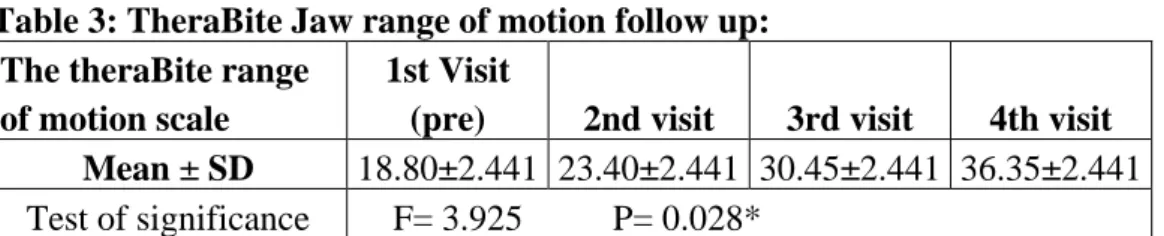
Table 3: TheraBite Jaw range of motion follow up:
The theraBite range of motion scale
1st Visit
(pre) 2nd visit 3rd visit 4th visit Mean ± SD 18.80±2.441 23.40±2.441 30.45±2.441 36.35±2.441 Test of significance F= 3.925 P= 0.028*
Table 3 reveals TheraBite Jaw range of motion scale follow up; it was found that the mean score of mouth opening on the theraBite range of motion scale at first visit was 18.80±2.441; that was improved in second and third visit for flow up to 23.40±2.441, 30.45±2.441 respectively. Finally, TheraBite jaw range of motion at 4th visit (final evaluation) was 36.35±2.441; there were statistically significant differences between four visits, as P= 0.028.
EJNHS Vol.1, No.1 27 Table 4: Eating and Dysphagia assessment of studied patients:
Tool III: Eating
Assessment Tool (EAT-10) Pre
1st follow
up
2nd follow
up
4th follow
up
Test of significance
N=
(20)
% N=
(20)
% N=
(20)
% N=
(20)
%
1. My
swallowing problem has caused me to lose weight.
No problem
0 0 0 0 0 0 12 60.0
F=5.644 P=0.005*
Mild problem
0 0 0 0 6 30.0 6 30.0 Mild to
moderate
2 10.0 4 20.0 13 65.0 2 10.0 Moderate
problem
14 70.0 16 80.0 1 5.0 0 0 Severe
problem
4 20.0 0 0 6 30.0 0 0 2. My
swallowing problem interferes with my ability to go out for meals.
No problem
0 0 0 0 0 0 15 75
F=5.773 P=0.005*
Mild problem
0 0 0 0 0 0 1 5
Mild to moderate
0 0 0 0 14 70 4 20 Moderate
problem
7 35 18 90 5 25 0 0 Severe
problem
13 65 2 10 1 5 0 0 3. 3.
Swallowing liquids takes extra effort.
No problem
0 0 0 0 13 65 18 90
F=8.505 P=0.001*
Mild problem
0 0 1 5 4 20 2 10 Mild to
moderate
4 20 16 80 3 15 0 0 Moderate
problem
12 60 3 15 0 0 0 0 Severe
problem
4 20 0 0 0 0 0 0 4. Swallowing
solids takes No problem
0 0 0 0 0 0 18 90
F=8.677 P=0.003*
EJNHS Vol.1, No.1 28 extra
effort.
Mild problem
0 0 0 0 15 75 2 10 Mild to
moderate
0 0 0 0 4 20 0 0 Moderate
problem
0 0 20 100 1 5 0 0 Severe
problem
20 100 0 0 0 0 0 0 5. Swallowing
pills takes extra effort.
No problem
0 0 1 5 17 85 18 90
F=10.512 P=0.000*
Mild problem
0 0 9 45 3 15 2 10 Mild to
moderate
1 5 9 45 0 0 0 0 Moderate
problem
15 75 1 5 0 0 0 0 Severe
problem
4 20 0 0 0 0 0 0 6. Swallowing
is painful.
No problem
0 0 0 0 8 40 18 90
F=6.767 P=0.004*
Mild problem
0 0 7 35 9 45 2 10 Mild to
moderate
0 0 7 35 3 15 0 0 Moderate
problem
12 60 6 30 0 0 0 0 Severe
problem
8 40 0 0 0 0 0 0 7. The
pleasure of eating is affected by my
swallowing .
No problem
0 0 0 0 2 10 19 95
F =4.357 P=0.030*
Mild problem
0 0 0 0 16 80 1 5 Mild to
moderate
0 0 8 40 2 10 0 0 Moderate
problem
0 0 12 60 0 0 0 0
EJNHS Vol.1, No.1 29 Severe
problem
20 100 0 0 0 0 0 0 8. When I
swallow food sticks in my throat.
No problem
0 0 0 0 4 20 19 95
F=4.357 P=0.030*
Mild problem
0 0 2 10 12 60 1 5 Mild to
moderate
0 0 9 45 4 20 0 0 Moderate
problem
10 50 9 45 0 0 0 0 Severe
problem
10 50 0 0 0 0 0 0 9. I cough
when I eat.
No problem
0 0 13 65 19 95
F=4.357 P=0.030*
Mild problem
0 0 4 20 7 35 1 5 Mild to
moderate
2 10 6 30 0 0 0 0 Moderate
problem
12 60 10 50 0 0 0 0 Severe
problem
6 30 0 0 0 0 0 0 10. Swallowing
is stressful.
No problem
0 0 0 0 13 65 18 90
F=8.592 P=0.000*
Mild problem
0 0 0 0 7 35 2 10 Mild to
moderate
0 0 8 40 0 0 0 0 Moderate
problem
7 35 12 60 0 0 0 0 Severe
problem
13 65 0 0 0 0 0 0
EJNHS Vol.1, No.1 30 Table 4 represents frequency of eating and swallowing problems that the study group suffered from; In the first visit; it can be found that 60% of the studied patients moderately experience loss of weight due to swallowing problems;
this percentage was increased to 80% at the second visit while at the third visit it was decreased to 65% of the studied patients who experience mild loss of weight due to swallowing problem. At the fourth visit 60% of the studied patient stated that they didn't experience any swallowing problem or weight loss which indicate high improvement in their eating pattern.
The table shows that; a high percentage of the patients experience severe problem in their ability to go out for meals due to swallowing problems.
At the second visit 90% of them perceived moderate decrease in their ability to go out for meals due to swallowing problems. moreover, at the third and fourth visit a highly significant improvement in patients' ability to go out for meals and decrease in their swallowing problem by (70%, 75%), respectively.
In relation to effort experienced due to swallowing problems: more than half (60%) of the studied patients experienced moderate effort to swallow liquid in the first visit, at the second visit 80% of them their swallowing problem improved to mild-moderate problem, while (65% and 90 %), respectively of them experienced no problems in swallowing liquid at the third and fourth visit.
As regards effort experienced from Swallowing solids; it can be noticed that all (100%) of the studied patient experienced severe to moderate swallowing problems with solids liquid at the first visit and second visit. While highly improvement was perceived by the patient to mild and no problem with swallowing solid liquids by (75% and 90%), respectively of the studied patients.
Concerning effort experienced from Swallowing pills; it can be noticed that three quarters (75%) of the studied patient experienced moderate swallowing problems with Swallowing pills at the first visit. At the second and third visit this was improved to mild and mild to moderate problem among
EJNHS Vol.1, No.1 31 (45% and 45%), respectively of the studied patients. While, the improvement continues to no problem among 90% of the studied patients at the fourth visit.
Regarding pain during swallowing, (60% and 40%), respectively of the studied patients experienced sever to moderate pain during swallowing at the first. At the second visit improvement was noticed among (35% and 35%), respectively of patient who experienced mild to mild-moderate pain during swallowing. At the fourth visit 90% of patients stated that they had no painful experience during swallowing.
In relation to effect of swallowing problems on pleasure of eating;
almost all the studied patients experienced severe loss of eating pleasure due to swallowing problems at the first visit. While, this was improved among (60%
and 80%), respectively of patient to moderate and mild problem at the second and third visit. Moreover, the improvement in pleasure of eating was continued to disappear among 95% of the studied patient at the fourth visit.
Concerning stick of food in the throat due to swallowing problems;
half of the studied patients reported moderate and severe problems in the first visit. While 45% and 45% of them experienced mild to moderate and moderate problem in the second visit. In the third and fourth visit improvement was noticed among 60% and 95% of the studied patients who experienced mild and no problem related to stick of food in the throat as result of swallowing problems.
As regards cough experience during eating due to swallowing problem; moderate coughing problem was noticed among 60% of the studied patients at the first visit, while this was improved to 50% among studied patients at the second visit. Additionally, 65% and 95% of the studied patients reported that they experienced no cough during eating problem due to swallowing problems.
In relation to stressful swallowing experience, more than half of the studied patients stated that they had severe stressful problem in swallowing at the first visit. At the second visit stressful swallowing problems was improved
EJNHS Vol.1, No.1 32 to moderate problem among 60% of the studied patients. At the third and fourth visit stressful swallowing experience was improved among (65% and 95%) respectively to have no stress problem during swallowing.
There were statistically significant differences between four visits at the eating assessment scale.
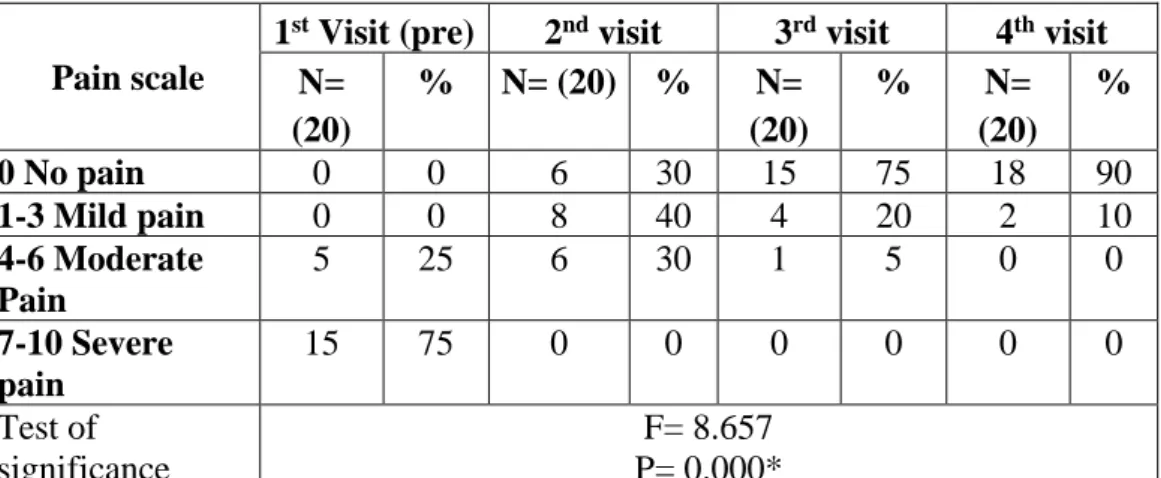
Table 5: Degree of pain of studied patient:
Pain scale
1st Visit (pre) 2nd visit 3rd visit 4th visit N=
(20)
% N= (20) % N=
(20)
% N=
(20)
%
0 No pain 0 0 6 30 15 75 18 90
1-3 Mild pain 0 0 8 40 4 20 2 10
4-6 Moderate Pain
5 25 6 30 1 5 0 0
7-10 Severe pain
15 75 0 0 0 0 0 0
Test of significance
F= 8.657 P= 0.000*
Table 5 reveals frequency of pain that the study group complain from it during treatment with TheraBite Jaw Rehabilitation. Regarding the first visit most of cases suffered from severe pain (75%); while on the second visit 40% suffered from mild pain; on third visit is 75% of the patients had no pain. Finally, 90% of the patient had no pain. There were statistically significant differences improving of patients; pain after TheraBite rehabilitation (P=0.000).
7. Discussion
Trismus is pathologic condition result from contraction of muscle of mastication; which yield connective tissue contracture leading to restriction in mouth opening (David etal 2009); many studies proved that immature fibrosis were the major causes of limited mouth opening after maxillofacial surgeries
EJNHS Vol.1, No.1 33 (Lund, Cohen 1993, Cohen, Deschler, Walsh, & Hayden 2005, Michael D, Stubblefield, Manfield, Riedel R 2010). The current study finding showed that the age of patients was 38.35±11.85 and male, the complication of maxilla- facial surgery tend to increase with age, this findings was in line with Osunde, Saheeb 2013, they study 150 patients aged 16–38 years; they found that sex had no effect on pain and trismus throughout the periods of postoperative evaluation but postoperative swelling was not affected by gender but patients above 25 years.
This study showed that the highest percentage of patient had been undergone soft tissue flap surgery and Jaw Reconstruction surgeries, and 50% had radiotherapy. The result support the report of previous authors; (Agarwal, Kumar, Rai 2016) who found that trismus was a significant complication of oral malignancies or its surgical and radiotherapy treatment, or both. In study done by Baslakrishnan and et al 2017, out of fifty patients, only nine patients had experienced limited MO during postoperative period when the duration of procedure exceeded 30 min.
Almost all patients in this study present with history of severe trismus that develop gradually after maxillofacial surgeries, and mouth opening using TheraBite scale was less than 35 mm which is the cutoff point to determine Trismus. There was almost steady increase in the mouth opening from the 2nd visit after one week, 3rd visit after two weeks , 4th visit after 3weeks of using TheraBite Jaw Rehabilitation; can be attributed to the use of TheraBite Jaw Rehabilitation therapy and improve the range of motion. These proved by many studies as (Kamstra etal 2012 found that after TheraBite exercises, mouth opening increased averagely with 5.4 mm after oncology treatment. also Maloney 2002 stated that various treatments are available to increase the mouth opening like unassisted mouth opening; finger assisted stretching exercises, spatulas, screws, wooden tongue depressor, etc. The devices used are wedged between the upper and the lower jaw, the front teeth, this placement can loosen teeth or can dislodge crowns. They are difficult to use and cause only simple static stretching.
At the end of the 4th weeks patients were satisfied with their mouth opening by improving the quality of life “chewing, speaking, swallowing and improved oral
EJNHS Vol.1, No.1 34 hygiene”. These supported by the study of Montalvo and et al 2017 who found that a significant improvement in mouth opening and improved quality of life was observed post-structured exercise with the jaw-mobilizing device for patients with trismus independent of time since oncologic treatment.
The study showed that pain history throughout the treatment was decreased dramatically and steadily. This may be explained by breaking the cycle of muscular spastic trigger point. This proposed by Simons and Travell 1998, who stated that stretching the spastic muscle by mechanical and medical aids help to decrease the pain dramatically.
8. Conclusion
The current study finding showed that patients with trisums who keep trained using TheraBite Jaw rehabilition improve mouth opening using theraBite scale and improved quality of life on (Eat -10) scale and decrease pain level dramatically.
TheraBite Jaw opening is a safe and effective method in increasing mouth opening it is good way for relieve pain associated with mouth spasm.
9. Recommendation
- Early using of TheraBite Jaw Rehabilitation post Maxillo-facial surgeries improving surgery outcome and prevent incidence of trisums complications.
- Training programs for nurses’ maxillofacial units, head and neck surgery unit and dental surgery unit about using TheraBite Jaw opening rehabilitation.
- Further researches concerning the effective timing of using jaw exercises to prevent trisums post maxillofacial surgery.
10. References
1. Angrwal P, Kumar HR, Rai K. (2016). Trismus in oral cancer patients undergoing surgery and radiotherapy. J. Oral Biol. Carniofac. Res. 6(1):S9- S13. Doi: 10.1016/Jobcr.201`6.10.004
EJNHS Vol.1, No.1 35 2. Balakrishnan G, Narendar R, Kavin T, Venkatarman S, Gokulanthan S. (2017).
Incidence of trisumus in transalveolar extraction of lower third molar. J.
Pharm. Bioallied Sci; 9(1); S222-S227.
3. Belafsky P, Mouadeb D, Rees C. (2008). Validity and riability of eating assessment tool (EAT-10). Annals of Otology Rhinology and Larynology;
117(12);919-24.
4. Bensadoun RJ, Riesenbeck D, Lockhart PB, et al. (2010). A systematic review of trismus induced by cancer therapies in head and neck cancer patients. Support Care Cancer. ; 18: 1033‐ 1038.
5. Cohen, E.G., Deschler, D.G., Walsh, K., & Hayden, R.E(2005). Early use of a mechanical stretching device to improve mandibular mobility after composite resection: a pilot study. Archives of Physical Medicine and Rehabilitation, . 86, 1416-1419.
6. David H.Shulman , Barry Shipman ,et al (2009). Treating trismus with dynamic splint : a case report .Journal of Oral Science ,Vol 51,No 1,141-14., 7. Dwivedi RC, Kazi RA, Agrawal N, Nutting CM, Clarke PM, Kerawala CJ et
al. Evaluation of speech outcomes following treatment of oral and oropharyngeal cancers. Cancer Treat Rev 2009; 35(5):417-424.
8. Grossi GB, Maiorana C, Garramone RA, Borgonovo A, Creminelli L, Santoro F. (2007). Assessing postoperative discomfort after third molar surgery: A prospective study. J Oral Maxillofac Surg. ;65:901–17.
9. Kamstra J, Roodeburg J , Beurskens C, Reintsema H, Dijkstra P. (2012).
TheraBite exercises to treat trismus secondary to head and neck cancer.Support Care Cancer; 21(4) ; 951-957.
10. La Touche R, París-Alemany A, von Piekartz H, Mannheimer JS, Fernández- Carnero J, Rocabado M. (2011). The influence of cranio-cervical posture on maximal mouth opening and pressure pain threshold in patients with myofascial temporomandibular pain disorders. Clin J Pain.;27(1):48-55
11. Lee R., Slevin N., Musgrove B., Swindell R., Molassiotis A (2012). Prediction of post-treatment trismus in head and neck cancer patients. Br J Oral Maxillofac Surg. ;50(June (4)):328–332.
12. Lund TW, Cohen JI (1993).Trismus appliances and indications for use., Quintessence Int. ;24(4):275-9.
13. Maloney GE, Mehta N, Forgione AG, Zawawi KH, Al-Badawi EA, Driscoll SE ( 2002) . Effect of a passive jaw motion device on pain and range of motion in TMD patients not responding to flat plane intraoral appliances.
Cranio; 20(1):55- 66.
14. Michael D, Stubblefield L, Manfield E, Riedel R. (2010). A Preliminary Report on the Efficacy of a Dynamic Jaw Opening Device (Dynasplint Trismus System) as Part of the Multimodal Treatment of Trismus in Patients With Head and Neck Cancer . Arch Phys Med Rehabil;91:1278-82.
EJNHS Vol.1, No.1 36 15. Montalvo Ch, Finizia C, Pauli N, Mohlin B, Andrell. (2017). Impact of exercise with TheraBite device on trisums and health related quality of lifeL: A procespective study. Ear,Nose and Throat J. 96(1); E1-E6.
16. Saund D, Pearson D, Dietrich Th. (2012). Riability and validity of self assessment of mouth opening: A validation study. BMC Oral Health . 12(48).
available at: http://www.biomedcentral.com/14-683/12/48
17. Schwenk W, Mall JW, Neudecker J, Muller JM. One visual analogue pain score is sufficient after laparoscopic cholecystectomy. Br J Surg 2002; 89: 114- 115.
18. Shaffer S, Brismee J, Sizer Ph, Courtney C. (2014). Temporomindibular disorders. Part 1: Anatomy and examination, diagnosis. Journal of Manual and Maipulative Therapy; 22(1); 1-12.
19. Simons, D.G., Travell, J.G. (1998). Myofascial Pain and Dysfunction: the Trigger Point Manual, vol. 1. Lippincott Williams and Wilkins,Baltimore,5-44.
20. Steiner F, Evans J, Marsh R, et al. (2015). Mouth opening and trismus in patients undergoing curative treatment for head and neck cancer. Int J Oral Maxillofac Surg.44:292-296.
21. Van Der Geer S, Van Rijn Ph, Kamsrra J, Langendijk J, Van Der Laan B, et al.
(2019). Prevalence and predicition of trisums in patients with head and neck cancer: A cross sectional study. Head and Neck G. of The Sciences and Specialities of head and neck; 41: 64-71.
22. Van Rossen L. (2013). What is included with the therabite system? An overview of the device, its parts, and what they do. Head & Neck Cancer, Radiation Therapy. available at: CranioRehab.com
23. Wetzels JW, Merkx MA, de Haan AF, Koole R, Speksnijder CM. (2014).
Maximum mouth opening and trismus in 143 patients treated for oral cancer: a 1-year prospective study. Head Neck. 36:1754-1762.
24. Wright EF, Domenech MA, Fischer JR Jr.( 2000). Usefulness of posture training for patients with temporomandibular disorders. J Am Dent Assoc;131:202–210.
EJNHS Vol.1, No.1 37 برعلا صخلملا
ى
ةداعإ ماظن ريثأت لا
ليهأت زاهج مادختساب TheraBite Jaw
ىلع زَزَض تلاضع كفلا دعب ام هجولا تاحارج
نيكفلاو
: ةمدقملا ز َزَض
كفلا وه ضابقنا غضملا ةيلمع نع هلوئسملا تلاضعلا و
نيكفلا كيرحت ةلاح دوجو نع جتانلا
ا حتفل هدودحم تاكرح هنع جتني ةيعيبط ريغ لقا نيكفل
≤ نم 35 .ملم دق ا نيكفلا و هجولا تاحارج ببست ىل
فيلت ثودح
ابلس رثؤت يتلاو غضملا هيلمع نع ةلوئسملا تلاضعلا رصق وا صلقت نم هعبتي امو دلجلا يف ةبدن و
ةايحلا ةيعون و هدوج ىلع و
.علبلاو غضملاو ضعلا لثم هطشنلاا ضعب يف ةبوعص
: ةساردلا نم فدهلا لا فدهت
لإ ةسارد ت ى ليهأت ةداعإ ماظن ريثأت مييق زاهج مادختساب
TheraBite Jaw ىلع
ززض .نيكفلاو هجولا تاحارج دعب نيكفلا تلاضع
: ثحبلا ةلئسا :ةيتلاا ةيضرفلا ىلع ةساردلا هذه بيجت فوس
رهظيس ىضرملا نيذلا نوناعي نم دعب كفلا ززض
تايلمع هجولا نيذلا ، نيكفلاو تلا ىلع اومظتنا
ىلع نيرم ماظن
ةداعإ مادخساب ليهأتلا TheraBite Jaw
اًنسحت
اًيتاذ يف حتف مفلا رسعو .علبلا
: ثحبلا ميمصت هبش ميمصت ثحبلا عبتا
يبيرجت رابتخلا ةيلاعف ليهأتلا زاهجب لخدتلا TheraBite Jaw
ىلع
نيكفلاو هجولا ايلمع دعب كفلا ززض ىضرم .
: ثحبلا ةيجهنم ايعب ةساردلا تمت
مسق ةد و ةيردنكسلاا ةعماج ىسيئرلا ىفشتسملاب نيكفلاو هجولا ةحارج
نيرشع ىلع ةساردلا ةنيع تلمتشا ضيرم
ا اورضحي نمم ل
هدودحم تاكرح نم نوناعي نيكفلاو هجولا هدايع
ليهأت ةداعإ ماظن هادأ مادختسا يلع يضرملا بيردت مت .نيكفلاو هجولا تاحارج دعب نيكفلل TheraBite Jaw
و وه ادا نيباصملا يضرملا يف هيعيبطلا يلفسلا كفلا ةكرح حيحصت هدعاسمل اهميمصت مت هلومحم ه ب
هكرح صقن
كفلا كيرحت ضيرملل نكمي همادختسا دعبو يلفسلاو يولعلا كفلا وا هيماملاا نانسلاا يلع هقيبطت متيو يلفسلا كفلا هادأ يلع ايودي طغضلا قيرط نع يبلس لكشب يلسفلا TheraBite
هدمل رهش .
و تاودا عبرا ىضرملا ةعباتم و مييقتل مدختسا دق :
ا ىلولا ةيفارغوميدلا تامولعملا عمجل ةلباقم نايبتسا : ةلاحلا و
ا ،ىضرملل ةيريرسلا ةيناثلا
نازيم : TheraBite
،ايعوبسا رتميلملاب مفلا حتف مييقتل ةثلاثلا
: سايقم Eat-
مييقتل10 ،علبلا رسع ضارعا ةعبارلا
: يقملا سايقل يرصبلا يلثامتلا سا
ةدح .مللاا
: جئاتنلا :ىتلاا نع ثحبلا جئاتن ترفسا دقل لاوا
تناك : كانه قورف تاذ ةللاد ةيئاصحإ نيب ةعباتملا تارايز
نازيم مادخسب كفلا ةكرحل ىضرملل TheraBite
نم رثكا 35
،ملم P = 0.028 ثيح
. ايناث ةردق نسحت :
دقب ريبك لكشب ىضرملا ىلا ىدا امم علبلا ىلع ىضرملا ةر
ةايحلا ةدوج نسحت .
اثلاث تاذ قورف كانه ناك :
.ىضرملا ءلاؤه ىدل مللاا ةدح نسحتب ةيئاصحا ةللاد تايصوتلا ةيلاتلا تايصوتلا ىلا ةساردلا هذه جئاتن تضفا :
:
1 - مادختسلاا ركبملا
ليهأتلا ماظنل TheraBite Jaw
دعب ةحارج هجولا نيكفلاو حتل نيس جئاتن ةحارجلا عنمو
ثودح تافعاضم كفلا ززض
. 2 - جمارب ةيبيردت تاضرمملل تادحوب
هجولا نيكفلاو ةدحوو ةحارج سأرلا
قنعلاو ةدحوو نانسلأا تاحارج لوح
مادختسا ماظن ليهأتلا TheraBite Jaw .
3 - ديزم نم ثاحبلأا لوح تيقوتلا لاعفلا مادختسلا نيرامت كفلا عنمل كفلا ززض دعب
ةحارج هجولا نيكفلاو