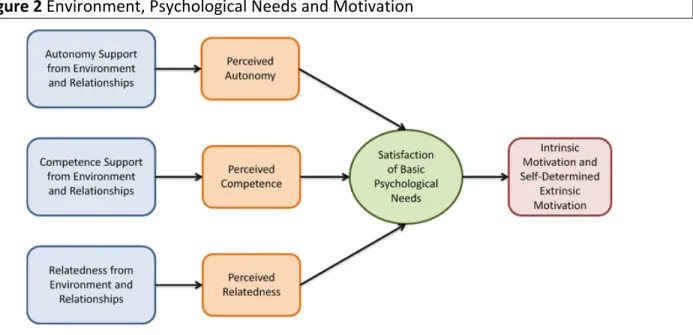
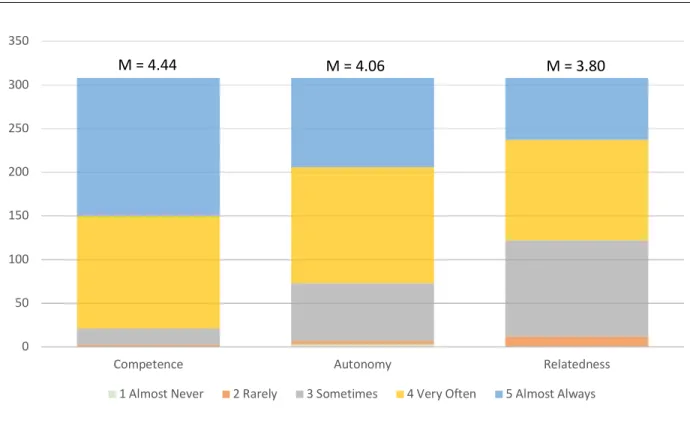
These evidence-based recommendations attempt to capitalize on the intrinsic satisfaction of teaching that faculty respondents reported, as well as minimize the barriers that keep instructors from wanting to teach core courses. This approach led to the creation of the Foundation Courses Initiative (FCI), a joint venture between the Center for Teaching Excellence and the Office of Academic Students. Almost all of the core courses at SMU are housed in the Dedman College of Humanities and Sciences.
Although there are many instruments to measure faculty perceptions, it was not possible to identify one that accurately measured perceptions of core courses. Items were written to reflect common stereotypes about teaching core subjects—for example, that they are boring and do not support their research agenda (Druger, 2006; Flaherty, 2016; Smith, 2018; Sobel, 2018)—as well as specific opinions. , expressed by faculty at SMU (M. Ellis, personal communication, June 9, 2020). Research Question 3 asks what motivates the administration to select and support those individuals who teach core courses.
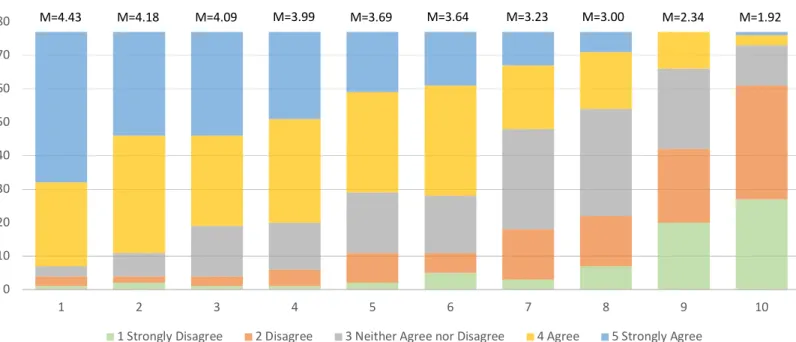
Q2 In general, I am familiar with the objectives and learning outcomes of foundation courses at SMU. There was high familiarity with the aims of foundation courses (M=4.18) as well as a strong recognition of support from supervisors (M=4.09) and the importance of these courses for success in future classes (M=4.43). There was apparently more uncertainty about whether teaching foundation courses is more time-consuming (M=3.23) than teaching other classes, and about what rank and status of faculty should teach these courses (M=3.00).
Student employment was associated with the best answer for why respondents wanted to teach or continue to teach undergraduate courses. The basic courses are] a good opportunity to increase interest in my subject and to reach potential undergraduate researchers.”. One unexpected finding was the frequency with which respondents cited their own growth and learning as a reason for wanting to teach foundational courses.
As expected, there were also several reasons why instructors did not want to teach core courses. Many comments also pointed to student attitudes and behavior as reasons why they did not want to teach core subjects. The effort to change student perceptions of core courses can be motivating for faculty and students.
These results indicate that tenured and nontenured faculty may view certain aspects of core courses differently. One chairman even called teaching basic courses a “theatre performance”: in order to teach these courses well, teachers must do so. Comments from department chairs regarding perceptions of core courses often reflected the themes identified in the faculty survey.
However, if teaching basic courses is more attractive, the skills to teach them well can be taught.
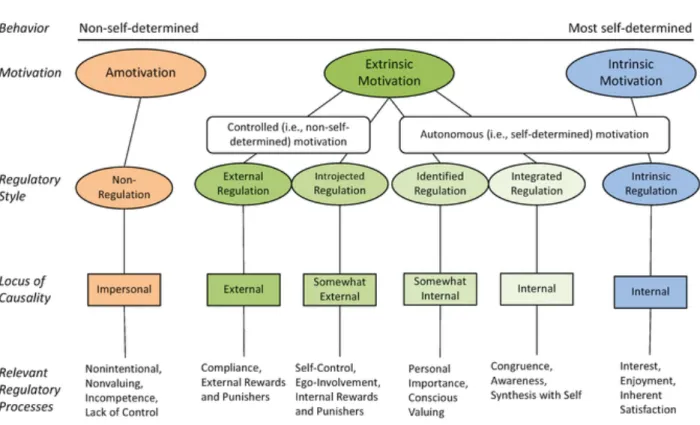
Reduce the time and workload associated with teaching foundational courses
Reduce the fear of being stuck teaching foundational courses, while also encouraging ownership of the courses when possible
Create opportunities for positive student interaction and supportive colleague relationships
Reduce the fear of being stuck teaching basic courses, while also encouraging ownership of the courses wherever possible. The data collected in this study supports this claim; teachers are encouraged by working with committed students who are enthusiastic about the field. There may also be opportunities to create more encouraging interactions so that the negative ones aren't as draining.
Drawing faculty into activities where they will often interact with enthusiastic students in their same discipline can be motivating. Involve e.g. core course instructors in major recruitment events, or allow them to advise a discipline-specific student organization. Creating mentorship opportunities has been shown to have several positive effects on faculty motivation (Lechuga, 2014); one way to do this is to use former students who did well in a given foundation course as course-embedded assistants.
In addition to providing faculty with regular interaction with an engaged and motivated student in their discipline, these assistants will save the professor time and can handle some of the less "hands-on" needs that may arise. Second, the impact of peer interactions can also be motivating, as noted by several faculty respondents. Some departments have identified and capitalized on this need for kinship, and others may not have as many formal mechanisms in place.
Such faculty learning communities have been found to improve the use of effective teaching techniques (Fidler, et al., 1999), increase participant satisfaction and motivation (McCourt et al., 2017), improve teaching persistence in a first-year course (Soldner et al, 2004), and increasing faculty agency (Campbell & . O'Meara, 2014). Finally, because personal learning was a commonly observed phenomenon for those teaching introductory courses, sponsoring monthly gatherings to discuss new accomplishments and exchange ideas could foster a community in which faculty want to be. part.
Emphasize transparency of departmental and institutional support mechanisms
This mixed methods project used a faculty survey and interviews with department chairs to better understand faculty perceptions of foundational courses at SMU, as well as their motivations for teaching or not teaching those classes. Also examined were departmental processes and incentives that could be useful in motivating highly effective instructors to teach these courses. Overall, respondents had a positive perception of foundational courses, with interactions with engaged students and student interest in their field being the main reasons for teaching these classes.
It is the author's hope that the data collected here will provide a clearer picture of faculty perceptions of foundational courses and that the suggested recommendations will stimulate faculty's intrinsic motivation to teach, encouraging those most suited to taught these courses to try. An exploration of whether attitudes may be between those who have previously taught foundational courses versus those who have not. This project aims to guide intentional action for SMU and contribute a new perspective to our understanding of faculty in foundational courses.
What drives research-focused university academics to want to teach effectively?: Examining performance, self-efficacy and self-esteem. In general, I am familiar with the objectives and learning outcomes of foundation courses at SMU. The learning outcomes of foundation courses are essential for students to progress successfully to higher level classes.
What are the comments you hear most often from faculty about teaching foundational courses. RQ1/RQ2 Open-ended: Please describe the reasons why you (a) would like to teach a foundation course again and/or (b) do not want to teach a foundation course again. Open-ended: Please describe the reasons why you (a) want to offer a foundation course; and/or (b) do not wish to offer a foundation course.
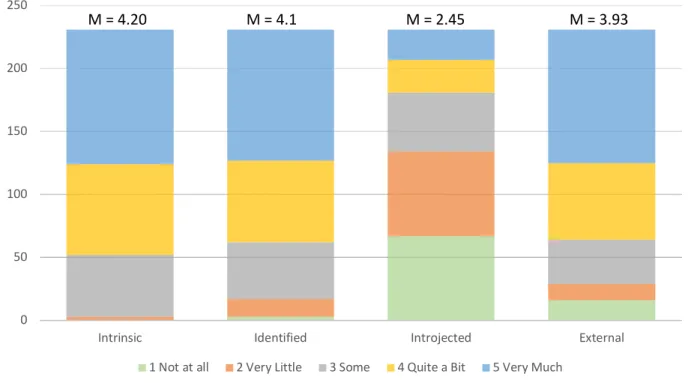
RQ2 I would feel guilty not teaching Introjected motivation RQ2 Because my university obliges me to teach external motivation.