THE TRANSFORMATION OF SEXUALITY
This page intentionally left blank
The Transformation of Sexuality
Gender and Identity in Contemporary Youth Culture
THOMAS JOHANSSON University of Gothenburg, Sweden
All rights reserved. No part of this publication may be reproduced, stored in a retrieval system or transmitted in any form or by any means, electronic, mechanical, photocopying, recording or otherwise without the prior permission of the publisher.
Thomas Johansson has asserted his right under the Copyright, Designs and Patents Act, 1988, to be identified as the author of this work.
Published by
Ashgate Publishing Limited Ashgate Publishing Company
Gower House Suite 420
Croft Road 101 Cherry Street
Aldershot Burlington, VT 05401-4405
Hampshire GU11 3HR USA
England
Ashgate website: http://www.ashgate.com British Library Cataloguing in Publication Data Johansson, Thomas
The transformation of sexuality : gender and identity in contemporary youth culture
1. Gender identity - Sweden 2. Youth - Sweden - Attitudes 3. Youth - Sexual behavior - Sweden
I. Title
306.7'6'0835'09485
Library of Congress Cataloging-in-Publication Data Johansson, Thomas, 1959-
The transformation of sexuality : gender and identity in contemporary youth culture / by Thomas Johansson.
p. cm.
Includes bibliographical references and index.
ISBN: 978-0-7546-4940-3 1. Youth--Sexual behavior. 2. Youth--
Sweden--Sexual behavior. 3. Youth--Social conditions--21st century. 4. Youth-- Attitudes--Cross-cultural studies. 5. Identity (Psychology) 6. Subculture. 7. Sexual behavior surveys--Sweden. I. Title.
HQ27.J354 2006 306.70835'09485--dc22
2006025820 ISBN: 978-0-7546-4940-3
Printed and bound in Great Britain by MPG Books Ltd, Bodmin, Cornwall.
Contents
List of Tables vi
Preface vii
Chapter 1 Introduction 1
PART I Scientia Sexualis
Chapter 2 Pleasure and Desire in Modern Times 7
PART II Youth, Gender and Sexuality: Positions and Transitions
Chapter 3 Gender, Sexuality and Institutional Settings 19 Chapter 4 Gender and Sexuality in Youth Culture Research 27 PART III Desire and Identity in Contemporary Sweden
Chapter 5 Gender Order or Disorder? 39
with Nils Hammarén
Chapter 6 Hegemonic Masculinity and Pornography 49
with Nils Hammarén
Chapter 7 Feminism and Reflexive Sexuality 61
Chapter 8 Young Masculinities in Transition 73
Chapter 9 Multiculturalism, Gender and Sexuality 85 PART IV Conclusions and Epilogue
Chapter 10 Youth in a Post-Traditional Society 99
Chapter 11 Epilogue: Cyberspace, Media and Sexuality 111 PART V Appendix
Chapter 12 Method and Methodology 127
References 137 Index 145
List of Tables
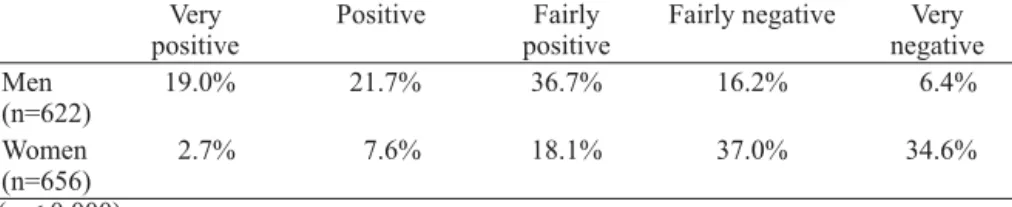
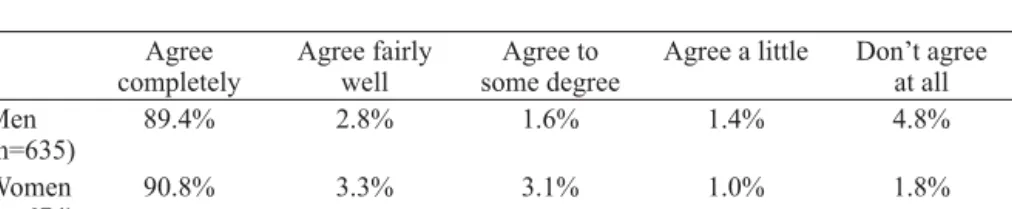
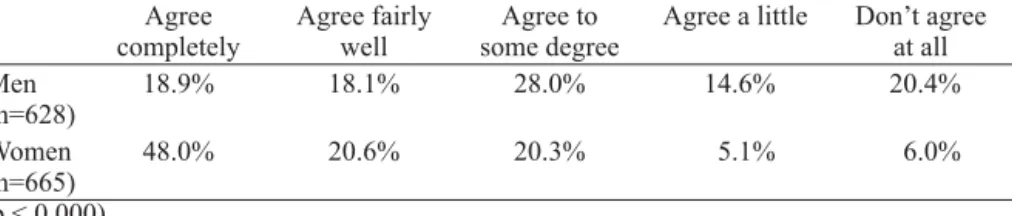
Table 5.1 ‘Girls should take the sexual initiative as often as boys do’ 42 Table 5.2 ‘Homosexuals should be allowed to adopt children’ 44
Table 5.3 ‘Do you think you’re good looking?’ 46
Table 5.4 ‘Are you generally ashamed of your body?’ 47
Table 6.1 ‘Have you ever read a porn magazine?’ 52
Table 6.2 ‘Have you ever watched a porn film?’ 52
Table 6.3 ‘Pornography is sexually exciting’ 53
Table 6.4 ‘What is your attitude toward pornography?’ 54
Table 6.5 ‘Pornography is degrading’ 55
Table 6.6 ‘Girls have as much right to watch pornography as boys do’ 55 Table 6.7 ‘Do you become sexually excited when you read erotic stories?’ 56 Table 6.8 ‘Do you become sexually excited when you watch porn films?’ 56 Table 6.9 ‘Are you ashamed of watching porn films?’ 57 Table 6.10 Percentage of young men and young women who have watched
(or not watched) a porn film and who have had sexual intercourse 57 Table 6.11 Percentage of young men and young women who have watched
(or not watched) a porn film and who have had oral sex 58 Table 6.12 Percentage of young men and young women who have watched
(or not watched) a porn film and who have had anal sex 58
Preface
This book is written within the research project ‘Youth, sexuality and gender in transition’. The project was financed by the Swedish research council (FAS). This book is the last one of three volumes (the other two are in Swedish) where the project has been discussed and presented. Two of the chapters are written together with Nils Hammarén, who has also been responsible for all the practical details of the survey.
Nils has also read and commented on the whole manuscript. I would like to thank all the people who have been directly or indirectly involved in this project. I also would like to thank all our respondents, who have contributed to this work by giving us information and material.
I am also grateful to Karen Williams, who has translated the main part of this text.
Finally I would like to express my gratitude to Philip Lalander, Jesper Andreasson and all the other researchers who contributed to the project.
Thomas Johansson Gothenburg 15 April 2006
This page intentionally left blank
Chapter 1
Introduction
In 1939, sociologist Norbert Elias published his work on the civilization process (Elias 1939/1982). Owing to the war, however, his efforts were forgotten for a time.
It was not until 30 years later that the scientific world gave serious consideration to Elias’s theory. The basic notion underlying Elias’s work is that Western history is also an account of how humankind has gradually developed increasingly sophisticated forms of self-control. In particular this concerns our bodily functions and, thereby, also our sexuality. Elias describes in detail how people are becoming more observant of their own bodily secretions and how they are developing feelings of shame when confronted with them. He considers that people in the Western world are marked by control, discipline and self-consciousness and that these envelop much of everyday life. The process of discipline affects everything from how people regulate their sexuality and bodily secretions to how they speak and behave in their social life. Yet this should not be seen as a development from a spontaneous and natural stage to a civilized stage. Elias considers rather that people have always deferred to some form of discipline, but that these forms have been different throughout human history.
There are many points of contact between Elias and the French philosopher Michel Foucault, whose works include a three-volume work entitled The History of Sexuality (Foucault 1978, 1987a, 1987b). Here, Foucault describes how a modern attitude towards sexuality is developing. Modern humans internalize a kind of understanding of what may be viewed as normal as opposed to abnormal sexuality.
He considers that, during modern times, sexuality has been made public – through everyday conversations, newspaper articles, scientific articles and sexual guidance information – and that this enables a new form of surveillance and control. In Foucault’s thoughts we find elucidation of a paradox: things done for the purpose of liberalization, for example scientific studies of sexuality or sexual guidance information, also entail new methods of control and surveillance. In modern society, people manage their own self-oppression: they are their own controllers. In his book Civilization and its Discontents (Freud 1932/1989), Freud describes how this form of discipline is located to the superego, which grows strong because of the growth of a bourgeois hegemony. Put simply, the concept of hegemony refers to a type of monopoly on what is to be considered normal and desirable in a given culture.
In the classical Swedish work Den kultiverade människan (Cultured Man), ethnologists Jonas Frykman and Orval Löfgren (1979) describe and analyse how the bourgeoisie, during the end of the 19th and beginning of the 20th century, tried to impose their own values on the Swedish peasantry. This was a question of strengthening the bourgeois position of dominance in Swedish society not only by
teaching peasants about clock time and schedules, but also by conveying values concerning physicality and sexuality. Frykman and Löfgren sketched a picture of a ‘hands-over-the-covers’ culture in which the sexual and the physical are seen as objectionable and unclean and in which masturbation is said to lead to serious illness and facial abscesses.
In the bourgeois culture, there was great fear of doing something wrong or of appearing deviant in some way. Considered from a Foucauldian perspective, bourgeois power was everywhere: in the schools, in how dwellings were furnished and designed, in books of etiquette, in the daily press, in the personal advertisements, and so on. If hegemony is to be upheld, people in the culture must be constantly reminded of the natural and rational inherent in what it advocates. Through these constant reminders, a certain normality is segmented in people’s consciousness.
Breaking with this normality is difficult, not least because it is closely tied to the individual’s emotional life – a fear of doing the wrong thing is created. Elias describes this process as follows:
Fears of this kind play a considerable part in the control to which the child is subject from the beginning, in the prohibitions placed on him. Perhaps only partly conscious in the parents, and partly already automatic, they are transmitted to the child as much by gestures as by words. They continuously add fuel to the fiery circle of inner anxieties, which holds the behaviour and feelings of the growing child permanently within definite limits, binding him to a certain standard of shame and embarrassment, to a specific accent, to particular manners, whether he wishes or not. (Elias 1939/1982: 330)
So, becoming embarrassed and feeling shame derive from a fear of breaking with a certain normality. The line of reasoning pursued thus far, however, does not imply that the individual is totally regulated and controlled by internal directives.
A controlled or even uncontrolled acceptance of desire and pleasure is sometimes allowed. Using Elias’s term, a kind of escape zone is created to deal with the expectations of normality that each individual lives with. On certain occasions, such as parties, disregard of the norms and values that regulate the sphere of intimacy is accepted. Moreover, imposing taboos tends to create curiosity about the forbidden.
In the bourgeois culture that Frykman and Löfgren describe, the consequence of hiding naked flesh was Peeping Tomism.
Elias’s and Frykman and Löfgren’s analyses of how the body and sexuality are regulated in modern society provide an avenue into the topic of the present book:
youth, gender and sexuality. While we see today a picture in which young people’s sexual thoughts and actions are characterized by experimentation and freedom, free and equal sexuality between men and women is still restricted and obstructed in many ways. For instance, research shows that young women are subjected, to a great extent, to sexism, oppression and dominance (Jeffner 1997; Holland et al 1998).
In approaching the present topic, we notice that it is intersected by prejudices, ideological notions and desire. Young people are both actors and objects. They shape their own sexuality and form their own desire, but they are also subjected to sexualization and exploitation. On advertisement billboards we see perfect,
well-trained young bodies. Most of these bodies belong to young women, but it is becoming more common to aestheticize men, too, thereby transforming them into objects (Nixon 1996, Johansson 1998).
The present book constitutes an attempt to get behind media images and prejudices.
Based on an extensive survey, but primarily on in-depth studies of different groups of young people, we will explore some central questions concerning young people’s sexuality. Considering the work of authors such as Norbert Elias and Michel Foucault, it may be worth reflecting on the question of just how regulated young people’s sexuality actually is; and what, exactly, is meant by sexual freedom.
The book begins with a section that presents several central theories of sexuality and society. This chapter brings to the fore some of the perspectives and questions used throughout the book. The central question concerns the extent to which we may speak today about sexual liberation, or whether we instead should view human sexuality as increasingly controlled and manipulated by commercial forces. This chapter places this book within a field of sexuality and gender studies. Thereafter the books is divided into several different parts.
The second part of the book – ‘Youth, Gender and Sexuality: Positions and Transitions’ – consists of two chapters, each treating different aspects of young people’s construction of gender, sexuality and identity. The first chapter deals with Scandinavian and Anglo-Saxon school and youth research. Much of the discussion on young people’s sexuality has centred on what is happening in and around schools.
Thus, educational research on young people has often started specifically with the classroom and what happens there, only later to expand its interest to the youth culture in general. In this chapter, we discuss the different depictions of young people’s sexuality that emerge from this research. Chapter 4 brings forward changes within youth culture research, starting in the 1970s and then gradually presenting a more up-to-date picture of research on these issues.
The third part of the book – ‘Desire and Identity in Contemporary Sweden’ – contains the main part of this book. Here the Swedish study is presented in several chapters, each dealing with specific issues. Chapter 5 is largely based on data from an extensive Swedish quantitative study of young people’s outlooks on and relations to their own sexuality. The major areas dealt with here are: fidelity/infidelity, love, homosexuality, pornography and beauty ideals. We discuss the data in the light of other relevant research findings. In Scandinavia and the Anglo-Saxon world, there are a number of studies similar to ours; we consider these in relation to our study.
The following chapter focuses more specifically on how young people look upon and consume pornography.
In Chapter 7, we deal primarily with young women’s struggle for independence and gender equality. We use examples from a great variety of empirical studies, and discuss the relation between politics, sexuality and gender. Emerging from this chapter is a tremendously active, self-confident and potent young woman. This image is intended to function as a contrast to the young female images often appearing in research, the media and other public spheres.
The following chapter deals with the construction of masculinity. It takes up a number of current tendencies and changes among young men. In this chapter, we use empirical examples from case studies of young feminist men, women playing on women’s soccer teams and bisexual men. The central question is: what changes are we able to discern among young men today?
Chapter 9 deals with questions concerning different norm systems and cultural perceptions of sexuality. On the basis of several case studies of young immigrant men and women, we will discuss issues of power, ethnicity and sexuality. This chapter also makes connections between sexuality, gender and space.
In the next part of the book, I will sum up all these different discussions, and once again return to the issues and questions raised at the beginning of the book. The purpose here is both to draw some general conclusions and to indicate the need for further research in certain areas. In this section I have also added a chapter that looks more carefully into issues around the media and sexuality. The last part of the book contains a more thorough discussion of methodological issues.
The present book is largely based on empirical data from an extensive Swedish research project on youth, gender and sexuality. The project has taken a fairly broad approach and has tried, using surveys and a number of qualitative in-depth studies to capture developments among today’s Swedish teenagers (16–19 years of age). This broad approach has also been combined with a number of group interviews with young people as well as a number of more specific qualitative in-depth studies. The survey was distributed among young people attending schools in two Swedish cities:
Gothenburg and Kalmar. A total of over 1,300 surveys were completed and returned (see Chapters 5 and 6).
The purpose of the various in-depth studies has been to obtain a broad as well as an extensive picture of how young people belonging to different groups and constellations view and relate to their own sexuality. Among other groups, we have spoken with political lesbians, male handball players, female soccer players, young Christians, immigrant young people and young men who view themselves as feminists (Johansson and Lalander 2003, Johansson 2005).
The interested reader will find in the Appendix a more thorough presentation and discussion of the empirical basis of the study. I would finally like to stress that in writing the book my sole ambition has not been to present our own investigation, but instead to use it as a point of departure in discussing current Scandinavian and Anglo-Saxon research on youth, sexuality and gender.
PART I
Scientia Sexualis
This page intentionally left blank
Chapter 2
Pleasure and Desire in Modern Times
It is in this sense that the sexological account of sexual identity can be seen as an imposition, a crude tactic of power designed to obscure a real sexual diversity with the myth of sexual destiny. (Weeks 1987: 37)
In one sense, it may point to the fact that overall inequalities in the relationship between man and woman handed down to us by our culture are playing havoc with many people’s lives, both men’s and women’s. (Hite 1981: xvii)
The first quotation is taken from an article by feminist historian Jeffrey Weeks. Here, he sharply criticizes sexology. Weeks asks whether sexology – the purpose of which is to increase our knowledge of human sexuality – doesn’t actually result in increased sexual repression and the categorization and compartmentalization of individuals rather than in their liberation. This is a perfectly apt question based on a critical theory of gender and sexuality. The second quotation is from sexologist Shere Hite’s well-known study of male sexuality. She states that the sex-role stereotypes that still dominate our ideas about gender and sexuality tend to diminish people and to reduce their ability to grow and mature sexually. On a superficial level, both Weeks and Hite seem to have the same ambitions for their work on sexuality: to work toward liberation and to counteract sexual repression. Yet these two scholars actually belong to two completely separate schools of thought and research that have developed around issues of human sexuality.
While Weeks explores the historical and cultural factors that help to form our sexuality, Hite focuses on detailed studies of sexual behaviour and expression: how often do you have sex? Do men like oral sex? Is masturbation a frequently occurring behaviour? How is an orgasm experienced? And so on. Weeks’s work concerns putting sexuality into a cultural and social context, while Hite’s research deals with detailed investigations of factual and concrete forms of sexual expression. Thus, the scientific study of human sexuality has different manifestations and focuses on different aspects of the phenomenon. Weeks criticizes the scientification that sexology has been responsible for, yet he is also partly a victim of the same process.
His work too may be used to legitimize a particular view of sexuality.
In late-modern society, science is no longer a project that takes place inside an ivory tower – it is not a glass bead game, but instead a reflexive process involving scientists, the people they study and journalists. The study of sexuality has also helped to create sexualities, that is, to shape and develop our view of sexuality and our behaviour as sexual beings. This is also one of the strong points made by Michel Foucault. Here, we may speak of a widespread scientification of sexuality.
According to Foucault, science – not least sexology – has helped to create new combinations of power, physicality and sexuality. Scientific classifications are transformed into ‘truths’. In certain cases, this has led to strong opposition to an excessively narrow way of looking at sexuality, in other cases, to people’s use of scientific categories and tools in the active formation of their own sexuality.
Thus, modern forms of sexuality are largely products of science, which implies the disappearance of our ability to speak of any form of pure or authentic sexuality.
The media constitute another important actor with a great influence on how sexuality is presented and staged. In the media, we find large numbers of talk shows, documentaries and films containing vivid portrayals and pictures of human sexuality.
People are deluged with these imaginary products, and though it is difficult to determine the degree to which and in what way people are affected, we can certainly establish that this media world helps to shape our image of sexuality, physicality and gender. The sexual education supplied by the media – thus, ‘mediaized’ sexuality – has in many respects replaced science as well as replacing the sex education taught in the schools.
Today, viewing sexuality as something natural – something that just exists and works – is not completely self-evident. It is instead the case that sexologists, gender scholars, feminists, journalists, psychologists and sociologists help to create and construct, both consciously and unconsciously, our picture of sexuality. When you study sexuality, you become a part of this apparatus. The entire contemporary discussion on sexuality – perhaps that on young people’s sexuality in particular – is intersected by different discourses and theories concerning how we can or even should view sexuality and physicality.
The question is to what degree it is at all possible to differentiate between the sexual moments of everyday life and the discourses and images that shape human sexuality in today’s society. Both of these realities have become increasingly blurred and have come to form a complex cultural fabric. In this chapter, we will follow the path from Foucault’s studies of sexuality to Baudrillard’s theories of postmodern sexuality.
This will form the foundation of a discussion and analysis of sexual narrations and expressions in our time, with particular focus on young people’s sexuality.
Scientia Sexualis
In his three-volume work The History of Sexuality (1981, 1987a, 1987b), Foucault starts from the frequently occurring hypothesis that there was an increase in sexual repression during the bourgeois epoch. He does not consider that this hypothesis is incorrect, but that it needs appreciable modification. Foucault wishes to get behind this hypothesis of repression and analyse the connections between power, sexuality and gender that create everyday pleasures and that give desire its cultural forms. Talk about gender and about sexuality has gradually become more qualified, nuanced and interwoven with power. In modern societies, interest in the sexual has gradually increased.
Talk about sex and, later on, the entrance of science – with its tendency towards classification and its frenetic search for more and different sexual types, sexual deviations and peculiarities – led to the scientification of everyday sexuality. A sexual landscape was created, filled with all manner of creations: Binet’s fetishists, Krafft- Ebing’s zoophiles and zooerasts, Rohleder’s auto-monosexualists, mixoscopophiles, gynecomasts, presbyophiles, sexoesthetic inverts and dyspareunist women (Foucault 1978).
These fine names for heresies referred to a nature that was overlooked by the law, but not so neglectful of itself that it did not go on producing more species, even where there was no order to fit them into. The machinery of power that focused on this whole alien strain did not aim to suppress it, but rather to give it an analytical visible, and permanent reality:
it was implanted in bodies, slipped in beneath modes of conduct, made into a principle of classification and intelligibility, established as a raison d’être and a natural order of disorder. Not the exclusion of these thousands aberrant sexualities, but the specification, the regional solidification of each one of them. The strategy behind this dissemination was to strew reality with them and incorporate them into the individual. (Foucalt 1978: 44) In this scientification of sexuality lay a great duplicity. The order that had been established was ostensible and, therefore, able to serve as a point of departure for the active formation of new sexual identities, which in their turn could be used as a platform for offering resistance to the excessively narrow view of sexuality found in psychiatry and sexology. Thus, the original scientific ambition led to the creation of new pleasures and new, intricate interplays between body, sexuality and gender.
There emerged rather directly a relationship between the old type of confessions and science. Talk about sexuality increased dramatically; it multiplied and was soon found everywhere. In modern society, we want to know; we want detailed information about sexuality. We want all this in order to develop our knowledge of sex and human sexuality. Fascination with the physical and endeavours to reveal secrets certainly took on scientific forms, but when we study pictures from the early days of psychiatry, we see how men cast their greedy eyes over the hysterical female bodies that were used as illustrative material. Thus, the will to know is not an irreproachable drive, but must be interpreted within the framework of a particular society and the rules of pleasure that constitute the normative means of control in that societal system.
According to Foucault, however, speaking about pleasure outside or beyond power is a hopeless project. Pleasure, desire, power and coercion are woven together to form something we then call sexuality. Thus, it is difficult to separate one aspect from the other. Is rape only a matter of male aggression and not a matter of sexuality?
On the basis of Foucault’s ideas, we might say that it is probably a question of a sexuality in which power and pleasure have taken on socially unacceptable forms. In Foucault’s view, it is impossible to talk about pure sexuality. Even when discussing resistance, we are always relating to and interwoven into a power network.
Resistance often constitutes the other side of power relations.
Where there is power, there is resistance, and yet, or rather consequently, this resistance is never in a position of exteriority in relation to power […] These points of resistance are present everywhere in the power network. Hence there is no single locus of great Refusal, no soul of revolt, source of all rebellions, or pure law of the revolutionary. Instead there is a plurality of resistances, each of them a special case: resistances that are spontaneous, savage, solitary, concerted, rampant, or violent. Still others that are quick to compromise, interested, or sacrificial; by definition, they can only exist in the strategic field of power relations. (Foucault 1978: 95)
The interplay between power, resistance and pleasure is extremely complicated. We may never speak of obvious power relations in which super- and subordination are clearly established, but instead of degrees of power and of a dynamic interaction between power and resistance. In many respects, Foucault’s way of approaching these issues leaves us in a moral vacuum. We find ourselves in a place beyond good and evil, while it is also possible to draw certain radically moral conclusions based on the line of reasoning he pursues.
Has scientists’ eagerness to press people for confessions resulted in increased repression? Foucault’s point is that it is certainly arguable that the apparatus of repression has become increasingly effective and consistent, but that we must also consider that this apparatus has simultaneously created new pleasures and that where there is power, there is often resistance. This is a question, therefore, of a flexible and changeable system of power relations, in which extensive, but never total, dominance relations emerge.
Foucault identifies and shows considerable interest in four different characters:
the hysterical women, the masturbating child, the Malthusian couple and the perverted man. These four types constitute anchor points for much of the research and knowledge about sexuality developed during the 19th century. This is also where psychoanalysis enters the scene as a kind of liberator of sexuality. Freud and psychoanalysis worked to do away with the repression that was thought to help create the hysterical woman. Toward the end of the first volume of The History of Sexuality (1978), Foucault implies a kind of criticism of psychoanalysis, or, more correctly, he tries to show how even this scientific discipline may be placed within a narrative on different historical patterns of repression and sexuality.
In the second and third volumes of The History of Sexuality, Foucault looks back at antiquity (Foucault 1987a, 1987b). He explores the sexual patterns that emerged, particularly among free men. He shows how sexuality was arranged in an active life pattern, as a way of approaching the self that included physical training, diet and sexual pleasure – a way of caring for the body that, to be sure, took place within certain moral and ethical frameworks, but that also allowed great freedom with respect to how people viewed such things as infidelity and sexual excesses.
Unfortunately, Foucault was not able to complete his work on the history of sexuality before his death. It stops just before he begins to look at the influence of Christianity on patterns of sexuality. It is possible to read these last two volumes as arguments in favour of the notion that the sexuality of antiquity was relatively open, though Foucault also shows clearly that patterns of dominance are found even here.
Foucault managed to suggest a great deal about the path he intended to take through the history of sexuality, but he also left many loose ends. What was his view on the role of psychoanalysis or on the sexual liberation of the 1960s and 1970s?
How would Foucault have interpreted the rest of the story up to the present era and its mediaized sexuality?
Hyperreal Sexuality
Seduction lies in the transformation of things into pure appearance. (Baudrillard 1977/1990: 117)
When everything is sexual, nothing is sexual any more and sex loses its determinants.
(Baudrillard 1993a: 9)
The historical process Foucault analyses in the first volume of The History of Sexuality (1978) focuses on the scientification of sexuality that is taking place in modern society. Today, the scientific apparatus – particularly the disciplines of medicine, sexology and psychology – is mapping and exploring all the nooks and crannies of sexuality. If we move on to a contemporary theorist and philosopher such as Jean Baudrillard, we find ourselves in the media age, a period that Foucault was not able to write about or analyse. Talk about sexuality is now transformed into the flow of pictures and phantasms produced and distributed via various media (Baudrillard 1977/1990, 1993a, 1993b).
As a result of the confession, we have now developed our knowledge of most aspects of human sexuality. Sexuality has been explored, penetrated and colonized.
It is hard to imagine being able to shock people today – getting them to react strongly to how sexuality is portrayed and stressed in the public sphere. Still, moral reactions and even moral panic do occur, but die out rather quickly and disappear in the media roar. The fact that people cannot be shocked, however, does not imply a lack of prejudices, moral stands or of repressive outlooks on sexuality in our society. These phenomena are simply manifested in ways other than the classic Victorian variation on sexual morality.
When sexuality is subjected to total penetration and becomes an ingredient in everything from soap operas to talk shows, what is there left to keep secret or protect?
When seduction becomes an increasingly abstract process – a kind of hallucinatory pleasure of the signs, a fascination with the superficial or with intrusive cameras’
pictures of genitals in action – what is there left to be seduced by? Baudrillard takes us to the end of the journey. According to him, when we have done all this, we have also eradicated what we used to call sexuality. The sexual is emptied of all meaning, but we are still left with our fascination, our expectation that there are more limits to be exceeded and that the search must continue.
Sexuality has never been more realistic, represented as accurately as possible, so that every detail is included in obtrusive portrayals of people’s sexual existence.
Current media technology provides undreamt-of possibilities to conduct exhaustive
studies of human beings’ physical relations. Certainly, this total demystification of human sexuality also defuses it, but the fall-out of this are new mythologies, new fantasies and new attempts to make the sexual secret. These novelties, however, only constitute temporary barriers to the hyperreal exploration of sexuality; they are soon drawn into the media roar.
In today’s society, talking about a true sexuality or something authentic is problematic. The scientific revolution and successful exploration of sexuality during the 19th and 20th centuries constituted one of the starting points of the continued study of the sexual during the latter half of the 20th century. Today, scientific observation is supplemented with the media’s capacity to penetrate even more deeply all aspects of sexuality. In talk shows, various aspects of the sexual are literally talked to pieces.
This is not just confined to talking, but pictures are also used to study in detail different kinds of facial expressions, body movements and emotional expressions. Yet, while boundaries, distinctions and moral norms are disintegrating in the media world, we can sometimes see in everyday life that a repressive, normative sexuality has gained or is gaining a greater foothold. How can we reconcile these two aspects?
Baudrillard would probably not have concerned himself with discussing the relation between a simulated reality, for example, the media world, and our social reality. What he stresses is how the form itself – the medium is the message – shapes our perception and our consciousness. Today, we must also examine both the media world’s images and everyday life’s lived reality. Though we are able to observe increased experimentation with sexuality in the media, signs of the opposite also exist – the cultivation of a number of very traditional conceptions of gender and sexuality. Thus, in this way, we may say that everyday life is both conservative and radically pioneering.
It is difficult to say exactly how we should apply Baudrillard’s ideas to concrete empirical data. As a thought experiment, we can imagine how young people’s sexuality and views on, for example, anal sex are shaped by the pornographic industry and the porn films they see. For instance, it has been shown that young men who have watched porn films are more likely to practice anal sex than are those who have not watched such films (Häggström-Nordin 2005). The images that colonize our inner world tend to influence us, in exactly what ways we do not always know, but it is conceivable that our sex lives sometimes collapse into the world of pornography. We can follow Baudrillard’s reasoning this far, but even if we find more and more support for his ideas, it is still impossible to imagine a total dissolution of the distinction between everyday life and the media.
If, as Baudrillard claims, the USA and Disneyland are the same thing, then perhaps the world of pornography corresponds in the same way to people’s actual sexuality. If the boundaries between the imaginary and the social no longer apply, then the boundaries between eroticism and porno, between good and evil as well as good and bad sexuality will also collapse. If we conduct a thought experiment in the spirit of Baudrillard, we can imagine that the porn industry is actually the reality in which we live – the world that provides the pictures, sexual narratives and
subject matter for people’s sexuality. We will return to these questions later, after a digression on how contemporary human beings create their sexuality.
Sex as Narrative and Manual
In The Transformation of Intimacy, Giddens (1992) discusses the changes that people’s intimate relationships have undergone during modernity. Contemporary love relations are increasingly characterized by openness. Relations and sexuality are not given in advance, but are instead open to negotiations, shifts and sometimes even dramatic transformations. These transformations place greater demands on people to keep up-to-date and to read the latest manuals with advice on how they should cultivate their love and sex lives (Hawkes 1996).
These new manuals need not always be books, but may equally be the content of soap operas or magazines. The duplicity that characterizes all attempts to define, categorize, study, present and give shape to sexuality is something that contemporary humankind must live with. Yet when is this a matter of repression and when is it a matter of freedom, desire and acknowledgement of sexuality? The duplicity that Foucault once pointed out would appear to be something we must learn to live with (Weeks 1985).
We may ask ourselves whether everyday life and people in general have developed in the direction of what Giddens calls pure relations. Or, we may ask whether sexual experimentation, adventure, full expression or the worry-free life – that is, everything that would seem to characterize postmodern humankind – has also marked the sexuality of contemporary humankind to increasingly greater degrees.
Isn’t it still the case that sexuality is surrounded by sexual taboos, boundaries, morals and other directives? When Bauman describes his postmodern sexuality, it is precisely this sexuality free from responsibility that he stresses.
Eroticism cut free from its reproductive and amorous constraints fits the bill very well;
it is as if it were made to measure for the multiple, flexible, evanescent identities of postmodern men and women. Sex free of reproductive consequences and stubborn, lingering love attachments can be securely enclosed in the frame of an episode, as it will engrave no deep grooves on the constantly re-groomed face being thus insured against limiting the freedom of further experimentation. (Bauman 1999: 27)
We can compare this picture to that presented by Ken Plummer (1996) in a number of texts on the reflexive and ethical individual. Choosing and recognizing one’s own freedom – in some sense – is not necessarily the same as developing an inconsiderate attitude. The difficulty inherent in determining the promiscuous, the affirming and the sexual is something that permeates many of the texts and research dealing with human sexuality.
What Foucault, Baudrillard and Bauman touch upon is a theme connected to the idea of a post-emotional society – a society in which emotional life has become increasingly undermined, affected, outstripped and mediaized (Mestrović 1997).
We no longer see the fascination with confession that Foucault discusses, but have instead developed what Simmel (1900/1990) calls a blasé attitude. Yet people still continue to confess and tell their sexual stories. Interpreting these stories has become increasingly difficult. According to Plummer, people find their inspiration and models for their storytelling in the media and in the culture. There are, therefore, no true narratives, only narratives. Could it be the case that this telling has become somewhat mechanical – that narratives come nowhere near any form of authenticity?
If sex has become more and more calculated – something used instrumentally or perhaps something interconnected with the imaginary and with the media images we are fed on a daily basis – then a shift from everyday life to the simulated world has taken place. If everything that reminds us of ‘the natural’ – for example bodily secretions and odours – is experienced as strange, as something that must be eliminated, where does that leave us? Perhaps, in the end, people will stop having physical sex and start engaging in telephone sex or having their relationships on the Internet instead of in a problem-filled reality (Kroker and Kroker 1988).
Sexuality is, and has perhaps always been, problematic. Waves of sexual liberation are followed by the growth of new restrictions and new forms of repressive sexual morals (Dew 1996; McLaren 1999). Here we can observe a constant interplay. For instance, what seems to be an assertion of a feminist outlook on gender and sexuality, which should stand for liberation and a struggle against repression, may easily turn into a reinforcement of the phenomenon being combated and may result in a new type of moralism (Dew 1996).
The fact that people are currently being deluged with sexual pictures and narratives – that ‘the clinical gaze’ has become an everyday starting point for formulating views and politics concerning sexuality – and that this does not keep them from acknowledging their sexuality and enjoying sex and their bodies, renders analysis of these phenomena considerably more complicated. Here, we are entering a field that has been travelled length and breadth by early pioneers and explorers who have mapped, studied and said both intelligent and extremely simplistic things about human sexuality. In the midst of this crossfire, we are trying to discover something, to say something about this field of intimacy, closeness and physicality. But what is there left to be said? Has everything important already been expressed?
Perhaps it is the case that the stories people tell remain within the framework of the socially desirable – the acceptable – and thus actually hide the ‘truth’, giving a skewed picture of human sexuality. Does there still exist, then, a normative sexuality, a kind of hegemonic ditto? Or can we instead observe an enormous differentiation – a landscape of sexual freedom? In Freud’s time, this was a question of neuroses and of the repression aimed at sexuality. The perverse, polymorphic individual emerged as the other side of neurosis and repression. This was a person who acknowledged all aspects of his/her sexuality and body, an individual who had not subordinated these things to the genitals or to the paradigm of reproduction.
The Epoch of Perversions
During Freud’s time, the late 19th and early 20th century, perversions were thought to be a response to the sexual repression that was widespread, particularly in bourgeois circles. It was the time of the hysterical woman and the compulsive man. By reading perversions as responses to a repression that affected people in different ways – as signs of how sexuality still reared its ‘ugly’ head – psychoanalysis helped to place perversions in the stream of sexuality.
What was then called a perversion is now often viewed as an identity. Moreover, today the word perversion has an unpleasant ring, which is perhaps not so remarkable if we look at its history. Consider, for example, homosexuality. Freud certainly never condemned homosexuality. Furthermore, he started from a theory based on the notion of early bisexuality. Yet despite this, he felt that homosexuality was a perversion – an error in the path toward formation of a mature genital sexuality.
Correctly used and read through historical glasses, Freud’s ideas and psychoanalysis constitute a path from biological determinism to psychological constructivism, though psychoanalysis never takes the full step towards recognizing those behaviours that are called perversions.
The question of what is actually pathological and what is identity politics has become increasingly difficult to get straight, investigate and answer. Behaviours previously considered perversions are now identities. The question is also whether the mature sexual person is a character who belongs to the past. Open relationships, sexual experimentation, boundary-crossing behaviour and ‘perversions’ are things people can indulge in and enjoy, with certain reservations. But psychiatry, psychology and the control apparatus are on top of these matters, constantly formulating new diagnoses and developing and refining their classifications of human behaviour.
When psychiatrists and psychologists begin talking about narcissism and narcissistic disorders as new illnesses, we soon acquire a new set of symptoms in connection with sexuality. It seems as though new opportunities for moralizing and for elaborating diagnoses of deviant sexuality are always emerging. The diffuse diagnosis of narcissism often includes a section on acting out and irresponsible sexuality (Ronningstam 1988). The narcissistic individual never develops genuine intimate relationships, but instead uses other people to meet his/her own needs. He/
she is exhibitionistic, flirts wildly and acts out his/her sexuality without any moral reservations.
At the same time, however, we may wonder whether narcissism, as it is often described, isn’t actually a common condition for contemporary humankind. The vulnerability, ambivalence, transparency and searching that mark this personality type are traits and expressions that would seem to characterize many individuals.
When sexuality is acted out in relatively free forms, it poses an immediate threat to social cohesion, family ties and society. Thus, it must be subject to some kind of control. Yet the boundaries are wider today. People can acknowledge their sexuality, come out as homosexuals and test their sexual limits, but there is often a price.
How far can one go? This varies a great deal across different social and cultural environments (Ziehe 1989).
In contemporary society, it is more permissible to acknowledge and express one’s sexuality in narratives and in other forms. At the same time, however, we may ask whether this acknowledgement has not pushed sexuality into a corner. If all the secrets have been revealed and if it is no longer possible to hide anything, what is to become of curiosity, excitement and defiance? If sexuality has become transparent, mediaized, exposed and legitimate, where then is the mystery?
This brief theoretical section is intended as an opening to the research that will be presented and analysed here. Starting from and inspired by the ideas of thinkers such as Foucault and Baudrillard, we will study how young people think, act and relate to sexuality and the construction of gender. Based on Foucault’s ideas about power and discipline, we will study, define, delimit and set up frameworks for sexuality and gender. Although we live today in a time when it is permissible, in many countries, to acknowledge one’s sexuality and desire, this does not imply that any type of behaviour may be staged without problems. There are always limits.
Considering Baudrillard’s ideas, it is interesting to study how media representations and the imaginary world infiltrate and permeate the construction of gender and sexuality. What type of narrative is possible and doable today? What models do young people use when telling their stories and sharing their experiences and feelings?
This book is explorative in nature. It is about seeing and deconstructing part of the more predominant societal narratives on youth, gender and sexuality. It is also about providing a picture of today’s scientific discussions on these issues.
PART II
Youth, Gender and Sexuality:
Positions and Transitions
This page intentionally left blank
Chapter 3
Gender, Sexuality and Institutional Settings
In Sweden the beginning of 2005 was marked by intense discussions about whether a newly formed feminist party would have any chance of success in the 2006 general election.1 Another burning question has concerned parental leave insurance and the possibility of getting fathers to stay at home with infants and small children. We see today the growth of a new and greater awareness of the meaning of gender in various social contexts. Discussions are constantly pursued concerning men’s and women’s different economic, social and cultural conditions. There are also great ambitions to create a fairer and more equal society. These ambitions are manifested in various ways, from political efforts to young women’s struggle against the pornography industry.
It is almost impossible to avoid taking a stand on issues of gender, power and justice. This does not imply, however, that we are currently approaching a just and equal society. If we look more closely at statistics on family, the labour market and education, we soon see that many classic gender patterns tend to be persistent (Lundgren 2001). Thus, we are living in a time of paradox. There is a great deal of talk about equality, and certainly things are happening, but at the same time it is easy to identify many inequalities.
How do young people deal with these paradoxes? What is the situation in schools?
Has the societal struggle for equality made any clear impressions on the attitudes of teachers and schools? What is the relation between young people’s worlds and the world of the schools? Are they marked by different social realities or by the same type of patterns? And, above all, in what way are gender and sexuality staged and reproduced in these contexts?
We will focus in particular on how attitudes towards and conceptions and understandings of sexuality affect and form young people’s everyday lives. We take our point of departure as the world of school, but gradually broaden this perspective, especially in the next chapter.
There has been a longstanding interest in studying differences between the sexes. Up until the 1970s, educational scientists and pedagogues were engaged in studying and establishing sex differences. Measures have been made and it has been shown that young men and women are different in many respects. These differences include: academic achievement, choice of subject, interests and motivation. This
1 The feminist party was not very successful in the 2006 general election. So, in the end this was more of a media event than a real political success story.
research has helped to establish the existence of differences, but has shown little interest in developing alternative interpretations and explanatory models or, for that matter, critical perspectives.
During the 1970s, gender-conscious scholars began to take a serious interest in the world of school. Research on sex differences was seen in relation to a broader discussion on power and gender. During the 1970s and 1980s, this research was largely focused on analysing how women’s subordination is reproduced in the schools in various ways. It was shown in a number of classroom studies that boys received more attention and support than girls did. This research confirmed the picture of a school system in which boys and girls were viewed and treated differently (Einarsson and Hultman 1984; Öhrn 2000).
In a major Swedish investigation from the beginning of the 1980s (Einarsson and Hultman 1984: 15; the title translates as Good Morning, Boys and Girls: On Language and Gender in Schools) we find the following example of how five-year- old Tanja and seven-year-old Lars talk about gender and occupations:
Lars: You know what I’m gonna be when I grow up?
Tanja: No.
Lars: A fireman.
Tanja: I’m gonna be an ambulance driver.
Lars: Okay. (Pause) Tanja: But I can’t.
Lars: Why not?
Tanja: ’Cause I’m a girl.
Lars: Yeah, but Ingrid’s a doctor.
Tanja: Yeah, maybe I can be a lady doctor.
Lars: No, maybe Ingrid isn’t really a doctor.
The report later shows how boys and girls of different ages take on their respective roles. These patterns are developed early and later confirmed again and again throughout the school years.
The picture changed somewhat during the 1990s, however. Scholars began to talk about changes – about how girls’ performance in many school subjects was now better than boys’. In several European countries this discovery led to strong reactions (Öhrn 2000; Francis and Skelton 2001). The talk then turned to the vulnerability of boys, to the lack of male models in the schools and to how this situation had to be improved. The reactions in Sweden were not as great as in the UK, for example, but similar discussions were pursued (Öhrn 1991, 2000). The question is to what extent we may really speak of any drastic changes in the balance of power between the sexes. We will return to this discussion later on.
Although we can see today increased awareness of how gender differences are reproduced and created in the schools, this does not imply the existence of a standard policy concerning these issues. In her article, Swedish pedagogue Elisabet Öhrn (2000) discusses a report from the Ministry of Education, published as late as 1993. The report affirms the importance of teachers and other school staff learning
about the gender differences that do exist so that they may base their efforts on this knowledge. A biological perspective on gender predominates in the report.
What is the magnitude of these changes? What we see in Scandinavian as well as Anglo-Saxon research is that the results of different studies are conflicting. Some scholars claim, based on their studies, that polarized gender patterns remain, nearly unaltered, while others are able to show actual changes.2 For instance, there is strong support for the claim that girls now have a more prominent and active role in the classroom and in the school. Another topic concerns how many young men perform poorly in school, thereby ending up in a marginalized and vulnerable position.
Research more focused on young people’s sexuality tends to give a very polarized and, in our view, stereotyped picture of how young men and women relate to their own bodies, desire and sex. We will study and discuss these findings later on.
In this chapter we will look more closely at research on how gender and sexuality are reproduced in and outside the classroom. However, in the next chapter we turn towards more general research on youth, sexuality, gender and identity. The studies presented concern in one way or another how teenagers themselves relate to and view the significance of gender and sexuality.
Today, the hidden curriculum is no longer particularly hidden. There is great awareness of how different power patterns affect and set the agenda for schoolwork.
But this awareness is only partial, that is, we have only partly seen through the existing gender and power patterns. Teachers still attach different traits and abilities to the sexes. While some teachers are actively working to counteract the worst effects of inequality, others are less committed. Moreover, it is the young people themselves who, to a great extent, help to strengthen these diametrical gender patterns. For instance, our research shows that young men have a great tendency to reproduce patterns of homophobia and sexism (Hammarén and Johansson 2001, 2002). This does not imply, however, that all young men participate in such reproduction. There is, of course, considerable variation in their attitudes and behaviours.
Questions of sexuality, the body, gender and identity are intimately and complexly interwoven during the teenage years. Many of the demarcations and hierarchies that are established are based on how young people approach their sexual identity.
We see today how several previously rather rigid understandings of sexuality and gender have been called into question. This creates new possibilities and probably new problems as well.
Gender cultures
In much of the existing literature on youth, gender and the schools, we find descriptions of two different gender cultures. This pattern is evident in a great portion of the school and youth research from the 1970s and 80s, but these descriptions of gender differences are also found in various forms in the current research literature.
2 See for example Holland et al (1998), Öhrn (2000), Frosh et al (2002), Johansson (2005).
Naturally, there is considerable support for this picture, and this support is mainly of three types:
Empirical support. There are a large number of empirical studies showing that boys and girls behave differently, perform differently, have different interests and think in different ways.
Everyday life. Great numbers of everyday observations – at daycare, home, the workplace and school – support the picture of distinct and clear gender differences.
Developmental psychology. Many developmental psychologists claim that boys and girls develop in different ways and that it is important to consolidate a firm and clear gender identity.
Feminist theory. Much of the existing statistics show clear and reliable gender differences. This holds true regardless of which area we consider. From a feminist or gender studies perspective, these differences are interpreted in terms of power and patriarchal patterns.
Recently, however, scholars have been trying to help nuance this picture. A number of studies have even shown changes in the balance of power between the sexes.
Although these changes should not be taken as support for the notion that we now live in a society characterized by equality, such tendencies must be taken into account.
The upshot of this is that we, for example, must give shape to new theoretical tools or at least modify our old ones.
As gender scholars, we must develop the ability to study and discuss conflicting results. The picture is complicated. What is important is having a double gaze – being able to see both continuity and change. We will first give a brief and rough picture of how young men and women have been described in the research. Thereafter, we will try to contribute to the discussion on these partly true, but also stereotyped portrayals of gender.
These images of gender were quite common in research performed in the 1970s and 80s, but it is also possible to discover these kinds of stereotypes in contemporary research on gender and youth.
Young men organize themselves into gangs. These gangs are often hierarchically ordered and have clear leaders. In order to become a member of a gang, you must complete an initiation rite, which is often quite dramatic in nature. The new member is subjected to some type of test, which may well consist of merciless and humiliating treatment. The young man must learn to take his place in the strictly ordered hierarchy. He shall be socialized into masculinity, and such socialization is sometimes manifested in the cultivation of homophobia, sexism and violence. The picture of young male sexuality emerging here tends to take on a stereotypical and one-dimensional character. What are often lacking are more complex and multifaceted pictures of how young men view the body, sexuality and gender.
Young women organize themselves into so-called friend dyads. These exclusive friendship relations form the point of departure for contacts with other same-sex friends and with
•
•
•
•
young men. While young men often get together on the streets, young women tend to see each other in the private sphere. They cultivate their romantic dreams and develop an intimate form of communication in the girls’ room. This type of sociality may indeed underlie collective forms of social relations and solidarity with other young women, but the authoritative organizational principles we often see in young men are conspicuous by their absence. With regard to sexuality, the pictures presented here are characterized by their lack of sexuality, desire and physicality.
A great deal of current feminist research stresses border crossing and the fact that gender is a social and cultural construction, and therefore something changeable and plastic. Yet how does this accord with the stereotypical pictures of young men and women presented above? This is a question that youth and school research has been struggling with during recent years. There is talk of changes, but also of persistent patterns. We will first look more closely at classroom research, and then gradually make our way out of the classroom.
There is a considerable amount of classroom research showing that boys, to a greater extent than girls, are favoured by and receive more attention from teachers (Öhrn 1991). The reasons boys receive more attention may vary. It may be because they are often viewed as troublesome and disobedient, but it may also be because they are seen as overachievers and as clear personalities. The downside of this is that girls tend to become invisible.
During the 1990s these patterns changed in a clear way. Educational research shows that girls generally out-perform boys. Today, for example, women constitute the majority of all individuals continuing to higher education. Naturally, this is also reflected in changed patterns of interaction in the classroom. For instance, Öhrn (2000) showed at the beginning of the 1990s that some previously irrefutable sex differences seemed to be giving way. She was able to show that, in several of the ninth-grade classes she studied, there was a great deal of evidence indicating that young women had the upper hand in the classroom and also had the most contact with teachers. At the time, this was a sensational finding. People were used to reading that young men predominated and received the most attention in the classroom, which was actually the case in several of the classes Öhrn studied.
One interesting finding from Öhrn’s study is that girls in the girl-dominated classes were often described as a group or a gang. There was sometimes talk of a Girl Mafia. On the other hand, teachers found it difficult to differentiate among the girls and, thus, to see them as individuals. Boys, however, were often visible as individuals, sometimes owing precisely to their personalities.
The changes described by different researchers have been met with considerable attention, and discussions have been pursued concerning the cause of poor school performance among boys. Other authors, however, consider that there is a tendency to exaggerate these changes. Young women have certainly improved their school performance in certain respects. But the fact remains that, with time, it is still men who procure the most prestigious positions and the best-paid jobs in society (Connell 2000; Francis and Skelton 2001; Öhrn 2002).
We may establish at this point that the picture of young women as passive, subordinated, shy and invisible has partly been played out. A number of empirical studies instead depict young women who are active, forward looking, independent and high performing (Paecter 2000). In her study of a girl-dominated class, Öhrn shows how the young women actively took over the role of teacher. This concerned a class in which some racism could be observed. The teacher dismissed the notion completely, saying that it was just a trend among the boys that would soon blow over. But a gang of young women in the class took the situation more seriously. They became actively involved in trying to counteract racism. When the girls wanted time off from class to participate in an anti-racism demonstration, the boys and the teacher were opposed. What is most remarkable here is the alliance formed between the teacher and the boys. The girls did succeed, however, in pointing out shortcomings in how the school dealt with this particular issue.
At the same time as young women assert themselves and become involved in issues of justice, a picture is emerging of young men as underachievers, passive and alienated. Moreover, young men are often viewed as potential criminals, violent and generally problematic.
Thus, it seems we may establish that the balance between the sexes has changed somewhat. Young women have improved their school performance in many respects. They have become more active and visible. But this does not mean that the performance of young men has generally declined. To understand these new patterns, we must study the connections between class, gender and ethnicity. Some scholars consider that this is primarily a matter of class patterns. The underachieving young men are found among the working class, while the new young women belong mainly to the middle class.
The most recent studies seem to show that we are dealing with a more complicated classroom situation. In her survey of Scandinavian as well as some Anglo-Saxon classroom research, Öhrn (2000) shows how several studies have helped to nuance the previously predominant and stereotypical picture of gender in schools. She also establishes that these studies reveal many results that are contradictory and difficult to interpret. At the same time as certain shifts in the power balance are occurring, we can also discern how young men continue to control and dominate young women.
This is taking place not least through sexual dominance.
In a Swedish study of sex education at one high school, we see how a teacher tries to counteract students’ various preconceptions about homosexuality, gender and sexuality. We also gain insight into how the students themselves feel about and relate to these questions (Bäckman 2003). Eva, the fictitious name given to the teacher, tries in different ways – for example through value-judgement exercises and showing films – to create a broader understanding of, for example, the situation of homosexuals. This is anything but easy. The students who react most negatively are, of course, the young men. At one point, one of them bursts out with the following tirade: ‘Are we gonna see a film about fags!? Then I’m going home!’ (Bäckman 2003:
79). On another occasion, a gang of young men pretend to vomit and ceaselessly throw out comments. Thus it appears to be relatively difficult to work with this type
of question. On the other hand, Bäckman establishes that the teacher does seem to have succeeded in her mission. In the end, the young men back down from their categorical repudiation and develop a more nuanced outlook.
Although this teacher is doing her best to create scope for a more nuanced and liberal view on sexuality, the students find it relatively difficult to take in the subject matter. Bäckman shows how these young people tend to reproduce classic gender patterns. This concerns, for example, how the picture of a sexually active young woman is negatively charged, while young men are given more latitude for their sexuality. Similarly, young women who masturbate are viewed as disgusting, while young men are reserved the right to different means of sexual expression. Although Eva works hard to call into question many conventional conceptions of gender and sexuality, it seems that the young people’s everyday reality and understandings are largely just the opposite of this liberal outlook on sexuality. On the other hand, Bäckman seems to have found certain tendencies towards change and towards disintegration of these gender patterns. Generally, however, this study reveals a picture of a rather slow-moving sexual sphere.
Our ambition is to use material from different current investigations of young people’s sexuality to show that their construction of gender and sexuality is actually very complex and difficult to interpret. Sexuality is largely a matter of power, boundaries and control. But it is, naturally, also about desire, longing and love.
Many of the studies of young people’s sexuality in and outside school have provided support for the notion that young men and women live in separate worlds or in different cultural realities. The purpose of our book is to use existing Scandinavian and Anglo-Saxon research to discuss and fill out this picture.
Gender Paradoxes
The existing research on youth, school, gender and sexuality presents a contradictory picture of the situation today. Scandinavian as well as Anglo-Saxon findings show that many of the typical gender patterns have been maintained over time. But here we are not speaking of total stability and lack of change, but instead of relative and slow change.
Boundaries are being moved and shifted. Above all, we find solid empirical support for the claim that young women have moved their positions forward and that young men have taken more ambivalent positions. There are also some studies indicating that a rather widespread change is taking place today in how young men see themselves and in how they view questions of equality, intimacy and masculine identity.
By way of conclusion, we will look more closely at how gender is reproduced with respect to three different areas and principles.
Performance. Young women are performing better and better in school and are increasingly likely to continue to higher education. On the other hand, in several European countries, we see that young men are tending to fall behind. This has been discussed extensively in certain countries. There is great concern about the 1.