
Having studied and worked in South Korea at various intervals over the years, I realized that my experience of living in this former 'hermit kingdom' merited a good old-fashioned Gramscian analysis of international political economy. For the development of my research agenda, I have Joo Hee Lee of Ehwa Women's University to thank for her continued assistance and friendship over the years, as well as David Kim of Yonsei University, Yoon Yong Mo of the Korean Confederation of Trade Unions, and Andreas Bieler, for their continuous support and guidance.
INTRODUCTION
But what forms of state and political strategies were necessary for this 'hermit kingdom' to adapt to capitalist norms at various levels of activity. International powers, including the IMF and the UN, provide organic intellectual insight of development norms to inform peripheral and semi-peripheral nations of the 'right ways'.
Why Gramsci?
Much of the literature on Korean development is written from a liberal perspective and does not address ground-level conditions or the effects that development and rapid economic change have had on workers. Donald Kirk (2001) looks at political scandals during Korea's economic miracle and the power of the chaebol in Korea to explain the events that led to the crisis.
Analytical Framework
National Manifestation of Struggles for Hegemony
The case study of Chapter 4 looks at the 'force lines' in South Korea in the historical period of crisis recovery following the economic shocks of 1997, which would lead to massive changes in various aspects of the Korean economy. Ideologies begin with ideas – ideology is “in the proper sense of the word referred to the worldview of a class, i.e.
Historic Blocs, the International Configuration of Forces
For example, forms of the state can affect the range of social forces that arise through "the kinds of dominance they exercise, for example by promoting the interests of one class and hindering others" (Cox 1981: 138). The establishment of state forms also explains some aspects of how nations respond to global hegemonic struggles.

Interviews and Data Collection
This is evident from the changing role of the state as an instrument of global economic and political hegemony, and from changes in production relations. An advantage of conducting elite interviews is that members of the upper echelons often have access to institutional resources that would otherwise not be available.
Chapters
The chapter is a depiction of the lack of consolidated hegemony in this semi-peripheral nation. It covers the production and reproduction of knowledge and of the social relations, morals and institutions that are prerequisites for the production of physical goods.
WHY ‘IR’?
WHY GRAMSCIAN ‘IPE’?
Introduction
International Relations: Questioning Change
The idealism of the League made an impact on the emerging academic discipline of IR. These undertones of positivist epistemology are part of the development from orthodox realist theory to neorealism.
The Critical Turn
Gramsci's use of the words direzione intellectual e morale (leadership, direction) can be equated with his use of egemonia (hegemony) as they are used interchangeably, while dom inaione (dominance) is clearly distinguished in his work in the Prison Notebooks . Van der Pijl observes, in the spirit of Marx, that "the penetration of the commodity form into the labor process itself is the starting point for the consolidation of capital."
Conclusion
Socio-economic modernization of production conditions can occur via passive revolution, which means that the two conditions discussed here have been affected with some 'success' according to development schemes of TCCN elites.
HISTORY OF WORLD ORDERS
INTERNATIONAL STRUGGLES FOR HEGEMONY
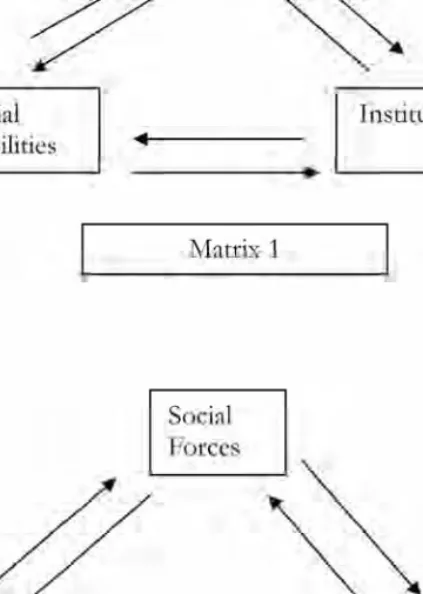
Traditionally, intellectuals take charge of managing national common sense and organizing the understanding of reality. Thus, reflecting on Cox's second matrix, Chapter 2 conducts an analysis of configurations of forces through a discussion of the forms of state and social forces that emerge from the expansion of certain forms of power.
Pax Britannica
Remove understated class divisions by avoiding direct association of wealth class with state (50-1). British leadership ended at the turn of the century and era.

Period of Mixed Imperialisms
The penetrated countries of the earlier phase of liberal expansion recognized their subordination in the capitalist world order and began to react. From the 1870s to the 1890s, a change in the nature of work was evident, resulting from a change in the point of production.
Pax Americana: Post-war Mixed Economic Consensus
That is why the IMF played a strong role in shaping the new world order. In the post-war period, a classic example of consensus on a mixed economy crystallized in England.
Neoliberalism
While the 1970s paved the way for a neoliberal historical bloc, policy recommendations for developing Latin American countries were included in the "Washington Consensus" in 1989. The "Washington Consensus" is a term coined by John Williamson, the World Bank's chief economist in the South Asian region and a senior associate at the institute.
KOREA’S HISTORY OF PASSIVE REVOLUTION
Following a similar periodization pattern as in the previous chapter, the discussion demonstrates the impact that the international hegemonic struggle had on this small country, which has not remained immune to international politics. I argue that a close inspection of the history of Korean economic development shows that the global hegemonic struggle outlined in Chapter 2 has had a significant impact on this semi-peripheral country, but has not been conducive to hegemony within Korea itself.
Occupied/Colonial History During Rival Imperialisms: 1 Form of State and Trasformismo
In the dual economy pattern, Japan benefited from Korea's modernization in all sectors. Although the colonial leaders did not receive much support from citizens for their leadership, trasformismo is noted in the way it is “best.”
Pax Americana I: US Occupation of Korea
The growth of the independent trade union movement was thus quickly stunted in the early life of the ROK. Chaebols played a major role in Korea's development and cannot be overlooked in the discussion of the restructuring of production relations and trasformismo throughout Korea's history.
Pax Americana II: Developmental Military Dictatorships
President Park's military government has been called a developmental state, and the "miracle in Han" is often attributed to state control of the economy. In the 1970s, the top 20 percent of households earned more than 40 percent of national income.
Neoliberalism and the Birth of Korean Democracy
However, the trade-off for these eliminations would be the restriction that workers would accept “the elimination of the requirement to ratify collective agreements and a. Rhee, In Je, then Secretary of Labor, argued in 1987 that "the ban on union political activity is dead." However, there was no real change in labor policies (Haggard and Kang 1999: 127).
CRISIS RESPONSE AND IMF RESTRUCTURING: PASSIVE
REVOLUTION IN THE KNOWLEDGE ECONOMY
This chapter looks at specific shifts in labor market expectations towards globalizing neoliberalism and all its ideological baggage. In the case of Korea, economic and social reforms after the 1997 crisis, despite democratization, followed a similar trajectory to earlier periods of development under the elite-led pattern of passive revolution.
Restructuring of Material Capabilities
The lesson for the working class is that the strategy of passive revolution will be attempted by the bourgeoisie' (Showstack-Sassoon. Van Apeldoorn writes that the worldview of a hegemonic group is only normalized by the adaptation of subordinate groups'.
FDI Welcomed: Restructuring Businesses and Banks
In 1999, Uh, Soo Bong of the Korea International Labor Foundation (KOILAF) gave a prescription for facilitating full labor market flexibility. Unemployment, or the final impact of labor 'flexibility' in this context, increased dramatically as a result of the 1997 crisis.
Institutional Restructuring I: Tripartite Commission and Limited Inclusion via Trasformismo
The Korea Employers Federation (KEF) and the Federation of Korean Industries (FKI) represented the employer/manager segment in the Commission. The Social Pact was initiated by the government and was composed of the following (Lee and Lee 1999: 172).
Institutional Restructuring II: VET
Nevertheless, the model demonstrates three crucial aspects of knowledge negotiated in the industries of the Industrial Age. Especially around the turn of the millennium, experts began to emphasize the importance of knowledge for sustainable development.

Restructuring of Ideas and the Knowledge Structure
VET, Educative Strategy, and the Restructuring of Common Sense
During the recovery period, the government emphasized Korea's place in the world as a 'knowledge economy'. People in the auto and computer industries were more likely to keep their jobs.
Restructuring of Content of VET Programmes
Performance and Individuality in the Workplace
Individualism and lifelong learning are crucial worker characteristics that will be sought in the knowledge economy, and workers must prepare to demonstrate those skills. This 'right' is also recognized at international level, for example in the Universal Declaration of Human Rights (1948) and the American Declaration of Human Rights and Duties (1948).
Incentive Structure: Trasformismo at its Best
The MOL introduced the idea of a new labor management culture in July 1999, and companies were given two months to hear about it, according to 3 phases printed in the Korea Herald (Wednesday, November 24, 1999). But during the recovery from the crisis, the invitation of foreign capital inspired a new face of labor-government relations, represented in the formation of the Tripartite Commission and the New Labor Culture.
CONCLUSION
In fact, government involvement and management of vocational education leads to worsening gaps between the knowledge and skills of the workforce. I review the questions I am forced to think about in the larger picture of the international political economy of expansive capitalism, and demonstrate how this both addresses these questions and opens doors for future research arising from the arguments I present.
South Korea in the Global Economy
Without consensus, according to Gramscian understanding, economic development will not become hegemonic and will be sustainable in the long term or not. In the third chapter, I operationalize the concept of passive revolution, which appears in various forms during the absence of hegemony.
Dissent: Past and Present
Despite speculation that the Korean economy is rapidly 'recovering' from the worst consequences of the economic crisis, the opposition has not subsided. I reasoned that most of the controversy surrounding these factors could be attributed to the internationally oriented restructuring process of the Korean economy.
The Future
Even government leaders in today's era of neoliberalism are confused about the future for South Korea. In the South Korean case, elite levels of society: the government and the managerial capitalist class have automated internationalization or globalization.