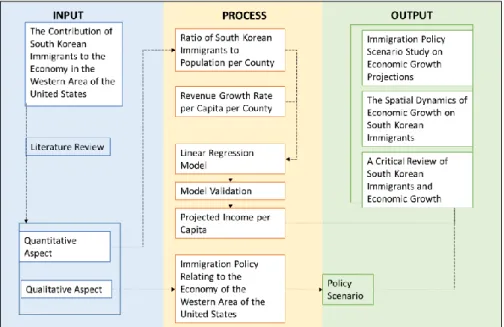
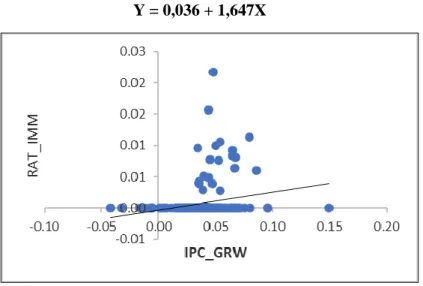
Immigration Policy Analysis of South Korean Immigrants on Economic Growth in the Western Area of the United States. Quantitative data in the form of data on the population of the western United States by county, the number of immigrants from South Korea by county, and the growth of per capita income by county. Quoted from VOA Indonesia news (10/04), the immigration crisis in the United States has worsened in recent weeks.
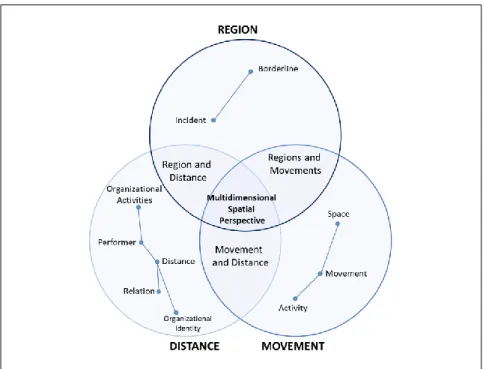
This study has three main objectives to highlight changes in immigration policies for South Korean immigrants in relation to economic growth and spatial dynamics in the western United States and critically examine these policies. The qualitative aspect consists of the immigration policy related to the economy in the western region of the USA. The existence of South Korean immigrants in the western United States cannot be separated from migration theory.
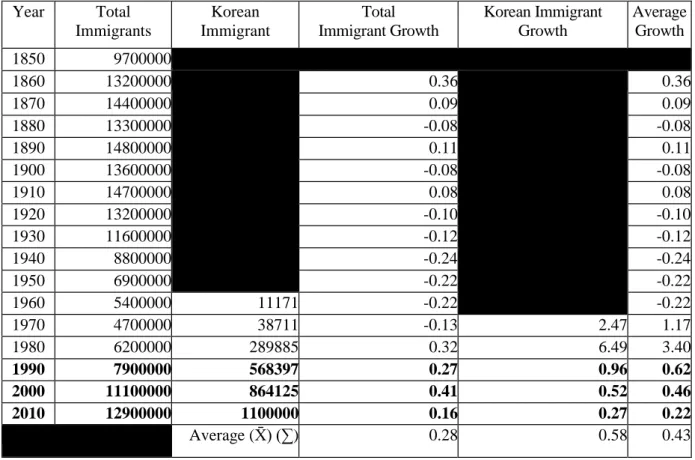
Immigration is one of the factors that play a major role in a country's population dynamics, and the United States is no exception. Thus, it can be said that there is a relationship between the level of immigration and per capita income in the United States (Kane & Rutledge, 2018). This study discusses three main aspects, namely (1) trends in economic growth, (2) immigration policies for South Korean immigrants in the western part of the United States, and (3) the spatial dynamics of economic growth for South Korean immigrants in the western part of the United States. area of the United States.
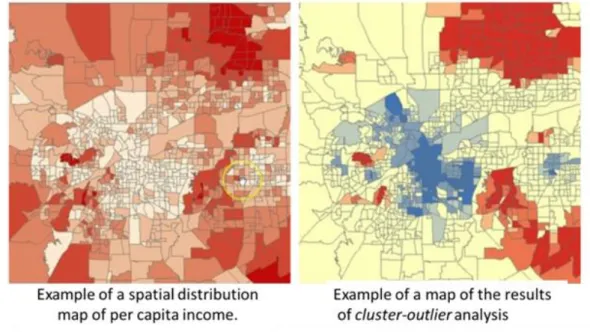
The figure above shows that cluster-outlier analysis (right) will highlight clustering of the spatial distribution of per capita income (left).
Results and Discussion
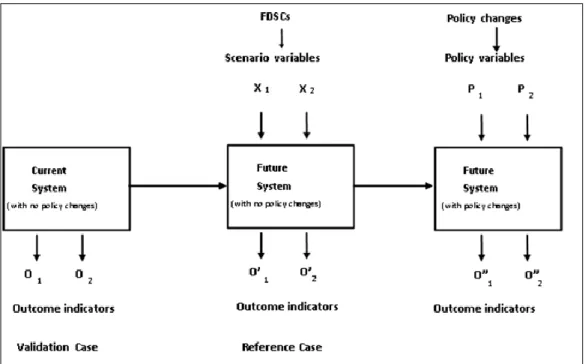
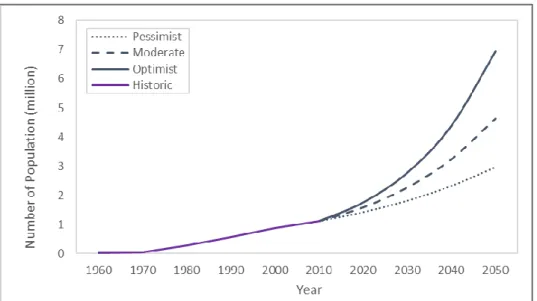
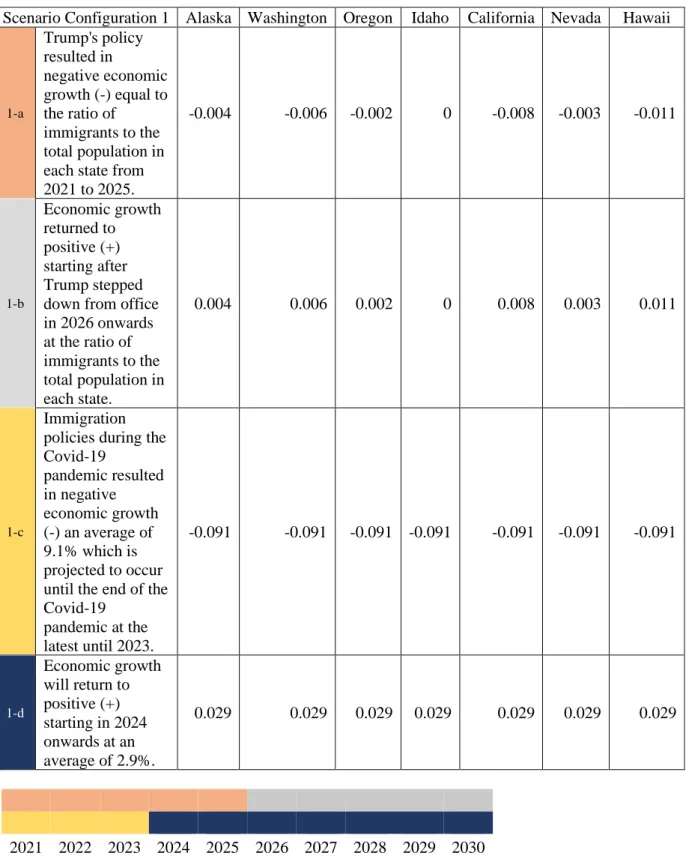
The projected economic growth will occur until Biden's term ends in 2025 with an increase in the ratio of immigrants to the total population in each state. For Oregon and Nevada, the expected income per per capita in the middle category, higher than Idaho. In the second policy scenario, expected economic growth in the US will decline and then rise again in the next few years or known as the 'saddle' cycle.
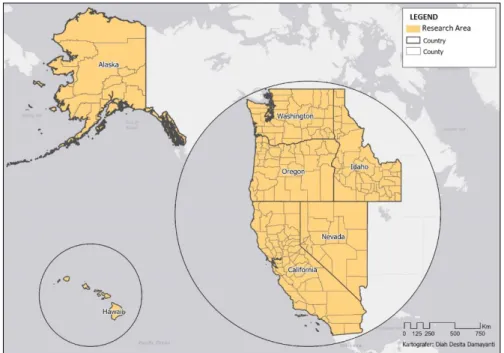
The Spatial Dynamics of South Korean Immigrant Economic Growth in the Western United States. In the state of Nevada, there are two counties with the highest scores, namely Washoe and Lander. In California, the highest per capita income is concentrated in Santa Clara, while for Hawaii, the highest value is in the capital Honolulu.
While Alaska also has a high per capita income, the number of South Korean immigrants in the region is so low that it is likely that the high per capita income comes from other population categories. These two opposing circumstances can be interpreted as such that there are two major groups of per capita incomes in the region, high and low in each of the above counties. Spatial distribution of income per capita based on scenarios 1 and 2, the year 2023. The results of the cluster outlier analysis in scenarios 1 and 2 in Figure 21 show that there is a significant difference in the High-High Cluster between Scenarios 1 and 2, especially in Southeast Fairbanks, Alaska.
Viewed from the distribution of South Korean immigrants, southern California areas such as Santa Clara and Los Angeles are the High-High cluster with the largest number of South Korean immigrants in the western region of the United States. Differences in the High-High Cluster are found in Southeast Fairbanks, Alaska, and Sacramento, California. The following map shows the migration flow of Koreans and the work undertaken in the western region of the United States.
In the following years, the Korean-led business in Los Angeles experienced rapid growth. This made Los Angeles the largest manufacturing center in the United States for the next two decades (Abelmann & Lie, 1995). These details show that the dominant ethnic Koreans work in the fields of management, business, and the arts.
This shows that the kinship system formed within Korean ethnic groups in the United States is based on work interests. The immigration aspect is closely related to the historical journey of Korean migration as part of the Asian diaspora in the United States as explained in the previous sub-chapter. The existence of Korean ethnicity in the western area of the United States plays a role in ethnic diversity that can restructure the cultural order in the economic and demographic context of the future.
However, with Korean ethnicity as a cheap labor force, Los Angeles was able to survive and even become an industrial center in the US.
Conclusions
Returning to In-Jin Yoon's (1997) concept of Korean firms and race relations in America, the different types of firms built by Koreans in the United States are based on three main aspects, namely immigration, entrepreneurship, and racial relationships (Yoon, 1997). Entrepreneurship highlights the Korean-led aspect of business, where this business as a means of livelihood has shifted from what most Korean immigrants initially did as laborers on sugarcane plantations, and in the next generation, it grew to business in shops, food, laundries and beauty salons. , also artists and students. This shows that ethnic Koreans can develop their potential in the midst of political pressure, which, through the companies they run, is even now one of the most influential Asian ethnic groups in the world.
Meanwhile, from the aspect of race relations, they prioritize ethnic similarities in the business they operate, just like other Asian ethnic groups (Japanese and Chinese). The presence of ethnic Koreans was able to maintain economic conditions, especially in Los Angeles during the inflation caused by The Great Depression in 1970 in which almost all parts of the United States experienced economic losses. In addition, since the Los Angeles Riots (LA Riots) in 1992, ethnic Koreans are no longer underestimated.
Through various struggles for citizenship, they were able to pave the way for racial equality and equality in the United States. Advances in Spatial Economic Analysis for Agricultural Economists: Tools and Topics International Association of Agricultural Economists Conference Queensland Australia, 1-25.