i
The Proceeding Of
The 1
stInternational Conference Technology on Biosciences and Social Science 2016
“Industry Based On Knowledges”
17th – 19th November 2016, Convention Hall, Andalas University, Padang, West Sumatera, Indonesia
Organized by:
Animal Science Faculty of Andalas University and
Alumbi Center of Universiti Putra Malaysia
Organizing Committee
SteeringCommittee:
Rector of Andalas University Deputy Rector II Andalas University Dean of Animal Science Faculty
Deputy Dean I of Animal Science Faculty Deputy Dean II of Animal Science Faculty Prof. Dr. Ir. Salam N. Aritonang, MS Prof. Dr. Ir. H.M. Hafil Abbas,MS Prof. Dr. Ir.Zaituni Udin, M.Sc
Chairman :
Prof. drh. Hj. Endang Purwanti, MS., Ph.D
Co-Chairman:
Prof. Dr. Ir. Hj.Husmaini, MP
Secretary:
Dr. drh. Hj.Yulia Yellita, MP Afriani Sandra, S.Pt., M.Sc
Secretariat:
Hendri Purwanto, S.Pt.,M.Si Yunizardi, S.Pt.
Arif Trisman, S.Pt.
Rahmat Mulyadi,SE
Treasurer :
Dr. Ir. Elly Roza, MS,
Financial
Dr. Ir.Tinda Afriani, MP.
Dr. Ir. Sabrina, MP
Editors:
drh. H. Yuherman, MS., Ph.D; Dr. Ir. Rusmana Wijaya Setia Ningrat, M.
Rur.Sc,;Dr.Ir. Masrizal, MS.; Dr.Ir. Firda Arlina,MP.; Indri Juliyarsi, SP., MP.; Deni Novia, S.TP., MP.; Sri Melia, S.TP., MP.; Aronal Arief Putra, S.Pt., M.Sc; Ferawati,S.Pt, MP.; Yulianti Fitri Kurnia, S.Pt,M.Si
Meet and Greet of UPM Alumny
Prof. Dr. Marlina, Apt.,MS.; Dr. Ir. Adrinal, MS.; Dr. P.K.Dewi Hayati,MS.
iii
Contents
Page
Organizing Committee……… ii
Content ……….. iii
Preface ……….…… iv
List Paper of Oral Presentation ……….. v
List Paper of Poster Presentation ……….. xii
Keynote Lecturer ……….. 1
Papers of Oral Presentation ……….. 31
Animal Science……… 32
Agricultures……….……… 206
Medicenes, Public Health, Technics and Natural Sciences …….………. 380
Economy and Social Sciences ……… 453
Papers of Poster Presentation ……… 519
Preface
v
List Paper of Oral Presentation
No. Author’s Title Page
ANIMAL SCIENCES 1. Yulianti Fitri Kurnia and
Endang Purwati
The Potential Of Dadiah From 50 Kota District, West Sumatera As a Probiotic Food Based On Total of Lactic Acid Bacteria
33
2. Harissatria, Jaswandi, and Hendri
Acceleration Time Equilibration Cauda Epididymis Spermatozoa Buffalo with Addition of Antioxidant Gluthatione
37
3. Jumatriatikah Hadrawi, Asep Gunawan, Niken Ulupi, and Sri Darwati
Association Analysis of NRAMP1 Gene Related to Resistance Against Salmonella pullorumInfection in Kampung Chicken
42
4. Ahmad Saleh Harahap, Cece Sumantri, Niken Ulupi, Sri Darwati, and Tike Sartika
Polymorphism Calpain-3 (CAPN3) Gene and Association with Carcass Traits and Meat Quality in Kampung Chicken
47
5. Wahyuni, Niken Ulupi and Nahrowi
Physical Quality of Broiler Meat Fed Diets ContainingMealworm Protein Concentrate
56 6. Mega Sofia, Cece Sumantri,
Niken Ulupi and Asep Gunawan
Identification Polymorphisms of Inos Gene and Association with Body ResistanceTrait in Kampong Chicken
62
7. Risky Nauly Panjaitan, Niken Ulupi and Nahrowi
Investigation of Cadmium Contamination in Mealworm, Ration and Broilers’s Feces
67 8. Woki Bilyaro, Asep Gunawan,
Tuti Suryati, Cece Sumantri, and Sri Darwati
Malonaldehyde and Fat Contents of Kampong-meat TypeCrossbreed Chicken
71
9. Devi Kumala Sari, Henny Nuraini and Tuti Suryati
Quality of Gelatin Processed from Chicken Legs (Tarsometa tarsus) Skin with Different Method
75
10. Linda Suhartati, Asep Gunawan, Rukmiasih, Sri Darwati, Cece Sumantri, Tuti Suryati,and Isyana Khaerunnisa
Physical and Chemical Characteristic of Chicken Meat from Kampung x Meat Type Crossbred Chicken
80
11. Teguh Rafian, Jakaria, Niken Ulupi, Yosi Fenita, and Muhammad Andriansyah
Evaluated the Effect of Fermented Palm Sludge on Burgo Chicken Performance
85
Donald John Calvien Hutabarat, Fransisca Rungkat Zakaria, Endang Yuli Purwani, and Maggy Thenawidjaja Suhartono
SCFA Profile of Rice RS Fermentation by Colonic Microbiota, Clostridium butyricum BCC B2571, or Eubacterium rectale DSM 17629
89
Asep Gunawan, Ahmad Furqon, Kasita Listyarini, Jakaria, and Cece Sumantri
Growth and Carcass Characteristic in Kampong x Broiler Crossbred Divergently Selected for Unsaturated Fatty Acid
100
12. Niken Ulupi, Cece Sumatri and Sri Darwati
Resistance against Salmonella pullorumin IPB-D1 Crossbreed, Kampong and Commercial Broiler Chicken
104
13. Angelia Utari Harahap Effects of Wheat Leaf Noni (Morinda citrifolia) on Carcass and Production Quail Eggs (Coturnix Coturnix Javonica) in the Different Level Concentrate
108
14. Armein Lusi Zeswita, Vivi Fitriani and Nursyahra
Microbial Analysis on Freshwater Shell (Corbicula sumatrana) in Singkarak Lake Solok District West Sumatra
112
15. Syaiful F. L, E. Purwati, Suardi, and T.Afriani
Analysis of Estradiol and Progesterone Hormone Levels Against Various Cell Culture in TCM- 199 Medium for Cattle In vitro
116
16. Jhon Hendri and Harris Satria Buffalo Embryo Maturation Optimization in Vitro with Addition Glutathione
125
17. Khalil, Reswati, Y.F. kurnia, Indahwati and Yuherman
Blood Mineral Profiles of Simmental Breed Cattle with Different Feeding Systems and Reproduction Statues in Payakumbuh Region West Sumatra, Indonesia
130
18. Lendrawati, A. Rahmat and J.
M. Nur
Performance of Broiler Chicken Fed Turmeric and Zinc Mineral under Heat Stress
134
19. Muslim Utilization of Plant Titonia Flowers (Tithonia diversifolia) in The Ration on The Performans of Broiler
138
20. Resolinda Harly, Almasdi and Sri Mulyani
Analysis of Factors Influence Palm Oil Farmers Personal Income Trough Buffalo’s Breeding
144
21. Retno Wilyani and Moch Hisyam Hermawan
Nutritional Value of Persimmon Yoghurt (Dyospyros kaki) as Healthy Soft Drink to Make Healthy and Fitness: An Analysis
148
vii
22. Fenita Y, Rafian T, Andriansyah M, Saepudin R, and Zain B
Evaluated the effect of fermented palm sludge on burgo chicken performance
157
23. Zulfa Elymaizar, Arnim, Salam N Aritonang, Mardiati Zein, and Elly Roza
In-Vitro Rumen Digestibility of Goat Feed by Patikan Kerbau (Euphorbia hirta L.) Herbal Supplemented
161
24. Salam N. Aritonang, Elly Roza and Lailya Rahma
The Adding of Saccharomyces cerevisiae on Moisture, Acidity and Lactic Acid Bacteria Colony Count of Yogurt from Goat’s Milk
166
Yuherman, Nur Asmaq and Endang Purwati
Characteristics and Antimicrobial Activity of Lactic Acid Bacteria Isolated from Dadih of Agam Regency
172
25. Sri Melia, Endang Purwati, Yuherman, and Jaswandi
A Comparative Study on Composition and Microbiological of Buffalo Milk From Different Location in West Sumatra
177
26. Yunizardi, Ade Rakhmadi and Endang Purwati
Effect of Addition White Oyster Mushroom (Pleurotus ostreatus) and Carrot (Daucus carota L) In Probiotic Duck Nugget On Protein, Calcium and Organoleptic Value
182
27. Tertia Delia Nova, Sabrina and trianawati
The Effect of level Flour turmeric (Curcuma domestica Val) ration toward carcass local duck
191
28. T. Astuti, G. Yelni, Nurhaita, and Y. Amir
Effect of the Form Complete Feed With Basis Fermented Palm Oil Fronds on the Content of Moisture, Crude Lipid, and Crude Protein for Ruminants
202
AGRICULTURES 29. I Ketut Budaraga, Arnim, Yetti
Marlida dan Usman Bulanin
Effect Of Combination Treatment Of Liquid Smoke Concentration, Soaking Time, Packaging And Different Storage Time To Yield And Moisture Content Nila Fish Fillet (Oreochromis Niloticus)
207
30. M. Said Siregar, Arif Kurniawan and Syakir Naim Siregar
Study On The Manufacture Of Nuggets From Natural Rubber Seed (Hevea Brasilinsis Mull. Arg)
218
31. Misril Fuadi, Mahmud T.M.
Mohamed, Mohd. Fauzi Ramlan, Yahya Awang
Effect Of Benzyladenine (BA) And Duration Of Shading On Growth And Quality Of Dracaena Sanderiana And Codiaeum Variegatum
228
32. Azwar Rasyidn, Gusmini, Ade Fitriadi and Yulmira Yanti
Soil Microbes Diversity Between Hilly and Volcanic Physiography And Their Effect To Soil Fertility
236
33. Dafni Mawar Tarigan, Bambang SAS, and Hasanul Arifin Marmen
Application of Green Manure and Rabbits Urine Affect Morphological Characters of Sweet Corn Plant (Zea mayssaccharata Sturt) in Lowland of Deli Serdang District
246
35. Dewi Rezki, Siska Efendi, and Herviyanti
Humic Substance Characterization of Lignite as a Source of Organic Material
251 36. Jamilah, Sri Mulyani, and
Juniarti
Nutritional Composition of Ruminant Forage Derived from Rice Crops (Oryza Sativa L.) that Applicated by C.odorataCompost
254
37. Mega Andini, Riska, and Kuswandi
Effectiveness of Liquid Smoke to Control Mealybug on Papaya
262 38. Muhammad Thamrin, Desi
Novita, Fitria Darma
Factors Affecting Farmers Decision to Convert Wetland
266 39. Riry Prihatini, Yulia Irawati,
Yosi Zendra Joni, and Sri Hadiati
The Occurrence of Somaclonal Variation on The Pineapple In vitro Culture as Detected by Molecular Markers
277
40. Riska and Jumjunidang Competitiveness ofFusarium oxysporum. sp cubense VCGs 01213/16 (Tropical race 4) Among Several VCGs in Race 4 on Ambon Hijau Cultivar
283
41. Fridarti and Sri Mulyani Changes nutrients by microbial fermentation chocolate waste indigenous result of the additional mineral phosphor and sulphur in-vitro
291
42. Sri Hadiati and Fitriana Nasution
Clustering and genetic distance some salak species (Salacca spp) based on morphological characters
295
43. Asep Dedy Sutrisno, Yusman Taufik, and Jaka Rukmana
Optimalization Flour Composite Nutritiose as Basic Materials Processing for Food Products
303
44. Sri Utami, Suryawati and Ermeli
KNO3 Concentration and Soaking Time Effect on Breaking Seed Dormancy and Seed Growth of Sour-Sop (Annona muricata L.)
310
ix
45. Susilawati, Dewi Sartika, and Mochamad Karel Saputra
Effect of Kepok Banana (musa paradisiaca linn) Peel Flour Addition as a Stabilizer on Chemical and Organoleptic Properties of Ice Cream
316
46. Ubad Badrudin, Syakiroh Jazilah, and Budi Prakoso
The effect of soil submersion duration and ameliorant types on growth and yield of shallot at Brebes Regency
325
47. Yulfi Desi, Trimurti Habazar, Ujang Khairul, and Agustian
Disease progress of Stewart’s Wilt (Pantoea stewartiisubsp.stewartii) on sweet corn
330 48. Yusnaweti On Growth Response And Results Of Upland
Rice Due To The Allotment Of Some A Dose Of Compost Bamboo Leaves
337
49. Fadriani Widya, Darmawan, and Adrinal
Rice husk biochar application in traditional paddy soil and its effect of nutrients vertical distribution
343
50. Ragapadmi Purnamaningsih, Ika Roostika, and Sri Hutami
Embryogenic Callus Induction and Globular Embryo Formation of Kopyor Coconut (Cocos nuciferaL.)
350
51. A. Sparta, L. Octriana, Nofiarli, N. Marta, Kuswandi, M.
Andini, and Y. Irawati
The Role of Cow Manure to Reduce The Need of Nutrient N Inorganic In Banana Plant Vegetative Growth
357
52. Wijaya Edo Rantou Analysis Influence of Technical Competence on Company's Performance In Electrical Engineering Company In Bandung
362
53. Desi Ardilla, Herla Rusmarilin, and Adi Purnama
Study The Physical And Chemical Properties Of Bioethanol From Pineapple Skin (Ananas comusus L.Merr )
370
54. Masyhura MD, Budi Suarti, and Evan Ardyanto AS
Increase Moringa Leaf Powder and Long Roasting on Protein Content in the Making of Cookies from Mocaf (Modified Cassava Flour)
376
MEDICINES, PUBLIC HEALTH, ENGINEERING, AND NATURAL SCIENCES 55. Ayulia Fardila Sari ZA, Putri
Nilam Sari, and Muthia Sari
Implementation of Hospital Information System in RSUP Dr. M. Djamil Padang 2016
381
56. Dien GA Nursal, Rizanda Machmud, Eryati Darwin, Nana Mulyana
Implementation Patient Safety Standards in Basic Emergency Obstetric Care Community Health Center (BEOC_CHC) Padang
389
57. Dewi Sartika, Susilawati, and Mumpuni Uji Kawedar
Survey of Salmonella Contaminated Vannamei Shrimps in Lampung
396 58. Ferra Yanuar Determinants of Birth Weight at Various
Quantiles in West Sumatra
403 59. Hardany Primarizky, Ira Sari
Yudaniayanti, and Djoko Galijono
Detection Of Osteoporosis in Ovariohysterectomized Cats (Felis Domesticus) based on Serum Osteocalcin Levels
408
60. Nefilinda Influence of Education and Local Wisdom on Environment Villages in Minangkabau
413 61. Masri, E., Asmira,S and
Verawati
Local Food Development from Combination Siarang Variety Of Black Rice (Oryza Sativa L.Indica) And Yellow Pumpkin (Cucurbita Moschata) To Prevent Anemia For Pregnant Women
420
62. Suryani, Zulmardi, Abdi Dharma, Yunazar Manjang, and Febria Elvy Susanti
Development of Antimicrobial Analysis of Lactic Acid Bacteria Isolated from VCO (Virgin Coconut Oil) Fermentation Process Against Bacteria in The Secretion of CSOM
425
63. Suci Rahayu, Darmawan Saptadi, and Febi Reza Fitriani
The Influence of Dicamba in Combination with BAP on Callus Induction and Proliferation of Centella (Centella asiatica L.)
432
64. Christina J. R. E.
Lumbantobing, Endang Purwati, Sumaryati Syukur, and Eti Yerizel
Triglyceride lowering effect of Garcinia atroviridis leaf tea from Sijunjung - West Sumatra on obese subjects in Medan, North Sumatra
440
65. Netty Suharti Preparation and Characterization of Ethanol Extract of Mychorryzae Induced Ginger as Raw Matherial for Anti Breast cancer Nano suspension Formulation
449
ECONOMY AND SOCIAL SCIENCES 66. Ike Revitaa, R. Trioclariseb,
Inesti Printa Elisyac
Reflections Of Social Reality In The Activities Of Women Trafficking In West Sumatera
454
67. Andri, Ida Indrayani and Rahmi Wati
Technical Efficiency Analysis of Poultry in District of 50 Kota (Stochastic Frontier Production Function Approach)
460
xi
68. Arif Fadhillah Teaching Accounting in Business School:
A Personal Reflection
465 69. Wijaya Edo Rantou Analysis Influence of Technical
Competence on Company's Performance In Electrical Engineering Company In Bandung
470
70. Ira Apriyanti, Desi Novita, and Pandhu Ahmad Pangestu
Efficiency of Marketing Distribution of Palm Oil in Sub District of Selesai Regency of Langkat
477
71. Yeyep Natrio, Afdhal Rinsik, Gusmaizal Syandri
The Occurance Of Transitivity And Suicidal Motives On Famous Public Figure`S Suicide Letters
483
72. Yusmarnia and Mahdi An analysis of Marketing
Efficiency of Sapodilla in Nagari Sumpur sub district of Tanah Datar, West Sumatera
494
73. Jusuf Wahyudi, Hesti Nur’aini and Lina Widawati
Information Systems of Eradication Pests and Diseases Crops for Agriculture Extension Instructor
501
74. Desi Novita and Ira Apriyanti The Regional Investment Competitiveness In Binjai City
506 75. Khairunnisa Rangkuti, Desi
Novita, and Bima Mahdi
The Impact of Rising Soybean Prices to Tofu Industry Small Scale in Medan
511
List of Poster
No. Author’s Title Page
ANIMAL SCIENCES 1. Wahidin Teguh Sasongko,
Teguh Wahyono, Shintia Nugrahini Wahyu Hardani, and Firsoni
Total Gas Production, Methane and Rumen Fermentation Characteristics of Rejected Soybean Meal Protected by Jackfruit Leaves
521
2. Nita Yessirita, Tinda Afriani, and Sunadi
The Supplementation of Amino Acid Methionine-Lysine on the Protein Quality of Leucaena Leaf Meal Fermented with Bacillus laterosporus
529
AGRICULTURES 3. Willy Pranata Widjaja,
Sumartini
Optimization Of Koji Concentration And Fermentation Time To Characteristics Of Modified Sorgum (Sorghum Bicolor L Monench) Flour
536
4. Kuswandi, Makful, Sahlan, and Mega Andini
Evaluation Performance Of Some Hybrid Of Watermelon From Indonesian Tropical Fruit Research Institute
545
5. A. Sparta, R, Triatminingsih, Y.Z. Joni, and Nofiarli
The Using of Thidiazuron to Induce the Mangoesteen Shoot (Garcinia mangostana L.) by Direct Organogenesis
550
6. Ira Sari Yudaniayanti, Bambang Sektiari L,, Hardany Primarizky
Healing Quality Of Femoral Fractures In Ovariectomized Rats With Therapy Of Cissus Quadrangularis Extract Shown by The Expression Of Type I Collagen
555
7. Sri Hadiati and Tri Budiyanti Parameters Genetic of Fruit Component Characters on Snake Fruit (Salacca sp.)
562 8. Riry Prihatini, Tri Budiyanti,
and Noflindawati
Genetic Variability of Indonesian Papaya (carica spp.) as Revealed by RAPD (Rapid Amplified Polymorphic DNA)
567
MEDICINE 9. Regina Andayani and Fivi
Yunianti
The Effects of Oxidation And Thermolysis Reaction on a-Mangostin Content in the Ethyl Acetate Extract of Mangosteen Rind (Garcinia mangostana L.) by High Performance Liquid Chromatography
575
10. Nini Marta, Kuswandi, Liza Octriana, and Nofiarli
The effectiveness test of herbicides 2,4 D, glyphosate, paraquat on low dose as growth regulator on papaya seedling
582
The 1stConference Technology on Biosciences and Social Sciences 2016
1
KEYNOTE LECTURER
The 1stConference Technology on Biosciences and Social Sciences 2016
Pharmacodynamic Evaluation of the Additive Combination of Pterostilbene and Oxacillin against Methicillin-resistant
Staphylococcus aureus (MRSA) ATCC 33591
Dayang Fredalina Basri*, Siti Fairuz Ishak, Ahmad Rohi Ghazali, Noraziah Mohamad Zin
School of Diagnostic & Applied Health Sciences, Faculty of Health Sciences, Universiti Kebangsaan Malaysia, Jalan Raja Muda Abdul Aziz, 50300 Kuala Lumpur, Malaysia
*Corresponding author: [email protected]
Abstract
Methicillin-resistant Staphylococcus aureus (MRSA) was initially limited to hospital and healthcare facilities but has gradually become a growing problem in healthy children and adult. Pterostilbene belongs to the phenylpropanoid phytoalexin which is involved in plant response to various pathogen and herbivores attack. The aim of this study was to evaluate the anti-MRSA action of pterostilbene in combination with selected antibiotics such as vancomycin, linezolid and oxacillin against MRSA ATCC 33591. The minimum inhibitory concentration (MIC) and minimum bactericidal concentration (MBC) of individual antimicrobial agents were determined using microbroth dilution technique whereas the microdilution checkerboard (MDC) assay was employed to verify the type of interaction of the combined agents from the fractional inhibitory concentration (FIC) index values. Time- kill assay (TKA) analysis and post-antibiotic effect (PAE) time were determined only on the combination which showed synergistic interaction. Cell morphology and ultrastructural changes of the treated and untreated strains were also observed. The MIC and MBC of indicated that pterostilbene was bacteriostatic against ATCC 33591. MDC results showed that pterostilbene-oxacillin combination exhibited lowest FIC value (0.56) for ATCC 33591 which implies partial synergistic interaction. On the other hand, combination of pterostilbene and vancomycin generated an additive effect (FIC 1.00) whereas pterostilbene-linezolid combination displayed indifference effects with FIC of 1.25 against MRSA ATCC 33591.
Despite the partial synergism, TKA proved an additive effect for the combination of pterostilbene and oxacillin against ATCC 33591 with concentration-dependent bactericidal action within 24 hour. After one hour exposure at 10X-MIC, prolonged PAE time of 2.6 ± 1.48 hour against ATCC 33591 was demonstrated by pterostilbene-oxacillin combination treatment compared to pterostilbene (2.02 ± 0.36 hour) and oxacillin (0.53 ± 0.28 hour) alone.
Scanning and transmission electron microscopic observations revealed that pterostilbene targeted the cell wall which is the same site of action as oxacillin hence additive effects by the combination treatment. In conclusion, pterostilbene in combination with oxacillin showed partial synergism with bactericidal and persistent antimicrobial effect against MRSA ATCC 33591. Therefore, pterostilbene has the potential to be developed as an alternative phytotherapeutic agent against MRSA infections.
Keywords: Pterostilbene, MRSA, Minimum Inhibitory Concentration (MIC), Minimum Bactericidal Concentration (MBC), Fractional Inhibitory Concentration (FIC), Bactericidal, Time-Kill Assay (TKA), Post-Antibiotic Effect (PAE).
The 1stConference Technology on Biosciences and Social Sciences 2016
15
The Development of Goat Meat Production in Thailand Chaiyawan Wattanachant
Department of Animal Science, Faculty of Natural Resources, Prince of Songkla University, Hat Yai 90110, Thailand
Corresponding author: [email protected]
Abstract
Goat meat has recently become an important aspect in the meat markets due to its containing of low fat and cholesterol contents that may benefit to human health as compared to mutton, pork and beef. Although the goat meat consumption is less as compares to chicken, pork, and beef, but the amount of world’s goat meat consumption trend to be increased. In Thailand, the number of the goat population was about 26.2% increase from the year 2011 to 2015, (427,567 vs. 539,583 heads). The largest distribution of the goat population is within the Southern region (39.1%; 271,730 heads) followed by the Central region (36.6%; 209,155 heads), Northern region (19.4%; 8,876 heads) and Northeastern region (4.8%; 19,822 heads), respectively. However, goat production in this country was primarily raised for the meat purpose (95.5%; 515,093 heads). More acceptability of goat products, especially the meat was reflected a growth of Thai consumer attitude which concern more about the nutritional quality. This was due to the hard research working, and strong knowledge transferring by many organizations such as universities, private companies, Ministry of Agriculture, and the Royal projects. Nevertheless, the demand of goat meat in the market was still slowly increased probably due to the high price of meat(350 to 380 Baht or 10.9 to 11.9 $US per kg) that limit the consumer decision compared to beef (280 to 300 Baht or 8.75 to 9.38 $US per kg), and chicken (61 to 75 Baht or 1.9 to 2.34
$US per kg of chicken breast meat). In addition, goaty odour was a negative preference that consumer concern. To cope with these two main limitations, research works which had been done in Thailand within two decades were concerned more about the improvement of production and nutritional systems to increase the meat yield, whereas breeding improvement program, slaughterhouse and slaughtering protocol, goat meat quality and consumer acceptability of goat meat were also studied. Thus, studies to develop strategies for improving production efficiency of goat with minimum cost may need to be undertaken. Moreover, in order to export goat products to the halal food markets, goat products development and consumer behaviour may also need to be considered. In conclusion, it could be emphasized that the Thai goat meat industry has more opportunity in development as indicated by the increasing trend in production and consumption.
Keywords: Thailand, Goat meat production, Thai goat meat industry
The 1stConference Technology on Biosciences and Social Sciences 2016
Implementation Patient Safety Standards in Basic Emergency Obstetric Care Community Health Center (BEOC_CHC) Padang
Dien GA Nursal a,b, Rizanda Machmudc, Eryati Darwinc, and Nana Mulyanad
aPost Graduated Student Andalas University Faculty of Medicine, Jl Perintis Kemerdekaan No 94, Padang;
bAndalas University Faculty of Public Health, Jl Perintis Kemerdekaan No 94, Padang,
cAndalas University, Faculty Of Medicine, Jl Perintis Kemerdekaan No 94, Padang,
dMinistry of Health RI, Jl H.R. Rasuna Said Blok X5 Kav. 4-9, Kuningan, Jakarta,
*Corresponding author: [email protected]
Abstract
A high number of Adverse Event based on the data from Ministry of Health RI showed that patient safety still not going well, while patient safety is a measure of the quality of health services in Indonesia. The purpose of this study is to determine the implementation of the seven standards of patient safety as the basic of patient safety model development based on Malcolm Baldrige in BEOC -CHC of Padang as the implementation of maternal and child safety. This study uses a qualitative research method and the number of informant is 25. The data collecting was done by in-depth interview and Focus Group Discussion that will be written on the transcript in the form of matrix and analyzed through resource and method triangulation. Based on the study result, there is no guidelines about patient safety from Department of Health of West Sumatra to the BEOC -CHC, it is also obtained that the patient safety incident that occurs is in the form of patient falls, diagnostic errors and drug delivery personally without reporting to the Department of Health. Out of seven standard of patient safety, only the third standard that has been accomplished. It can be concluded that the patient safety hasn’t been completely implemented, so it is necessary to develop Malcolm Baldrige- based patient safety model that is suitable to improve patient safety in BEOC -CHC
Keywords: Patient Safety, BEOC-CHC, Standard 1. Introduction
WHO had identified the risk of adverse event in health services which are serious and threaten the safety of patients globally? [1]
Risks detected since the report of the Institute of Medicine (IOM), reported adverse events on the hospital in Utah and Colorado by 2.9%
which 6.6% of them died, and the New York Hospital by 3.7% with the mortality rate is 13.6% of them [2-5] The report of adverse event in Indonesia from the Ministry of Health is quite high. Until February 2016, it is reached 289 reports. The type of adverse event consists of 69 events of near miss (43.67%) in the form of medication errors (29.2%), patient falls (23.4%), canceled operations (14.3%), diagnosis errors (11%),
incorrect laboratory tests (8.4%) and incorrect roentgen (5.2%). [6].
Since the implementation of JKN in 2012, PT BPJS as the executor of JKN adjust a procedure starting from the first level of health care. To reduce maternal and infants mortality rate in Indonesia was done by the availability of BEOC-CHC in each district as a gate keeper for the safety of mothers and children. BEOC-CHC will improving access to maternal and neonatal to cope with obstetric and neonatal emergency cases which is the largest contributor to maternal and child mortality rate [7]. The aspects of patient safety in the primary health centers appears as the part of the Regulation of Ministry of
The 1stConference Technology on Biosciences and Social Sciences 2016
390
Health number 75 of 2014, but still no clear guidelines for its implementa-
tion [8, 9].
There isn’t much information about adverse event in primary care [10]. Based on some research, it is in the form of missed or delayed diagnosis and medication management [11], medication and diagnosis errors, failures communication between the human resources [12] Teamwork, management support, communication, staff and the value of patient safety. [13, 14], the lack of guidance, ineffective communication, lack of knowledge and lack of quality assurance mechanisms [15].
To provide a high quality health services and be able to compete in the global marketplace, it can be used the Malcolm Baldrige Criteria for Performance Healthcare (MBHCP). The advantages of MBHCP are its ability to provide a comprehensive and integrated assessment. MBHCP is used because of its ability to identify the strengths and opportunities for improvements, provide a framework to improve performance advantages by giving liberties to the management to implement its management strategies. An integrated management framework includes every factor that defines the organization, operational processes and a clear and measurable work, increases the process speed and quality of work, building a high work system, translating the vision and mission into strategy and builds the loyalty of patients. [16] The purpose of this study is to determine the implementation of the seven standard of patient safety as the basic of patient safety model development based on Malcolm Baldrige in BEOC-CHC of Padang as the implementation of maternal and child safety.
2. Material and Method
This study uses a descriptive exploratory study with a qualitative design.
The study was held in Department of Health of West Sumatra as the policies holder, Department of Health of Padang as the direct supervisor and BEOC-CHC. The study was conducted from January to August 2016.
The number of informants is 25 wich is the Head of Health Registry Section, Accreditation, and Sertification of Department of Health of West Sumatra, the Head of Health Services of Department of Health of Padang, the Head of Lubuk Buaya and Seberang Padang BEOC-CHC. All informants got in-depth interview. Six health personnel from Lubuk Buaya BEOC-CHC, nine health personnel Seberang Padang BEOC-CHC, and also 12 patients got focus group discussion (FGD). Informants get asked about the implementation of the seven standards of patient safety based on a system approach in terms of input, process and output using the guidelines which are derived from the hospital patient safety guidelines which were modified and adjusted based on research purposes.
The result of in-depth interviews and FGD will be written in the field notes, personal documents, official documents, drawings and photographs. Furthermore, the result would be read and analyzed. The analyzed was done by interpret and dechiper the data that has been acquired into a substantive theory. The data that had been required were analyzed descriptively, summarized and presented.
3. Result and Discussion
Based on the 25 informants in this study, the average age of the respondents is 39 years old, with the youngest is 25 and the oldest is 52 years old. The average length of work is 13 years, the longest is 22 years and the shortest is 2 years. For almost all patients were housewives.
The 1stConference Technology on Biosciences and Social Sciences 2016
Based on the results, the adverse event was found last year in BEOC-CHC is medication errors and patient falls out of the bed. This adverse event was completed amicably between health centers and patient's family. Incidents didn’t report in writing to the Department of Health of Padang because there are no guidelines and reporting format for adverse events. Until now there are still no guidelines for patient safety from Department of Health of West Sumatra, Department of Health of Padang and BEOC-CHC in Padang about the implementation of patient safety in the BEOC-CHC.
3.1. Patient Rigths
There are no guidelines to fulfill the patient rights on BEOC-CHC yet. The doctor in charge of service making plans of service and done assessment of patients. Medical records and informant consent as the document of services planning and implementations. In the implementation process, information provide and explanations to the patients and their families about plans and results are not always given, but for every services performed is always preceded by the signing of informed consent. Patients or family explained about the services that will be given but without being informed about the result of services, the further services plans and the likelihood of adverse events. The output has not been running well. Patients have not been informed about the results of the services given and the possibility of adverse events.
3.2. Educate Patients And Their Families There is no spesific plans to educate the patients and their families about patient safety at BEOC-CHC. The health guidance and promotion about the maternal and child safety limitary given only to the mother through maternal classes every month, without educate the patient's family. The implementation of giving right informations, transparent and honest to patients was not done yet but patients have already know their obligations and responsibilities, patients understand and accept the consequences of services, also patients and families fulfill their financial obligations. The output has not been accomplised too.
3.3. Patient Safety And Continual Care
Planning of the patient flow from registered until finishwas coduct through the workshops in BEOC-CHC every month.
Every health personnel incharge from patients register until the medication and patient go home. Standard Operational Procedures (SOP) for each supporting facilities and the flowchart of patient services flows has been displayed on the walls of health centers. The coordination of services started from the patient registered until going home accordingly to the patient needs, but sometimes constrained due to the limitations of doctors, sometimes patients were examined and given a prescription not by doctor. The improvements of communications and transfer comunication among health personnel running well. The output already performing well.
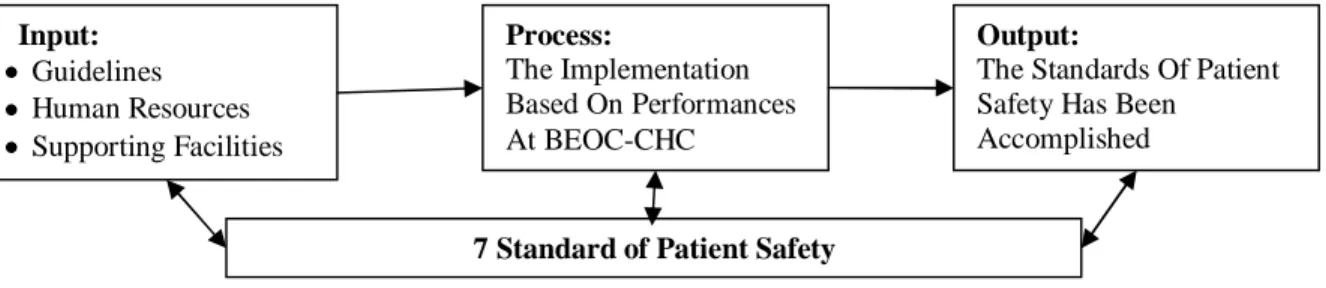
Input:
Guidelines Human Resources Supporting Facilities
Process:
The Implementation Based On Performances At BEOC-CHC
Output:
The Standards Of Patient Safety Has Been
Accomplished
7 Standard of Patient Safety
Figure 1. Thinking Flow of The Implementation of Patient Safety Standard in BEOC Health Centers
The 1stConference Technology on Biosciences and Social Sciences 2016
392
3.4. The Use of Improvement Methods of Performances to Evaluate and Improve Patient Safety
Planning in the input by conducted performance assessment for health personnels is carried through the accreditation process of BEOC-CHC. All heath personnel of BEOC- CHC will empowered all health personnels.
Lubuk Buaya BEOC-CHC is one of the best CHC in Padang which already have an ISO 9001 certificate. Implementation of patient safety not done yet. There is no designing plan of improvement with the 7 standards patient safety, accumulation of data, such as incident reports, risk management and audit quality of health services. Likewise, there has been no intensive evaluation of adverse events and proactively evaluate the high-risk cases, because there are no result of data analysis, thus the change of system have not been implemented. The output has not accomplished.
3.5 The Role Of Leadership To Improve Patient Safety
For input, the planning has not spesifically for patient safety. The head of BEOC-CHC has not appointed a specialized team. There are no guidelines and documents about patient safety in the health center yet because the patient safety issue is still a new issue for the health center. The implementation is also has not been done yet, no interdisciplinary team, no risk identification, no mechanism of work, no responsive procedure towards incidents, no internal and external reporting mechanisms, no mechanism to handle incidents, no open collaboration and communication between units, no resource and information system, no measurable targets. The output has not been accomplished too.
3.6. Educate the Personnels about Patient Safety
Plans for training and orientation process about patient safety which adjusted
based on the decision from the Department of Health of Padang as the direct supervisor of BEOC-CHC. There are no guidelines and documents about patient safety. There are no integrating patient safety topics in every in- service training activities and also providing a clear guidance about reporting incidents yet, but there are trainings about teamwork to support interdisciplinary approach and collaboration in serving patients. Based on the output, education and training programs and orientation about patient safety for new health personnels in accordance with their respective duties has not yet accomplished,
3.7. Comunication Is The Key To The Personnels To Achieve A Patient Safety
There is no spesific planning about comunicating about patient safety. There are no guidelines and documents about patient safety in BEOC-CHC yet because the patient safety issue is still a new issue. For process, no budget avaiable to plan and design data proccesing to obtain data and information that is related to patient safety. For the output the implementation of data transmission still is not clear and the information still is not timely and accurate yet.
Based on the research, it is obtained that the adverse event occurred at BEOC-CHC at the last year. The implementation of patient safety in BEOC-CHC had been varied because no specific guidelines avaiable yet.
[4]. In Indonesia, the regulation about the accreditation of primary health centers just had been declared recently on Permenkes number 75 of 2014, the implication in the health centers is not clear yet. [8]. The risk management which is the core of the implementation of patient safety in the BEOC-CHC hasn’t been running yet. And the adverse event still is the fault of the individual because ‘blaming culture’ still is applied. [17, 18]
The implementations of the 7 standards of patient safety at BEOC-CHC are reviewed with the system approach of input, process
The 1stConference Technology on Biosciences and Social Sciences 2016
and output. Almost at all standards about patient safety (input, process and output) is not accomplished yet. Only the third standard about patient safety and continual care are systematicly goes well. Changes happen in health care providers, now patient is an important aspect of the design of the health care and improving the quality of health services (patient centered care). [19] Patients have an important role in helping to achieve an accurate diagnosis, in deciding on the appropriate treatment, in choosing an experienced and secured provider, in ensuring that the right treatment is given, monitored and adhered to, and in identifying the side effects and take appropriate action.[19-21]
Therefore, it is important to fulfill patients' rights and educating patients and families.
Comunication between healths personnel in the unit are good but between units still worse. Worse comunication can lead to adverse event. [22, 23] Good comunication between heath personnel and with patient and family it’s important for patient safety.
Performance assesment in BEOC-CHC all this time based on health personnel attendances. Planing performance assessments in BEOC-CHC can be carried through the accreditation process of CHC. Good health personnel performance can improve patient safety through fix inadequate work space, fullfill incomplete equipment, given adequate information from the health personnel, and fix busy and disorganized working environment is busy and disorganized.[24] Such as strong, unwavering leadership and open communication and action can improve patient safety [25] with encourage and ensure the implementation of the patient safety program through the implementation of “7 Steps to the Hospital Patient Safety”.
Health personnel as the practicioner must understand about patient safety. Educate the health personnel about patient safety was the sixth standard of patient safety, done by planing training and orientation process about patient safety [18, 26, 27] Since training of
health personnel is determined by the Department of Health of Padang as the direct supervisor of BEOC-CHC, it is necesarry to planing about training health all personnel about patien safety in BEOC-CHC.
Comunication was the key to the health personnel to achieve a patient safety. Good communication between health personnel, between health personnel and patients can reduce adverse event. Open communication is necesarry too, open communication would make good patient safety culture. To make good patient safety culture it is necessary to developt a model thats fit to patient safety in BEOC-CHC which can be developt bases malcom baldridge performance.
Conclusion
In general it can be seen that out of the 7 standards of patient safety based on patient safety guidelines by KPPRS, only the third standard about patient safety and continuous care that has been running systematically, started from input, process until its output, while the patient safety standard number 1, 2, 4, 5, 6, and 7 hadn’t been accomplished yet. It is required a patient safety system that matches the conditions of the BEOC-CHC based on Malcolm Baldridge performance as the standard of the performance of the organization which is applied on the patient safety performance.
Acknowledgements
This Research is a part of Competitive Professor Grant Andalas University number 81/UN.16/HKRGB/LPPM/2016. esearchers would like to thanks to dr. Adang Bachtiar DSc, Prof Dr dr Herkutanto SpF SH LLM FACLM, Prof dr Nur Indrawati Liputo SpGK PhD, Nilda Tri Putri ST, MT PhD. BEOC- CHC Seberang Padang and Lubuk Buaya, Department of Health Sumatera Barat and Padang, and Andalas University.
The 1stConference Technology on Biosciences and Social Sciences 2016
394
References
[1] R. Varnam, "Patient Safety: A Primary Concern?," in Institute for Innivation and Imprevement, ed, 2012.
[2] A. Findyartini, R. Mustika, E. Felaza, Herqutanto, E. S. K. Wardhani, D. Iryani, et al., Modul Pelatihan untuk Pelatih Keselamatan Pasien:
Kolaborasi Bidang Pendidikan Proyek P4K-RSP, 2015.
[3] L. T. Kohn, J. M.Corrigan, and M. S.Donaldson, To Err is Human: Building a Safer Health System.
Washington: National Academy Press, 2000.
[4] S. G. Marchon and W. V. Mendes Junior, "Patient safety in primary health care: a systematic review," Cadernos de saúde pública, vol. 30, pp.
1815-1835, 2014.
[5] R. Varnam, "Patient Safety: A Primary Concern?
In Institute for Innivation and Imprevement,"
2012.
[6] Subdit Pelayanan Medis dan Keperawatan,
"Evaluasi pelaporan E-Reporting Pelaporan Insiden Keselamatan Pasien RS Sampai Februari 2016," presented at the Workshop Keselamatan Pasien di Hotel Horizon Bogor 2-4 Maret 2016, Bogor, 2016.
[7] D. R. P. Rahmanita and A. Bachtiar, "Penilaian Kinerja Pelayanan Obstetri Neonatal Emergensi Dasar di Puskesmas Poned Tanah Sareal Kota Bogor dengan Pendekatan Balanced Scorecard tahun 2014," Fakultas Kesehatan Masyarakat UI, 2014.
[8] Peraturan Menteri Kesehatan Republik Indonesia No 75 Tahun 2014 tentang Pusat Kesehatan Masyarakat, 2014.
[9] Peraturan Menteri Kesehatan Republik Indonesia Nomor 46 Tahun 2015 tentang Akreditasi Puskesmas, Klinik Pertama, Tempat Praktik Mandiri Dokter, dan Tempat Praktik Mandiri Doketr Gigi, 2015.
[10] J. Kingston-Riechers, M. Ospina, E. Jonsson, P.
Childs, L. McLeod, and J. Maxted, "Patient safety in primary care," Edmonton AB: Canadian Patient Safety Institute and BC Patient Safety and Quality Council, 2010.
[11] M. O'Rourke, "the australian Commission on Safety and Quality in Health Care agenda for improvement and implementation," Asia Pacific Journal of Health Management, vol. 2, p. 21, 2007.
[12] S. G. Marchon and W. V. M. Junior, "Patient safety in primary health care: a systematic review," Cad. Saude Publica, vol. 30, pp. 1815- 1835, 2014.
[13] P. A. Molloy, "Examining the relationship between work climate and patient safety among nurses in acute care settings," 2012.
[14] S. L. Walston, B. A. Al-Omar, and F. A. Al- Mutari, "Factors affecting the climate of hospital patient safety: A study of hospitals in Saudi Arabia," International Journal of Health Care Quality Assurance, vol. 23, pp. 35-50, 2010.
[15] C. M. Pettker, S. F. Thung, E. R. Norwitz, C. S.
Buhimschi, C. A. Raab, J. A. Copel, et al.,
"Impact of a comprehensive patient safety strategy on obstetric adverse events," American journal of obstetrics and gynecology, vol. 200, pp.
492. e1-492. e8, 2009.
[16] I. Sadikin, Malcom Baldrodge National Quality Award (MBNQA). Surabaya: Lembayung Central Indonesia, 2010.
[17] M. R. Chassin, "THE NEED FOR A
PARADIGM SHIFT IN HEALTHCARE
CULTURE: OLD VERSUS NEW," High Reliability Organizations: A Healthcare Handbook for Patient Safety & Quality, p. 3, 2016.
[18] V. Nieva and J. Sorra, "Safety culture assessment:
a tool for improving patient safety in healthcare organizations," Quality and Safety in Health Care, vol. 12, pp. ii17-ii23, 2003.
[19] B. Johnson, M. Abraham, J. Conway, L.
Simmons, S. Edgman-Levitan, P. Sodomka, et al.,
"Partnering with patients and families to design a patient-and family-centered health care system,"
Bethesda MD: Institute for Family-Centered Care, 2008.
[20] C. A. Vincent and A. Coulter, "Patient safety:
what about the patient?," Quality and Safety in Health Care, vol. 11, pp. 76-80, 2002.
[21] R. E. Davis, R. Jacklin, N. Sevdalis, and C. A.
Vincent, "Patient involvement in patient safety:
what factors influence patient participation and engagement?," Health Expectations, vol. 10, pp.
259-267, 2007.
[22] M. Top and S. Tekingündüz, "Patient Safety Culture in a Turkish Public Hospital: A Study of Nurses' Perceptions About Patient Safety,"
Systemic Practice and Action Research, vol. 28, pp. 87-110, Apr 2015 2015-03-17 2015.
[23] A. C. Bishop and B. R. Cregan, "Patient safety culture: finding meaning in patient experiences,"
International Journal of Health Care Quality Assurance, vol. 28, pp. 595-610, 20152015-07-16 2015.
[24] A. P. Gurses, "Performance obstacles and facilitators, workload, quality of working life, and quality and safety of care among intensive care nurses," 3175496 Ph.D., The University of Wisconsin - Madison, Ann Arbor, 2005.
[25] J. P. Bagian, "Patient Safety: What Is Really at Issue?," Frontiers of Health Services
The 1stConference Technology on Biosciences and Social Sciences 2016
Management, vol. 22, pp. 3-16, Fall Fall 2005 2015-04-04 2005.
[26] N. J. Verbakel, M. Langelaan, T. Verheij, C.
Wagner, and D. L. Zwart, "Improving patient safety culture in primary care: a systematic review," J Patient Saf, 2014.
[27] M. Fleming, "Patient Safety Culture Measurement an Improvement: A "How to Guide"," vol. 8, 2005.