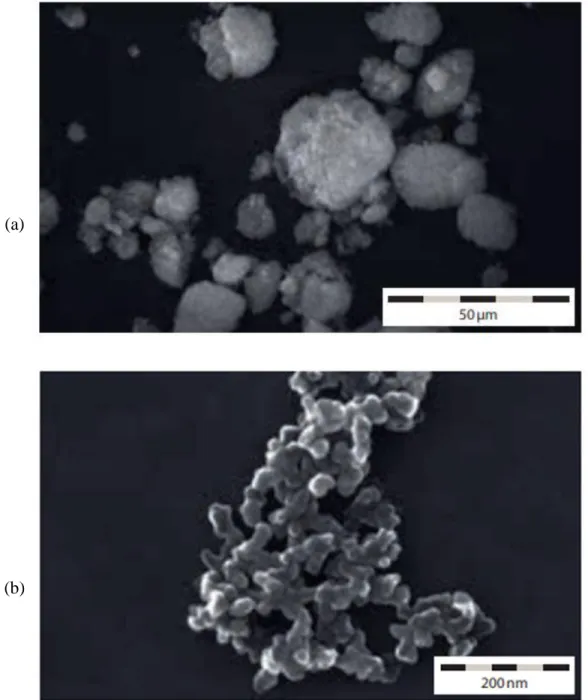
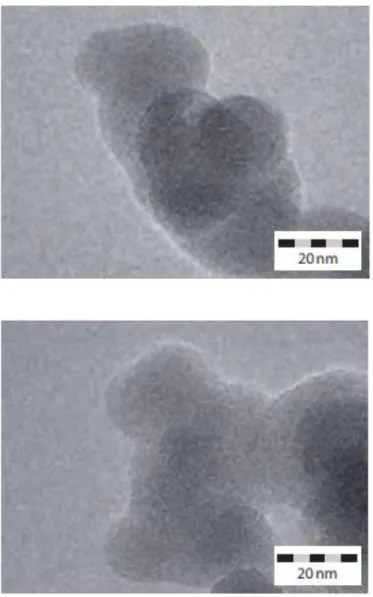
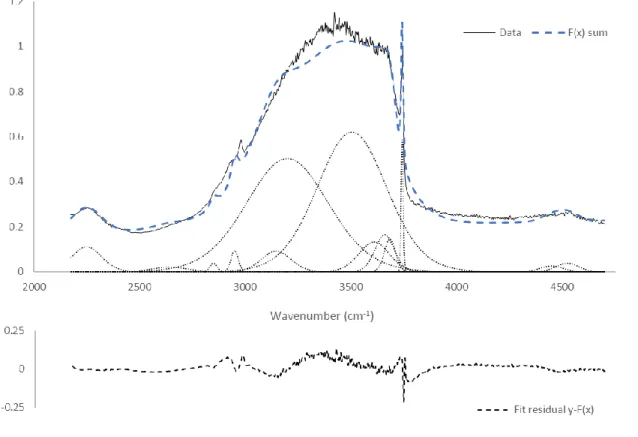
42 Figure 16: Cumulative pore volume as estimated via gas adsorption testing versus estimated pore volume based on final relative piston position from PECS. A study was conducted on the feasibility of rapidly producing fused silica glass parts from powder compacts using pulsed electric current sintering.
INTRODUCTION
A summary and discussion of these published studies is given in the Literature Review, and the variety of results implies that it is non-trivial to obtain reproducible results when sintering a glass powder. In this study, an amorphous fumed silica nanopowder is sintered with PECS to produce both porous and fully consolidated glass samples.
BACKGROUND INFORMATION
Fumed Silica
Sintering of Amorphous Silica
Devitrification During Sintering
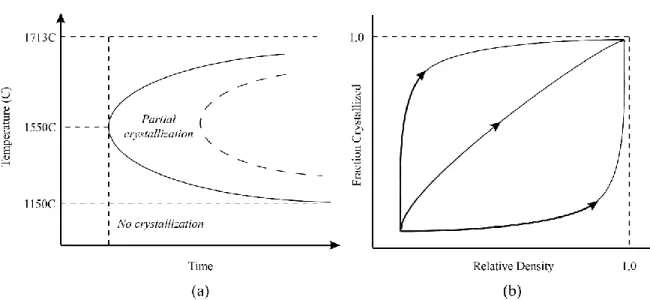
Silica Crystallization Kinetics
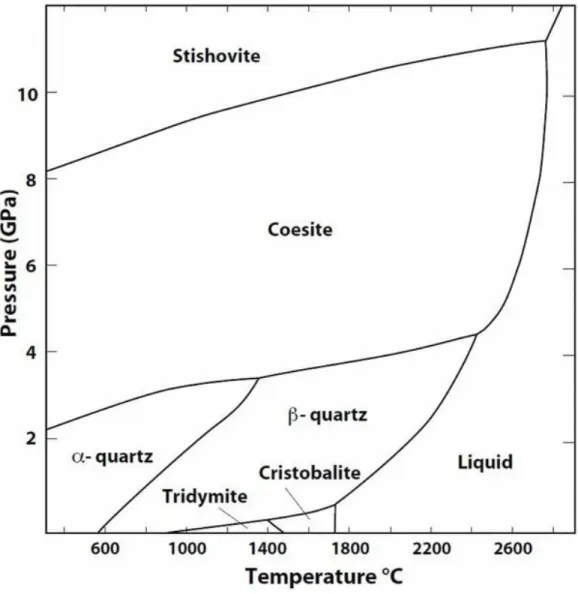
It should be noted that the presence of -OH groups and/or impurities facilitates crystal nucleation and devitrification is thus influenced by the thermal and processing history of the material and also the environmental conditions (e.g. humidity) under which devitrification is observed. As a devitrification product, cristobalite often grows preferentially along the (101) crystallographic direction, hypothetically as a result of the lower energy requirement for crystal growth in this direction.23 This is perhaps also facilitated by the anisotropy of the glass structure and the fact that minimal reorganization of silica tetrahedra is required for the phase transformation from glass to cristobalite.21,23.
Pulsed Electric Current Sintering
On the Presence of Plasma
Known Issues and Challenges
LITERATURE REVIEW
Zhang et al.47 and Shi et al.48 sintered a commonly synthesized sol–gel derived mesoporous silica, SBA-15, in two related studies published in 2015 and 2016, respectively. Dibandajo et al.49 and Maheshwari et al.50 sintered mesoporous silica SBA-15 to create compacts with a bimodal meso-macroporous microstructure.
EXPERIMENTAL PROCEDURE
After melting, the samples were removed from the covers and the graphite was peeled off, and then the sintered compacts were heat treated at 900 °C for 5-10 hours under flowing oxygen to remove the remaining graphite from the pellet surfaces. Fracture surfaces of some samples were etched in 20% KOH at 60 C or 17% HF at room temperature to enhance microstructure features prior to imaging. Some samples were coated with gold-palladium prior to scanning electron microscope (SEM) imaging to reduce surface loading.
Meanwhile, internal fracture surfaces created by the thermal expansion mismatch between the crystallized and vitreous sample regions in malleable mounting putty are oriented as schematically illustrated in Figure 39. It was noted that the powder diffraction line profile of the crystallized cristobalite has features indicative of 1-D. layer disorder.52 This was investigated using powder pattern simulations calculated by the well-established code DIFFaX53.
Considerations Regarding Silica Volatilization in Reducing Conditions and
RESULTS AND DISCUSSION
To begin, observations regarding the inherent variability of PECS and reproducibility of results will be discussed in such a way as to frame the specific outcome of the experiments described in the previous section. First, sintering at low temperatures (sub-Tg) was found to produce compacts with a continuous porous microstructure. Next, dense, transparent glass compacts were formed by consolidation above the softening point of the glass.
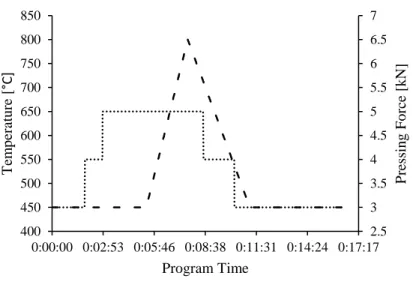
No correlation was found between processing parameters and the presence or extent of these defects, implying an inherent inconsistency in using PECS to produce silica glass parts, especially at higher temperatures. The third section consists of a short treatise on the effect of axial pressing force applied during sintering. It is demonstrated that increasing the pressing force drives down the observed onset of viscous sintering of the glass as additional mass transport mechanisms are activated.
Pores/bubbles are rapidly removed from the glass at a temperature well below that required to achieve similar results when no axial force is applied. Both of these observed effects are due to the disruption of thermal gradients as the glass is encouraged to flow from where it is least viscous into the cooler center of the sample. Twin boundary stacking faults in cristobalite are commonly observed in naturally occurring crystals, as they are inherently created by transition from the high (β) to low (α) temperature polymorphs of the phase.
Inherent Variability of Results According to the Experimental Set-up
It is generally accepted that the temperature must reach or exceed 1100 °C to activate crystallization; the thermal gradient the samples experienced appears to have been at least ~100 degrees across the 0.75 inch thick mold wall. All of this evidence points to an inability to correlate what the external pyrometer measures and the actual internal temperature at the center of the mold ensemble, and to the existence of extreme thermal gradients within the mold ensemble. The combination of these realities significantly reduced the chances of achieving reproducible results with this experimental design, despite adhering to the aforementioned precautions.
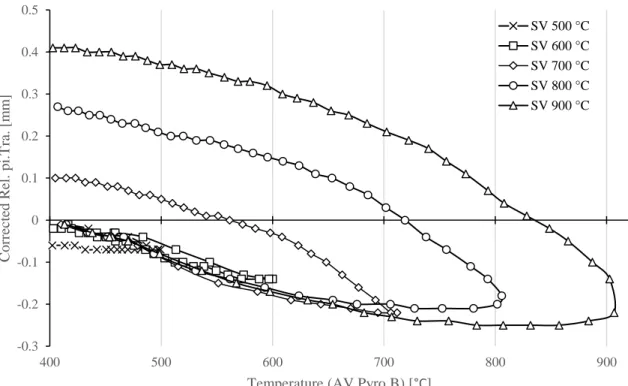
The onset of viscous sintering can be seen to be shifted by as much as 35 °C as measured by optical pyrometer at the outer die wall.
Graded Porosity in Glass Scaffolds Fabricated via Pulsed Electric Current
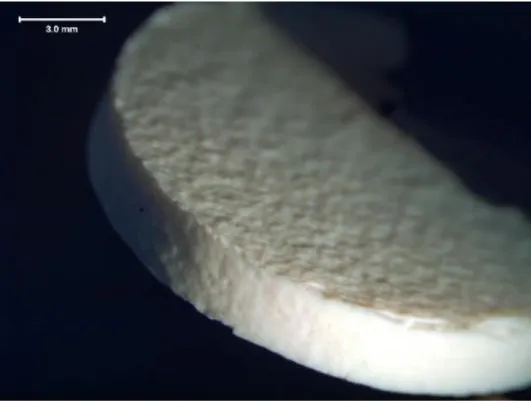
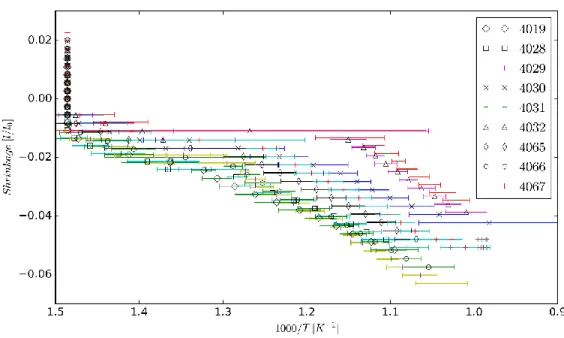
No correlation was found between cumulative pore volume measured by gas isotherm testing, and estimated porosity derived from overall shrinkage of the compact (Figures 13-14). The outer surfaces are heated directly from the dies, and then that heat must diffuse into the center of the sample. Thus, we see compacted glass with few pores near the outer surfaces of the samples, but an open, porous microstructure at the centers (as demonstrated in Figure 17.
The existence of a porosity continuum across the samples is likely responsible for the discrepancy in gas adsorption measurement results. To summarize, sintering at temperatures below the glass softening point results in intermediate compact powder sintering and a continuous porous microstructure. The thermal gradient within the cover results in graded porosity, with increased densification/removal of pores on the outer surface of the compact.
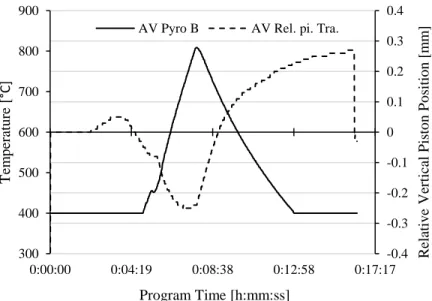
AV Pyro B is the temperature measured by the external pyrometer, and AV Rel.pi.Tra gives the vertical displacement of the upper piston. The feature changes indicate the presence of a thermal gradient in which the surface of the sample is at a higher temperature than the interior, resulting in a more sintered microstructure on the surface than in the center of the compact. The cumulative porosity of the sample can be seen to decrease with increasing sintering temperature and the increasing pore volume distribution shifts slightly towards smaller average pore widths.
Rapid Fabrication of Fused Glass Specimens Using Pulsed Electric Current
The position and intensity of the features do not change after the glass is heated above Tg, regardless of the sintering parameters (heating rate, holding time at set temperature, compressive strength). Incomplete consolidation was observed in some samples as the melt front (Figure 33) moved through the material, resulting in residual bubbles trapped within the bulk of the glass. Crystals of cristobalite nucleate consistently at corners, occasionally at the surface, and in some cases from the bulk of the sample.
After cooling, most of the crystalline phase was fractured from the glass due to the stress caused by the different thermal expansion of the phases. As previously discussed, glass powders are known to melt according to simple viscous sintering models, which depend on the ability of the glass to flow at a given temperature. These may have resulted from the detachment of crystallized portions of the bulk glass during the β to α transformation of cristobalite, or may be an artifact of increased compressive force.
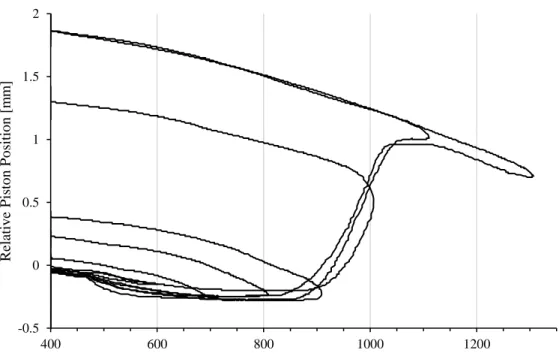
As can be seen in Figure 36, apart from the dramatic shift starting at 15 kN, there seems to be no significant change in the sintering behavior of the glass. This may be the result of crystallized portions breaking off from the bulk glass during the β → α cristobalite transformation, or may be an artifact of the increased compressive force. Apart from the dramatic shift starting at 15 kN, there does not appear to be significant change in the sintering behavior of the glass (as inferred from slope).
Rapid Devitrification of Silica Glass During PECS
CONCLUSIONS AND FUTURE WORK
Unfortunately, the implicit non-isothermal and inhomogeneous nature of the PECS method contributes to results that are difficult to reproduce. No correlation was found between heating rate or holding time and any properties of the molten samples, although dependence of the viscosity and thus the sintering rate on temperature would predict an effect of these variables on powder consolidation. Critically, the early sintering onset temperature was found to vary by ±35 K for identically prepared samples due to inconsistency of thermal gradients in the die ensemble.
The thermal gradients present in the die cause the sample to heat up 100–200 °C higher than those measured on the outer wall of the die. The presence of thermal gradients also induces a stress gradient across the sample, which contributes to devitrification and the preferred growth direction of the precipitated cristobalite phase. To produce silica glass parts using PECS, a balance must be found in terms of processing parameters that eliminate unwanted introduced porosity and devitrification, both of which depend on temperature gradients and equilibria in the matrix.
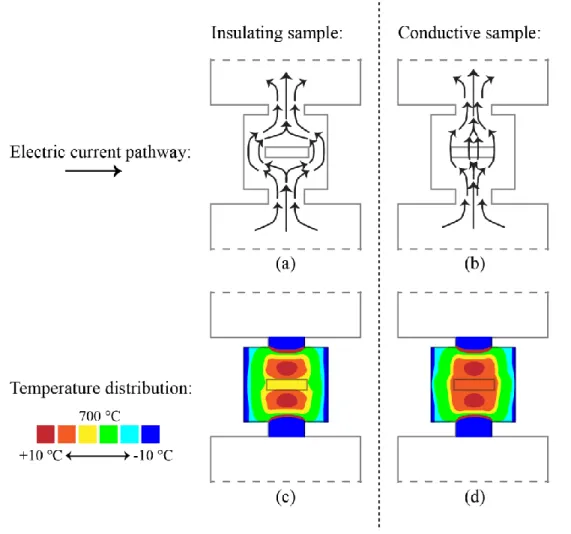
To address the issue of thermal gradients in this work, a beneficial study could involve computer modeling of current flow and temperature distributions through various geometries. It is possible that the extreme thermal gradients encountered in this work could be reduced in intensity or almost completely removed by changing the cover configuration. Repeating these sintering experiments with an alternative means of measuring temperature, such as via a thermocouple inserted into the cover wall, would provide more useful data overall and allow better program control.
34; Challenges and opportunities for spark plasma sintering: a key technology for a new generation of materials," Chapter 13 in Sintering Materials. An Experimental Study on Temperature Distribution and Heating Rate Influence on Bubble Formation," Glass Technology-European Journal of Glass Science and Technology , part A. Ohyanagi, “Effect of electric field and pressure on the synthesis and consolidation of materials: A review of the plasma spark sintering method,” J .
Garay, "Finite element modeling of electrically actuated sintering: Effect of coupled electric potential,. Suzuki, "Study of sintering of glass silica by spark plasma (SPS)," Proceedings of the 21st Brazilian Congress of Mechanical Engineering. Miele, "Silica, Carbon, and Boron Nitride Monoliths with Hierarchical Porosity Prepared by the Plasma Spark Sintering Process," Microporous Mesoporous Mater.