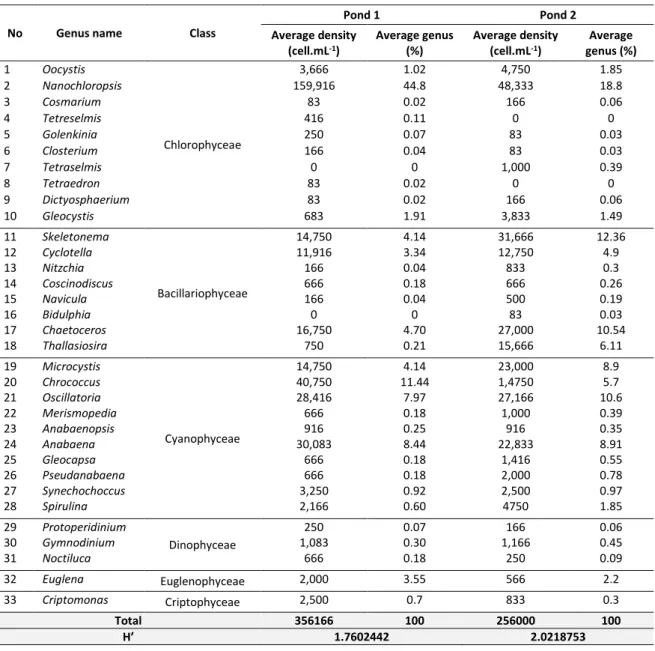
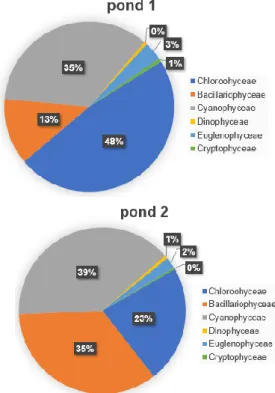
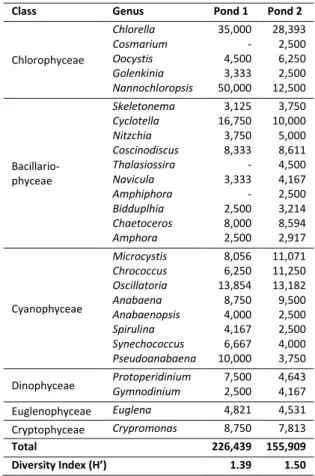
The results obtained in the two ponds, in pond 1 there were six classes with a total of 31 genera consisting of Cyanophyceae (10 genera), Chlorophyceae (9 genera), Bacillariophyceae (7 genera), Dinophyceae (3 genera), Euglenophyceae (1 genera ), Cryptophyceae (1 genus). The dominant phytoplankton classes found during the study were common in the white shrimp (Litopenaeus vannamei) culture site. Composition of phytoplankton The diversity index value in the study can be seen in table 1.
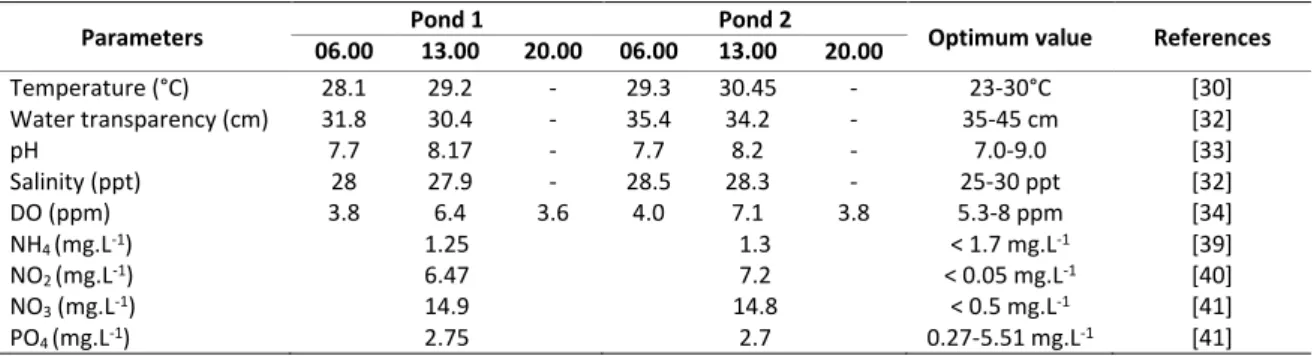
The high SR value indicates that the environmental conditions in the water for the production process are quite good [13]. The highest water transparency is in pond 1, which is 48 cm in the morning, and the lowest is 20 cm during the day. So that the salinity obtained during the study is in the optimal range for the growth of shrimp and phytoplankton in water.
Identification of Sago-Pulp Amylolytic Bacteria and Its Utilization for Granulated Fertilizer
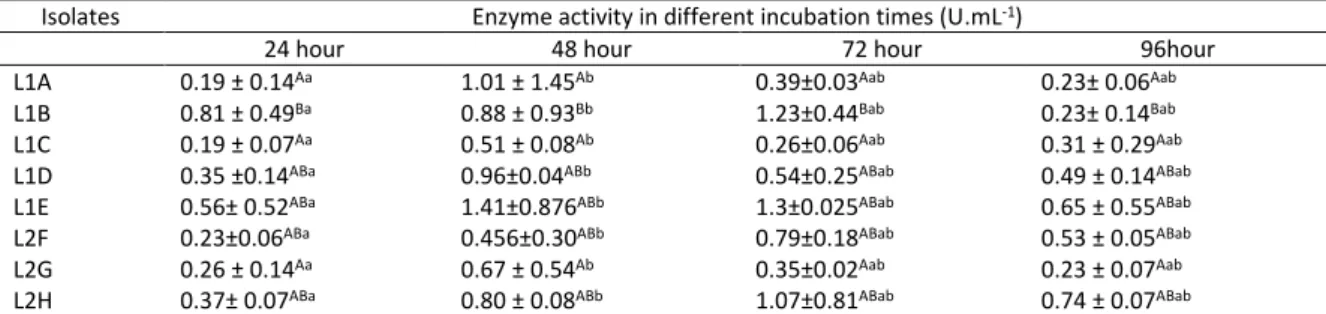
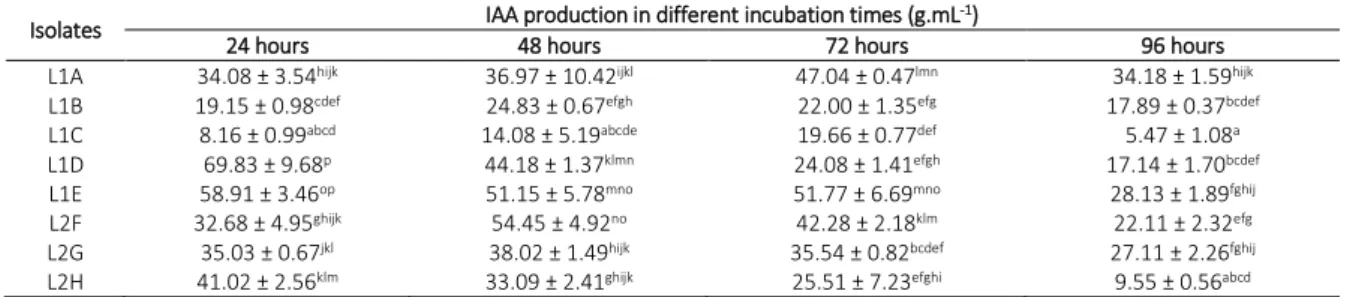
Five mL of the bacterial culture was taken to observe the optical density at 54 nm, equalize the sample density, 1 mL of each taken, then transferred to 50 mL of new starch broth media, incubated at. One ml of the DNA reagent was added to each test tube to stop the reaction. The ammonia content of the supernatant was determined based on the Sera Ammonia test kit.
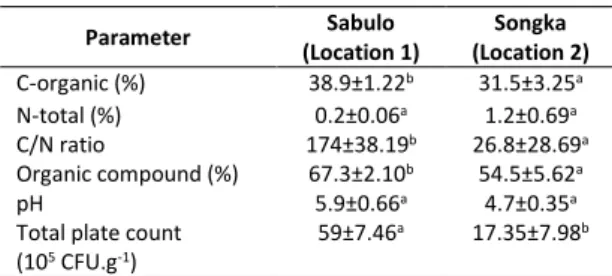
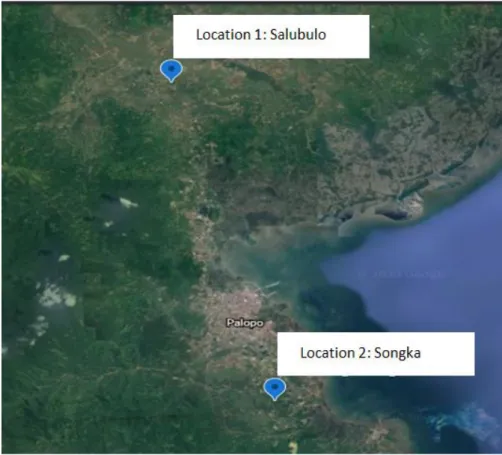
One exudate of a pure bacterial isolate was picked into a culture bottle containing 10 ml of sterile NB medium and then incubated in an incubator shaker at 150 rpm and a temperature of 28 C for 24 hours. A total of 1 g of granular product was diluted in 9 mL of sterile NaCl, then homogenized and diluted to a dilution of 10-10, then 100 L was taken and poured into sterile petri dishes. Comparison of physicochemical and biological parameters of sago pulp waste in Sabula and Songko based on T-test.
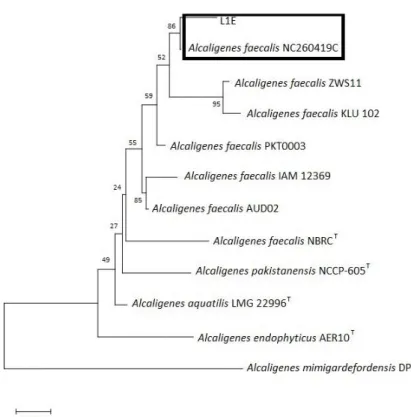
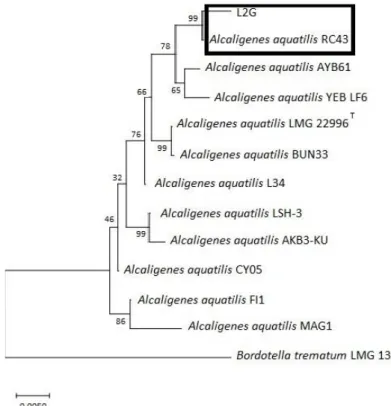
Species identification of amylolytic bacteria Phylogenetic identification based on 16S rDNA sequence similarity revealed that isolate L1E was identified as Alcaligenes faecalis NC260419C. Phylogeny tree showing the relationship between L1E isolates and comparison bacterial strains based on 16S rDNA sequences. The results of 16S rDNA sequence analysis showed that the relationship between L1E isolates and Alcaligenes faecalis NC260419C was 99.85% (Figure 2).
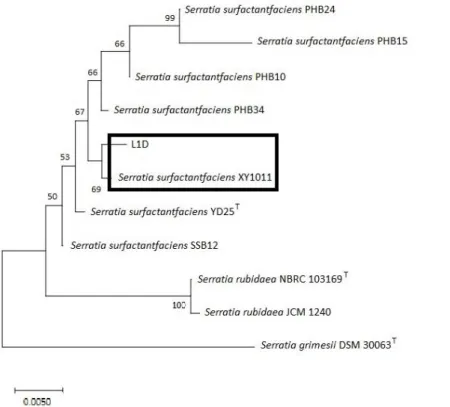
The result of the hemolytic activity test of the three potential isolates (Alcaligenes faecalis, Serratia surfactantfaciens and A. aquatilis) revealed one non-pathogenic isolate. Amylolitic activity of bacterial strains isolated from sago pulp from the traditional sago industry in Palopo, South Sulawesi.
Phytoplankton and Its Relationship to White Leg Shrimp (Litopenaeus vannamei) Culture Productivity in Alasbulu, Banyuwangi
Some of the genera that were only found in Basin 2 were Cosmarium, Thalassiosira and Amphiphora. Based on the results obtained, it was shown that the Chlorophyceae group dominated with a percentage of 51% and 44% in basin 1 and 2, respectively. The results regarding the culture production of vannamei shrimp (Litopenaeus vannamei) in pond 1 and 2 with indicators such as culture day, yield, survival rate, feed conversion ratio and average daily growth are shown in Table 3.
The high yield value in pond 1 can be associated with phytoplankton density, where pond 1 has a higher value compared to pond 2. The high survival rate in pond 2 is assumed to be influenced by the high diversity index value obtained. The lower survival rate obtained in pond 1 may be caused by the high density of antagonistic phytoplankton, one of which is Cyanophyceae.
The results indicated that shrimp in pond 1 had a better feed utilization efficiency compared to pond 2. The average total density of Chlorophyceae and Bacillariophyceae in pond 1 was higher than in pond 2. Based on these results, it can be concluded that although the stocking density in pond 1 is higher than in pond 2, the need for natural feed for shrimp growth in pond 1 is still met with the abundance of phytoplankton.
The phytoplankton found in pond 1 and pond 2 consisted of six classes with a total of 27 genera. The productivity of vannamei shrimp culture in pond 1 was higher compared to pond 2 based on the harvest yield, GDT and FCR values obtained.
Effect of Prebiotic and Probiotic Fish Feed on Physical, Chemical and Biological Quality of Feed
Indra Wahyu Pratama * , Anik Martinah, Ating Yuniarti
Based on the fish feed proximate analysis method [13] in Table 2, the change in nutrient content in the feed to which prebiotics and probiotics are added occurs during the fermentation process from hour 24 to 72. The decrease in ash content is caused by the activity of microbial growth as a result of the fermentation process that occurs in feed. The possibility that crude proteins increase is due to the increasing growth of cells of the microbes during the fermentation process [15].
It is suspected that there is an exogenous enzyme activity in the fermentation process by means of macromolecular hydrolysis reactions into simpler molecules such as proteins into amino acids. During the fermentation process, the fat content increases due to microorganisms capable of producing microbial oil, where microorganisms derived from living cells are capable of producing lipids or fats [18]. It is assumed that with the addition of oligosaccharides, bacteria will grow maximally and the activity of exogenous enzymes acting in the fermentation process will catalyze macromolecular hydrolysis reactions into simpler ones.
Among other things, high nutritional levels will first undergo the fermentation process through the process of breaking down the food ingredients containing fats, carbohydrates and proteins, which are difficult to digest to digest more easily, and there is a characteristic smell and aroma [21 ]. SRD0.05 test results of the abundance of bacteria at the 24th, 48th and 72nd hours, after the fermentation process of feed, showed a noticeable effect on the duration of fermentation of feed containing prebiotics and probiotics. The abundance of bacteria on the main effect of feed fermentation time showed that the treatment 3 (72 hours) differed significantly higher than the other treatments.
Extending the fermentation time in the fermentation process may provide opportunities for microbes to convert the components inside the substrate into easier components to digest. The duration of fermented fish feed, which has added prebiotics and probiotics, has a noticeable effect on bacterial abundance.

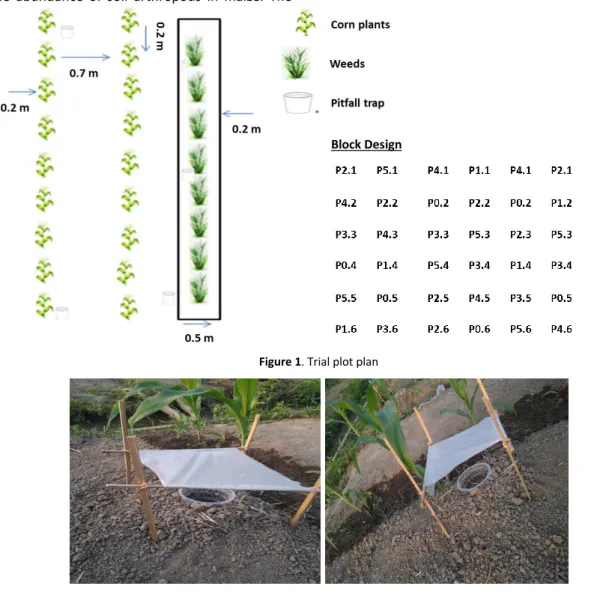
The Effectiveness of Weed as Beetle Bank Against Abundance of Soil Arthropods on Corn (Zea mays. L)
The type of weed can affect its effectiveness in increasing the diversity of the soil arthropod population. Observation of arrival of arthropods to weeds in corn planting was carried out at the age of 14 to 77 days after planting. The arrival of terrestrial arthropods in the plant will increase when the habitat and food of the arthropods can be supplemented in order to increase the population of the arthropods.
The percentage of Hemiptera ranks was low because arthropod habitat did not support arthropod survival. The survival of ground beetles is determined by the ground beetles' habitat, namely the availability of wild plants that ground beetles prefer [16]. Ground beetles are active in early summer and will be important predators in the active predation of crop pests [17].
The layout of a corn plant that is adjacent to the beetle bank will also greatly affect the value of the diversity. The value of the index of diversity will be low when the location of the adjacent. The value of the diversity index will be low when the location is contiguous.
It is caused by the lack of significant difference for arthropods to shift in their existence so as to increase the diversity of the medium [20]. The lowest value of diversity was 1.57 in the treatment with Leptochloa chinensis, and the highest value of diversity index was 1.70 in the treatment with Eleusine indica.
Antimicrobial Activity of Combination Bacteriocin and Asam Sunti Extract (Averrhoa bilimbi L. fermented) Against Multidrug Resistant Escherichia coli
Antimicrobial activity of combined bacteriocin and Asam Sunti (fermented Averrhoa bilimbi L.) extract against multidrug-resistant Escherichia coli. Combining bacteriocin with natural ingredients such as Asam Sunti extract is expected to increase its effectiveness in inhibiting MDR bacteria. Thus, the aim of this study was to evaluate the potential of the combination of bacteriocin and Asam Sunti extract in inhibiting MDR E.
Lz = diameter of clean area (mm2) Ls = diameter of blank plate (mm2) V = sample volume (mL) Asam Sunti Extraction. Three treatments were used in this experiment namely 1% bacteriocin, 1% Assam sunti extract and combination of bacteriocin and Assam sunti extract (v/v) with ratio (%) of 1:1, 1:2 and 2:1. Based on the results of qualitative tests of the combination of bacteriocin and Asam Sunti extract on MDR E.
The combination of bacteriocin and Asam Sunti extract with a ratio of 1:1 (B1+AS1) showed inhibitory activity against three MDR isolates namely LL1.2, LL1.3 and LL3.11. The inhibitory activity of the combination of bacteriocin and Asam Sunti extract was not consistent. Using combination of bacteriocin and Asam Sunti extract, the reduction percentage of the number of bacterial cells was 92% in the 1:1 (B1+AS1) treatment and 95% in the 1:2 (B1+AS2) combination.
The combination of bacteriocin and Asam Sunti extract in all comparisons was able to inhibit strain LL1.3 with a relatively high percentage value. Changes in chemical constituents of starfish (Averrhoa bilimbi L.) during asam sunti production.

Title Typed in Bold, Capitalize each First Letter of Each Word, Except Conjunctive, Scientific name should not be Abbreviated
Calibri 14 Bold Center, should not exceed 12 words, except conjuctive)
Title entered in bold, each first letter of each word capitalized, except subjunctive, scientific name should not be abbreviated. Combination Halftone, combine figure and text (image containing text) and color graphics or in grayscale format. Black and white figures must be in grayscale mode, while colored figures must be in RGB mode.
If the figures come from a third party, it must have the transfer of copyright from the sources. References printed in numbered list (number format 1,2,3,…), listed sequentially as they appear in the text (Vancouver system or author number style). Manuscript citation print only the reference number (not author and year), example: Obesity is an accumulation of fat in large amounts that would cause excess body weight (overweight) [1].
The conclusions of the research findings are short, concise and solidly written, without any further additional new interpretations. This section can also be written about the novelty of the study, the pros and cons of the study, as well as recommendations for future research. (Calibri 10 Justify). This section describes gratitude to those who helped both substantively and financially.
Importance of CD80/CD86-CD28 interaction in the recognition of target cells by CD8+CD122+ regulatory T cells.