In the organizations of the machine age, the shelf life of knowledge was relatively long. There he first encountered two of the central characters in Knowledge Leadership: the Yogi and the Commissioner. In this chapter, “The Emerging Era of the Knowledge Leader,” we explain how knowledge leaders are becoming key individuals in knowledge-based organizations (SMEs) as they link knowledge to day-to-day performance.
In the rest of this section, we will describe how both the Yogi and the Commissioner have knowledge biases that can affect your ability to become a knowledge leader and create the KBOs of the future. Taken together, however, the qualities of the Yogi and Commissioner can be beneficial for knowledge leaders. The fundamental worldviews of the Yogi and the Commissioner are so clearly polarized that it puts their distinctions in bold relief.
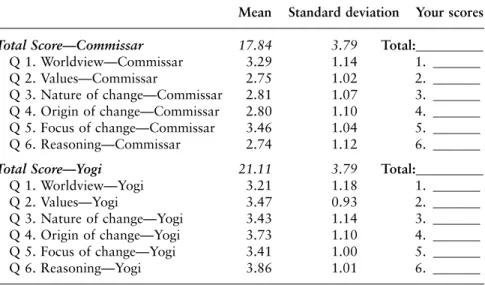
In the previous chapter, you indicated your preference for the Yogi's or Commissioner's Core Beliefs through the Knowledge Bias Profile. For a yogi, ends are usually unpredictable - so means are paramount. One of the most notable aspects of Komisar's worldview is the role played by structure.
This, then, is the challenge posed by the divergent worldviews of Yogi and the Commissioner. Although they are usually not aware of it, the perceptual styles of the Yogi and the Commissioner are consistent, defining their characteristics. The problem then is that Yogi's and Commissioner's preferred learning styles are very limited.
High Grounding/Low Enlightenment (Commissar) Leaders who prefer this style of learning can easily attain a sense
Commissioners take in a large amount of data from the outside world and manipulate it in programmed and predictable ways – regardless of the circumstances. Left to their own devices, they both ignore half of the learning cycle, preventing them from ever fully learning from their experiences. It is interesting that between the yogis' and the commissioner's preferred learning styles lie both the best (robust learning) and the worst (learning difficulties) of possible worlds (Table 5.1).
Low Grounding/Low Enlightenment (Learning Disabled)
High Enlightenment/Low Grounding (Yogi)
With some exceptionally intellectual Yogis, the "ivory tower" effect takes over and they can become specialists in analyzing what other people do. Yogis who practice this way of learning can be quite articulate when explaining their views, but they rarely extend themselves in applying their theories. What yogis say may look great on the drawing board, but unforeseen practical flaws usually show up in the real world because their formulas often don't account for some important variable (for example, human nature).
Staying separate from the outside world, yogis must rely on finding answers within themselves. The yogis' lack of experience results in a stunted or atrophied development of their ability to judge what is true. They may never realize that their intellectual pursuits are drifting further and further away from the mark of what is useful, serviceable, or true.
䊏 Belief that the world can be known by standing apart and thinking about it, rather than engaging with it. 䊏 Oversimplified view that implementing solutions is fairly easy, while developing solutions is the more difficult and certainly a nobler task.
High Grounding/High Enlightenment (Robust Learning)
In the other three learning modes, either capacity (grounding or enlightenment) improves at the expense of the other. The short form of the KBP has one representative question per worldview category (whereas the full KBP instrument has two to seven questions per category). The closeness of the Yogi and Commissioner standard deviations is an indication of the stability of the Knowledge bias.
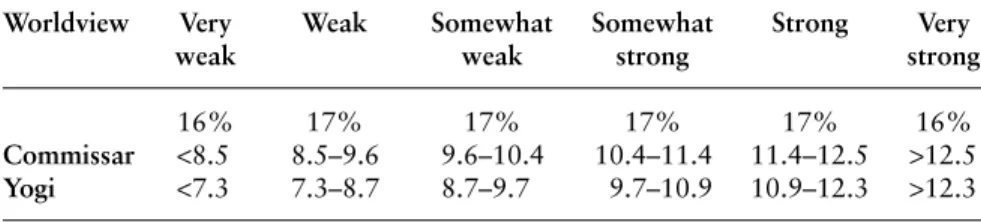
Another way of saying this is that if you preferred one component of the Yogi worldview (for example, values), you would also very likely prefer another component of the Yogi worldview (for example, focus on change). Kane completed Part A of the KBP (short form), scoring 28 on the Commissioner's Worldview and 10 on Yogi's Worldview. Rizzo was born to Italian-American parents and grew up in the New England region of the United States.
Part B of the Knowledge Bias Profile relates the worldviews of the Yogi and Commissioner to these three behaviors. Managers are increasingly discovering that knowledge is one of the most valuable assets a company can possess. Therefore, there are no guarantees that actions based on knowledge will be effective 100% of the time.
However, there are other more subtle aspects of the organizational environment that can only be clearly seen with the help of knowledge. It should also support the tasks to be accomplished as part of the knowledge strategy. Moreover, the strategy is not sustainable because little knowledge is created and there is a net drain on the organisation's knowledge resources.
An Introduction and Perspective” in the first issue of The Journal of Knowledge Management (1997); and the founding of the first professional association of knowledge managers (Knowledge Management Consortium International [KMCI]) in 1998. But here it is understood that the design's success in achieving its purpose is not statically inherent in the design itself. But at present it is not known whether your colleagues are actually experiencing anything out of the ordinary—.
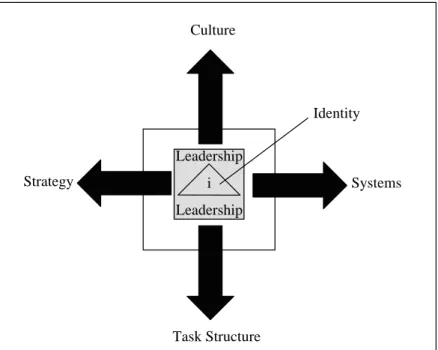
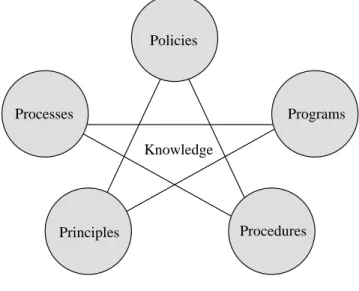
The main advantage of Popper's approach to knowledge is that it is anchored in action, which is focused on solving problems and achieving goals - two activities that are the essence of all managerial activities. As this figure shows, the information-based view of knowledge overlooks most of the factors that enable knowledge to be performance-oriented.