Volume 13 • Number 2 • 2023
OTORITAS : Jurnal Ilmu Pemerintahan
Published by the Department of Government Studies,
Faculty of Social and Political Sciences, Muhammadiyah University of Makassar For further information, please visit: https://journal.unismuh.ac.id/otoritas
ISSN: 2088-3706 (Print) | 2502-9320 (Online) | DOI : 10.26618
Firstpublished in April 2011
Please send all articles, essays, reviews, and documents to:
Regular Mail:
Department of Government Studies Faculty of Social and Political Sciences
5th Floor of Menara Iqra, Muhammadiyah University of Makassar Jl. Sultan Alauddin No.259 Makassar, 90221
South Sulawesi, Indonesia E-Mail:
OTORITAS : Jurnal Ilmu Pemerintahan is an internationally peer-reviewed open access journal published triannual in April, August and December, aims to publishes significant
and cutting-edge research drawn from all areas of politics and governmental studies and promotes scholarly, theoretical, pragmatic, and contemporary research, which makes a clear conceptual and methodological contribution to existing international
literature.
OTORITAS : Jurnal Ilmu Pemerintahan indexed by :
OTORITAS : Jurnal Ilmu Pemerintahan have been double blind-reviewed by international peer reviewers. The decision on whether the scientific article is accepted
or not in this journal will be the Editorial Board’s right based on peer reviewer's recommendation.
About the Journal
OTORITAS : Jurnal Ilmu Pemerintahan, with registered number ISSN 2088-
3706 (Print), ISSN 2502-9320 (Online), is an internationally peer-reviewed open access journal published triannual in April, August and December by Department of Government Studies, Faculty of Social and Political Sciences, Universitas Muhammadiyah Makassar in collaboration with Muhammadiyah’s College Association of Government Studies (AIPPTM) and Asia Pacific Society for Public Affairs (APSPA).
OTORITAS : Jurnal Ilmu Pemerintahan aims to publishes significant and
cutting-edge research drawn from all areas of politics and governmental studies and promotes scholarly, theoretical, pragmatic, and contemporary research, which makes a clear conceptual and methodological contribution to existing international literature.
OTORITAS : Jurnal Ilmu Pemerintahan Starting from 2015 it is available in e-
journal version and has been currently indexed by both national and international indexer institutions such as: ESCI Web of Science (International), DOAJ (International), ASEAN Citation Index (International), Dimensions (International), Garba Rujukan Digital (National), Google Scholar (International), Crossref (International), BASE (International), SINTA (National), and Indonesia One Search (National).
OTORITAS : Jurnal Ilmu Pemerintahan Starting from 2016 and for the
upcoming years, the process of manuscript submission and other management processes will be conducted online through Otoritas : Jurnal Ilmu Pemerintahan website and for the betterment of the quality and quantity of Otoritas : Jurnal Ilmu Pemerintahan qualified reviewers and editors are recruited. Besides that in the same year we collaborated with Muhammadiyah's College Association of Government Studies (AIPPTM) on the publication of this journal.
OTORITAS : Jurnal Ilmu Pemerintahan Starting from 2018, we collaborated
with Asia Pacific Society for Public Affairs (APSPA) on the publication and has
been accredited by National Journal Accreditation (ARJUNA) Managed by Ministry
of Research, Technology, and Higher Education of Republic Indonesia.
Focus and Scope
Otoritas: Jurnal Ilmu Pemerintahan (Journal of Political Science and
Government) promotes scholarly, theoretical, pragmatic, and contemporary research, making a clear conceptual and methodological contribution to existing international literature. Its spesific aim is to enhance the broad scholarly understanding of governance, public administration, public law, religion and politics, comparative politics, international studies, and democratic institutions in emerging countries.
Otoritas : Jurnal Ilmu Pemerintahan (Journal of Political Science and
Government) is committed to disseminating rigorous, high-quality research and
debate with a scientific influence on the international society. To that purpose,
the Editorial team follows a meticulous editorial procedure, bringing the most
sophisticated research on modern politics and governance to the academic
community and policymakers. The journal is online and has open access, and its
internal publication procedure enables it to distribute its research findings
internationally promptly.
Editorial Board
EDITOR-IN-CHIEF
Andi Luhur Prianto, Scopus ID: 57208214401, Universitas Muhammadiyah Makassar, Indonesia
MANAGING EDITORS
Nur Khaerah, Scopus ID: 57708938300, Universitas Muhammadiyah Makassar, Indonesia
ACCOCIATE EDITORS
Abel Kinyondo, Scopus ID: 55293738000, University of Dar Es Salaam, Tanzania Abel Polese, Scopus ID: 57201804952, Dublin City University, Ireland
Ilyas Mohammed, Scopus ID: 57221933986, University of Liverpool, United Kingdom Michael Hatherell, Scopus ID: 56433408300, Deakin University, Australia
Nursaleh Hartaman, Scopus ID: 57395318100, Universitas Muhammadiyah Makassar, Indonesia Riccardo Pelizzo, Scopus ID: 6507727385, Nazarbayev University, Kazakhstan
INTERNATIONAL EDITORIAL
Adam Tyson, Scopus ID: 35337925000, University of Leeds, United Kingdom
AKM Ahsan Ullah, Scopus ID: 10043791400, Universiti Brunei Darussalam, Brunei Darussalam Ahmad Harakan, Scopus ID: 57203222670, Universitas Muhammadiyah Makassar, Indonesia Andreas Ufen, Scopus ID: 24280605600, German Institute of Global and Area Studies, Germany
Farida Tadjine, Scopus ID: 57678049100, University of Kasdi Merbah Ouargla, Algeria Mergen Dyussenov, Scopus ID: 57190342068, National University of Singapore, Singapore
Mohd Afandi Salleh, Scopus ID: 55582821500, Universiti Sultan Zainal Abidin, Malaysia Mubashar Hasan, Scopus ID: 45861188500, Oslo University, Norway
Muh Firyal Akbar, Scopus ID: 57210750267, Universitas Muhammadiyah Gorontalo, Indonesia Ni Putu Tirka Widanti, Scopus ID: 57970637000, Universitas Ngurah Rai, Indonesia Nuryanti Mustari, Scopus ID: 57395318000, Universitas Muhammadiyah Makassar, Indonesia
Önder KUTLU, Necmettin Erbakan Universitesi, Turkey
Rudi Hardi, Scopus ID: 57395626900, Universitas Muhammadiyah Makassar, Indonesia Wolfgang Drechsler, Scopus ID: 36840148600, University College London, United Kingdom
EDITORIAL ASSISTANTS
Abdillah Abdillah, Scopus ID: 57697035900, Universitas Muhammadiyah Makassar, Indonesia Hamrun Hamrun, Scopus ID: 57395116400, Universitas Muhammadiyah Makassar, Indonesia
Table of Contents
How does the government improve the competitiveness of SMEs?
lesson learned from Thailand
Andrie Elia1, Basrowi2, Buncha Chinnasri3
1Departement of Sociology, Faculty Social and Political Science, Universitas Palangka Raya, Indonesia
2Department of Management Studies, Graduate Program, Universitas Bina Bangsa, Indonesia
3Faculty of Agriculture Kasetsart University, Thailand
182-202
Indonesia’s pro-people foreign policy: the protection of Indonesian women migrant workers in Malaysia in 2022
Arie Kusuma Paksi1, Pebria Prakarsa Renta2
1,2Department of International Relations, Universitas Muhammadiyah Yogyakarta, Indonesia
203-216
The insignificance of GDP growth rate to people’s welfare: a political economy analysis of China’s impressive GDP
Asmarawati Handoyo1, Yuli Isnadi2
1Graduate Institute of Political Economy, College of Social Sciences, National Cheng Kung University, Taiwan.
2Department of Management and Public Policy, Universitas Gadjah Mada, Indonesia.
217-232
Policy process in Indonesia during COVID-19: a cross-sectoral policy Perspective
Evi Satispi1, Ma’mun Murod2
1Department of Public Administration, Universitas Muhammadiyah Jakarta, Indonesia
2Deparment of Political Science, Universitas Muhammadiyah Jakarta, Indonesia
233-245
How does buy service-based policy attract public transportation customers in Yogyakarta, Indonesia ?
Fitriani1, Achmad Nurmandi2, Muhammad Lutfi3, Mujizatullah4, Abu Muslim5
1,2 Department of Government Affairs and Administration, Jusuf Kalla School of Government,Universitas Muhammadiyah Yogyakarta, Indonesia
3Department of Government Studies, Universitas Muhammadiyah Sinjai, Indonesia
4,5Research Center for Religious Treasures and Civilizations, National Research and InnovationAgency, Indonesia
246-260
Local government strategy in managing traditional markets in The City of Pariaman, Indonesia
Herza Netti1, Erianjoni2
1,2 Department of Public Administration, Universitas Negeri Padang, Indonesia
261-276
Disputing land: argumentative turn in local land policy conflict in Central Java, Indonesia
Laila Kholid Alfirdaus1, Dzunuwanus Ghulam Manar2, Teguh Yuwono3
123Department of Politics and Governance Studies, Faculty of Social and Political Sciences,Universitas Diponegoro, Indonesia
277-288
Policy and innovation network: a study of inter-agency collaboration in post-disaster rehabilitation and reconstruction in the Central Sulawesi, Indonesia
Mohammad Rusli Syuaib
Department of Public Administration, Universitas Sintuwu Maroso, Indonesia
289-301
Local government innovation model in Pekanbaru City, Indonesia: a study of public service mall
Ranggi Ade Febrian1, Khairul Rahman2, Ahmad Fitra Yuza3, Zainal4
1234Department of Government Studies, Faculty of Social and Political Sciences, Universitas Islam Riau, Indonesia
302-314
Civil Service Police Unit principle : no punishment and no taxation without representation
Sarip1, Diana Fitriana2, Absori3, Khudzaifah Dimyati4, Harun5
1 Faculty of Law, Universitas Muhammadiyah Cirebon, Indonesia
2 Faculty of Law, Universitas Bhayangkara Jakarta Raya, Indonesia
3,4,5Faculty of Law, Universitas Muhammadiyah Surakarta, Indonesia
315-332
Declining democracy: autocratization in Indonesia during the Jokowi years
Taufik1,2, Muhamad M.N. Nadzri3, Jamaie Hj. Hamil4
1,3,4 Center for Research in History, Politics and International Affairs, Faculty of Social Science and Humanities,
Universiti Kebangsaan Malaysia, Malaysia
2Department of International Relations, Faculty of Social and Political Sciences, Universitas Pasundan, Indonesia
333-351
The Bretton Woods institutions and the quest for development in Africa
Zekeri Momoh
Department of Political Science, Faculty of Social Sciences, Veritas University, Nigeria
352-363
Article Guidelines
Article Title: Segoe UI, 14pt Bold, alignment centered, single-line spacing and All Caps. Article title should be written briefly and clearly. It shows exactly the issue to be discussed and should not create misinterpretations. Article title is written in capital letters symmetrically and does not contain unusual abbreviations. Express the main idea of a new article and followed by another explanation.
Author Details: Segoe UI, alignment centered, Article title, author's name (without academic degree(s)), and author's affiliate address are written in the center on the first page under the article title. The distance between title and author's name is double-spacing; meanwhile the distance between author's affiliate address and abstract title is single-spacing. Keywords should be written under abstract for each language. It is arranged alphabetically and separated by a semicolon consisted of 3-5 words. For Indonesian article, the title is translated into English at the beginning of English abstract (see the example above).
Corresponding Author should be marked with an asterisk and followed by a comma "*)" as the example above. At the bottom of the left column on the first page/abstract, it is written the Corresponding Author’s mark and his/her email address (see example). Article revisions and final decisions will only be communicated through the Corresponding Author’s email.
If there is more than one author, write the authors’ names separated by a comma (,). If the author's name consists of two words, the first name should not be abbreviated. If the author’s name consists of only one word, write his/her actual name in one word. However, the online version (HTML) will be written in two words consisting of the same name (repeatedly) for metadata indexation purpose (Camdali & Tunc, 2006; Fridman, 2008).
Introduction: Introduction consists of (in sequence) general background, state of the art as the basis for the scientific novelty statement of the article, scientific novelty statement, and research problem or hypothesis. In the end, introduction should mention the purpose of article review.
Literature review is not allowed in the scientific article format, so it is replaced by the state of the art to prove the novelty of the article.
Research Methods: Method is implemented to solve problems, including analytical method.
The method used to solve the research problems is described in this section.
Results and Discussion: This section consists of results and discussion. Every result should be supported by sufficient data. Then, result should be able to answer the research question or hypothesis stated earlier in the introduction.
Conclusion: Conclusion states the answer of the hypothesis and/or research objective or scientific finding. Conclusion is not the repetition of findings and discussion, but it is the summary of findings as expected in the objective or hypothesis. If necessary, conclusion can also be ended with the next idea to be implemented to the study.
Acknowledgment: Acknowledgment are primarily addressed to research funders or donors.
Acknowledgment can also be dedicated to people who contribute in the study.
References: All references used in the article should be listed in the References section.
References should contain reference literature originating from primary sources (scientific journals at least 80% of the entire references) published in the last 10 (ten) years. Each article contains at least 10 (ten) references. It is better to write the reference system in the article and in the references section using the reference management programs such as Mendeley, EndNote, Zotero, or others.
Publication Ethics
Otoritas : Jurnal Ilmu Pemerintahan, with registered number ISSN 2088-3706 (Print), ISSN 2502-9320 (Online) is a peer-reviewed journal, available in print and online and published tri-annual. This statement clarifies ethical behaviour of all parties involved in the act of publishing an article in this journal, including the author, the chief editor, the Editorial Board, the peer-reviewer and the publisher (Department of Government Studies, Faculty of Social and Political Sciences, Universitas Muhammadiyah Makassar in collaboration with Muhammadiyah’s College Association of Government Studies (AIPPTM) and Asia Pacific Society for Public Affairs).
This statement is based on COPE’s Best Practice Guidelines for Journal Editors.
ETHICAL GUIDELINE FOR JOURNAL PUBLICATION
The publication of an article in a peer-reviewed Otoritas : Jurnal Ilmu Pemerintahan is an essential building block in the development of a coherent and respected network of knowledge.
It is a direct reflection of the quality of the work of the authors and the institutions that support them. Peer-reviewed articles support and embody the scientific method. It is therefore important to agree upon standards of expected ethical behaviour for all parties involved in the act of publishing: the author, the journal editor, the peer reviewer, the publisher and the society.
Department of Government Studies, Faculty of Social and Political Sciences, Universitas Muhammadiyah Makassar in collaboration with Muhammadiyah’s College Association of Government Studies (AIPPTM) and Asia Pacific Society for Public Affairs as publisher of Otoritas : Jurnal Ilmu Pemerintahan takes its duties of guardianship over all stages of publishing seriously and we recognize our ethical and other responsibilities. We are committed to ensuring that advertising, reprint or other commercial revenue has no impact or influence on editorial decisions.
PUBLICATION DECISIONS
The editor of the Otoritas : Jurnal Ilmu Pemerintahan is responsible for deciding which of the articles submitted to the journal should be published. The validation of the work in question and its importance to researchers and readers must always drive such decisions. The editors may be guided by the policies of the journal's editorial board and constrained by such legal requirements as shall then be in force regarding libel, copyright infringement and plagiarism.
The editors may confer with other editors or reviewers in making this decision.
FAIR PLAY
An editor at any time evaluate manuscripts for their intellectual content without regard to race, gender, sexual orientation, religious belief, ethnic origin, citizenship, or political philosophy of the authors.
CONFIDENTIALITY
The editor and any editorial staff must not disclose any information about a submitted manuscript to anyone other than the corresponding author, reviewers, potential reviewers, other editorial advisers, and the publisher, as appropriate.
DISCLOSURE AND CONFLICTS OF INTEREST
Unpublished materials disclosed in a submitted manuscript must not be used in an editor's own research without the express written consent of the author.
DUTIES OF REVIEWERS:
Contribution to Editorial Decisions
Peer review assists the editor in making editorial decisions and through the editorial communications with the author may also assist the author in improving the paper.
Promptness
Any selected referee who feels unqualified to review the research reported in a manuscript or knows that its prompt review will be impossible should notify the editor and excuse himself from the review process.
Confidentiality
Any manuscripts received for review must be treated as confidential documents. They must not be shown to or discussed with others except as authorized by the editor.
Standards of Objectivity
Reviews should be conducted objectively. Personal criticism of the author is inappropriate.
Referees should express their views clearly with supporting arguments.
Acknowledgement of Sources
Reviewers should identify relevant published work that has not been cited by the authors. Any statement that an observation, derivation, or argument had been previously reported should be accompanied by the relevant citation. A reviewer should also call to the editor's attention any substantial similarity or overlap between the manuscript under consideration and any other published paper of which they have personal knowledge.
Disclosure and Conflict of Interest
Privileged information or ideas obtained through peer review must be kept confidential and not used for personal advantage. Reviewers should not consider manuscripts in which they have conflicts of interest resulting from competitive, collaborative, or other relationships or connections with any of the authors, companies, or institutions connected to the papers.
DUTIES OF AUTHORS Reporting standards
Authors of reports of original research should present an accurate account of the work performed as well as an objective discussion of its significance. Underlying data should be represented accurately in the paper. A paper should contain sufficient detail and references to permit others to replicate the work. Fraudulent or knowingly inaccurate statements constitute unethical behaviour and are unacceptable.
Originality and Plagiarism
The authors should ensure that they have written entirely original works, and if the authors have used the work and/or words of others that this has been appropriately cited or quoted.
Multiple, Redundant or Concurrent Publication
An author should not in general publish manuscripts describing essentially the same research in more than one journal or primary publication. Submitting the same manuscript to more than one journal concurrently constitutes unethical publishing behaviour and is unacceptable.
Acknowledgment of Sources
Proper acknowledgment of the work of others must always be given. Authors should cite publications that have been influential in determining the nature of the reported work.
Authorship of the Paper
Authorship should be limited to those who have made a significant contribution to the conception, design, execution, or interpretation of the reported study. All those who have made significant contributions should be listed as co-authors. Where there are others who have participated in certain substantive aspects of the research project, they should be acknowledged or listed as contributors. The corresponding author should ensure that all appropriate co- authors and no inappropriate co-authors are included on the paper, and that all co-authors have seen and approved the final version of the paper and have agreed to its submission for publication.
Disclosure and Conflicts of Interest
All authors should disclose in their manuscript any financial or other substantive conflict of interest that might be construed to influence the results or interpretation of their manuscript. All sources of financial support for the project should be disclosed.
Fundamental errors in published works
When an author discovers a significant error or inaccuracy in his/her own published work, it is the author’s obligation to promptly notify the journal editor or publisher and cooperate with the editor to retract or correct the paper.
302 This research aims to find a model for implementing local government innovation in Pekanbaru City. One of the Innovation Public Service Mall innovations with the highest score is SMART PETAKU (Pekanbaru City Government Land Asset Management System) with a score of 820. However, there are still several innovations with the lowest score, one of which is the E- Archive with a score of 0. Using the theory of disruptive innovation ( Yu & Hang, 2010), the basic design of this study uses a qualitative method with a descriptive approach from primary data sources obtained from in-depth interview techniques and secondary data, namely passive observation techniques. The research findings show that first, the success of the internal perspective is determined by the indicators of visionary and innovative local government head leadership, the right organizational structure with the establishment of a Public Service Mall, an organizational culture that is not separated from the pathology of democracy, and employee competencies that require development. Second, an external perspective determined by supervision from the Pekanbaru City DPRD, community participation, and appreciation factors that have a significant effect on the performance of the Pekanbaru City Government.
Third, the marketing aspect is supported by the existence of a dynamic website from the content and information presented. Fourth is the technological perspective, where the Pekanbaru City Government through the Public Service Mall applies the E-Gov concept with application designs for requests and complaints. The conclusion of the study found the IEMT model with internal, external, market, and technology perspective dimensions.
Recommendations for further research are collaborative governance studies in service innovation with the private sector at Public Service Malls which are still disproportionate.
Otoritas : Jurnal Ilmu Pemerintahan Vol. 13, No. 2, 2023 DOI: https://doi.org/10.26618/ojip.v13i2.10424
Local government innovation model in Pekanbaru City, Indonesia: a study of public service mall
Ranggi Ade Febrian1*), Khairul Rahman2, Ahmad Fitra Yuza3, Zainal4
1234Department of Government Studies, Faculty of Social and Political Sciences, Universitas Islam Riau, Indonesia
Abstract
Keywords: model, innovation, local government, service, public
Introduction
Conceptual and empirical studies of innovation in public services are always interesting to study in the midst of the growing 4.0 revolution era. The readiness of reliable, superior apparatus, leadership, budget, new ideas, and technological instruments is the unit of analysis to initiate studies on innovation in public services.
Research that examines innovation is currently dominated by technological and product innovation in the private sector (Roberts, 1999; Johnson, 2001; Fuglsang &
Pedersen, 2011; Bhattacharyya et al., 2010; Salim, 2013; Kanagal, 2015), but there are still limited studies on the ideal innovation model in local governments in the field of public services.
The author presents a novel innovation model for the metropolitan city, incorporating the concept of Malay Islam within a smart city madani framework.
Several studies on local government innovations tend to emphasize administrative and bureaucratic aspects, as carried out by (Gopalakrishnan & Damanpour, 1994; Rowe et al., 1974; Drejer, 2002; Krishnan & Jha, 2011; Marom, 2015; Jakovljevic, 2018; Anggraini,
*) Corresponding Author E-mail : [email protected]
303 2019). The study focuses more on the government's general strategy in serving the community with service innovation. The study of the idea of a civilized metropolitan city in Pekanbaru City reinforces the fact that this research is unique in that it emphasizes not only the bureaucratic aspect but also the social and Islamic aspects of the people of Pekanbaru City. (Mashur, 2016; Wicaksono et al., 2021).
Innovation studies in the private sector have had a lot of impact on consumer attitudes, which tend to seek novelty in the products they use. (Pantano et al., 2019). In addition, innovation in the private sector can increase economic value and social impact in society (Coccia, 2017). However, there is a negative tendency to consider the public sector as the initiator of innovation in meeting the needs of society (Pradana et al., 2022). Although the public sector has initiated innovations at the central government and local government levels, such as the village internet, the impact has not been felt by the community or local government competitiveness. The literature on public sector innovation has so far been scarce (Albury, 2005; Bommert, 2010), although it has grown in recent years. The need for a public sector innovation measures is carried out by a number of local governments, such as in Indonesia (Nugraha, 2019). It was recorded in 2019 that there were 8016 local government innovations contained in the local government innovation index, consisting of 2771 innovations in public service aspects, followed by 754 innovations in other forms, and 754 innovations in governance (Balitbang Kemendagri, 2020).
What sets this research site apart is its location in an Indonesian city that embraces the vision and mission of a smart city, underpinned by the principles of a civil city functioning as an Islamic metropolitan area.There are six pillars: smart governance, smart people, smart economy, smart environment, smart mobility, and smart living. Of the six existing pillars, there is smart governance, commonly called smart governance, which is one of the pillars that aims to create effective, efficient, and accountable public servants. This study tries to map the innovation model carried out by the Pekanbaru City Government using the disruptive innovation theory Yu & Hang (2010) with four dimensions, namely internal perspective, external perspective, marketing perspective, and technology perspective. These dimensions are operationalized for systematic data collection, discussing the development of theoretical frameworks and indicators to measure local government innovation in the public service sector in Pekanbaru City.
The problem raised in this study is that there are nine innovations that have a score of 0 out of 15 innovations made by the Pekanbaru City Government, as shown in the following figure:
Figure 1. Types of innovation within the Pekanbaru City Government.
Source :Research and Development Agency of the Ministry of Home Affairs of the Republic of Indonesia, 2020
40 620 820
0 0 0 0
0 0 230 0 0 60
0 350
0 100 200 300 400 500 600 700 800 900 Pekanbaru First Night
SMART PETAKU (Land Asset Management System) E-Archive SIMPEL (Service Management Information System) RCC (Rumbai Care Center) LABRAK (Track Goods District) Brand New Lightweight Iron Plastic Bag Smart Rescue Madani
304 Based on the local government innovation development map, Pekanbaru City is one of the cities with regions with a very innovative focus. The number of innovations owned is 15, with a total score of 2530. The innovation with the highest score is SMART PETAKU (Pekanbaru City Government Land Asset Management System) with a score of 820. But there are still some innovations with the lowest score, one of which is E- Archive with a score of 0. This secondary data is the basis for conducting field investigations. More specifically, this study aims to find a model for implementing local government innovations in Pekanbaru City. The discussion will be based on an examination of the results of field research conducted on the implementation of the local government innovation system within the Pekanbaru City Government, which is focused on innovations in the Pekanbaru City public service.
Research Methods
This research is classified as descriptive qualitative research that seeks to describe the local government innovation model and the factors inhibiting innovation in public services in Pekanbaru City. This is in line with the opinion (Sotirios Sarantakos, 1993) that descriptive research is suitable for explaining a system, relationship, model, and social events that take place in the structure and process of understanding the connecting factors of important issues in it. Through qualitative methods, it is possible to understand and comprehend the processes of relationships that occur in more specific networks in depth in both formal and informal matters (Bogason, 2007).
The determination of informants used the snowball method technique, which is more suitable for policy studies (Lovink et al., 2015). The informants in this study were the Head of the One Stop Investment and Services Office, the Local government Secretary, the Head of Commission of The Local Representative House, and community leaders, and public service experts. This research uses primary data sources, namely in depth interview techniques, and secondary data sources, namely passive observation techniques (Bogason, 2007). Interview, observation, and documentation data (Creswell et al., 2007) were organized and chosen through coding and reduction processes to help identify, classify, and categorize the tendencies of informants' answers and other recorded facts about local government innovation in Pekanbaru City.
Results and Discussion
The review and analysis in this section seek to answer this question by combining literature from four perspectives: a) Internal perspective; b) External perspective; c) Marketing perspective, customer orientation in disruptive change; and d) Technology perspective, technology mapping of Disruptive innovation. Possible inhibitors and supporters of disruptive innovation models occur in Pekanbaru City are summarized in the following discussion:
Internal perspective
Internally view, the Pekanbaru City Government has developed the digitalization of local government innovation to increase the utilization of e-government platforms to increase the effectiveness and efficiency of governance through the concept of the public service, which was inaugurated in 2019. The leadership dimension is an important factor in realizing the public service. The Pekanbaru City Government created the Public Service as part of a comprehensive set improvement and transformation of public service governance in Pekanbaru City. Combining various types of services in one place, simplification of procedures, and integration of services at the public service
305 will facilitate public access to various types of services, and increase public trust in public service providers.
Based on the results of an interview with the head of the One Stop Investment and Services Office in Pekanbaru City, he revealed,
The public service was designed as a form of Mayor Pak Firdaus MT's commitment during his leadership in realizing the vision and mission of Pekanbaru City as a Civilized Metropolitan City. Then it was outlined in the Pekanbaru City RPJMD 2017-2022 and implemented on March 6, 2019.
(Interview, 2023)
This aspect relates to the success of the organization in meeting the challenges of disruptive innovation internally determined by the competence of the leadership and commitment of the local government head as a policymaker (Dollery & Wallis, 1997).
Some researchers have found that the cognitive framework of senior managers does play a major role in guiding strategic decisions (Kaplan, S., & Tripsas, 2004). It can be concluded that in the internal perspective setting, the first dimension is the leadership factor.
The second aspect of innovation from an internal perspective is the organizational structure that can facilitate innovation development. Based on the results of interviews with the Local government Secretary of Pekanbaru City, it said,
"The government formed a Public Service as part of the organizational structure of local government apparatus and is a follow-up to the Regulation of the Minister of State Apparatus Empowerment and Bureaucratic Reform of the Republic of Indonesia Number 23 of 2017 then followed up through Pekanbaru Mayor Regulation Number 603 of 2018 concerning the Establishment of Public Service and Decree of the Head of One Stop Investment and Services Office Pekanbaru City No. Kpts. 100 of 2018 concerning the Establishment of the Acceleration Team for the Implementation of the Public Service of Pekanbaru City in 2018." (Interview, 2023)
Organizational structure drives innovation in the public sector as part of the government's legal authority, which distinguishes it from innovation in the private sector. (Christensen, Clayton M., 2003).
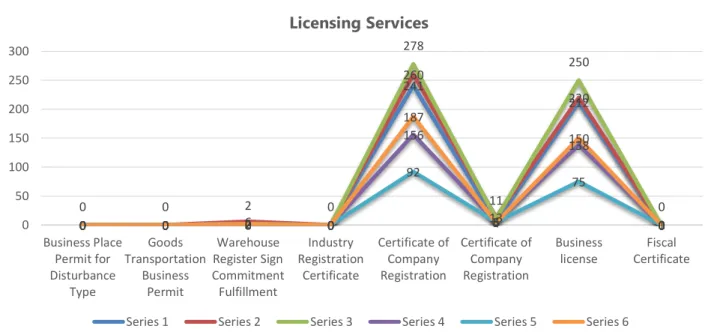
The results of field observations show that the Public Service as an integrated service center with the concept of one stop service is expected to become a role model for integrated services between Ministries, Local government Governments, BUMN/BUMD and the private sector with strict service standards. The basic principles of public services prioritize transparency, efficiency, and convenience in the delivery of services, so as to provide time certainty, clarity of processes and procedures, and cost transparency. Strengthened by the MoU and PKS between the Pekanbaru City Government and public service delivery agencies that have joined the Pekanbaru City Public Service to accelerate disruptive innovation in public services. The MoU and PKS can serve as examples to strengthen the diffusion of innovation into collaborative governance. (Provan & Kenis, 2008; Chris Silvia, 2011; Eppel, 2013). Ease of service for the business world in the industrial and service sectors in Pekanbaru City has had an impact on the high response of the business world to take care of licensing, especially for trading business license services reaching 250 in the 3rd series and managing company registration certificates reaching 278 services in the 3rd series. For example,
306 this innovation model has an impact on increasing the types of business licensing services at the Public Service, as shown in the following figure:
Figure 2. Progress of types of business licensing services at Public Service Malls Source: public service mall
The third aspect is organizational culture, which is an important component of the success of an innovation. Culture is an effective way to control and coordinate people without a complicated and rigid formal control system (Tushman et al., 1996).
However, culture is a double-edged sword that sometimes results in innovation failure.
Bureaucratic pathology is a classic obstacle to service innovation at Public Service Pekanbaru City. Based on the results of an interview with the Chairman of Commission I of the Pekanbaru City Local government People's Representative Assembly, he said :
The Pekanbaru City Government must continue to evaluate services at public service , especially in population administration services. Our observation is that there are often long queues and piles of files. Innovation through this public service should be able to cut the bureaucratic process and reduce long queues because people can register online". This aspect has shown that bureaucratic pathology affects organizational culture, which is detrimental to promoting disruptive innovation. (Interview, 2023)
The fourth aspect is employees. Some experts also try to explain the success or failure of disruptive innovation from an employee perspective. Based on the results of an interview with the Head of One Stop Investment and Services Office Pekanbaru City, he said :
In carrying out its main duties and functions, One Stop Investment and Services Office Pekanbaru City is supported by human resources of 106 (one hundred and six) people, consisting of: a. Structural Officials: 33 people; b. Staff / Civil Servants: 52 people c. Casual Workers: 43 people, Composition of State Civil Apparatus and Casual Workers at One Stop Investment and Services Office Pekanbaru City. (Interview, 2023)
0 0 0 0
241
6
212
0
0 0 6 0
260
13
220
1
0 0 2 0
278
11
250
0
0 0 2 0
156
5
138
0
0 0 2 0
92
5
75
0
0 0 2 0
187
4
150
0 0
50 100 150 200 250 300
Business Place Permit for Disturbance
Type
Goods Transportation
Business Permit
Warehouse Register Sign Commitment Fulfillment
Industry Registration
Certificate
Certificate of Company Registration
Certificate of Company Registration
Business license
Fiscal Certificate
Licensing Services
Series 1 Series 2 Series 3 Series 4 Series 5 Series 6
307 This condition shows that the quality and quantity of human resources are still very limited, with limited educational backgrounds and technical skills. So it is necessary to increase the number of HR apparatus with a level of education and technical skills tailored to the position and assignment because the demand for soft skills in HR for innovation is getting higher.
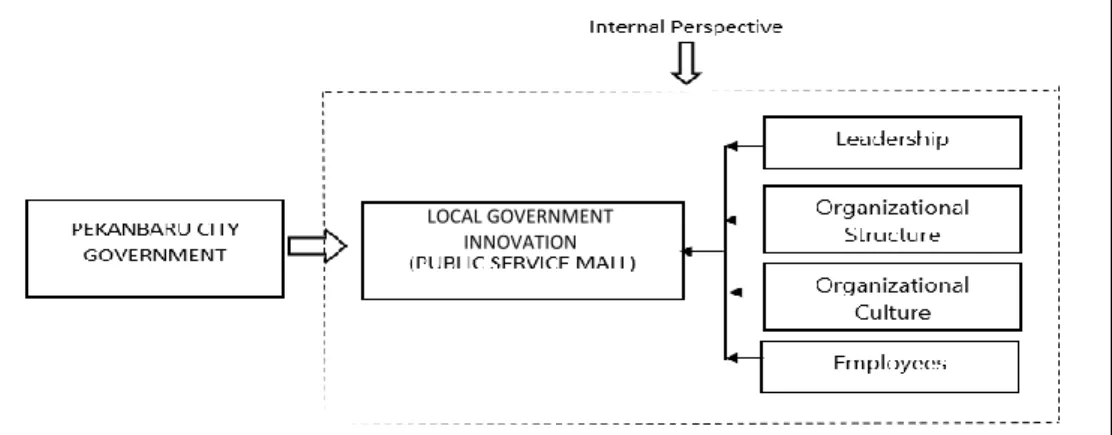
If several indicators are identified that affect the internal perspective of the local government innovation model within the Pekanbaru City Government, then these four indicators become the findings in this study. Can be described as follows:
Figure 3. Internal Perspective Innovation Model Source: field research results
External Perspective
In some studies, the external dimension greatly influences the policies made by the government (Barry, 1995). The government's limitations in terms of resources are open to external factors taking an interest in the policies made by the government.
Innovation can be a potential that can be utilized by external actors outside the government, so cooperation is needed and even leads to collaboration (Emerson et al., 2012) which emphasizes sharing resources in innovating. In addition, the external dimension is also determined by the public perspective, namely the community itself, because it is the community that feels the impact of service innovations made by the Government.
Based on the results of an interview with the Head of One Stop Investment and Services Office, he said:
We are open to receiving input from outside, especially from the community, regarding the service innovations provided. In fact, we consistently discuss with partners, especially the Pekanbaru City Local government People's Representative Assembly, in terms of service control and evaluation. (Interview, 2023)
The attitude of the Pekanbaru City Government, which is open to external factors, is a positive asset in realizing efficient and effective local government innovation. Supervision from the legislature as a partner of the local government is a strategy for creating a proportional local government innovation model.
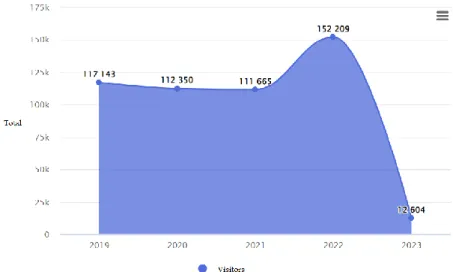
Another external factor found is the high level of public demand for public services in Pekanbaru City. Based on data collection in the field, it shows an increase in people who arrange services at the Pekanbaru City Public Service, especially in 2022, as can be seen in the following figure:
LOCAL GOVERNMENT INNOVATION
308 Figure 4. MPP Visitor Statistics 2019 to 2023
Source: field research results
The increase in visitors in 2022 was quite significant, amounting to 152,209 visitors who processed services at the Pekanbaru City public service. Public response as an external part of service innovation that occurs in Pekanbaru City is also a factor in assessing the performance of the Pekanbaru City Government in creating local government innovations. It is proven that in 2021, Pekanbaru City received the 2021 Innovative Government Award (IGA) from the Ministry of Home Affairs. Pekanbaru Mayor Firdaus received an award in the category of very innovative Mayor with this year's Local government Innovation Index value of 60.14. This means that Pekanbaru is included in the Very Innovative City category. In 2022, Pekanbaru City obtained a Local government Innovation Index score of 60.14. This means that Pekanbaru is included in the category of very Innovative city and has again received the Innovative Government Award. Pekanbaru City managed to get the second rank as the Most Innovative City.
This condition shows that the external reward dimension from the Central Government through the Innovative Government Award program is a trigger to motivate the Pekanbaru City Government to create innovations in public services. So that it can be described that there are 3 dimensions of the external perspective that become indicators determining the local government innovation model in Pekanbaru City, as in the following figure:
Figure 5. External Perspective Innovation Model Source: Field research results
Marketing Perspective
This dimension presents how to identify community demands and understand community needs for public services. In a private context, it can be interpreted that companies must be able to answer the demands and needs of consumers, who are so
LOCAL GOVERNMENT INNOVATION (PUBLIC SERVICE MALL)
309 complex (Ishak, 2005). Based on the results of interviews with the Head of One Stop Investment and Services Office in Pekanbaru City, he said, "The Public Service was created to create efficient, effective, accountable, and transparent public services. The Pekanbaru City Government presents various types of public services and even services to other horizontal and vertical agencies outside the services authorized by the Pekanbaru City Government ". At the beginning of the establishment of the Pekanbaru City Public Service in 2019, the community immediately responded well, supported by socialization through print and electronic media; this is evident from the number of visits in 2019 of 117,143 visitors.
Based on the results of field data collection, it shows that the types of services at the Pekanbaru City Public Service consist of 266 types of services from 42 agencies and consist of 88 service counters. Of the 42 agencies, there are several private sectors, BUMN, BUMD, and civil society, namely Awal Bross Hospital, PT Pos Indonesia, PLN, PDAM, the Notary Association, Indonesian Architect Association, and Indonesian Dentist Association. In terms of marketing, the public service is quite good with dynamic website governance, presenting various kinds of information and service content to the public that can be accessed easily on the website https://mpp.pekanbaru.go.id/. The type of content provided is quite innovative, but it needs development in reciprocal relationships such as community responses and complaints. The website display provided can be seen on the following link page:
https://mpp.pekanbaru.go.id/.
Another finding from this marketing perspective is that there is a concept of collaboration in public service innovation between the Pekanbaru City Government and the private sector, namely Awal Bross Hospital in presenting the website by displaying Awal Bross Hospital service information. Naturally, this is a strategy to strengthen the position of the public service in providing services to the community.
Technology Perspective
Technology is the main instrument in innovation based on electronic government (Carter, L., & Bélanger, 2005). The use of information technology in services will shorten the bureaucracy of services that tend to be long and bad (reference). The principles of efficiency, effectiveness, and transparency are the bargaining power in the use of information technology by the government for the public. The tendency of contemporary society is to accept the novelty of the information technology offered, but some people with a classical paradigm tend to reject it and require a long process.
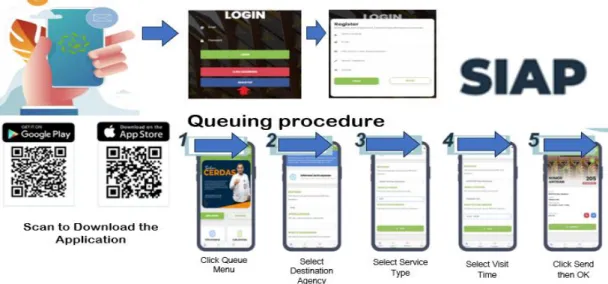
Service innovation at the public service in Pekanbaru City has used technological instruments to prepare the content of the services provided, especially in the queuing and complaint service systems. These two problems have always been bureaucratic pathologies in public services provided by government agencies. The Pekanbaru City public service makes service innovations based on applications that can be accessed through the community's smart phones. The name of the application is the Queue and Complaint Information System (SIAP), as illustrated in the following figure:
310 Figure 6. Queue and Complaint Information System Application
Source: Investment and One-Stop Services Office of Pekanbaru City
This application aims to facilitate the community in conducting services at the Pekanbaru City Public Service, especially in solving service time problems, namely long queue lists. Through the SIAP application, people can determine when to arrange the documents needed. However, based on the results of field research, it shows that there is still a low number of people who use this SIAP application to perform services at the Pekanbaru City Public Service. Recap data from the Investment and One-Stop Services Office of Pekanbaru City from January 2022 to January 2023 shows a low trend of 517 queues using the SIAP application. While people who come manually to perform services range from 14,299. For more clarity, it can be illustrated in the following figure:
Figure 7. Visitor Statistics by Queue Type
Source: Investment and One-Stop Services Office of Pekanbaru City.
The data shows that the utilization of information technology in queue-type service innovation has not been maxiy utilized. This can be caused by user perceptions;
in this case, the community is still classical, people do not understand the use of applications, or socialization is still not optimal. Based on the results of an interview with the Head of Investment and One-Stop Services Office of Pekanbaru City, he said:
311 The Pekanbaru City Government has prepared the SIAP application to facilitate the community in queuing and the complaint system. Our target is, of course, all types of services, especially population services, which are always crowded. But people still choose to queue manually by coming directly to the Public Service . This, of course, we cannot force, and we have socialized it through the website and actually in the Public Service. (Interview, 2023)
From the internal side, the government has made innovations through the information technology approach as a solution to reduce queues, but it returns to the diverse and dynamic attitudes of the community. For the community to benefit from socialization, it is necessary to practice it regularly. This can be discussed in subsequent studies to strengthen studies in the field of public services from a community perspective.
From the previous analysis, the findings of this research can be mapped in the context of local government innovation within the Pekanbaru City Government, as shown in the following figure:
Table 1. Findings of Local government Innovation Models in Pekanbaru City Public Services Unit of Analysis Dimensions Section Findings
Local government Innovation Model in Pekanbaru City
Internal Perspective
Leadership
The Local government Head is committed, visionary and innovative Organizational
Structure
The establishment of the Public Service
Organization is considered effective Employees
Need to develop the capacity and capability of employees.
External Perspective
Parliamentary Oversight
Strengthen the objective monitoring function of the DPRD
Society Participation
Support from the public is needed.
Award
Identify and strengthen Innovation Government Award (IGA) assessment indicators.
Marketing Perspective
Dyamic Website Provision of a more informative and productive website.
Collaboration Strategy
Strengthen multi-actor cooperation in
technological and socio- economic fields
Technology Perspective
User Strengthen user benefits
App Content Easy access to app content and context Source: modification of field research findings
312 Conclusion
This study aims to find a model for implementing local government innovation in Pekanbaru City, selected by the Pekanbaru City Public Service as the most innovative city in 2022 in the Innovation Government Award. Based on the research results, it can be concluded that the local government innovation model in public services at the Pekanbaru City Public Service is called the IEMT model, which consists of internal perspective, external perspective, marketing perspective, and technology perspective dimensions. First, the internal perspective determined its success on the indicators of visionary and innovative local government head leadership, the right organizational structure with the establishment of the Public Service, an organizational culture that has not been separated from the pathology of bureaucracy, and employee competencies that need development. Second, the external perspective, which is determined by supervision from the Pekanbaru City DPRD, community participation, and reward factors that have a significant effect on the performance of the Pekanbaru City Government. Third, the marketing perspective is supported by the existence of a dynamic website from the content and information presented. Fourth is the technology perspective, where the Pekanbaru City Government, through the Public Service, implements the E-Gov concept with application designs for queues and complaints.
In the future, it is necessary to design the latest studies of public service innovation at the Pekanbaru City Public Service because several dimensions of innovation have not been optimally carried out, especially in maximizing the application that is still not utilized by the community from the perspective of government sociology. Then it needs the latest study from the perspective of government collaboration, which has involved multi-actors but has not been optimal in implementing innovations at the Public Service in Pekanbaru City.
Acknowledgement
The author would like to thank the parties who have helped with the implementation of this research. First to the Rector of Riau Islamic University, Prof. Dr.
H. Syafrinaldi, SH, MCL, who has provided research funding assistance through the Directorate of Research and Community Service. Second to the Pekanbaru City Government for its assistance in providing secondary and primary data, and third to the research reviewers, Prof. Dr. H. Yusri Munaf, SH, M.Hum, and Dr. H. Rahyunir Rauf, M.Si, for their input, suggestions, and discussions for the perfection of this research.
References
Albury, D. (2005). Fostering innovation in public services. Public Money and Management, 25(1), 37–41. https://doi.org/10.1111/j.1467-9302.2005.00450.x Anggraini, T. (2019). Inovasi Birokrasi Pelayanan Publik di Dinas Penanaman Modal dan
Pelayanan Terpadu Satu Pintu ( DPMPTSP ) di Kabupaten Musi Banyuasin. Politeia:
Jurnal Ilmu Politik, 11(2), 44–57.
https://talenta.usu.ac.id/politeia/article/download/1122/654/4054
Barry, R. G. C. and D. (1995). Shaping The External Environment : A study of s firms’
attempts to influence public policy. Business & Society.
https://journals.sagepub.com/doi/abs/10.1177/000765039503400304?journalCode
=basa
Bhattacharyya, O., Khor, S., McGahan, A., Dunne, D., Daar, A. S., & Singer, P. A. (2010).
Innovative health service delivery models in low and middle income countries - what can we learn from the private sector? Health Research Policy and Systems, 8(Lmic), 1–11. https://doi.org/10.1186/1478-4505-8-24
313 Boeije, H. (n.d.). Qualitative Research.
Bogason, P. (2007). Methods for Network Governance Research: an Introduction. 1–2.
Bommert, B. (2010). The international public management review IPMR : the e-journal of the IPMN. International Public Management Review, 11(1), 15–33.
Carter, L., & Bélanger, F. (2005). (2005). The utilization of e‐government services: citizen trust, innovation and acceptance factors. Information Systems Journal, 15(1)(5-25.).
https://doi.org/https://doi.org/10.1111/j.1365-2575.2005.00183.x
Chris Silvia. (2011). Collaborative Governance Concepts for Successful Network Leadership. State and Local Government Review, 43(1), 3–5.
https://doi.org/https://doi.org/10.1177/0160323X11400211
Christensen, Clayton M., and M. E. R. (2003). The Innovator’s Solution: Creating and Sustaining Successful Growth. Harvard Business School Press.
https://www.hbs.edu/faculty/Pages/item.aspx?num=15473
Coccia, M. (2017). The Origins of the Economics of Innovation: John Rae (1824). SSRN Electronic Journal, 5, 9–28. https://doi.org/10.2139/ssrn.2966955
Creswell, J. W., Hanson, W. E., Clark Plano, V. L., & Morales, A. (2007). Qualitative Research Designs: Selection and Implementation. The Counseling Psychologist, 35(2), 236–264. https://doi.org/10.1177/0011000006287390
Dollery, B. E., & Wallis, J. L. (1997). © 1997 A B Academic Publishers Printed in Great Britain Market Failure , Government Failure , Leadership and Public Policy. The Journal of Interdisciplinary Economics, 8, 113–126.
Drejer, A. (2002). Situations for innovation management: Towards a contingency model.
European Journal of Innovation Management, 5(1), 4–17.
https://doi.org/10.1108/14601060210415135
Emerson, K., Nabatchi, T., & Balogh, S. (2012). An integrative framework for collaborative governance. Journal of Public Administration Research and Theory, 22(1), 1–29. https://doi.org/10.1093/jopart/mur011
Eppel, E. (2013). Collaborative governance: framing New Zealand practice. Institute for
Governance and Policy Studies Working ….
http://igps.victoria.ac.nz/publications/files/07705653e38.pdf
Fuglsang, L., & Pedersen, J. S. (2011). Innovation and How Similar Is. 2002, 2005–2006.
Gopalakrishnan, S., & Damanpour, F. (1994). Patterns of generation and adoption of innovation in organizations: Contingency models of innovation attributes. Journal of Engineering and Technology Management, 11(2), 95–116.
https://doi.org/10.1016/0923-4748(94)90001-9
Ishak, A. (2005). Pentingnya Kepuasan Konsumen dan Implementasi Strategi
Pemasarannya. Jurnal Siasat Bisnis., 3, 1–11.
https://journal.uii.ac.id/JSB/article/view/975/884
Jakovljevic, M. (2018). A model for innovation in higher education. South African Journal of Higher Education, 32(4), 109–131. https://doi.org/10.20853/32-4-2432
Johnson, D. (2001). What is innovation and entrepreneurship? Lessons for larger organisations to look elsewhere? Is your competition sufficiently respectful.
Industrial and Commercial Training, 33(4), 135–140.
Kanagal, N. B. (2015). Innovation and product innovation in marketing strategy. Journal of Management and Marketing Research, 18, 1–25.
http://www.aabri.com/copyright.html
Kaplan, S., & Tripsas, M. (2004). Thinking about technology: how cognitive frames shape technical change. (pp. 04–039). Harvard Business School, Working Paper.
Krishnan, R. T., & Jha, S. K. (2011). Innovation Strategies in Emerging Markets : What Can
314 We Learn from Indian Market Leaders. ASCI Journal of Management, 41(1), 21–45.
Lovink, M. H., Kars, M. C., Ginkel, J. M. D. M., & Schoonhoven, L. (2015). Patients ’ experiences of safety during haemodialysis treatment – a qualitative study.
https://doi.org/10.1111/jan.12690
Manara, M. U. (2014). Hard Skills dan Soft Skills pada Bagian Sumber Daya Manusia di Organisasi Industri. Jurnal Psikologi Tabularasa, 9(1), 37–47.
Marom, A. (2015). Inovasi Birokrasi Pelayanan Publik Bidang Sosial Tenaga Kerja Dan Transmigrasi Di Kabupaten Kudus. Gema Publica, 1(1), 45.
https://doi.org/10.14710/gp.1.1.2015.45-63
Mashur, D. (2016). Strategi Pembangunan Kota Pekanbaru. Jurnal Administrasi Pembangunan, 4, 87–156.
Nugraha, H. (2019). Model Implementasi Inovasi Di Sektor Publik Studi pada Inovasi E- Office Satu Pintu di Puslatbang PKASN LAN. Jurnal Wacana Kinerja: Kajian Praktis- Akademis Kinerja Dan Administrasi Pelayanan Publik, 22(2), 183–196.
https://doi.org/10.31845/jwk.v22i2.172
Pantano, E., Priporas, C. V., & Foroudi, P. (2019). Innovation starts at the storefront:
Modelling consumer behaviour towards storefront windows enriched with innovative technologies. International Journal of Retail and Distribution Management, 47(2), 202–219. https://doi.org/10.1108/IJRDM-07-2018-0120
Pradana, I. P. Y. B., Susanto, E., & Kumorotomo, W. (2022). Analyzing the critical factors for innovation sustainability in the public sector: evidence from Indonesia.
International Journal of Public Sector Management, 35(7), 733–748.
https://doi.org/10.1108/IJPSM-02-2022-0044
Provan, K. G., & Kenis, P. (2008). Modes of network governance: Structure, management, and effectiveness. Journal of Public Administration Research and Theory, 18(2), 229–252. https://doi.org/10.1093/jopart/mum015
Roberts, P. W. (1999). Product innovation, product-market competition and persistent profitability in the U.S. pharmaceutical industry. Strategic Management Journal, 20(7), 655–670. https://doi.org/10.1002/(sici)1097-0266(199907)20:7<655::aid- smj44>3.0.co;2-p
Rowe, L. A., Boise, W. B., & Rowe, L. A. (1974). Innovation: Organizational Current Evolving Concepts. Public Administration Review, 34(3), 284–293.
https://www.jstor.org/stable/pdf/974923.pdf?seq=1
Salim, N. M. N. and J. (2013). Jurnal Teknologi Full paper Model Perkongsian Pengetahuan dalam Organisasi Sektor Swasta di. Model Perkongsian Pengetahuan Dalam Organisasi Sektor Swasta Malaysia Dan Hubungannya Dengan Inovasi Dan Prestasi Organisasi, 1, 67–76.
Sotirios Sarantakos. (1993). Social Research. Macmillan Education Australia.
https://books.google.co.id/books/about/Social_Research.html?id=- CKGGQAACAAJ&redir_esc=y
Tushman, M. L., Iii, C. A. O. R., Tushman, M. L., & Iii, C. A. O. R. (1996). Management.
Wicaksono, B., Asta, R., & Rafi, M. (2021). Comparative Study: Dimension Policy of Smart People in Metropolitan City of Bandung, Jakarta, and Pekanbaru. Jurnal Bina Praja, 13, 93–103. https://doi.org/10.21787/jpb.13.2021.93-103
Yu, D., & Hang, C. C. (2010). A Reflective Review of Disruptive Innovation Theory.
International Journal of Management Reviews, 12(4), 435–452.
https://doi.org/10.1111/j.1468-2370.2009.00272.x