Mikhail is one of the most driven and passionate people I have met, and his optimism and confidence inspire others to do the same. Kerry is one of the sharpest and kindest people I've met, and several people I ran into at Emory told me they wanted to be like him when they grew up.
The Importance of Noninvasive Molecular Imaging
The latter is being addressed by hardware and software solutions specific to each imaging modality, but also by developing or using contrast agents that can extend the limits of these modalities (eg, sparsity-based super-resolution techniques) or that produce bright or orthogonal bio-signals for sensitive or specific detection. In this chapter, I will discuss the current state-of-the-art MI methods that have been used to image gene expression and other cellular processes, with a particular focus on ultrasound and its contrast agents.
Existing Methods for Noninvasive Molecular Imaging
A handful of synthetic contrast agents have been developed for the US: mainly microbubbles and droplets/nanobubbles. These contrast agents are used almost exclusively for intravascular imaging, and their strengths and limitations have been reviewed.19 In summary, microbubbles are the most commonly used contrast agents in the US for clinical imaging, and can produce extremely strong and specific nonlinear signals when used. depicted at their resonance level. frequency.
Gas Vesicles as Ultrasound Contrast Agents
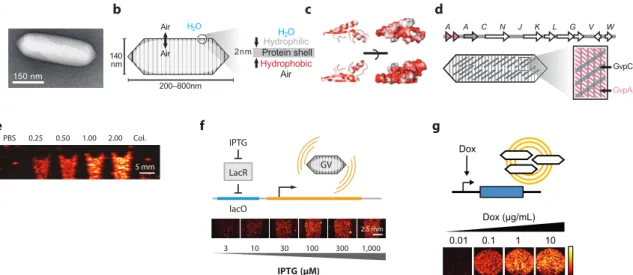
Compared to the synthetic US contrast agents mentioned above, GVs have three main advantages: 1) their genetic encoding, 2) their stability, 3) their small size and narrow size distribution. As mentioned above, a major use of synthetic US contrast agents is as a hemodynamic contrast enhancer in functional US imaging; Most importantly for this use case, the small size of GVs allows them to enter capillaries more effectively than microbubbles, and their narrow size distribution means that the hemodynamic improvement they provide upon injection is more softer than that from microbubbles (despite the fact that they are smaller in amplitude).43.
Targeted contrast-enhanced ultrasound imaging of tumor angiogenesis with contrast microbubbles conjugated to the integrin-binding peptide knottin. Ultrasound molecular imaging of epithelial mesenchymal transition to assess tumor metastatic potential via targeted biosynthetic gas vesicles.
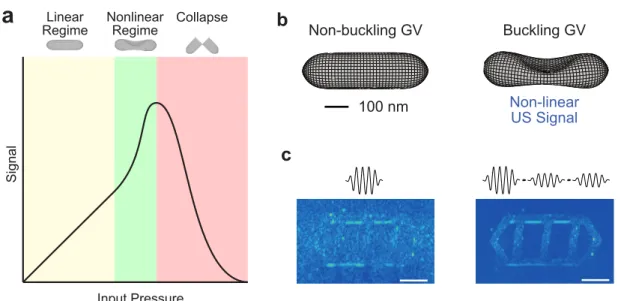
Capabilities and Limitations of Existing Acoustic Reporter Genes
Previous Acoustic Reporter Gene Engineering Efforts
There were three main limitations to the engineering efforts previously performed: 1) they were limited in scope, using only a small number of GV gene cluster homologues, with most targeting GvpC and none targeting the primary GV structural protein GvpA did not direct;. After developing this system, we will use it to screen libraries of both GV gene cluster homologues and GV structural protein mutants in hopes of identifying improved ARGs with more desirable phenotypes for non-destructive in vivo imaging.
High-Throughput Approaches to Acoustic Reporter Gene Engineering
There have been only three previous attempts to engineer ARGs: one that used cluster and expression engineering to alter the acoustic properties of ARGs and improve their expression levels in bacteria, 3 one that used only expression technology to enable their expression in mammalian cells,4 and one that used protein and expression engineering to convert ARGs into sensors of intracellular protease activity.5 The first two of these efforts, although highly impactful in their results, involved little or no protein engineering; the third involved substantial protein manipulation, but only of the accessory structural protein GvpC. We determined that before attempting to engineer the four ARG phenotypes listed above, we first needed to develop a high-throughput system to analyze the acoustic phenotypes of large libraries of ARG variants.
Conversely, screens can be created for any phenotype for which either qualitative or quantitative data can be collected, and some very creative phenotype proxy screens have been created in cases where the phenotype of interest is difficult or slow to assess; however, the throughput of screens is limited by the speed at which this data can be collected for each member of a library, and depending on the screening strategy used, this can be very slow (see below). While selections are almost always performed in pools in which all variants are mixed in the same sample, screening can be performed either in a pooled format or in a pooled format in which the variants are separated into microplate wells. 7–9 Sequential screening offers significant advantages of easy genotype-phenotype correlation and compatibility with a large number of phenotypic assays, but it is expensive and time-consuming and requires specialized equipment often including automation.
The advantage of this method is that it allows us to directly evaluate almost all the phenotypes of interest and to collect quantitative data on each. The primary disadvantages are that it is complex to implement, and its throughput is ∼103 mutants per experiment due to the high screening time required per mutant.
Thus, this method would be preferable to pooled buoyancy screening, as long as the libraries we want to screen have sizes on the order of 103 mutants.
However, in the absence of structural information, information on key residues known to affect the phenotype of interest, or orthologs with sufficient sequence diversity and interesting well-characterized functions, a directed evolution experiment must be initiated using a mutagenesis method. that generates a large diversity (which will result in many variants with reduced function, but hopefully also some with increased function), and to use the information gathered from this library to generate more targets in the rounds future of engineering. However, with recent advances in oligo synthesis, it is now possible to generate an entire scan-site saturation library as an array of oligos and clone them into a target vector in a single step.
Also, if the gene of interest is highly susceptible to mutation, a large number of mutant sequences may be nonfunctional. Because it is customary to substitute every possible amino acid at every desired position, these libraries are usually scaled only by the number of residues to be saturated, which may mean all residues in the protein.
Structural model of the gas vesicle protein GvpA and analysis of GvpA mutants in vivo: Structure of the gas vesicle protein GvpA. Mutations in the major gas vesicle protein GvpA and effects on gas vesicle formation in Haloferax volcanii: Mutations in the major gas vesicle protein.
Abstract
Introduction
Results
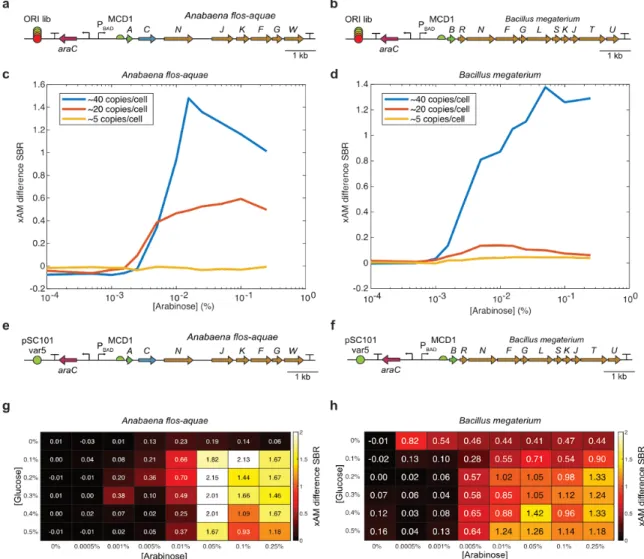
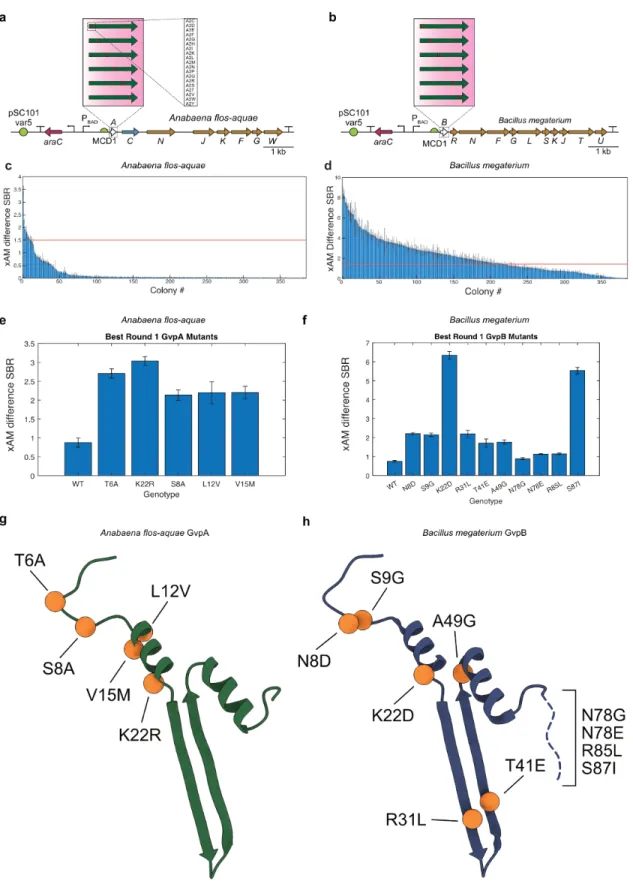
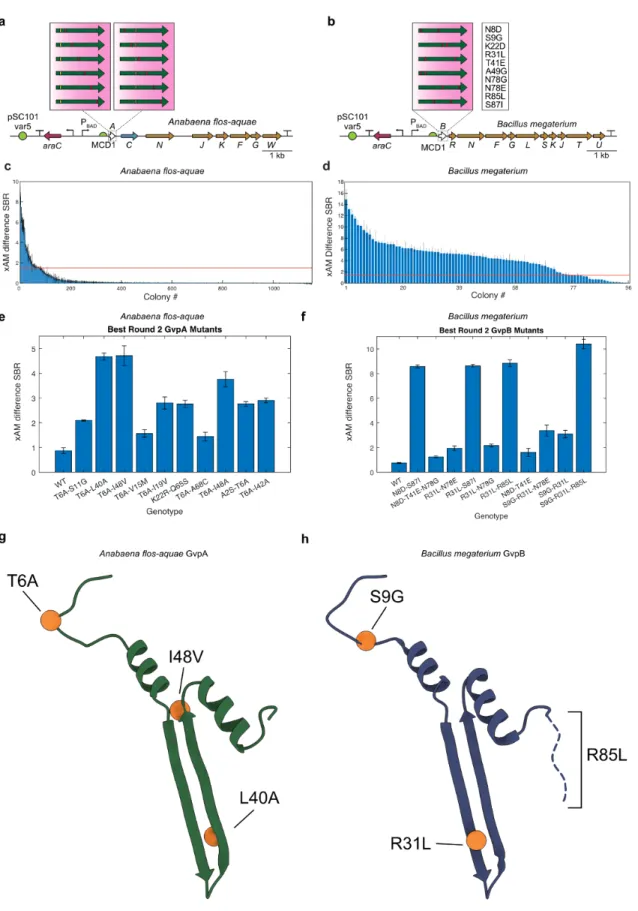
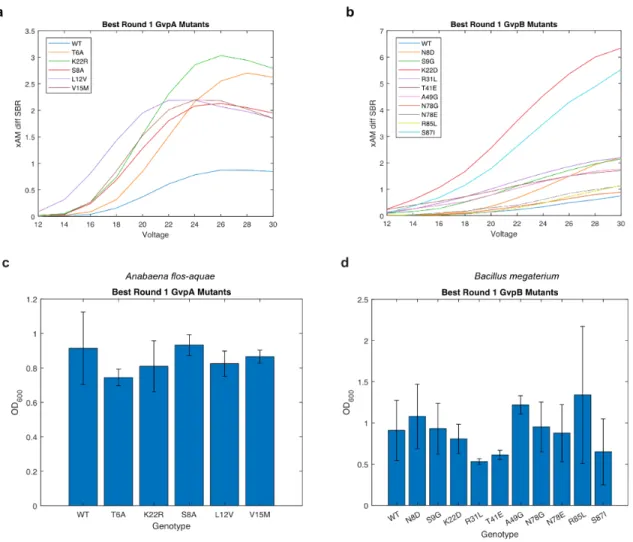
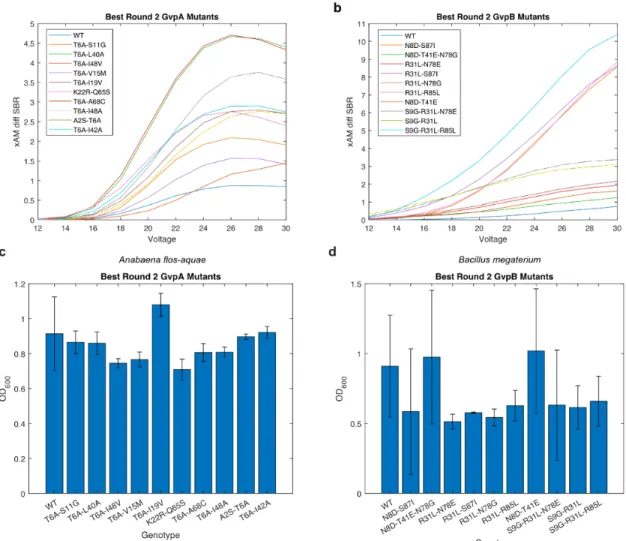
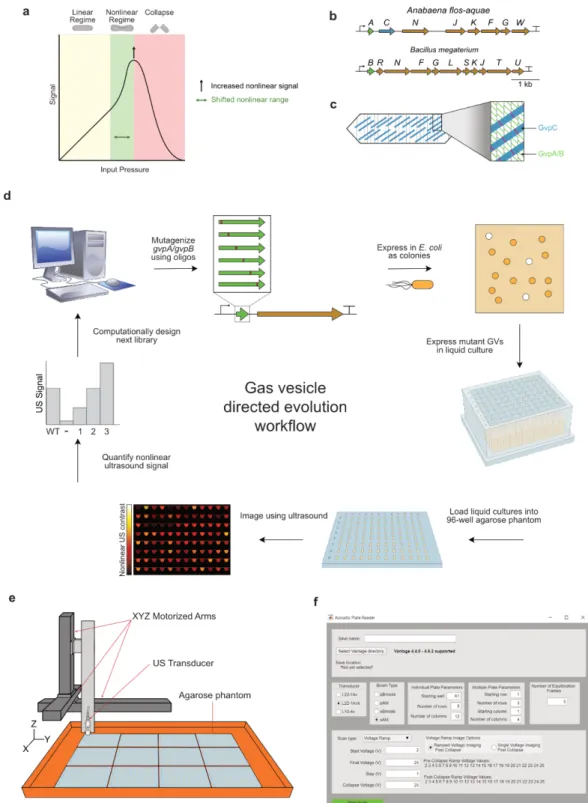
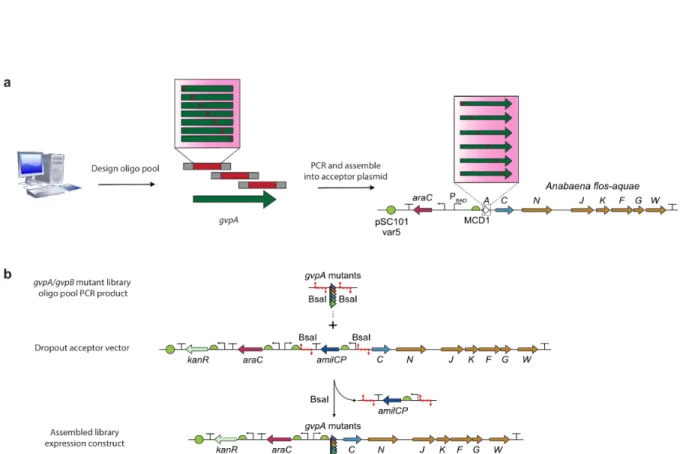
-B) Diagrams of the WT Anabaena flos-aquae and Bacillus megaterium gene clusters with origin of replication (ORI) libraries of different strengths. -B) Diagrams of the mutagenized Anabaena flos-aquae and Bacillus megaterium gene clusters. used in the second round of evolution.
Discussion
The primary strategies used to increase the stability of bacterial expression constructs in vivo are chromosomal integration and incorporation of plasmid stability elements such as toxin/antitoxin or plasmid partition systems; Although the latter can easily be added to plasmids carrying these ARGs, chromosomal integration will likely prove problematic due to the significant reduction in copy number when moving from a medium copy plasmid (in this case ~40 copies/cell) to chromosomal integration ( 1 -3 copies/cell). This change will likely necessitate further tuning of the expression levels of all proteins in these clusters, both at transcriptional (via promoter tuning) and translational (via RBS tuning) levels; Fortunately, high-throughput cloning methods such as MoClo and simplified chromosomal integration systems enable the rapid generation of these constructs and cell lines, and when combined with the increased screening throughput provided by the Acoustic Plate Reader, these and other technical efforts will be significantly accelerated.
Methods
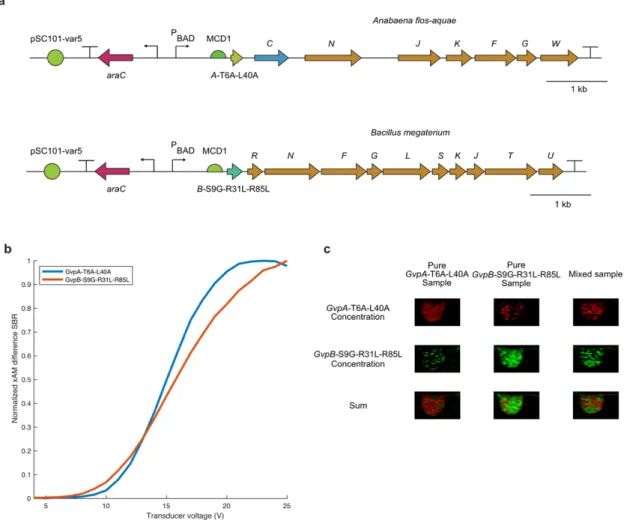
Transformations were then inoculated at a 1:100 dilution into autoinduction Lennox LB containing 100 µg/ml kanamycin, 0.6% glycerol and the appropriate concentrations of glucose and inducer for the experiment (see below). See Supplementary Note 2 for the details of the spectral unmixing paradigm used to separate the two ARG types.
Author Contributions
Acknowledgements
Biomolecular actuators for genetically selective acoustic manipulation of cells. 2022) Magnetoacoustic protein nanostructures for non-invasive imaging of tissue mechanics in vivo. Interspecies cross-feeding with amino acids increases population evenness in a synthetic bacterial consortium. 2016) EcoFlex: a multifunctional MoClo kit for E. 2018) Engineered promoters enable constant gene expression at any copy number in bacteria. 2019).
Supporting Information
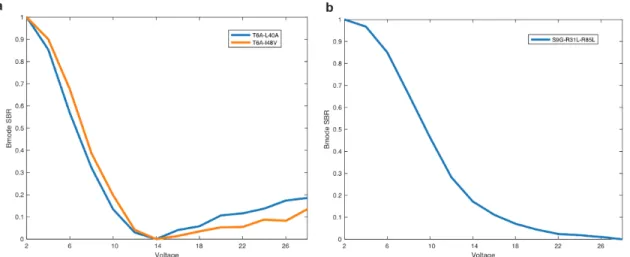
-D) Collapse pressure curves for the mutants shown in A-B. E-F) OD600 measurements for the mutants shown in A-B. Characterization of the top mutants from round 2 of evolution. -D) Collapse pressure curves for the mutants shown in A-B. E-F) OD600 measurements for the mutants shown in A-B. Additional characterization of the top mutants identified in this study.
ABSTRACT
GENOMIC-MADE ACOUSTIC REPORTER GENES FOR REAL-TIME IN VIVO MONITORING OF TUMORS AND TUMOR-HOMING BACTERIA. 34; Genomically derived acoustic reporter genes for real-time in vivo monitoring of tumors and tumor-homing bacteria.” Nature Biotechnology.
Introduction
Despite the promise of first-generation ARGs, their utility for monitoring bacterial or mammalian gene expression in vivo is limited. The properties and performance of these improved ARGs should facilitate a wide range of in vivo research.
RESULTS
We named this pair of plasmids mARGAna: mammalian ARG adapted from Anabaena flos-aquae (Fig. 4-4e). We acquired ultrasound images of the tumors as they grew, with 3 imaging sessions spaced 12 days apart (Figs. 4-5a).
DISCUSSION
Furthermore, non-destructive real-time imaging of ARGs enables ultrasound-guided procedures such as biopsies targeted to genetically defined cells. Meanwhile, second-generation mARGs could be used to visualize the growth and viability of tissues such as tumors and accurately sample their contents under ultrasound guidance.
METHODS
Cells were expanded in TET-free medium and frozen in recovery cell culture freezing medium (Gibco) using g. MDA-MB-231-mARGAna cells were grown in T225 flasks in DMEM supplemented with 10% TET-free FBS and penicillin/streptomycin until confluent as described above.
Data availability
On the last day of ultrasound imaging, mice were anesthetized with 100 mg/kg ketamine and 10 mg/kg xylazine and whole body imaged in supine position using ChemiDoc MP imaging system with Image Lab software (BIO-RAD). After whole-body fluorescence imaging, mice were sacrificed and tumors were resected and placed in 10% formalin solution for 24 hours at 4˚C, after which they were transferred to PBS.
Code availability
Sections were stained with TO-PRO-3 nuclear stain, mounted with Prolong Glass (Invitrogen) and imaged with a Zeiss LSM 980 confocal microscope with ZEN Blue. For photomicrographs of tumors from induced and uninduced mice, the Emerald channel was gated between 0 and 25497, the EBFP2 channel between 0 and 17233, and the TO-PRO-3 channel between 5945 and 53136 for display.
ACKNOWLEDGEMENTS
The fluorescence channels were set as follows: blue epi illumination with a 530/28 filter for Emerald/GFP and a 605/50 filter for Antares/CyOFP1.
AUTHOR CONTRIBUTIONS
COMPETING INTERESTS
Rapid monitoring of target protein expression by fluorescent signal based on a dicistronic construct in Escherichia coli. Regulation of metabolism in Escherichia coli during growth on mixtures of non-glucose sugars: arabinose, lactose and xylose.
SUPPLEMENTARY INFORMATION
All images were normalized and plotted on a dB scale as described above, except that the scaling factors were A=2 and B=0.5. All images were normalized and plotted on a dB scale as described above, except that the scaling factors were A=2 and B=0.5.
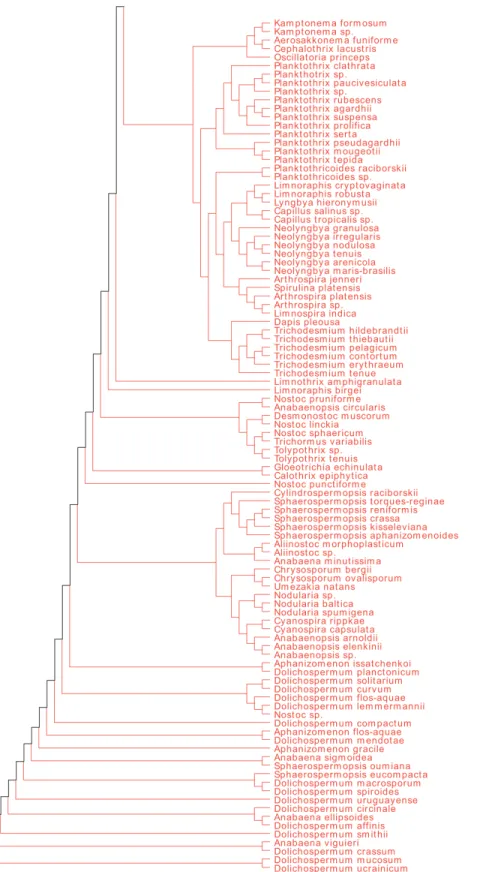
Lessons Learned from Half a Decade of ARG Engineering
In this chapter, I gather a series of insights from these ARG engineering projects, and propose a number of projects that build on their results. The developed methods and technical approaches explored in this work set the stage for future ARG engineering efforts.
Future Directions for ARG Engineering
Construction of the acoustic plate reader and its use to screen mutant libraries revealed that throughput of 102–103 variants screened per round of screening is sufficient to identify enhanced acoustic phenotypes, with the critical caveat that screened mutants are first -checked for successful GV production through an opacity assessment in colony format. Screening libraries of random mutants of structural GV proteins revealed that the acoustic and expression phenotypes of ARGs can be successfully engineered; In relation to the two limits mentioned above, while protein engineering alone is likely to be sufficient to maximize the amount of nonlinear distribution for GVs, it is almost certainly not sufficient to maximize the number of GVs produced per cell, which will require tuning of promoters, RBS, ORI and timing of expression.
A ARG Engineering Projects Attemptable Using Current Methods
This approach would allow mutant ARGs to be screened directly in the cells in which they will be used, which is strongly preferable to screening in E. The main challenge to overcome is that the turgor pressure of E.
B ARG Engineering Projects Requiring Novel Methods
To take full advantage of this increased screening depth, methods such as deep mutation scanning9 can be used to extract more information from these libraries than simply the genotypes of selected mutants: through a combination of mutant barcoding and deep sequencing, fitness landscapes can be constructed either dense for individual proteins or sparse for multiple proteins in a group. Conversely, a sparse fitness landscape can be constructed for all the proteins in a cluster if an epPCR library is subjected to this protocol and the beneficial and deleterious mutations are clustered to identify "hotspots" for targeted mutagenesis.
Given the utility of GvpC as a functional handle for GV, it would be beneficial to design orthogonal GvpA/GvpC pairs that specifically bind to each other with minimal cross-reactivity. This could be achieved either by screening homologues of the two proteins against each other in purified form or by mutagenesis of one or both binding partners, possibly using a surface display method for GvpC.14 Finally, a more ambitious project could involve adding a completely new functionality to GvpA or GvpC: for example, engineering "split-GvpA" or "split-GvpC", a split-GFP15 analog that dimerizes itself and induces GV formation or a nonlinear signal change in response to a protein-protein binding event, or even in response to a small molecule.