Examining the current views of pharmacists on the demand for stricter regulation of pharmaceutical compounding first requires sufficient background knowledge of the basic compounding timeline. The company then compounded a certain amount of the elixir, packaged and shipped 633 products across the country. The aim of the proposed law is to make a clear distinction between traditional mixtures and manufacturers of mixtures.
The study sample was not limited to Mississippi-licensed pharmacists practicing in certain fields, but rather included pharmacists practicing in all fields. Mississippi-licensed pharmacists who were not actively practicing at the time of the survey were excluded from completing the survey after responding that they were not actively practicing. After the initial survey mailing, another email was sent a week later to those in the sample who had not yet completed the survey.
The follow-up email also contained the link to the survey and a reminder of the purpose of the study. The body of the initial and follow-up emails can be found in Appendices B and C. If the participant answered “no,” the individual was excluded from completing the remainder of the survey.
Of the 266 responses, 67 were removed from the data analysis, for example because the responder was not currently exercising, the survey was not fully completed, and so on.
Sample Description): Results
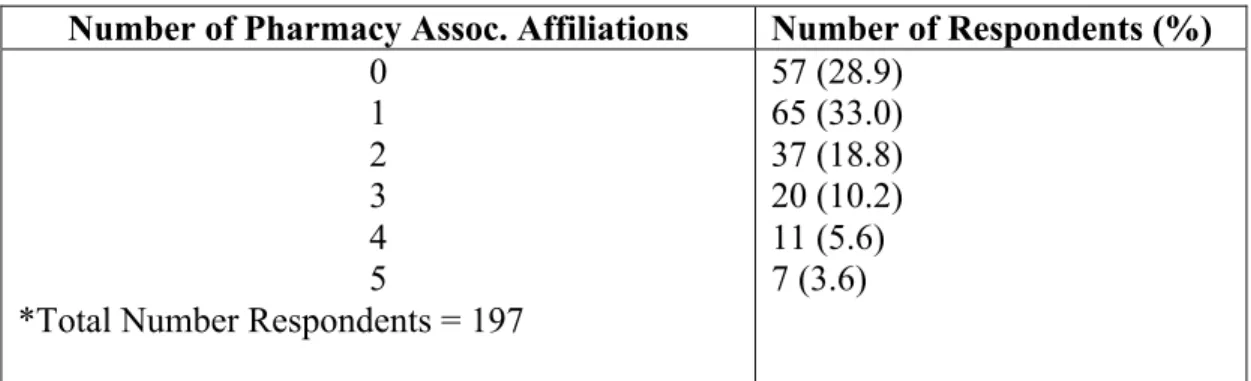
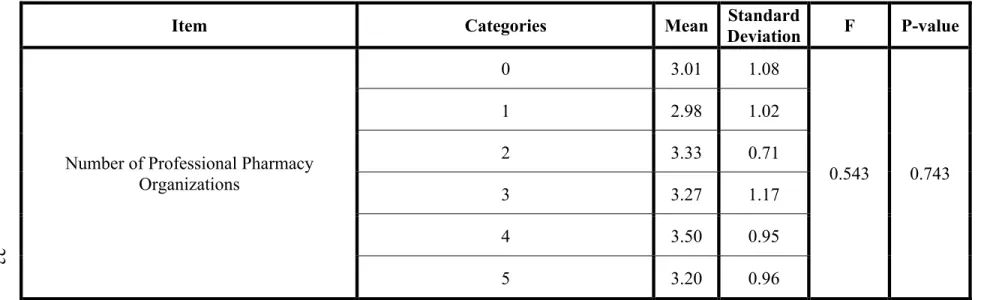
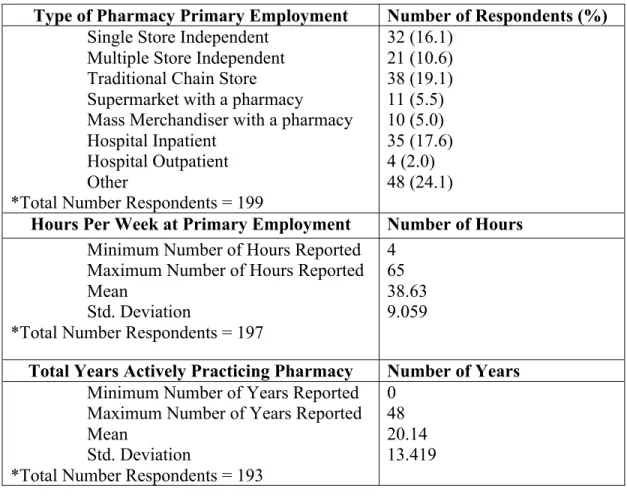
The total was then calculated as 199 responses that were fully completed by currently practicing Mississippi pharmacists. The next highest percentage was found to be affiliated with 0 organizations and 2 organizations at 28.9% and 18.8% respectively. Respondents reported the number of medications their primary workplace contained per week.
The second highest percentages were found to compound 0 and 10-99 medications per week of 25.5% and 22.9% respectively. Additional characteristics related to the reported number of medications compounded per week can be found in table 3.
Knowledge): Results
Attitude): Results
Comparisons): Results
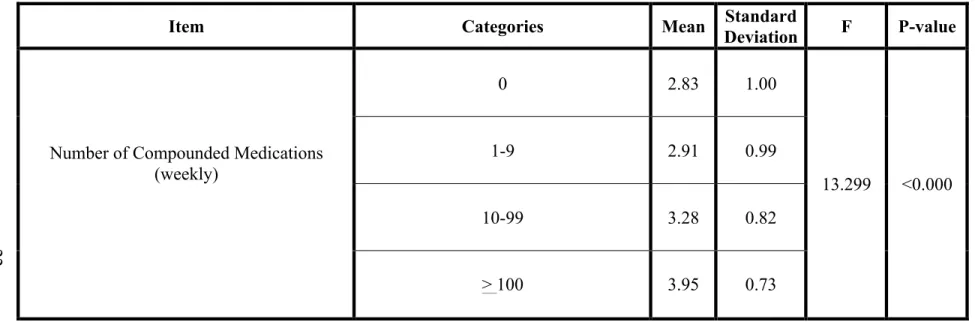
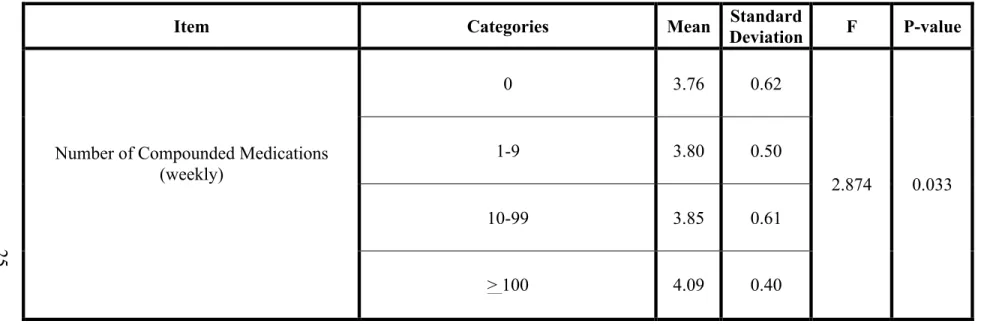
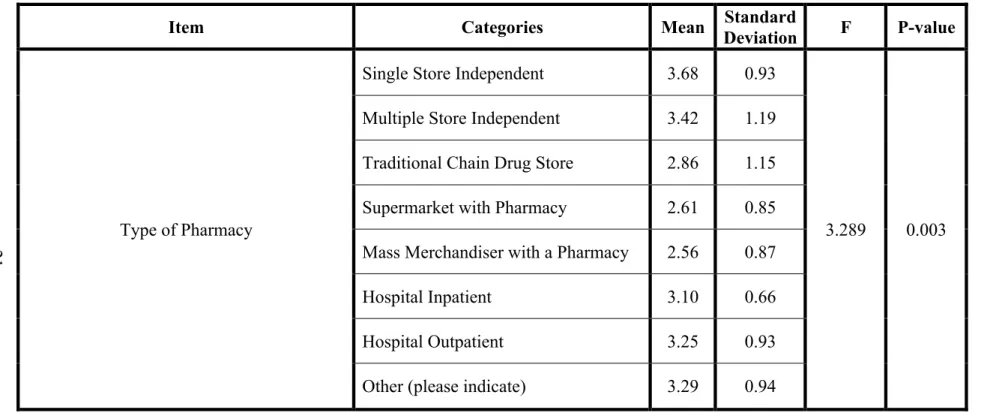
HSD tests with knowledge as the dependent variable also revealed significant differences between > 100 compounded medications and 0, 1–9, and 10–99 compounded medications, respectively. Tukey HSD test with attitude as dependent variable revealed significant differences between > 100 compounded medications and 0 compounded medications.
Population 2 Mean Difference Std. Error P-value
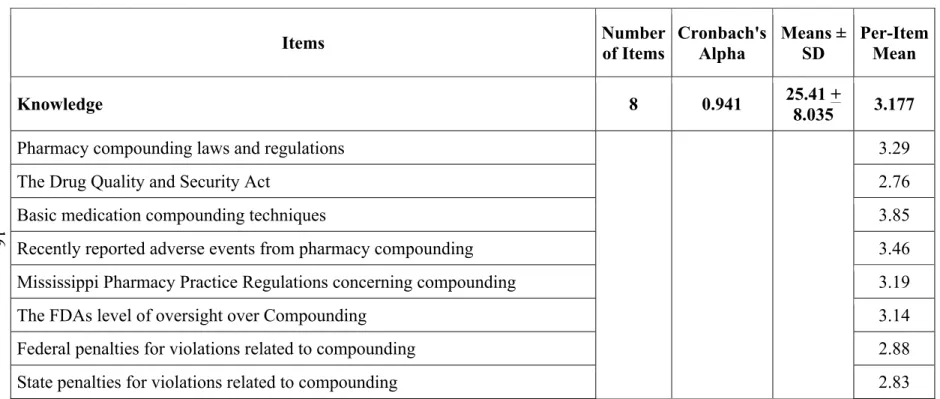
Frequencies and percentages of the number of respondents associated with a specific number of compounded medications per week were more evenly dispersed. Aim 2 aimed to collect and analyze descriptive statistics regarding self-reported, perceived knowledge of eight statements related to pharmaceutical regulations and safety practices. Respondents seem to report that they know the most about basic compounding techniques (mean = 3.85), adverse events recently reported due to compounding in pharmacies (mean = 3.46), and compounding laws and regulations (mean = 3.29).
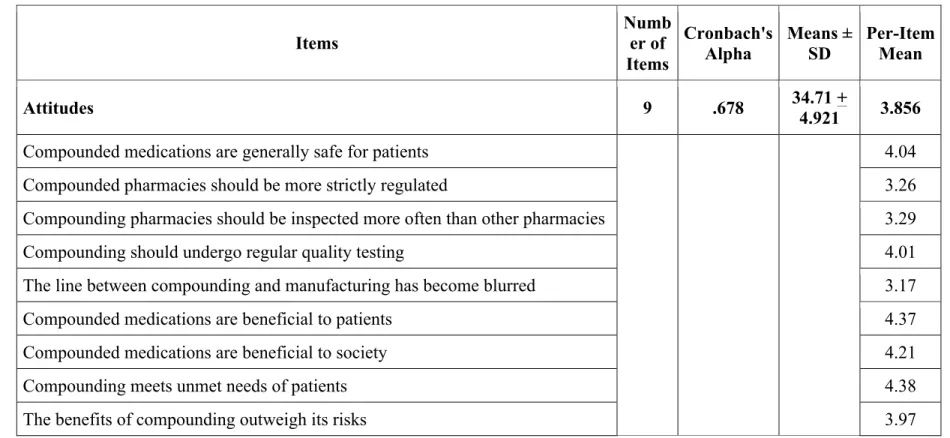
The purpose of Objective 3 was to collect and analyze descriptive statistics regarding self-reported responder attitudes, nine statements regarding pharmacy compounding needs, and safety qualities. The statements ranged from the importance of compounding in pharmacies to the need for attitude indicators for the regulation of compounding in pharmacies. The lower average values for these three can be explained by... the fact that 74.5% of respondents reported preparing at least 1 medicine per week, while 19.3% of respondents prepared more than 100 medicines per week, which likely contributes to a large portion of their medication use. weekly tasks at their primary workplace.
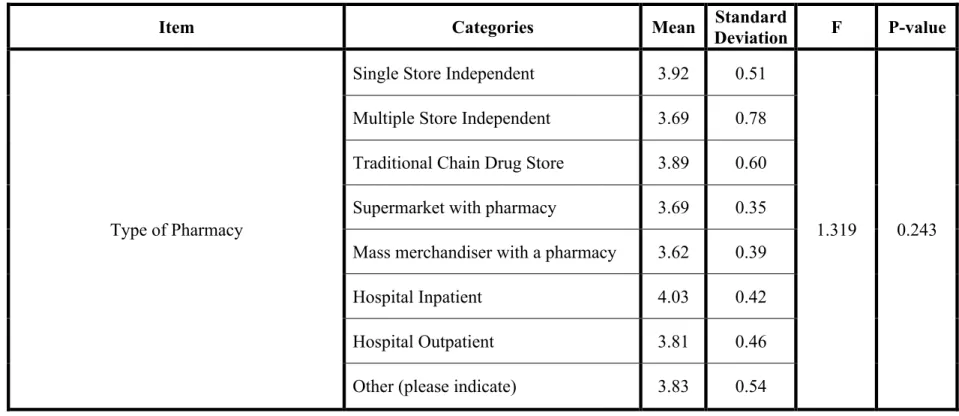
These differences can be explained by the fact that pharmacists in single-store independents compound more medications and not only have an interest in staying informed about pharmacy compounding, but also a need to remain informed for .. compounding duties that involve their practices are related. These differences can be explained, similar to those in single-store independents, by the fact that pharmacists compounding > 100 medications per week are involved in practices that have a high emphasis on pharmacy compounding and not just an interest in keeping up to date of pharmacy compounding, but also have a need to stay informed in order to adequately complete compounding duties related to their practices. The final question of the survey distributed asked respondents to record any additional comments regarding pharmacy compounding.
The data, tests and analysis ... of the study seem to support the idea that knowledge and attitudes regarding the importance, safety and regulation of pharmacy compounding are influenced by factors such as primary workplace and level of involvement in the compounding of medicines, the comments section of the data shows that within the data there was still a wide spectrum of opinions on the subject. This study appears to be the first conducted in Mississippi regarding pharmacists' knowledge and attitudes regarding the practice of pharmacy compounding safety and regulation. Another interesting area of study would be to survey typical adult individuals in Mississippi to assess their knowledge and perspectives on the issues of pharmacy compounding.
Another area of future research could be another perspective on the impact of pharmacy organizations on reported knowledge and attitudes toward the safety and regulation of compounding in pharmacies. Question 2 Which of the following best describes the type of pharmacy practice that is your PRIMARY location. For the purpose of this study, pharmacy compounding is defined as a practice in which a licensed pharmacist combines, mixes, or modifies ingredients in response to a prescription to create a medication tailored to the medical needs of an individual patient.
Q7 Check each category for which you have compiled recipes (please check all that apply). For the purposes of this study, pharmaceutical compounding is defined as the practice in which a licensed pharmacist combines, mixes, or modifies ingredients in response to a prescription to create a medication tailored to the health needs of an individual patient. Such incidents have sparked much discussion and debate about the best way to regulate pharmaceutical compounds.