
Set in 13pt and Minion Pro by Manila Typesetting Company, Makati, Philippines. Printed in USA. The popular statement "Small is the new big" is reflected in the vast amount of applications of nanotechnology in the military domain.
Nanotechnology’s Entry into the Defense Arena
Introduction
Nanotechnology is seen by many developed countries, especially in the defense sector, as a technology of national importance for the economy and security.
What Is Nanotechnology
Such changes in properties of nanomaterials have created major applications in Physics, Chemistry, Materials Science, Computing, Engineering, Medical and Biosciences, etc. The unique properties of nanomaterials used for various applications are their chemical reactivity.
Nanotechnology Offers Innovative Opportunities for Defense
It's hard to say which of the country's defense departments first started working out the possibility of using nanotechnology. Among Asian countries, Japan is the leading emerging country investing in nanotechnology, followed by China and Taiwan.
Nanotechnology for Soldiers
- Smart Clothing Using Nanotechnology for Various Applications
- Invisibility and Adaptive Camouflage
- Armor Fabric
- Faster Intensive Medical Help
- Food and Safe Drinking Water
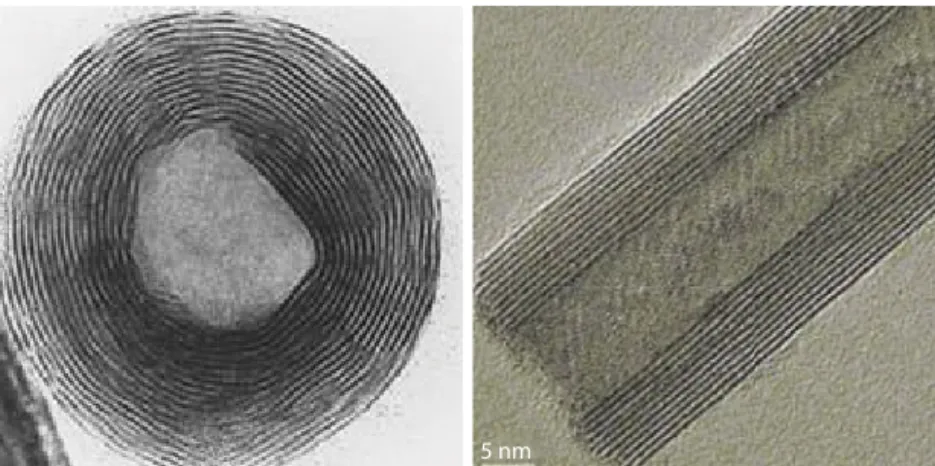
An adhesive chest patch fitted with sensors and a tiny radio can also be used if they are not embedded in the textiles. In the near future this may provide a portable diagnostic kit; so that the damage can be detected if necessary.
Increased Surveillance for Better Protection and Security
The sender and receiver will both detect that it has been intercepted, whereas in digital cryptography an intruder's interference cannot be detected and messages can be copied. These devices make very low noise, high speed operation and single photon generation devices with a low incidence of simultaneous generation of multiple photons.
Smaller, More Effective and Cheaper Nanotechnology-Based Weapons
Such weapons can be made using high-strength and lightweight polymer nanocomposites supported by nanotechnology. Because these devices will use very little fissile material, there will be "virtually no radioactive fallout." v) Like nanoflotilles for targeted drug delivery, targeted delivery of highly toxic substances to vulnerable areas can be accomplished using nanotechnology.
Nanotechnology in Aeronautics for Lighter and Faster Aircraft
- Exfoliated Nanocomposites
- Single-Wall Carbon Nanotubes (SWCNT), Double-Wall Carbon Nanotubes (DWCNT)
- Nanoplatelets and Nanofibers of Graphite/Graphene
- Electrospun Nanofibers
Nanofibers synthesized by various methods, such as from vapor-phase grown graphite, electrospun nanofibers or phase-separated liquid crystal fibers, have proven useful in nanofiltration systems. Similarly, nanoclay platelets dispersed in polymer have also been found to be UV stable and flame retardant.
Nanotechnology for Stealth Warships and Submarines for Ocean Exploration
- Microwave Absorber for Stealth Technology Microwave absorbers have the ability to eliminate electromag-
- Invisible Stealth Ships, Planes and Vehicles Nanotechnologists have developed invisible left-handed meta-
- Radar Absorbing Material: Carbon Nanotubes (CNT)
- Radar Absorbing Material: Ionic Liquids
Countermeasures include the radiation of noise power in the working band of the radar to confuse or mislead the radar as a communications system. In addition to mobile communication systems, satellite communication systems and automatic teller machines (ATM) also operate in the GHz range [6–8].
Nanotechnology for Vehicles
- Vehicles with Scratch Resistant Surfaces
The scratch resistance of coatings occurs on the car body and windows (which in modern vehicles are usually made of polycarbonates) to protect the surface and underlying layers from mechanical damage, chemical and UV degradation; preferably by including it in the car paint systems [11]. The nanoparticles can be uniformly distributed throughout the coatings or they can be designed to preferentially segregate to the top surface.
Nanotechnology for Satellites
Another attempt is to make abrasion-resistant thin film nanocomposites composed of sputtered chromium zirconium (CrZrx) alloys on polymeric substrates. Nanotechnology is applied to make lightweight, miniaturized components and therefore very small satellites.
Nanomaterials for Portable Energy/Power
- Portable Fuel Cells (FC)
- Rechargeable Lithium (Li) Batteries
- Supercapacitor
- Solar Cells
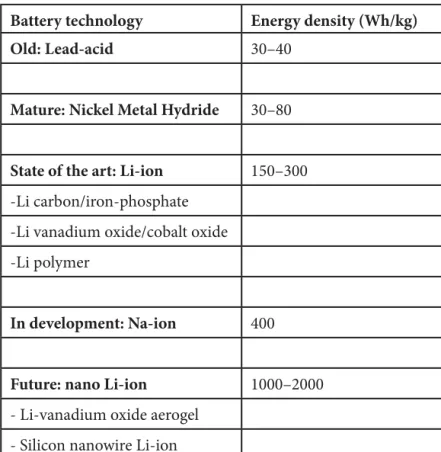
Nanowire Solar Cell – This is another nanowire solar cell based on Indium Phosphide (InP) nanowires on the metal electrode of Indium Tin Oxide (ITO); and then the nanowire electrode platform is coated with the organic polymer, poly(3-hexylthiophene). Quantum Dot Solar Cell (QDSC) – This type of cell is expected to deliver an efficiency of as much as 86.5%.
Nanosensors
- Chemical Nanosensors
- Mechanical Nanosensors
- Magnetic Nanosensors
- Radiation Nanosensors
- Portable Miniature X-Ray Nanosensors
- Surface-Enhanced Raman Spectroscopy (SERS) Nanosensors
- Smart Dust Sensors
Magnetic nanosensors are produced using unique magnetic properties of very small nanoparticles that exhibit quantum properties. Because CNTs are very effective electron emitters, they are used as an electron source to generate X-rays used in portable X-ray detectors.
Nanotechnology for Logistics
- Smaller, Faster Nano-Cameras
In 2013, a group of scientists from the MIT media Lab (Ramesh Raskar, Kadambi, Refael Whyte, Ayush Bhandari and Christopher Barsi) and the University of Waikato in New Zealand (Adrian Dorrington and Lee Streeter) were in the news for producing a low-cost "nano-camera ", which can operate at the speed of light. The "nano camera" can probe the scene with a continuous wave signal that oscillates in nanosecond periods;.
Conclusions
The defense organization has benefited greatly from these nanoproducts and is now incorporating them into defense related devices. In the future, nanotechnology may offer soldiers better equipment, greater safety and security, and effective operational capabilities.
Stealth, Counter Stealth and Nanotechnology
Introduction
Aircraft protection includes the development of stealth, anti-stealth, high definition sensors, energy efficient solar powered aircraft, etc.
Radar – An Incentive for Developing Stealth
- Principle of Radar
- How Radar Functions
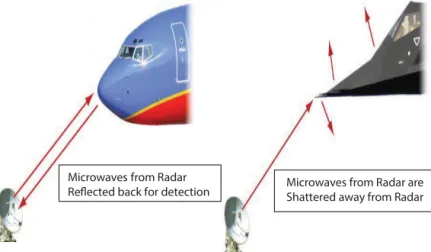
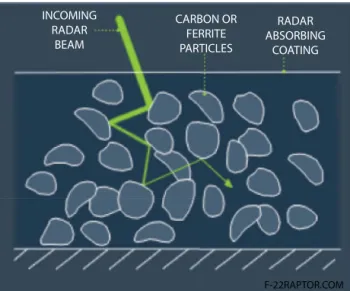
When a reflective target blocks part of the beam, this beam is reflected in different directions and some energy reflected in the direction of the radar antenna is detected (Figure 2.1). The time interval between transmission and reception of the pulse gives the range from the radar to the target.
What Is Stealth and Why Was It Developed?
40 Nanotechnology in the Defense Industry .. visible light, it only sees the energy reflected back to it and when its antenna picks up enough energy to rise above the electronic noise found in the receiver. The first two stealth aircraft produced were used in combat in Panama in 1989 and the other were the F-117s used in Iraq in 1991.
Considerations and Efforts for Designing Stealth Aircraft
- Camouflaging
- Plasma Active Stealth
- Inactivating Radar Signal or Making Planes Less Visible
The real part and the imaginary part of the propagation constant give an idea whether the loss of electromagnetic waves is caused by attenuation or phase change or both in the medium. Usually, the microwave-absorbing properties of the ferrites are dominated by the magnetic and dielectric losses. This imperfection of the conductor results in a very small portion of the energy entering the conductor from free space (air), i.e. the second medium.
Radar Cross Section (RCS)
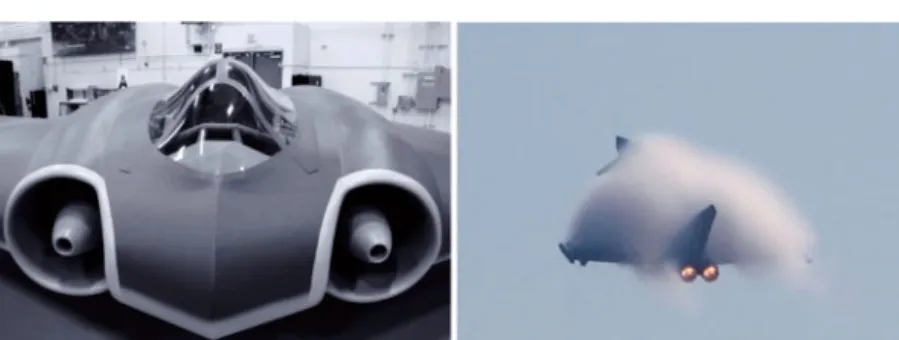
RCS is not directly proportional to detection range due to the effects of radial dispersion and the radar's canonical beam. RCS is viewed as the percentage of power re-radiated (scattered) by the target and the ratio of the power scattered in the direction of the radar. There is a need to minimize RCS that can be achieved by addressing aircraft design.
Shaping of Stealth or Improved Aerodynamics by Reducing RCS
Aircraft surface modification has been discussed so far; but the internal construction also needs attention, as radar waves that penetrate the aircraft's surface become trapped in special internal structures known as re-entrant triangles and bounce off the internal faces, causing a loss of energy. Such structures are buried in the engines in the wing or fuselage of stealth aircraft.
Reducing the IR Signature
Circulating coolant to reduce exhaust temperature, such as fuel inside the tailpipe, with the fuel tanks serving as heat sinks cooled by the airflow along the wings. For this, engines can be equipped with flow mixers to mix the cold bypass air with the hot air passing through the combustion chamber and turbine. Engineers the interaction between the exhaust stream and the airflow over the aircraft to create an additional vortex that further promotes mixing.
Muffling Aircraft Noise
What Is Counter Stealth and Why Is It Used?
- LIDAR (Light Detection and Ranging)
- Multi-Band 3D Radar
- Quantum Radar
As the name suggests, it is a pack of three to four separate radars controlled by a single processing and command unit. It is difficult to block the counter-stealth radar, as it has a passive angle-tracking function against jammers. This type of radar is difficult to track because passive radar stations emit nothing.
Nanotechnology for Improved Stealth Performance
- Nanomaterials as RAM or Microwave Absorber As discussed above, RAM should be able to increase and
- Nanomaterials in Airframe Structure
- Nano-Metal Coatings for Aero-Engine Parts One of the major trends in application of nanomaterials in
- Nanomaterials for Electro-Communication Component of Aircraft
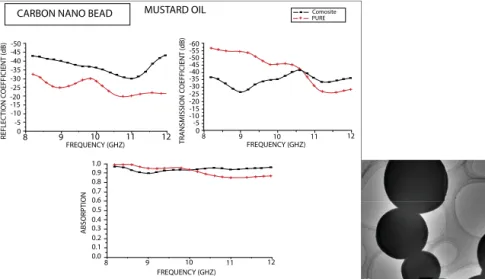
Variation in the absorption with frequency suggests the frequency-dependent behavior of the material. Variation of reflectance, transmittance and absorption by CNF acrylic composite is a function of frequency in the X band. 78 Nanotechnology in the defense industry. diameter) than copper (a diameter of ~3 mm). Cu conducts about 2 million electrons/sec) [56].
Conclusions
Nanomaterials for energy storage devices - CNTs have been shown to be potential material for hydrogen storage. There are many more possible applications of nanotechnology that still need to be explored. One of the futuristic possibilities seems to be the use of nanomaterials and nanotechnology.
Nanocomputers in Aid of Defense
- Introduction
- Classification of Nanocomputers
- History of Nanocomputers
- The Nanocomputers
- Nanotechnology and Quantum Computers
- Recent Advances in Nanocomputers
- Applications of Nanocomputers in the Military
- More Powerful Computers to Come
- Summary
The number of electrons can be changed by adjusting electric fields in the area of the tip. 96 Nanotechnology in the Defense Industry .. architecture of the circuits) that operate on a type of unconventional logic. One of the first applications of nanotechnological solutions for soldiers lies in the development of environmental intelligence.
Nanotechnology-Aided Armor
Historical Background of Armor
It is now known that in order to protect the lives of people it is not only necessary that the armored material should be resistant to penetration by projectiles or bullets, but also by sound waves (which can be life-threatening), radiation, viruses. or hazardous substances, usually gases. On the other hand, it is important to emphasize that there are properties of intelligent materials, such as self-healing, camouflage, memory and the delivery of medicine through fibers or materials that are incorporated into military technology. Therefore, it is possible to define armored nanomaterials as the branch of science that studies the structure and properties of materials that serve to preserve life, focused on its nanometric scale.

Nanomaterial-Aided Armor
- Polymers
- Carbon Nanoforms
- Nanocomposites
- Armor of Smart Nanomaterials
In the case of polymers, it is necessary to consider (a) the selection of aromatic rings that increase rigidity in the molecular chain of the polymer and (b) the size of the molecular weight of the polymer. It is possible to modify the process without affecting the chemical structure of the polymer. In this way, it is possible to achieve the orientation of the polymer chains in the direction of the flow.

Summary
Nanotechnology and Weapons
Eric Drexler
- Introduction
- Considerations for Developing Nano High Energy Materials (HEMs) for Weapons
- Propellants
- Explosives
- Pyrotechnics
- Requirements for Nanoparticles Used in Nanoweapons
- Synthesis of Nanomaterials for Weapons
- Characterization of Nanomaterials Used in Weapons
- Nanomaterials for Use in Nanoweapons and Ammunition
- Super Penetrating Materials
- Nanocrystalline Tungsten
- Liquid Metal
- High Energy Laser Weapons
- Nanoweapons
- Types of Nanoweapons
- Defensive Measures to Combat Nanoweapons
- Risks Posed by Nanoweapons
- Need for Preventive Anti-Nanoweapon and Anti-Ecophagic Policies
- Summary
138 Nanotechnology in the defense industry . cellulose) and white dextrin; this also increased the short duration of HNS pulse sensitivity [6]. 140 Nanotechnology in the defense industry. screws and fasteners, fireworks, automotive airbag components and gas blasting in mining, quarrying and demolition. The standard CornerShot can be mounted on the front of a semi-automatic pistol, connected to the trigger at the rear.
Nanotechnology to Aid Biological and Chemical Warfare Defense
Introduction
What Is Biological Warfare?
- Types of Biological Warfare
166 Nanotechnology in the Defense Industry. i) During the First World War, gaseous chemicals such as chlorine and phosgene were used in the Battle of Ypres; (ii) During World War II, chemical nerve gas (tabun, a cholinesterase inhibitor) and biological warfare, such as the use of Bacillus anthracis to treat anthrax, Salmonella to contaminate water, Vibrio cholerae, Shigella spp. There is a record of bioterrorism using strains of Ames strain of Bacillus anthracis, which were mailed to six people in the United States on January 26, 2002. Centers for Disease Control and Prevention (CDC) in 2006 that Salmonella-related infections cause an estimated 1.4 million cases of foodborne illness and approximately 500 deaths annually in the United States alone; it is thought to be a potential biological agent as it can be easily weaponized as aerosol or contaminated food and water.


![Figure 3.2 Schematic of memristor stacked in a set whose dimensions could fulfill the conditions imposed by the great challenge of Feynman [16].](https://thumb-ap.123doks.com/thumbv2/123dok/10296752.0/115.648.152.495.641.835/figure-schematic-memristor-stacked-dimensions-conditions-challenge-feynman.webp)
