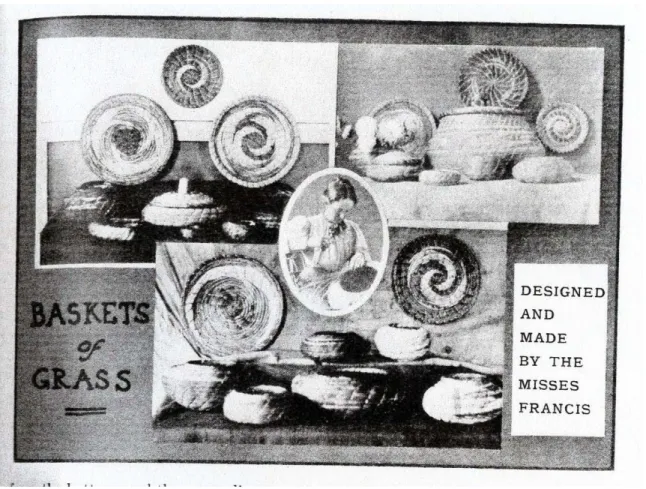
As both writers and magazine editors at the turn of the century, I became interested in the promotion of American Indians in the popular press during this period. Turn-of-the-century mass media advertisements also encouraged the middle class to purchase, collect, and decorate American Indian-themed items. 8Elizabeth Hutchinson, “Progressive Primitivism: Race, Gender and Turn-of-the-Century American Art” (Ph.D. Dissertation, Stanford University, 1999), 1.
11Elizabeth Hutchinson, “Progressive Primitivism: Race, Gender, and Turn-of-the-Century American Art” (PhD diss., Stanford University, 1999). 12Elizabeth Hutchinson, “Progressive Primitivism: Race, Gender, and Turn-of-the-Century American Art” (PhD diss., Stanford University, 1999). The House Beautiful was the only housing magazine spanning the turn of the nineteenth century into the twentieth century (and today, the longest-running decorating magazine at 112 years).
THE ORIGINS OF THE HOUSE BEAUTIFUL
The Victorian drawing room, in particular, exemplified the changing perspective on home decor that The House Beautiful wanted to educate its readership about. In its initial year, The House Beautiful did not include articles on American Indians while trying to establish itself as a credible, young publication. Articles and advertisements on the subject of Colonial Revival and Arts and Crafts were featured in The House Beautiful.
Stone served as editor of The House Beautiful for fifteen years until March 1913, when he resigned to enter the business world and the magazine passed into the hands of the Atlantic Monthly Company of Boston.45. Throughout its first ten years, The House Beautiful consistently emphasized the artistic and unique, yet utilitarian and practical home environment. By the early 1930s, the magazine had a circulation of 100,000 copies.46 While promoting American Indian-themed decorations and objects was never the magazine's sole mission, the theme clearly fit into The House Beautiful's larger agenda of reforming American houses, decorating , and interior.
AMERICAN INDIANS IN CHICAGO’S WHITE CITY
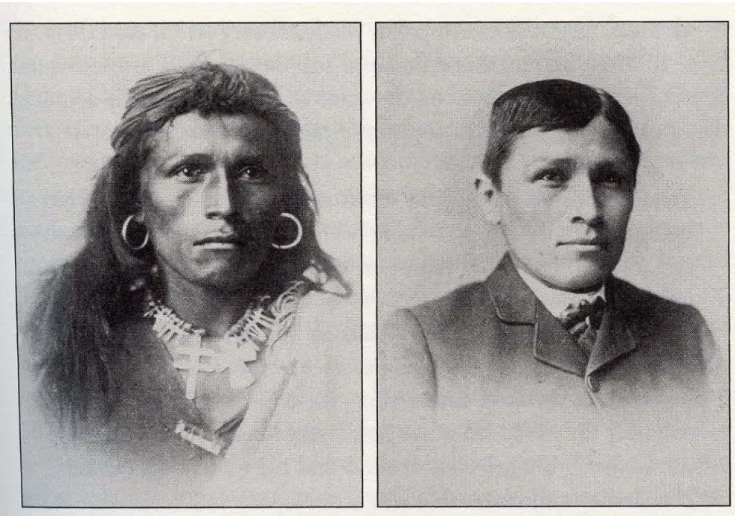
48 Diane Dillon, "Indians and "Indianicity" and the 1893 World's Fair" in George De Forest Brush: The Indian Paintings (Washington: National Gallery of Art. As a counterbalance to the portrayal of Indians as primitives, the Indian Bureau of the Department of the Interior set up a model boarding school with Indian students from all over the country on the fairgrounds to show the future of Indians in America and their potential for civilization and assimilation.51 According to Dillon, the density and variety of objects in the building's interior suggested a department store from the late nineteenth century (fig. 15), and "the similarity between the ethnographic displays and retail and domestic displays encouraged fairgoers to view the artefacts as potential items for home decoration."52.
While Buffalo Bill's Wild West show was not officially endorsed by fair organizers, Buffalo Bill Cody (Fig. 20) obtained land just outside the fair gates where he continuously performed his show throughout the course of the fair. Although these groups had different goals, ranging from educational, to monetary gain, to entertainment, they were all united by their recognition of the public's attraction to Indians, and their recognition that Indians could help them advance their projects. 53Diane Dillon, "Indians and "Indianicity" and the 1893 World's Fair" in George De Forest Brush: The Indian Paintings (Washington: National Gallery of Art American population) visited the fair in Chicago.
AMERICAN INDIANS IN THE HOUSE BEAUTIFUL
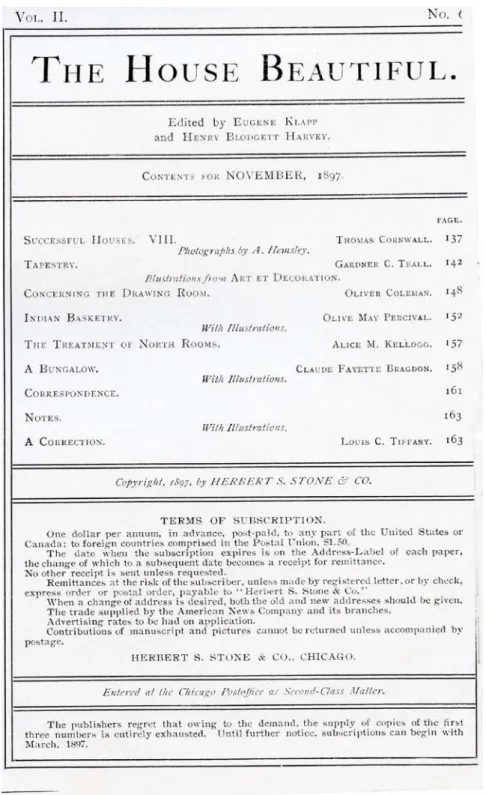
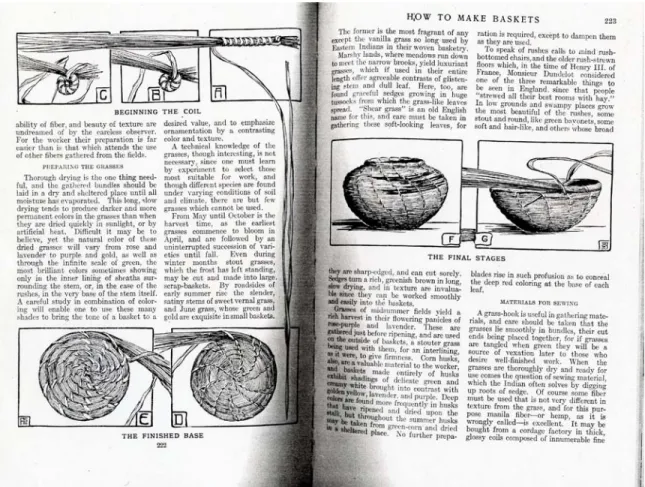
The November 1897 (Fig. 22) issue marked a turning point in the evolution in the content of The House Beautiful, for it was in this issue that the joint editors made history by publishing the magazine's first American Indian article. In her basket article in The House Beautiful, Percival would refer to many of the features Cohodas described. The following section provides examples of four of the romantic stereotypes of American Indians presented to the public through The House Beautiful's articles.
This idea was certainly emphasized by most of the writers who covered American Indian artifacts in The House Beautiful. The House Beautiful, at the turn of the century, clearly emphasized the prevailing contemporary view that Indian-made objects and Indians were disappearing. This sense of the exotic and the primitive helped popularize American Indians and their objects at the turn of the century, as did emphasizing their rarity.
ADVERTISING AMERICAN INDIANS IN THE HOUSE BEAUTIFUL
As noted in the previous section, The House Beautiful promoted a specific representation of Native Americans and Indian objects and encouraged readers to purchase, collect, and decorate with American Indian objects and images. Dealers and sellers of these Indian-themed items sold in The House Beautiful benefited from the attention given to American Indians in the magazine's articles. Although the content of the articles focused on traditional American Indian objects, including basketry, pottery, and rugs, by merely giving attention to American Indians, these articles allowed readers to infer that any object remotely associated with a Native American would be appropriate to use, collect and/or decorate with.
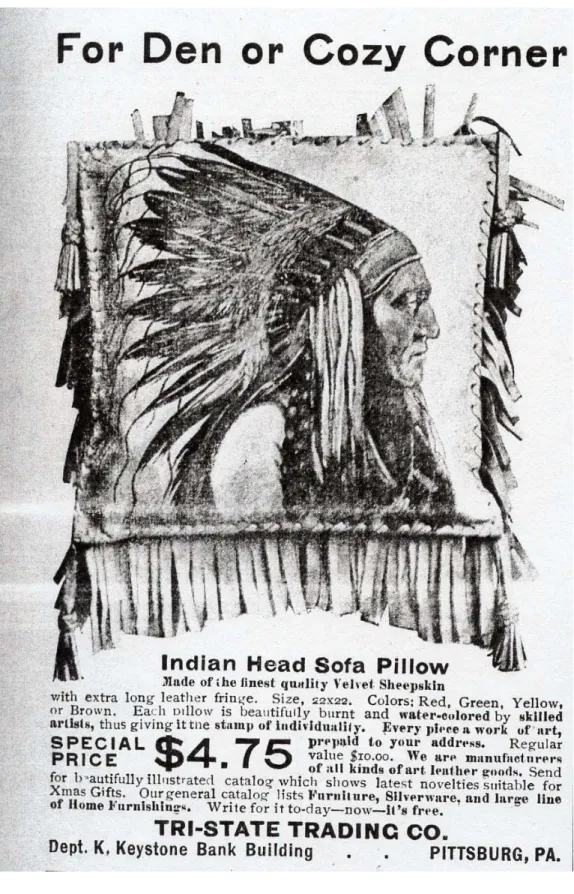
However, the ads went a step further than most items by directly offering American Indian themed decor to middle-class Americans for purchase. The following ads are reminiscent of how The House Beautiful and other magazines have fueled the “Indian Craze.” Advertisements featuring American Indian-made objects were present in The House Beautiful from almost the beginning.
In 1898, one of the earliest advertisements for traditional American Indian objects came from the famous Native American photographer, Edward S. While the merchants who placed advertisements for American Indian-made crafts in The House Beautiful were geographically diverse—by started from Washington to. Advertisers deliberately used language that corresponded to the popular romanticized images of the American Indian presented by articles published in The House Beautiful, to sell their products.
Lester from Mesilla Park, New Mexico placed at least three different ads (figs. 55-57) in The House Beautiful using a similar approach. Another group that took advantage of The House Beautiful's promotion of American Indians as an opportunity to sell their mail order products were the manufacturers of factory-made, mass-produced Indian-themed items. In addition to advertisements for traditional American Indian-made crafts such as baskets, blankets, and pottery, readers of The House Beautiful saw advertisements for numerous other mass-produced Indian-themed decorative items for their homes.
Many sellers of the mass-produced Indian-themed items continued to emphasize the same qualities and descriptive terms used by the sellers of the traditional Indian-made objects.
CONCLUSION
All these different groups collectively created an image of the romanticized Indian for the American public. Like so many others, The House Beautiful also had its reasons for promoting American Indians and their image to its readers. Above all, the editors of The House Beautiful, Klapp, Harvey, and Stone wanted to emphasize that the house is a representation of the owners' character and their understanding of the culture.157 They felt this was because of the objects displayed in their homes, that people showed the level of their cultivation.158.
The editors of House Beautiful made it their mission, through editorial content and advertisements, to encourage the magazine's readers to furnish their homes with objects that reflect their individuality, intelligence, and artistic taste (Figure 69). American Indian-made objects and (ironically) other Native American-themed objects were supported in both editorial and advertising by The House Beautiful because the magazine's editors saw these objects as items that displayed individuality, intelligence, and artistic taste readers. (Figure 68). George Wharton James clearly conveyed this idea when he wrote in his article on Indian pottery in April 1901 that “the house is only intelligently furnished, which in its decorations and embellishments offers food for thought.
Indian baskets in my dining-room, and Indian pottery in the drawing-room and bedrooms, have the house of model conventionality, showing no other thought than that of the paid upholsterer, cabinet-maker, and house decorator.”160. After the 1896-1906 period, which represented the turn-of-the-century peak of American Indian popularity in The House Beautiful, and in the country, the magazine continued to publish occasional articles and advertisements featuring American Indians include. While these articles were much less common after the turn-of-the-century years, Rachel Abbott's November 1916 article titled “Made in America By Americans – A Plea for the Recognition of American Art” indicated that the ideas about American Indians , and their arts and crafts, haven't changed that much.
Abbott, emphasized the "disappearing Indian" when she said that the arts and crafts skills of the Indians "are in imminent danger of disappearing," and "old traditions are falling away before new commercial ones. She romanticized the American Indian designs as "definitive, strong, symbolic and vital" because they were "produced in a period of simple,
BIBLIOGRAPHY
Aesthetics and Meanings: The Arts and Crafts Movement and the Revival of American Indian Basketball. The Content of Style: Perspectives on the American Arts and Crafts Movement. Santa Fe Style Arts and Crafts. The Content of Style: Perspectives on the American Arts and Crafts Movement. 10 Kwakiutl Camp, Ethnological Grounds, from Columbian Gallery, World's Fair Photograph Portfolio (Chicago, 1894).
11 Sioux Life Group, Smithsonian Exhibit, from The Columbian Gallery, a portfolio of photographs from the World's Fair (Chicago, 1894). 38 Illustration from the front of what the white race can learn from the Indian by George Wharton James. Curtis wrote: “The idea that the image is intended to convey is that the Indians as a race, already deprived of their tribal strength and stripped of their primitive clothing, are entering the darkness of an unknown future.”
47 Advertising section of The House Beautiful featuring the magazine's first advertisement for American Indian crafts sold by Edward S. 60 Advertisement for a life-size Papier Mache Indian Bust by the National Papier Mache Works of Milwaukee, Wisconsin, 1901 Indian Advertising American 61. Portrait on leather by the Fine Leather Company of Chicago, Illinois, 1901.
62 Advertisement showing a terracotta plaque of a White Wolf to be hung on the wall of a home by The Florentine Statuary and Importing Co.