All rights reserved. The Southern Baptist Theological Seminary has permission to reproduce and disseminate this document in any form by any means for purposes chosen by the Seminary, including, without limitation, preservation or instruction.
THROUGH THE EYES OF BUDDHIST BACKGROUND BELIEVERS
__________________
A Dissertation Presented to the Faculty of
The Southern Baptist Theological Seminary
__________________
In Partial Fulfillment
of the Requirements for the Degree Doctor of Philosophy
__________________
by
Nicholas Blaine Walburn December 2018
APPROVAL SHEET
NORTHERN THAI THERAVADA FOLK BUDDHISM THROUGH THE EYES OF BUDDHIST
BACKGROUND BELIEVERS
Nicholas Blaine Walburn
Read and Approved by:
__________________________________________
George H. Martin (Chair)
__________________________________________
Theodore J. Cabal
__________________________________________
Timothy K. Beougher
Date______________________________
I dedicate this dissertation to my wife, Carrie. I could not have completed this dissertation without the kindness, patience, encouragement, and Christ-like love that you have freely given me. God has blessed me with an amazing ministry partner in you. I look forward to
the years ahead as we follow Christ and glorify Him together.
TABLE OF CONTENTS
Page
LIST OF FIGURES AND TABLES... vii
PREFACE ... ix
Chapter 1. INTRODUCTION ...1
Statement of the Problem ...3
Research Question ...6
Personal Background ...8
Literature Review ...9
Definitions ...13
Limitations and Delimitations ...14
Methodology ...15
Role of the Researcher ... 19
Data Collection Procedures ... 20
Data Analysis Procedures ... 23
Strategies for Validating Findings ... 26
2. CHIANG MAI CONTEXT ...27
Introduction ...27
History of Buddhism in the Region ...27
Animism and Buddhism in Lanna ... 30
Decline and Renewal of Buddhism ... 36
Patronage and the Decline of Lanna ... 37
Chapter Page
Buddhism in Northern Thailand Today ... 41
History of Christianity in the Region ...45
Beginnings in Bangkok... 47
Christian Mission to Chiang Mai ... 51
Continued Mission to Northern Thailand ... 56
Demographics ...62
Conclusion ...65
3. ANSWERS TO RESEARCH QUESTIONS...67
Introduction ...67
Respondent’s Answers to Interview Questions...67
Age and Occupation ... 67
Time since Conversion ... 68
Only Christian in Family? ... 69
Ethnicity ... 70
Prior Experience as a Buddhist ... 70
Identified Themes in Coding Families ...71
Relationship as a Motivator for Religious Adherence ... 73
Tradition ... 73
Practices of Buddhism ... 74
Practices of Animism ... 79
Aspects of conversion to Christianity ... 81
Conclusion ...94
4. INTERPRETATION OF FINDINGS ...96
Chapter Page
Introduction ...96
Information Discovered ...97
Interpretation of Findings ...97
Relationship as Motivator for Religious Adherence ... 98
Tradition ... 100
Themes in Animism Coding Family ... 102
Themes in Buddhism Coding Family ... 102
Themes in Aspects of Conversion to Christianity Coding Family ... 103
Interaction with Pertinent Literature ...104
Sunatree Komin’s Nine Thai Value Clusters ... 104
Interaction with Komin’s Nine Thai Value Clusters ... 109
“Lausanne Occasional Paper 15” ... 111
Erik Cohen’s Buddhism and Christianity in Thailand ... 115
Sugarn Tangsirisatian’s “Factors Relevant to Conversion among Thai University Students” ... 118
Edwin Zehner’s “Unavoidably Hybrid: Thai Buddhist Conversions to Evangelical Christianity” ... 125
Stanley Tambiah’s Northeastern Spirit Cults ... 128
Nantachai Mejudhon’s “The Way of Meekness: Being Christian and Thai in the Thai Way”... 130
Wan Petchsongkram’s Talk in the Shade of the Bo Tree ... 135
Interaction with Missionary Writings ... 138
David Lim’s Sharing Jesus . . . series of books. ... 146
Challenges Faced ...154
Conclusion ...156
5. EMERGING STRATEGIES FOR EVANGELISM ...157
Chapter Page
Introduction ...157
Descriptions of Themes in Thai Traditions ...158
Tradition ... 158
Relationship as a Motivator for Religious Adherence ... 161
Descriptions of Themes among Aspects of Conversion to Christianity ...162
Emerging Strategies for Evangelism Suggested ...164
Northern Thai Christians Must First Depend on Christ for Transformation and Repentance before Subsequently Articulating this Posture to folk Buddhists ... 164
Northern Thai Christians Should Make Every Effort to Form Gospel-Centered Relationships with Buddhist Family Members, Friends, and Neighbors ... 170
Northern Thai Christians Should Think about Evangelism in Terms of Worldview Revolution ... 177
Northern Thai Christians Should Encourage Folk Buddhists to Pray to God for Specific Needs, for Healing, and to Seek Answers to Heart-Level Questions ... 181
Northern Thai Christians Should Invite Folk Buddhists to Attend Cell Group Meetings, to Gather with Worshippers at Churches, or to Live in Christian Dormitories ... 184
Northern Thai Christians Should Begin to Disseminate the Idea that Thai Christianity has Traditionally Been Practiced in Thailand ... 185
Conclusion ...186
6. CONCLUSION ...189
Introduction ...189
Tradition ... 190
Relationship as a Motivator for Religious Adherence ... 192
Chapter Page
Suggestions for Evangelism ...193
Suggestions for Future Research ...196
Conclusion ...197
Appendix 1. DEMOGRAPHICS ...198
Age and Occupation ... 198
Time since Conversion ... 198
2. OPEN CODING FREQUENCY REPORT ...199
3. INTERACTION WITH PERTINENT LITERATURE ...202
BIBLIOGRAPHY ... 206
LIST OF FIGURES AND TABLES
Figure Page
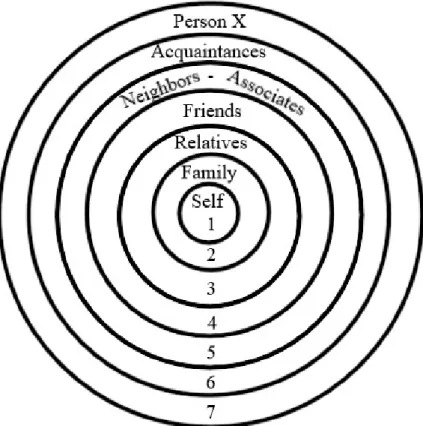
1. Respondent ages in years ...68 2. Answers to "Are you the only Christian in your family?" ...69 3. Oscar W. Thompson’s concentric circles of concern ...168 Table
A1. Open coding frequency report ...199 A2. Interaction with pertinent literature ...202
PREFACE
Thank you to Carrie, my wife. You truly are a gift from the Lord. Thank you to our kids, Fiona, Evan, and Monroe, for your encouraging smiles and for your excitement when I get home from teaching. Thank you to my parents for your love and support.
Thank you to the pastors and members of Sojourn Community Church in New Albany, Indiana. Thank you to Joyce, my editor, for your assistance and careful eye. Thank you to my friends in Chiang Mai for the lodging you provided and your friendships. Thank you to my respondents for your God-honoring stories. Thank you to my fellow world
religions doctoral students, who have given me encouragement and constructive criticism throughout this program.
Special thanks go to Dr. George Martin for supervising this dissertation, for modeling how to think deeply about religions from a biblical worldview, and for patient instruction and kindness. It has been a blessing to study Buddhism with you. Thank you to Dr. Ted Cabal for your much-needed wisdom and helpful direction as a part of my dissertation committee. I have benefitted greatly from your perspective and experience.
Thank you to Dr. Timothy Beougher for serving on my defense committee and for aiding my study of this topic with your deep knowledge of evangelism.
Nick Walburn
Clarksville, Indiana December 2018
CHAPTER 1 INTRODUCTION
Theravada Buddhism has existed in Southeast Asia since the third century BC, and is still prominent in Sri Lanka, Myanmar, and Thailand today. The history of modern Thailand began with people groups who arrived from China and displaced groups
indigenous to the region. The Tai people spread from mainland China beginning
sometime in the first millennia until the twelfth century. The Tai were originally animists who worshipped forest spirits and their ancestors. Already present in the region were the Theravada Buddhist Mon people, whose continued existence shaped later Thai society and governance. Today, Thai culture still bases itself upon the precepts of Buddhist dharma and a spirit of meekness pervades all interactions. The Thai proverb “to be Thai is to be Buddhist” demonstrates that Theravada Buddhism remains a major part of Thai cultural identity.
Despite Buddhism’s prominent place in Thailand, the animistic roots of the past remain. Each home and business contains a pii house, built by Thai people who believe in local benevolent spirits.1 These small animistic dwellings exist alongside ever- present household shrines to the Buddha. A mixture of animism, Brahminic ritual, and Buddhism intertwine in Thai culture.2 Many animists in Thailand readily accept
Buddhism, as their belief systems easily assimilate new Buddhist forms. While Buddhism has functioned as a way to store up merit for the next life, Thai people retain the rituals of
1Pii, according to Thai belief, are local ghosts that can bring blessing if they are appeased with offerings. Pii are believed to cause trouble for humans if ignored or offended.
2The Khmer empire was a Hindu kingdom present in Southeast Asia until the fifteenth century.
My own observations in Thailand confirm a mixture of these religious forms as a part of the culture. The prominence of Hindu forms there is clearly seen in the Thai national symbol, the Garuda.
animism in order to protect their day-to-day lives. Observers may note this syncretistic mix of religious practice among Thai folk Buddhists living in Chiang Mai.
Protestant Christian mission among the Thai people in Chiang Mai has seen limited results since its inception a hundred and fifty years ago. Daniel McGilvary and his wife established the first Chiang Mai mission in 1867, as recorded in his
autobiography, Fifty Years among the Siamese and Lao. Perhaps the most compelling account from McGilvary’s fifty years as a missionary in Northern Thailand is the testimony of Nan Inta, the first baptized Christian convert in Chiang Mai.3 Nan Inta’s deep respect for Buddhism was overcome by a growing interest in “the doctrine of a free and full pardon through the merits of another,” a concept alien to Theravada Buddhism.4 In his autobiography, McGilvary gives detailed accounts of Nan Inta’s conversion, describing this radical change in terms of a revolution in this former Buddhist’s thinking.
McGilvary quotes Nan Inta:
If the Gospel system seems too good to be true in that it offers to pardon and cleanse and adopt guilty sinners, and give them a title to a heavenly inheritance, it is simply because it is divine, and not human.5
Today, though many faithful Western missionaries and Northern Thai believers continue to share the gospel in Chiang Mai, Thai people living in Chiang Mai today remain overwhelmingly Buddhist—only 6.52 percent of Chiang Mai residents claim to be Christian.6
3Daniel McGilvary, Fifty Years among the Siamese and Lao (New York: Fleming H. Revell, 1912), 96.
4Ibid., 97.
5Ibid., 98.
6“Christian Presence Map: Chiang Mai,” ESTAR, accessed October 10, 2017,
https://estar.ws/harvest/christian-presence-map.html. The ESTAR foundation, via its website, facilitates church growth in Thailand through providing up to date and complete statistics on the percentage of Thai people who claim to be Christian, offering a country-wide church directory, and making a print-on-demand publishing house available. Chiang Mai has a higher population of Christians than many cities and regions in Thailand.
Statement of the Problem
A small subset of Thai people in Chiang Mai are Buddhist background
believers in Christ. This population exists despite the prevalence of folk Buddhism in the region and the national expectation that to be Thai is to be Buddhist. With this study, I examine the character of folk Buddhism that this population of Northern Thai Buddhist background believers practiced prior to their conversions. I elicited accounts from among these believers in order to shed light on their prior practices and motivations as folk Buddhists. Along with these descriptions of their former practices, respondents related their testimonies of how God drew them to Christ. I identified trends in these testimonies in order to understand their former practices and to facilitate Christian evangelism among Northern Thai folk Buddhists.
Challenges exist regarding the portion of this research that directly relates to God’s action. Because God is spirit, he is invisible to human vision. His presence is often a mystery as he works in the lives of humans. In John 3:8, Jesus describes the activity of the Holy Spirit as being analogous to the wind. Thomas Oden builds upon Jesus’ simile about the wind and the Holy Spirit:
The fact that we cannot see the wind does not mean that it does not exist. We hear it, feel it, observe its results. At times the unseen wind is capable of uprooting giant trees and swelling vast ocean waves—visible effects of a less visible operation.7 In addition to my primary goal of describing prior Buddhist practices among this
population, I identified and examined trends in their testimonies prior to conversion. This examination sheds light on the means that God used to bring individuals to Christ while they were still folk Buddhists.8
7Thomas C. Oden, Life in the Spirit: Systematic Theology (San Francisco: Harper-San Francisco, 1992), 3: 9.
8Though Christian practice of these Buddhist background believers is not a primary focus of this dissertation, description of their Christian beliefs and practice is provided through interviews. In addition to contrasting their former practice of Buddhism with their present practice of Christianity, I am able to discern any syncretistically carried-over practices found within their new lives as Christians.
In Chiang Mai, folk Buddhism remains a prominent way of life for most Thai people. However, God is continually working, faithfully drawing Thai people in Chiang Mai out of folk Buddhism and toward lives of obedience to Christ through the gospel.
The Holy Spirit is responsible for initiating their conversion and for sustaining their visible growth in Christlikeness, using unique circumstances and key relationships with gospel-sharing Christians to achieve his purposes (Titus 3:5, 1 Cor 3:7).
My respondents were folk Buddhists and are now Christians. As such, their former Northern Thai folk Buddhist practice is bounded by location and time. An
observer of this dissertation may question the study of folk Buddhism through the eyes of former Buddhists. Its aim is to better understand the practices of a specific subset of folk Buddhists in Chiang Mai who eventually came to faith in Christ. This target population is the only group with insider knowledge of both domains. My interviews include questions targeting emic reflections on prior Buddhist practices, questions aimed at eliciting
description of prior motivations, and questions providing opportunity for respondents to contrast their former lives as folk Buddhists and their present lives as Christians.
I used identified trends in the participants’ accounts to construct a repertory of best practices for future evangelism among Northern Thai folk Buddhists. As descriptive and prescriptive aspects of this study exist together, its form resembles an engineering project. An architectural account, below, provides a helpful analog:
A leading architect once built a cluster of large office buildings set in a central green. When construction was completed, the landscape crew went to the architect for his word on placement of the sidewalk grid between the buildings. “Not yet,”
was the architect’s reply, “just plant the grass solidly between the buildings.” This was done, and by late summer the new lawn was laced with pathways of trodden grass, connecting building to building, and building to the outside. The paths followed the most efficient line between the points of connection, turned in easy curves rather than right angles, and were sized according to traffic flow. In the fall the architect simply paved in the pathways. Not only did the pathways have a design beauty, but they responded directly to user needs. Furthermore, there was never any
need to put up “DON’T WALK ON THE GRASS” signs, for there was always just the right little shortcut path.9
Like trodden grass, I interpret overlaps in the accounts of these former folk Buddhists as evidences of God’s leading. One might generalize these as fruitful paths for future
evangelism among Northern Thai. Diverging from the well-known poem of Robert Frost, I aimed to find the road more traveled.
Understanding these former folk Buddhists’ perspectives is foundational for contextualizing the gospel in the process of making disciples of all nations, i.e., the work of missions. Edward M. Bounds defines missions as
the giving of the Gospel to those of Adam’s fallen race who have never heard of Christ and his atoning death. It means the giving to others the opportunity to hear of salvation through our Lord Jesus Christ, and allowing others to have a chance to receive, and accept the blessings of the Gospel, as we have it in Christianised lands.
It means that those who enjoy the benefits of the Gospel give these same religious advantages and Gospel privileges to all of mankind.10
Bounds’ description of missional cross-cultural communication is accurate, though the transmission of information is not only one-way. A study of world religions requires
9Christopher Williams, Origins of Form: The Shape of Natural and Man-made Things—Why They Came to Be the Way They Are and How They Change (Lanham, MD: Taylor Trade Publishing, 2013), 112.
10Edward M. Bounds, The Essentials of Prayer (New York: Fleming Revell Company, 1925;
Grand Rapids: Christian Classics Ethereal Library, 2004), 55. I disagree, in part, with a contemporary use of Bounds’ phrase “Christianised lands” without a caveat. North Americans currently live in a time often characterized as post-Christian. However, many Christians and churches remain in the West who live counter-culturally as people in, but not of, the world. I also readily affirm that Edward Bounds is known primarily for his works on prayer. In chap. 13 of the 1925 publication The Essentials of Prayer, prayer and missions are discussed at length. I value the richness of Bounds’ definition of missions, particularly his phrase “gospel privileges.” In 1972, George Peters contrasted mission and missions in A Biblical Theology of Mission. He wrote, “Mission, in my usage, refers to the total biblical assignment of the church of Jesus Christ. It is a comprehensive term including the upward, inward and outward ministries of the church. It is the church “sent” (a pilgrim, stranger, witness, prophet, servant, as salt, as light, etc.) in this world. . . . Missions is a specialized term. By it I mean the sending forth of authorized persons beyond the borders of the New Testament church and her immediate gospel influence to proclaim the gospel of Jesus Christ in gospel-destitute areas, to win converts of other faiths or non-faiths to Jesus Christ, and to establish functioning, multiplying local congregations who will bear the fruit of Christianity in that community and to that country.” George Peters, A Biblical Theology of Mission (Chicago: Moody Press, 1972), 11. For additional discussion of missions, see Craig Ott, Stephen J. Strauss, and Timothy C. Tennent, Encountering Theology of Mission: Biblical Foundations, Historical Developments, and Contemporary Issues, ed. A.
Scott Moreau (Grand Rapids: Baker Academic, 2010), xv; Gary R. Corwin, Gary B. McGee, and A. Scott Moreau, Introducing World Missions: A Biblical, Historical, and Practical Survey, ed. A. Scott Moreau, Encountering Mission (Grand Rapids: Baker Academic, 2004), 72; John Piper, Let the Nations Be Glad!
The Supremacy of God in Missions (Grand Rapids: Baker Academic, 2010), 39; Michael W. Goheen, A Light to the Nations (Grand Rapids: Baker Academic, 2011), 219.
much observation and listening. Becoming equipped to share the gospel cross-culturally invariably includes specific training to understand the culture and beliefs of the religious other. For the Christian, a study of missiology nearly always incudes a study of world religions.
Research Question
The research question that guided this study, then, is as follows: What trends are present in the testimonies of formerly Buddhist Northern Thai Christians? By eliciting testimonies of how Northern Thai Christians came from folk Buddhism to faith in Christ, I provide recollections of their emic perspective on Buddhism. An emic approach is one that seeks “to understand the meaning of people’s lives, as they themselves define them.”11 This study utilized the recollections of a unique subset of insiders: former folk Buddhists in Chiang Mai. For an outsider, gaining an insider’s perspective allows a helpful corrective against misinterpretation of the setting or system being researched.
Readers of this study encounter autobiographical descriptions of former folk Buddhist practice from Northern Thai Buddhist background believers. I compared, contrasted, and analyzed their stories through coding. Margaret LeCompte and Jean Schensul explain that “emic interpretations are local; they make the ethnographer’s story meaningful to insiders, or the local people who have been studied.”12 This study
identifies new areas of meaning for Northern Thai Buddhist background believers by analyzing and interpreting collected accounts of their former practices. Trends that respondents had previously been unable to discern emerged through systematic examination of multiple testimonies.
11Margaret D. LeCompte and Jean J. Schensul, Ethics in Ethnography: A Mixed Methods Approach (Lanham, MD: AltaMira Press, 2015), 23.
12Margaret D. LeCompte and Jean J. Schensul, Analysis and Interpretation of Ethnographic Data: A Mixed Methods Approach (Lanham, MD: AltaMira Press, 2012), 17.
Paul Hiebert thoughtfully considers using insider perspectives to improve interpretation of culture:
Both etic and emic models are useful, but the questions remain: Can an
anthropologist, given his own cultural biases, ever really understand another culture in its own terms? And even if he does so, can he effectively communicate it to others who have not lived in-depth in that culture?13
Peter Berger and Thomas Luckmann similarly caution, “to include epistemological questions concerning the validity of sociological knowledge in the sociology of knowledge is somewhat like trying to push a bus in which one is riding.”14 To these critiques, I reply, to what degree are Westerners epistemologically stunted from
understanding the East? To what degree are Northern Thai people unable to understand themselves? Learning in the field of social science should be a dialogue whereby initial observations lead to early theories. These theories should then be tested and refined to become more and more accurate. The end result of closely listening to and comparing multiple narrators’ self-descriptions has sufficient validity in their setting when properly delimited. These findings also provide meaningful observations and interpretations that can assist outsiders in making their own assessments about the local folk Buddhist practices in Northern Thailand. Paul Hiebert provides a way forward, epistemologically, with his assessment:
Clearly, our understanding of another culture is only approximate, just as its model of the world around it is approximate. But this does not mean we have no
understanding of it at all. Careful study can give us a great many insights into another culture, and as we develop new methods for learning about the thinking and conceptual processes of others, these approximations should become more accurate and easier to verify.15
13Paul G. Hiebert, Transforming Worldviews: An Anthropological Understanding of How People Change (Grand Rapids: Baker Academic, 2008), 89–90.
14Peter L. Berger and Thomas Luckmann, introduction to The Social Construction of Reality:
A Treatise in the Sociology of Knowledge (New York: Open Road, 2011), Logos. Because certain Logos format sources have no page or location numbers, I will cite quotations by chapter and subheading locations.
15Hiebert, Transforming Worldviews, 90.
Hiebert also advocates studying the worldview of the adherent in order to interpret his or her descriptions of cultural elements.16 In this study, I examined the Northern Thai folk Buddhist worldview as seen through the eyes of Buddhist background believers by administering ethnographic interviews with local respondents.
Personal Background
In my late twenties, I lived in South Korea. There, I first witnessed overt idolatry in a cross-cultural setting. At the top of a mountain outside of Seoul, I watched Buddhist worshippers perform an energetic sequence of bows before a gilded Buddha statue. I remember my shock at the sight and recall surprise at the degree of my own sorrow for the Korean men and women kneeling before the mute idol (Hab 2:18-20, 1 Cor 12:2). As a Christian from a predominantly Christianized setting, my initial
observation of practicing Buddhists in a majority Buddhist setting is a powerful memory.
My conceptual knowledge of Buddhism had not prepared me for an encounter with Korean folk Buddhism in its actual form. A later site visit to Tokyo exposed me to a radically different form of Buddhism, Amita Buddha worship among Japanese Pure Land Buddhists. My observations of Buddhism in Asia revealed its diversity in faith and practice, which differed from my previous study of historical Buddhism.
I have since pursued several seminary degrees in Christian ministry and have written this dissertation as part of a world religions research doctorate. My wife and I have prayed for revival among the people of Thailand consistently since 2011. Our hope is to join with what God is already doing to further His kingdom among the nations according to his calling on our lives. I find great value in this dissertation topic. I have made teaching my profession and I aim to assist outside observers of Buddhism to be better prepared to understand folk Buddhists in local settings, such as in Northern
16Hiebert, Transforming Worldviews, 90.
Thailand. As a Christian, I also see that this dissertation is potentially a useful resource for Northern Thai Christians and for Western missionaries living and ministering among Northern Thai folk Buddhists.
Literature Review
A literature review describes existing literature for a particular topic. Such a review alerts the reader to resources that can clarify and corroborate findings from a research project. Furthermore, a literature review assists in demonstrating the manner in which a project contributes to the body of literature in existence. Specifically, a literature review validates the study by showing why the study “has important implications for the discipline that informs it, as well as practical value for the population and specific
problem under study.”17 Regarding my research question, existing literature is too broadly focused, does not take into account distinctions of regional variance in Thai identity, or is not focused on qualitative research. Nevertheless, the existing literature does provide a broad context for my research, a context that is supplemented by my research. Below, I have provided a non-exhaustive list of representative examples.
Several studies exist within the domain of Thai Buddhists who have converted to Christianity. Pacharin Chuchmanamast’s 2011 DMin thesis, “Effective Spiritual Movement Building among Thai Buddhist University Students,” interacts with Thai Buddhists, but only with Central Thai Buddhists who are also college students in Bangkok.18 My research setting is church based, in Chiang Mai. Suragarn
Tangsirisatian’s dissertation, “Factors Relevant to Conversion among Thai University Students: A Comparative Study of the Christian and Non-Christian Ethnic Thai
17Stephen L. Schensul, Jean J. Schensul, and Margaret D. LeCompte, Initiating Ethnographic Research: A Mixed Methods Approach (Lanham, MD: AltaMira Press, 2012), 49.
18Pacharin Chuchmanamast, “Effective Spiritual Movement Building among Thai Buddhist University Students” (DMin thesis, Bethel Seminary, 2011).
University Students,” similarly focuses on college students alone.19 Marten Visser created a Thailand-wide study of church growth that includes interviews in his 2008 PhD
dissertation entitled “Conversion Growth of Protestant Churches in Thailand.”20 His efforts are admirable, but he bases his sample upon Thai nationality without taking into account any regional variances. As such, Visser includes Central and Northern Thai respondents in his sample.21 The main methodology of Visser’s research centers on church growth and is quantitative.22 My research is qualitative and focused solely on formerly Buddhist Christians in Chiang Mai, who are 6.52 percent Christian compared to Thai people as a whole, who are 0.69 percent Christian.23 This regional distinction matters due to differences in culture, religious practice, and exposure to conversion to Christianity among various locations within Thailand.
I recall an account by Kosuke Koyoma, Japanese missionary to the Thai people. He reports a rebuke given to a Western missionary by a Northern Thai Buddhist woman. When attempting to share the gospel with her, the missionary was sharply told,
“‘Just a minute! I am a Northern Thai woman. Speak to me in the Northern Thai dialect. . . .’ He replied, ‘I am sorry, I can speak only the Bangkok Thai . . .’ and she replied, ‘I thought so. . . . You missionaries are always trying to teach people while you really do not understand the people.’”24 I have aimed to avoid the mistake of assuming
19Suragarn Tangsirisatian, “Factors Relevant to Conversion among Thai University Students:
A Comparative Study of Christian and non-Christian Ethnic Thai University Students” (PhD diss., Trinity Evangelical Divinity School, 1999).
20Marten Visser, “Conversion Growth of Protestant Churches in Thailand” (PhD diss., University of Utrecht, 2008).
21Visser, “Conversion Growth of Protestant Churches in Thailand,” 3-4.
22Ibid., 6.
23“Christian Presence Map: Chiang Mai,” ESTAR, accessed October 10, 2017, https://estar.ws/harvest/christian-presence-map.html.
24Kosuke Koyoma, Waterbuffalo Theology, 25th anniversary ed., rev. and expanded (Maryknoll, NY: Orbis, 1999), 64-65.
that all Thai people are culturally similar, especially in regard to their former religious practice. I did this by asking questions of former Northern Thai folk Buddhists and delimiting any identified trends to the respondents among which I accomplished the research.25
The MA thesis of Jurjen de Bruijne, entitled “Conversion: Discovering the Conversion of Thai Buddhists towards Christianity,” retests the interviews of Marten Visser and finds that written materials were often found to be prominent artifacts in Buddhist conversions.26 However, his study relies on respondent sampling based on Thai nationality, is only forty pages, and does not utilize grounded theory. My study is
delimited to Northern Thai Christians who were formerly folk Buddhists and, as such, my results have a more focused, local validity among this locationally bounded group.
Another well-known historical treatment, Alex Smith’s Siamese Gold, recounts the history of the Thai Church from a church-growth lens, but only up to 1982, far too dated to provide anything but historical information for this research project.27
This study utilizes a similar format as a dissertation from The Southern Baptist Theological Seminary graduate, Matthew Lynn Pierce. This study is different in research goal but similar in methodology to Pierce’s research. In “Ethnic Identity among Diaspora Peoples: How Globalization and Migration Reshape the People Group Phenomenon,”
Pierce interviewed displaced Burmese to determine their understandings of ethnic identity. Pierce’s use of phenomenological analysis, narrative research, ethnographic
25I identified trends in my respondent accounts. Chapter 5 includes a list of hypotheses presented as emerging strategies for evangelism among Northern Thai folk Buddhists based upon these findings and a review of pertinent literature.
26Jurjen de Bruijne, “Conversion: Discovering the Conversion of Thai Buddhists towards Christianity” (MA thesis, Ede Christian University for Applied Sciences, 2010), 25.
27Alex G. Smith, Siamese Gold: The Church in Thailand (Bangkok: Kanok Bannasan, 1982).
interview, case studies for gathering information, and grounded theory to analyze the results is a helpful methodological model for my own study.28
The dissertation of Nantachai Mejudhon, “The Way of Meekness: Being Christian and Thai in the Thai Way,” presents his perspective on Christian mission among the Thai people and levels a criticism at typically Western attempts at
evangelism.29 He advocates a softer approach that works with an already present cultural value of meekness found in Thai society. Wan Petschongkram’s Talk in the Shade of the Bo Tree: Some Observations on Communicating the Christian Faith in Thailand is an insider description of Thai Buddhists’ misunderstanding of Christianity. Petschongkram wrote this pastoral treatise to make manifest many misunderstandings that Thai people often have when hearing the gospel in their Buddhist context.30 My research centers on the perspective of Northern Thai folk Buddhists who later became Christians. Respondent interviews were analyzed in the context of this study. I compare identified trends in my own research to the findings of Mejudhon and Petschongkram.
This literature review shows that to answer my specific research question, a great deal of the literature on this domain is either too broad, not taking into account distinctions of regional variances between Thai identities, or is not focused on qualitative research. Based upon these distinctions, my study fills a niche in the research. This literature review demonstrates the reason why this study “differs in approach, concept, or methods and population from previous studies; why the study site is the right place for
28Matthew Lynn Pierce, “Ethnic Identity among Diaspora Peoples: How Globalization and Migration Reshape the People Group Phenomenon” (PhD diss., The Southern Baptist Theological Seminary, 2016).
29Nantachai Mejudhon, “The Way of Meekness: Being Christian and Thai in the Thai Way”
(PhD diss., Asbury Theological Seminary, 1998).
30Wan Petschongkram, Talk in the Shade of the Bo Tree: Some Observations on
Communicating the Christian Faith in Thailand (Bangkok: Thai Gospel Press, 1975), accessed July 14, 2018, http://www.herbswanson.com/post/_docs/Bo_Tree.pdf.
enhancing understanding of the study topic; and how the researcher’s approach to the topic will fill a gap in the literature and/or extend extant work.”31
Definitions
Conversion is the point at which a person becomes a Christian. A converted person experiences new life through faith in Christ and repentance from sin.32 Conversion entails a radical change. A person who is a Christian no longer believes what he or she once believed. The Christian Scriptures use varied imagery regarding this event, such as being born again, receiving a heart of flesh, becoming a new creation, and putting off the old self (John 3:3-6, Ezek 36:26-27, 2 Cor 5:17, Eph 4:22-24, Mark 1:14-15, Acts 3:19, Acts 20:20-21). The Holy Spirit initiates conversion via regeneration (Titus 3:5). A truly converted person also experiences sanctification. Sanctification is a process sustained by the Holy Spirit that effects continued growth in Christlikeness (2 Thess 2:13, 1 Pet 1:2).
Folk Buddhism is a localized expression of Buddhism. Paul Hiebert, Daniel Shaw, and Tite Tiénou, define folk religion by
local expressions of the religion. These include local temples, churches, mosques, and shrines scattered around the countryside; the prophets, purohits, pastors, mullas, priests, evangelists, and lay leaders associated with them; the sermons, rituals, classes, and teachings in local congregations; and the religious beliefs and rituals found in the homes of ordinary people.33
Northern Thai Buddhists have distinct practices that do not conform completely to forms of Buddhism found in ancient India or practiced in other parts of the world today. Folk religion differs from tradition by varying from the generally accepted loci of authority for religions that are
31Schensul, Schensul, and LeCompte, Initiating Ethnographic Research, 49.
32Faith and repentance work together in the Christian life. Succinctly, faith provides the means for beliefs and actions that constitute participation in the Christian life while repentance defines cessation from beliefs and actions that are in opposition to a Christian’s participation in the Christian life.
33Paul G. Hiebert, R. Daniel Shaw, and Tite Tiénou, Understanding Folk Religion: A Christian Response to Popular Beliefs and Practices (Grand Rapids: Baker Books, 1999), 73.
often found in large institutions, old leaders, normative religious texts, written commentaries, schools where young leaders are trained in the accepted beliefs, and large centers of worship and pilgrimage where people come for deep, authentic religious experiences.34
Since regional variance of Buddhist faith and practice exists throughout Thailand, utilizing the label “folk Buddhism” to describe the Buddhism formerly practiced by my respondents in Chiang Mai, Thailand allows me to more clearly delimit my study.
Limitations and Delimitations
This study is delimited to focus on a population of Buddhist background believers I interviewed in October 2017. It is also delimited locationally, taking place in Chiang Mai, Thailand. Limitations to this study include my inability to speak Thai. An intensive site visit took place during which I elicited testimonies through an interpreter. I was also limited by being a non-Thai Westerner. My observations required clarification and confirmation from insiders.
Much research on ministering among Thai Buddhists exists, and this literature was useful for comparison and contrast after gathering data and identifying trends from first-person testimonies. Prominent examples include Talk in the Shade of the Bo Tree:
Some Observations on Communicating the Christian Faith in Thailand by Wan
Petschongkram,35 applicable chapters on Thailand from the series of books by David Lim and Paul De Neui on specific Christian ministry to Buddhists,36 and several dissertations that focus on ministry among the Thai, including Nantachai Mejudhon’s “Meekness: A New Approach to Christian Witness to the Thai People.”37 This study highlights unique
34Hiebert, Shaw, and Tiénou, Understanding Folk Religion, 73.
35Petschongkram, Talk in the Shade of the Bo Tree.
36David Lim, Steve Spaulding, and Paul H. De Neui, eds., Sharing Jesus Effectively in the Buddhist World (Pasadena: William Carey Library, 2005), 147-86, 283-326. David Lim and Steve Spaulding, eds., Sharing Jesus Holistically with the Buddhist World (Pasadena: William Carey Library, 2005), 99-124, 179-252. David Lim and Steve Spaulding, eds., Sharing Jesus in the Buddhist World (Pasadena: William Carey Library, 2003), 121-46.
37Mejudhon, “The Way of Meekness.”
characteristics of Northern Thai folk Buddhist practice using comparison. Paul Hiebert explains that
comparison provides a heuristic device to guide us in looking for similarities and contrasts in areas that may not have been consciously explored in either culture.
This “dialogue” between worldviews can help us find parallel sets of themes in two cultures.38
This study allows for comparison between individual testimonies and for contrast between the current worldviews of the Christian converts and their prior beliefs as folk Buddhists in a Northern Thai setting.
Methodology
Respondents were theoretically sampled in the course of administering grounded theory.39 Since I performed this research within Chiang Mai, it has validity in this setting, and may have limited explanatory power in other settings in Thailand or among diasporic Thai. I relied on key informants in my sampling “who have expert knowledge in specific areas relevant to the study, [knowledge that] can be extended to others who nominate other people whom they know for the researcher to contact.”40 This method is also called reputational sampling. Schensul and LeCompte claim that
reputational case selection requires that
researchers get help from community experts to identify suitable persons or units to study. Researchers first must decide what kind of individual or units they want to study. They then ask community experts to name others who—because of their
38Hiebert, Transforming Worldviews, 103–4.
39For a fuller explanation of grounded theory research, see John Creswell, Qualitative Research & Inquiry Design: Choosing among Five Approaches (Thousand Oaks, CA: Sage Publications, 2013), 86. The respondents are chosen so as to facilitate the formation of a theory from the interviews and research. In grounded theory, researchers allow an explanatory theory to form in the course of the study, rather than applying an already formed theoretical lens to the study at the outset. All respondents are assigned numbers in the course of this dissertation to ensure their anonymity.
40Jean J. Schensul and Margaret D. LeCompte, Essential Ethnographic Methods: A Mixed Methods Approach (Lanham, MD: AltaMira Press, 2012), chap. 10, “Approaches to Selection in Ethnographic Research,” Logos.
reputations—are known to be the best examples of the kind of people the researchers want to study.41
Due to locational delimitations and cultural distance between my respondents and myself, this type of sampling is well suited for this research project.
My first stage of research was a phenomenological analysis. Russell Bernard calls this process of understanding the beliefs of others “trying to see reality through another person’s eyes.”42 Phenomenological analysis is also essential for making the gospel intelligible through contextualization. Paul Hiebert writes,
The first step in critical contextualization is to study the local culture
phenomenologically. Before judging people, it is important to understand their beliefs because it is on the basis of these that they act. It is too easy to judge people before understanding them deeply.43
Hiebert’s caution underscores the importance of seeking to understand inward character that causes outward conduct, rather than hypothesizing based on observation alone.
Hiebert, Tiénou, and Shaw also stress the interpersonal nature of this kind of study. They advise that withholding of judgment is essential because premature judgments are
generally wrong and that people will not talk about their deep inner conflicts if the outsiders show incredulity or shock.44 The purpose of phenomenological analysis is to understand the old ways, not to judge them.45 In the course of this study, formerly Buddhist Northern Thai Christians describe prior instances of folk Buddhist worship. In order to gather quality data, I developed rapport with my respondents during the course of the interviews.
41Schensul and LeCompte, Essential Ethnographic Methods, chap. 10, “Identifying Key Informants or Local Experts,” Logos.
42Russell Bernard, Research Methods in Anthropology: Qualitative and Quantitative Approaches, 3rd ed. (Walnut Creek, CA: Alta Mira Press, 2002), 23.
43Hiebert, Shaw, and Tiénou, Understanding Folk Religion, 21.
44Ibid., 22.
45Ibid.
This study allowed participants toreflect on their former experiences as folk Buddhists and contains editorial comments offered from their new Christian perspectives.
By compiling their accounts, I was able to identify trends and achieved a clearer picture of the community’s self-understanding. Regarding phenomenological knowledge of religion, a respondent’s self-reflection can lead to a new assessment that has the benefit of seeing past events in sequence. Luke Timothy Johnson writes,
Because we cannot know until after the moment—sometimes not until long after the moment—whether and how life has been restructured around that moment, we cannot identify a religious experience while it is being experienced, but only after the fact, by examining its results, the degree to which an individual’s or a
community’s life has or has not been changed.46
Phenomenological analysis is well suited for this task. Peter Berger and Thomas Luckmann explain that
[the one] method [they] consider best suited to clarify the foundations of knowledge in everyday life is that of phenomenological analysis, a purely descriptive method and, as such, “empirical” but not “scientific”—as [they] understand the nature of the empirical sciences.47
If Buddhist background Northern Thai Christians retain misunderstandings about Christianity based on their prior immersion in a folk Buddhist worldview,
phenomenological analysis can help draw out these errors, revealing how pre-
understanding contributes to respondents’ experiences.48 Since pre-understanding does contribute to the learning process of becoming a Christian in sometimes negative ways, the possibility of hearing misunderstandings due to the respondents’ majority Buddhist setting existed. However, since the purpose of this study is to identify trends in
46Luke Timothy Johnson, Religious Experience in Earliest Christianity: A Missing Dimension in New Testament Studies (Minneapolis: Fortress Press, 1998), 65.
47Berger and Luckmann, The Social Construction of Reality, “Introduction,” Logos.
48Ilkka Pyysiäinen, Magic, Miracles, and Religion: A Scientist’s Perspective (Lanham, MD:
AltaMira Press, 2004), chap. 1, “Philosophies of Subjectivity and Agency,” Logos.
respondents’ former practices, I identify the step of correcting misconceptions as a possible future research topic among this population.49
I interviewed respondents to a point of saturation at which I could properly describe the characteristics of my target population. A point of saturation occurs when one interviews a “sufficient number of members with the characteristics of interest to the researcher.”50 This study includes interaction with a number of respondents sufficient to give me information for a local validation of my findings. LeCompte and Schensul described this plane of assessment as
[an] informational saturation point; that is, the point at which additional data collection, including interviews and observations, produces no new information about cultural domains, subdomains, or factors. This is the point of “sufficient redundancy,” when patterns of response begin to repeat themselves and generate no new information.51
The label “saturation point” demands some qualification. Specific information pertinent to the study limits any saturation. Life stories are as varied as the kinds of people who tell them, and this study provides clarity on specific iterations of folk Buddhism in Northern Thailand prior to conversion among this population.
49Another possible addition to future research would be to ask respondents “What did you think about Christians when you were a Buddhist?”
50Margaret D. LeCompte and Jean J. Schensul, Designing and Conducting Ethnographic Research: An Introduction (Lanham, MD: AltaMira Press, 2010), 156.
51Schensul and LeCompte, Essential Ethnographic Methods, chap. 10, “Knowledge of Population Characteristics: Problems of Bias and Representativeness,” Logos. Rather than aiming for a specific number of respondents, I utilize the above definition of saturation for this study. The reader may note that I delimit this study and its findings to the Northern Thai Buddhist Background Believers I interviewed in October 2017. Together, saturation and proper delimitation allow for validity as I identify trends in respondent testimonies. Additionally, I am able to ask questions and form hypotheses about identified trends among my target population. Chapter 5 utilizes trends drawn from respondents’ accounts and pertinent literature to formulate a list of hypotheses for Northern Thai Christians to test when
evangelizing their folk Buddhist family members, friends, and neighbors.
Role of the Researcher
As a researcher, I listened as an active part of this study. In qualitative research, the researcher is the primary data gathering instrument.52 I did not undertake this study in a lab setting. As an ethnographer, I was a human observer in an environment outside of my control. Schensul and LeCompte explain that a certain lack of control is inherent in the ethnographic method, and when recording observations “it is important to remember that there may be more than one story; different participants may describe what happened and why differently.”53 The researcher gathers data, but the unique role of the researcher does not end with this component of the overall task.
The researcher also creates helpful organized data from raw observations.
When it comes to interpretation, LeCompte reminds that “only the researcher can create codes that link meaningfully to the conceptual framework and research questions and make the comparisons that result in good analysis and interpretation.”54 Christopher Partridge presents a principle for interpretation:
an insider’s perspective, which may conflict with scholarly interpretations, is felt to carry equal if not more weight. Wilfred Cantwell Smith (1916–2000) has even argued that no understanding of a faith is valid until it has been acknowledged by an insider. Religious studies is thus carried out in the context of a dialogue which takes seriously the views of the insider, in order to gain a deeper understanding of the insider’s world view.55
The statement above links the phase of data collection with a later component of this study, data analysis.
52LeCompte and Schensul, Designing and Conducting Ethnographic Research, 1.
53Schensul and LeCompte, Essential Ethnographic Methods, chap. 11, “Lack of Control over Field Conditions,” Logos.
54Schensul and LeCompte, Specialized Ethnographic Methods, 333.
55Christopher Partridge, Introduction to World Religions (Minneapolis: Fortress Press, 2005), 17.
Data Collection Procedures
This study utilizes a list of questions formed from focused conversations with formerly Buddhist Thai Christians, advice from Western missionaries with experience in the region, and my previous experiences in Chiang Mai. Also utilized is a review of literature on the history of Thailand, Theravada Buddhism, animism, and the history of Protestant mission and the church in Thailand.
I asked respondents the following questions:
1. What is your age and occupation?
2. How long have you been a Christian?
3. “Are you the only Christian in your family?”56 What is your ethnicity?
4. What do you remember about life as a Buddhist before your conversion? “When you were a Buddhist what rituals did you do? Did you do them daily, weekly or monthly?
Why did you do the rituals?”57
5. What do you remember as being important to you in your thinking, your heart, and your life during the time leading up to your conversion?58
6. How did you become a believer in Christ?
7. How is your life different now that you have become a Christian?
8. “What do you do when you attend Thai ceremonies? e.g. a funeral, when Thai men become monks, and/or weddings?”59
9. “How do family, friends, and people at work or school react when they know you are a Christian?”60
56Thai Buddhist background believer, Facebook message to author, July 8, 2017. This question was suggested by a Thai friend. Many Buddhist background believers are first generation. All of these questions are intended to be acceptable to Buddhist background Thai Christians.
57Western missionary in Thailand 1, email message to author, July 12, 2017. This question was suggested by a Western missionary with many years of experience in a Thai setting.
58Western Missionary in Thailand 2, email message to author, July 8, 2017. This question was suggested by a Western missionary as a way to clarify the kind of information I seek as a researcher.
59Thai Buddhist background believer, Facebook message to author, July 8, 2017.
60Ibid.
10. What would be something important to include when sharing the gospel with a Buddhist?
11. “What is something that would prevent Thai people from coming to Christ?”61
Narrative analysis. This research focuses on discovering an accurate view of how respondents, as former folk Buddhists, lived in the time immediately before the point at which they became Christians. To describe these phenomena, a semi-structured interview allowed respondents to tell their stories. Schensul and LeCompte explained that, in a semi-structured interview, “the same open-ended questions are asked of everyone in the sample, but the way they are explored and the way the responses evolve is flexible and depends on the respondent’s unique set of circumstances.”62 This method is well suited for eliciting the narratives this study requires. A semi-structured method allows for the identification of variables so that each testimony has as much overlap as possible. This method also allows for the revealing of patterns within cases.
Russell Bernard describes narrative analysis as having a goal to “discover regularities in how people tell their stories or give speeches.”63 After multiple narratives are recorded, an emergent analysis came from comparison between multiple narrators.64 I administered semi-structured interviews among a population that is all Northern Thai, presently Christian, and formerly Buddhist. Their autobiographical accounts provided raw data for analysis.
Interviews. David Fetterman labels interviews “the ethnographer’s most important data gathering technique,” touting their importance for explaining and putting
61Kasem, Facebook message to author, July 8, 2017.
62Schensul and LeCompte, Essential Ethnographic Methods, chap. 7, “What are Semistructured Forms of Data Collection?,” Logos.
63Bernard, Research Methods in Anthropology, 451.
64Ibid., 452.
into a larger context data gained through participant observation.65 A semi-structured interview is a sub-set of interviewing designed to serve a specific research purpose and, in this case, “comparing responses and putting them in the context of common group beliefs and themes.”66 The task of learning the testimonies of respondents is a means toward two goals: zeroing in on their histories in order to gain a better picture of their Northern Thai folk Buddhist practices and identifying the patterns of how the biblical God led each of them to faith in Christ.
Concerning the identification of themes across a collection of interviews, a prominent theme did not need to appear in every interview to be indicative of a pattern.67 James Spradley defines an ethnographic interview as having a specific purpose, a series of explanations for interview elements, and ethnographic questions (of which subsets include descriptive, structural, and contrast questions).68 These elements are present in an ethnographic interview and distinguish this research form from friendly communication due to the underlying purpose of gathering data. Herbert and Irene Rubin philosophically define the process of interviewing from an interpretive constructivist perspective as learning “how people view an object or event and the meaning they attribute to it [as being] what is important.”69 This philosophy in interviewing is a guiding principle that is also submitted to a Christian worldview. The presence and working of God in the lives of Northern Thai men and women presupposes this study. Christ drew them to himself while they while still practicing folk Buddhism. No one becomes a genuine believer in Jesus
65David Fetterman, Ethnography: Step By Step, 2nd ed. (Thousand Oaks, CA: Sage Publications, 1998), 37.
66Ibid., 38.
67Schensul and LeCompte, Essential Ethnographic Methods, chap. 7, “What are Semistructured Forms of Data Collection?,” Logos.
68James Spradley, The Ethnographic Interview (New York: Holt, Rinehart, and Winston, 1979), 59-60.
69Herbert J. Rubin and Irene S. Rubin, Qualitative Interviewing: The Art of Hearing Data, 2nd ed. (Thousand Oaks, CA: Sage Publications, 2005), 27.
through his or her own merit or volition, and all true conversion depends on the regenerating presence of the Holy Spirit (Titus 3:5).70
Case study. A case study is also referred to as a “narrative history,” and by collecting cases together, trends across the cases may be extracted and studied.71
Testimonies from respondents theoretically selected by a key informant comprise cases.
Carol McKinney cites the importance of key informants to researchers because of their local knowledge.72 In my research, I relied on a local Christian who is a former Buddhist.
I first met my key informant when visiting Chiang Mai in early 2017. We connected when he described his testimony of how he, a former Buddhist, became a Christian. His level of English proficiency and work as a translator for local media businesses was a great advantage for this project. His network of similar former Buddhists in Chiang Mai who are now Christians allowed me to gather a collection of cases selected reputationally.
Data Analysis Procedures
After recording data from the case studies, the process of coding information took place. Respondent interviews were theoretically sampled in the course of
administering grounded theory.73 I used a constant comparative method of data
sampling.74 Open coding, followed by axial coding and selective coding, allowed for the
70However, as humans are prone to do, a respondent might have misremembered or misunderstood reality in their reporting. Instances like these would be epistemologically difficult to determine since the researcher relies on respondents’ accounts for information about their testimony.
71Susan Weller, “Structured Interviewing and Questionnaire Construction,” in Handbook of Methods in Cultural Anthropology, ed. Russell Bernard (Walnut Creek, CA: Alta Mira Press, 1998), 373.
72Carol McKinney, Globe Trotting in Sandals: A Field Guide to Cultural Research (Dallas:
SIL International, 2000), 97.
73Creswell, Qualitative Inquiry and Research Design, 86.
74Ibid.
identification of patterns and the development of a theory.75 John Creswell presents the steps of a grounded theory study as creating and organizing files for data, reading through the text, making margin notes from initial codes, describing open coding categories, selecting one coding category for the central phenomenon in process, engaging in axial coding—exploring causal conditions, contexting, identifying intervening conditions, strategizing, identifying consequences, performing selective coding and interrelating the categories to develop a story or propositions, presenting a visual model or theory, and presenting propositions.76 Following Creswell’s sequence of steps allowed me to draw meaningful data from individuals’ accounts and allowed me to compare and contrast my findings, ultimately identifying trends.
Grounded theory. Creswell describes grounded theory as an approach well suited for “when a theory is not available to explain or understand a process.”77 In this study, I sought to answer my research question using grounded theory. I identified trends within former folk Buddhist practice of Buddhist background Thai Christians in Chiang Mai. Since trends are present, a section of my dissertation deals with implications of these trends.
This prescriptive section includes suggestions for evangelism among Northern Thai folk Buddhists based upon identified trends. I identified trends after coding
characteristics from respondents’ testimonies. LeCompte and Schensul call coding in a grounded theory approach the inductive method. This practice involves a great deal of pattern recognition on the part of the researcher, a process that benefits from inputting
75Creswell, Qualitative Inquiry and Research Design, 86.
76Ibid., 190-91.
77Ibid., 88.
these codes into a computer-based coding platform in order to discover deeper connections.78
Computer-based analysis. Once respondent interviews were administered and recorded, transcribed, and stored as text files, I entered these into a qualitative data
analysis computer-based program, Atlas.ti.79 I assigned codes to respondent interviews.
Different codes that describe and categorize phrases from interviews were assigned.
Atlas.ti “allows multiple codes to be searched at the same time.”80 This program stores and allows for organization of data. Analysis then took place in a virtual workbench called the hermeneutical unit.81 In the context of this program, open coding, followed by axial coding and selective coding, allowed for identification of patterns and development of theory.82 Schensul and LeCompte describe open coding as inductive coding.83
Inductive coding takes place when the researcher finds codes in transcripts and generates categories for organizing data.
LeCompte and Schensul discuss these levels of abstraction along which the researcher sifts and examines data through a process that is increasingly fine-grained.84 Axial coding involves comparing codes to one another and determining the existence of relationships between the codes. What LeCompte and Schensul call “the pattern level of analysis” is analogous to axial coding.85 Selective coding involves finding a central code
78LeCompte and Schensul, Analysis and Interpretation of Ethnographic Data, 92.
79Schensul, Schensul, and LeCompte, Initiating Ethnographic Research, 54.
80Ibid.
81LeCompte and Schensul, Analysis and Interpretation of Ethnographic Data, 181.
82Creswell, Qualitative Inquiry and Research Design, 86.
83LeCompte and Schensul, Analysis and Interpretation of Ethnographic Data, 169.
84Ibid, 248.
85Ibid.
that serves as a theme against which a researcher relates other information. A qualitative data analysis computer program allows the researcher to not only select different codes as the research progresses, but to run and rerun data with different central themes in
selective coding. Coding is not the only strength of using data analysis software, as the software also allowed me to take notes and to organize all data in one place, providing a great deal of flexibility and utility.
Strategies for Validating Findings
The specific population of Buddhist background believers who provided accounts limit the validity of this study. The respondents’ descriptions are accurate according to their memories of their folk Buddhist practices prior to their conversions.
Schensul and LeCompte wrote that “validity is the degree to which researchers actually have discovered what they think their results show and the applicability of those results to other populations.”86 This study is descriptive in regard to the local expression of
Northern Thai folk Buddhism formerly practiced by my respondents.
In Chapter 5, this study also provides a suggested list of evangelistic best practices for the local population of folk Buddhists in Northern Thailand. I base this list of suggestions for evangelism on the presence of trends across respondents’ accounts of their former folk Buddhist practices. As such, this section is secondary to the main task of better understanding respondents’ former practices as folk Buddhists.
86Schensul and LeCompte, Essential Ethnographic Methods, chap. 11, “Introduction: What is Research Quality?,” Logos.