Oxidation of Volatile Organic
Compounds in Aqueous Solution and at the Air-water Interface of
Aqueous Microdroplets
Thesis by
Fathima Rifkha Kameel
In Partial Fulfillment of the Requirements for the Degree of
Doctor of Philosophy
California Institute of Technology Pasadena, California
2015
(Defended Oct 8
th, 2014)
© 2014
Fathima Rifkha Kameel
All Rights Reserved
ACKNOWLEDGMENTS
First of all, I would like to extend my heart-filled gratitude to my advisor, Prof.
Michael R. Hoffmann, for the support, enthusiastic encouragement and the guidance provided during my graduate study. Your valuable comments and encouragement made me a better and a stronger scientist. I thank you for giving me the opportunity to join your group and for trusting my capabilities. I also value your advice on balancing my education with family life. I would also like to thank my committee members, Prof. Paul Wennberg, Prof. Mitchio Okumura, Prof. William A. Goddard III and Prof. Simona Bordoni for valuable insights and guidance.
I would also like to express my great appreciation to Dr. Agustín J. Colussi for his guidance, encouragement, insightful comments, feedback and support throughout my stay at Caltech. I am very grateful for his constructive suggestions and planning of my research work. His willingness to give his time so generously is deeply appreciated. I would also like to thank Dr. Nathan Dalleska for technical support and for providing the resources I needed in my research project.
I also would like to acknowledge all group members for their help and support, which enabled me to successfully complete my graduate study. I especially want to thank Tammy Campbell and Jina Choi for their company. I miss you guys a lot. I would also like to thank my lab mates, Chong Woo, Dae Jung, Asghar Aryanfar and Clement Cid, for helping me on numerous occasions. I would also like to express my sincere thanks to my friend Francesca Riboni, a visiting student from Milan, Italy, for her
support both in the lab and outside of academics. I really miss you, and wish you were here with me. I am also grateful and would also like to extend my special thanks to Jae Hong for his help in course work, especially during my first year at Caltech.
I would also like to thank Natalie Gilmore, Assistant Graduate Dean, for supporting me financially when I needed it most and for her guidance about how to successfully complete my studies at Caltech.
Finally, I would like to thank my family, especially my husband Thilina Piyadasa for his unconditional love, support and encouragement. He was always my best supporter. I do not think I could have made it this far without you. Thank you for everything that you brought into my life; I do appreciate it a lot. I am so blessed to have you in my life. I would also like to extend my heartfelt gratitude towards my parents, who helped me with my daughters so that I could complete my studies without any difficulties. Last but not least, I would like to extend my thank you to my in-laws as well for helping me out on numerous occasions.
ABSTRACT
Isoprene (ISO), the most abundant non-methane VOC, is the major contributor to secondary organic aerosols (SOA) formation. The mechanisms involved in such transformation, however, are not fully understood. Current mechanisms, which are based on the oxidation of ISO in the gas-phase, underestimate SOA yields. The heightened awareness that ISO is only partially processed in the gas-phase has turned attention to heterogeneous processes as alternative pathways toward SOA.
During my research project, I investigated the photochemical oxidation of isoprene in bulk water. Below, I will report on the > 305 nm photolysis of H2O2 in dilute ISO solutions. This process yields C10H15OH species as primary products, whose formation both requires and is inhibited by O2. Several isomers of C10H15OH were resolved by reverse-phase high-performance liquid chromatography and detected as MH+ (m/z = 153) and MH+-18 (m/z = 135) signals by electrospray ionization mass spectrometry. This finding is consistent with the addition of OH to ISO, followed by HO- ISO reactions with ISO (in competition with O2) leading to second generation HO(ISO)2 radicals that terminate as C10H15OH via -H abstraction by O2.
It is not generally realized that chemistry on the surface of water cannot be deduced, extrapolated or translated to those in bulk gas and liquid phases. The water density drops a thousand-fold within a few Angstroms through the gas-liquid interfacial region and therefore hydrophobic VOCs such as ISO will likely remain in these relatively
‘dry’ interfacial water layers rather than proceed into bulk water. In previous experiments from our laboratory, it was found that gas-phase olefins can be protonated on the surface of pH < 4 water. This phenomenon increases the residence time of gases at the interface, an event that makes them increasingly susceptible to interaction with gaseous atmospheric oxidants such as ozone and hydroxyl radicals.
In order to test this hypothesis, I carried out experiments in which ISO(g) collides with the surface of aqueous microdroplets of various compositions. Herein I report that ISO(g) is oxidized into soluble species via Fenton chemistry on the surface of aqueous Fe(II)Cl2 solutions simultaneously exposed to H2O2(g). Monomer and oligomeric species (ISO)1-8H+ were detected via online electrospray ionization mass spectrometry (ESI-MS) on the surface of pH 2 water, and were then oxidized into a suite of products whose combined yields exceed 5% of (ISO)1-8H+. MS/MS analysis revealed that products mainly consisted of alcohols, ketones, epoxides and acids. Our experiments demonstrated that olefins in ambient air may be oxidized upon impact on the surface of Fe-containing aqueous acidic media, such as those of typical to tropospheric aerosols.
Related experiments involving the reaction of ISO(g) with OH radicals from the photolysis of dissolved H2O2 were also carried out to test the surface oxidation of ISO(g) by photolyzing H2O2(aq) at 266 nm at various pH. The products were analyzed via online electrospray ionization mass spectrometry. Similar to our Fenton experiments, we detected (ISO)1-7H+ at pH < 4, and new m/z+ = 271 and m/z- = 76 products at pH> 5.
TABLE OF CONTENTS
Abstract v
Table of Contents vii
List of Figures viii
List of Illustrations xii
Chapter 1 Introduction and Summary 1
Chapter 2 Polarity and Oxidation Level of Visible Absorbers in Model
Organic Aerosol 21
Chapter 3 OH Radical-Initiated Chemistry of Isoprene in Aqueous
Media: Atmospheric Implications 46
Chapter 4 Fenton Oxidation of Gas-Phase Isoprene on Aqueous Surfaces 76
LIST OF FIGURES
Figure page
Figure 2.1: A typical chromatogram of a P1-T1 solution with product detection via UV absorption at 400 nm, 254 nm and total (negative) ion current (TIC)
ESI mass spectrometry. 33
Figure 2.2: UV-Visible absorption spectra of species absorbing into the visible in P1-
T1 mixtures (aged at 60 C for 16 h). 34
Figure 2.3: Negative ion chromatogram of species in P1-T1 mixtures (aged at 60 C for 16 h).
A: eluting within 4.5-8.5 min. B: 35-40 min; C: 40-50 min. 35 Figure 2.4a: Negative extracted ion chromatogram (EIC) of some of the most
abundant polar species in P1-T1 mixtures (aged at 60 C for 16 h). The insert zooms in the 25-50 min retention time range 36 Figure 2.4b: Negative extracted ion chromatogram (EIC) of some of the most
abundant weakly polar species in P1-T1 mixtures (aged at 60 C for 16 h).
The insert zooms in the 0-25 min 36
Figure 2.5a: Negative extracted m/z = 289 ion chromatogram (EIC) in P1 and P1-T1
solutions. 37
Figure 2.5b: Negative extracted m/z = 269 ion chromatogram (EIC) in P1 and P1-T1
solutions. 37
Figure 3.1: Chromatograms of the products of the > 305 nm photolysis of aqueous (5 mM ISO in 50 mM H2O2) under air for 1 hr.
a(b) traces correspond to total positive (negative) ion count (TIC) signals
detected by ESI-MS. 60
Figure 3.2a: ESI positive ion mass spectrum of the products eluted between 10.70 and 10.84 min, in the photolysis of (10 mM ISO in 50 mM H2O2) solutions
under air for 1 hr. 61
Figure 3.2b: ESI positive ion mass spectrum of the products eluted between 11.77 and 11.92 min, in the photolysis of (10 mM ISO in 50 mM H2O2) solutions
under air for 1 hr. 62
Figure 3.3: Extracted ion chromatograms (EIC) of the products m/z+ = 135 (a) and m/z+ = 153 (b) of the photolysis of (10 mM ISO in 50 mM H2O2) solutions
under air for 1 hr. 63
Figure 3.4: Extracted m/z+= 153 ion chromatograms of the products of the photolysis of (10 mM ISO in 50 mM H2O2) solutions under air for 1 hr. 64
Figure 3.5: m/z+ = 153 ion current as a function of photolysis time for products 1 to 7 (labels as in Fig. 4) in the photolysis of (10 mM ISO in 50 mM H2O2)
solutions under air. 65
Figure 3.6: Extraction ion chromatograms (m/z+ = 135[a,b] and 153[c,d]) of the products of photolysis of Ar-purged versus air-sparged 10 mM ISO
samples. 66
Figure 3.7: Extraction Ion chromatograms of 153 m/z of the photolysis products of aqueous ISO solutions (1 [a], 2 [b], 5[c] and 10 µl[d] ISO+ 10 µl H2O2 in 3.5ml MQ H2O) in the presence of air. The inset shows the area under the trace of 153+ m/z formed under the different initial amounts of added
ISO. 67
Figure 4.1: Negative ESI-MS of FeCl2 microjets exposed to: N2(g) (grey trace) ISO(g)/N2(g)(blue trace), H2O2(g)/N2(g)(green trace), and ISO(g)/H2O2(g) /N2(g)(red trace) streams. The inset represents the mass range where the
m/z = 265 product appears. 92
Figure 4.2: MS2 of m/z- = 265. 93
Figure 4.3: Positive ESI-MS of 1 µM FeCl2 at pH 2 (grey traces) exposed to ISO(g)/N2(g) (blue traces), H2O2(g)/N2(g) (green traces), ISO(g)/H2O2(g)/N2(g) (red traces). 4.3A: spectra in the m/z = 50 – 600 Da
range. 94
4.3B: spectra of the less abundant product species in the m/z=150–350 Da range. Note the 250:1 Y-axis scale expansion in B relative to A. The largest (ISO)1-8H+ signals of A were subtracted from the blue and red trace spectra of B for clarity.
Figure 4.4: MS2 of (ISO)2H+, m/z=137+. 95
Figure 4.5: Zooming in on the evolution of specific mass spectral peaks as functions of gas composition, and the presence of t-BuOH as OH radical scavenger.
ISO(g): blue trace. ISO(g)/ H2O2(g)/N2(g): red trace. ISO(g)/H2O2(g) in the
presence of excess dissolved t-BuOH (see text): light blue trace. A: m/z = 155. B: m/z+=169. C: m/z+= 153. D: m/z+ = 171. 96
Figure 4.6: MS2 of the m/z+ = 153 and m/z+ = 171 product signals. 97 Figure 4.7: Negative ES-MS of 1µM Fe2+ at pH 2, exposed to ISO(g)/ H2O2(g)/N2(g)
(red line), ISO(g)/ H2O2(g)/N2(g) in the presence of excess dissolved t- BuOH ( 100 x [FeCl2]) (light blue line) in the m/z=100-350 Da. 98
LIST OF ILLUSTRATIONS
Scheme 2.1: Proposed structures of the acids giving rise to the ESI mass spectral signals at m/z = 269 and the their chromophore. 38 Sheme 2.2: Proposed structures of the acids giving rise to the ESI mass spectral
signals at m/z = 289 and their chromophore. 39 Scheme 3.1: The initiation step leads to several HO-ISO isomers. 55
Scheme 3.2: One of the many (propagation + termination) pathways leading to
possible products. 56
Scheme 4.1: Experimental setup – Microjets of 1 µM aqueous FeCl2 at pH 2 are continuously injected at 25 µL min-1 into the spraying chamber of an electrospray ionization mass spectrometer, where they are alternatively exposed to gas streams consisting of A: ISO(g)/N2(g), B: H2O2/N2(g), or
A + B. 82
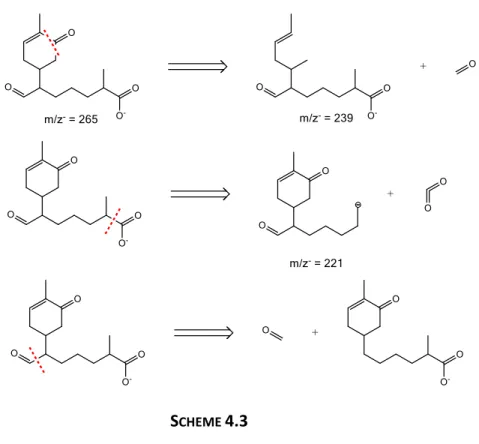
Scheme 4.2: Reaction scheme of further reactions that recycle Fe(II) and generate HOO radicals and O2(g) as additional reactants. 84 Scheme 4.3: Possible structures for the 204 Da (ISO)3 sesquiterpenes and associated
266 Da C15H22O4 products. 87
Chapter 1
Introduction and Summary
Aerosols affect the earth's climate by absorbing or reflecting the Sun's energy (direct affect) and influencing cloud formation (indirect effect). They also degrade the local air quality thereby leading to potential health effects especially lung diseases such as asthma and cancer. Aerosols may be organic or inorganic, but most aerosol or much of the mass is organic in nature, particularly the PM 2.5 fraction. The influence of organic compounds on atmospheric aerosols is far less understood and largely uncertain, predominantly in relation to that of the dominant inorganic aerosol components [1].
This is definitely caused by the large number (up to several hundred or a thousand) and structural complexity of the organic species involved, which are difficult to identify because of the difficulties associated with their collection, separation and the availability of suitable analytical methods. Primary organic aerosols, or POA, are directly emitted into the atmosphere through vehicle exhaust, cooking and biomass burning, whereas Secondary Organic Aerosols, or SOA, are formed from gas-to-particle conversion by oxidation of volatile organic compounds (VOC) present in the atmosphere. Oxidation mainly takes place with OH radicals, ozone or NOX. SOA compounds are assumed to be largely water soluble or hydrophilic. Although the composition of SOA is the result of complex interactions between trace organic gases
and aerosols, some basic scenarios have been outlined using model systems that await validation.
Isoprene is the most abundant biogenic VOC. About 600 Tg/C[2] are being emitted into the atmosphere annually. ISO significantly affects the oxidative capacity of the atmosphere. It has been generally assumed that condensed-phase reactions of hydrophobic substances, i.e., those having small Henry’s law constants, would make a negligible contribution to SOA formation. ISO, which has a H constant = 0.036 M atm-1 [3], was not considered to produce SOA and was not included in traditional models of SOA formation. In the past, aqueous bulk phase reactions of polar organic compounds, such as glyoxal,[4, 5], methyl glyoxal and pyruvic acid, were proposed as potential sources of SOA. However, after the detection of tetrol species, the main tracer for SOA from isoprene under low NOX regions in the Amazon forest ISO is being considered as a significant contributor for SOA formation[6]. Since then, ISO has been investigated as a major source of fog/haze and aerosol formation at the surface. During the daytime, photo-oxidation of ISO takes place with OH radicals. The mechanisms of SOA formation under high-NOx is well understood; however, the mechanism of formation under low- NOx conditions still remain to be fully characterized. In the low-NOx regions such as forests, where there is a considerable amount of biogenic VOC emissions, the main mechanism for SOA formation would be the reaction between OH and ISO. In these regions, ISO forms epoxy diols (IEPOX)[7, 8] in the gas phase, and alkene tetrols and oligomers in the aqueous phase[8].
In the high-NOx regions, apart from the formation of methyl vinyl ketone (MVK), methacrolein (MACR) and hydroxyacetone, ISO also leads to the regeneration of OH radicals through the formation of hydroxyl peroxy radicals[9]. These species also can be either primary or secondary in nature [10]. However, still the mechanism and the product formations are still not fully understood, and there are large discrepancies arising in modeled and measured ISO emission fluxes on the overlying boundary layer. In addition, the revelation that the laboratory generated aerosol underpredicts the oxygenated VOCs generated[11] and the masses of SOA[12, 13]. Field measurements have also revealed that the OH radical concentrations measured therein are much higher than those evaluated from current chemical mechanisms[11]. In this thesis, I argue that gas phase chemical reactions alone cannot fully account for all the SOA formed in the atmosphere[14]. Aqueous phase, gas/solid, emerging new concepts in the physical chemistry of interfaces,[15-18] and along with newly-found phenomena at the air-water interface[19-30] demonstrate some of the missing processes that can be used to fill in the mass balance gap. These deficiencies have led researchers to consider the possibility, seemingly by elimination, that other unspecified processors might close the gap[11]. In this thesis, I show that heterogeneous processers (HPs) may play an important role; however, this phenomenon awaits a complementary characterization in the field.
AQUEOUSPHASEREACTIONS
The photochemistry of organic species in the aqueous aerosol media is, in general, quite different from in the gas-phase, or in less polar or hydrogen-donating solvents, and also can be a potential contributor to SOA.
H2O2(g), having a Henry’s law constant H = 105 M atm-1 [31], is extremely soluble in water [32]. Its gas-phase mixing ratio, i.e., the abundance of one component of a mixture relative to that of all the other components, may reach up to 1.5 ppbv (parts per 109 by volume), or more [33]. It has been calculated that, typically, ~ 1 ppbv gas- phase H2O2 concentrations will lead to 0.1 mM H2O2 in aqueous fog and aerosol droplets [34]. Furthermore, dissolved H2O2 can undergo solar photolysis generating OH radicals, which can lead to the formation of oxygenated species in the bulk.
Other OH radical precursors in the aqueous phase include Fe(II)/Fe(III) iron (Fenton reaction) species, and nitrate ions, which yield hydroxyl radical via photolysis [35, 36].
Isoprene in the aqueous bulk phase leads to the formation of polyols and other low- vapor pressure compounds (glyoxal, pyruvic acid [PA]), and these low-vapor pressure species under go further oxidation to form higher mass oligomers. PA acid and GLA, which are highly water-soluble (H= 3 × 10⁵M/atm [37, 38] and H= 3.6 × 10⁵ M/atm[39]) and under photo-oxidation, are capable of forming larger macromolecules that possess properties of HULIS (Humic Like Substances), and up to 50% of the aerosol mass consists of macromolecular organic substances [40].
Pyruvic acid is one of the most abundant of the α-dicarbonyls in the atmosphere both in the gas and in the aqueous phase. The α-dicarbonyls arise as a result of oxidation of isoprene (by the oxidation of VOC) and by the photochemical degradation of the colored organic matter in rivers, lakes, and oceans. Their fate is, however, uncertain. The ketonic functionality of the α-dicarbonyl moieties absorbs light above
≥300 nm. Photolysis alone does not lead to oligomers[41]; rather it often leads to
smaller species, but, at the same time, it is capable of producing colored species upon photolysis and aging [42], leading to a large sum of poly-functional high molecular weight oligomeric species [42-44] via slow dehydration of the alcohol functionalities.
HETEROGENEOUSREACTIONSANDMINERALDUSTAEROSOLS
Mineral dust aerosols, which can be another source of hydroxyl radical precurors, constitute an important fraction of the tropospheric aerosol budget. They originate from deserts by wind-blown erosion [45, 46], and fly ash emitted by power plants. Dust events originate in very dry environments in the northern hemisphere, especially the west coast of North Africa and extending through the Middle East into Central Asia, specifically in arid areas such as Sahara and the Gobi deserts. These events are responsible for both generation and deposition of the global airborne mineral dust[47].
Dust aerosols contain transition metal-based semiconductor particles such as Fe2O3, ZnO and TiO2. Mineral aerosol sources of iron, i.e., soil particles suspended in the atmosphere by strong winds, represent approximately 95% of the globally-averaged
atmospheric budget, with the remaining fraction attributed to industry, biofuels, and biomass burning [48]. The largest natural source of iron has been identified as coming from the North African deserts, and thus the largest deposition to the oceans occurs in the North Atlantic and Mediterranean downwind of the North African coast [49].The mass mixing ratio of TiO2 is 0.1% to 10%, and varies depending on the location and source.
A fraction of the inorganic aerosol consists of semiconducting metal oxides, which can undergo long range transport and can be readily activated by UV-Vis solar radiation, leading to a diverse set of chemical transformations [5]. For example, α-Fe2O3 has a band gap energy of 2.2 eV i.e., equivalent to a wavelength of 520 nm, while TiO2 has a corresponding band gap energy of 3.2 eV, which is equivalent to a wavelength of 385 nm. When a photon of energy equal to or exceeding the band gap is irradiated onto the surface of a semi conductor, an electron from the valence band can be transferred to the conduction band, leaving a hole (h+) behind. The ‘exciton pair h+ and e-, are capable of promoting a series of oxidation and reduction reactions on the surface of the semiconductor, leading to the in situ production of OH radicals, HO2 radicals and O2-
[50].
Thus, heterogeneous semiconductor photocatalysis via surface-activated photochemical processes in aqueous media may be a potent source of high-redox potential oxidants under dusty conditions.
INTERFACIAL CHEMISTRY
The troposphere contains airborne liquid water in the form of aerosol, clouds, fog and haze. The large specific surface areas (S/V 10-4 to 10-5 cm-1) of such dispersions suggest that gas-liquid heterogeneous processes could play a significant role in atmospheric chemistry. Early recognition of this [51] and worldwide concern about atmospheric aerosols[52-55], however, have not translated into the inclusion of heterogeneous processes (HPs) as essential components of atmospheric chemistry until recently, especially over remote (i.e., low NOx) forests[7].
Aerosol, in the form of water droplets, fog, cloud or haze particles, remains in the troposphere for a considerable period, depending on its size. Typically, droplets of ~ 1
m diameter will settle ~ 25 m per week under typical atmospheric conditions [56].It
also should be noted that the interfacial shells or the surfaces of these droplets, where water density drops a thousand fold within ~ 1 nm, do not behave similar to bulk water[15, 17]. These interfaces are assumed to be drier than the bulk of the aerosol, and therefore, the properties are quite different from that of the bulk. Therefore, it is assumed that hydrophobic gases colliding with these interfacial shells tend to stick to the surface rather than proceed into bulk water[57]. All of these can increase the resident time at the interface. Having such a long lifetime and interfacial attractions will promote interfacial surface reactions, and the consequent modification of the aerosol’s composition as a whole.
Sources of interfacial oxidants may include OH radicals from photolysis of H2O2 and OH from Fenton reactions. Generally, H2O2 production is associated with reactions occurring in the daytime, involving hydroxyl radical chemistry and species like HOx, NOx
and ozone[58], with an H2O2 daytime production rate of 150 cm-3 s-1[59]. However, a few authors have suggested the possibility that hydrogen peroxide is also produced during nighttime[59]; indeed, nitrate radicals, produced in the nighttime stratosphere oxidation of NO, react with hydrogen sulfate ions and produce hydrogen sulfate radicals (R1), whose fate is to dimerize to peroxydisulfuric acid (R2) and subsequently hydrate (R 3) to Caro’s acid (i.e., peroxymonosulfuric acid). Ultimately, the latter is in equilibrium with sulfuric acid and hydrogen peroxide (R4)[59]:
NO3 + HSO4- NO3- + HSO4 (R1)
2 HSO4 H2S2O8 (R2)
H2S2O8 + H2O H2SO5 + H2SO4 (R3)
H2SO5 + H2O H2SO4 + H2O2 (R4)
Given that H2O2 is very soluble in water (see above and [32]) and that, as we previously demonstrated, the production of OH radicals, through gas-liquid interface through Fenton reaction, potentially also occurs in the dark (i.e., with no incident
irradiation), isoprene oxidation in the nighttime can also be achieved also by means of processes other than the reactions with NO3 [60].
FENTONS’S REAXTION
Iron is one of the most abundant elements on the earth surface and is found in cloud water and fog, as well as in mineral dust aerosols (sources include mineral dust from arid regions, anthropogenic emissions and biomass burning). It is also an important source of micronutrients to the ocean phytoplankton [61, 62]. As a redox–active metal, iron may be present in the oxidation states of Fe(II) and Fe(III), and can cycle between them through atmospheric processes, thus affecting the composition of the aerosol [63].
The amount of iron, present as Fe2+ in the atmosphere, varies between 0.4 ng/m3– 32820 ng/m3, and its speciation (oxidation state) is mainly influenced by photochemistry and pH [64]. Several studies have shown that photo-reduction of Fe3+ in the presence of organic compounds is an important source of Fe2+ in cloud and fog water[63, 65], and the concentration ratio of Fe2+/Fe3+ depends on the redox potential and the oxidation capacity (i.e. O2, O3, H2O2 and peroxyacids) [36].
The Fenton reaction is capable of producing ·OH radicals via one-electron transfer (R5), and FeIVO2+ species via a two-electron oxidation via O-atom transfe, as in the reaction R6 shown below [66]:
Fe2+ + H2O2 Fe3+ + OH- + ·OH R5 Fe2+ + H2O2 FeIVO2+ + H2O R6 R5 can undergo further reaction to recycle Fe(II) and to generate HOO radicals[67-69]
and O2 as additional sources of oxidants.
Thus, when ISO molecules impinge on fog or haze aerosol containing Fe(II), they may react irreversibly with OH-radicals generated in situ via gas-phase interface Fenton reactions, either in the day- or nighttime (thus providing a possible contribution to the underestimate isoprene nighttime oxidation), with the rate of product formation depending on the efficiency of the OH radical generation within the aqueous aerosol.
The results presented in this thesis provide direct evidence, for the first time, that VOCs can be oxidized day and night on acidic aerosol via interfacial Fenton chemistry.
This process represents an additional pathway for the conversion of organic gases into secondary organic aerosol matter.
SUMMARY
The research reported in my thesis concentrates on SOA formation pathways that are not included in traditional atmospheric chemistry models. This work reveals the potential importance of multiphasic reactions in the formation of SOA. These pathways may provide clues as to the unaccounted sources of SOA both in the daytime/nighttime.
My thesis consists of 4 chapters. Chapter 1 provides a brief summary of background and research on aqueous aerosols. Chapters 2 to 4 describe research carried out in aqueous medium both in the bulk and at the interfaces.
In Chapter 2, we investigate the relationship between optical properties and the polarity of model organic aerosol using pyruvic acid as a surrogate to model organic aerosols. Our findings suggest that the visible absorptivity of the aerosol may be due to a small fraction of its chemical components, which are largely comprised of weakly polar species having a significantly smaller O/C ratio than the average. The finding also revealed that the average oxidation level of the aerosol may not be a good descriptor of its ‘brownness’. This chapter was published in Chemical Physics letters in April 2014 [70].
In Chapter 3, we carry out an experimental study of the oxidation of aqueous ISO initiated by .OH radicals (from the photolysis of H2O2)in the presence and absence of dissolved O2 under various experimental conditions. Here, we show that OH-initiated oxidation of ISO leads to the formation of C10H15OH species as primary products, whose formation both require and is inhibited by O2. A minimum of seven C10H15OH isomers were resolved by reverse-phase high-performance liquid chromatography and detected as MH+ (m/z = 153). We also prove that the production of OH radicals in the aqueous phase via the photolysis of H2O2 is much faster than the gas phase production via photolysis of O3. Our calculations can further help to explain the enhanced SOA
concentration/visibility reductions during foggy conditions at sunrise. This chapter was published in the Journal of Physical Chemistry A in April 2013 [71].
In Chapter 4, we explore the possibility of ISO to undergo reactions on surfaces of aqueous droplets containing Fe2+. We also find that gaseous isoprene ISO(g) is oxidized upon impacting the surface of aqueous FeCl2 solutions simultaneously exposed to H2O2(g) via Fenton reaction. We observed the formation of monomer and oligomer species (ISO)1-8H+ which are herein oxidized into myriad products whose combined yields amount to a minimum of 5% of (ISO)1-8H+. MS/MS analysis reveals that protonated species observed losses of H2O and O neutrals, whereas the less abundant negative ion products undergo CO, H2O and CO2 losses. Addition of tert-butanol (as OH scavenger) to FeCl2 solutions significantly inhibited all of the oxidized species, demonstrating that unsaturated volatile gas compounds indeed oxidized upon impact on the surface of Fe-containing aqueous acidic media, such as those of typical tropospheric aerosols. This chapter was published in The Journal of Physical Chemistry C in July 2014 [72].
We also carried out the prospects of ISO (g) interaction with photolysed surfaces of aqueous H2O2 droplets under different pH conditions. ISO is oxidized with the OH radicals generated by photolysis of H2O2 at λ = 266 nm. No new product formation was observed at pH ≤ 6; However, a few products were observed both in positive and negative modes at pH 6 particularly at m/z+ = 271 and m/z-= 76.
REFERENCE:
1. Fuzzi, S., et al., Critical assessment of the current state of scientific knowledge, terminology, and research needs concerning the role of organic aerosols in the atmosphere, climate, and global change. Atmospheric Chemistry and Physics, 2006. 6: p.
2017-2038.
2. Guenther, A., Estimates of global terrestrial isoprene emissions using MEGAN (Model of Emissions of Gases and Aerosols from Nature) (vol 6, pg 3181, 2006). Atmospheric Chemistry and Physics, 2007. 7(16): p. 4327-4327.
3. Leng, C., et al., Temperature-Dependent Henry's Law Constants of Atmospheric Organics of Biogenic Origin. Journal of Physical Chemistry A, 2013. 117(40): p. 10359-10367.
4. Galloway, M.M., et al., Analysis of photochemical and dark glyoxal uptake: Implications for SOA formation. Geophys Res Lett, 2011. 38.
5. Carlton, A.G., et al., Atmospheric oxalic acid and SOA production from glyoxal: Results of aqueous photooxidation experiments. Atmos Environ, 2007. 41(35): p. 7588-7602.
6. Claeys, M., et al., Formation of secondary organic aerosols through photooxidation of isoprene. Science, 2004. 303(5661): p. 1173-1176.
7. Paulot, F., et al., Unexpected Epoxide Formation in the Gas-Phase Photooxidation of Isoprene. Science, 2009. 325(5941): p. 730-733.
8. Surratt, J.D., et al., Reactive intermediates revealed in secondary organic aerosol formation from isoprene. Proceedings of the National Academy of Sciences of the United States of America, 2010. 107(15): p. 6640-6645.
9. Surratt, J.D., Radical regeneration from isoprene. Nature Geoscience, 2013. 6(12): p.
995-996.
10. Noziere, B., et al., Atmospheric chemistry in stereo: A new look at secondary organic aerosols from isoprene. Geophysical Research Letters, 2011. 38.
11. Whalley, L., D. Stone, and D. Heard, New Insights into the Tropospheric Oxidation of Isoprene: Combining Field Measurements, Laboratory Studies, Chemical Modelling and Quantum Theory, in Atmospheric and Aerosol Chemistry, V.F. McNeill and P.A. Ariya, Editors. 2014. p. 55-95.
12. Heald, C.L., et al., Satellite observations cap the atmospheric organic aerosol budget.
Geophysical Research Letters, 2010. 37.
13. Ng, N.L., et al., Organic aerosol components observed in Northern Hemispheric datasets from Aerosol Mass Spectrometry. Atmospheric Chemistry and Physics, 2010. 10(10): p.
4625-4641.
14. Barkley, M.P., et al., Can a "state of the art" chemistry transport model simulate Amazonian tropospheric chemistry? Journal of Geophysical Research-Atmospheres, 2011. 116.
15. Donaldson, D.J. and K.T. Valsaraj, Adsorption and Reaction of Trace Gas-Phase Organic Compounds on Atmospheric Water Film Surfaces: A Critical Review. Environ. Sci.
Technol., 2010. 44(3): p. 865-873.
16. Valsaraj, K.T., On the Physiochemical aspect of partitioning of Non-polar Hydrophobic Organics at the Air-water Interface. Chemosphere, 1988. 17(5): p. 875-887.
17. Valsaraj, K.T., A Review of the Aqueous Aerosol Surface Chemistry in the Atmospheric Context. Open Journal of Physical Chemistry 2012. 2: p. 58-66.
18. Valsaraj, K.T., et al., On the Enrichment of Hydrophobic Organic-Compounds in Fog Droplets. Atmos Environ, 1993. 27(2): p. 203-210.
19. Enami, S., M.R. Hoffmann, and A.J. Colussi, How phenol and α-tocopherol react with ambient ozone at gas/liquid interfaces. J. Phys. Chem. B, 2009. in press.
20. Enami, S., M.R. Hoffmann, and A.J. Colussi, Simultaneous Detection of Cysteine Sulfenate, Sulfinate, and Sulfonate during Cysteine Interfacial Ozonolysis. Journal of Physical Chemistry B, 2009. 113(28): p. 9356-9358.
21. Enami, S., M.R. Hoffmann, and A.J. Colussi, Absorption of Inhaled NO2. Journal of Physical Chemistry B, 2009. 113(23): p. 7977-7981.
22. Enami, S., M.R. Hoffmann, and A.J. Colussi, Prompt Formation of Organic Acids in Pulse Ozonation of Terpenes on Aqueous Surfaces. Journal of Physical Chemistry Letters, 2010.
1(15): p. 2374-2379.
23. Enami, S., M.R. Hoffmann, and A.J. Colussi, Proton Availability at the Air/Water Interface. Journal of Physical Chemistry Letters, 2010. 1(10): p. 1599-1604.
24. Enami, S., M.R. Hoffmann, and A.J. Colussi, Molecular Control of Reactive Gas Uptake
"on Water". Journal of Physical Chemistry A, 2010. 114(18): p. 5817-5822.
25. Enami, S., M.R. Hoffmann, and A.J. Colussi, Dry deposition of biogenic terpenes via cationic oligomerization on environmental aqueous surfaces. J. Phys. Chem. Lett., 2012.
3: p. 3102-3108.
26. Enami, S., et al., Protonation and Oligomerization of Gaseous Isoprene on Mildly Acidic Surfaces: Implications for Atmospheric Chemistry. Journal of Physical Chemistry A, 2012.
116(24): p. 6027-6032.
27. Enami, S., et al., Superacid Chemistry on Mildly Acidic Water. Journal of Physical Chemistry Letters, 2010. 1(24): p. 3488-3493.
28. Enami, S., et al., Global inorganic source of atmospheric bromine. J. Phys. Chem. A, 2007.
111: p. 8749-8752.
29. Mishra, H., et al., Anions dramatically enhance proton transfer through aqueous interfaces. Proceedings of the National Academy of Sciences of the United States of America, 2012. 109(26): p. 10228-10232.
30. Mishra, H., et al., Bronsted basicity of the air-water interface. Proceedings of the National Academy of Sciences of the United States of America, 2012. 109(46): p. 18679- 18683.
31. NASA-JPL Chemical Kinetics and Photochemical Data for Use in Atmospheric Studies, Evaluation Number 14. 2003.
32. Vacha, R., et al., Adsorption of atmospherically relevant gases at the air/water interface:
Free energy profiles of aqueous solvation of N-2, O-2, O-3, OH, H2O, HO2, and H2O2.
Journal of Physical Chemistry A, 2004. 108(52): p. 11573-11579.
33. Lelieveld, J. and P.J. Crutzen, Influence Of Cloud Photochemical Processes on Tropospheric Ozone. Nature, 1990. 343(6255): p. 227-233.
34. Seinfeld, J.H. and S.N. Pandis, Atmospheric chemistry and physics: from air pollution to climate change. 2nd ed. 2006, Hoboken, N.J.: Wiley.
35. Wang, Y., et al., Speciation of iron in atmospheric particulate matter by EXAFS. Chinese Science Bulletin, 2006. 51(18): p. 2275-2280.
36. Dedik, A.N., P. Hoffmann, and J. Ensling, Chemical Characterization of Iron in Atmospheric Aerosols. Atmospheric Environment Part a-General Topics, 1992. 26(14): p.
2545-2548.
37. Khan, I., P. Brimblecombe, and S.L. Clegg, The Henrys Law Constant of Pyruvic and Methacrylic Acids. Environmental Technology, 1992. 13(6): p. 587-593.
38. Staudinger, J. and P.V. Roberts, A critical review of Henry's law constants for environmental applications. Critical Reviews in Environmental Science and Technology, 1996. 26(3): p. 205-297.
39. Zhou, X.L. and K. Mopper, Apparent Partion-coefficient of 15 Carbonyl-compound between Seawater, Air and Fresh-water - Implications for Air Sea Exchange.
Environmental Science & Technology, 1990. 24(12): p. 1864-1869.
40. Andreae, M.O. and A. Gelenczer, Black carbon or brown carbon? The nature of light- absorbing carbonaceous aerosols. Atmos. Chem. Phys. Discuss., 2006. 6: p. 3419-3463.
41. Griffith, E.C., et al., Photochemistry of aqueous pyruvic acid. Proceedings of the National Academy of Sciences of the United States of America, 2013. 110(29): p. 11714-11719.
42. Guzmán, M.I., A.J. Colussi, and M.R. Hoffmann, Photoinduced Oligomerization of Aqueous Pyruvic Acid. J. Phys. Chem. A, 2006. 110: p. 3619-3626.
43. Rincon, A., A. Colussi, and M. Hoffmann, Chemical identity and thermal behavior of polyfunctional Oligomers from pyruvic acid and photolysis in water and ammonium bisulfate. 2009, California Institute of Technology: Pasadena.
44. Rincon, A.G., et al., Optical Absorptivity versus Molecular Composition of Model Organic Aerosol Matter. Journal Physicochemcal A., 2009. 113: p. 10512-10520.
45. Iuga, C., C.I. Sainz-Diaz, and A. Vivier-Bunge, On the OH initiated oxidation of C2-C5 aliphatic aldehydes in the presence of mineral aerosols. Geochimica Et Cosmochimica Acta, 2010. 74(12): p. 3587-3597.
46. Andreae, M.O. and D. Rosenfeld, Aerosol-cloud-precipitation interactions. Part 1. The nature and sources of cloud-active aerosols. Earth-Science Reviews, 2008. 89(1-2): p. 13- 41.
47. Cwiertny, D.M., M.A. Young, and V.H. Grassian, Chemistry and photochemistry of mineral dust aerosol, in Annual Review of Physical Chemistry. 2008, Annual Reviews:
Palo Alto. p. 27-51.
48. Louwerse, M.J., P. Vassilev, and E.J. Baerends, Oxidation of methanol by FeO2+ in water:
DFT calculations in the gas phase and ab initio MD simulations in water solution. Journal of Physical Chemistry A, 2008. 112(5): p. 1000-1012.
49. Mahowald, N.M., et al., Atmospheric Iron Deposition: Global Distribution, Variability, and Human Perturbations. Annual Review of Marine Science, 2009. 1: p. 245-278.
50. Hoffmann, M.R., et al., Environmenta Applications of Semiconductor Photocatalysis.
Chemical Reviews, 1995. 95(1): p. 69-96.
51. Schryer, D.R., Heterogeneous Atmospheric Chemistry. Geophysical Monographs. Vol. 26.
1982, Washington, D.C: American Geophysical Union.
52. Heald, C.L., et al., A large organic aerosol source in the free troposphere missing from current models Geophys. Res. Lett., 2005. 32: p. L18809.
53. Kanakidou, M., et al., Organic aerosol and global climate modelling: a review. Atmos.
Chem. Phys., 2005. 5: p. 1053-1123.
54. Kroll, J.H. and J.H. Seinfeld, Chemistry of secondary organic aerosol: Formation and evolution of low-volatility organics in the atmosphere. Atmos. Environm., 2008. 42: p.
3593-3624.
55. Munger, J.W., et al., Fogwater Chemistry in an Urban Atmosphere. J. Geophys. Res., 1983. 88(NC9): p. 5109-5121.
56. Finley, J.W., E.L. Wheeler, and S.C. Witt, Oxidation of Glutathione by Hydrogen-Peroxide and other Oxidizing-Agents. Journal of Agricultural and Food Chemistry, 1981. 29(2): p.
404-407.
57. Goss, K.U., Predicting Adsorption of Organic Chemicals at the Air-Water Interface. J.
Phys. Chem. A, 2009. 113(44): p. 12256-12259.
58. Monks, P.S., Gas-phase radical chemistry in the troposphere. Chemical Society Reviews, 2005. 34(5): p. 376-395.
59. Pedersen, T., Nighttime Hydrogen-Peroxide Production on Sulfuric Acid-Aerosols involving Nitrate and Sulfate Radicals. Geophysical Research Letters, 1995. 22(12): p.
1497-1499.
60. Brown, S.S. and J. Stutz, Nighttime radical observations and chemistry. Chemical Society Reviews, 2012. 41(19): p. 6405-6447.
61. Gao, Y., S.M. Fan, and J.L. Sarmiento, Aeolian iron input to the ocean through precipitation scavenging: A modeling perspective and its implication for natural iron fertilization in the ocean. Journal of Geophysical Research-Atmospheres, 2003. 108(D7).
62. Sholkovitz, E.R., et al., Fractional solubility of aerosol iron: Synthesis of a global-scale data set. Geochimica Et Cosmochimica Acta, 2012. 89: p. 173-189.
63. Pehkonen, S.O., et al., Photoreduction of Iron Oxyhydroxides In the prescence of important Atmospheric Organic-Comppounds. Environmental Science & Technology, 1993. 27(10): p. 2056-2062.
64. Oakes, M., et al., Characterization of soluble iron in urban aerosols using near-real time data. Journal of Geophysical Research-Atmospheres, 2010. 115.
65. Siefert, R.L., et al., Iron Phoochemistry of Aqueous Suspensions of Ambient Aersols with added Organics-Acids. Geochimica Et Cosmochimica Acta, 1994. 58(15): p. 3271-3279.
66. Enami, S., Y. Sakamoto, and A.J. Colussi, Fenton chemistry at aqueous interfaces. Proc.
Natl. Acad. Sci. U. S. A., 2014. 111(2): p. 623-628.
67. Stark, M.S., Addition of peroxyl radicals to alkenes and the reaction of oxygen with alkyl radicals. Journal of the American Chemical Society, 2000. 122(17): p. 4162-4170.
68. Villano, S.M., H.H. Carstensen, and A.M. Dean, Rate Rules, Branching Ratios, and Pressure Dependence of the HO2 + Olefin Addition Channels. Journal of Physical Chemistry A, 2013. 117(30): p. 6458-6473.
69. Zador, J., S.J. Klippenstein, and J.A. Miller, Pressure-Dependent OH Yields in Alkene plus HO2 Reactions: A Theoretical Study. Journal of Physical Chemistry A, 2011. 115(36): p.
10218-10225.
70. Kameel, F.R., et al., Polarity and oxidation level of visible absorbers in model organic aerosol. Chemical Physics Letters, 2014. 603: p. 57-61.
71. Kameel, F.R., M.R. Hoffmann, and A.J. Colussi, OH Radical-Initiated Chemistry of Isoprene in Aqueous Media. Atmospheric Implications. Journal of Physical Chemistry A, 2013. 117(24): p. 5117-5123.
72. F. Rifkha Kameel , F.R., M. R. Hoffmann , Shinichi Enami , and A. J. Colussi Fenton Oxidation of Gaseous Isoprene on Aqueous Surfaces. J. Phys. Chem. C, 2014.
10.1021/jp505010e.
Chapter 2
Polarity and Oxidation Level of Visible Absorbers in Model Organic Aerosol
Sections reprinted with permission from F. Rifkha Kameel, S.H. Lee, M. R. Hoffmann, and A. J. Colussi, Chemical Physics Letters April 2014
ABSTRACT
How to parameterize the absorptivity of organic aerosols in atmospheric models remains uncertain. Here, we report that the = 400 nm absorbers in model aerosol mixtures elute as weakly polar species in reversed-phase chromatography. Typical among them, the m/z = 269 (C12H13O7-
, O/C = 0.58) isomers detected by mass spectrometry possess C=O groups linked by C=C bridges. More polar species, such as the m/z = 289 (C11H13O9-
, O/C = 0.82)polyacids, are instead colorless. On this basis, we argue that visible absorptivity, which develops from extended conjugation among chromophores, may not increase monotonically with oxidation level.
INTRODUCTION
In addition to degrading air quality,1 aerosols affect the Earth’s radiation budget.2-3 They scatter incoming solar radiation, thereby having a cooling effect. Some,4-5 however, also absorb radiation and may have a significant warming effect on mid- troposphere.6 Absorptivity is mainly due to their organic matter content. The main absorber is primary Black Carbon (BC) emitted during the incomplete burning of biomass materials. Aerosols, however, also contain Brown Carbon (BrC) matter7 generated in the atmospheric processing of the volatile organic compound (VOC) emissions that dominate the tropospheric carbon budget.8
Much work has been dedicated to unravel the physical and chemical mechanisms by which secondary organic aerosols (SOA) are produced from volatile organic compound (VOC) emissions. The main goal was to account for the fraction of global VOC emissions converted to SOA on the basis of the aerosol yields produced in laboratory experiments.7 The key assumptions were that (1) the photochemical processing of VOCs in the gas-phase generates heavier species that may condense and become part of the aerosol,8 and (2) the molecular identification of the myriad condensable species produced in such experiments should suffice to characterize SOA and their role in the Earth’s system.9,10
Biogenic gases account for a larger fraction of VOCs emitted globally11 and organic matter for most of the mass of atmospheric aerosols.12 It is known that the exhaustive
chemical and biological degradation of natural organic substances in the environment yields extremely complex materials that have been described as humic-like substances (HULIS).13 Notably, HULIS isolated from soils, surface waters or atmospheric aerosols display similar properties to a certain extent despite their different origins and, hence, the wide variations in their chemical frameworks and functionalities.14 This observation suggests that the full speciation of such materials (1) should be difficult (and perhaps unfeasible) even by the most advanced analytical techniques,15 and (2) could be neither sufficient nor necessary for assessing their role in the environment. The implication is that HULIS properties may emerge from universal supramolecular interactions in mixtures of polyfunctional molecules exceeding a modicum of chemical complexity.
The photochemical oxidation of VOC’s should produce BrC aerosol particles whose optical properties may not be generic, but could vary with their residence time and the oxidative power of the local troposphere. Thus, there is a need for assessing how the evolution of BrC absorptivity could be parametrized in current atmospheric radiative transfer models. Extreme chemical complexity precludes a bottom up approach in which absorptivity is evaluated from the contributions made by the myriad light absorbers.9-10 An alternative, more realistic approach is based on overall descriptors, such as overall polarity or oxidation level. Here, we show that visible absorptivity may be associated with the less polar fraction of BrC components rather than with specific compounds. We also argue on chemical grounds that such fraction consists of highly unsaturated rather
than highly oxidized species, and that the degree of unsaturation may be actually anti- correlated with oxidation beyond a certain level.
How chromophores, which absorb in the visible ( > 400 nm), are produced in the photochemical oxidation of VOCs is not fully understood.11-12 It has been suggested that absorbance could involve unspecified interactions in the aerosol phase among discrete, low-molecular weight -keto carboxylic acids,11 such as the widespread pyruvic and mesoxalic acids byproducts of the oxidation of aromatics.8, 13-14 These acids absorb (max
320 nm) the solar radiation reaching the lower troposphere due to the fact that the
carbonyl chromophore is conjugated with the adjacent carboxyl C=O group, and thereby may undergo photochemistry.15 Aqueous solutions of such acids and their photochemical transformations may in fact be considered model surrogates of typical aerosol matter. The photolysis of pyruvic acid solutions is known to produce small polyfunctional oligomers.16-20 Previously, we had shown that visible absorptions develop during the thermal aging of such mixtures via the slow dehydration of alcohol functionalities.16-17 We hypothesized that such red-shifted absorptions arose from the conjugation of disjoint carbonyl chromophores via newly created -orbital >C=C<
bridges in species, which, by being the products of dehydration, had lower O/C ratios than their precursors.
Here, we confirm such hypothesis by means of separative analyses of aged model aerosol mixtures via high-performance reversed-phase liquid chromatography with
tandem UV-visible absorption-electrospray/chemical ionization mass spectrometric detection, and also show that photolysis of pyruvic acid leads to HULIS substances.
EXPERIMENTALDETAILS
Pyruvic acid (PA) solutions (0.1 M to 0.5 M, PA, 98% Sigma-Aldrich) were prepared in deionized water adjusted to pH 1 using 70% HClO4, sparged with ultrapure airprior and subsequently photolyzed with > 305 nm light. Sample solutions (3.5 mL, magnetically stirred in 4 mL silica UV cuvettes kept at 298 K in a Peltier sample holder) (hereafter designated as P0) were irradiated for 4 hours with light from a 1 kW high-pressure Xe−Hg lamp source filtered through a water cell (to remove infrared radiation) and a tandem > 305 nm long band-pass interference filter. After irradiation, photolyzed samples (P1) were aged in the dark at 60 °C for several hours (16 to 19 h). Some of these thermally aged samples (hereafter P1-T1) were photolyzed for 1 h into P1-T1-P2 samples. Some P1-T1-P2 samples were thermally aged for several hours (P1-T1-P2-T2).
Some P1-T1 samples were diluted in 1:5, 1:25 and 1:100 with deionized water prior to analysis.
Samples were analyzed by injecting 50µl into a HPLC/UV/ESI (Agilent 1100 series) LC/MS system. Separation was performed using a ZORBAX Eclipse XDB-C18 RPLC reversed-phase column (l=250 mm, ID= 3.00, dp =5 micron, flow rate=0.4 l/min, t0= 2.5 min) under various solvent gradient protocols. The eluent consisted of mixtures of
solution A (0.1% acetic acid/ Milli-Q water) plus MeOH (B) programmed as follows: 7.5%
B until 8 min, increasing to 90% at 45 min. ESI-MS detection of both positive and negative singled-charged ions in the 100-800 Da range was performed at various fragmentation voltages. We also ran extracted ion chromatograms (EIC) at several m/z values. The structures of selected products were elucidated via MS/MS spectrometry using an Ion Trap detector (Agilent 6300 Series HPLC-MSn/Bruker Ion Trap mass spectrometer) in positive and negative ion modes in the 30 to 800 Da mas range at fragmentation voltages of 1 V and 3V.
RESULTSANDDISCUSSION
We verified that PA solutions before (P0) or after being photolyzed (P1) do not absorb above 350 nm, in accord with previous experiments from our laboratory performed under similar or identical conditions on PA samples as received from the supplier or distilled at low pressure.15-16 The accelerated aging at 60 C undergone by P1-T1 samples is deemed to simulate the thermal processes occurring in actual aerosol particles during their atmospheric lifetimes, which range from days to weeks depending on particle size and meteorology.21 Previously, we had shown that the thermal
‘browning’ of such solution has an apparent activation energy Eact 55 kJ mol-1.17 Thus, aging at 60 C for 16 hours is deemed equivalent to aging at 25 C for 5.6 days in the atmosphere.
In contrast with P0 and P1 samples, P1-T1 samples absorb appreciably up to 450 nm. Figure 1 displays a chromatogram of P1-T1 solutions as simultaneously reported by absorbance at 400 nm (Fig. 2.1A) and 254 nm (Fig. 2.1B), and by the total negative ion current (TIC) detected by tandem ESI mass spectrometry (Fig. 2.1C). It is apparent that (with the exception of a small feature at 6 min) all of the species absorbing at 400 nm (1) elute after 20 minutes; i.e., they are weakly polar,22-23 (2) are not well resolved under present conditions; i.e., they consist of a suite of molecular structures possessing a quasi-continuum of affinities for the column, and (3) they are acidic, but since they are weakly polar, the (carboxylic) acid groups appear to be attached to large, less polar backbones. Since A254 nm/A400 nm 10 for most chromophores (Fig. 2.2), we overlaid the 10 x chromatogram at 400 nm (Fig. 2.1A) in Fig. 2.1B. Comparing the red and blue traces before 40 min in Fig. 1B, we infer that 400 nm absorbers represent a minor fraction of the species present in this system (cf. the red and blue traces in Fig. 2.1B). By the same token, we infer that nearly all species eluting after 40 min absorb at 400 nm. Fig. S2.1 shows the evolution of the 400 nm absorbers upon successive thermal aging and > 300 nm photolysis treatments. As a rule, thermal aging results in the deepening of color, which is nearly bleached upon photolysis in accord with previous reports from our laboratory.17
Figs. 2.3A-C show negative ion ESI mass spectra in the mass range m/z = 50 to 800 Da acquired between 8 and 10 minutes (yellow band in Fig. 1) in Fig. 2.3A, between 35 and 40 minutes (orange band in Fig. 1) Fig. 3B, and between 40 and 50 min (red band in
Fig. 1) Fig. 2.3C. Note the differences between the scales of the Y-axis of Figs. 3A-C, which give a measure of the relative abundances of the anions detected in each case. If not the most intense, the most congested mass spectrum is that corresponding to those species eluting between 35 and 40 minutes (Fig. 2.3B), which give rise to maximum absorbance at 400 nm (Fig. 2.1A). EICs are particularly informative about isomerism and polarity among the products (Figs. 2.4A and B). Among the more polar species (i.e., those eluting before 20 min), we find the isomers of m/z = 289 (green trace) and m/z = 245 (blue trace) anions (Fig. 4A). Notably, m/z = 177 anions appear (mostly) at 6 min, and also at 36 min. It is hardly conceivable that such m/z = 177 signals could correspond to a very polar and a weakly polar isomer of the same molecular formula, respectively (see below).
Fig. 2.5A and B show the EICs of the polar m/z = 289 and of the less polar m/z = 269 anions in P1 (after photolysis) versus P1-T1 (i.e., after thermal aging) samples, respectively. Note that the m/z = 289 anions of Fig. 2.5A, which elute before 10 min, do not absorb appreciably at 400 nm (cf. Fig 1A), whereas some the less polar m/z = 269 anions elute in the > 20 min range, which overlaps the region of significant 400 nm absorbance (Fig. 2.1A). Also note that the intensities of m/z = 289 anions do not change much upon aging, whereas those of the m/z = 269 anions markedly increase under the same conditions. Thus, the formation of m/z = 269 anions, as a representative of the species absorbing in the visible, is concomitant with color development during thermal aging. Hence, the anions of mass 269 Da (C12H13O7-
) must possess several isomers of
similar polarities that absorb in the visible region (Scheme 2.1). As a rule, each additional double bond in a conjugated -electron system is known to shift the absorption maximum about 30 nm towards longer wavelength.24-25 It follows that conjugation should be less extended in the species that give rise to the m/z = 289 anions (C11H13O9-
) (Scheme 2.2). We have confirmed that m/z = 289 anions correspond to C11 species because they shift to m/z = 300.0916 (versus 289.0565, as detected via high-resolution ESI mass spectrometry) in the photolysis of 13CH313
C(O)13C(O)OH. The MS/MS spectra of representative m/z = 247 and 289 anions reveals systematic 44 (CO2) and 18 (H2O) neutral losses, which are characteristic of hydroxyl-acids. Basic chemistry tells us that the various geometric (E, Z) isomers of the 270 Da acids in Scheme 1 may have different polarities26 and would absorb further into the visible than the 290 Da acids of Scheme 2.27-28 The absorption spectrum of the octa-3,5-diene-2,7-dione motif of most of the proposed structures for the 270 Da acids in fact has maxima at 280 and 350 nm; i.e., it extends significantly into the > 400 nm region.29
It was found that the van Krevelen diagram of the H/C vs. O/C ratios of bulk organic aerosols (OA) from a variety of locations and environments has a slope of SVK -1.30 Since the replacement of a >CH2 group with >C=O and >C-OH functions leads to SVK = -2 and 0, respectively, a SVK -1 slope is therefore consistent with the creation of both
>C=O and >C-OH functionalities, i.e. with the formation of acids or hydroxy-ketones.
This has been shown to be true for a wide range of OA types, including laboratory/ambient, biogenic/anthropogenic, urban/remote and freshly emitted/aged.