WELCOME FROM THE RECTOR OF UNIVERSITAS INDONESIA
It is both a pleasure and honor for me to welcome you all to the 14th International Conference on QiR (Quality in Research) 2015. Globalization today results in very competitive atmosphere in all aspects. This flourishing competition should consider the harmony and balance between human needs and the environment quality for creating favorable sustainable future.
Steps to ensure the preservation of the environment for our future generations are slowly but surely taken. This fragile balance between the development and innovation of mankind as an effort to enhance their quality of life with its harmony with nature must be maintained as a way to achieve sustainable future - helping us make products and services more efficient, design better buildings, produce safer cars and keep people healthier.
Nowadays, scientists and researchers, hand in hand with industrial experts are creating and developing new green technologies that give us hope for a Sustainable Future. Great minds in Engineering, Architecture and Design areas especially has came up with ideas such as Green Architecture that has the capability to cut down urban resource use dramatically, and making urban expansion sustainable; New Nuclear Material; Waste-Sourced Biofuel/Pyrolysis, where technology is now able to turn biomass waste such as paper, grass or wood chips into gas and eventually ethanol;
Biomimicry, that has given the rise to self-healing materials. This in turn will give longer lives to most consumer goods, and thereby reducing the demand for raw materials and waste; and many more innovations that should be encouraged for the motivation of current and future development.
These Green and Smart Technologies can help protect, conserve and even restore our precious shared environment. To develop this technology, we need to combine engineering, scientific or technological approaches, with ecology, economics and the social sciences and humanities. The Green and Smart Technologies innovation field is now wide open and offers exciting new territories to explore and develop. Creative thinking by our top technical and scientific researchers is giving us a more and more treasures of new workable ideas. However, innovations require more than just brilliant ideas. Innovations require resources, skills, technology, knowledge, tools, techniques and so much more. But most of all, innovations require people. People are the driving force behind every need of change, changes that are aimed to improve mankind’s quality of life, to enhance their living conditions or to simply make life easier and more comfortable.
This conference is about learning of the fundamental aspects which can transform the world and society, thinking ahead to possible challenges facing the globe, discovering innovations related to opportunities for industry, and most importantly, this conference is about bringing together interdisciplinary people to accelerate activities in many areas simultaneously. This is what makes the conference exceptional this year in terms of potential impact from this networking.
I extend my sincere thanks to the Faculty of Engineering Universitas Indonesia, supporting parties and institutions for their participation and contributions in QiR 2015. I would also thank the people of Mataram especially our colleagues from Universitas Mataram and STMIK Lombok for their gracious support and hospitality. Additionally, I extend a hearty thank you to the members of the organizing committees for dedicating their valuable time so that each one of us enjoys an exceptional conference program over the next several days. May we have a successful, stimulating, fruitful and rewarding conference.
Prof. Dr. Ir. Muhammad Anis, M.Met.
Rector
Universitas Indonesia
PREFACE
i
WELCOME FROM THE DEAN OF FACULTY OF ENGINEERING UNIVERSITAS INDONESIA
Welcome to the 14th International Conference on QiR (Quality in Research) 2015. The Faculty of Engineering Universitas Indonesia is proud that this year we could once again held an international conference of this grand scale. This two-day, biennial conference is presented together with our co- hosts Universitas Mataram and STMIK Lombok and speaks to the importance of fostering relationships among national and international front liners, thinkers, academics, executives, government and business officials, practitioners and leaders across the globe in an effort to share knowledge and best practices as part of a worldwide network.
For almost twenty years, the first definition of sustainable development and sustainability includes sentences like ‘much remain to be done in the areas of sustainability’ or ‘the underlying science is still far from exact and we all still need to make a big effort’ are common introducing and/or concluding phrases in both literature and scientific forums. I envisioned that QiR will be a platform where academicians, scientists, researchers and practitioners from engineering, architecture, design, and community services to share, discuss, and move forward with their findings and innovations. I hope that the intellectual discourse will result in future collaborations between universities, research institutions and industry both locally and internationally. In particular it is expected that focus will be given to issues on innovations for the enhancement of human life and the environment.
In accordance to this year’s theme, this conference will cover a wide range of green and smart technology issues, especially state of the art information and knowledge of new innovations, ideas, creative methods or applications which can be implemented to enhance the human life with various smart technologies developed to improve mankind’s quality of life and green technologies to make sure that we make a contribution to keeping our environment for our future generations. The itinerary for the two days has been carefully planned to ensure a lively exchange of ideas and the development of innovative strategies and there will be many opportunities for everyone in attendance to share their expertise with, and learn from, peers from around the world.
We foresee more and more challenges in our future. Challenges in how to improve our life, how can we enhance our society, how can we make our lives and the lives or our society better? These challenges should be answered together by developing collaborations for future research in various engineering and design areas. Let’s make this conference an international media for exchange of knowledge, experience and research as well as the review of progress and discussion on the state of the art and future trend of prospective collaboration and networking in broad field of eco-based technology development.
My deepest appreciation to our sponsors, supported parties and various contributors for their never ending supports of this conference. I would also like to convey my gratitude to all of our distinguished speakers for making the time to share their knowledge with us. To our fellow researchers and/or practitioners from Indonesia and overseas, welcome and enjoy your stay in this amazing island, Lombok. I would also like to invite all participants in expressing our appreciation to all members of the QiR 2015 organizing committee for their hard work in making this conference another success.
Prof. Dr. Ir. Dedi Priadi, DEA Dean Faculty of Engineering Universitas Indonesia
PREFACE
ii
WELCOME FROM THE QiR 2015 ORGANIZING COMMITTEE
Welcome to the 14th International Conference on QiR (Quality in Research) 2015. It is a great pleasure for Faculty of Engineering Universitas Indonesia to be hosting this biennial event with Faculty of Engineering Universitas Mataram and STMIK Lombok, in the spirit of strengthening of cooperation and mutual growth to be world class institution. For the first time, the QiR 2015 is held in Lombok Island, one of Indonesia’s beautiful paradise islands.
It is with our utmost pleasure to hold this year’s QiR 2015 in conjunction with 4th Asian Symposium on Material Processing (ASMP), and International Conference in Saving Energy in Refrigeration and Air Conditioning (ICSERA).
The aim of this International Conference with our selected theme, “Green and Smart Technology for Sustainable Future”, is to provide an international forum for exchanging knowledge and research expertise as well as creating a prospective collaboration and networking on various fields of science, engineering and design. We hope this conference can be a kick-off for the strengthened action and partnerships on creating a platform for us; national and international thinkers, academics, government officials, business executives and practitioners, to present and discuss the pivotal role of engineers in innovative products which will reduce environmental impacts, applications in sustainable planning, manufacturing, architecture, and many more to grow and ensure the rising prosperity of our society going into the future. Under this theme, the conference focuses on the innovative contributions in green and smart technology to encourage and motivate current and future development for achieving sustainable future.
Over the period of 18 years, this biennial international conference started from annual national conference and now has become an important place of encounter between scholars and practitioners from different countries, cultures and backgrounds discussing contemporary engineering and design issues dealt in their hometown, country or even region. Serving as a platform for an engineering and design dialogue, this conference will have 21 invited speakers and has gathered more than 500 papers from more than 17 countries all over the world:
86 papers on International Symposium on Civil and Environmental Engineering 129 papers on International Symposium on Mechanical and Maritime Engineering 121 papers on International Symposium on Electrical and Computer Engineering 107 papers on International Symposium on Materials and Metallurgy Engineering 36 papers on International Symposium on Architecture, Interior and Urban Planning 56 papers on International Symposium on Chemical and Bioprocess Engineering 74 papers on International Symposium on Industrial Engineering
21 papers on International Symposium on Community Development
This year, we have a special talkshow planned as a special session within our plenary lecture. This talk show was planned by our alumni with the theme “Serve Our Country”. After more than five decades of existence, FTUI has in its library hundreds if not thousands undeveloped innovation ideas and research from its faculties, graduates and students, all of which are aimed at enhancing the quality of human life and the environment, especially in Indonesia. We feel that it’s time we contribute more to our country by making sure that these innovations and research can be implemented and produced for a better future of our nation. The talk show will feature some of the most prominent figure in Indonesia’s government and will discuss how these innovations can be used by the government in areas such as: electrical, oil and gas, IT, mining, design, manufacture and how the industry can be a part of it.
My deepest gratitude: to all of our speakers, participants, contributors, partners, exhibitors and professional associations, who have given this conference their generous support. I would also like to thank all members of the Organizing Committee, our International Advisory Board and distinguished Reviewers for all of their support and advice. We also
owe our success to the full support of the Rector of Universitas Indonesia and the Dean of Faculty of Engineering. Last but not least, a special thanks to our co-hosts, Universitas Mataram and STMIK Lombok for all of their immense supports in making this conference a success.
PREFACE
iii
Allow me to wish all of you a meaningful and rewarding conference. We wish you a pleasant and memorable stay in Lombok. Thank you and we hope to see you again at the QiR 2017.
Dr. Fitri Yuli Zulkifli, ST., MSc.
General Chair of QiR 2015 Organizing Committee
iv
Advisor
Prof. Prof. Dr. Ir. Dedi Priadi, DEA., Dr. Ir. Muhamad Asvial, M.Eng.
Ir. Hendri DS Budiono, M.Eng
Prof. Dr. Heri Hermansyah, S.T., M.Eng.
Jos Istiyanto, S.T., M.T., Ph.D.
Dr. Ir. Wiwik Rahayu,DEA.
Prof. Dr. Akhmad Herman Yuwono, M.Phil.Eng., Chairman
Dr. Fitri Yuli Zulkifli, S.T., M.Sc.
Vice Chairman
Dr. Nyoman Suwartha, ST., MT., MAgr.
International Advisory Board
Prof. Dr.-Ing. Axel Hunger University of Duisburg, Germany.
Prof. Chia-Fen Chi, National Taiwan University Science and Technology, Taiwan Prof. Dr. Ir. Dedi Priadi, DEA, Universitas Indonesia, Indonesia
Prof. Josaphat Tetuko Sri Sumantyo, Chiba University, Japan Prof. Koichi Ito,Chiba University, Japan.
Prof. Kozo Obara, Kagoshima University Prof. Martin Betts, Griffith University, Australia Prof. Michiharu Tabe, Shizuoka University, Japan Prof. Tae-jo. Ko, Yeungnam University, South Korea Steering Committee
Prof. Dr. Ir. Anne Zulfia Syahrial,, M.Sc. (UI) Prof. Dr. Ir. Eko Tjipto Rahardjo, M.Sc. (UI) Prof. Dr. Ir. Harinaldi, M.Eng. (UI)
Inaki Maulida Hakim, ST., MT (UI)
Prof. Dr. Ing. Ir. Misri Gozan, M.Tech. (UI) Dr. Ir. Setyo Sarwanto Moersidik, DEA. (UI) Ir. Sukisno, Msi (UI)
Yusron Saadi, ST., MSc., PhD. (UNRAM) Dr. rer. nat. Teti Zubaidah, ST., MT. (UNRAM) Hijrah Saputra, ST.,M.Sc (STMIK LOMBOK) Technical Program Committee
Ir. Martha Leni Siregar, MSC. (UI) Maya Arlini, ST., MT., MBA (UI) Dr. Eny Kusrini, S.Si. (UI)
Dr. Mochamad Chalid, S.Si., M.Sc.Eng. (UI) Dr. Ir. Purnomo Sidi Priambodo, M.Sc. (UI) Rossa Turpuk G. S.Ars., M.Ars. (UI)
Sugeng Supriadi, S.T., M.S.Eng., Ph.D. (UI) Dr. rer. nat. Agustino Zulys, S.Si., M.Sc. (UI) Misbahuddin, ST., MT. (UNRAM)
Secretariat and Registration Herra Astasusmini, SE
Treasurer
Evy Surpiningsih, S.Pd., MM Nuri Nugraini, Amd
CONFERENCE ORGANIZER
v
Programme and Protocol Tikka Anggraeni, M.Si.
Design and Documentation Rengga Wibisono, S.Sos.
Widiya Prastiwi, S.Ikom.
Web and Information System I Gde Dharma Nugraha, S.T., M.T.
Boma Anantasatya Adhi, ST., M.T.
Ruki Harwahyu, S.T., M.T., M.Eng.
Ardiansyah, ST., M.Eng.
Gunawan Heri Saputra, Amd Exhibition and Sponsorship Dr. Ir. Nahry., MT.
Dr. Adi Surjosatyo, M.Eng.
Dr. Muhammad Suryanegara Dr. Badrul Munir, ST., MEng.Sc
Kemas Ridwan Kurniawan, ST., MSc., PhD.
Dr. Tania Surya Utami, S.T., M.T.
Ir. Erlinda Muslim, MEE.
Venue and Facilities Jumiardi, S.Ars
Hadi Mulyadi Meal
Anggie Dwiyana Putri, M.Si.
Conference Organizing Committee : Faculty of Engineering Universitas Indonesia
Dekanat Building 3th Floor Kampus UI, Depok 16424, Indonesia Phone : +62-21- 7863503, Fax : +62-21 – 7270050
Email : [email protected], Website : http://qir.eng.ui.ac.id www.eng.ui.ac.id
CONFERENCE ORGANIZER
vi
Abdurrachman Agency of the Assessment and Application of Technology , Indonesia Achmad Hery Fuad Universitas Indonesia , Indonesia
Achmad Munir Institut Teknologi Bandung , Indonesia Adit Kurniawan Institut Teknologi Bandung , Indonesia Adityo Abdi Nugroho Universitas Indonesia , Indonesia Agus S. Pamitran Universitas Indonesia , Indonesia
Agus Setyo Muntohar Universitas Muhammadiyah Yogyakarta , Indonesia
Ahmad Fauzantoro Agency of the Assessment and Application of Technology , Indonesia Ahmad Indra Siswantara Universitas Indonesia , Indonesia
Ahmad Munawar Universitas Gadjah Mada , Indonesia
Ajib Setyo Arifin Graduate School of Science and Technology, Keio University , Indonesia Akhmad Herman Yuwono Universitas Indonesia , Indonesia
Akhmad Hidayatno Universitas Indonesia , Indonesia Akmaluddin ST., M.Sc Universitas Mataram , Indonesia Alfirano Alfirano Universitas Sultan Ageng Tirtayasa , Indonesia Amalia Suzianti Universitas Indonesia, Indonesia
Anak Agung Putri Ratna Universitas Indonesia , Indonesia Andi Rustandi Universitas Indonesia, Indonesia
Anne Zulfia Syahrial Universitas Indonesia, Indonesia Ardiyansyah S. Yatim Universitas Indonesia , Indonesia Arief Udhiarto Universitas Indonesia, Indonesia
Aries Subiantoro Universitas Indonesia, Indonesia Ario Sunar Baskoro Universitas Indonesia, Indonesia Astrida Fitri Nuryani Universitas Brawijaya, Indonesia Ayomi Dita Universitas Indonesia, Indonesia
Azrar Hadi Universitas Indonesia, Indonesia Badrul Munir Universitas Indonesia, Indonesia Bagio Budiardjo Universitas Indonesia, Indonesia Bambang Suharno Universitas Indonesia, Indonesia Basari Universitas Indonesia, Indonesia
Boma Anantasatya Adhi Universitas Indonesia, Indonesia Bondan T. Sofyan Universitas Indonesia, Indonesia Budiarso M.Eng Universitas Indonesia, Indonesia Catur Apriono Universitas Indonesia, Indonesia
Chairul Hudaya Korea Institute of Science and Technology, Indonesia
Chao-Lung Yang National Taiwan University of Science and Technology, Taiwan Chi Chi National Taiwan University of Science and Technology, Taiwan
Cindy Rianti Priadi Universitas Indonesia, Indonesia
Danardono Agus Sumarsono Universitas Indonesia , Indonesia Damrizal Damoerin Universitas Indonesia , Indonesia
Dave Mangindaan Universitas Katolik Parahyangan , Indonesia
Dedet Candra Riawan Institut Teknologi Sepuluh November , Indonesia Deni Ferdian Universitas Indonesia, Indonesia
Dijan Supramono Universitas Indonesia, Indonesia Dita Trisnawan Universitas Indonesia, Indonesia Djoko M Hartono Universitas Indonesia, Indonesia Docki Saraswati Universitas Trisakti, Indonesia Dwita Sutjiningsih Universitas Indonesia, Indonesia
Edy Giri Rachman Putra National Nuclear Energy Agency of Indonesia, Indonesia Eko Adhi Setiawan Universitas Indonesia, Indonesia
Eko Pradjoko Universitas Mataram, Indonesia Eko Tjipto Rahardjo Universitas Indonesia, Indonesia Ellen Sophie Tangkudung Universitas Indonesia, Indonesia Elsa Krisanti Universitas Indonesia, Indonesia
Elyas Palantei Universitas Indonesia, Indonesia
Endang Widjajanti Institut Sains dan Teknologi Nasional Jakarta, Indonesia Eny Kusrini Universitas Indonesia, Indonesia
Erika Buchari Universitas Sriwijaya, Indonesia Essy Arijoeni Universitas Indonesia, Indonesia Evawani Ellisa Universitas Indonesia, Indonesia Evi Savitri Iriani Ministry of Agriculture, Indonesia Faiz Husnayain Universitas Indonesia, Indonesia
REVIEWER
vii
Feri Yusivar Universitas Indonesia, Indonesia Fitri Yuli Zulkifli Universitas Indonesia, Indonesia
Gabriel Sudarmini Boedi Andari Universitas Indonesia, Indonesia Gamantyo Hendrantoro Institut Teknologi Sepuluh November, Indonesia Gerry Liston Universitas Indonesia, Indonesia
Gunawan Universitas Indonesia, Indonesia
Gunawan Wibisono Universitas Indonesia, Indonesia
Hardianto Iridiastadi Institut Teknologi Bandung , Indonesia Hartana Universitas Mataram, Indonesia
Heddy Rohandi Agah Universitas Indonesia, Indonesia Henry Nasution Universiti Teknologi Malaysia, Malaysia Herr Soeryantono Universitas Indonesia, Indonesia Heru Purnomo Universitas Indonesia, Indonesia Hugeng Universitas Multimedia Nusantara, Indonesia I Made Kartika Diputra Universitas Indonesia, Indonesia Ida Ayu Giriantari Universitas Udayana, Indonesia Inaki Maulida Hakim Universitas Indonesia, Indonesia Isti Surjandari Universitas Indonesia, Indonesia
Jachrizal Sumabrata Universitas Indonesia, Indonesia Jauhar Fajrin Universitas Mataram, Indonesia
Johny Wahyuadi Soedarsono Universitas Indonesia, Indonesia Kamarza Mulia Universitas Indonesia, Indonesia
Kazuyuki Saito Japan Agency for Marine-Earth Science and Technology, Yokohama, Kanagawa, Japan Krairiksh Monai King Mongkuts Institute of Technology Ladkrabang, Thailand
Leksmono Suryo Putranto Universitas Tarumanagara, Indonesia M. Dachyar Universitas Indonesia, Indonesia
Manik Mahachandra Institut Teknologi Bandung, Indonesia Martha Leni Siregar Universitas Indonesia, Indonesia
Max Rudolf Muskananfola Universitas Diponegoro, Indonesia Maya Arlini Puspasari Universitas Indonesia, Indonesia Mazlina Esa Universiti Teknologi Malaysia, Malaysia Mina Azhar Aziz Oklahoma State University, USA Misri Gozan Universitas Indonesia , Indonesia Mochamad Chalid Universitas Indonesia, Indonesia Moh Abduh Institut Teknologi Bandung, Indonesia Mohammed Ali Berawi Universitas Indonesia, Indonesia Mudrik Alaydrus Universitas Mercu Buana , Indonesia Muhamad Asvial Universitas Indonesia, Indonesia Muhamad Sahlan Universitas Indonesia, Indonesia
Muhammad Agung Santoso Universitas Indonesia, Indonesia Muhammad Agung Shamsuddin Universitas Indonesia, Indonesia Muhammad Firdaus Syawalludin Lubis Universitas Indonesia, Indonesia Muhammad Idrus Alhamid Universitas Indonesia, Indonesia
Muhammad Suryanegara Universitas Indonesia, Indonesia Mulia Orientilize Universitas Indonesia, Indonesia
Myrna Ariati Mochtar Universitas Indonesia, Indonesia Nahry Yusuf Universitas Indonesia, Indonesia
Naniek Utami Handayani Universitas Diponegoro , Indonesia Niken Taufiqurrahmi Universitas Surya, Indonesia
Nji Raden Poespawati Universitas Indonesia, Indonesia Nofrijon Sofyan Universitas Indonesia, Indonesia Nyoman Suwartha Universitas Indonesia , Indonesia Oki Setyandito Universitas Mataram, Indonesia
Paramita Atmodiwirjo Universitas Indonesia, Indonesia Pijar Religia Universitas Surya, Indonesia
Prima Dewi Purnamasari Universitas Indonesia, Indonesia Purnomo Sidi Priambodo Universitas Indonesia, Indonesia Rahmat Nurcahyo Universitas Indonesia , Indonesia Rahmayetty Universitas Sultan Ageng Tirtayasa, Indonesia
Ratno Nuryadi Agency of the Assessment and Application of Technology, Indonesia Reini D. Wirahadikusumah Institut Teknologi Bandung, Indonesia
Retno Wigajatri Purnamaningsih Universitas Indonesia, Indonesia Ridwan Gunawan Universitas Indonesia, Indonesia
REVIEWER
viii
Riezqa Andhika Yeungnam University, Korea
Rike Yudianti Indonesian Institute of Sciences, Indonesia Rini Riastuti Universitas Indonesia, Indonesia
Riri Fitri Sari Universitas Indonesia, , Indonesia Rizal Munadi Universitas Syiah Kuala , Indonesia Rizki Reynaldo Universitas Indonesia, Indonesia Rochmadi Universitas Gajah Mada, Indonesia
Rony Seto Wibowo Institut Teknologi Sepuluh Nopember, Indonesia Rossa Turpuk Gabe Universitas Indonesia, Indonesia
Rudy Setiabudy Universitas Indonesia, Indonesia Ruki Harwahyu Universitas Indonesia, Indonesia Said Zulamraini Universitas Riau, Indonesia Sajjad Haider King Saud University, Saudi Arabia
Sasono Rahardjo Agency of the Assessment and Application of Technology, Indonesia Sigit Pranowo Hadiwardoyo Universitas Indonesia, Indonesia
Siswa Setyahadi Agency of the Assessment and Application of Technology , Indonesia Siti Aminah Universitas Indonesia , Indonesia
Siti Murniningsih Universitas Indonesia, Indonesia Slamet Universitas Indonesia, Indonesia
Sotya Astutiningsih Universitas Indonesia, Indonesia Sri Harjanto Universitas Indonesia, Indonesia
Sugeng Supriadi Universitas Indonesia, Indonesia Sunaryo Universitas Indonesia, Indonesia
Sutrasno Kartohardjono Universitas Indonesia, Indonesia Syahril A. Rachim Universitas Indonesia, Indonesia Tania Surya Utami Universitas Indonesia, Indonesia Teti Zubaidah Universitas Mataram, , Indonesia Tiena Gustina Amran Universitas Trisakti, Indonesia Toha Saleh Universitas Indonesia, Indonesia
Tommy Ilyas Universitas Indonesia, Indonesia Tri Tjahjono Universitas Indonesia , Indonesia
Triatno Judho Hardjoko Universitas Indonesia, Indonesia Wahyuaji Np Universitas Indonesia, Indonesia
Wayan Mustika Universitas Gadjah Mada, Indonesia Wen Chien Le National Taiwan University Taiwan Widjojo Adi Prakoso Universitas Indonesia, Indonesia Widodo Wahyu Purwanto Universitas Indonesia , Indonesia Yalun Arifin Universitas Surya, Indonesia
Yandi Andri Yatmo Universitas Indonesia , Indonesia Yanuar M.Sc., M.Eng. Universitas Indonesia, Indonesia Yohandri Azwir Universitas Negeri Padang, Indonesia Yudan Whulanza Universitas Indonesia, Indonesia Yusuf Latief Universitas Indonesia, Indonesia Yuswan Muharam Universitas Indonesia, Indonesia
REVIEWER
ix
Table of Contents
Symposium A - Civil & Enviromental ... 1
A1.3 Risk Sharing Among Stakeholders to Implementing Performance Based Contract on Highway Project ... 2
A1.5 Model Development for Estimating Probabilistic Project Duration Using Quantify External Factors Influence ... 7
A1.6 Collaboration of Parties to Reduce Construction Waste in Integrated Project ... 14
A2.2 Physico-Hydro-Mechanical Properties of a Commercial Bentonite in Indonesia ... 23
A2.3 Mechanical Properties Distribution and Reliability of Shotcrete ... 29
A2.4 Water Absorption of Brick Wall Mortar with Glass Powder Added ... 34
A2.5 The SiCC Column Improved the Expansive Clay ... 38
A3.2 In-Filled Lightweight Concrete Frame Reinforced With Sisal Fiber Bars Subjected to Lateral Loading ... 45
A3.3 The Bond Strength and the Development Length of Reinforcing Deform Bars of Precast Concrete Using Grouting ... 51
A3.4 Improving the Quality of Experimental Research in Civil Engineering by Employing Statistical Design of Experiment; A Case Study in Developing Composite Hybrid Sandwich Panel ... 57
A3.6 Pull out Test of Single Pile Row Nailed-slab System on Soft Clay ... 63
A4.2 Understanding Pedestrian-Analysis of Student Perception on Pedestrian Facility of Universitas Indonesia Campus, Depok ... 69
A4.3 Pedestrian Safety Profile in Indonesia ... 76
A4.4 Traffic Safety Analysis of Elementary School Children ... 83
A4.5 Influence Determinants Of Human Behavior To Assessment Willingness to Pay For Road Safety Improvement ... 95
A4.6 Road Deterioration Analysis for the National Roads of Indonesia ... 102
A5.3 Increasing Bintaro Region Using TOD Concept As Solution of Traffic Congestion ... 112
A5.4 Analyzing Service Quality of Toll Road and Its Relation with Customer Satisfaction In Indonesia Using Multivariate Analysis ... 120
A5.5 Factors Affecting Indonesian Motorcycle Rider Behaviour ... 125
A5.6 Development of Low Cost Vehicles for Rural Areas in Indonesia ... 131
A6.2 The Influence of Rob Water Immersion on the Characteristics of Hotmix Polymer Modified Asphalt ... 137
A6.3 How Asphalt Types Improve Resilient Modulus of Hot Mix Asphalt Concrete ... 143
A7.3 Structural Health Monitoring - Preserving What We Have ... 148
A7.4 State-of-the-art of Literature Reviews on Project Financing Models for Toll Road Investments ... 154
A7.5 Green Concept Mapping Researches of Natural Waste Based Materials ... 168
A8.2 Backwater Rise due to Log Jam at An Arched Bridge during A Flood (A Flume Experiment) ... 175
A8.3 On The Numerical Simulations of Drag Forces Exerted by Subaqueous Mudflow on Pipeline- A Laboratory Experiment Assessment ... 182
A8.5 Stability and Placement Analysis of Geotube to Prevent Existing Shoreline at Pisangan Coastal Area in Karawang ... 187 A9.1 Project Irrigation Efficiency Assesment on Paddy Field of Pandrah Irrigation
x
Project, Aceh ... 193
A9.2 Development of A New Water Index Criterion for Water Balance Assessments ... 202
A9.3 The Changes of Land Use Pattern Affect to the Health of Upper Siak Watershed, Riau Province, Indonesia ... 208
A9.6 Study of Coagulant Aluminium Sulphate and Ferric Sulphate to Remove Organic Matter from Water ... 214
A11.2 Natural Frequencies of Semi-Rigidly Connected Frame with Axial Force Effects ... 218
A11.3 The Influence of Pressure to Mechanical Properties Dendrocalamus Asper Blade Bamboo ... 224
Symposium B - Mechanical & Maritime Engineering ... 230
B1.2 The Influence of Die Clearance and Punch Velocity in Micro-Blanking Process ... 231
B2.1 Design and Optimal Frequency of a Bolt-Clamped Langevin Transducer for Actuator of Ultrasonic Elliptical Tool Holder ... 236
B4.5 Design Analysis of Electrical Car Chassis Using Wire Model with Finite Element Method 241 B6.1 Suspended Coil Spring Suspension for Straddle Type Monorail: Spings and Dampers Selection Analysis ... 247
B6.3 A Finite Volume Method for Water Hammer Problems ... 252
B6.5 Stress Dependent Relaxation Time in Finite Strain Viscoelasticity ... 256
B7.1 Ship Energy Efficiency Management Plan (SEEMP) Implementation on Anchor Handling Tug Supply (AHTS) Vessel ... 261
B7.2 Marine Highway a Concept Toward an Efficient Shipping and Port Operation in an Archipelagic State ... 265
B7.4 Determining the Competitive Position of the Indonesian Main Port of Tanjung Priok .. as Central Issue ... 271
B7.5 Tribological Behavior of Amorphous Carbon Coated Stainless Steel under Palm Methyl Ester Contained Diesel Oil ... 277
B7.6 CFD Investigation into the Use of Inclined Keel on Fishing Vessels to Reduce Fuel Consumption ... 282
B9.2 The Simulation Performance of Three-bed Silica Gel Conventional Re-heat Combined Adsorption Cycle ... 288
B10.3 Hydrocarbon Refrigerant Applications in Indonesia ... 294
B11.2 Double U Pipes Configuration of Centifugal Reaction Pump for Wind Pumping ... 300
B11.3 Hydraulic Openflume Turbine Blade Angle Optimization with Numerical Method ... 305
B11.4 Oil Spill in the Form of Tar Ball ... 310
B11.5 Local Pressure Measurements of Flow Boiling in a Microchannel ... 315
B12.1 Looped Gas Pipe Network Optimization using Genetic Algorithm ... 321
B12.3 Performance Analysis of Auxiliary Turbine of Proto X-3 Bioenergy Micro Gas Turbine 327
B12.4 Gasification Application Study on Ceramic and Pottery Industry: Flame Pattern Study on Percentage Mixture of Rice Husk and Coconut Shell as Fuel in a Downdraft Gasification System ... 338
B12.5 Experimental Study of a Plasma Actuators Utilization as One of an Active Flow Control Method to Velocity Characteristics Profile on a Quiet Flow ... 344
B12.6 Characteristic of Small Bubble Generated by Single Nozzle on Flotation Process ... 350
B13.2 Analysis of Heat Transfer For Fin and Circular Tube Heat Exchanger Using Combined Vortex Generators ... 357
xi
B13.3 Performance and Smoke Emission Characteristics of Direct Injection Diesel Engine with Cooled and Hot EGR Systems Fueled by Diesel Fuel, Jatropha Oil and Wet Methanol
Blends ... 363
B13.4 Effect of Inlet Air Velocity in Desorption Characteristics of Sorption Material in Fluidized Bed with a Heating Pipe ... 369
B13.5 Waste Cooking Palm Oil From Trash to Energy ... 374
B13.8 Magnetic Field Variation Effects on LPG Diffusion Flame Characteristics ... 380
B14.2 Solar Tracker for Vertical Solar Distillation Apparatus ... 386
B14.3 Analysis of Experimental Flame Stability on LPG Fuel on Bunsen Burner Modified with Variation Length of Barrel and Swirling Fan ... 392
B14.4 Optimisation of Distribution Microtabs on Re-Design Blade Wind Turbine AWT-27 ... 398
B14.5 Optimization of Low-Grade Bioethanolcompact Distillator Using Waste Heat Motorcycle 405 B15.1 A Preliminary Study of a New Fluidized Bed Drying System for Corn Material ... 411
B15.3 Analysis on Tearing Defect Simulation of the results of Oil Body Filters Production by using Abaqus CAE program ... 415
B15.12 Development Of Engine Simulator For Single Cylinder Common Rail Diesel Engine .. 422
B8.2 Condenser - Evaporator Approach Temperatures and their Influences on Energy Performance of Water Cooled Chillers ... 428
B8.3 Thermal Comfort at a Residential House Air-conditioned by Hybrid Desiccant Cooling System ... 434
B8.4 A study on effect of process variation for residential SOFC system ... 440
B8.5-Regeneration Performance of Liquid Desiccant on the Surface of a Plate Type Heat Exchanger ... 444
B8.6 Contaminant Dispersion Analysis in Interim Storage for Spent Nuclear Fuel Building .. 450
B9.3 End Effects of a Thermoacoustic Stack Plate on the Flow Pattern ... 457
B9.4 Investigation of the Minimized Pressure Drop of Four Refrigerants in a Small Channel with Genetic Algorithm ... 462
B9.5 Performance of Solar Air-conditioning System in Indonesia ... 468
B10.5 An Experimental Study of Condensation Heat Transfer of R410A Inside Small Hydraulic Diameter Multiport Aluminum Tubes ... 472
B10.6 Two Phase Frictional Pressure Drop of R410a During Evaporation Inside Aluminum Multiport Minichannels ... 477
B14.1 Effect of position and direction of secondary air on NO reduction ... 483
B15.5 An Experimental LPG Auto-thermal Reforming Reaction by Inversed Air Injection .... 488
Symposium C - Electrical & Computer ... 492
C1.1(Invited) Development of Microsatellites for Profiling Lithosphere and Atmosphere Characteristics to Support Human Life and Sustainable Environment ... 493
C1.2(Invited) Recent Progress in Single-dopant Atom Devices ... 494
C1.3 Design And Realization Chirp Generator For Synthetic Aperture Radar (SAR) ... 495
C1.4-Microstrip Antenna Implementation on Small UAV ... 501
C1.6 Correction of Radiation Pattern Measurement in Non-Anechoic Chamber at Frequency Range of 2 to 3 GHz using FFT-Based Method ... 506
C1.7 Plasma Surface Modification of Graphite-encapsulated Metal Nanoparticles Fabricated by DC Arc Discharge ... 511
xii
C2.3 Design and Realization of Antenna Deployment UHF for TTC Downlink Application with
Nanosatellite Structure as Ground Plane ... 518
C2.4 Star Patch MicrostripAntenna for UWB ... 524
C3.3-Detection of tropical tubers using a capacitive sensor ... 529
C4.6-I-V Characteristics of Highly-doped P-I-N Diodes ... 534
C5.1 Neural Network Priority Assessment Derivative Products Aluminium for Optimizing Downstream in Developing Local Economy (PT. INALUM) ... 539
C5.2 Security in Digital Evidence Implementation Visual Cryptography Scheme ... 545
C5.3 Analysis of Indoor Sensor Monitoring System based on Intel Galileo and Thingspeak Web-Service ... 551
C5.4 OpenVPN–NCI on Single Board Computer (SBC) Raspberry Pi Model B+: A Stream Cipher Implementation on Personal VPN Gateway Device ... 558
C5.5 An Enhanced Analysis of Lead-Acid Battery Operasional based on Peukert’s Formula .. 565
C5.6 Monitoring Dissolved Gas at Transformer ... 571
C5.7 The Implementation of T-020 Block Cipher Algorithm and Dongle Design on Field Programmable Gate Array (FPGA) ... 578
C6.1 Comparative Study on Feature Selection and Classification Techniques for Coronary Heart Disease Diagnosis ... 586
C6.6-On The Design of True Random Number Generator Using Ring Oscillators and Chaotic System as Post-Processing ... 593
C6.7 The Influence Of Lexicon Mapping To Accuracy Improvement On Sentiment Analysis . 599
C6.9 Design of Simple Modified Werner Array Electrodes for Soil Nutrient Sensor of Palm Oil Plantation ... 606
C7.2 The Effect Of Blog As A Learning Media For Muhammadiyah School Of Lhokseumawe City ... 611
C7.4 An Automated HTML5 Offline Services (AHOS): A Case Study of Webbased Maintenance DSS in SMIs ... 618
C7.5 Performance Evaluation of OSSEC, Suricata, and Honeyd on Network Security System 624
C7.6 Implementation Σ-Hash on Android Smartphone to Provide Digital Image Data Integrity 631 C8.2-Progress on Image Reconstruction Methods For Electrical Capacitance Based Tomography A Literature Review ... 636
C8.3 Rule Selection Based using Rough Set Theory for Diagnosis of Breast Cancer on Digital Mammogram Images ... 643
C8.6 Paddy Growth Stages Classification based on Hyperspectral Image using Feature Selection Approach ... 649
C9.3 Factual Electromagnetic Field Exposure under 150 kV Power Transmission Line, Nusra II, Lombok ... 654
C9.6 Simulation Propagation of Satellite Mobile Communications in Urban and Rural Areas Impact Rain Conditions ... 660
C10.3 The Integrated Methodological Development of Reliability, Risk and Condition-based Maintenance in the Improvement of the Thermal Power Plant Availability ... 666
C10.5 Energy Information System (EIS) As Energy Mix Projections with Trend Analysis Approach for The Scenario Achievement Of The National Energy Policy In 2025 ... 673
C11.1 Design of Solar Power Plant for Production of Electrical Energy ... 680
C11.4 Development Of Wireless Charging For Mobile Application Using PV Module ... 686
xiii
C11.5 The Application of Feeds in Tariff on Renewable Energy Markets in Indonesia to
Support The Achievement of The Planned Energy Mix ... 692
C11.6 The Causes and Countermeasures of Power Loss of Photovoltaic Modules ... 698
C11.7 Design of Pokayoke Sensor Systems in Engraving Machine to Overcome Upside Defect Production using Programmable Logic Controller ... 704
C12.3 Preparation of SrGa2S4:Eu Thin Film Phosphors for LED Lighting by Laser Annealing 710
C12.4 Study of Information Fusion Methodology and Knowledge Growing System Algorithm to Design Cognitive Processor ... 715
C13.4 Path Loss Prediction For GSM 900 Signal Strength Measurements ... 720
C14.1 Reliability Analysis of Isolated Alternating Current Smart Microgrids System ... 726
C14.3 Simulation Of Smart Grid Using SCADA ... 732
C14.4 Simulation Of Braking And Variations Of Load In Switched Reluctance Linear Motor 738
C14.5 Comparison of Analysis and Simulation of Power System Stability 500 KV Java Bali Using Methods of Runge Kutta Lower Order and Higher Order ... 744
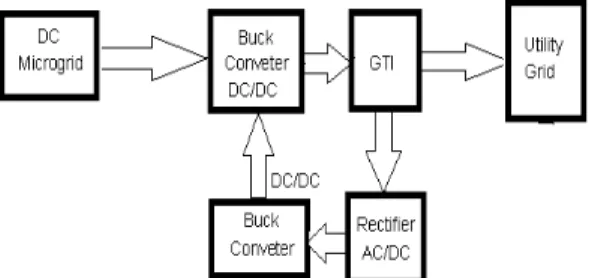
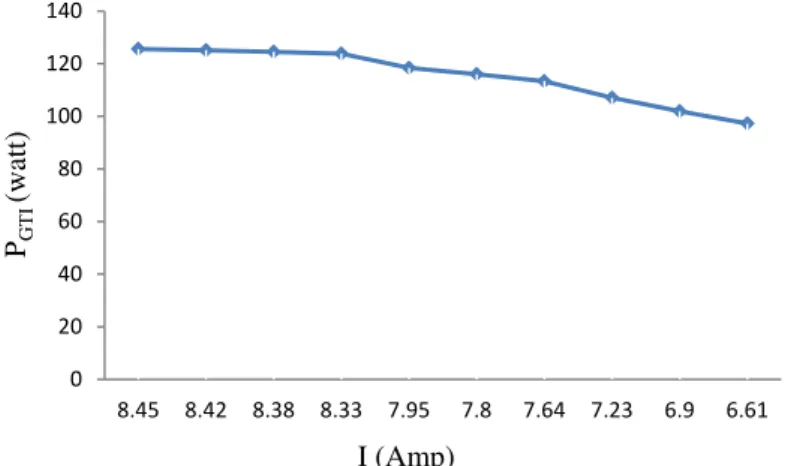
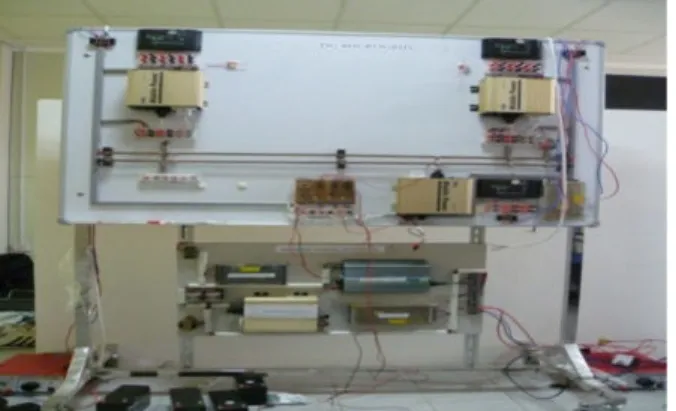
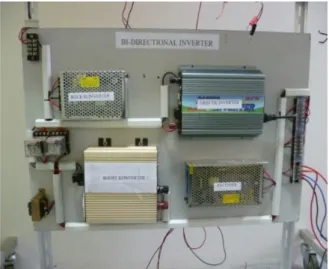
C14.6 The Development of Grid-Tie Inverter as Bidirectional DC/AC Converter in the DC Microgrid Network ... 750
C14.8 Controlling of Vgs Voltage at Power Mosfet to Control Rotation Speed of a DC Motor 756
C14.9 Permanent Magnet Generator Design for Wind Turbine Application ... 762
C15.2-Implementing Parallel Computing At Graph Coloring to Build Software For Course Timetabling ... 768
C15.3 Implementation of HRIR Interpolations on DSP Board TMS320C5535 eZdsp™ ... 777
C15.5 Implementation of Compressive Sensing in Embedded Hardware Device ... 783
C16.1 Planning Analysis about the Performance of Wi-Fi 802.11n Based Backhaul for LTE Network on Rural Area ... 789
C16.3 A Survey On Full Duplex Wireless Communications ... 797
C16.4 Implementation Of Pseudo Random Number Generator Algorithms based on Chaotic Logistic Map on an AVR Microcontroller by Utilizing a Temperature Sensor as a Key Sequence Generator ... 806
C16.5 A Review of Torque Ripple on Permanent Magnet Generator for Wind Turbine Applications ... 812
C17.1 Infrared Heater Controller on Dryer Cocoa Beans Machine based on Fuzzy Logic ... 820
C17.3 Comparison of Simulation Design between the Hollow and Solid Rotor Core of the Permanent Magnet Synchronous Generator ... 826
C17.4 An Integrated Functional Design Process Applied to a Multifunctional Three Fingered Gripper ... 831
C18.1 Dual-band Printed Antenna Composed of Square Patch and SRR for GPS and WLAN Application ... 839
C18.2 Multiuser MIMO Downlink Precoding Performance Results ... 846
C18.3 Non-relational Column-based Storage System for Web Services ... 852
C18.4 Breast Cancer Detection using Naive Bayes and C4.5 Algorithms ... 861
C18.6 Ultra Wideband Monopole Antenna Construction using Coplanar Waveguide for High Speed Data Transfer ... 869
C18.7 Designing Business Architecture for Mining Company by Using TOGAF Framework and Business Process Methodology ... 873
C18.8 Optimal Simulation Network with Energy Go Green, New Quadruple and Newton-Raphson to Minimize Losses ... 881
xiv
Symposium D - Materials & Metallurgy ... 891 D1.4 Electrical Current Dependence on Carbon Nanomaterial Structure Produced by Arc
Discharge in Liquid Medium ... 892 D2.5 Synthesis and Characterization of Poly(Acrylamide-Co-Methacrylamide) Gels Material using Raman Spectroscopy ... 896 D5.1 Copper Foamwith Interconnected Open Cell Structure Fabrication ... 901 D5.4 Performance of Jatropha Curcas as Dielectric Fluid for Surface Treatment of SKD 61
by using EDM-EDC ... 905 D5.8 Determination of Strain Hardening Exponent Base of Indentation Size Effect (ISE) of Vickers Hardness ... 912 D5.9 Effect of Equal Channel Angular Pressing and Post Heating on Microstructure and
Hardness of Cu-Zn 70-30 ... 916 D6.4 Synthesis and Characterization of Hydroxyapatite-Biopolymer Composites ... 922 D6.5 The Effect of Alkali Treatment toward Mechanical Properties of Polypropylene/Kenaf
Composite ... 928 D7.3 Mechanical Properties of Cogon Grass (Imperata Cylindrica) Fiber-Reinforced
Unsaturated Polyester Composites ... 934 D8.1 Synthesis and Characterization of New Copolymer Hexyl Methacrylate grafted to
Amylopectin as a Biodegradable Agent of Polymer Hybrid ... 938 D8.2 Performance of Natural Carotenoids from Musa aromatica and Citrus medica var Lemon as Photosensitizers for Dye-sensitized Solar Cells with TiO2 Nanoparticle ... 943 D9.3 Modified CO2 Corrosion Rate Calculation Model for Carbon Steel in Aqueous
Environment and Its Mitigation Recommendation for Oil and Gas Processing Facilities
Application ... 948 D9.5 Pitting Corrosion Study of Hyper-Duplex Stainless Steel 3207 in 6% FeCl3 using Weight Loss, Potentiodynamic Polarization Methods and Electrochemical Impedance Spectroscopy (EIS) Analysis ... 954 D11.1 Physico-chemical Characteristics of Composites Membranes based on Sulfonated
Cyclone Fibre Cellulose and Benzotriazole ... 959 D11.3 Effect of nano rubber particle additions to carbon fibre reinforced epoxy resin on
mechanical properties ... 966 D12.2 Grain Size Distribution Analysis of Multi-crystalline Si Ingot Produced by Directional
Solidification Technology ... 971 D12.3 Metal-Organic Frameworks- Chemistry, Properties, and Prospective Applications in
Sustainable Energy Development ... 976 D12.5 The Acoustical Characteristics of Polymer Mortar ... 983 D12.6 Synthesis and Characterization of Nanocrystalline Hydroxyapatite ... 988 D12.8 Impact Strength Properties of Bamboo Fiber Reinforced Polymer Composite in Uni
and 2 Direction ... 997 D13.1 Surface Modification of Nano Porous Polyethersulfone Membrane as a Filtration
Membrane in the Dialysis System: A Comparison of Coatings Material ... 1003 D13.3 High Water Permeability of Nanoporous Polyethersulfone (PES) Membrane for
Ultrafiltration Purposes ... 1009 D13.6 Changes in Surface Chemical Properties of Pyrite Caused by a Biosurfactant-producing Bacterium Implications for Eco-friendly Bioflotation Reagents in Sulfide Mineral Processing 1014 D13.10 Synthesis of Magnetite (Fe3o4) Nanoparticles from Iron Sand with Sonochemical
xv
Methods and their Magnetics Characterization ... 1019
D13.11 CaCO3 Scale Formation in Copper Pipes- Effect of Flow Rates on Induction Time and Mineral Phases ... 1024
D13.14 Synthesis of Portland Nano Cement Using Sol-Gel Method as Binder in Porous Membrane for Water Filtration Purpose ... 1031
D13.15 Effect of Lignin Addition on Mechanical Properties of Recycle Polypropylene (rPP) Composites ... 1036
D13.16 Chiral Metal-Organic Frameworks and Coordination Polymers Based on Modified Biphenyl and BINAP-Oxide Linkers and Their Properties ... 1040
Symposium F - Chemical & Bioprocess ... 1047
F1.1 The Effect of Storage Temperature for the Detection of Silver Nanoparticles via Engineered Biomolecules ... 1048
F1.2 Heterorhabiditis bacteriophora as Promised Biopesticide to Control Insect Pest Oryctes rhinoceros in Indonesia ... 1051
F1.3 Increased of Lamb Production on Padjadjaran Sheep Through the Application of Syncronization Estrus and Artificial Insemination Innovation ... 1059
F1.4 Zero Order Degradation Rate of Vitamin C in Fresh Orange and Strawberry Juices without Any Preservatives during Storage ... 1065
F2.1 Mathematical Modelling in CO2 Adsorption Using Strong Base Anion Exchange Resin as Adsorbent for Biogas Purification ... 1071
F2.2 Reducing the Energy Consumption and Greenhouse Gas Emission by Flare and Vented Gas Recovery- an Experience in Arun LNG Plant ... 1081
F3.3 Study of Different Operating Conditions During Carboxymethyl Chitosan Synthesis .... 1089
F3.5 Application of Low Input Technology for Sustainable Rice Industry in Tropical Tidal Swampland in Kalimantan Indonesia ... 1096
F4.2 Addition of Granular Rubber Tire Carriers in Enhancing Performance of Anaerobic Moving Bed Reactors ... 1100
F4.6 Application of a Simple Electrocoagulation (EC) Apparatus using Aluminum (Al) Electrodes for Colour Removal from Aqueous Solution ... 1106
F5.3 Effect of Selective Membrane Utilization to Produce Chlorine by Plasma Electrolysis Method ... 1110
Symposium G - Industrial ... 1120
G1.1 Innovation for Sustainable Development based on ICT Platform ... 1121
G1.2 A Framework for Sustainable Manufacturing in Indonesia ... 1126
G1.4 Risk Model on Business Model of Mobile Refuelling Unit (MRU) for Natural Gas Vehicle 1132 G2.2 Usability Issues in Designing Al-Qur’an Application of Touch Screen Device for Low Vision People ... 1138
G2.3 Design of Fatigue Monitoring Apparatus Based On Critical Flicker Fusion Frequency .. 1144
G3.1 Risk Impact Analysis on Investment for Drinking Water Supply System Development Project in Bekasi using Project Risk Management ... 1149
G3.2 Reducing CO2 and H2S Content in Biogas through Improved Circulated Water Scrubbing Method ... 1155
G3.3 The Design of MRT Jakarta Smart Card Ticketing System using System Engineering Methods – ISO 15288 ... 1161
xvi
G3.6 Prototypes Liquid Waste Processing Equipment Based on Ozone and UVC for Home
and Small Industries ... 1167 G4.1 Production Systems and Sustainability ... 1173 G4.3 Design of Inspection Plan and Work Measurement of Packaging Material Inspection
Activity in a Baby Milk Industry ... 1179 G4.4 Production Assembly Line Balancing by considering the Performance Rating of the
Operator ... 1185 G4.5 Improving Service Quality towards Patients’ Satisfaction at Stroke Hospitals in
West Sumatera ... 1191 G5.2 Development of Recycled Plastic Producer’s Capability Indicator Using Material Testing Results and Radar Chart ... 1197 G5.3 The Extended Integrated Model of Kansei Engineering, Kano and TRIZ Incorporating Cultural Differences in Services ... 1203 G5.4 Optimize Parameters Using Moving Average, Turtle And Awesome Oscilator ... 1209 G5.6 The Prevalence of Musculoskeletal Complaints Among Workers in Oil Palm Plantation 1215 G6.2 Life Assessment Analysis of Photovoltaic System in Indonesia ... 1220 G6.3 Analysis of the Workplace Culture 5S for Continuous Improvement on Foundry
Industries in Indonesia ... 1225 G6.5 Service Quality Measurement and Improvement for Restaurant X Using Dineserv ... 1231 G7.1 Application of Response Surface Methodology of Experimental Designs on Welding
Operation Settings to Reduce the Defects of Miniature Circuit Breaker Rating 2 Ampere .... 1237 G7.2 Reduction of Bubble Defect Using Two-Level Full Factorial Design in Rotocast Area
of PT. XI ... 1243 G8.1 Subtitle Design of Parental Guidance Movie Program on Indonesian Television ... 1248 G8.4 Comparative Analysis of Artificial Neural Network and Lognormal Distribution Methods for Designing Predictive Maintenance Scheduling ... 1254 G9.3 Implementation of Analytic Network Process for Selecting Supplier of Aluminum
at PT X ... 1260 G9.4 Steel Warehouse Location Determination For JABODETABEK And Jawa Barat
Distribution Areas ... 1266
Symposium H - Community Development ... 1272 H1.1 Institutionalization and Mainstreaming of Community Engagement in High Education
Institution ... 1273 H1.2 Implementation of Local Cultural Policy Management Wisdom (Rate Lom) in District
Bangka Belitung Islands ... 1274 H1.3 Toward a Green Sustainable Campus: Lessons Learned from Conserving Water in the Faculty of Engineering, Universitas Indonesia ... 1278 H1.4 Analysis and Design of Knowledge Management System for Agribusiness Community
Development ... 1284 H1.5 Originally Antipathy Turn into Care for Disaster Preparedness ... 1290 H1.6 The Influence of Economic, Socia-cultural, and Environmental of Tourism Toward
Pro-poor Tourism Initiatives in Bunaken National Marine Park ... 1296
xvii
• BPH MIGAS
• FAKULTAS TEKNIK UNIVERSITAS INDONESIA
• RESEARCH GROUP ON APPLIED ELECTROMAGNETIC TECHNOLOGY
• FAKULTAS TEKNIK UNIVERSITAS MATARAM
• UD. RAGIGENEP
• YOHANA PEARL
• LESTARI OLEH-OLEH
EXHIBITOR LIST
xviii
PT. Samudra Montaz
PT. Bank Negara Indonesia,Tbk
Energi Mega Persada
The 14th International Conference on QiR (Quality in Research) Organizing Committee wishes to express its gratitude and appreciation to :
Prof. Dr. Ir. Muhammad Anis M.Met., Rector of Universitas Indonesia for consenting to be the guest of honour
All invited speakers session, moderators and conference speakers, for their participation.
All conference Sponsors, Supporters, Exhibitors and advertisers for their generous support.
All participants and others who have in one way or another contributed towards the success of this conference.
MAINLY SPONSOR SPONSORED BY
SUPPORTED BY
CONTRIBUTED BY
ACKNOWLEDGEMENT
Continuing Education Program Center for Computing and Information Technology, FT UI
TIM INKUBATOR DTM FTUI
xix
Prof. Antonio Gomes Correira, Univ. of Minho, Portugal
Prof. Francesco Picchioni, Rijksuniversiteit Groningen, The Netherlands
Prof. Hero Jan Heeres, Rijksuniversiteit Groningen, The Netherlands
Prof. Hiroyuki Umemuro, Tokyo Institute of Technology, Japan
Prof. Hwataik Han, Kookmin University, Korea
Prof. Josaphat Tetuko Sri Sumantyo, Chiba University, Japan
Prof. K.U. (Katja) Loos, University of Groningen, The Netherlands
Prof. Liselotte Schebek, Technische Universität Darmstadt, Germany
Prof. Makoto Hirano, Shibaura University, Japan
Prof. Masafumi Yohda, Tokyo University of Agriculture and Technology, Japan
Prof. Michiharu Tabe, Shizuoka University, Japan
Prof. Ming Yang, Tokyo Metropolitan University, Japan
Dr. Mioara Mandea, Centre National d'Etudes Spatiales, France
Prof. Muhammad Idrus Alhamid, Universitas Indonesia, Indonesia
Prof. Mohammad Nasir, Minister of Research, Technology And Higher Education Republic of Indonesia
Prof. Oliver Carsten, University of Leeds, England
Prof. Rainer Leisten, University Of Duisburg-Essen, Germany
Dr. Rokiah Omar, Universiti Kebangsaan Malaysia, Malaysia
Prof. Sangkwon Jeong, Korea Advanced Institute Of Science And Technology
Veronica Soebarto, Ph.D., The University of Adelaide, Australia
INVITED SPEAKER
xx
PROF. ANTONIO GOMES CORREIA UNIVERSITY OF MINHO, PORTUGAL ([email protected])
Professor Correia graduated in Civil Engineering from the Technical University of Lisbon - IST in 1977, and received a Doctor-Engineer Degree by “Ecole Nationale des Ponts et Chaussées”- Paris in 1985. In 1987 he also received the Doctor degree in Civil Engineering by the Technical University of Lisbon – IST and also in 1998 the “Habilitation in Civil Engineering.
In 1987 he gained the specialist degree at the National Laboratory of Civil Engineering (LNEC), distinguished with Manuel Rocha Award. In 1998, he created the Geotechnical Research Centre at the Technical University of Lisbon – IST and he served as its President until 2000. In 2001 he gets the degree of specialist in Geotechnique attributed by the Portuguese Association of Engineers.
Professor Correia is registered as an expert (external member) of "Agência de Avaliação e Acreditação do Ensino Superior" (Agency for Assessment and Accreditation of Higher Education - A3ES) for the scientific area of Civil Engineering, starting from 2013 when he served as a panel member in the evaluation of undergraduate and graduate courses for three institutions
Since 2003, he is a Full Professor at the University of Minho and from 2010 to 2013 Director of the Research Centre of Territory, Environment and Construction. He is also from 2010 chair of the Doctoral program in Civil Engineering and from 2013 Vice-Dean of School of Engineering of the University of Minho. From September 2013, He served as the Editor-in-Chief of the International Journal on Transportation Geotechnics published in Elsevier’s Engineering Journals.
PROF. FRANCESCO PICCHIONI RIJKSUNIVERSITEIT GRONINGEN, THE NETRHERLANDS ([email protected])
Francesco Picchioni was born in 1971. He is a professor of chemical product technology at the University of Groningen (RuG). His research interests include synthesis and application of bio-based and renewable polymeric materials for a variety of industrial applications. He studied and graduated from the University of Pisa. In 2010 he was elected Lecturer Gold 2010: a prize from the Royal Dutch Chemical Society to promote initiatives and innovation in chemistry education.
In 2000 Prof. Picchioni moved from Italy to Eindhoven and since 2003 he has worked at the Rijksuniversiteit Groningen University where he’s
currently teaching: Interfacial Engineering, Polymer Chemistry (for Industrial Engineering and Management), Polymer Products, and From bacteria to plastic, In collaboration with other teachers (responsible for only a part of the course).
INVITED SPEAKER
xxi
PROF. HERO JAN HEERES
RIJKSUNIVERSITEIT GRONINGEN, THE NETHERLANDS ([email protected])
H.J. (Erik) Heeres (25-06-1963) carried out his Ph.D. research at the University of Groningen on the development of novel homogeneous lanthanide catalysts for the conversion of unsaturated hydrocarbons and graduated in 1990. Afterwards, he performed a post-doc at the University of Oxford in the group of Prof. J. M. Brown on asymmetric catalysis.
From 1991-1999, he was employed at Shell Research B.V. (Amsterdam and Pernis, the Netherlands) and worked on a range of applied catalysis topics.
He joined the chemical engineering department of the University of Groningen in 1999 as an assistant professor. In 2003 he was appointed here as a full professor in green chemical reaction engineering. His research interests concern the development of efficient catalytic technology for acid- and metal-based catalytic biomass conversions, with an emphasis on biofuels (catalytic pyrolysis, pyrolysis oil upgrading), platform chemicals (levulinic acid, hydroxymethylfurfural) and performance materials from biomass (starch modifications).
The group is actively involved in national and international consortia. Heeres (h-index 36) is the (co-) author of 155 papers in international peer reviewed journals and 13 patents in the field of (applied) catalysis and chemical reaction engineering. Heeres supervised 30 PhD students and up to 50 master students. He was nominated twice for the teacher of the year award of the Chemistry bachelor and master program and once for the Faculty teacher of the year award. He is currently an editorial board member of the journal Sustainable Chemical Processes.Heeres is a member of the Koninklijke Hollandsche Maatschappij der Wetenschappen..
PROF. HIROYUKI UMEMURO TOKYO INSTITUTE OF TECHNOLOGY, JAPAN
Professor Umemuro received his Bachelor of Engineering in Control Engineering, Faculty of Engineering, Tokyo Institute of Technology in 1987, Master of Engineering in Control Engineering, Graduate School of Science and Engineering, Tokyo Institute of Technology in 1989, and his Doctor of Engineering in Industrial Engineering and Management, Graduate School of Decision Science and Technology, Tokyo Institute of Technology in 1998. He is currently Professor at the Department of Industrial Engineering and Management, Graduate School of Decision Science and Technology, Tokyo Institute of Technology.
Professor Umemuro is also members of the following Professional Societies: International Society for Gerontechnology, Japan Ergonomics Society (a member of International Ergonomics Association), Japan Industrial Management Association, Japanese Cognitive Science Society, Japanese Society for Artificial Intelligence, The Japan Society for Management Information. He also serves as Trustee for the Japan Ergonomics Society since 1999 till today, served as President for the International Society for Gerontechnology Japan Chapter, 2006-2012 and Editorial Board of the Japan Society for Management Information 2002-2004. Professor Umemuro has published 25 publications in Prefereed Journals, 50 publications in Edited Conference Proceedings, 5 Publications as Invited Contributions, 4 books publications, and 3 books translations.
INVITED SPEAKER
xxii
PROF. HWATAIK HAN
KOOKMIN UNIVERSITY, KOREA ([email protected])
Professor Han received his Bachelor Degree in 1980 at Mechanical Engineering from Seoul National University. In 1982, he received his Master in Mechanical Engineering from Seoul National University and in 1988 he finished his Ph.D in Mechanical Engineering, University of Minnesota, USA. He currently serves as the Director of BKplus-Energy ODA Center, Kookmin University, Director of Energy Engineering Human Development Center, Kookmin University, and Director of Well-being Environment Research Center, Kookmin University.
Professor Han holds a certification as Professional Engineer from Minnesota State Board of AELSLAGID, Registration No. 21924 (since 1992). He is the President of the Society of Air-conditioning and Refrigerating Engineers in Korea (SAREK) since 201; the Central Construction Committee, Ministry of Land, Infrastructure and Transportation, Korea since 2013; the Editor-in-Chief, Koran Air Cleaning Association (KACA) from 2004; Member of the Korean Society of Automotive Engineering (KSAE) from 2001; Arbitrator for The Korean Commercial Arbitration Board from 1998. He is also a member of the American Society of Heating, Refrigerating and Air Conditioning Engineers (ASHRAE) from 1990 and member of American Society of Mechanical Engineers (ASME) from 1988.
PROF. JOSAPHAT TETUKO SRI SUMANTYO CHIBA UNIVERSITY, JAPAN ([email protected]) Prof Josaphat Tetuko Sri Sumantyo was born at Bandung, West
Java, Indonesia in 1970. He received the B.Eng. and M.Eng.
degrees in Electrical and Computer Engineering from Kanazawa University, Japan in 1995 and 1997, respectively (Subsurface Radar Systems) and the Ph.D. degree in Artificial System Sciences (Applied Radio Wave and Radar Systems) from Chiba University, Japan in 2002.
He was an Associate Professor (permanent staff) at the Center for Environmental Remote Sensing (CEReS), Chiba University
from 2005 to 2013, then Full Professor (permanent) at the same center from 2013 to now, member of international and domestic organizations, reviewer of journals, and organizations. His main interests are theoretically scattering microwave analysis and its applications in microwave (radar) remote sensing. He manages Josaphat Microwave Remote Sensing Laboratory (JMRSL), Center for Environmental Remote Sensing (CEReS), Chiba University, Japan.
His laboratory promotes the education and research to develop the internationally technologies and sciences. He always encourages the undergraduate and postgraduate students to know the microwave phenomenon and to be familiar with the interaction between microwave and natural matters (i.e. vegetation, artificial materials, earth surface, and snow), therefore they could develop original methods or sensor during studying in the courses.
INVITED SPEAKER
xxiii
PROF. DR. K.U. (KATJA) LOOS
UNIVERSITY OF GRONINGEN, THE NETHERLANDS ([email protected])
Professor Loos is a Professor at the Faculty of Mathematics and Natural Sciences, University of Groningen, Netherlands. Her fields of disciplines are:
Polymer Science, Chemistry, Applied, Materials Science, and Multidisciplinary.
Her main research interests are focused on the design, synthesis and characterization of novel tailor made macromolecules as well as on the development of sustainable, eco-efficient and competitive production methods of polymeric materials. By utilizing modern polymer synthesis techniques including biocatalysis and other controlled polymerization methods her research aims to expand fundamental scientific knowledge towards advanced technologies.
She is a Member of the board of the study group Macromolecules (studiegroep macromoleculen) of the chemistry section of the Dutch Science Foundation (NWO), Member of the board of the National Dutch Graduate School of Polymer Science & Technology (PTN), Member of the program committee of the Dutch Belgian Beamline (DUBBLE) at the European Synchrotron Research Facility (ESRF) in Grenoble, France, Member of the Scientific Evaluator Board of the German Academic Exchange Service (DAAD). She currently serves as Associate Editor Europe of the Journal of Renewable Materials, Member of the Editorial Board of Journal of Renewable Materials, Member of the Editorial Board of Polymer, Member of the Editorial Board of Polymers, Reviewer for scientific journals, Reviewer for grant proposals (national and international), Scientific advisor of Dutch and German courts, Industrial consulting and Contract Research.
PROF. LISELOTTE SCHEBEK TECHNISCHE UNIVERSITÄT DARMSTADT, GERMANY
([email protected]) Professor Liselotte Schebek is a Professor for the Faculty of Civil and
Environmental Engineering as well as Chair of Material Flow Management and Resource Economy, Technische Universität Darmstadt. She was born on May 19th, 1957 in Bensheim / Bergstraße. She completed her Dipl.-Ing from Technische Universität Darmstadt in Study of Chemistry in 1983 and completed her Doctoral Oral Examination from University of Mainz in 1990.
She was employed as Project Manager Lahmeyer International, Frankfurt (since 1998, ERM Lahmeyer International, Niederrad) from 1990-1999 and also as a Lecturer on Environmental Management, University of Applied Sciences, Wiesbaden. From 1999-2012 she was the Head of Department of
Technology-Induced Material Flow/Institute for Technology Assessment and Systems Analysis (ITAS-ZTS), Karlsruhe Institute of Technology (KIT). Professor Schebek continued on as Professor of Industrial Material Cycles, Technische Universität Darmstadt, Faculty of Civil Engineering and Geodesy between 2000-2009/2013 and Professor of Material Flow Management and Resource Economy, Technische Universität Darmstadt, Faculty of Civil and Environmental Engineering since 2010. Her research interest include: Closed substance cycle and resource management, Material flow management and environmental protection, Material and energetic use of biomass, and Energy technologies and energy systems
INVITED SPEAKER
xxiv
PROF. MAKOTO HIRANO
SHIBAURA INSTITUTE OF TECHNOLOGY, JAPAN ([email protected])
Professor Hirano finished his Bachelor of Engineering in 1977 from Waseda University Japan and continued on to finished his Master of Science in 1979 and Ph.D in Engineering in 1990 from the same University. He went to Temple University Fox School, PA, USA to pursue his Executive MBA degree and finished in 2002 when he returned to Waseda University to take his Ph.D in International Business Management and finished them in 2007. He is currently a Professor at the Graduate School of Engineering Management, Shibaura Institute of Technology and a Guest Professor for the Kochi University of Technology, Japan.
Professor Hirano currently serves as the Vice-Chairperson of IEEE Technology and Engineering Management Society, Chairperson for Entrepreneur Engineering Society, Director & Secretary- General for the Japan MOT Society, and Member of Committee for The Japan Society for Science and Research Management, and holds membership several other notable societies and associations.
His research interest includes: Innovation Management, MOT (Management of Technology), SME Clustering in Manufacturing Industry, Regional Development, and Entrepreneurship. Professor Hirano was awarded the President Award for NTT Science and Core Technology Laboratory Group and NTT Basic Research Laboratories. He is the holder of 52 patents; one of them is the Method of fabricating circuit elements on an insulating substrate (US Patent 787136).
PROF. MASAFUMI YOHDA TOKYO UNIVERSITY OF AGRICULTURE AND TECHNOLOGY, JAPAN ([email protected])
Professor Masafumi Yohda served as a professor since May 2003 in the Department of Biotechnology and Life Science, Tokyo University of Agriculture and Technology. Before that he was a researcher for the Institute of Physical and Chemical Research (RIKEN) since 1991.
He finished his Bachelor, Master and Doctor from Department of Chemical Engineering, The University of Tokyo in 1982, 1984, and 1987 respectively. In 1999 he was awarded the Excellent paper award of Journal of Bioscience and Bioengineering.
His research field includes Biochemistry, Molecular Biology, Biophysics, System Engineering, and Environmental Science. Professor Yohda is the Councilor of the Japanese Biochemical Society, Director of the Protein Society of Japan, Director and Manager of East Japan Branch of the Society of Biotechnology, Director of the Chem-Bio Informatics Society. He is also a member of the Molecular Biology Society of Japan, The Society of Chemical Engineers, Japan, Japan Society for Environmental Biotechnology, to name a few.
INVITED SPEAKER
xxv
PROF. MICHIHARU TABE SHIZUOKA UNIVERSITY, JAPAN ([email protected])
Michiharu Tabe received the B.S. and M.S. degrees and the Ph.D. degree in engineering from Keio University, Japan, in 1973, 1975, and 1984, respectively. He joined Nippon Telegraph and Telephone Corporation in 1975, and had been engaged in research on Si processes for high-speed bipolar transistors and ultra-small MOSFETs. In 1984-85, he was a visiting researcher at Stanford University and studied oxidation of Si surfaces by Synchrotron Radiation. In 1990, he started to work on Si nanodevices, primarily single electron transistors.
Since 1994 up to now, he has been a Professor at Research Institute of Electronics, Shizuoka University, Japan. He is currently working on a new research area of “Single Dopant Atom Devices”.
Recently, two papers published from his group have been officially adopted as Emerging Technologies in “International Technology Roadmap for Semiconductors”.
He is also an Adjunct Professor of University of Indonesia and an Honorable Professor of Obuda University, Hungary. In 2012, he received Prize for Science and Technology by the Minister of Education, Culture, Sports, Science and Technology of Japanese Government, the 20th TakayanagiKenjiro Memorial Award in 2006, and a Fellowship of Japanese Society of Applied Physics in 2008.
PROF. MING YANG TOKYO METROPOLITAN UNIVERSITY, JAPAN Prof. Ming Yang is a Professor in the Faculty of System Design Graduate School of System Design, Dept of Intelligent Mechanical Systems, Tokyo Metropolitan University, Tokyo, Japan. His Research Topics include: Micro-Forming and Micro-Fabrication.
![Fig. 1. (a) GTI configuration; and (b) Diagram Block of GTI model [4]](https://thumb-ap.123doks.com/thumbv2/123dok/11851187.0/34.893.274.638.110.306/fig-1-gti-configuration-diagram-block-gti-model.webp)
![Fig. 2. Diagram block of BGI supplying dc load [5]](https://thumb-ap.123doks.com/thumbv2/123dok/11851187.0/34.893.298.593.709.841/fig-diagram-block-of-bgi-supplying-dc-load.webp)