This book offers an innovative study of future wars, crises and transformations of the global political economy. From the perspective of global security, the period since the end of the Cold War has been a disturbing disappointment. It was certainly plausible that the ruling side in the Cold War pushed hard for nuclear disarmament in the immediate aftermath of the Soviet collapse.
Its particular focus is on the future of global security given the characteristic tension between the workings of the transnational economy and their political manipulations by powerful actors.
Preface
My other academic affiliation is with the Globalism Institute at RMIT University in Melbourne, Australia. As always, Katarina has encouraged me a lot and helped to simplify and clarify some parts of the text. Early (and in some respects different versions) of two of the chapters have been published previously.
Key parts of Chapter 5 appeared as "The Long Downslide of the World Economy and the Future of Global Conflict" in Globalizations, May Routledge).
Acknowledgements
1 Introduction
Much of the religious right in the United States supports the government of George W. Any historical explanation of the era of competing imperialisms and World War I must lead to this. These scenarios also account for the possibility of future crises, catastrophes and wars, including those in core areas of the global economy.
North can generate, cause or instigate potentially violent conflicts, especially in the core areas of the world economy.
2 Global security
Countries at the center of the global economy are carrying out many large-scale military interventions on the peripheries. According to Wagar's account, after a long wave of economic growth in the first decades of the twenty-first century, a wave of decline will begin in 2032. Thus, in the armed conflict in the United States, they took the side of the conservative faction of Congress.
Elsewhere in the core of the world economy, however, the dominant global order of economic liberalism is equated with the preconditions for growth and security.
3 Explaining the First World War
Marxist theorists of imperialism at the time of the First World War, or immediately afterwards. Classical theorists of imperialism saw the causes of war in terms of long-term political-economic processes. While involved in the opium trade and wars in the East, the Royal Navy contributed to the suppression of piracy and slavery in the rest of the world.
The expansion of the French colonial empire was primarily seen as a method to "rejuvenate" the country after its humiliating defeat in the Franco-Prussian War. This is what Britain attempted with imperialism in the last decades of the nineteenth century. The core of the justification for late nineteenth-century imperialism was that natural history was understood as (vulgar) Darwinism.
Two decades later, in the 1907 Stuttgart Congress of the Second International, European socialists and labor parties debated colonialism. In the revised version of the paper, Kautsky saw the European arms race as an inevitable consequence of competing imperialisms.13. Britain was the industrial workshop of the world and imported agricultural goods and raw materials.
The concentration of production is a general and fundamental law of the present stage of development of capitalism' (ibid.: 8). However, theories of imperialism vary in their accounts of the main causal mechanisms and processes.
4 The origins of the First World War
At least there was nothing inevitable in the exact timing of the start of the war. This avoidance of war in the summer of 1914 would have saved Europe and the world from the First World War. In the first two decades of the twentieth century, the strategic situation was constantly changing.
This causal explanation has long historical roots in the political debates and struggles of the eighteenth and nineteenth centuries. The liberalist critique of the upper class of professionals in the field of violence – the aristocracy – emerged in eighteenth-century Europe. What are – and are – the consequences of the mechanisms and processes of the global economy for global security.
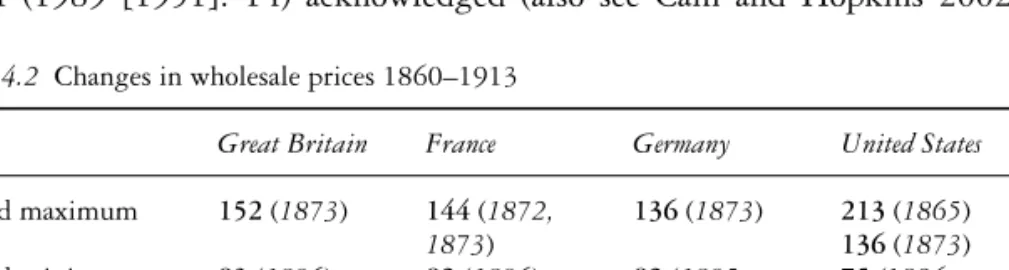
For example, it was not necessary for the industrial capitalist expansion of the nineteenth century to be territorialized as it had been since the 1870s. This is actually a rough description of what happened in the US, Germany and other industrializing countries in the nineteenth century. Before 1815, economic growth was slow compared to industrial age standards (see Maddison 2005).
In 1914, four of the European dynastic leaders were blood relatives (Nicholas II of Russia, Wilhelm II of Germany, George V of England and Leopold II of Belgium). As a result of the Industrial Revolution, economic growth accelerated in Europe during the first half of the nineteenth century. So it seems that the most plausible counterfactuals have to do with the outcome of the war.
Conversely, the denaturalization of understandings can contribute to the openness and responsiveness of the community.

5 The long downward wave of the world economy in the late
It appears that the global poor have remained as poor as they were Figure 5.2 Slowing economic growth in the world as a whole. From this perspective, how should we explain the long wave cycles in the capitalist world economy. For these and other reasons, confidence in the continuation of the bubble may begin to wane.
Characteristically, financial markets also enable mechanisms that tend to concentrate wealth in the hands of the relatively few, thus contributing to the global problem of under-consumption/over-production. It is true that two of the three turning points in the twentieth century coincided with world wars (also, the first cycle was back at the time of the Napoleonic wars). On the other hand, it may be that not only depression, but also growth in particular political-economic contexts, can generate, ignite or cause violent conflicts, especially in the main areas of the world economy (Kondratieff excluded Latin America and European colonies in Africa and Asia from his study).
Parallel developments occurred in the production of the internal combustion engine, automobiles, rubber compounds, airplanes, and road and airport construction. In the social context thus created, the uneven growth of the third wave upwards led to the formation of new alliances and an arms race between them. However, in light of the political-economic analysis of this chapter, a new wave of growth does not seem particularly likely without adequate, collectively organized global measures.
In the 1980s and 1990s in particular, many of the key systems of global governance were enlisted for the project of subsuming economic orthodoxy. Again, in the early twenty-first century, the world economy oscillates between relatively low per capita growth and deepening deflation and recession.

6 Global insecurity in the early twenty-first century
The anchor of the Bretton Woods system was the dollar, pegged to the value of gold. In addition, due to the continued surplus of US allies, a shortage of gold appeared. In 1972, the US government consciously decided not to return to a modified form of the Bretton Woods system.
In the Cold War context of the USA, the ISLM model was more acceptable and soon gave way to increasingly orthodox interpretations. The end of the Bretton Woods system was also a breaking point, leading to the gradual erosion of the social democratic structures and their alignment in the world economy. Thirty years after the end of the Bretton Woods system, a new public discourse of neo-imperialism has emerged.
During and immediately after the collapse of the Bretton Woods system, only a few actors openly advocated neoliberal ideas. In this sense, in the course of the self-reinforcing process of neoliberal globalization, the United States has clearly become stronger than ever. In 1985, the US Congress passed legislation that threatened the financial position and organizational principles of the UN.
We are thus left with political-economic explanations for the new rise of neo-imperialism in the early 21st century. The Bretton Woods system was inherently dilemmatic and presupposed a largely disintegrated global economy of the 1940s, dominated by the US.
7 Possible futures A
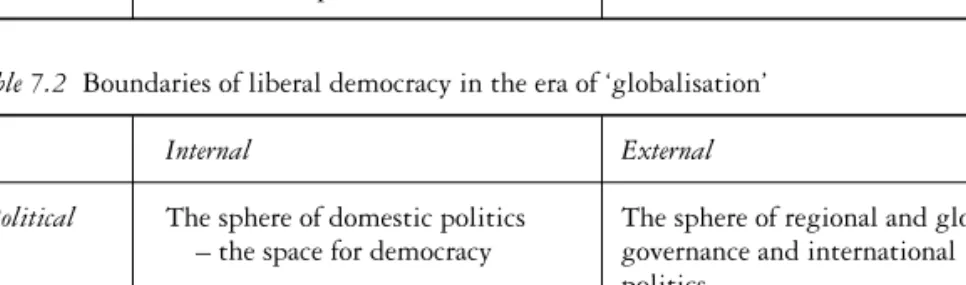
As part of the self-reinforcing process of neoliberalization (see chapter 6), and led by the United States, a global framework of institutional arrangements has been created which, among other things, tends to turn towards a new truly upward phase in the world economy (as explained in chapter 5). Nothing resembling the Great Depression of the 1930s has so far occurred in the core areas. The 2005 figures represent about 7 percent of China's GDP and 6.5 percent of that of the US.
In 2001, America is facing the worst energy shortage since the oil embargoes of the 1970s. Mechanism A3: Crisis-prone global finance and the precarious role of the US dollar in the global monetary system. Foreign holdings of US government bonds amounted to almost half of the total national debt.
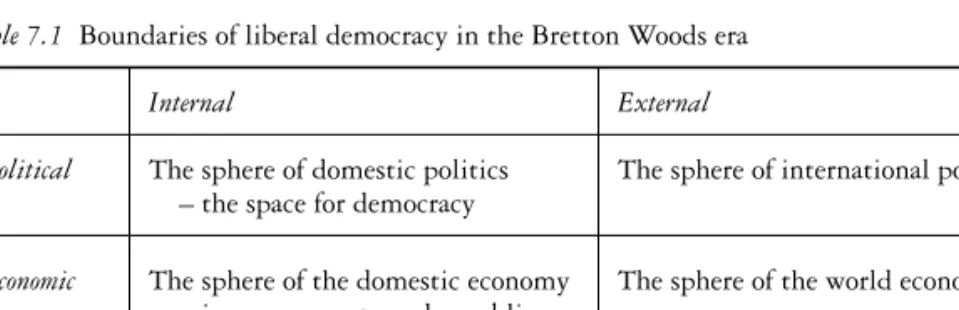
Given the Bretton Woods monetary system, there is nothing inevitable about the centrality of the US dollar. It was also moderated by the multilateralism of US trade policy during the Bretton Woods era (for a description of the gradual transition to unilateralism, see Martin 1994). This theory essentially asserts that the stability of the world depends on the benevolence and leadership of the United States.
In the early twenty-first century, the Chinese view of the US went from slightly negative to sharply negative (World Public Opinion Org 2007). It is clear that the US will not face the depression alone, as it will drag down most parts of the world economy.