RRAC guidelines on Anticoagulant Rodenticide
Resistance
Management
Editor: Rodenticide Resistance Action Committee (RRAC) of CropLife International
The Rodenticide Resistance Action Committee (RRAC) is a working group within the framework of CropLife International. Participating companies include:
Bayer CropScience, BASF, LiphaTech S. A., PelGar, Rentokil Initial, Syngenta and Zapi. Senior technical specialists, with specific expertise in rodenticides, represent their companies on this committee.
The RRAC is grateful to the following co-authors:
Stefan Endepols, Alan Buckle, Charlie Eason, Hans-Joachim Pelz, Adrian Meyer, Philippe Berny, Kristof Baert and Colin Prescott.
Photos provided by Stefan Endepols.
Aim
This document provides guidance to advisors, national authorities, professionals, practitioners and others on the nature of anticoagulant resistance in rodents, the identification of anticoagulant resistance, strategies for rodenticide application that will avoid the development of resistance and the management of resistance where it occurs.
Contents
1. Introduction
...22. Classification and history of rodenticide compounds
...33. Mode of action of anticoagulant rodenticides, resistance mechanisms, and resistance mutations
...64. Testing for resistance
...95. Integrated pest management for rodent control
...106. Preventing resistance
...147. Combatting resistance
...158. Alternatives to anticoagulants: chemicals and other control techniques
...179. Resistance and ecotoxicology
...2010. Definitions
...2111. Further reading
...2212. Other sources of rodenticide resistance management advice and information
...2313. Laboratories performing resistance tests in rats and mice
...2314. Checklist for rodenticide users experiencing difficulties
...2415. Maps of resistance areas of the Norway rat
...26It has now been shown over some fifty years that the use of anticoagulant rodenticides forms the most effective method of controlling commensal rodent populations.
The continued use of these anticoagulant rodenticides has, however, led to the development of resistance in commensal rodent species, the Norway rat Rattus norvegicus, the roof rat Rattus rattus, and the house mouse Mus musculus1. Resistant strains of the Norway rat may be restricted to certain geographical regions. Resistant mouse strains cannot be allocated geographically. Often, the occurrence of resistance is connected to certain conditions, such as the presence of livestock-feed with high content in vitamin K3, industrial infrastructure, and the continuous use of anticoagulant rodenticides with poor practice.
However, in some cases the reasons for development of resistance cannot be attributed with certainty.
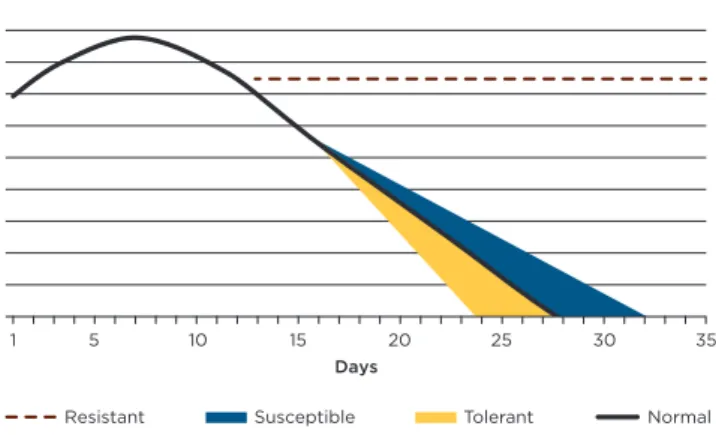
Remember, resistance is characterised by the ability of individuals within a rodent population in the field to continue feeding on the anticoagulant bait over many weeks (see Figure 1: Example of progress of an anticoagulant treatment), without being killed. It is not characterised by the reluctance of the rodents to feed on the baits.
Continuous feeding from anticoagulant baits may not only be due to resistance, but may also be caused by under-baiting or immigration. However, once these alternatives have been eliminated, the probability that the cause of the continued feeding activity is anticoagulant resistance is high.
From the point of view of those undertaking practical rodent control, the term Practical Resistance is used to identify resistance that has led to the difficulty to control rodents in field situations.
“Anticoagulant resistance is a major loss of efficacy in practical conditions where the anticoagulant has been applied correctly, the loss of efficacy being due to the presence of a
strain of rodent with a heritable and commensurately reduced sensitivity to the anticoagulant”.
Greaves, 19942There are other scientific definitions of the term resistance (see chapter 10).
This document on rodenticide resistance provides understanding of the nature of anticoagulant
resistance, introduces data on known resistant strains and provides help to those wishing to recognize resistance and manage it.
1. Introduction
1 Several sub-species and variations exist of Rattus rattus and Mus musculus. There is no evidence that subspecies differ in their susceptibility to anticoagulants.
2 Greaves, J.H. (1994). In: Pelz, H-J. and Prescott, C.V. Chapter 9. Resistance to anticoagulant rodenticides. Rodent Pests and their Control (Buckle, A.P. and Smith, R.H. eds). 2nd Edition, CAB International, Wallingford, UK. pp 187-208.
1 5
Resistant Susceptible Tolerant Normal
10 15 20
Days
25 30 35
Figure 1: Example of progress of an anticoagulant treatment in terms of bait consumption during a 35 day baiting. Within a population, susceptibility varies individually, and therefore some individuals may survive a few days longer. This natural range is indicated by red and green ranges. However, individual feeding behaviour can lead to the same effect.
With resistant animals, bait consumption will stay at a constant level, and no sufficient control will be possible.
Worldwide some naturally occurring vertebrate pesticides, such as cyanide and strychnine, have been used for hundreds, possibly thousands of years to kill unwanted mammalian pests, and zinc phosphide has been used as a rodenticide for nearly 100 years. The most prolific period of research and development occurred between 1940 and 1990.
Sodium fluoroacetate (1080) was developed in the 1940s, first-generation anticoagulant rodenticides in the 1940s, 50s and 60s, and cholecalciferol and second generation anticoagulant rodenticides in the 1970s and 80s, partly to overcome resistance.
Acute-acting substances
None of the acute rodenticides is now widely used.
Indeed, with the exception of alphachloralose none is currently registered in Europe as a biocide, although more are available in North America. Prior to 1950 all vertebrate pesticides were non-anticoagulants, most of them acute or quick-acting, but after the introduction of warfarin and the other anticoagulants the importance of these compounds was reduced.
After the emergence of anticoagulant resistance in some populations of rodents and the discovery of residues of the second-generation anticoagulants in wildlife, interest in non-anticoagulants, or at least less persistent ‘low residue’ vertebrate pesticides, has revived and more new acute substances have been investigated.
Alphachloralose is a narcotic with a rapid effect.
It slows a number of essential metabolic processes, including brain activity, heart rate and respiration, inducing hypothermia and eventual death. It is most effective against small rodents such as house mice in cold or cool conditions. Alphachloralose is most often used in baits containing 2-4% of the active material for mouse control. In a number of countries there is some use of this compound for controlling bird pests and clearly because of its toxicity to birds it must be used with care when applied in baits for control of mice.
Zinc phosphide was first used as a rodenticide in 1911 in Italy. It is an effective acute rodenticide and was the most widely used rodenticide worldwide until the introduction of anticoagulant compounds in the 1940s and 1950s. It is still used as a rodenticide in the USA, Australia, the Asia-Pacific region, Europe and China.
Its use in Europe has become limited to field rodents in crop protection. Elsewhere it still remains the toxin of choice for use in some situations, for example mouse plagues in Australia, and can be rapidly broadcast from ground spreaders or aircraft. Zinc phosphide is a fast-acting compound, with clinical signs first appearing from 15 minutes to 4 hours after intake and, following a lethal dose, death generally occurs in 3–12 hours. The emetic action of the zinc portion reduces the toxicity of zinc phosphide to some non-target species; however, rats lack a vomiting reflex. Death is mediated by a combination of cardiac failure and respiratory failure.
Sodium fluoroacetate (1080) was first prepared in Belgium in 1896 but was not seriously investigated as a pesticide until the 1940s, when shortages of other acute rodenticides such as strychnine and red squill necessitated the development of other toxicants. Sodium fluoroacetate occurs naturally at lethal concentrations in poisonous plants. The toxin is formulated into baits to kill a range of introduced mammalian pests including rodents. The period between the time fluoroacetate is consumed and the appearance of symptoms of poisoning in mammals is between 0.5 and 3 hours, and animals receiving a lethal dose mostly die within 24 hours. Inhibition of energy production in the tricarboxylic acid (Krebs) cycle results in death from heart or respiratory failure.
Most acute rodenticides, for example norbormide, thallium sulphate, strychnine and red squill, are either no longer available, no longer registered for use, or, where they are available and registered, are not recommended because of a number of adverse characteristics. In particular, many of these substances lack antidotes and reliable efficacy due to the
development of bait shyness.
Sub-acute compounds with delayed action Bromethalin was developed in the 1970s. It is a single-feeding rodenticide that is registered for use in the USA, where its use is restricted to bait stations in and around buildings for the control of commensal rodents. In the 1970s, bromethalin was evaluated for use in Europe; however, because of concerns regarding humaneness, the dossier was not submitted and bromethalin is not registered in Europe. Bromethalin is a neuro-toxicant. The use of this substance is increasing in the USA because of the recent removal of the second-generation anticoagulants from the amateur market.
Cholecalciferol (vitamin D3) was developed as a rodenticide in the 1970s. It has a relatively low risk of secondary poisoning and low toxicity to birds.
In New Zealand it is registered in baits at 0.4 and 0.8% and in the USA at 0.075%. In Europe it was registered at 0.1% but this registration has lapsed, although re-registration is under consideration.
Time to death is similar to that for anticoagulants and usually occurs 3-7 days after a lethal dose.
To become biologically and toxicologically active, cholecalciferol must undergo metabolic conversion to 25-hydroxycholecalciferol. The latter metabolite is the most biologically active form of vitamin D3 which can cause calcification of blood vessels and death from heart failure. Low doses of cholecalciferol have been added to anticoagulant containing baits to increase their effectiveness. There is some proof that low doses of cholecalciferol added to anticoagulants like coumatetralyl can significantly increase the efficacy of the FGAR in resistant Norway rats.
2. Classification and history of
rodenticide compounds
Anticoagulants
All anticoagulant rodenticides have the same mode of action, i.e. interference with the synthesis of clotting factors, which results in haemorrhaging and death. In the liver cells, the biologically inactive vitamin K1-2,3 epoxide is reduced by a microsomal enzyme into biologically active vitamin K, which is essential for the synthesis of prothrombin and other clotting factors. Anticoagulant rodenticides antagonize the enzyme vitamin K1-epoxide reductase in the liver causing a gradual depletion of the vitamin and consequently of vitamin K-dependent clotting factors. This results in an increase in blood-clotting time until the point where the clotting mechanism fails. The principal use of anticoagulants worldwide has been for control of commensal rodents, primarily Norway rats, ship rats, and house mice. About ten anticoagulant rodenticides have been brought to the market. Some are reviewed below to illustrate their properties. A number have been registered for commensal rodent control.
The first-generation anticoagulants (FGAR) came into use during the early 1950s and revolutionised rodent control with outstanding safety and efficacy.
The second-generation anticoagulants were introduced to overcome resistance to the first- generation compounds, which was first observed in the late 1950s.
First-generation anticoagulants
Warfarin, is the earliest first-generation anticoagulant rodenticide. It has been used in a range of rodent baits since it was first introduced in 1947. Warfarin, like the other anticoagulants, inhibits the synthesis of vitamin K-dependent clotting factors. Symptoms of poisoning do not appear suddenly, and will culminate in death in rats within about 5–7 days of initial ingestion. The single dose LD50 is 50–100mg/kg in rats versus daily doses of 1 mg/kg for 5 days which will kill rats in 5–8 days.
Chlorophacinone and Diphacinone are anticoagulants of the indane-dione class, which differ chemically from hydroxycoumarin anticoagulants such as warfarin or brodifacoum. Diphacinone is more toxic than warfarin to most species of rats and mice. Clinical and post-mortem signs of toxicosis are as for other anticoagulants. The persistence of diphacinone in the liver is similar to other first-generation anticoagulants which are rapidly eliminated and do not bio-accumulate like the second-generation anticoagulants. Chlorophacinone has similar properties to diphacinone but with slightly greater potency.
Coumatetralyl was launched in 1957, and is marketed worldwide and is more potent than warfarin and some other first-generation compounds. It is used as a tracking powder or as a cereal bait, wax block or paste for rodent control. Like other anticoagulant rodenticides, coumatetralyl inhibits the formation of vitamin K-dependent clotting factors. It is less persistent (in sub-lethally poisoned animals) than brodifacoum, but more persistent than diphacinone, and will have similar humaneness to other
anticoagulant rodenticides.
2. Classification and history of rodenticide compounds
Second generation anticoagulants
The second-generation anticoagulants, brodifacoum, bromadiolone, difethialone, flocoumafen and difenacoum are more acutely toxic than first-
generation anticoagulant rodenticides. Their superior potency is related to their greater affinity for vitamin K-epoxide reductase.
Bromadiolone and difenacoum were the first compounds of the second generation introduced to the market.
Bromadiolone has chemical and biological effects that are similar to difenacoum. However, it is somewhat less potent than brodifacoum, difethialone and flocoumafen. Like difenacoum it was developed and came to the market in the 1970s. In spite of bromadiolone belonging to the second-generation anticoagulants, resistance problems have been encountered in some rodent populations but the compound is effective against certain rodent strains that have become resistant to other first-generation anticoagulant rodenticides (see later chapters).
Difenacoum was also introduced to overcome the early strains of resistant rodents found in the UK and on continental Europe. It is unusual among anticoagulants because, at the LD50 level, it is more potent to house mice than Norway rats. As was the case with bromadiolone, some resistance to difenacoum is found in certain strains of rats and mice (see later chapters).
The three most potent anticoagulants are:
Brodifacoum differs from the first-generation anticoagulants and the above second-generation anticoagulants in that it is very potent and only requires a single dose to induce death, if sufficient toxicant is ingested. Second-generation anticoagulants, like brodifacoum, have an important role in controlling rats and mice that have developed resistance to first-generation anticoagulants and to bromadiolone and difenacoum. However in the New World it has become better known for its role in eradication of rodents from island wildlife sanctuaries.
The field use of second-generation anticoagulants has resulted in reports of wildlife contamination.
Flocoumafen and brodifacoum are similar in terms of their chemistry, biological activity and potency, persistence, and risk of secondary poisoning.
Flocoumafen is a second-generation anticoagulant that was developed in the early 1980s. Flocoumafen has been used against a wide range of rodent pests including the principal commensal species. It is also effective against rodents that have become resistant to other anticoagulant rodenticides.
Difethialone: In contrast to brodifacoum, which contains bromine in its molecule, and flocoumafen containing fluorine, difethialone contains a sulfur atom.
The potency of difethialone is very similar to both above compounds.
No practical resistance is known in Norway rats and house mice against these three most potent second- generation anticoagulants.
Fumigants
Fumigants have limited use but have been used for rodent control in situations where conventional methods, such as baits and contact poisons, are either ineffective or impractical. Great care is required in the application of all these formulations and, in many countries, only pest-control professionals are permitted to use them. One of the compounds most commonly used for fumigation is phosphine (PH3), derived from aluminium phosphide and mainly used for the control of infestations of stored product insects but these applications are also efficient against rodents. Another fumigant used is carbon dioxide (CO2) in a specially designed delivery device designed for use against commensal mice. Fumigants have also been used for gassing rodent burrows. In these operations, either pellets or tablets are inserted in rodent burrows, which are then sealed with soil.
The gases evolved build up to concentrations lethal to the burrow’s occupants. These techniques are common for rabbit control and less frequent for the control of rats.
The enzyme vitamin K 2, 3 epoxide reductase (VKOR) is the target for anticoagulants. In a biochemical process in the liver cells, the so called vitamin K cycle, this enzyme enables each vitamin K molecule ingested in food to be recycled about 10,000 times. Vitamin K in its reduced form (vitamin K hydroquinone) is an essential co-factor for the carboxylation of glutamate residues to produce calcium-binding, gamma-
carboxyglutamate residues (Gla). This post-translation step is required for the activation of precursor proteins in the production of the active blood clotting factors II, VII, IX and X. Similar vitamin K-dependent Gla-proteins are also known to play key roles in the regulation of a number of other proteins, including one involved with bone metabolism. Having a similar structure in the
binding site as the vitamin K molecule, anticoagulants may block the VKOR enzyme. If the reduction step is inhibited, the recycling process stops, leading to impairment of blood coagulation and spontaneous haemorrhages as soon as the supply of vitamin K hydroquinone is depleted. Modifications in the protein structure due to polymorphisms on the gene coding the VKOR may induce anticoagulant resistance.
Most resistant strains are characterised by one single nucleotide polymorphism (SNP). These SNPs cause the exchange of one amino acid in the VKOR enzyme.
All rat and mouse resistant strains known today, characterised by one or several SNPs, are listed below and further data are provided in chapter 7.
Rattus norvegicus
Breeding experiments determined a dominant autosomal warfarin-resistance gene on chromosome 1 in Norway rats. According to their origin and resistance properties several geographically distinct resistant strains were described in the UK, Denmark, Germany and the USA. These were originally designated Scottish-, Welsh-, Hampshire-, Muensterland/Westphalia-, Jutland- and Chicago-type resistance, thus identifying different resistance alleles in geographically distinct Norway rat populations.
This was later confirmed by the detection of the gene vitamin K epoxide reductase complex subunit 1 (VKORC1), a gene encoding an anticoagulant-sensitive component of the VKOR. Sequence variants leading to amino acid substitutions were found in this gene in rats as well as in house mice. A number of region-
3. Mode of action of anticoagulant
rodenticides, resistance mechanisms, and resistance mutations
Position of altered amino acid on VKOR
Amino acid wild-type
Amino acid resistant strain
SNP name and
abbreviated name Species
120 Leucine Glutamine Leu120Gln
L120Q R. norvegicus,
128 Leucine Glutamine Leu128Gln
L128Q
R. norvegicus, M. musculus
128 Leucine Serine Leu128Ser
L128S M. musculus
139 Tyrosine Cysteine Tyr139Cys
Y139C
R. norvegicus, M. musculus, other species
139 Tyrosine Phenylalanine Tyr139Phe
Y139F R. norvegicus
139 Tyrosine Serine Tyr139Ser
Y139S
R. norvegicus, M. musculus Table 1. Polymorphisms on the VKOR enzyme known to be markers of resistance. Not included is the spretus- introgression strain of the house mouse, marked by a combination of polymorphisms (Arg12Trp/Ala26Ser/
Ala48Thr/Arg61Leu).
specific sequence variants developed independently in this gene, each conferring a certain level of resistance to anticoagulants. Among the variants with confirmed impact on the resistance status, mutations at position 139 of the gene are the most frequent.
The most widespread variants in Norway rats, with confirmed impact on warfarin and at least some other anticoagulants, are:
Tyr139Cys (Y139C): prevailing in Denmark and Germany and found so far in parts of the Azores, France, Hungary, The Netherlands and several parts of the UK.
Tyr139Phe (Y139F): prevailing in France and Belgium and also found in The Netherlands, the UK and outside Europe in South Korea.
Tyr139Ser (Y139S): conferring ‘Welsh-type resistance’, is known only from Wales.
Leu120Gln (L120Q): known in UK from Hampshire and Berkshire and now more widely across southern England, was also found in some places in France and in Belgium.
Leu128Gln (L128Q): the mutation conferring
’Scottish-type resistance’ was found in Scotland, northern England and in a few locations in central France.
Arg35Pro (R35P): marking Chicago-type resistance, was found in rats from the Chicago/USA-area and in Europe in one location in central France only. The biological role of this polymorphism remains unclear.
Figure 2. Distribution of anticoagulant-resistant strains of the Norway rat in Europe. The shaded areas are intended to show the approximate locations of the different resistance mutations in Europe and not their exact extent. Data from a number of published sources. For more information on the distribution of resistance in some countries see chapter 15.
Results of laboratory and field studies indicate that most of the genetic resistance variants confer practical resistance to first-generation anticoagulants. Single nucleotide polymorphisms (SNP) at VKORC1 position 120 and 139 also impair the efficacy of bromadiolone and difenacoum (except for Tyr139Ser where this impairment is insufficient to cause practical treatment failure). In Rattus norvegicus there is currently no evidence that the highly potent compounds brodifacoum, difethialone or flocoumafen may be resisted.
The biochemical mechanism of anticoagulant resistance has been studied in several geographic strains/VKORC1-variants of the Norway rat. Amino acid substitutions in the VKOR seem to alter its structure and function, resulting in decreased sensitivity to anticoagulant inhibition, depending on strain characteristics. Studies showed that sequence variants at Tyr139 decrease sensitivity against warfarin to varying degrees while at other positions they dramatically reduce VKOR activity.
It was hypothesized that these sequence variants, in addition to generating structural changes in the VKOR protein, may also induce compensatory mechanisms to maintain blood clotting.
Anticoagulant resistance may be accompanied by disadvantageous effects like an increased dietary requirement for vitamin K, or the promotion of arterial calcification. Such ‘physiological fitness costs’ that would usually decrease the incidence of resistance in rodent populations in the absence of anticoagulant selection can be compensated for by a diet rich in vitamin K, as found in animal feeds that are frequently supplemented with vitamin K3. Vitamin K levels that occur naturally in the diet are too low to act as an antidote to anticoagulants.
Mus musculus
A dominant autosomal warfarin-resistance gene was determined on chromosome 7 in house mice. Three VKORC1 sequence variants mediating resistance to anticoagulants seem to be widely distributed:
Tyr139Cys (Y139C), Leu128Ser (L128S) and a group of linked sequence variants Arg12Trp/Ala26Ser/
Ala48Thr/Arg61Leu (spretus introgression).
House mice carrying the homozygous Y139C
sequence variant were found to be highly resistant to warfarin and bromadiolone.
Research in the UK with a strain of house mice carrying the homozygous Leu128Ser sequence variant showed such mice to be resistant to warfarin, and presumably other first-generation anticoagulants.
Some individuals also survived choice and no-choice trials with bromadiolone and difenacoum. It seems that the mutation enables some of the mice to stabilize their vitamin K metabolism even when consuming anticoagulants of high potency over prolonged periods.
The third VKORC1 sequence variant (Arg12Trp/
Ala26Ser/Ala48Thr/Arg61Leu) has probably been transferred from Mus spretus, a species found in the Iberian peninsula and north Africa, to Mus musculus by inter-specific hybridisation and then quickly spread over long distances, presumably by freight transportation of individuals. Although the phenotypic effect must still be verified, it is known to be associated with a substantial loss of anticoagulant efficacy against first-generation anticoagulants (e.g. warfarin, coumatetralyl), as well as the second- generation compounds bromadiolone and most probably difenacoum.
Studies revealed that sex and modifier genes, which influence the expression of the resistance gene, Y139C
Y139F Y139S L120Q L128Q
3. Mode of action of anticoagulant rodenticides, resistance mechanisms, and resistance mutations
affect the penetrance of the genotype in house mice.
Variations in metabolism and clearance are also known to influence the efficacy of anticoagulants, probably associated with detoxification by the enzyme complex cytochrome P450.
Resistance mechanism and VKORC1 sequence variants in other rat species
In roof rats (Rattus rattus) the VKORC1 sequence variant Trp59Arg presumably confers some degree of resistance. However, earlier breeding experiments with warfarin-resistant roof rats indicated considerable instability in the resistance trait and suggested a multifactorial basis for the resistance. Warfarin- resistant Rattus losea in southern China possessed an Arg58Gly VKORC1-mutation, which was absent in susceptible individuals, and some warfarin-resistant Rattus flavipectus carried the Tyr139Cys SNP
Relationship between resistance ratios and treatment efficacy
As explained above, the different resistance SNPs confer on the animals that carry them different degrees of resistance to anticoagulants. Generally, possession of a resistance SNP in both rats and mice confers resistance to all first-generation anticoagulants, although the actual degree of resistance may vary. Some SNPs in both rats and mice also confer resistance to the second-generation compounds bromadiolone and difenacoum. A number of SNPs have been found which have no effect on anticoagulant susceptibility.
The RRAC has carried out a series of studies, in collaboration with leading resistance experts, to determine the degree of resistance conferred by some of the most important resistance SNPs using
the BCR technology it has developed (see Technical Monograph at www.rrac.info). The following tables provide data on the degree of resistance, respectively, in known resistant strains of the Norway rat and the house mouse. Resistance factors given are the multiples in the dose of the respective compound, which is required to cause a certain level of disturbed blood clotting in animals of the homozygous resistant strain in comparison to the baseline susceptible strain (Table 2). RF below 1.0 means that the tested strain responded a little bit more to the experimental treatment with the anticoagulant than the baseline strain. RF = 1.0 means that there is no difference between the tested strain and the baseline susceptible strain. RF between 1 and below 2 means that there is only a minor difference, which will not noticeably influence the product performance. Higher resistance factors may be indicators of practical control
problems, depending on the compound concerned.
When considering the resistance factor as a measure of resistance, particular consideration must be given to further statistical analysis. Resistance factors usually are calculated only as a factor of the acute (i.e. single dose) ED50 values. Taking into account individual deviations expressed in statistical calculations like confidence limits, larger differences in the susceptibility of individuals of different strains may occur. Also given is information where such strains already have been identified (Figure 2), and recommended anticoagulant rodenticides to control them (Tables 3 and 4). Recommendations for mouse control are based on experiments and experiences provided by RRAC members.
Some VKOR polymorphisms were found which do not alter the susceptibility of the enzyme to the anticoagulants, and therefore are no marker for resistance. These polymorphisms are not contained in this review.
VKOR Resistance factors in male/female homozygous rats Susceptible
strain ED50: (males/females)
Bromadiolone Difenacoum Brodifacoum Flocoumafen Difethialone 0.47 / 0.62 0.65 / 0.79 0.22 / 0.23 0.29 / 0.34 0.43 / 0.49
L120Q 10/14 4.8/12 work in progress
Y139C 17 / 15 1.6 / 2.9 1.2 / 1.8 0.8 / 1.0 0.5 / 0.8
Y139F 7 / 9 1.4 / 1.9 1.3 / 1.3 1.0 / 1.0 0.9 / 0.8
Table 2: Three of the most important polymorphisms of the VKOR proven to induce resistance to anticoagulants in Norway rats (Rattus norvegicus), and resistance factors in male and female resistant rats, based on BCR data.
Also given are the ED50 values for males and females in mg/kg bodyweight of the susceptible baseline strain. The data in this table are the result of work funded by RRAC and conducted by Dr C Prescott and Mr D Rymer (the University of Reading, UK) and Dr A Esther, (Julius Kuehn Institute, Germany).
4. Testing for resistance
Since the first anticoagulant-resistant rodents were discovered in Scotland in 1958, researchers have sought ways reliably to distinguish between resistant and susceptible animals. Several different testing methods remain available and are widely employed;
each has its advantages and drawbacks.
Early anticoagulant resistance testing methods proposed by the World Health Organization relied on laboratory no-choice feeding tests in which bait, containing the normally-used concentration of the active ingredient under investigation, was offered to groups of individually-caged rodents for different numbers of days. Baseline tests were conducted for each different rodent species using susceptible strains. The resulting dose/response lines were subjected to probit analysis to obtain lethal dose percentiles, expressed in terms of the numbers of days of continuous feeding required to kill different percentiles of susceptible populations. Individuals that survived the lethal feeding period required to kill 99% of susceptible animals (i.e. the LFP99) were considered resistant. Although they were conducted in the laboratory, these tests could be readily interpreted in terms of the practical outcome of rodent control treatments. This was because resistance was defined in terms of the period of feeding, albeit no-choice, on commercially-used baits required to kill a high percentage of a rodent population.
A drawback with lethal feeding period tests is that they are time-consuming to carry out and, because mortality is the required end-point, they are questionable on grounds of humaneness.
Consequently, alternative tests were developed to overcome these difficulties using the blood clotting response (BCR). In BCR tests, the ability of the blood to clot in the presence of measured doses of an anticoagulant is determined in susceptible animals.
Animals are said to be resistant when their blood continues to clot when a dose of anticoagulant (the discriminating dose) is administered that would prevent clotting in given percentile, normally 99%, of susceptible rodents. BCR tests were conducted on Norway rats over a period of 20 years for a number of anticoagulant compounds of both the first and second generations. Using this method, the first routine screening for resistant Norway rats was initiated in the UK, permitting some resistance areas to be delineated.
However, in their turn, these BCR tests were found to possess drawbacks. These were mostly due to the fact that the researchers who had developed them introduced variability by using different techniques, laboratory reagents and discriminating doses.
In order to overcome these difficulties, Norway rat and house mouse BCR base-line data have been developed for several first- and all second-generation anticoagulants by the industry’s Rodenticide
Resistance Action Committee using a novel and consistent BCR test methodology introduced by researchers at the University of Reading, UK. Another major difficulty of the early BCR test method was that of relating resistance determined by these test methods to practical treatment outcomes. The novel RRAC BCR test methodology has overcome this particular difficulty, by, for the first time, permitting the calculation of resistance ratios from the BCR test data.
These conventional laboratory techniques for testing rodents for resistance were reviewed by the European and Mediterranean Plant Protection Organization and anticoagulant resistance and resistance testing methods have recently be comprehensively reviewed in other documents (see chapter 11).
Both LFP and BCR resistance tests require the capture and laboratory confinement of wild rodents for screening resistance. This is costly, time-consuming and regarded by some to be inhumane. This severely restricts our ability to monitor the development and distribution of resistance quickly and cost-effectively and few comprehensive geographical surveys have been conducted using these methods.
New advances in our understanding of the genetics of anticoagulant resistance now offer the promise of cheap and rapid tests for resistance that overcome these drawbacks (see chapter 2). Work by researchers in Germany has identified mutations in the gene coding for vitamin K1 epoxide reductase in both Norway rats and house mice that are responsible for anticoagulant resistance in a number of resistance foci in Europe (see chapter 2). Our increasing understanding of resistance SNPs has made it possible to develop molecular-biological techniques for the identification of mutant resistance genes in DNA extracted from small pieces of rodent tissue, and even from faecal pellets. Such quick, cheap and humane tests, for the first time, permit more detailed mapping of resistance foci which, in turn, will assist in the management of anticoagulant-resistant rodent infestations.
The severity of resistance conferred by the different SNPs, and therefore their importance in terms of practical rodent pest management, still requires interpretation using mechanistic studies, such as laboratory feeding tests and BCR tests.
However, care is required in the interpretation of the results of DNA screening surveys. Some genetic mutations are ‘silent’. That is, they occur in parts of the genome that may sometimes contain significant resistance mutations but, in fact, they have no observable effects on blood clotting and therefore on resistance. Other mutations may be found on which we have no prior information and these may be either silent or confer a significant degree of resistance. In other studies, resistant rodent strains are discovered which possess no observable DNA mutations at all.
Introduction
The cost effective control of commensal rodent populations, either on a small or larger scale, requires a planned strategy. The casual unplanned implementation of a control programme is unlikely to lead to long term effective control.
Any Integrated Pest Management programme (IPM) comprises a number of practical elements and this is true for the integrated management of rodents. For eventual success, however, an essential presumption must be that the person applying the IPM must be suitably trained, competent and ideally qualified to the standards required. In some countries it is a legal requirement that those applying rodenticides are both trained and qualified to national standards.
Even if such national standards are not set, it is a label requirement of those rodenticides approved and sold for professional use, that the user is ‘trained and competent’.
The effective application of the recommendations in this section will play a fundamental role in the avoidance of the development of resistance to anticoagulant.
The practical elements that comprise an integrated rodent management programme will be considered separately in this chapter. However, from a practical point of view they are frequently applied together in an integrated way, with each supporting the other in an ongoing continual process to a greater or lesser degree.
The following are the essential elements of an effective programme:
• Survey
• The use of physical control techniques
• The use of chemical control techniques
• Environmental management
• Record keeping
• Monitoring
• Review
Survey
It is essential that prior to the application of any practical control and management programme the full scope and extent of the infestation that is to be treated is identified and is understood. One of the most common reasons for treatment failure and prolonged treatment times is the underestimation of the extent and intensity of the infested area as a result of inadequate survey. Underestimation of the extent of the infestation will lead to poor application of the control measures. This failure may then be misinterpreted as anticoagulant resistance.
The objectives of the initial survey are to identify the species under treatment, the three-dimensional patterns of activity, the harbourage being used, food sources, non-target risks and appropriate sites for the safe and effective application of control measures.
Effective survey requires that the person undertaking the survey possesses practical and observational skills and that they are able to identify patterns of rodent activity, often without ever seeing a live rodent, from the signs and traces that the rodents leave behind.
When undertaking the survey the surveyor will be looking for traces of activity that the rodents have left behind. These will include droppings, footprints, tail swipes, damaged materials, smears, urine patches and urine pillars (house mice), burrows and holes, and even smell can be indicative of rodent activity.
At the same time as signs of rodent activity are being sought, the surveyor will be identifying the reasons why the area is infested and will be identifying those components of the habitat that might need to be managed as a part of the control programme to reduce the carrying capacity of the environment. Such management will not only help with control, but will also reduce the opportunities for re-infestation after the control programme is complete.
The quality of the survey is the basis upon which the remainder of the control strategy will depend and should be undertaken thoroughly, by trained and competent staff who have the time to undertake the survey to the standards required.
New technologies of survey, also including options of physical control, are based on electronics and information technologies. Traps and motion detectors, equipped with respective techniques, may communicate with the pest management technician’s computer and mobile devices, enabling constant remote monitoring. Set up with some experience, such devices are very efficient and reliable tools for permanent detection of rodents, including transparent documentation. They may also be used for the control of small or incipient infestations, such as where rodents are approaching a protected property, such as food-production units. As this segment of professional pest management has just started to develop, a wider variety of efficient solutions for detection, monitoring and physical control may be brought to the market in the near future.
Physical Control
It is essential that consideration is given to the use of physical control techniques when undertaking any rodent control programme. In many countries it is recommended that physical control options are considered prior to the use of the chemical control options, which are seen as presenting a potentially higher environmental risk.
Physical control techniques (kill trapping, live trapping, sticky boards, ultrasound, electromagnetic fields, shooting, etc.) are not usually as efficient or as cost effective as the rodenticides, particularly the anticoagulants. In addition, there are issues of humaneness with the trapping techniques (kill and live capture traps and sticky glue boards), as well as labour costs associated with high visit frequencies. However, the perceived environmental risks associated with the rodenticides as well as potential customer concerns,
5. Integrated pest management for
rodent control
particularly in the food industry, with possible product contamination with rodenticides, means that the option for the use of physical control should be considered in any integrated programme.
The development of anticoagulant resistance in both Norway rats, ship rats and house mice increases the likelihood that physical control options may form a part of the control programme.
In most situations where there are no exceptional circumstances, however, physical control will not form a very significant part of the core control programme, in particular when serious infestations have to be treated. For new technologies on remote control techniques dealing with low numbers of rodents see previous chapter.
Chemical Control
Chemical control, particularly the use of the anticoagulants, will usually form the basis of the control programme in most extant rodent infestations.
A good integrated programme will however require that even though chemical control is regarded as the most appropriate control option, there remains a range of decisions that have to be made with regard to the most appropriate chemical control option as well as details relating to the way in which the chemical rodenticide will be presented. The range of available chemical alternatives to the anticoagulants is summarized in Chapters 2 and 8. A good integrated strategy will also require that consideration is given to the following issues:
Which Chemical?
While chronic anticoagulant rodenticides are likely to provide the most cost effective control option, consideration should also be given to the use of acute
and/or sub-acute rodenticides, where available. These alternatives to the anticoagulants are more likely to provide an appropriate option for control where anticoagulants are not available or are not approved and where there is resistance to the anticoagulants in the rodent population.
Which Formulation?
Decisions on the most appropriate chemical will also involve consideration of the formulation that is most appropriate to the infestation under control and the environment in which control is being undertaken.
Rodenticide baits are now available in a range of formulations including loose grains, bait bags, pellets, blocks, paste baits/soft blocks and gel baits. Not all will be equally palatable to the rodents under control and the different baits will present differing levels of risk depending upon the environment in which control is being undertaken. Selecting the most appropriate combination of chemical and bait formulation is essential and requires careful consideration.
In addition to the bait formulations there are additional techniques for presenting chemical rodenticides. These include contact dusts, contact gels, contact foam and liquid baits. The strengths and weaknesses and risks associated with these techniques need to be an option for consideration in any integrated programme.
Presentation?
Having decided which formulation is appropriate, it is necessary to consider how best to present the rodenticide to both protect it from non-target access, and to ensure that it is readily available to the rodents being controlled so that rapid and effective control is achieved as safely as possible. The use of bait containers will need to be considered together with the options of presenting the baits directly to the rodents themselves (particularly for Norway rats) through burrow baiting.
Environmental Management
Rodent infestations arise because the habitat and the environment provide them with the means to survive.
The environment will be supplying the food and the water they need, as well as somewhere to live, shelter move around and breed successfully.
The more the availability of these factors is limited, the lower the carrying capacity of that environment will become and the lower the level of rodent activity that it will support.
One of the objectives of the survey discussed earlier was to identify where the rodents were feeding, drinking and finding shelter, as well as the routes they were taking to exploit the environment.
An effective programme will seek firstly to identify those aspects of the environment that are critical in this regard. The programme will then also identify how and where to modify the availability of these components both to assist in control and longer term to ensure that the infestation does not re-establish after control is complete.
Identification and removal of the food and water source is perhaps an obvious step to take here.
However, it is not always possible to do this, in which case limiting, as far as is practicable, the access that the rodents have to the food and water through exclusion and proofing will be necessary.
Identification and removal of the harbourage and cover used by the rodents is also an integral part of any integrated strategy.
The reduction in the carrying capacity of the environment should be seen not only as an essential part of the programme, but also as a contributing factor to the safe use of rodenticides and the reduction in environmental risk. The lower the carrying capacity, the fewer rodents there will be and the lower the levels of the required use of chemical and physical control techniques.
Record Keeping and Monitoring
An essential component of any rodent control programme is to keep and maintain good records of all the operations that have been undertaken and then to utilise these data to monitor progress. These data will be particularly useful to help identify prolonged treatment times, and the possible causes, and will help separate out failures due to resistance from other issues.
In addition, safety considerations will require that certain basic information on the toxicants (or alternative control systems) that might be used will need to be recorded purely as part of the risk mitigation measures. Risk assessment undertaken as a part of risk mitigation should be recorded separately but should be readily available.
5. Integrated pest management for rodent control
A good integrated strategy will ensure that essential data are recorded including:
• Details of who has undertaken the rodenticide application and where
• Environmental Risk Analysis: Possible routes of non-target poisoning, including secondary poisoning, and appropriate risk mitigation measures taken
• Toxicant used
• Where toxicant has been placed and how – including mapped distribution of bait placements
• Amount of toxicant used
• Dates of all visits and actions undertaken
• Details of rodent consumption of bait from baiting points
• Records of carcasses recovered
• Records of monitoring and detection (electronic, photographic, tracking plates etc.)
• Details of environmental factors that require attention as a means of reducing carrying capacity
• Baits recovered at the end of the treatment
• Disposal methods
• Completion and closure dates
These data should be recorded and presented in such a way that they can be assessed easily and if necessary trend graphs and spatially specific time lines produced showing the progress of the control programme.
Reviews
It is appropriate, in any rodent management programme, that those who undertake the control have an expectation of the time-scale over which control is to be achieved. As far as the anticoagulants are concerned, an appropriate initial time scale for field control might be set at 14-35 days. If control is achieved within this time then targets and expectations have been met.
If however the records indicate that rodent activity is still present after this period, then it is appropriate for a review to be undertaken to determine possible reasons for the prolonged treatment. This review should include not only those undertaking the rodent control operations and running the programme, but also those who manage and are responsible for the site at which the control is being undertaken.
This review should seek, using the records available, to identify why the control is prolonged and what action is necessary to achieve success. All aspects of the operation should be reviewed by a close analysis of the data. These should include the suitability of the initial survey, the correct bait presentation, the palatability of the bait, the baiting density and visit frequency, the degree to which environmental management might be improved to assist with control and any other aspects relating to the nature of individual infestations.
Amongst the issues reviewed must be the bait take profile for the treatment. If the records indicate that bait consumption is poor the baiting strategy should be reviewed. If the bait consumption is good, but control is not being achieved, then the possibility that the target rodents may be resistant should be considered. The outcome of the review should clarify the causes of prolonged treatment times. To search for reasons of control failure also see the check-list, chapter 13.
A further purpose of any regular review of progress when using rodenticides must be to ensure that label requirements are being observed. The rodenticide label identifies exactly how the rodenticide
manufacturer and the registration authorities intend and expect the rodenticide to be used to achieve maximum efficacy and to ensure safe use. In many countries the label is not only a set of instructions designed to maximize efficacy, but is also a legal document which identifies the legal requirement when using the rodenticide.
READ AND FOLLOW THE RODENTICIDE LABEL AT ALL TIMES
6. Preventing resistance
Background
The development of anticoagulant resistance is one of the most important challenges to the sustainable use of anticoagulants around the world. In other pest control disciplines, for example insect pest control, several different insecticide modes of action are available and novel active substances come into use. This is not so for rodent pest control; in fact the opposite is the case. There is almost complete reliance on anticoagulants and we are losing effective chemical interventions rather than gaining them. In some countries, such as the UK and perhaps in some other European countries, anticoagulant resistance is extensive and established and it is too late for real consideration of the prevention of resistance. But in other countries, where resistance is not yet so widespread, the prevention of resistance must be a high priority. There are a number of actions that should be taken by pest managers to prevent the development of anticoagulant resistance.
Use of Alternatives
Anticoagulant resistance only develops where anticoagulants are used. Therefore, any suppression of rodent populations that can be undertaken by other means provides a way to avoid resistance development. For example, modification of habitats to ensure that they are not conducive to the establishment and growth of rodent infestations, by the removal of food and harbourage, will reduce the numbers of rodents present. This in turn reduces the quantities of anticoagulants required for their removal and, thereby, the probability of resistance development.
The use of traps and glue-boards imposes no selection towards the development of genetically-resistant rodents and is therefore a positive way to prevent their evolution. The same can be said for the use of non-anticoagulant rodenticides, where these remain or may become available. The use of these interventions within integrated pest management programmes is particularly to be promoted because programmes that exert a range of different genetic selection pressures are less likely to promote resistance development.
Ideally, where effective alternatives to anticoagulants are available, the occasional use of different modes of action should be considered.
Even when there is no resistance suspected, occasional use of one of the most potent anticoagulants may prevent the potential selection of a few resistant animals.
Effective rodent control
First and foremost it is essential to conduct rodent pest control operations following widely available codes of best practice (see previous chapter).
Only by following best practice guidance and use recommendations given on product labels will applications of rodenticides be fully effective. Such applications are those least likely to promote the development of resistance.
Especially when anticoagulants are used, it is important to remove all rodents from an infested site. This is because it is likely that those rodents that survive into the latter parts of treatments are those that are intrinsically less susceptible to anticoagulants or may even be those physiologically resistant to the active substance in use. Therefore, these are the most important individuals to remove in order to prevent resistance development, although they are often the most difficult.
All traces of rodenticide bait should be removed at the end of baiting operations. Leaving small remnants of bait in position will mean that susceptible individuals will succumb if they find and consume them but others that are more tolerant or resistant will not do so.
Anticoagulants should not be used routinely as permanent baits. These applications are generally serviced, and baits replenished, at intervals of four, six or eight weeks. It is therefore inevitable that, occasionally, rodents encounter bait stations containing only limited quantities of bait. The most susceptible are likely to succumb in such circumstances, while the less susceptible will survive and breed. Permanent baiting should take place only where there is a direct and immediate risk of immigration of rodents and permanent bait stations should be visited frequently to ensure that they do not run out of bait.
Resistance to the second-generation anticoagulants includes resistance to the first-generation
anticoagulants in rats and in mice. The use of the first- generation compounds to control populations already containing a proportion of resistant individuals, e.g. in resistance areas of the Norway rat and the house mouse, would promote the survival of individuals that are resistant to anticoagulants, and thereby increase the frequency of the resistance gene in the population. However, first-generation anticoagulants have well-known environmental benefits: they are less acutely toxic to non-target animals and are less persistent in the bodies of non- targets, and the environment in general, and so less likely to cause secondary poisoning. For the control of Norway rats outside known foci of resistance, the use of these compounds is therefore particularly recommended. Even when applied indoors, the probability is high that poisoned rats stay outdoors, posing some risk of secondary poisoning to predators and raptors. Where these important environmental advantages of this group of anticoagulants are not required, in particular for the control of house mouse infestations which are confined to indoor locations, having been under control-pressure for prolonged periods, careful consideration should be given to the use of one of the most potent second-generation anticoagulants or a non-anticoagulant to avoid the selection of anticoagulant resistant mice.
Those who apply anticoagulants in areas where resistance is known to occur should always make the assumption that resistance is present at treated sites unless there is positive proof to the contrary.
This precautionary measure will tend to restrict the spread of resistance, rather than promote it. Of course, confirmation of the presence or absence of resistance on a site-by-site basis using DNA-sequencing is extremely helpful.
Rodent Control in Resistance Foci
When working on sites where there is resistance, analysis of the specific resistance mutation present will permit the most effective rodent management strategy to be implemented. This strategy will include a requirement diligently to follow best practice
guidelines and rodenticide label use recommendations.
If in doubt, seek expert advice on the local
circumstances either from manufacturers, distributors or from relevant government organisations.
Information is also available from the RRAC website:
www.rrac.info
If all other causes of treatment failure are ruled out, but confirmation of resistance by DNA-sequencing is not possible, or is not possible in a reasonable period of time, a sensible strategy is to apply an integrated approach to rodent pest management at the site (chapter 5), including if necessary the application of a product containing one of the most potent anticoagulants, brodifacoum, difethialone and flocoumafen or a non-anticoagulant.
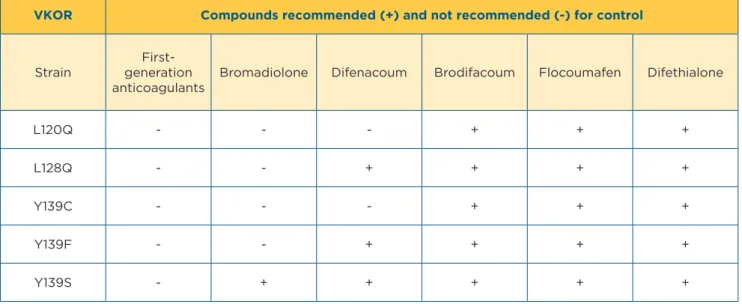
When dealing with resistant Norway rats, and the nature of the resistance mutation present is known, recommendations for which anticoagulants rodenticides are effective against specific mutations are shown in Tables 3 and 4.
It is important to understand that all known resistance mutations, in both rats and mice, are capable of effective control with applications of the most potent second-generation anticoagulants (brodifacoum, difethialone and flocoumafen) and that no practical resistance to any of these active substances is presently known.
It is more important than ever that complete
eradication of rodents is achieved at resistance sites.
This is best done using an integrated strategy which employs a combination of effective interventions, including the use of non-anticoagulant rodenticides, where these are available, as well as effective anticoagulants. Where residual rodent activity is identified after anticoagulant use, and this cannot be eradicated using other chemical interventions, apply intensive trapping to eliminate remaining rodents.
Gassing or fumigation should be considered, provided it is carried out by personnel with appropriate
expertise. New techniques of trapping and remote detection and monitoring should be considered to eradicate remaining infestations, and to prove the success of the control measure.
Background
Anticoagulant resistance is now established in rat and mouse infestations in many countries. Indeed, in some European countries several different resistance mutations (SNPs) are present in both species and are sometimes widely distributed (chapter 15).
This means that those who conduct rodent pest management in these countries frequently encounter resistant rodent infestations in some areas and are required to deal with them effectively. Only if this is done comprehensively, and by a large proportion of practitioners, will the spread of resistance be curtailed.
Conversely, if it is not done resistance will continue to spread and will become more severe.
It is important to note that resistance in the Norway rat in most cases is restricted to certain resistance areas or foci of resistance, where the probability is high that rats of a certain resistant strain occur, in particular in habitats where these rats are adapted to, e.g. in relation to certain farming systems. In some countries, these resistance areas are well known (see chapters 3, 15, and information of national working groups). In contrast, the appearance of resistant house mice is not linked to known areas. In most cases known so far, the distribution of a resistant strain of the house mouse is connected to the transportation of goods and to the control history in the respective premise. Therefore, options to assess the probability of the presence of resistant mice are mostly limited to the conduct of resistance tests.
The most important actions to be taken at foci of resistance to prevent its spread are:
1) the cessation of the use of resisted anticoagulants 2) the application of effective alternative control
interventions, including the application of anticoagulants that are not resisted.
Confirming Resistance
The first sign of resistance seen by practitioners is often the failure of control practices which are normally effective. However, there are many possible reasons for such failure and careful consideration of all possible explanations is first necessary (see checklist for rodenticide users, chapter 14). If, after consideration, other explanations are ruled out, an important next step is the collection of tissue samples from the suspected resistant infestation and confirmation, using DNA-sequencing, of the presence of a resistance mutation (e.g. see chapter 4, and list of laboratories, chapter 13). This will permit resistance specialists to understand the nature of resistance present and to develop and promote effective strategies to remove resistant infestations.
When resistance is confirmed using DNA-sequencing or PCR, it is essential to pass this information to local resistance specialists and/or to a rodenticide resistance working group (see chapter 13), so that an up-to-date record of the distribution of resistance can be kept.
7. Combatting resistance
Where individual infestations are found to be resistant, or to contain resistant individuals, it is possible that the resistance extends beyond the treated site and onto neighbouring properties. Where there are indications that resistance may be more extensive than a single infestation, apply area or block control rodent programmes if possible. The area under such management should extend at least to the boundaries of the area of known resistance and ideally beyond.
These programmes must be effectively coordinated and should encompass the procedures identified above.
Carefully record the details of all measures employed so that useful local knowledge is accumulated about effective and ineffective resistance management strategies.
Do not use anticoagulant rodenticides as permanent baits as routine. Use permanent baiting only where there is a clear and identified risk of immigration, or where an outstanding level of protection must be afforded. A serious risk-analysis and appropriate risk mitigation measures are essential.
Table 3: Polymorphisms of the VKOR, and compounds recommended (+) to control these strains of the Norway rat (Rattus norvegicus), based on BCR data and field trials. Products containing rodenticides marked with (-) shall not be used to control respective strains.
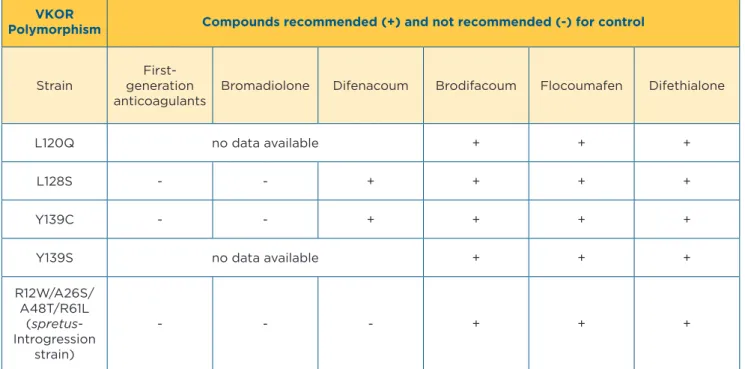
Table 4: Polymorphisms of the VKOR proven to induce resistance to warfarin in the house mouse (Mus musculus), and compounds recommended to control them (+). Mouse strains resist those compounds are marked with (-).
VKOR Compounds recommended (+) and not recommended (-) for control
Strain
First- generation anticoagulants
Bromadiolone Difenacoum Brodifacoum Flocoumafen Difethialone
L120Q - - - + + +
L128Q - - + + + +
Y139C - - - + + +
Y139F - - + + + +
Y139S - + + + + +
VKOR
Polymorphism Compounds recommended (+) and not recommended (-) for control
Strain
First- generation anticoagulants
Bromadiolone Difenacoum Brodifacoum Flocoumafen Difethialone
L120Q no data available + + +
L128S - - + + + +
Y139C - - + + + +
Y139S no data available + + +
R12W/A26S/
A48T/R61L (spretus- Introgression
strain)
- - - + + +
7. Combatting resistance
Background
Rodent pest management should always involve an integrated approach (chapter 5) in which all appropriate measures are employed to achieve desired goals. There are a number of different measures that may be integrated into a comprehensive plan to deal with rodent infestations and anticoagulant rodenticides are one of these.
Indirect Interventions (i.e. not aimed at killing rodents)
Among the alternatives available, the best way to deal with rodent infestations of course is not to have them in the first place. These measures may be called ‘indirect interventions’ because they are not intended directly to kill rodents. There are two main approaches:
1) exclusion (sometimes called proofing)
2) hygiene (sometimes called habitat modification):
Exclusion
Although they may be costly, measures to prevent the ingress of rodents into buildings provide a long-term solution to rodent problems and are usually without adverse impacts. These measures should always be implemented, preferably before rodent infestations become established. Exclusion precautions are effective only if they are regularly inspected and operations at protected sites are adapted to accommodate them.
However, some rodents and in particular house mice may be extremely difficult to exclude from the built environment because of their ability to penetrate very narrow apertures. Consideration should always be given to proofing premises at the conclusion of successful rodent removal operations in order to prevent infestations recurring.
Mice may be brought into otherwise secure premises in freight containers. Therefore precautions must be taken, such as thorough examination of goods coming into stores, to avoid failure of proofing measures caused by this.
A specific aspect of exclusion is the use of repelling machines. These may be based on electromagnetism, ultrasound and other acoustic mechanisms. There is very little scientific evidence from independent testing that these devices provide any significant effects on rodent behaviour under practical conditions. The same applies to repellent chemicals. Although attempts have been made to develop such chemicals, no scientific evidence is available that any shows sustainable effects.
Hygiene and environment
Operations intended to prevent rodent access to foodstuff, such as the use of rodent-proof bins and close-fitting doors, are also likely to be substantially free from non-target impacts, although of course such action will also prevent access to any other animals,
such as wild birds, that also may be relying on these food and water sources.
In order to deter rodent infestations, sites should be cleared of all debris, rubbish, old machinery and equipment, unwanted stores of straw and hay, etc. Vegetation should be cleared around buildings to provide an open perimeter and immediate surroundings, so that natural predators can take rodents. If possible, areas around buildings should be laid to concrete, or other hard surfaces, to prevent rodent burrowing. Once again, the only non-target impacts of such operations will be on the other animals that rely on the materials taken away for cover and harbourage.
Direct Interventions
A wide range of measures is available which aims to capture or kill rodent pests – these are ‘direct interventions’. Some of these rely on physical means, such as trapping, others rely on chemical methods including rodenticide baits, gases, powders, foams and gels. Chemical methods rely on a range of active substances. Due to the differing policies of chemical regulation jurisdictions around the world, there is wide variability on what chemicals are available to practitioners. For example, the European Chemicals Agency (ECHA) has implemented policies which restrict rodent pest management using chemical interventions almost entirely to the anticoagulant rodenticides.
Conversely, under the Environmental Protection Agency of the United States, a wider range of alternatives to anticoagulants is available. This document will not attempt to provide information on the legal ability of practitioners to obtain and use specific chemicals in a particular country. Those who use the information contained in it should ensure that they comply with local regulations concerning the products and their label instructions.
Trapping
There is a vast array of different types of rodent trap – and more come to the market every year claiming to be more effective than predecessors. Some aim to catch rodents alive, while others are intended to kill them during or after capture. Some traps take only single rodents each time they are set, while others are multiple capture. Whatever the type of trap, their effective and humane use always requires a high degree of skill. Traps may not kill cleanly and therefore must be checked frequently so that animals captured, but not killed, may be humanely despatched. When kill traps are set outdoors they should always be set in tunnels to avoid taking non-target animals, such as birds.
Live-capture traps have the advantage that, if they are checked frequently, captured non-target animals can be released unharmed. Some authorities recommend that these traps are checked twice daily. In order to meet such requirements, and to be able to react in a very short time, the use of remote detection and monitoring techniques is recommended. Captured target animals must be despatched humanely, because in some countries it is illegal to translocate and release them.
8. Alternatives to anticoagulants:
chemicals and other control techniques
Some species, such as the Norway rat, are very suspicious of new objects, such as traps, and are very reluctant to enter them. House mice are usually more willing to go into traps, although there are reports of mouse infestations that are impossible to trap due to trap avoidance behaviour. Generally, traps may be effective in situations where infestations, particularly of mice, are small but are unlikely to be cost-effective and sufficiently rapid against large or dispersed rodent infestations.
A special type of trap is the glue-board (or sticky- board). These are sheets of material which are covered with a powerful adhesive to which rodents become stuck when passing over them. These devices are sometimes useful against rodents where an abundance of alternative food makes baiting unreliable. To be operated humanely, glue-boards must be checked very frequently so that users can humanely despatch animals held on them. Even so, they are general