Capstone: EFL Teaching Portfolio Leqing Sun
Vanderbilt University Feb 25, 2021
Table of Contents
Abstract ... 3
Philosophy of Teaching ... 4
Overview ... 4
Forming a Student-Centered Classroom ... 5
Incorporating L1 into English Language Classrooms ... 7
Conducting Communicative Language Teaching ... 9
Artifact Analyses ... 13
Professional Knowledge Area 1: Learner ... 13
TESOL Domain 4: Identity and Context ... 13
Artifact A ... 14
TESOL Domain 6: Learning ... 17
Artifact B ... 18
Professional Knowledge Area 2: The Learning Context ... 20
TESOL Domain 2: Instructing ... 21
Artifact C ... 22
Professional Knowledge Area 3: Curriculum ... 25
TESOL Domain 1: Planning... 25
Artifact B ... 26
TESOL Domain 7: Content ... 28
Artifact D ... 29
Professional Knowledge Area 4: Assessment ... 31
TESOL Domain 3: Assessing ... 31
Artifact E ... 32
Applications to Practice: Implications and Future Considerations ... 36
Strengths in My Practice of the Teaching Philosophy ... 36
Weaknesses in My Practice of the Teaching Philosophy ... 36
Challenges I Anticipate Experiencing in My Future Teaching Context ... 39
Future Development ... 41
References ... 43
Appendix ... 46
Artifact A... 46
Artifact B ... 54
Artifact C ... 72
Artifact D... 83
Artifact E ... 102
Abstract
This teaching portfolio discusses my beliefs in teaching, how I practiced those beliefs in my projects completed in the academic program, and implications for my future career, all of which were developed during my two years of study at Vanderbilt University. It contains three parts, 1) my philosophy of teaching, 2) artifact analyses, and 3) implications and future considerations. In my teaching philosophy, I include three main strategies: 1) forming a student-centered classroom, 2) incorporating L1 in English language classrooms and 3) conducting communicative language teaching. I then use the above strategies as a theoretical framework to analyze five artifacts that I created, including an investigation, a curriculum, an interview report, a lesson plan and a language assessment. In the end, I discuss my strengths and weaknesses in living out my strategies in those artifacts, challenges I anticipate to experience in the future to conducting these strategies and how I will be working to continue to improve myself in teaching.
Philosophy of Teaching Overview
Born and raised in Jiangsu, a province in east China, whenever I look back to my past experience of learning English as a compulsory course in my secondary education, be it in a private foreign language middle school or a public high school, my memories are almost all about how I could achieve a higher score on tests, rather than how I could actually use English as a communication tool or how I could understand English with all its profound historical, religious and cultural background. It seemed that English was another subject that could be summarized by equations and principles; and it was as if as long as the students can recite what was in the textbooks and complete the tests, they would be able to grasp English. This was not the case. Even three years after I graduated from high school, when I went back to a public middle school as a student teacher of English, and when I was tutoring some high school students part-time, I realized that those patterns of teaching English have not changed much.
Envisioning myself after graduation, I hope that I can be an ELA (English Language Arts) teacher in an international high school in east China. Take the school (Kang Chiao International School) where I had my internship as an example: over 95% of the students are Chinese who plan to pursue tertiary education in English-speaking countries such as the United States and the United Kingdom. The other 5% or less students are usually from Asian countries including South Korea, Japan and Singapore, who moved to China because of their parents’ works. Based on what I know about that school, those non-Chinese students are evenly distributed in each class and grade-level
and they choose to enroll in international schools to be prepared to study further in English- dominant countries as well. Thus, if I am going to be their teacher, my major teaching goals will be twofold: to prepare them for the language tests (i.e., TOEFL or IELTS) they need to take in order to be admitted; and to prepare them for actively participating in an English-dominant learning environment.
Therefore, considering what I want to change about English teaching in China and what my future students will need, my philosophy of teaching mainly consists of the following three ideas:
forming a student-centered classroom, incorporating L1 into English language classrooms and conducting communicative language teaching.
Forming a Student-Centered Classroom
Wiggins and McTighe (2012) put forward a metaphor concerning the relationship between teachers and students that resonates with my beliefs in student-centered classrooms. They argued that students are the primary clients of teachers, which means all the curricula, assessments, instructional designs, etc. made by the teachers should be closely tied to the needs of the students (Wiggins & McTighe, 2012). Valenzuela (1999, as cited in Jiménez, Smith & Teague, 2009) suggested that in order for teachers to show they care about their students, they have to make a start at completely understanding students’ environment academically and socially. Both the statements above stress the importance of teachers putting students at the center of their attention as well as in macro- and micro-design. A student-centered classroom, in my opinion, should be culturally responsive (Gay, 2010) and closely tied to students’ needs; and during the class, the
teachers should perform contingent scaffolding for the students so that the lesson can be more effective and engaging (Daniel et al., 2015).
As I have mentioned in the previous section, in my past experience of learning English, I had always felt English was detached from real life. However, in fact, students’ lives and their “funds of knowledge” (Moll et al., 1992) are valuable and should be involved in the process of learning English. Besides what is contained in textbooks, teachers should also pay attention to students’
lives, not only what is currently around them, but also what they have experienced and what might interest them. For example, teachers may schedule meetings with students and their parents in small groups or even individually after class, creating a light-hearted environment and exploring students’ interests and past experience. In class, teachers could ask them to introduce to others their culture, family traditions or anything that is special or unique to them and relevant to class content using English. This would be a good chance for them to utilize English as they learn and also to know about each other, forming necessary respect for other cultures and understanding cultural diversity. A “literacy log” (Skerrett, 2015), for example, could be used to help both parties in the class learn more about students’ language use and let students be the master of their own language development.
As teachers, no matter which subject we are teaching, a critical question that we should take into consideration is how we can “care for” rather than just “care about” the students. These two expressions are different in that the former encompasses active engagement including “concern, compassion, commitment, responsibility and action” (Gay, 2010, p.48). Teachers should put
themselves into students’ shoes and try considering what works best for students from different cultural and language backgrounds. Therefore, Gay (2010) introduced the notion of “culturally responsive teaching” as the answer to how teachers could equitably serve their students. I also appreciate the idea of “backward design” by Wiggins and McTighe (2012) greatly in terms of what attitudes teachers should hold when preparing lessons. Instead of thinking too much about
“teaching”, what teachers should really care about should be “learning” – that is what the students are going to need, what they are going to gain through the process, how much of the content they are going to understand, and how they can benefit more from the lessons, etc.
Another point I want to include in forming a student-centered classroom is that the teachers should perform contingent scaffolding in the class (Daniel et al., 2015). Many times, the teachers tend to put much effort in preparing and designing a lesson, which although necessary, could lead to over-scaffolding (Daniel et al., 2015). Under such circumstances, if a teacher tries too hard in sticking to the pre-written plan or the preset curriculum, students’ specific needs and questions during the class could be ignored. In fact, to best serve their students, teachers should always be ready to respond to the students, adjust their teaching based on students’ reactions and provide chances for students to be engaged in collaborative discussion so as to reach the goal of
“comprehension as sense-making” (Daniel et al., 2015, p.5).
Incorporating L1 into English Language Classrooms
Another essential problem that we have to face is: in what position should the teachers put students’ first languages when they learn English and how could they be utilized? For far too long
there has been a false impression in many Chinese parents and school administrators’ minds that Chinese should be minimized in English classes so that the students can learn English more effectively. In my opinion, however, students’ first languages should always be valued and
“translanguaging” should be used as a strategy to facilitate students’ English learning.
Translanguaging practices include “code-switching, translating, language brokering or interpreting between culturally and linguistically diverse individuals” (Tse, 1996, cited by Daniel
& Pacheco, 2015, p. 645). They summarized that translanguaging helps develop students’
proficiency in those languages, meta-linguistic awareness, and their English reading skills. As a matter of fact, for culturally and linguistically diverse students, their native languages contribute greatly to their sense of identity, and work as a medium that helps them socialize and transmit their own culture; and since their first language development impacts their second language development directly, a less complicated way to start the instruction of English literacy is to build on what they already know about their own language (Herrera, Perez & Escamilla, 2015), which is similar to Daniel and Pacheco’s idea above. Carrasquillo (1994, cited by Carrasquillo, Kucer &
Abrams, 2004) agreed that ELLs could use their experience of learning their first language to facilitate their second language acquisition. Therefore, in the future, I will not avoid using Chinese when teaching English, especially for beginners. For grammar rules, I will choose to purposefully elaborate in Chinese and make comparisons between Chinese and English so that the students can establish a more solid foundation for the knowledge. If there are Japanese or Korean students in my class, I might seek help from the school to make sure that these students can receive due
language support.
Krashen (1985) put forward the idea of “i + 1” in teaching EL students and that teachers should generate more “comprehensible input” (Krashen, 2003) during class. The idea of his language teaching theories, although mainly focusing on adding comprehensible next-level language features into students’ input, to some extent, also encourages teachers to incorporate students’ L1 in teaching the target language to help students comprehend. Besides, during class if only the target language is promoted or allowed to be used, the topics of students’ input and output would be very limited. However, if the teachers take advantage of what the students already know in their native language, the topics could be largely enriched and made more relevant to students’
individual identities.
Conducting Communicative Language Teaching
Communicative language teaching (CLT), as is obviously seen in its name, aims at enabling the learners to communicate in the target language and in given situations, and the learning takes place during the process of learners’ “struggling to communicate” (Alamri, 2018, p. 132).
According to Maley (1984, as cited by Anderson, 1993), CLT focuses more on: language use rather than only language form; fluency rather than simply accuracy; language tasks rather than language exercise; students’ initiative rather than teacher-centered direction; customized teaching rather than a panacea; and the awareness of varied language use rather than the language itself.
Communicative competence is seen as the goal of second language learning by some North American scholars (Hiep, 2007). Although the definition of communicative competence could be
slightly varied among different authors, it is clear that it includes both linguistic knowledge of a language and the ability of properly using the language in any social circumstances for various purposes (Alamri, 2018; Hiep, 2007; Zhang & Wang, 2012).
Brown (2000) argued that in English language teaching there should not be “a method for all”
(p. 40). Instead, he proposed an “enlightened, eclectic approach” (Brown, 2000, p. 40) where the teaching features are affected by the synthesis of a number of teaching and learning principles, and inspired by the interconnection between CLT theories, contextual analysis and classroom observation. However, in the spirit of CLT, he insisted that the teachers should be well aware of the tenets of the CLT approach and then properly practice to their conviction. In order to realize this idea, Hu (2005) who also stood for an eclectic approach for teachers, suggested that schools and teacher educators should work on 1) heightening teachers’ awareness of contextual factors, 2) build up teachers’ competence in analyzing and overcoming contextual constraints, and 3) develop sound guidelines for teachers to make methodological choices. By doing so, hopefully the teachers would be able to have a handful of useful teaching activities and strategies at their disposal when facing students. In real teaching practice, Brown (2000) also suggested that the teachers should take a few “calculated risks” (p. 40) in the classrooms to explore and test new activities that best fit the needs of students and further help build an innovative, beneficial cycle.
Secondly, contextual factors are always critical in designing, giving and reflecting on a lesson, which means instead of adopting CLT, we should adapt it to the conditions of specific areas and schools (Brown, 2000; Hiep, 2007). In China where there have been years of English language
teaching in the traditional grammar-oriented way, both the teachers and the students have been used to this pattern. Therefore, abruptly and thoroughly changing the methods of English language teaching within a short time is unlikely to be feasible or have a good result. Yu (2001) suggested that the teachers should seek to combine traditional analytic teaching with CLT to suit a Chinese foreign language learning classroom. As a matter of fact, the communicative methodology and the traditional EFL teaching methodology are not contradictory with each other; but rather, they can be complementary (Li, 1989, as cited by Sun & Cheng, 2002, p. 77). The reason behind this synergy is that students’ fully understanding grammar rules and being able to correctly put them into use, as the ultimate goal of traditional grammar-based teaching, could build a solid foundation for them to communicate accurately and properly in English. Therefore, it is possible that the EFL teachers can combine communicative activities and non-communicative ones to form a “locally appropriate communicative approach” (Rao, 2002, p. 98). Or, if we take one step further, the teachers can organically combine the two, by using interactive activities to teach grammar or transferring paper-based text analysis into classroom discussion so that the students can get more chances to meaningfully make use of English (Sun & Cheng, 2002).
Thirdly, Brown (2000) specifically stressed the importance of not relinquishing grammar while encouraging students’ spontaneity; in the meanwhile, one should not overdo some certain CLT features such as intentionally avoiding all the interrupting and correcting the students during the conversation, either. Alamri (2018) pointed out that grammar, “instead of being an optional add-on to communication, it actually lies at the heart of communication” (p. 134). Anderson (1993)
as well concurred that students’ being knowledgeable of grammar does not have to compromise their focus on building up communicative competence.
I appreciate the approach of CLT greatly and I have always supported the idea of fostering students’ communicative competence. Therefore, in my future English classes, I will try to align my teaching to what have been suggested above, adjusting my teaching methods according to the contextual factors as well as students’ reactions, taking a few “calculated risks” to explore new activities to engage students into meaningful communication (Brown, 2000, p.40). I will also combine traditional analytic approaches and CLT to best suit the circumstances in China, and continuing teaching grammar to ensure that the students can communicate accurately.
In conclusion, in terms of my teaching philosophy, I mainly put forward three ideas or strategies to guide my future teaching, namely forming a student-centered classroom, incorporating L1 into English language classrooms and conducting communicative language teaching. In the future, I will try to implement them as I hope, but in the meanwhile, I will also be constantly revising them based on the contexts and the feedbacks from my students.
Artifact Analyses
Professional Knowledge Area 1: Learner
This professional knowledge area concerns the Learner, which in my opinion is one of the most critical factors when designing lessons and activities as teachers. Learners are the receivers and participants of education; therefore, how they have interacted and will interact with their teachers and peers shapes teachers’ teaching approaches, which in turn decides whether the learners can effectively grasp the knowledge they are being taught as well.
TESOL Domain 4: Identity and Context
“Teachers understand the importance of who learners are and how their communities, heritages and goals shape learning and expectations of learning. Teachers recognize the importance of how context contributes to identity formation and therefore influences learning.
Teachers use this knowledge of identity and settings in planning, instructing, and assessing.”
From my perspective, this standard mainly contains two pieces of information. First, teachers should value learners’ identities and understand that their context, including but not limited to 1) what they have experienced, 2) what has been around them, 3) where they are from originally, and 4) where they see themselves in the future. The above four elements shape who they are, how they learn and what they want to achieve. Second, teachers should utilize this information to direct their planning, instructing and assessing procedures. The above is consistent with the suggestion that Jiménez, Smith and Teague (2009) have put forward, that teachers should try to understand students’ academic and social background as thorough as possible to develop a productive
relationship with English language learners, build on their prior knowledge and engage them into the classroom. Gay (2010) also suggested that teachers should conduct “culturally responsive pedagogy” by attentively learning about and responsively teaching to fit students’ culture background and needs. Teachers who learn about the students’ “funds of knowledge” know them as “a whole person” and would be able to gear their teaching towards students’ interests, provide more relevant content and at least to some extent avoid viewing the students with stereotypes (Moll et al., 1992).
These suggestions are in line with my philosophy of teaching. First, they are relevant to Forming a Student-Centered Classroom since I believe teachers should start by learning about students’ academic and social milieu (Jiménez, Smith & Teague, 2009); tie their curricula, assessments, and instructional design into students’ interests and needs (Wiggins & McTighe, 2012); and genuinely care for the students by first learning about and responding to their cultural background (Gay, 2010). Second, they align with Incorporating L1 into English Language Classrooms too, because using L1 positively affirms students’ identity (de Jong, 2011) and this strategy showcases how students’ identities shape teachers’ teaching. Thirdly, the suggestions are consistent with Conducting Communicative Language Teaching, in that teachers should adapt rather than adopt their teaching methods based on the specific conditions of different contexts and student needs (Brown, 2000; Hiep, 2007).
Artifact A
Artifact A is used to analyze the learner identity, heritage and learning context to inform and
direct teaching and accommodation, which aligns with my teaching philosophy and TESOL Domain 4.
Specifically speaking, in the Community Literacy paper, I investigated, discussed and analyzed the communicative literacy of the Chinese population in Nashville area. This paper consists of six parts: a general review of the population and distribution of Chinese people;
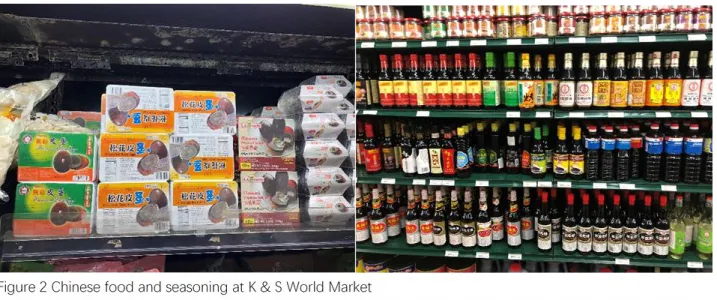
restaurants and market places that are closely related to this group; organizations that serve them;
print resources written in Chinese; Chinese immigrants’ views about language learning; and finally, implications for classroom teachers.
Firstly, in the General Review section, I introduced the Chinese population distribution in Nashville and the trend in which it has been changing recently. Based on my research on a series of relevant websites, I wrote “… generally, Chinese people in Nashville tend to assemble in one area, the center of the city, where Vanderbilt University is located. This distribution fact goes in line with what is shown at GNCA website and it can thus be presumed that the Chinese population in Nashville mainly consists of students as well as staff and faculties related to Vanderbilt University.” Although for each individual student their background may be varied, the fact that the majority of the Chinese population are related to Vanderbilt University can help the teachers know about their living and learning contexts and maybe their goals. If I were the teachers, starting from learning about students’ academic and social milieu (Jiménez, Smith & Teague, 2009), I would be able to know that usually for the students whose family immigrated for studying or working at Vanderbilt University, they tend to have higher academic goals.
Secondly, in the sections of Restaurants and Markets, Organizations and Print Resources, I discussed what is closely related to the Chinese immigrants’ daily lives and the support they can receive from their community. For example, I wrote “On the website, a list of other organizations serving Chinese are also provided, including language schools, Chinese education and cultural groups and Chinese churches. There is news related to Chinese posted on the website as well.”
Using such information, even for teachers who are not so familiar with Chinese culture, they can have a glance at Chinese immigrant students’ lives. In my mind, if I were to engage these Chinese students into my English lessons more effectively, I would ask them to bring what is unique to them culturally to the classroom, such as a Chinese newspaper with an interesting story on it, and use them as the material to help students learn English in a more meaningful way, which is consistent with “culturally responsive pedagogy” put forward by Gay (2010).
Thirdly, in Immigrants’ Views section, I interviewed a few Chinese immigrants on their ideas about language learning. In terms of what I found, I wrote “Being in a monolingual English environment, they are afraid of their children losing such sense of identity of being Chinese.”
Different than what I expected before the interviews, instead of worrying about the children’s English development, they actually care more about how they can preserve their heritage language.
Thus, if I were to teach these students, I would purposefully incorporate Chinese into my class, which would not only help the students develop both of the languages and their metalinguistic awareness (Goodwin & Jimenez, 2015), but also positively affirm their identities (de Jong, 2011).
One of the weaknesses of this investigation is that I did not gain insights from the students
themselves. Since Chinese students were the target group, some surveys or interviews directly with them would have made my results more authentic. In the future, if I were to teach a certain group of students, I would make sure that I reach out to them directly in advance and learn about their preferences and needs.
TESOL Domain 6: Learning
“Teachers draw on their knowledge of language and adult language learning to understand the processes by which learners acquire a new language in and out of classroom settings. They use this knowledge to support adult language learning.”
In my opinion, under the circumstances I hopefully will be teaching in, this TESOL domain mainly stresses two points: first, the teachers should try to understand the process of language learning from both what they know about the language itself and their own experience of learning, as the latter can easily be ignored; second, the teachers should apply this knowledge to the language teaching. Although I am not likely to teach adults in the future, the above statements can still be applied to high school students. Theoretically speaking, according to Wiggins and McTighe (2005), when planning lessons, teachers should think from the perspective of the students, for example, what they should learn and would be able to do, rather than focusing too much on what we as teachers will do. To think from this point of view requires us to draw from our past experience as students, so that we can know what is the best way for the students to approach the new knowledge.
This idea is consistent with my philosophy of teaching. It is especially relevant to the section Forming a Student-Centered Classroom in which I promoted “backward designing” put forward
by Wiggins and McTighe (2005) that students should be considered as the major clients of teachers and thus when planning a lesson, we should think about how they would learn and what they would be interested in. This idea aligns with Incorporating L1 into English Language Classrooms too because one of the reasons why I had this strategy was I benefited from using L1 when I was learning English as a student.
Artifact B
Artifact B is a curriculum I co-designed with a colleague for a TOEFL reading course in which I sufficiently made use of both my knowledge of language and my past experience of preparing for and taking the TOEFL reading tests, which is in line with my teaching philosophy and TESOL Domain 6.
In the Scope and Sequence of Curriculum, we first introduced our goals, configuration of each lesson and what the students should do to achieve maximized effectiveness. Then, we designed the topics for 10 weeks, 3 lessons each week and wrote in detail the first three weeks of lessons.
First of all, different than regular TOEFL reading lessons my partner and I used to take in which the main focus was only on test-taking skills and languages, our design put reading articles with the same topic into one week as a unit and we organized relevant units to be taught in two to three consecutive weeks to form a module. For example, for the first two weeks, the topics were
“Geology” and “Ecology” respectively, while the following two weeks focused on “History” and
“Archeology”. The rationale behind this design was that teachers should design the course in the most favorable sequence for the students so that they can be most ready to acquire knowledge
(Nation & Macalister, 2020). When I was a learner of TOEFL reading, although I enjoyed the diversified knowledge contained in each article, I was also bothered by not being able to learn about each topic further or more comprehensively as the topics were constantly changing.
Therefore, when designing this curriculum, we decided to put relevant topics together.
Secondly, as my partner and I both agreed upon, TOEFL reading lessons could be a bit boring if the teachers only focused on having the students practicing completing the comprehension questions repetitively. Not that it is not useful in helping the students gaining a higher score, but it is likely to demotivate the students. Therefore, in the curriculum, we planned to have some creative activities from time to time so that the students could be attracted to the lessons. For example, for one of the articles under the topic of “Geology”, we designed an activity called “cause-effect chains”
(see Appendix) for the students to fill in so that they could better understand the article and in a more interesting way. According to Nassaji and Fotos (2011), these creative activities require the students to work in a collaborative way and thus reach their highest potential. Besides, imagining ourselves as students, if we were provided these activities, we would be more enthusiastic about the class and behave better (Wubbels, 2011).
Thirdly, in our curriculum, we incorporated content relevant to the culture of English- speaking countries, especially when talking about topics on liberal arts such as history, art and music. When I first moved to the United States, I noticed many cultural differences, which took me quite some time to get used to, even though I had heard of some of them. My partner shared the same opinion as me. Given the fact that all our target students who would take this course
would be studying in English-dominant countries, we believe that doing so helps them get used to the new environment easier. Besides, since culture is an essential and inseparable part of the language (Van Lier, 2004), incorporating cultural background knowledge into the lessons will help the students learn about the language and the community of native speakers in a more comprehensive way.
In my future teaching career, if I am going to use this curriculum, besides what has already been included in it, if time permits, I would also want to have the students read more authentic texts as a complement, such as some fiction that attracts their interest. From my experience, I learned that sufficient amount of input would not only help them gain more vocabulary, but also gradually acquire the ability to access and understand the articles in a more efficient and effective way.
In my opinion, teachers should try their best to consider the perspectives of learners to understand who they are; teachers should also draw from their own experience to see more clearly what can best facilitate teaching and learning. Learners should always be considered within a certain learning context. Therefore, in the following section, the learning context will be discussed in detail.
Professional Knowledge Area 2: The Learning Context
This section discusses The Learning Context of the professional knowledge area. From my perspective, the learning context refers to not only the physical context at school where the learner studies, how the teachers and peers treat and support each other, but also the learner’s personal
history and background, and how their family is involved the learning process. Each student has a unique learning context by which their personality is shaped and how they are learning is determined. Therefore, when designing activities, lessons or curricula, it is essential that the teacher takes into consideration the specific learning context of each student.
TESOL Domain 2: Instructing
“Teachers create supportive environments that engage all learners in purposeful learning and promote respectful classroom interactions.”
This statement describes the requirements for the teachers in a classroom. In my opinion, it stresses that first, teachers should carefully scaffold the class to meet the needs of students, achieve the goals of the lesson and thus support the students’ learning; second, they should promote a learning environment in which the diversity of students are respected. These requirements are closely relevant to “culturally responsive pedagogy” Gay (2010) has promoted, that the teachers should “care for” the students rather than “care about” the students. In addition, as Echevarría, Vogt and Short (2017) have suggested, teachers should activate students’ background knowledge and make linkage between the new knowledge and what they have already known.
These ideas are consistent with my philosophy of teaching. For one thing, it is related to Forming a student-centered classroom. Envisioning myself in the future, I believe that to best facilitate students’ learning, a teacher should create a classroom environment where the unique background of students is valued. As Wiggins and McTighe (2012) has put forward, students are the primary client of teachers, which stressed the importance of teachers gearing their instruction
towards students’ needs. For another, Incorporating L1 into English language classrooms is also relevant to this view. By involving students’ first language into the classroom, not only can we ensure they understand the knowledge more thoroughly without the confusion caused by language barrier (de Jong, 2011), we can also activate their learning experience and strategies in their L1 (Echevarría, Vogt, & Short, 2017). Besides, we positively confirm their identity by this deed (de Jong, 2011). The ideas are consistent with Conducting Communicative Language Teaching as well, in that in order to create a supportive and engaging environment, teachers are supposed to pay close attention to students’ needs and the context they are living in (Brown, 2000; Hiep, 2007);
also, since CLT is aimed at having learners learn to use the language through the process of
“struggling to communicate” (Alamri, 2018, p. 132), the students are engaged in an environment that promote purposeful learning.
Artifact C
Artifact C is used to analyze how a teacher should pre-assess the students’ learning context, what kind of information should be gathered and how they are relevant to creating a supportive environment, which is closely related to TESOL Domain 2 and my philosophy of teaching.
Interview Report of an English language learner aims at assessing a student’s learning context prior to giving lessons to them. In order to elicit as much information relevant to language learning of the student as possible, I designed a semi-structured survey and interviewed one of my friends who was studying at the University of Edinburgh as an English language learner. The paper includes two major parts, which respectively discussed my findings on this student’s cultural,
experiential, academic and linguistic background; and her education context in the University of Edinburgh. Although she is not and will not be my student, in this paper, I imagined myself as a would-be teacher of hers so that I can consider more comprehensively about what aspects I will need to know about her.
Firstly, I discussed my friend’s nationality, first language and her history of learning English.
I also noted her language preference when talking with her peers of similar background because I believe that would be the time when she feels most relaxed. I wrote “With her Chinese peers at the University of Edinburgh, she tends to use Chinese mixed with English when she does not know how to translate certain terms, which she considers as translanguaging.” Learning about a student’s L1 and then purposefully incorporating it into the classroom affirms the student’s identity (de Jong, 2011) and helps build on their metalinguistic awareness (Goodwin & Jimenez, 2015). Besides, Wei (2011) also commented that translanguaging helps the EL students to draw on their past experience and background and form a coordinated and meaningful system of which they can make sense.
Thus, teachers can use this information to choose the most suitable language and materials for the class to activate students’ background knowledge, make them feel more comfortable in class and ultimately learn the target language better.
Secondly, I touched upon her parents’ and her own view about learning English so that I can know about her motivation of learning English and what are some driven factors in her learning history, which are essential too. I wrote “As far as she concerns, what is most important about English is how one can communicate with others effectively and to learn and understand English
together with the culture behind it.” As a teacher, if we get such information, we would know that her goal of learning English, instead of reaching certain academic scores, is actually using English as a communication tool, which is consistent with the spirit of CLT as I have mentioned in the third part of teaching philosophy. Thus, if I really were her teacher, I could provide more chances for her to practice conversational skills during the class.
Thirdly, I shifted my attention to her life in the University of Edinburgh, concerning accommodations of EL students, her view of the Scottish culture and her observations on campus.
I wrote “She also mentioned that Chinese students liked to stick together and many of them did not enjoy interacting with people from other background as much, probably because Chinese people tend to be more reserved.” Gay (2010) suggested that teachers should “care for” instead of
“care about” the students and the difference is that the former stresses that that the teachers put themselves into the students’ shoes and see how they are viewing everything surrounding them.
Apparently, being a teacher and being a student could be drastically different even in the same environment. Thus, it is important that the teachers learn about the circumstances from the student’s point of view to see how the school really is like being a minority student in it without assuming the situation by reading the protocols provided by the school. For example, if I were her teacher, given the fact that she wanted to know more about the Scottish culture, I would suggest her to go out of her comfort zone, expand her friend circle to students from other countries, especially those native students so that she can really “live” the culture and hopefully grasp the language better.
To conclude, teachers should pay attention to creating a learning context in which the students can be valued, respected; and the goals of the lessons, their purposes and needs fulfilled. But the content of a lesson is never less important. Thus, I will then discuss the curriculum.
Professional Knowledge Area 3: Curriculum
This professional knowledge area brings our attention to Curriculum. A curriculum is a bridge between teachers and students, depending on which the knowledge can be jointly developed.
Teachers design, adjust and fulfill a curriculum according to the needs and interests of the students so that the goals can be achieved most effectively and efficiently. In my opinion, a responsible teacher should always be willing to make changes on the pre-written curricula or plan a curriculum based on their close interaction and comprehensive observation of the students. Lessons make up a curriculum and thus each of them should also bear the same criteria as we set for the curricula.
TESOL Domain 1: Planning
“Teachers plan instruction to promote learning and meet learner goals, and modify plans to assure learner engagement and achievement.”
From my perspective, this TESOL domain stressed two things: first, what a teacher plans to teach and how s/he is going to conduct the teaching should be aiming at best serving the students’
interests, needs, their preferences in the way of learning and their learning goals; second, after the teacher has tried out the plan with the students, or after the teacher has known better about the target students, s/he makes appropriate and necessary changes to the plan to actually make sure that the aims in the previous point get realized. More specifically, teachers should always be
considering what is the best way for the students to learn, what they should understand and be capable of, when planning a lesson (Wiggins & McTighe, 2012); and teachers should also always pay attention to generating “comprehensible input” for the students, and tapping on the students’
background knowledge and interests to best facilitate their learning (Echevarría, Vogt & Short, 2017).
These ideas resonate with my philosophy of teaching. First off, it goes in line with my opinions in Forming a Student-Centered Classroom in which I agreed upon the idea that teachers should always be ready to plan their instruction in a way that best fits the students’ needs and interests (Wiggins & McTighe, 2012) so that the students can be sufficiently motivated. Secondly, it aligns with the spirit of Conducting Communicative Language Teaching. Brown (2000, p. 40) suggested that in English language teaching, teachers should conduct an “enlightened, eclectic”
approach where they adjust their teaching methods based on the synthesis of teaching theories, contextual analysis and classroom observation.
Artifact B
As I have mentioned in previous sections, Artifact B is the curriculum of a TOEFL reading course I co-designed with a colleague that caters to the needs of Chinese students in international high schools in China. This artifact is closely related to this TESOL domain as well as my teaching philosophy. The Scope and Sequence of the Curriculum mainly contains two parts, 1) an introduction to the goals of this curriculum and directions of how teachers should use this curriculum to maximize the teaching effect; and 2) the actual plan for the topic of each week and
configuration of each lesson.
Firstly, in order to promote learning, my partner and I decided to arrange all the TOEFL reading articles based on their topics, and have relevant topics to be taught in a row as a module so that we can hopefully reach best teachability (Macalister & Nation, 2020) because for one thing, this ensures that the students’ attention can be best focused on one large topic without being distracted; for another, consistent topics make sure the vocabulary (fields and frequency) that the students are exposed to are of one system (Macalister & Nation, 2020) and thus easier to be memorized and retrieved. Besides, given the fact that the topics in TOEFL reading are very diversified, doing so helps learners gain some knowledge in the target field systematically, which aligns with learning goals because this may help them develop some ideas about in what direction they are going to further study once they enter the college. For example, we have topics ranging from liberal arts such as history to STEM subjects like biology; and we put relevant topics such as
“education” and “psychology” together.
Secondly, we allowed much freedom for the teachers who will be using this curriculum so that they have space to customize or modify their lessons as the course goes on and based on their students’ needs to maximize engagement and achievement. I wrote “because each class is unique and every individual may generate different outcomes and questions to the same material and homework, there will be some open time for teachers to deal with unanticipated questions during the class.” According to Macalister and Nation (2020), during the process of enacting a curriculum, teachers should constantly monitor and analyze the students’ ongoing needs and environment.
In my future teaching context, I could see this kind of curriculum as of big potential in both fulfilling students’ need in passing the TOEFL tests and preparing them for better adjusting a new environment upon entering college in an English-speaking country. However, my colleague and I created this curriculum mostly based on our own experience. As we all know, how people interact with each other changes as time goes, and each student would have different needs and interests so we could not predict everything. Therefore, in the future I would adapt this curriculum to better fit the students’ situation or create new curriculum based on my analysis of them.
TESOL Domain 7: Content
“Teachers understand that language learning is most likely to occur when learners are trying to use the language for genuine communicative purposes. Teachers understand that the content of the language course is the language that learners need in order to listen, to talk about, to read and write about a subject matter or content area. Teachers design their lessons to help learners acquire the language they need to successfully communicate in the subject or content areas they want/need to learn about.”
This TESOL domain stresses the essential role of communicative language teaching. In my mind, it talks about two major things: firstly, meaningful communication helps build on learners’
English language ability most effectively; secondly, teachers should consciously add in language features that would help the learners meaningfully use the language in certain content areas.
According to Alamri (2018), language learning takes place during the process of learners’
“struggling to communicate” (p. 132). As one of the goals of communicative language teaching,
communicative competence includes both the linguistic knowledge of the language and the ability of properly using the language in certain social circumstances for certain purposes (Alamri, 2018;
Hiep, 2007; Zhang & Wang, 2012). Therefore, it is necessary that teachers include these in their lessons.
These ideas are closely related to the third strategy in my teaching philosophy, Conducting Communicative Language Teaching, in which I made the point that teachers should adapt an
“enlightened, eclectic” approach based on students’ specific needs, taking a few “calculated risks”
to explore new activities to engage students into meaningful communication (Brown, 2000, p.40).
Artifact D
Artifact D is a lesson plan carefully designed to address a relatively complex topic for 10th grade Chinese students in EFL environment, and to ensure their engagement in the lesson so that their English language can be effectively and meaningfully developed.
The SIOP Lesson Plan starts with the context of the lesson, the standard, the objectives, the theme and the materials needed. And then, I planned in detail each step of the lesson, time allotment, purposes, interaction focuses and specific procedures. After all these, I discussed the rationale behind the lesson plan. This lesson plan is closely related to this TESOL domain and my teaching philosophy as the following.
Firstly, in the warm-up activity, I designed an activity for the students to discuss on “the trolley problem” and “the footbridge dilemma”, which are related to the theme of the whole lesson, what is fair. I required the students to make use of the grammatical structures (i.e., subjunctive
mood) they had learned in previous lessons in the process of discussion so that they can meaningfully practice the language features. Different than language drills, this activity pushes the students to “struggle to communicate” (Brown, 2000, p.40). In my future teaching career, I would continue to incorporate such activities into my teaching to stimulate students’ meaningful interaction and conversation.
Secondly, in the procedure for analyzing the passage “Life isn’t Fair – Deal with It”, I designed a series of questions for the students to discuss when encountering complex sentences.
For example, I wrote “T asks the Ss the following questions: What does the author believe we cannot control? What we can control? What does he mean by “the beginning of our life”? What are some examples of “the outcomes we attain”?” These questions not only help the students better understand the sentences themselves, but also help lead their conversation in a more structured and meaningful way. In communicative language teaching, instead of adopting a certain teaching method, teachers should gear the lesson towards contextual factors (Brown, 2000; Hiep, 2007).
Thus, when I was designing this lesson plan, I considered the facts that Chinese students usually face difficulties in dealing with longer sentences and they often need some help in establishing a conversation, and thus added this procedure in it. In my future teaching, I will always take various contextual factors and students into consideration and adjust my approach accordingly. However, since the real situation could be much more complicated than ideal, I will have to be more patient and careful about how I get the necessary information and how to make justified judgement to direct my teaching planning.
In a nutshell, in planning and conducting a curriculum, teachers should be careful about how they can best meet the goals and promote learning; teachers should also aim at helping the students meaningfully use the language they are learning. Next, as an essential part of teaching and planning, assessment teachers should conduct and how we should make use of it will be discussed.
Professional Knowledge Area 4: Assessment
This professional knowledge area concerns Assessment, which in my mind refers to not only tests or evaluations of students after a certain period of teaching and learning (i.e., summative assessments), but also the on-going investigations, observations or judgements made before and during the process of learning (i.e., formative assessments). Assessments as, for and of learning (Gottlieb, 2016) are inseparable parts of teaching and learning, and in the end, benefit both teachers and students.
TESOL Domain 3: Assessing
“Teachers recognize the importance of and are able to gather and interpret information about learning and performance to promote the continuous intellectual and linguistic development of each learner. Teachers use knowledge of student performance to make decisions about planning and instruction “on the spot” and for the future. Teachers involve learners in determining what will be assessed and provide constructive feedback to learners, based on assessments of their learning.”
This TESOL domain discusses the important role of assessments in teaching and how teachers
should make assessments to best facilitate learners’ learning. From my perspective, this statement stresses two major points: firstly, teachers should consider information gathered from students when making decisions about teaching both contingently and for the future; secondly, learners should be involved before, during and after the process of assessments, based on which the teachers would then provide constructive feedbacks. Theoretically speaking, according to Gottlieb (2016), in assessments for learning, teachers should be focusing on the ongoing needs of the students and adjust their instruction and assessments accordingly. Besides, students’ views should be valued because this would ensure that they are given the ownership in the school community (Gottlieb, 2016).
These opinions are consistent with my philosophy of teaching. In the first section, Forming a Student-Centered Classroom, I mentioned that teachers should perform contingent scaffolding for the students so that the students can be best engaged and facilitated (Daniel et al., 2015).
Although I did not specifically discuss assessment in my teaching philosophy, enacting contingent scaffolding requires the teachers to assess the students’ reactions closely during a lesson so that they can adjust their instruction methods in time to fit their needs. Also, in Conducting Communicative Language Teaching, Brown (2000) suggested that teachers should base their teaching approaches on the combination of pedagogical theories, contextual analysis and class observation, where the latter two are, as a matter of fact, on-going assessments.
Artifact E
Artifact E is a second language acquisition assessment I conducted on a Chinese college
student majoring in Physics who just started his exchange program in the University of California – Berkeley for one semester. Although he was not my student, nor will he become my student in the future, his identity was similar to my future target students. Therefore, assessing him can be seen as a simulation of the assessments I will be enacting in the future; and what I did in this assessment goes in line with both the TESOL domain and my teaching philosophy. The Second Language Acquisition Assessment consists of an overall language assessment and more detailed analyses of this student’s ability in pragmatics, phonology, grammar and semantics. In the end of this paper, I also provided instructional recommendations for the teachers based on my analysis.
Firstly, based on the written and oral samples I gathered during an interview with him, I gave an evaluation on his overall English language level. For example, I wrote “his speaking ability falls somewhere between B2 (independent user) and C1 (proficient user), the rationale being that during the interview, most of time he could fluently answer or interact with me with little hesitation.” According to Gottlieb (2016), listening comprehension is the cornerstone of second language acquisition and it is the prerequisite of higher-level oral output. Therefore, assessing the student from oral interaction ensures that both listening and speaking were touched upon.
Formative assessments for learning largely depend on how teachers make use of the knowledge to gear their instruction towards the students (Gottlieb, 2016). Thus, if I were actually his teacher, I would be able to use this information to adjust the lesson to better fit his level of English listening and speaking and thus help him improve. This can be tied back to “backward design” proposed by Wiggins and McTighe (2012) too, which is an essential part of my teaching philosophy.
Secondly, in the section Instructional Recommendations for Pragmatics, I gave suggestions that teachers should make sure that the students are clearer about the criteria to which their performance is compared. For example, I wrote “In order to improve Yujia’s pragmatic skills, it is helpful if the instructor can let him know about the content of the four maxims so that he can consciously avoid some of the mistakes that he made during this conversation.” The goes in line with one of the ideas in this TESOL domain that teachers should inform the students of and involving students in deciding what will be assessed beforehand. Ensuring students having their input in the design of an assessment and that they have tools to monitor their own growth promote student agency (Gottlieb, 2016).
Thirdly, in terms of phonological mistakes this student has made, I suggested that he should take an active role in improving his pronunciation. I wrote “For this problem, I recommend that the instructors encourage him to record himself speaking English whenever possible, and listens to it with/for him after in order to figure out common mistakes he makes.” This would be a constructive feedback and advice I would provide if I were his teacher. Such assessment as learning encourages the students to be responsible for themselves and become “independent, capable thinkers” (Gottlieb, 2016, p.216). This idea echoes with my first strategy in the teaching philosophy too, because in building a student-centered classroom, what I expect for the students is for them to be an active participant in classroom interactions, rather than just a receiver.
However, given the fact that Yujia was not actually my student and we both had limited time in finishing this interview/sample-gathering process, my assessment of his English language level
could be incomprehensive. If conditions allow, I should have engaged him in more diverse language activities and observed him more closely during class so that I would be able to adjust my ongoing teaching to help improve students’ achievement (Gottlieb, 2016).
In my future teaching though, given the fact that there will be at least 30 to 40 students per class, and this kind of assessments are time-consuming, I may only use it when I notice that there are some students who do need such a comprehensive language evaluation. As a substitution, I may seek to conduct some assessments that are easier to be done to multiple subjects at a time to inform my future teaching.
Applications to Practice: Implications and Future Considerations
In my philosophy of teaching, I brought up three key ideas that will inform my future teaching.
First, in Forming a Student-Centered Classroom, I stressed the importance of teachers’ paying close attention to students’ needs, interests and identities to conduct culturally responsive pedagogy (Gay, 2010), as well as attentively monitoring the reactions of the students during class to form contingent scaffoldings (Daniel et al, 2015), because teachers should always see students as the major clients when planning and delivering the lessons (Wiggins & McTighe, 2012). Second, in Incorporating L1 into English Language Classrooms, I argued that EFL students should be allowed to “translanguage” when they are learning English because so that both their L1 and English skills can be improved and their meta-linguistic awareness can be built (Daniel & Pacheco, 2015); besides, using L1 is especially helpful for beginners of English in that the new knowledge can be built on what they have known about their L1 and how they acquired their L1 (Herrera, Perez & Escamilla, 2015; Carrasquillo, Kucer & Abrams, 2004). Third, in Conducting Communicative Language Teaching, I stated my belief that teachers should adapt their teaching approaches based on specific context and students’ needs (Brown, 2000; Hiep, 2007) and help the students learn English from their “struggling to communicate” (Alamri, 2018, p. 132), but, grammar should not be left out even though communication requires fluency (Anderson, 1993;
Brown, 2000; Alamri, 2018).
Strengths in My Practice of the Teaching Philosophy
When comparing my philosophy of teaching to the artifact analyses, I found that in general,
I have lived out most of the key ideas when I was planning lessons, designing the curriculum, conducting investigations or interviews, etc.
For example, in the Community Literacy paper, I gathered information on the Chinese population in Nashville, trying to make sense of my subjects by starting to learn about their academic and social milieu (Jiménez, Smith & Teague, 2009). When co-designing the TOEFL Reading Curriculum, my partner and I spent a decent amount of time discussing our past experiences of test preparation, because we genuinely care for the students (Gay, 2010); and so that we could see from the students’ perspective what they would want and be able to learn when designing lesson plans or curricula (Wiggins & McTighe, 2012). In the Interview I conducted to pre-assess a student, my questions touched upon her identity, learning history, language preference, parents’ expectations, study goals, current learning context, etc., to gain a comprehensive evaluation of her. This would help me build a productive classroom that fits the students’ unique needs and positively affirms the students’ identities (de Jong, 2011), which is essential for conducting culturally responsive pedagogy (Gay, 2010). In my SIOP lesson plan, I constantly guided the students into meaningful conversations based on the content of the lesson with the facilitation of sentence stems. In the process of struggling to communicate, the students would learn and grasp English better (Brown, 2000). In the Second Language Acquisition Assessment, I evaluated the student’s English language skills in pragmatics, phonology, grammar and semantics respectively as well as gave an overall assessment, which would be helpful for the backward design of future lessons (Wiggins & McTighe, 2012) and building a communicative language teaching
classroom in an “enlightened, eclectic” way (Brown, 2000, p. 40).
Weaknesses in My Practice of the Teaching Philosophy
As I read through the works that I have created, I noticed that my second strategy, Incorporating L1 into English Language Classrooms, is not lived out sufficiently. First, when I was planning lessons or curricula, although I have always had this idea in my mind, I usually merely touched upon it rather than made substantial use of it. For instance, I would include Chinese translation when introducing new vocabulary in the SIOP lesson plan; but I could have encouraged the students to use Mandarin to discuss their opinions prior to actually talking about “the trolley problem” in English. In my future teaching, since I envision myself to be teaching in China, a similar issue to students not conversing in Chinese enough will probably not exist – the problem will instead be how they view using Chinese in an English class, because many of them have been taught in a way that regards using any Chinese as unhelpful. Therefore, what I will need to do is to formally inform them of the reason why we are incorporating two languages in the class and how we should balance them to benefit our learning.
For another, when I was thinking about incorporating L1 into English language classrooms, I had always been picturing using it for my lesson delivery. However, in assessing students’
language ability, this strategy could be essential too. In my past practice, I tend to only pay attention to students’ language ability of English but ignore their L1 levels; as a matter of fact, for EFL students, their learning of English can largely depend on their knowledge of their L1, both linguistically and methodically (Carrasquillo, Kucer & Abrams, 2004). Therefore, in my future
teaching, I could put more effort into evaluating students’ L1 level to inform instruction. For example, I could seek to collaborate with Chinese language teachers in the same school, obtain their perceptions on how well the students are mastering Chinese, and compare it with their English levels. If I see (in)consistency between the two, I could implement some interventions based on whether there is lack of interest or other issues.
Challenges I Anticipate Experiencing in My Future Teaching Context
Among my three key ideas that I have put forward for my future teaching, the third one, Conducting Communicative Language Teaching, appears to be most challenging in the following ways.
First, communicative language teaching usually requires the teacher-student ratio to be relatively high so that there could be enough interaction between the teacher and the students, and that the teacher would be able to constantly monitor the class. However, in China, due to the large population, usually the class size could be as large as 40 to 50 students per class, making it difficult to implement communicative language teaching. Honestly, the number of students in a class largely depends on the infrastructure and socioeconomic status of the target area, leaving me little space to change. However, I could anticipate the challenge easier if I work in an international high school where there are relatively fewer students, or an academy where there are more choices in terms of the class configuration.
Second, due to the profound impact of Confucianism, Chinese students tend to be more conservative and quieter during the lessons, believing that they should accumulate enough
knowledge before making use of it (Hu, 2005), which contrasts with how communicative language teaching works. Thus, there is a large chance that I would face the challenge of students refusing to talk or being engaged in active conversations. To tackle this problem, I plan to establish a trusting relationship with the students by sincerely caring for them and talking to them as a friend and teacher, hoping that they would feel comfortable enough to participate in the conversations;
and thus make my classroom a safe place for them to be in, which is necessary if I want to conduct communicative language teaching.
Third, considering the washback effect of English tests in China, since those tests are largely grammar-based (Zhang & Wang, 2012), and the scores are closely relevant to whether students can be admitted into a decent tertiary education institute, the schools’ administrators and students themselves may hold against the idea of incorporating communicative language teaching, believing grammar-translation a better way to pass those tests. I personally see solving this challenge as a revolutionary act, if successful. Therefore, I foresee working with one or two classes in lower grades as a start, because the mindsets of the students, parents and teachers there are likely to be more open since the “big test” is not so close yet, which makes them easier to accept the relatively novel teaching approach without fearing too much that this change would do harm to their English test scores. If I could prove that using communicative language teaching is just as useful, if not more than the traditional way of teaching in promising the students a good grade, there may be a chance that the administrators could see the advantage of this approach and then promote it. But to be honest, the administrators may not agree with “experimenting” with
communicative language teaching with lower graders in the first place if they are too conservative.
If this really is the case, I would try to communicate with my fellow teachers to try to further change the situation. However, no matter how much I like this approach, I have to admit that not all students will be open to the very method I will use and so, I will need to refine my own teaching constantly based on the student needs to reach what makes the best results.
Future Development
As TESOL Domain 8 states, “Teachers continue to grow in their understanding of the relationship of second language teaching and learning to the community of English language teaching professionals, the broader teaching community, and communities at large, and use these understandings to inform and change themselves and these communities.” I would not be able to continuously improve and refine my teaching skills without the connection to the teaching community. Therefore, in my future teaching career, I foresee myself working closely with my fellow teachers as well as frequently exchanging ideas with students’ families to inform and adjust my teaching and education research. If conditions permit, I would attend teaching seminars or summits to communicate with teachers from various background as well. In order to make this possible, in my job hunting, I will consciously pay attention to the school culture in terms of whether they encourage collaboration between teachers, by asking them questions during my interviews, remembering that job hunting is always a two-way choice.
This teaching portfolio records how my beliefs in teaching English developed, and analyzes works that I have generated during my study at Vanderbilt University. It marks the end of an
academic program, yet sets the beginning of my teaching career. In the future, I will be working from what I have already gained and understood, and continuously building on and modifying it to approach perfection in teaching.