Cassel, Università Federale del Rio Grande do Sul, Brasile Elisabetta Cianfanelli, Università di Firenze, Italia. Quan Yu, Università norvegese della Scienza e della Tecnologia (NTNU), Norvegia Sergio Terzi, Politecnico di Milano, Italia.
Fashion Operations and Supply Chain Management Linking Inventory Management Performance and Operational
Sustainable Fashion Supply Chain Integrating Sustainability in the Fashion System
Brand Management and Strategy
Future Trends in the Fashion Industry
Supply Chain Management?
1 Introduction
By reviewing the existing literature, we can observe that several aspects of Supply Chain Management (SCM) in the luxury industry indeed emerge as highly relevant and worth a deeper investigation. Brun and Moretto (2012) analyzed contract design in the luxury jewelry industry as a tool to improve supply chain performance.
2 Research Approach
3 Discussion of the Research Agenda 3.1 Supply Management
- Data Management and Visibility
- Contract Management
- Variety Management
- Sustainability Management
The company had to revise its supply chain approach in this direction to ensure consistent management of the product portfolio. However, also according to results in other industries, contracts can be a very powerful coordination mechanism between two actors in the supply chain.
4 Conclusions and Future Developments
What are the impacts of these programs on traditional supply chain and CSF performance. Because tomorrow's success is based on supply chain management processes and successful companies have already figured this out.
At the MIP Politecnico di Milano Graduate School of Business, he is the director of the Master's in Supply Chain and Procurement Management. During this period she collaborated as a consultant in the field of Operations and Supply Chain Management.
Management in the Fashion Industry
The need for success in supply chain practices in the fashion industry has attracted researchers and managers. Reducing delivery time in the fashion supply chain is the main objective of quick response (Čiarnienėa and Vienažindienė2014).
2 Data and Methodology
In the second part, we discuss how the data were collected and what methodology was followed. The third section covers the findings and, finally, in the last section, the results are reported and discussed.
3 Results
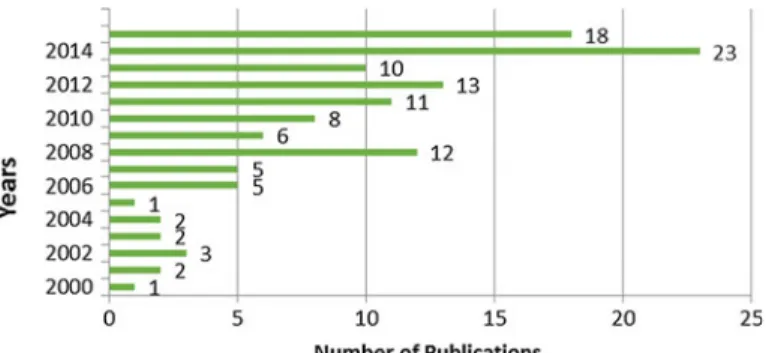
- Publication Years
- Languages
- Countries
- Research Areas
- Document Types
- Source Title
Three different languages were used in publications related to supply chain management in the fashion industry. Publications on supply chain management in the fashion industry have appeared in 17 different research areas.
4 Discussion and Conclusion
There are 79 different source titles in the Web of Science database related to supply chain management in the fashion industry. Turker D, Altuntas C (2014) Sustainable supply chain management in the fast fashion industry: an analysis of company reports.
Fashion Brands in the Chinese Market
A Review of Long- Versus Short-Term Orientation in National Culture
Dimensions
The second part is an overview of Hofstede's cultural model and an overview of the fifth dimension. The final section is an analysis of the current Chinese luxury fashion brand market and its likely future direction.
2 The Concept of Culture
This paper reviews the culture dimensions and mainly summarizes and gives recommendations according to the fifth dimension of Hofstede's culture model.
3 National Culture
4 Hofstede ’ s Five-Dimensional Model of National Culture
5 Long- Versus Short-Term Orientation
In addition, the term fifth dimension is revised, from Confucian dynamism to long-term versus short-term orientation. The following diagram shows the advantages and disadvantages of a long-term orientation compared to a short-term one (Table 2).
6 Current Situation of the Chinese Luxury Market
Superiorities of the Chinese Market
They have their own understanding of luxury fashion brands and spontaneously buy their favorites as self-rewards. Therefore, these characteristics lead to a younger-age trend of luxury consumers in China (Halepete2011), where almost half of luxury fashion consumers are younger than 35 years old (Atsmon et al.2011).
Challenges of the Chinese Market
Most Chinese families not only respect traditional culture, but also apply it in modern society. Product sales of many luxury fashion brands, such as Cartier and Channel, have fallen dramatically (Atwal and Bryson2014).
Future Direction
7 Conclusion and Recommendations
Mentzer JT, Dewitt W, Kleeber JS, Min S, Nix NW, Smith CD, Zacharia ZD (2001) Defining supply chain management. Keywords See Now, Buy Now ⋅ Luxury Fashion Industry ⋅ Supply Chain Management ⋅ Luxury Fashion Operations ⋅ Fashion Revolution.
1 Introduction: The Current Fashion-Shows Scenario and the See Now Buy Now Revolution
As cultural conversation is provocative and involves change, new ideas, innovation and new channels, SNBN can be considered a total embrace of innovation. It was further said that the wait between runway shows and retail availability creates excitement, while SNBN claims that consumers lose interest over this long wait.
2 Research Objectives
Ralph Toledano, the federation's president, further argues that the new scheme could work for marketing-driven brands; However, Paris has no intention of compromising the quality of the work of French fashion designers. Fast fashion retailers, known to replicate runway trends without competition, will not be able to capitalize on the traditional six-month gap between runway shows and retail availability. The SNBN movement is becoming a promising topic for further discussion in SC management (SCM).
3 Research Methodology
Sampling
Data Collection and Analysis
4 Results
Distribution Challenges in Luxury Fashion SCs
In addition, luxury fashion companies fully outsource their value-added activities (100%), while transportation is similarly fully outsourced. In terms of SNBN, channel integration (online, retail), market integration, and just-in-time services (same-day delivery) emerge as key areas of luxury fashion SC process implementation.
The SNBN in Italy: Where Do Italian Luxury Fashion Companies Stand?
All major buying firms are scheduled to show their collection at the same time, and therefore the implementation of SNBN may not work for those who are highly dependent on external partners due to the fact that clothing manufacturers and manufacturers of textile may not meet the excessive demands. orders coming from a number of large buying firms. Short lead times and tight deadlines can be a competitive advantage for suppliers located in Europe in order to reduce lead times and increase delivery performance to implement SNBN.
5 The Implications of the SNBN
Large players have a fairly large presence in the retail channel in terms of Directly Operated Stores (this is a plus, as the SNBN part of the collection can just be sent to the store, avoiding showroom visits from buyers, order collections and the like) while small players distributed through independent retail will have a much greater need for coordination in the days before the catwalk, and it seems that SNBN could hardly work in this case.
6 Discussion
Probably, the spread of the SNBN approach will force fashion companies to set up explicit and effective demand forecasting systems. Also, small emerging designers who do not have high control and power over their supply system may be bothered by the spread of the SNBN choice.
7 Conclusion
Forecasting: The SNBN approach, which results in in-store delivery (physical or online) on the same day of the show, requires a Make To Forecast production approach. With more than 100 articles published in scientific journals and international conferences on the above topics, he is one of the most prolific authors in the global scientific community on the specific "Luxury Supply Chain".
Education Program for an Apparel Retail Company
Looking at the basic structure of the fashion industry until the late 1980s, fashion retailers traditionally used their ability to predict consumer demand and fashion trends well in advance of the actual time of consumption in order to compete in the market (Guercini 2001). The fast fashion literature suggests that rapid response techniques such as just-in-time response, rapid response and agile supply chains can be valuable to the fashion industry as such techniques can create a competitive advantage in the marketplace (Bruce et al.
2 Literature Survey
In the early 1990s, the role of retail shopping was explored by Swindley (1992) with a survey of UK shoppers and Wall et al. 1994) who conducted a qualitative study in Canada. Goworek (2014) investigated the roles and responsibilities of own brand buyers within UK fashion retail, as distinct from the roles of buyers of branded goods supplied by other companies.
3 Methodology
Continuous Improvement
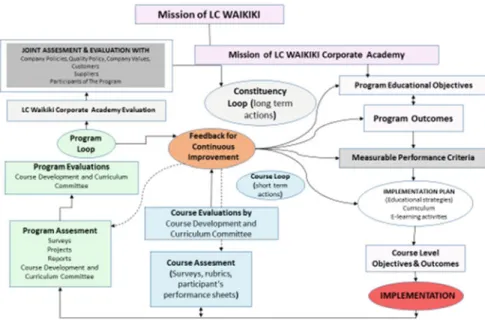
The methodology adopted for the design of the program was such that the "continuous quality improvement loops" similar to the ABET accreditation approach were formed to fully describe the strategy and practices involved in the development and implementation and program learning outcome-driven continuous improvement system (http :/ /www.abet.org/, http://www.iso.org/iso/home.htm). The focus of the assessment program was on participant learning, and on how the program could facilitate participant learning more effectively.
Curriculum and Its Implementation
A problem-based learning approach was used for the program to facilitate problem-solving skills and analytical ability of the participating buyers. They were required to do projects and case studies to help them integrate industry knowledge.
Assessment
To interview participants and review individual participant proposals for the continued progress of the program. Demand for the program and job placement data were key indicators of the overall success of the program.
4 IT Facilities and E-learnings at LC Waikiki
E-learning Applications for Courses
Program evaluation data, exit surveys, exit interviews, and thesis survey results were collected, evaluated, reviewed, and ultimately reported to the appropriate units identified in the company's organizational chart when the program was completed. The aim was to achieve consistency and quality of the courses based on feedback on the success of the course's learning outcomes.
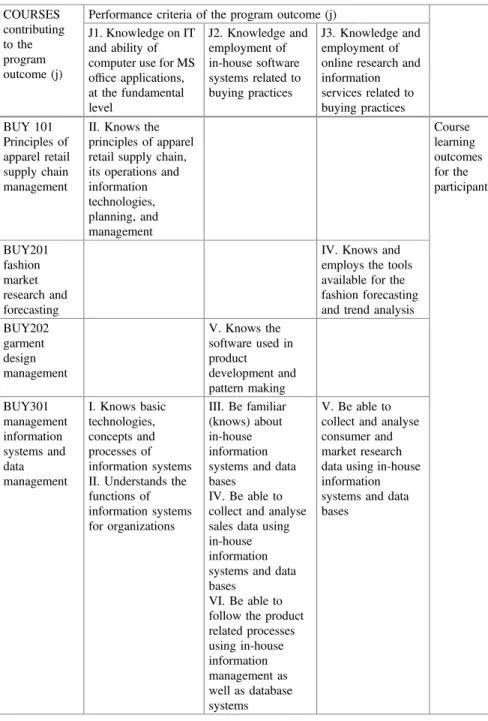
IT Applications for Courses
BUY403: Business Ethics: Regarding this course, there is a comprehensive e-learning on the ISO27001 Information Security and Security Infrastructure, which contains the subjects on what to and how to ensure/manage the information security and explains the related responsibilities. BUY503S: Visual Merchandising: Polytropon Mock shop is a setup of virtual reality and visual reporting tools that helps participant to build fully merchandised interactive 3D stores, to automatically generate planograms that provide a complete visual guide for every outfit in the store , to visually analyze the product data given, and to create storyboards and series books in minutes (http://www. polytropon.com/en/Software/MockShop-Virtual-Merchandising.html).
5 Conclusions
Wall M, Sommers M, Wilcock A (1994) Retail purchasing of fashion goods: underlying themes in the sourcing process. The article's research methodology was based on a literature review and a series of interviews with some of the experts in physiotherapy.
2 Wearable Design and Technology
A heater was presented and it was based on metallic glass nanotrough networks with a wide operating temperature range and excellent stretchability. The paper's research methodology was based on a series of interviews with experts in physiotherapy.
3 Application to Pregnant Women
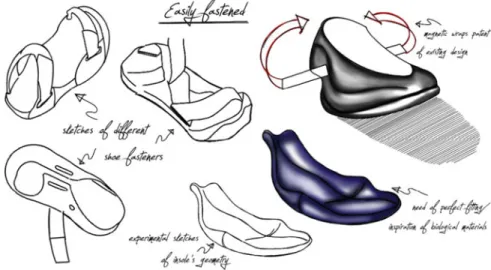
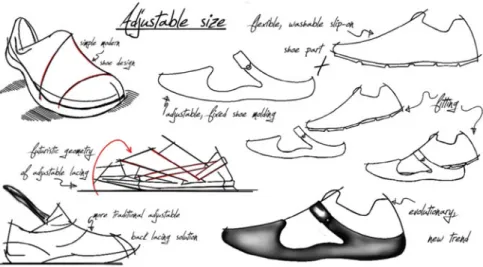
In addition, the reference to a technology called negative heel contributed significantly to the transformation of the product. Three additional important factors were identified: (a) the importance of exercises or massages for the foot muscles, (b) the hydration parameter, and (c) the ease of tying the shoes mainly due to the changes in the pregnant woman's body.
4 Conceptual Design
Foot-muscle exercises and massage as well as the right hydration and water pressure on the skin are able to reduce or even lead to the disappearance of the phenomenon of swollen feet. Here, a brief summary of previous research into interior design spaces and interactive installations is given, before the intended functionality of the concept is outlined.
2 The Adaptive Fitting Room 2.1 Theoretical Background
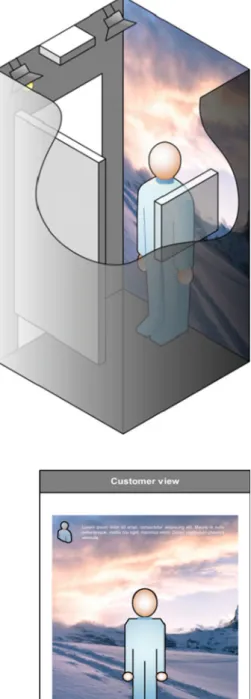
The Fitting Room Concept
Based on the identification of the product, the customer gets the appropriate experience by automatically changing the ambience in the assembly room. 2 Adaptive dressing room during use, showing a change in ambience when a customer brings a certain garment into the dressing room.
User Scenarios
- Customer
- Shop Floor Assistant
- Retail Manager
- Designer
In addition, the electronic aid helps the store assistant to classify how to approach the customer for the best possible interaction, as well as to prioritize between different customers based on more data. Based on fitting room statistics, such as combinations and products tried but not purchased – the adaptive fitting room can open up precise surveys of customers trying on specific products or combinations – for direct customer engagement.
3 Discussion and Prospects for Future Research
Second, it assumes that a change of the fitting room is perceived as a positive experience for the customers. Even when in place, the effects of the concept can be difficult to quantify, as it can, for example, bring customers into the store who buy something without trying it on.
4 Conclusion
While some (eg Soars 2009) argue that improved shopping experiences can have a significant impact on decision making, store selection and spending, it is difficult to foresee the effects of the adaptive fitting room in terms of actual conversion and increased sales. The authors would like to thank the participants of the project for providing valuable empirical data.
Classi fi cation for Fashion Product Development
The approach will be used in body measurement portals to optimize size charts and thus the fit of the clothing, as well as in e-stores to recommend the morphologically best clothing to a customer.
1 Introduction and Outline
The objective of the project is morphological classification based on body scan data that will be used to develop a sizing system and ensure better fitting clothing. Analysis of available body scan data showed that it is simply impossible to derive rules for automatic morphological classification.
2 Morphological Classi fi cation
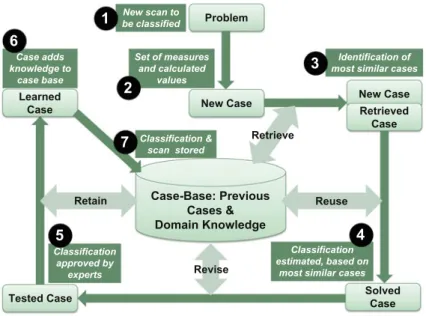
Morphological classification based on CBR technology makes great demands on the configuration of the morphological classification system: The case base for expert classification must include multiple body shapes that are suitable for global markets as well as for specific target groups. The starting point for the development of the classification scheme was a detailed analysis of the variance of the various key measures in correlation with the most important primary dimensions.
3 Case Based Reasoning for Morphological Classi fi cation
The REVISE phase captures the estimation of the CBR system and applies it to the current problem (query). The autoclassifier test runs support optimization of the similarity functions and the fitting algorithms.
4 Results and Bene fi ts
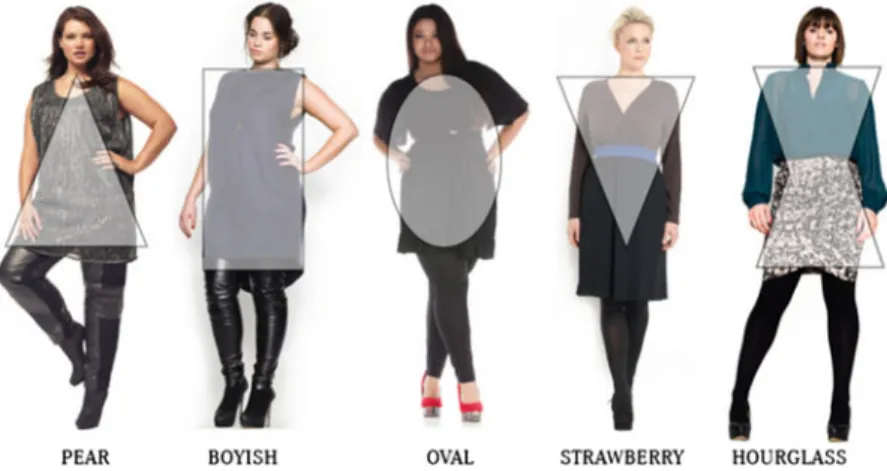
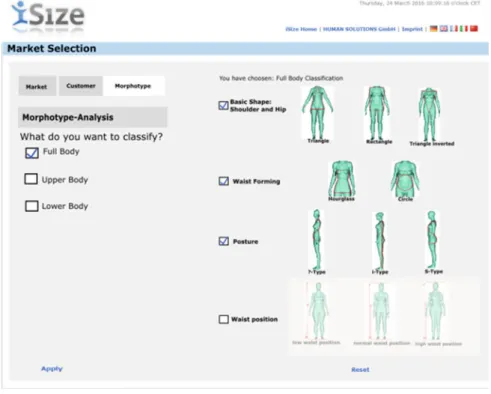
Due to the different frequency distributions of morphotypes in the different age groups, the basic block concepts need to be adapted with respect to the individual target group of the company (Fig. 4). 4 Example: Definition of the target customer profile related to morphotypes in the iSize body measurement portal of human solutions.
5 Summary and Outlook
Fashion webshops like in the figure above will use morphotype features to characterize and classify their target customers and to recommend especially those products that, due to their fix characteristics, will optimally fit the body shape as the individual customer. Duffy M (1987) HOAX fashion formula, dress the body type you need to look like the body you want.
Best Products Evolve According to Users Feedback
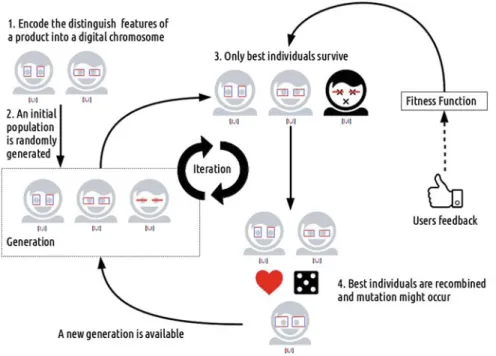
More realistically, however, in the shorter term, GENDE will be employed by product companies to design new products, leveraging the unique genetic process that naturally embodies marketing aspects (i.e., user feedback) in the design process. At its current stage, GENDE is a proof-of-concept and still needs some development to be market-ready.
2 GENDE Concept
First, we must effectively encode the distinctive features of the product into a digital chromosome. Since a main goal of the design is the design of products that customers will appreciate, the fitness function of GENDE is a function of the appreciation of users for individuals (Takagi2001).
3 Related Work
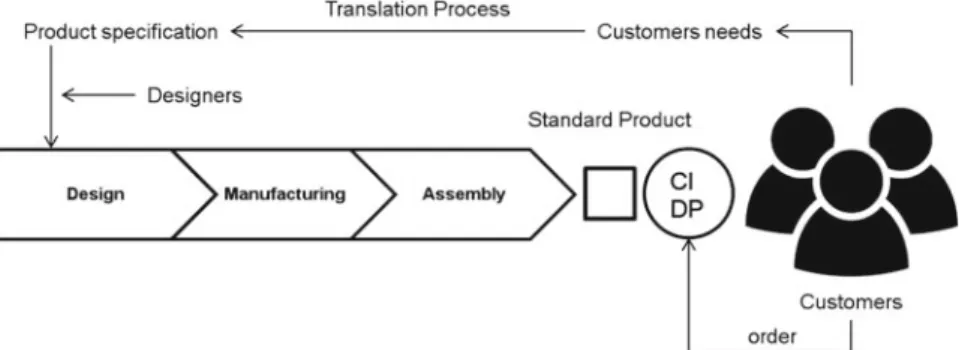
In that paper, by incorporating the domain-specific knowledge into the genotype, the author shows how to implement a more realistic design assistance system. In that paper, by including the domain-specific knowledge in the genotype, the author shows how to a more realistic design help system. Finally, in Fig.3c a new CIDP is placed in the early stage of value chain to offer customers a real individual customization and support the design-by-customer (DBC) approach.
4 Proof of Concept
Traditionally, the customer involvement disconnect point (CIDP), namely the point where customers are involved in value creation, is set at the end of the process (see Fig.3a). The size, shape and color of the elements in the necklace evolve from generation to generation according to user feedback.

5 Discussion
In our case, however, we aim to evaluate users' appreciation of a product. Vajna S, Clement S, Jordan A, Bercsey T (2005) The autogenetic design theory: an evolutionary view of the design process.
This article describes how CLARA Swiss Tech Sagl (http://claraswisstech.com), a start-up founded in Switzerland in 2015 operating in the wearable technology (WT) sector, has successfully adopted this approach (Table 1).
2 CLARA Swiss Tech Sagl
The Problem
The Solution
In addition, CLARA includes an accelerometer that detects whether the driver is braking and automatically activates all indicators in red to immediately show car drivers and other road users that they are slowing down. Eventually, a button placed directly on the smart jacket allows the user to light up all the built-in LEDs in several different situations, either in continuous or flashing mode.
3 Lean Start-Ups and Lean Business Models
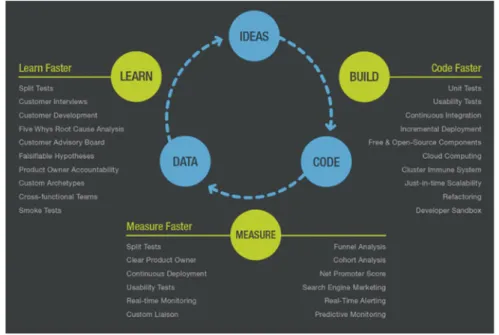
One of the key processes for addressing this challenge within the lean start-up methodology is the build, measure, and learn feedback loop (see Figure 3). For this reason, the lean start-up approach brought new pragmatic tools to support entrepreneurs' strategy.
4 From the Idea to a Business Model
Indeed, with the prototype, the team was able to present not only the concept, but also the tangible execution of the product. Then, other people could vote on already submitted comments to highlight the most desirable upgrade to the jacket so the team could evaluate its feasibility and integrate it.
5 The Lean Business Model Applied to CLARA
- Problem
- Solution
- Key Metrics
- Unique Value Proposition
- Unfair Advantage
- Channels
- Customer Segments
- Cost Structure
- Revenue Stream
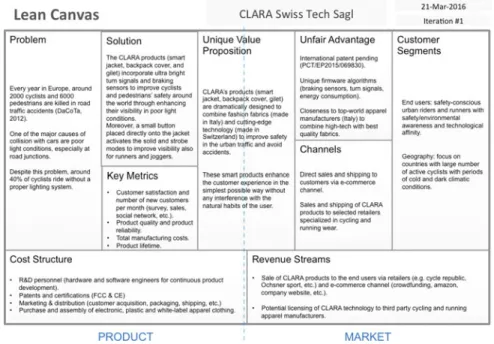
CLARA Swiss Tech developed a set of products (smart jacket, backpack, jacket) combining the best fashion fabrics and the best smart and e-textile technologies to improve safety in urban traffic and avoid accidents. In addition, the CLARA team decided to add a button to their products to directly illuminate all indicators on the jacket (via both solid and strobe activation modes) in order to make both runners and any pedestrians who perceive danger safer. associated with low visibility. in city traffic.
6 Lean Business Model: Application Tips
However, validating learning through beta test sessions, where key users can provide valuable feedback to the startup team before large investments are made and mass production takes off, has already proven to be a winning solution. From a start-up point of view, the road ahead is still long with the next steps to be taken being a set of decisions to make or buy for garment manufacturing and supplier selection.
Tool: The vMannequin Framework
The level and quality of performances offered by modern off-the-shelf computers is sufficient to allow the implementation of sophisticated and rich interactive 3D graphics applications at a limited cost. The original contribution of this paper is the presentation of a framework that allows easy implementation of user data-driven visualization applications for comprehensive, interactive, real-time clothing design based on off-the-shelf computing, sensor hardware and activation, along with it. economic evaluation.
2 Related Works
Even if the basic installation setup of the application is similar to ours, their approach is not real-time. This work lacks the visual appeal central to our proposed system, but introduced the use of real-time virtual body animation.
3 The System
- Interaction Devices
- Core Application
- Configuration System
- Orchestration
- Users Perspective
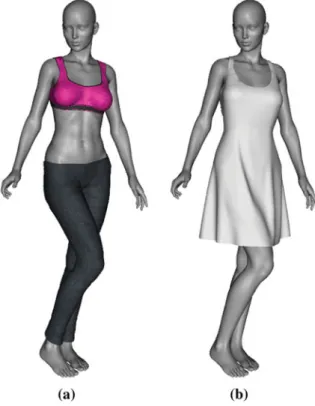
Recently, the authors in Gltepe and Gdkbay (2014) exploited the use of virtual avatars for fitting. In the next step, the user is presented with a catalog of available customizable assets (mostly clothes, but shoes, hairstyles are also available) (in Figure 3b).
5 Economic Impact Evaluation
The general idea is to use detailed objects that are easy to find and can be as close as possible to the clothing that the retail store wants to display with the application. Poser, Daz 3d, MakeHuman, so there are a large number of available dress models, hairstyles, props and other elements that can be reused.
6 Conclusions
Character animation is a well-established skill where there are several professionals available, and good results can be achieved even at a moderate price range. With a little extra effort from modeling professionals, these items can be customized to match stock clothing exactly.
Product Platforms
Wearable technology devices, or simply wearable devices, refer to smart things that are designed to be worn comfortably on the human body. LexInnova (2015) defines: “Wearable technology typically provides sensing and scanning, such as biofeedback and physiological function tracking.
2 The IoT Wearable Innovation Taxonomy
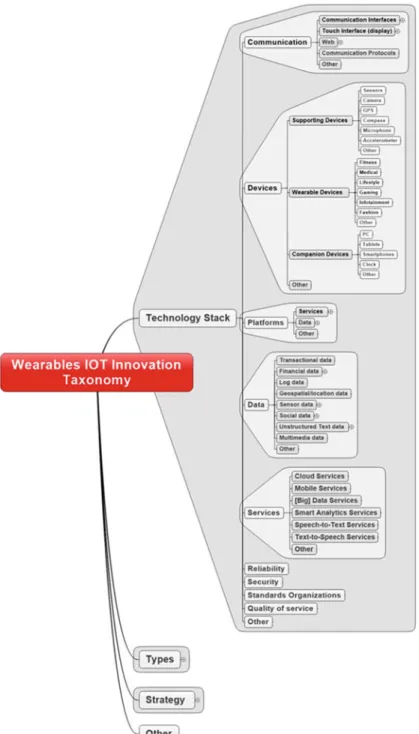
The taxonomy aims to provide a framework to categorize and relate the technology and specific aspects of the IoT research market and area. The pilot version of the taxonomy (hierarchy of some concepts of the taxonomy - shown in Fig. 1, 2 and 3; a set of examples - international and local companies IoT and fashion, services, etc.) contains more than 300 terms; the total number of all taxonomy features is 400.
3 IoT Wearable Business Models
IoT Wearable Multi-Sided Platform (Wearable as a Service) is an organization that creates value primarily by enabling direct interactions between three (or more) different types of connected actors: IoT Wearable Data Providers (human or artificial), IOT Wearable Providers and IoT Users Wearable or data users (human or artificial). IoT-Wearable MSP BMP "classically" creates value by enabling interactions between different groups/sides of the platform.

4 Main Findings and Recommendations
5 Limitations and Further Developments
6 Further Details
Fleisch E, Weinberger M, Wortmann F (2014) Business Models and the Internet of Things, Bosch IoT Lab Whitepaper.http://www.IoT-lab.ch/?page_id=10543). Gartner (2016a) Building the digital platform: the 2016 CIO Agenda, Gartner 2016 CIO agenda survey, http://www.gartner.com/technology/cio-trends/cio-agenda/.
Fashion Operations and Supply Chain Management
Performance and Operational
A longitudinal approach to examining inventory management performance is important to understanding the competitive performance of fashion apparel and accessories companies. The purpose of this paper is to demonstrate and empirically test a comprehensive performance model that encompasses the various dimensions of a fashion company's inventory management performance, including efficiency, productivity, and responsiveness, to evaluate the effect of inventory management performance on company outperformance.
2 Data Description and De fi nition of Variables
- Model Variables
- Inventory Policy Performance Variables
- Firm and Segment Control Variables
- Dependent Variables
Inventory responsiveness (XC): Measures the firm's responsiveness in matching customer sales with the inventory held by the firm during the annual period. ΔSit is the increase in sales revenue of the fashion company in period t from period t−1. 2010) show that controlling for product portfolio gross margin and non-inventory fixed asset performance of firms is important.

3 Hypothesis Development and Model Speci fi cation
We develop linear regression models Eq. 1)–(6), where the dependent variables rROAitsandrROSare ROA and ROS performance adjusted by the firm's segment.b1 is the coefficient for each of the firm-specific indicator variables for inventory management performance; in other words, XI, GMROII, XC;b2dheb3determine the coefficients for the firm's total individual capital investment ðKitÞ and the change in the firm's sales from the previous yearðΔSitÞ, respectively; finallymib4andb5are the coefficients for the segment-adjusted firm-level control variables, gross margin ðrGMitÞ and segment-adjusted non-inventory assets ðrSOAitÞ respectively; and is random model error. The relative inventory measure of inventory efficiency (XI) is significant (p < 0.05) and negatively related to operating performance.
5 Discussion and Conclusion
Hancerliogullari G, Sen A, Aktunc EA (2016) Demand uncertainty and inventory turnover performance: an empirical analysis of the US Kesavan S, Gaur V, Raman A (2010) Do inventory and gross margin data improve sales forecasts for US public retailers.
Border E-Commerce Towards China
The Case of the Apparel Industry
For example, China is one of the countries widely recognized as promising for e-commerce adoption. Despite being one of the most active sectors in the e-commerce landscape, fashion is not easy to sell online.
2 Theoretical Background and Research Questions
This is why an effective configuration of the logistics underlying a cross-border online operation is key to the ultimate success of the initiative. One of the most debated issues in this regard is the mismatch between the growth of the e-commerce market and the logistics one.
3 Methods
In Phase III, the model was first tested by inserting input data from a heterogeneous set of fashion companies to calculate the logistics costs of the identified solutions. Second, a sensitivity analysis was performed to show the influence of changing the annual demand and the value of the commodity on the optimal choice.
4 Results and Discussion
He is the director of the B2C e-commerce and export observatories at the Politecnico di Milano School of Management. She is the director of the Internet of Things Observatory at the Politecnico di Milano School of Management.

2 The Research Approach
The IDEF0
The RFID Technology
From the literature analysis, supply chain management, SCM (Michael and McCathie2005), healthcare industry and privacy issues appear as the main trends in the use of RFID. It is important to emphasize that quantitative assessments of the economic results of their use are limited (Bottani et al. 2010).
3 The Case Study
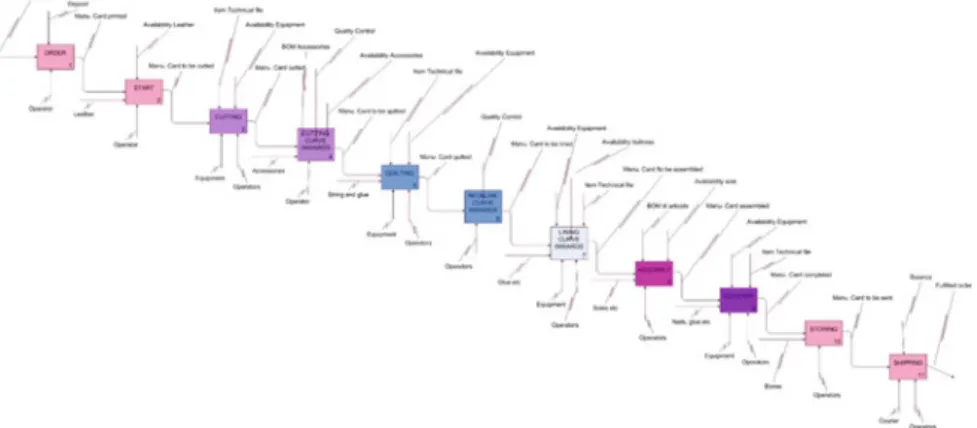
When the customer's order is received, it is transferred to the company's information system and immediately after receiving the customer's payment, the production process begins with the appropriate selection of leather. Table 3 summarizes the proposed annual return on investment due to the reduction of control over the work of subcontractors (item manual Figure 3 Scenario TO-BE of the production cycle . count, now 570 h/year), automated control of production progress (4 operators for 16 hours). at least 4 times a year, now 1140 h/year) and inventory control (now 256 h/year).
5 Conclusion
Bottani E, Montanari R, Volpi A (2010) The impact of RFID and EPC networks on the bullwhip effect in the Italian FMCG supply chain. Michael K, McCathie L (2005) Advantages and disadvantages of RFID in supply chain management International Conference on Mobile Business, 623-629.
System for the Fashion Retail Industry
In recent decades, however, this sector has undergone a real revolution due to the introduction of the "Fast Fashion" model. To achieve this result, the first part of the research project is focused on identifying the main risks associated with the entire SC flow (Section 2).
2 Supply Chain Risk Assessment: Understanding Main Targets and Critical Areas
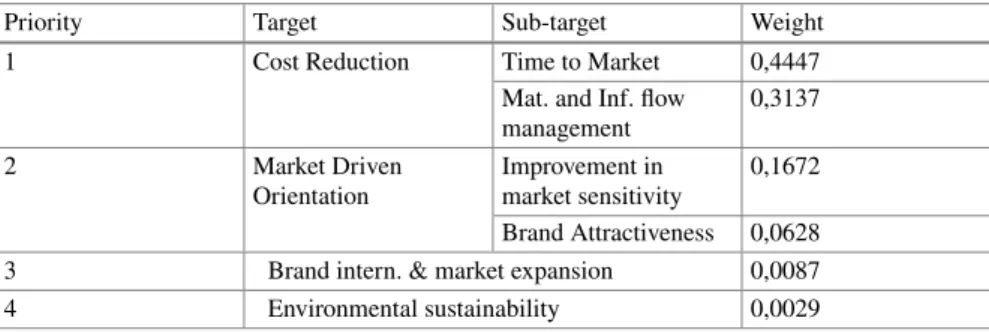
As expected, the cost reduction perspective is considered the most important for the business immediately followed by market-driven orientation and. In this context, the next section focuses on this aspect and proposes a framework for optimizing performances.
3 Framework for Optimisation of Supply Chain Performances
Key Performance Indicators
Availability: is a measure of the event when the requested item is not available in the store and is strictly related to the previous KPI;. Primary transport costs: refer to deliveries from suppliers to warehouses and are proportional to distances and quantities delivered;.
Analysis of the Results for a Traditional Supply Chain
Out of stock: this parameter is strictly linked to availability and service level. Out of Stock Cost: This refers to the economic loss associated with image damage, lost sales and/or lost customers;

4 The Omni-Channel Strategy: Impact Analysis on a Traditional Supply Chain
Analysis of the Results for the Omni-Channel Strategy
Figure 3b, in fact, shows the out-of-stock cost and reflects that replenishments are not optimized for the omni-channel strategy Martino et al. Reducing stock-out can be achieved by optimizing the replenishment policy, i.e.