The Feasibility Analysis
After working through this chapter you should be able to:
& Understand the term‘feasibility analysis’and how it applies in maximizing
the chance of entrepreneurial success.
& Discuss the limited value of intuition and gut reaction when planning to
launch a new hospitality venture.
& Understand the role of research in entrepreneurial success.
& Apply the tenets of Porter’s Five Forces model in a feasibility analysis.
INTRODUCTION
According to the Merriam-Webster Online Dictionary, the word ‘feasible’
means‘capable of being done or carried out’. In a business or entrepreneurial sense, a feasibility study or analysis may therefore be understood as an inves- tigation into something which is capable (or not) of being successful, such as the initiation and continuation of a new business venture based on a creative or novel idea. Barringer and Ireland (2006) propose a simpler explanation:
‘‘[Feasibility analysis is] a process of determining if a business idea is viable’’(p. 52).
According to White (2007):
‘‘A feasibility study isn’t magic, although it can have a magical effect on. . .profitability. . .Rather, a feasibility study provides you with data that replace wishful thinking. The study gives you a rich, detailed and accurate picture that includes information you really need to know, rather than information that’s just easily available’’.
Whatever the semantics and whether we are considering starting or buying and developing an existing business, serious consideration should first be given to its potential. In other words, the question becomes,‘Is the idea worth pursuing?’ In a sense, these considerations will depend on individual
CHAPTER 6
121
preferences and personal circumstances. For example, someone sacrificing paid employment of 30k will be more likely to proceed, all other things being equal, with a business idea than another who may be sacrificing a salary of 120k.
The aim of this chapter is to introduce the concept of a feasibility analysis (or study) and to discuss the basic steps involved. It does this first by consid- ering the role of feasibility analysis in the context of the hospitality industry.
Then each element of service/product, industry/market, personal/organiza- tion, and finance is introduced and explained. Further discussion is left until elsewhere in the book where each is expanded and developed.
Key point 6.1
A feasibility analysis provides essential information to determine whether a business idea is viable and is an important precursor the business plan.
HOSPITALITY ENTREPRENEURS AND THE ROLE OF FEASIBILITY ANALYSIS
Whilst the provision of hospitality and tourism services is probably one of the world’s oldest industries, many entrepreneurs still rely on gut reaction and intuition as a method of determining whether their venture will be successful.
As discussed in Chapter 1, some hospitality entrepreneurs1have a tendency to be swept away by enthusiasm for their own ideas and launch into a new business before carefully considering whether:
& there is a market for their service;
& there are adequate sources of start-up and continuing finances; and
& they have the skills to deliver such a service.
Barringer and Ireland (2006) refer to this somewhat cavalier approach as the‘ready, fire, aim’syndrome where the business is launched prematurely.
This almost certainly guarantees ultimate failure or an inordinate amount of subsequent iteration to (re)establish business objectives. In a sense, the over- confidence and willingness to follow intuition is not really surprising. After all, successful entrepreneurs take risks, trust their own judgement and have a clear vision of the way their business ought to be; do they not? Well actually, yes, but the successful business person takes‘measured’risks, makes a judgement and
1This behaviour is not uncommon amongst entrepreneurs in other sectors (see Bhide, 2000).
forms a business vision in a less haphazard fashion. Unfortunately, the pop- ular media loves a winner and goes to great lengths to ensure that the public shares the enthusiasm and success without showing the extensive preparatory planning involved. Whilst it is true that occasionally mavericks appear in the limelight, for us lesser mortals a reliance on carefully collected facts and figures is the sensible way to maximize the chances of entrepreneurial success.
Thus, intuition alone is an unreliable way of ascertaining future success of a hospitality venture.
In order to gain a more reliable picture of whether a business idea is likely to be successful requires a dispassionate and systematic approach through a feasibility study. There are a number of techniques associated models and approaches which may be used for this purpose. All include a requirement for information about selecting an appropriate site, market analysis, concept and mix development and financial feasibility. This does not necessarily have to be conducted by the entrepreneurs; instead professionally performed anal- yses may be commissioned. However, these services can be costly and so long as a few simple rules are followed most people are perfectly capable of con- ducting an adequate and systematic feasibility study. Figure 6.1shows the main elements of a feasibility analysis and where it features in the overall planning process.
Many entrepreneurs in the micro seasonal sector of the hospitality industry have objectives which are not always consistent with those usually ascribed to
FIGURE 6.1 The role of feasibility analysis in developing successful business ideas.
Adapted from: Barringer and Ireland (2006, p. 54).
Hospitality Entrepreneurs and the Role of Feasibility Analysis 123
founders of ‘growth firms’. Instead, the aspirations and skill sets of these entrepreneurs are modest, preferring ‘lifestyle proprietorship’ with neither revenue maximization or market expansion as priorities. Business objectives tend to be personally defined. Goulding’s (2006) study of UK-based small hospitality firms concurs and concludes that instead of clear commercial objectives, operations are inextricably linked to intrinsic personal variables emphasizing the need for rest and relaxation, social priorities, family commit- ments and privacy. The above positioning of the analyses, elements and pro- cess hold true irrespective of whether entrepreneurs are keen to set up growth or lifestyle firms.
However, there are a number of reasons why many hospitality entrepre- neurs might (erroneously) consider the above figure redundant when planning for a new business. These including ease of entry into the industry and a perception that required skills are little more than an extension of those used in a domestic setting. There is much to be said for intuition as a partial driver of management decision-making but the feasibility stage of a new venture is probably not best suited to this approach. The latter point is important be- cause some evidence (reference) suggests that many hospitality entrepreneurs do not have industry-specific skills or qualifications and lack basic business knowledge. Moreover, the industry demands little in the way of special legal requirements to start trading and there are precious few regulatory industry bodies. It is therefore unsurprising to learn that conversion of private dwellings into business premises remains a common route to entrepreneurship in the hospitality industry (Lashley and Rowson, 2006). The following vignette based on the BBC’s (UK) From Hell to Hotel television broadcast illustrates the impetuous nature of some would be hospitality entrepreneurs.
The St. Giles House Hotel
At the turn of this century, a rather well-off (financially secure) husband and wife team decided to purchase a dilapidated shell of a building in the city of Norwich in the UK. The defunct General Post Office construction site was deemed ideal for a high-class luxury hotel.
The main investors for the initiative were family members who ultimately financed the project to the tune of several millions. During the refurbishment the couple had to persuade family benefactors to reinvest significant extra sums in order for the hotel to open.
During the course of the broadcasts viewers witnessed the highs but mainly lows of the conversion process up until the grand opening of the hotel. During early stage-setting broadcasts, interviewers were keen to know about the impetus for the idea and how data was obtained about the primary market segment for the St. Giles. The couple indicated that owning and running a hotel had always been a dream and they felt that the time was right to embark on their venture. The process of identifying a primary market for the hotel was similarly idiosyncratic. The couple felt that customers’tastes and preferences would mirror
their own somewhat ostentatious expectations. Moreover, when enquiries were made about the husband and wife’s hospitality training and expertise, none was forthcoming. Indeed, their total sum of knowledge appeared to be based on a former cosmopolitan lifestyle which included extensive travel and international hotel patronage. They agreed that these experiences had equipped them with knowledge sufficient to own and run their own hotel successfully.
The remainder of the broadcasts journalled a litany of mistakes, crises and errors arguably rooted in a complete lack of management, people and operational skills. Many staff were treated in a questionable manner and expected to take on other duties besides those hospitality-related. As a result many staff left or where asked to leave including managers.
After missing several launch deadlines, the hotel was finally opened with an almost completely new staff profile. Once the‘honeymoon’period subsided, occupancy and restaurant bookings declined significantly. At this point the television series ended and viewers were left wondering about the future of the St. Giles House Hotel. In 2007 the predictable fate of the venture was made clear. Shortly after the hotel was opened, the original investors withdrew and it was taken over by a new company. The husband and wife team still remain but have no strategic decision-making autonomy and play a minimal role in the operation of the enterprise.
Questions
1. List and explain the mistakes made by this entrepreneurial couple.
2. How would a feasibility analysis have helped them avoid some of the pitfalls seen above?
3. Give three examples of research methods which could have been used to help the St. Giles House Hotel identify its niche market.
Reflective practice
1. How would you ensure emotional detachment from your business idea to improve its chances of success?
2. Contact successful hospitality entrepreneurs known to you and ask whether they used intuition or feasibility exclusively or a combination of both methods when deciding on launching their business.
PERSONAL CHARACTERISTICS
In order to run a hospitality business successfully individuals need appropriate skills and, some argue, specific characteristics. The preferable scenario is when the founder already possesses them. For example, to run a restaurant, food
Personal Characteristics 125
preparation and service skills are key. Of course as an owner-operator there will be a wide range of other skills necessary ranging from how to change beer kegs to book-keeping. If, after a while a decision is made to expand the business or relocate to a bigger premises, there may be good reason to employ people to take care of these operational tasks on your behalf. In this instance, alternative skills such as those of basic management and marketing will be required.
However, whether you already have appropriate abilities or a willingness to embrace them depends to an extent on personal characteristics such as stamina, commitment and dedication. There is overwhelming evidence to suggest that many businesses fail soon after opening due to a lack of them (see Chapter 1). Entrepreneurial traits/characteristics have already been intro- duced as important predictors of success in Chapter 2, and here Burns (2001) considers them as:
& stamina;
& commitment and dedication;
& opportunism;
& ability to bounce back;
& motivation to excel; and
& tolerance of risk, ambiguity and uncertainty.
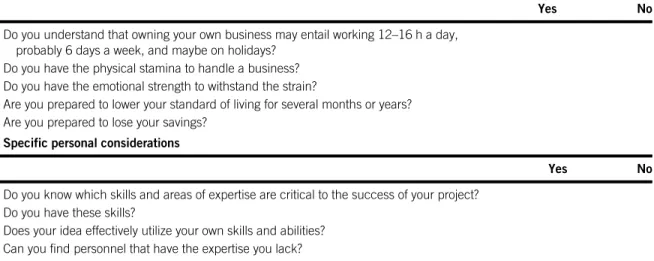
Table 6.1 shows a feasibility checklist abstracted from the Canada Business Network(2007) website and contains questions pertaining to some of Burn’s entrepreneurial characteristics.2
This type of analysis does not stop with the entrepreneur (although for micro businesses it is likely to in the first instance) but may be expanded to encompass the whole organization to determine an overall organizational competency. The process of introspection and diagnosing allows the entrepre- neur to determine their‘suitability’before embarking on their business jour- ney. If resulting gaps are exposed it may reveal a shortfall of skills or traits but does not necessarily guarantee business failure. It is simply a technique which may be used so that the entrepreneur becomes self-aware of potential weak- nesses. It is then up to the individual to take remedial action in the form of personal education and skilling or even a shift of focus to the abilities of others by establishing a network of business friends and colleagues. In fact this is a basic requirement of effective entrepreneurship. Establishing extensive net- works allows some personal capability gaps to be ‘managed’ by using the attributes of others. In exchange for external advice and experience, the entre- preneur may extend an invitation to the colleague; perhaps a place on the board of directors or
2This reproduction is not represented as an official version of the materials reproduced, nor as having been made in affiliation with or with the endorsement ofCanada Business.
advisors would be appropriate.
Key point 6.2
There are certain entrepreneurial characteristics including stamina, commitment dedication which are important in optimizing chances of new business success.
Networking may also give rise to‘clustering’or collaboration co-existing with competition in some sectors. In short, clustering invites firms to focus on their core activities but also to collaborate and build relationships with others to access, develop and share internal resources. This approach allows
TABLE 6.1 Feasibility characteristics checklist
The product or service
Yes No
Do you like to make your own decision?
Do you enjoy competition?
Do you have will power and self-discipline?
Do you plan ahead?
Do you get things done on time?
Can you take advice from others?
Are you adaptable to changing conditions?
The next series of questions stress the physical, emotional and financial strains of a new business
Yes No
Do you understand that owning your own business may entail working 12–16 h a day, probably 6 days a week, and maybe on holidays?
Do you have the physical stamina to handle a business?
Do you have the emotional strength to withstand the strain?
Are you prepared to lower your standard of living for several months or years?
Are you prepared to lose your savings?
Specific personal considerations
Yes No
Do you know which skills and areas of expertise are critical to the success of your project?
Do you have these skills?
Does your idea effectively utilize your own skills and abilities?
Can you find personnel that have the expertise you lack?
Do you know why you are considering this project?
Will your project effectively meet your career aspirations?
Personal Characteristics 127
companies to build collectively on their strengths. The benefits of this ongoing dialogue and information exchange between firms allows them to improvise, innovate and accelerate their development much more effectively than if each was operating independently. They also benefit from ‘knowledge bleeds or
‘spill over’by virtue of being in close proximity and enhanced flexibility to react quickly to shifts in customer demands. This enhanced form of network- ing extends beyond industry sector to include broader memberships extended to industry suppliers, research and development institutions and government departments providing development and extension services. Hospitality clus- ters are typically found in resort towns of the UK and Europe for example Aviemore, Bath, Lausanne and Cannes.
Reflective practice
1. Discuss which personal characteristics and skills you believe important for launching a successful hospitality venture.
2. Using the above questionnaire, reflect on your strengths and weaknesses.
3. Can missing characteristics be learned?
4. How important is it to learn them?
COMPETITION
New business entrepreneurs could do worse than follow a key piece of advice from Tzun Zu’s Chinese military treatise written during the 6th century, that is,‘know your enemy’. In other words, how does your service compare or differ from that of the your competition? How can this information be obtained and used? It will depend very much on the exact nature of the business and how much can be afforded. For example, if the trading environment is slow and predictable with only a few competitors research can be relatively simple and rudimentary. However, this environment is extremely rare in hospitality and tourism except in brand new locations in developing global regions. Even here, multinational players soon recognize the potential for business and seek to dominate the market. This is an interesting point because, all things being equal, entering a market with fewer competitors would seem more favorable than one which economists refer to as ‘monopolistic competition’ where many small operators are vying for business. Unfortunately, the trading envi- ronment is rarely simple. Whilst one would seek to avoid this situation as a new entrant, entering a market with only a few players is also unwise as a first step. The key issue here is how substantial are the few? In other words, a market highly concentrated by say three large organizations will confer
benefits to them due to their independent and combined strength, established market position and relatively abundant resource base. Whilst one only has to observe that large and small hospitality organizations do indeed exist in resorts internationally with many enjoying business success, it is more diffi- cult to succeed and sustain (despite the natural locational advantages bestowed on all hospitality organizations in the region). The following case illustrates some of the opportunities and challenges faced by entrepreneurs entering a market.
Small and Medium Hospitality Enterprises in New Zealand: too Many New Entrants?
New Zealand’s hospitality industry has grown significantly in the last decade, confirming its importance for the nation’s economy. The number of restaurant, cafe, and accommodation operations grew by almost 40 per cent between 1999 and 2005; equally as impressive is the growth (76.4 per cent) in the number of full-time employees in the industry during the same period (Statistics New Zealand, 1999, 2005). These developments suggest potential opportunities for current and future hospitality businesses. For example, it is no secret that New Zealand has recently become a more known tourist destination, possibly with some collaboration from the movie industry, and that the international tourist market has increased.
However, despite such positive outlook, there are a number of issues that demonstrate the challenges that small and medium enterprises (SMEs) in the hospitality as well as in other industries face. For example, reports suggest that on average 5.75 times more newcomers start their ventures than what New Zealand’s economy can actually sustain (Pinfold, 2001).
The number of new start ups in already saturated industries, or the level of owners’ preparedness to start a venture can have a direct impact on the lifetime of SMEs. Challenges may be more severe for hospitality business owners, as these have to wrestle with a wide array of bureaucratic, economic, and labour issues, and in recent years with consistent decreases of returns (Stewart, 2006).
To investigate challenges and other business related areas of concern, a study was conducted with the assistance of owners of small and medium hospitality operations in Christchurch and Wellington. A total of 255 hospitality enterprises that included cafes, motels, restaurants, bars and bakeries were approached in these two cities, and invited to participate completing a questionnaire sent to them. In total, 62 (24.3 per cent) responses were obtained.
It was found that 51.6 per cent of the participating businesses had been operating for three years or less, and within this group, 22 (68.8 per cent) had been operating for two years or less. This finding suggests a high per centage of new entrants in the small sample of this study. Several reasons might be behind owners’decision to abandon or sell their hospitality business. For example, the most pressing challenges among participants were lack of skilled labour, with 56.5 per cent of responses, competition from other hospitality businesses (41.9 per cent), and local authorities’rules, including signage and/or costs of compliance (40.3 per
Competition 129
cent). In contrast, lack of customers was the least important issue for participants, with only 19.4 per cent of responses.
Interestingly, when ownership structures of the hospitality operators were investigated, it became clear that most operations (74.2 per cent) had already existed prior to being taken over or purchased by the current owner(s). Adding this to the large per centage of participating businesses that had been operating for three years or less (51.6 per cent) provides further evidence of the high ownership mobility among hospitality SMEs. That only 12 (19.4 per cent) of all respondents in this study started their hospitality operations from scratch only confirms the difficulties among many businesses to survive in a very challenging environment.
Participants worked on average 60.6 h per week. Not surprisingly, on average their hospitality businesses represented 84.3 per cent of their yearly income. To be independent or to be one’s own boss (83.9 per cent), to make money (72.6 per cent), to change lifestyle (62.9 per cent) and passion for the hospitality industry (58 per cent) are participants’main reasons for starting their hospitality business. In contrast, as it would be expected, working in the hospitality industry‘as a hobby’(4.8 per cent) is participants’least important reason for being in this industry.
While future research could further investigate the overall validity of this study, or if any changes have occurred in the business structure of hospitality SMEs, the overall findings suggest a number of areas that new entrants, or even those already in the hospitality industry, should closely pay attention to.
Questions
1. What challenges other than the ones discussed in this case do you think are affecting hospitality SMEs as we speak? Think about your own suburb, city, or country.
2. What potential strategies, if any, would you suggest for hospitality SMEs in this study to minimise the apparent high per centage of‘casualties’among businesses?
Possible answers
1. A number of individuals may be entering the hospitality industry to make an investment they expect to recover, or reap benefits from, quickly. As positive results in the form of high profits, or even beyond break-even point, are not to materialise within a short- term, disillusion or disappointment may set in among new entrants, persuading a number of them to sell their businesses, or simply abandon the hospitality industry altogether.
2. While it is a complex issue with no simple solution, assistance should be made available by local chambers of commerce, the hospitality industry itself through a task force advising new entrants, or government agencies. Educational institutions (degree providers) could also significantly contribute educating and advising would be entrants about industry requirements so that these would be better equipped, and about potential challenges they might face in the industry.
Source: Alonso (2007).
Understanding the market and its exact competitive nature relative to your service is quite clearly fraught with difficulty. Hospitality entrepreneurs need many answers before they can even think about starting a business or approaching potential investors for start-up funding. The $64 000 question becomes:
& When is the best time for launching the new business?
This seems straight forward enough as an enquiry but the answer can appear somewhat inexact as it depends on a myriad of environmental and contextual conditions and variables. However, these answers are worthwhile pursuing to optimize the chances of entrepreneurial success.
Key point 6.3
In general, markets are most attractive when they contain only a few competitors. However, this very much depends on the degree of market concentration.
Some commentators speak of ‘industry attractiveness’. Simply, if it is attractive it would be reasonable to enter andvice versabut how does one measure‘attractiveness’. Linked to this is whether the industry will remain attractive and for how long? This depends on its inherent dynamism, for example, information communication technology is notoriously fast-moving compared to say that of the museum curator. So too, industries such as hospitality will have sectors which are more or less dynamic. The key is to take a strategic perspective, focus on the appropriate areas and ask the right questions. Barringer and Ireland (2006, p. 61) consider an industry to be attractive according to a‘must’list:
& must be large and growing and important to customers that is‘must’
have rather than‘would like’;
& must not be‘mature’where product is tired and price competition is
intense;
& must have high operating margins; and
& must not be‘crowded’as crowding gives rise to fierce price competition
and low margins.
Another useful way to ascertain attractiveness is by brainstorming all of the likely information you are likely to need for the potential business.
Competition 131
There are also a number of business models available for guidance; a popular one is Michael Porter’s Five Forces Model and it is shown below (Figure 6.2).
The construct has value because it alerts the nascent entrepreneur to several key areas prior to market entry. These may be considered as
‘information requirements’and once established may be pursued via a num- ber of sources; some examples are shown inTable 6.2.
The World Wide Web is also an excellent source of market information and many of the above have their own sites. It is also worthwhile conducting online searches via an appropriate search engine. However, the entrepreneur must not take this intelligence unquestioningly. Its credibility depends on a number of factors such as why the research was commissioned, who commissioned it and why. All information is political and will therefore have an inherent bias. Entrepreneurs must avail themselves of this back- ground information whenever possible if they are to make balanced
FIGURE 6.2 Porter’s five forces.
Source: Porter (1985, p. 6).
informed business decisions. However, even seemingly objective and unbi- ased information may be based on questionable premises and therefore have weaknesses.
Reflective practice
1. To what extent do you believe Michael Porter’s five forces model is a practical option for the hospitality entrepreneur?
2. Discuss why you think this is so.
Complimentary sources of information are those which the entrepreneur may elicit themselves using any number of research methods. Indeed, it is most unlikely that secondary data (even if reliable) will be sufficient for fully
TABLE 6.2 Information sources for feasibility analysis
Source Example Information
Publications Books, professional and industry journals, business magazines and daily broadsheet newspapers that isHospitality,Economist, In Touch in Business,Management Today, HR Monthly
Overviews of general economic trends, features on specific industries and regions, service and product intelligence
Databases Independent vendors, market consultants
in possession of consumer lists, telephone and business directories from extant businesses
Electoral registers, property ownership, purchasing behaviour
Government Central and state government and
government agencies
Regulated industries and sectors, Hansard, commissioned inquiries International, national and regional
trade associations, chambers of commerce, trade shows
World Tourism Organization, Institute of Hospitality, Australian Hotels Association
Published surveys and other research related to business interests of members Annual company reports All publicly listed organizations Financial performance, goals,
profile of executives and senior management, forecasting and comments on state of industry Universities and other educational
institutions
Rigorous published academic research, opportunity-spotting for innovative business ideas
Tourism Management, International Journal of Hospitality Management, Journal of Management Development, Journal of Small Business and Enterprise Development Adapted from: Schaper and Volery (2004).
Competition 133
informed decision-making. Despite the fact that no one ever has ‘perfect’
information, the gap often inherent in the avilable secondary data can be filled (at least in part) by the entrepreneur gathering data themselves or commission someone else to do it. In fact, it would be unwise for any business to proceed without this sort of knowledge input as potential sites, markets and so on all have their own idiosyncracies by virtue of context and timing. Simple exam- ples of primary data collection methods include observing how other similar establishments operate by visitation. Nothing could be simpler that booking reservations at nearby restaurants or accommodation in hotels within your vicinity. A wealth of information can be collected in this way including staff- ing, style of service, interior design, menu style, pricing and so on. Entrepre- neurs looking for more ‘scientific’and potentially richer information could use interviewing and focus groups techniques or alternatively use trained rearchers.
Similar to the judicious use of secondary data, primary data must also be treated cautiously due to a number of potential biases and inaccuracies which could affect its value. According to Schaper and Volery (2004), the main causes or error are:
& Nature of the sample–is it of the general population or the intended
market?
& Is the research method appropriate for the respondents and nature of
the research question?
& Are the questions appropriate–do tyey allow respondents to really
give their own opinion or do they only allow a response to be categorized into one or two categories when clearly more should be used?
& How high is the response rate?
& Has the research been conducted that can be repeated by someone else–
reliability
& Does the information measure what it is supposed to. For example, if a
respondent is asked about their preference for a particular variety of tea can this be generalized to their propensity to consume it and other hot and cold beverages?
& Can these results be generalized to other groups of people not included
in the study?
Reflective practice
1. You have an idea to open a small bed and breakfast in a popular resort destination. With limited resources, what primary form(s) of data collection would you use for your feasibility study?
2. Same question for a small bistro in a city centre location.
3. Same question for a small hotel on a tropical resort island.
ORIGINATING OR FOLLOWING?
When planning to introduce products and services, the entrepreneur needs to consider whether they are new or simply augmentations of existing ones. If the former, there will be no secondary data available on which to identify a likely demand. A comprehensive understanding of primary data-gathering research techniques and methods is therefore of primary importance. In this situation, other considerations are also important such as whether the innovator wants to deal with issues that arise from being the first operator in a particular field including lengthy lead times prior to profit-making, ease of immitation by competitors and significantly higher costs to bring the service to market.
On the other hand, analyzing markets for services that already exist is much easier than for those that do not and usually less costly. It is certainly more common as most new services are simply an addition or augmentation of other preexisting ones (Audretsch, 1995). For example, some styles of food service delivery require chefs to both prepare and then arrange/present food on the plate to be delivered to the customer by the food server. Others such as Gueridonservice, sees the food server preparing the dish in front of customers and then serving the finished item (although this style of service is becoming increasingly rare). Breakthrough hospitality services are uncommon but one example would be the‘stone grill’concept where restaurant customers cook the food themselves. Another (and more significant) example is that of the MacDonald’s hamburger. Although the food item itself was not novel, the actual service concept underpinning the item was groundbreaking and the owner, Ray Croc, enjoyed what Barringer and Ireland (2006) refer to as‘first
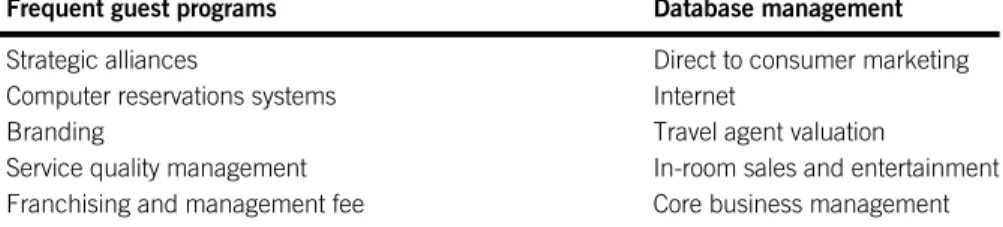
TABLE 6.3 Range of innovations in hotels
Frequent guest programs Database management
Strategic alliances Direct to consumer marketing
Computer reservations systems Internet
Branding Travel agent valuation
Service quality management In-room sales and entertainment
Franchising and management fee Core business management
Adapted from: Lewis and Chambers (2000).
Originating or Following? 135
mover advantage’for a considerable amount of time before the concept was copied by other organizations.Table 6.3shows some examples of competitive innovations in hotels in the most recent 15 years.
Being the first to offer a service or product means that the originator can enjoy dominance over the whole market including a powerful and recognizable brand image. On the other hand, disadvantages include costly set up costs and greater risk of failure. It may also be the case that even if the first mover manages to build market share, business success is not always forthcoming.
Moreover, some industries are not structured in a way that rewards first movers. The hospitality industry is one such sector where‘second movers’ are often, after studying the originator, able to move in quickly with a refined and potentially more successful product. Besides, hospitality customers are typically diverse with a broad range of tastes and preferences which cannot be satisfied by one service type or where one can be substituted for another.
An important element of market feasibility is successfully identifying a niche for the entrepreneur’s product. Essentially, a market segment or niche is a specific subgroup of individuals with a set of characteristics which differen- tiate them (or the niche) from other consumers (Frederick, Kuratko and Hodgetts, 2007). As an example, these authors note that specific segments exist amongst Australian wine drinkers. A similar classification could be applied to beer drinkers in the UK particularly if‘Real Ale’enthusiasts are included in the total market for beer consumption. These might be ritual- oriented drinkers; premium inconspicuous drinkers; fashion-oriented drin- kers and social beer drinkers.
Small hospitality business often begin by selling to niche markets before broadening their horizons. The key is to identify a segment that is large enough to enable entrepreneurial success without invoking direct competi- tion. The paradox is that the more successful a niche, the more limited the time frame for the entrepreneur to remain successful without expanding significantly to combat increased competition. An example here is where ethnic entrepreneurs initially cater for people sharing their own same cultural background, that is, their intended market (see Chapter 2). For example, in the city of Birmingham, UK, a few Pakistani entrepreneurs established the first
‘Balti’curry houses in the mid 1970s to satisfy a small and culturally defined demand. Thirty years later, the popularity of these restaurants and demand therefore has expanded to such an extent that the term Balti house is common parlance country-wide amongst the ethnic and non-ethnic groups alike with many original recipes now appearing in generic and dedicated published cook- books (for example, see Chapman, 1998).
Reflective practice
1 What advantages and disadvantages would face the entrepreneur introducing a new hospitality service?
2 What advantages and disadvantages would face the entrepreneur introducing an imitation or copied hospitality service?
FINANCES
An important stage of the feasibility analysis concerns finances. A detailed analysis is not usually required here as we simply want to gain an impression of whether the idea is likely to be a success or not. Therefore, it is wholly appropriate not to get bogged down in minutiae and financial forecasting but rather, focus on the main areas of:
& capital requirements,
& rate of return, and
& breaking even and other positive aspects associated with the business.
Once these preliminary analyses have been completed and the idea remains a reasonable prospect, financial projection statements can be com- pleted, usually for the first three years of the operation. Usually, these details are included in the business plan (see Chapter 9).
In plain English, a capital requirement simply means how much money (capital) will the business need to start up and from where will it come? An exact amount is not necessary for a feasibility analysis but the estimate should be realistic and account for all likely financial requirements. Typically, they might inlcude cost of premises purchase, staff hire, equipment costs, training, marketing, business launches and so on. A full discussion on raising capital is not appropriate here but some sources include:
& personal savings/assets;
& loans from family, friends, banks or similar institutions;
& business‘angels’and venture capitalists.
In the SME sector of the hospitality and tourism industry, most sources of capital are from personal assets and from family and friends. Conversion of private dwellings remains one of the most common routes for industry en- trance. These sources of start-up capital are common elsewhere and reflect the current position in the generic small business sector.
Whilst securing sufficient funding is clearly important, the actual sources of capital also warrant serious consideration. The saying, ‘There
Finances 137
is no such thing as a free lunch’could not be more appropriate. Capital for start-up will have an associated ‘cost’ and more ‘risky’ ventures attract higher costs for the entrepreneur. A useful metaphor here is Marlowe’s play The Tragical History of Doctor Faustus based on the original Faust story where, in exchange for power and knowledge, the main character sells his soul to the devil. The moral in an entrepreneurial sense is that financiers want a return on their investment and the more substantial the investment the more they will require as a reward for their risk. This does not only apply in a strict financial sense but may also influence the way a business is managed and operated. For example, a family member providing 75 per cent of all start-up funding may waive a financial reward (return on investment) in favour of having a stake in the business which translates into (but not limited to) making most of the strategic business decisions. Indeed, this may even happen tacitly in that a family benefactor may feel ‘entitled’to have a significant input into running the business by virtue of their financial contribution and also by dint of their position in the family hierarchy!
Obviously, there are a myriad of these configurations and sometimes small family businesses become challenged less by the act of trading and more by the complex interfamily relationships and power structures. The moral here is that for the entrepreneur there are always strings attached when seeking start-up capital whether emotional and/or financial.
The emotional side of capital funding has warranted little attention by commentators but all rightly note that understanding and forecasting a finan- cial rate of return is essential. Typically, projections calculated include‘return on assets’,‘return on equity’and‘return on investment’(see Chapter 9) and are used to see whether the projections are appropriate, that is, do they justify pursuing the business idea. Whilst there is a degree of subjectivity involved several issues must be considered ranging from the actual amount of capital required and the time it will take to obtain the return to inherent risks and what economists refer to as the opportunity costs involved. For example, is there a better investment alternative such as a high interest bank or building society account? In other words, what would the potential investor stand to gain (or lose) by investing in your hotel or restaurant in preference to other available investment opportunities?
Key point 6.5
Sometimes small family businesses become challenged less by the act of trading and more by the complex interfamily relationships and power structures. The moral here is that for the entrepreneur there are always strings attached when seeking start-up capital whether emotional and/or financial.
Another key set of questions must be addressed at this stage of the feasibility analysis. According to Schaper and Volery (2004) they can be summarized as:
& How long will it take before the venture reaches break even point?
& How long before cash returns exceed disbursements?
& When will the business be profitable? If this takes too long, the venture
will fail.
Barringer and Ireland (2006) draw attention to other issues related to financial feasibility:
& steady and rapid sales growth during the initial five years ina defined
market segment or niche;
& high percentege of repeat business;
& ability to forecast income and expenditure;
& internally generated funds to finance and sustain growth;
& availability of an exit opportunity for investors to convert equity into
cash (an acquisition or initial public offering).
Reflective practice
1. Interview a hospitality entrepreneur known to you asking for an estimation of when their new venture began to break even?
2. How did they cope financially before their business became profitable?
3. Now they operate a successful business, what is their most significant ongoing cost(s)?
DEMOGRAPHICS
Demographic data is a key part of any feasibility analysis and is reasonably inexpensive to obtain and fairly straightforward, right? Wrong. As with all data in raw form it forms a collection of numbers which can be interpreted in a variety of ways. Typically demographic studies illustrate findings as circles at specific kilometre intervals around a region (like a dartboard without the number segments). According to White (2007) these areas rarely form neat and tidy concentric circles as consumers are not attracted equally from all points of the compass. So what is the best way to identify a market for a restaurant for example?
Around 80 per cent of the restaurant’s custom will come from local resi- dents, the remainder will come from those living outside the primary and secondary areas. Understandably, the primary market is likely to be bigger
Demographics 139
than the secondary market and a feasibility analysis must scrutinize a number of factors to determine the size and shape of the market areas and how much business the restaurant is likely to generate.Table 6.4contains an indicative summary of what factors to include in the analysis.
Whilst the above serves as a useful checklist, these items are by no means exclusive and other equally important aspects must be considered including the size of restaurant’s geographic market, who is attracted, how often they visit and how much they spend. Restaurant design is also a key issue. Will the operation have a theme? If so how will it be incorporated into the layout and quality of internal fixtures and fittings? Feasibility analyses therefore must be able to target the socio-economic lifestyles of its market(s) in preference to simply identifying an‘average customer’demographically; this is too sim- plistic. When calculating patronage, spend, and intended restaurant design/
ambience the entrepreneur needs more detailed knowledge including Table 6.4:
& customer values, lifestyles and actual behaviour;
TABLE 6.4 Summary and considerations of a feasibility analysis
&Exact location and site remembering that only a short distance can have an effect on the size of the market area and the
amount of business
&Visibility of signage, major road attractiveness and access
&Co-tenancies, which includes other tenants or uses in the shopping center or in surrounding properties
&Layout of the site and relationship of the entrances and parking to the building’s entrance
&Natural and man-made physical features make act as barriers. For example, as rivers and mountains, cemeteries and
industrial areas may require potential customers to travel a considerable distance to your restaurant even if they only live a few kilometers away
TOther barriers tend to be psychological in nature and concern how your business is perceived by association with proximal physical features, often man-made, ranging from unsightly and run-down buildings to the quality of residential estates
TThese psychological barriers can be alternately viewed as opportunities. They key is to know your market and establish your business objectives accordingly. For example, a fine-dining restaurant would find little success on a city-based light industrial estate. However, a medium-priced take-away operation in this location would have a better chance of doing well because its fare would be more appropriate to its primary market–that is industrial workers
TIn a city or town centre location, shopping and entertainment nodes create patterns of travel. These influence the restaurant’s exposure to residents in their non-working hours. However, being improperly located within a node could be problematic as being located in a mall may render the restaurant inconvenient to visit
TTravel patterns are important as if the population normally travels in a southerly direction for entertainment and dining, they may resist going north or west to get to your restaurant. Travel times are also key as they are more important than travel distance. Moreover, traffic density also has a psychological impact on peoples’willingness to drive to particular locations. For example, a longer route which has less traffic and is therefore less stressful is often preferred to a shorter high density trip
Adapted from: White (2007).
& with whom they associate or avoid; and
& of which socio-economic lifestyle groups is your primary market
comprised?
For example, knowing that the income of one particular male demographic is between $50 000AU and $60 000AU tells nothing of food-related tastes and buying behaviour. One particular restaurant design or concept may attract a particular group but not another. Not knowing about their preferences and behaviour will prevent the entrepreneur from operating optimally; relying on gut reaction here will just not do. In the hospitality industry amongst chef restaurateurs (particularly amongst those with limited resources and business savvy), it is often believed that customers share the same love of food and wine as themselves. In some cases, chefs believe they can‘educate’their customers out of their preferences for less ostentatious dishes. Whilst this is com- mendable in one sense it is also incredibly arrogant and fool hardy in another.
Occasionally, there may be an isolated success story or two. However in the main, businesses started intuitively with little more than the entrepreneur’s belief that others share their predispositions are doomed to failure as many anecdotal tales from the hospitality industry will attest.
Key point 6.4
Typically demographic studies illustrate findings as circles at specific kilometre intervals around a region (like a dartboard without the number segments), these areas rarely form neat and tidy concentric circles as consumers are not attracted equally from all points of the compass.
SUMMARY
Feasibility analyses determine whether a business idea is worth pursuing or not. This can be framed in a number of ways but answers key questions such as:
& Is there a market for the considered service or business idea?
& Are there adequate sources of start-up and continuing funds? and
& Does the entrepreneur have the skills or other means to deliver this
service?
In the hospitality industry (but not exclusively) there is a tendency for entrepreneurs to commit emotionally to a new venture and launch before first conducting a thorough and systematic analysis of all pertinent factors. This
Demographics 141
process is key to optimise chances of business success irrespective of whether the venture is of the‘lifestyle’or‘growth’types.
Feasibility analyses should be comprehensive but appropriate to the new venture focussing on areas of:
& personal characteristics of the entrepreneur;
& nature of the competition;
& availability of start-up and continuing finances including rate of return
and breaking even; and
& demographic information.
This information can be obtained from a variety of sources including that which has already been published and also by a process of primary data collection. The latter is particularly important if the new service is a truly novel concept because in these circumstances data will not be readily available given the originality of the idea. However, making sense of secondary data and collecting reliable primary data is fraught with difficulty. The former type will almost certainly contain errors and biases to a lesser or greater extent depend- ing on who commissioned the research, why and how the data was gathered and interpreted. Collection of original data requires a full understanding of appropriate research methods to avoid drawing inappropriate conclusions.
This research may be either commissioned from a dedicated professional organization or undertaken by the entrepreneur. The choice most often depends on available resources but the process itself does not necessarily have to be overly onerous. Ultimately, the amount of data required on which to base an initial‘yes’or‘no’decision rests with the entrepreneur. However at the very least, they should be confident that most bases are covered. Nascent entrepreneurs should speak with experts and or familiariz themselves with at least one construct (checklist) designed to ascertain ‘industry attractiveness’. This should allow an educated estimate of whether the ven- ture is likely to be a success. The following stage is a more detailed inspection of the market, finances, organizational readiness and so on in the form of business plan.
Case author
Small and medium hospitality enterprises in New Zealand: too many new entrants?
Dr Abel D Alonso Edith Cowan University
School of Marketing, Tourism and Leisure Australia