The Tribe Alasmidontini (Unionidae: Anodontinae),
Part I: Pegias, Alasmidonta, and Arcidens
ARTHUR H2 CLARKE
SMITHSONIAN CONTRIBUTIONS TO ZOOLOGY • NUMBER 326
Emphasis upon publication as a means of "diffusing knowledge" was expressed by the first Secretary of the Smithsonian. In his formal plan for the Institution, Joseph Henry outlined a program that included the following statement: "It is proposed to publish a series of reports, giving an account of the new discoveries in science, and of the changes made from year to year in all branches of knowledge." This theme of basic research has been adhered to through the years by thousands of titles issued in series publications under the Smithsonian imprint, commencing with Smithsonian Contributions to Knowledge in 1848 and continuing with the following active series:
Smithsonian Contributions to Anthropology Smithsonian Contributions to Astrophysics
Smithsonian Contributions to Botany Smithsonian Contributions to the Earth Sciences Smithsonian Contributions to the Marine Sciences
Smithsonian Contributions to Paleobiology Smithsonian Contributions to Zoology
Smithsonian Studies in Air and Space Smithsonian Studies in History and Technology
In these series, the Institution publishes small papers and full-scale monographs that report the research and collections of its various museums and bureaux or of professional colleagues in the world cf science and scholarship. The publications are distributed by mailing lists to libraries, universities, and similar institutions throughout the world.
Papers or monographs submitted for series publication are received by the Smithsonian Institution Press, subject to its own review for format and style, only through departments of the various Smithsonian museums or bureaux, where the manuscripts are given substantive review. Press requirements for manuscript and art preparation are outlined on the inside back cover.
S. Dillon Ripley Secretary
Smithsonian Institution
The Tribe Alasmidontini (Unionidae: Anodontinae),
Part I: Pegias, Alasmidonta, and Arcidens
Arthur H. Clarke
SMITHSONIAN INSTITUTION PRESS City of Washington
1981
A B S T R A C T
Clarke, Arthur H. The Tribe Alasmidontini (Unionidae: Anodontinae), Part
1: Pegias, Alasmidonta, and Arcidens. Smithsonian Contributions to Zoology, n u m b e r 326, 101 pages, 32 figures, 24 tables, 1981.—The taxonomy, morphology, life history, and distribution of fourteen species, comprising four traditional genera, are described. Discussions of morphology include descriptions of the shell, anatomy, and glochidium (where possible) of each species and of character variation, together with statistical tables, illustrations, and scanning electron microscope photographs. Distributional data include organized lists of all museum material, with distribution maps, and with special reference to recently collected specimens that are likely to represent living populations.
Also discussed are some quantitative effects of water hardness and temperature on shell weight and on characters linked with shell weight, new glochidial characters as observed with the scanning electron microscope, the indirect determination of sex in non-gravid specimens by examination of the demi- branchs (Ortmann's method), and taxonomic relationships of the Tribe Alasmidontini. Species recognized are: Pegias fabula (Lea), Alasmidonta {Presso- donta) viridis (Rafinesque), A. (P.) heterodon (Lea), A. (Alasmidens) mccordi Athearn, A. {Alasmidonta) undulata (Say), A. (A.) arcula (Lea), A. (A.) wrightiana (Walker), A. (Decurambis) marginata Say, A. (D.) atropurpurea (Rafinesque), A.
(D.) raveneliana (Lea), A. (D.) varicosa (Lamarck), A. (/).) robusta (new species), Arcidens (Arkansia) wheeleri (Ortmann and Walker), and A. {Arcidens) confragosus
(Say). A new subgenus, Alasmidens, is described.
OFFICIAL PUBLICATION DATE is handstamped in a limited number of initial copies and is recorded in the Institution's annual report, Smithsonian Year. SERIES COVER DESIGN: The coral Montastrea cavemosa (Linnaeus).
Library of Congress Cataloging in Publication Data Clarke, Arthur Haddleton, 1926-
The tribe Alasmidontini (Unionidae, Anodontinae) (Smithsonian contributions to zoology ; no. 326) Bibliography: v. 1, p.
CONTENTS: pt.l Pegias, Alasmidonta, and Arcidens.
1. Unionidae—Classification. 2. Mollusks—Classification. I. Title. II. Title: Alasmidontini (unionidae, Anodontinae) III. Series: Smithsonian Institution. Smithsonian contributions to zoology ; no. 326-
QL1.S54 no. 326, etc. [QL430.7.U6] 591s [594'. 11] 80-23747
Page
Introduction I Scope 1 Shell Characters and Water Quality 2 Glochidial Characters 5 Indirect Determination of Sex 7 Taxonomic Relationships of the Alasmidonta Complex 7 Acknowledgments 8 Genus Pegias Simpson, 1900 9 Pegiasfabula (Lea, 1838) 9 Genus Alasmidonta Say, 1818 15
Subgenus Pressodonta Simpson, 1900 17 Alasmidonta (Pressodonta) viridis (Rafinesque, 1820) 17 Alasmidonta (Pressodonta) heterodon (Lea, 1830) 28 Subgenus Alasmidens, new subgenus 35
Alasmidonta (Alasmidens) mccordi Athearn, 1964 35 Subgenus Alasmidonta, sensu stricto 37
Alasmidonta (Alasmidonta) undulata (Say, 1817) 38 Alasmidonta (Alasmidonta) arcula (Lea, 1838) 48 Alasmidonta (Alasmidonta) wrightiana (Walker, 1901) 54 Subgenus Decurambis Rafinesque, 1831 57
Alasmidonta (Decurambis) marginata Say, 1818 57 Alasmidonta (Decurambis) atropurpurea (Rafinesque, 1831) 67 Alasmidonta (Decurambis) raveneliana (Lea, 1834) 71 Alasmidonta (Decurambis) varicosa (Lamarck, 1819) 75 Alasmidonta (Decurambis) robusta, new species 81 Genus Arcidens Simpson, 1900 84
Subgenus Arkansia Ortmann and Walker, 1912, new status 85 Arcidens (Arkansia) wheeleri (Ortmann and Walker, 1912) 85 Subgenus Arcidens Simpson, sensu stricto 89
Arcidens (Arcidens) confragosus (Say, 1829) 89 Literature Cited 98
in
The Tribe Alasmidontini (Unionidae: Anodontinae),
Part 1: Pegias, Alasmidonta, and Arcidens
Arthur H. Clarke
Introduction
SCOPE.—This is a taxonomic revision of the Alasmidonta complex, a related assemblage of 14 species of freshwater mussels traditionally com- prising the nominal genera Alasmidonta Say (1818), Pegias Simpson (1900), Arcidens Simpson (1900), and Arkansia Ortmann and Walker (1912).
All of them live in rivers and several are found only near riffles or rapids where the water is well oxygenated. Nine of the species, at best, are either uncommon, rare, or very rare; in fact, three of these appear to have become extinct in this cen- tury. In general ecology and in status of endan- germent they resemble another group of unionids in another subfamily (Lampsilinae), variously recognized under the names Dysnomia Agassiz (1852), Epioblasma Rafinesque (1820), and Plagiola Rafinesque (1820), and recently thoroughly mon- ographed by Johnson (1978).
This paper has two parts, a general introduc- tory section and a systematics section. The first part contains discussions of some effects of water quality on established taxonomic characters, some new taxonomic characters of glochidia, the
Arthur H. Clarke, Ecosearch, Inc, 7 Hawthorne Street Mattapoisett, Massachusetts 02739.
indirect determination of sex in non-gravid spec- imens, and the taxonomic placement of the Alas- midonta complex. The systematics section contains accounts of the taxonomy, morphology (descrip- tions of shells, anatomy, and glochidia, and anal- yses of their variation), life history, and geograph- ical distribution of each species, distribution maps, illustrations and SEM photographs. The sections on geographical distribution consist of organized lists, arranged by river systems, of all of the documented site records available from the writer's field work, from museum collections, and from the primary literature. Collections made since 1950 are identified by collector and date because those are most likely to reflect the present occurrence of living populations.
The specimen records listed are principally those from the collections of the Academy of Natural Sciences of Philadelphia (ANSP); the Museum of Comparative Zoology, Harvard Uni- versity (MCZ); the National Museum of Natural Sciences, National Museums of Canada (NMC);
the National Museum of Natural History, Smith- sonian Institution (USNM); the Ohio State Uni- versity Museum of Zoology (OSUM). Those col- lections produced so many records that the geo- graphical distributions of most species were clearly defined. To save space, records from the 1
large and important collection at the University of Michigan Museum of Zoology (UMMZ), and other sources, have been cited only in cases where they further extend the ranges of the species concerned.
For identification of species treated in this pa- per one should first make a tentative identifica- tion by using the illustrations and the distribution maps and then confirm that identification by reading the text. Characters are described in the same sequence under each species and detailed comparisons of species are therefore convenient.
Parallelism among subgeneric and generic de- scriptions also facilitates comparisons at those levels.
SHELL CHARACTERS AND WATER QUALITY.—
Correct taxonomic decisions about mollusk pop- ulations depend on our ability to discriminate between genetic and ecophenotypic effects. The proper taxonomic placement of the nominate species Alasmidonta triangulata (Lea) (Figure 12*), which differs in shell characters from typical Alas- midonta undulata (Say) (Figure \2b-d, g), presents such a problem. I believe that a solution to that problem, even if it is only approximate, may have application to similar problems in other species groups.
Alasmidonta "triangulata" occurs in coastal drain- ages south of Virginia and differs from A. undulata, which lives in coastal drainages in Virginia and northward, by two sorts of shell characters: those that clearly relate to shell thickness and those that are apparently unrelated to thickness. In individuals of the southern populations the shell is relatively thinner (i.e. more fragile), the hinge plate is narrower, there is no pronounced anterior- ventral thickening, the nacre tends to be pinkish, the beak sculpturing is coarser, the posterior slope tends to be more conspicuously sculptured, the umbones are more centrally located, and the shell is proportionately higher. The first three charac- ters listed above are linked and are discussed here.
The other characters are discussed elsewhere un- der A. undulata.
I approached this problem by assembling spec- imens from the whole geographical range of the
group (the St. Lawrence River System in Ontario and Quebec to the Chattahoochee River System in Florida), by examining and measuring these specimens for all characters that appear to be revealing or have been used by other investigators to define taxa, and by comparing these results with the parameters of water quality about which data are available and which appear to be sig- nificant.
The specimens used in the investigation are in the Museum of Comparative Zoology, the Na- tional Museums of Canada, and the Smithsonian Institution. For most river systems it was neces- sary to combine measurements from several col- lection lots so that sufficient data were available for statistical analyses (see discussion below).
These data are listed in Table 1.
The shell characters measured were length (L), height (H), maximum width with both valves appressed (W), distance from beak (umbone) to the anterior margin (distance designated BA) measured parallel to the long axis of the shell, strength and extent of sculpturing on the poste- rior slope (PSS), nacre color, hinge plate thickness measured at the pseudocardinal tooth of the right valve (Hp), and total shell weight (Wt). Linear quantities were measured in mm, weight in grams, and qualitative characters (sculpturing and nacre color) using arbitrary scales from 1 (absence) to 9 (maximal development). The re- sults of linear and weight measurements only are discussed here; other results are given under A.
undulata.
The water quality information was provided by the United States Geological Survey (Briggs and Ficke, 1977) and J. C. Briggs, (pers. comm.) for rivers of the United States and by the Cana- dian National Research Council for the Ottawa River in Ontario. The USGS data for each river reported here (Table 2) are from the recording station located farthest downstream but still above the influence of marine water. The Ottawa River data are from measurements taken near Ottawa, Ontario. All hardness and temperature data presented are averages of the most recent 3 years data (taken at approximately 2 week inter-
TABLE 1.—Analysis of the Alasmidonta undulata complex: Sample origins, quantities, and lengths
Arbitrary drainage code 370 390 410 420 430 440 450 460 461 470 480 510 520 540 550 555 565 620 625
River system Ottawa River St. Lawrence River St. John River Maine Coastal Merrimac River Massachusetts
Coastal Connecticut River Hudson River Passaic River Delaware River Susquehanna
River Patuxent River Potomac River James River Tar River Neuse River Wateree-Santee
Rivers Ocklokonee River Flint-Apalachicola
Rivers
Number of specimens
(N) 15 5 6 4 29 30 21 31 3 16 43 4 23 22 11 21 4 2 44 334
Number of lots
6 1 2 2 4 2 4 14 2 3 8 2 9 7 6 7 1 1 14 95
Length (mm) minimum (mean) maximum
39.60 (58.90) 68.20 28.84(38.93)47.13 35.54 (39.88) 44.47 30.58 (49.37) 59.75 27.16(44.29)69.43 32.55 (48.06) 62.95 22.79 (45.02) 72.87 21.28 (44.82) 66.55 29.27 (45.65) 67.25 9.80 (26.44) 46.43 22.29 (48.80) 67.34 48.13 (56.67) 71.18 24.16(37.71)56.17 23.73 (43.00) 56.63 25.88 (50.36) 70.33 29.07 (52.30) 72.22 21.20 (30.02) 43.40 39.90, 44.50 24.47 (52.31) 84.40
vals) except for drainages 461 (2 years) and 370, 410, 420, and 440 (1 year).
In order to use the existing data for compara- tive purposes, it was necessary to make assump- tions. These assumptions are, that within accept- able limits, a genetically uniform population has existed within each river system during the period within which the museum specimens were col- lected, i.e., the past 150 years; that overall trends in annual, average, downstream values for water temperature and water hardness also have not significantly changed; and that, in the rivers un- der investigation, values measured far down- stream are approximately representative of am- bient conditions throughout each river system in the regions occupied by the Alasmidonta undulata group. These assumptions have not been rigor- ously tested and they probably cannot be tested.
Museum collection lots cannot always be confi-
dently used as unbiased natural population sam- ples but, for some species in some river systems that are now polluted, they probably represent all of the recent historical material that will ever be available. This exercise, then, can only be used to produce "likely" generalities, but if such gen- eralities indicate that particular taxonomic char- acters are probably ecophenotypic rather than genetic. I consider it imprudent to utilize them for taxonomic discrimination. It is incumbent on a systematist to make taxonomic decisions and to base them on the best information that is avail- able.
The data (Table 2) indicate that high values of the quantity (Wt X 103) + (L X H X W) appear to correspond with moderate hardness and low temperature and that low values of these ratios seem to be related to low hardness and moderate temperature. I am aware from previous experi-
TABLE 2.—Analysis of the Alasmidonta undulata complex: Statistical summary of shell measure- ments (mean and standard error of the mean) and of water quality measurements (mean) Arbitrary
drainage code 370 390 410 420 430 440 450 460 461 470 480 510 520 540 550 555 565 620 625
H/L .605 ± .014 .645 ± .010 .636 ± .009 .620 ± .016 .636 ± .006 .636 ± .005 .632 ± .007 .613 ± .006 .635 ± .040 .673 ± .007 .611 ±.004 .624 ±.017 .621 ± .005 .635 ± .007 .665 ± .010 .667 ± .010 .666 ± .005 .698 ± .006 .682 ± .004
W/L .504 ±.017 .515 ± .004 .501 ± .009 .464 ±.017 .469 ± .006 .446 ±.004 .456 ± .006 .444 ±.006 .467 ±.017 .505 ± .011 .407 ± .003 .483 ± .012 .449 ± .007 .432 ± .006 .477 ± .008 .491 ± .010 .497 ± .022 .566 ± .014 .561 ± .006
Hp/L .098 ± .005 .118 ±.004 .086 ± .003 .088 ± .005 .080 ± .002 .083 ± .002 .097 ± .002 .082 ± .002 .096 ± .009 .082 ± .003 .090 ± .001 .072 ± .004 .088 ± .002 .079 ± .002 .050 ± .002 .062 ± .001 .067 ± .003 .062 ± .005 .064 ± .001
Wt X l&IL X H X W .395 ± .018 .358 ±.011 .230 ± .009 .213 ±.013 .213 ± .005 .229 ± .003 .247 ± .008 .253 ± .009 .244 ± .018 .226 ± .011 .265 ± .005 .224 ± .018 .245 ± .008 .234 ± .007 .134 ± .013 .159 ± .010 .161 ± .015 .212 ± .003 .190 ± .006
Hardness (ppm CaC03)
100 129 31 15 17 22 35 70 92 57 116 - 106
61 23 21 19 21 30
Av. temp.
°C 6.5 9.1 6.7 7.0 12.1 11.0 11.3 11.1 - 13.5 13.8 - 15.0 15.2 17.0 17.3 19.1 21.2 20.5
No. days
> 4.4°C 170 221 164 197 251 261 244 238 250 271 279 302 293 313 347 365 360 365 365
Av. temp on days >
4.4° C 13.0 14.9 13.8 14.2 16.4 14.6 16.9 15.6 16.4 16.4 16.6 - 17.7 17.9 17.7 17.3 19.5 21.2 20.5
ence (Clarke, 1973 and included references) that hard water appears to favor the production of thick shells and that soft water is inimical to that development, but I am not aware that any quan- titative relationships have been demonstrated.
The effects of temperature on growth have been investigated by Howard (1922:71) who showed that in the Mississippi River at Fairport, Iowa, the rate of growth of several species of freshwater mussels taken together increases rapidly with ris- ing temperatures in excess of about 45° F. Accu- mulated growth (as measured by increase in vol- ume) within a single water body appears to be directly related to an appropriate summation of average temperature excesses above a critical minimum. Relative shell weight is therefore likely to be inversely related to that summation because, of course, the mantle edges of a more rapidly growing specimen will remain for a shorter time at each shell growth increment, and may be expected to deposit less shell material there, than a slower growing specimen. Furthermore in a
rapidly-growing specimen that has attained a length of (say) 50 mm, the outer surface of the mantle has had a shorter period of time to cause additional thickening of the shell than in a slower- growing specimen that has also attained a length of 50 mm.
As a first approximation, the following coeffi- cient (Qjn) is proposed for combining aspects of water temperature and water hardness in a man- ner that reflects the effect of those two variables on relative shell weight in freshwater mussels:
0* =
HdD f X Tf
Hd = mean total hardness (in ppm CaCO3 + MgCOs), Df = mean number of days per year when mean water temperature exceeds a thresh- old amount at which growth begins to occur (that threshold is dependent on the species), and Tf = mean excess of temperature in degrees Celsius on days when that threshold was exceeded.
Figure 1 demonstrates the relationship that
4 0 - _
3 2 -
.24-
.16-
-
.08-
-
N
_ \ — - ^
• - • • ' • • , \ ^
* • • . #
WtxlO3
LxHxW Qht "
370 390 410 420 430 440 450 460 461 470 480 520 540 I 550 555
I 565
I 620 625 FIGURE 1.—The relationship between aspects of water quality and relative shell weight in
Alasmidonta undulata.
exists between Qj»t and relative shell weight (Wt X 103) -*- (L X H X W). An arbitrary (but, I hope, reasonable) threshold temperature of 4.4° C (=
40° F) has been used. It has been assumed that Alasmidonta undulata, which occurs as far north as the Bousquet River in the cold boreal forest region of northern Ontario, has a growth thresh- old temperature of less than 7.2° C (45° F), so 4.4° C (40° F) was selected as a working approx- imation. Selection of a different threshold tem- perature between 0° C and 7.2° C would have produced a Ojit contour line of similar shape, but located above or below the line shown here. The parallelism of Qj,t and relative weight would have remained, however.
The extent of numerical agreement between relative weight and Qj,t may also be estimated by use of the Spearman rank coefficient following the method given by Siegel (1956:212). A corre- lation with p < 0.01 results. This indicates a probability of correlation exceeding 99%.
Based on the above discussion I believe that, at
least in this species group, intrapopulation differ- ences in relative weight are so well correlated with aspects of water hardness and temperature that one may conclude that they are probably not genetically based and are therefore not useful for discriminating taxa. The characters of relative hinge plate thickness and anterior-ventral thick- ening are linked to relative weight and intrapo- pulation differences in those characters must be considered ecophenotypic for the same reasons.
GLOCHIDIAL CHARACTERS.—Surber (1912) pro- vided, for his time, an excellent identification key for glochidia of mussels associated with the button industry. The diagnostic characters he used are size, relative dimensions, shape, general surface sculpturing, and presence or absence of "hooks."
Other workers (e.g. Ortmann, 1911; Lefevre and Curtis, 1908, 1912; Baker, 1928; Inaba, 1941;
Johnson, 1946) have studied the glochidia of many additional species but no important new, comparative taxonomic characters have been de- fined. Recently Giusti (1973), Wood (1974), and
Giusti, et al. (1975), have discussed the glochidial morphology of Anodonta cygnea L. They, and Cal- loway and Turner (1979), have shown that scan- ning electron microscope (SEM) studies of glo- chidia reveal much more detail than that which could be observed by previous techniques. That method has been used here in the search for additional taxonomic characters.
Unfortunately, most of the species of alasmi- dontine mussels are uncommon or rare. In addi- tion, glochidia undergo progressive development while they are in the marsupium and only adult females collected that are well along in the breed- ing cycle contain mature glochidia. In most spe- cies that period occurs in the spring during a time of high water. Suitable specimens of some species have been obtained as the result of field work for this study and other studies, however, and a search of museum collections brought forth (es- pecially from the magnificent collection at the Ohio State Museum) additional preserved adult female specimens in an advanced gravid condi- tion. Mature glochidia were therefore available for seven of the fourteen species treated in this paper.
Internal characteristics of glochidial shells are best observed in specimens from which the soft parts have been removed. This is possible with fresh specimens (Calloway and Turner, 1979) but no practical method for completely removing soft parts from preserved glochidia has been de- scribed. I have found that useful preparations can be achieved by soaking the preserved glochidia in water for several days, then soaking in a 0.5 N solution of NaOH in water for 12 hours, washing in distilled water, and finally critical-point drying using amyl acetate. When many mature glochidia were treated together in this manner some were always gaped open and suitable for mounting and subsequent examination. Similar results were also obtained in some cases by omitting treatment with NaOH and by simply air drying the washed glochidia. Softening of the tissue with NaOH is often desirable, however; it does not cause distor- tion in shell characters but it may leave chemical residues that are difficult to wash away. The
internal tissues are not removed by either method and the preparations are not "clean," but if the valves are open most internal shell characters are clearly visible.
Using the SEM, several new shell characters now appear to be available and useful for taxo- nomic studies. These are details of the shape and size of the valves, the fine structure of the "spines"
or "hooks," the nature of surface microsculpture, and details of the ligament and hinge. Some aspects of valve shape and of the fine structure of the "hooks" are of special interest.
The valves of alasmidontine glochidia, like those of the European species Anodonta cygnea (see Wood, 1974), are not symmetrical as previously believed but exhibit clearly defined anterior and posterior areas. This asymmetry is particularly prominent in Arcidens confragosus but it is apparent to some significant extent in all of the species examined.
Each "spine" or "hook" of an anodontine or alasmidontine is a complex hinged structure es- pecially adapted for piercing the skin, fin or scale of a host (a fish in most cases) and ensuring a successful period of attachment. It is much more complex than the generalized terms "spine,"
"hook," or "spiny hook" imply. The term "sty- let," widely used in entomology for another com- plex structure, also finely adapted for piercing tissue, is therefore introduced here. SEM exami- nation shows that most of the outer surface of each stylet is covered with tiny "microhooks,"
here termed microstylets. In some species these are flattened and bladelike and have two to six sharp cutting edges and in other species they are pyramidal and round in cross-section. As previ- ously reported by Arey (1924) and others, and independently observed here, these microstylets are inclined forward, toward the point of the stylet, and in the opposite direction to what would be expected if they functioned as barbs on a hook.
It is apparent that the sharp, blade-like point of the stylet is adapted to cause the initial piercing and wounding of the fishes fin or scale and that further closing of the valves is accompanied by inward folding of the stylets. This causes the
numerous microstylets to pierce the fishes tissue, to anchor the glochidium much more firmly, and to produce enhanced irritation of the fishes flesh thus promoting the formation of a cyst. It also pulls the soft body of the glochidium into more intimate contact with the fishes blood and facili- tates subsequent interaction. The size and shape of the stylet and the number, arrangement, shape, and size of the microstylets show clear differences when species are compared with each other.
These and other glochidial features provide ad- ditional useful characters for the analysis of the interspecific relationships proposed and the tax- onomic arrangement used in this paper.
INDIRECT DETERMINATION OF SEX.—In most spe- cies of Unionidae, including most of the alasmi- dontines, sexual differences in the mantle or shell are either obscure or do not exist. Unless a speci- men is adult and gravid, prompt assignment of sex therefore presents a problem.
Ortmann (1911:291) demonstrated that males and non-gravid females can be differentiated, even as quite young specimens, by the unaided eye. His method appears to have been overlooked by most subsequent workers. He showed that the number of longitudinal connections (septa) that join the outer and inner laminal tissue (i.e. the outer and inner faces) of each demibranch are much greater in those demibranches that are potentially marsupial than in those that are not.
Demibranches that may later become marsupial have more interlamellar connections because more connections are necessary to maintain the integrity of the organ when it becomes distended with eggs or glochidia. Ortmann states that: "the difference is very striking, and may be detected by the naked eye on holding up the gill [—
demibranch] toward the light. When I was hunt- ing for sterile females among my material I always used this method in discovering the sex, and the much more crowded septa in the gill examined always indicated the female sex. I never made a mistake, and a specimen selected as a sterile female according to this test always proved to belong to this sex, when a closer microscopical examination was made."
During the present study the number of pri- mary water tubes (i.e. the spaces between the septa) was determined by placing an excised por- tion of the outer demibranch on a microscope slide, by slicing it transversely in an oblique plane with a razor blade so that the cut edges of the septa were exposed, and by counting the water tubes under a dissecting microscope while using an ocular micrometer scale. The results of these examinations and the tentative sex determina- tions are given under the species concerned.
I am conducting an evaluation of this conve- nient sexing method by comparing its results with the presence of sperm or ova, and/or spermato- cytes or oocytes, in the sex glands as determined by histological sectioning. Preliminary results in- dicate that the method is reliable for distinguish- ing males from non-gravid females. Hermaphro- dites have not yet been examined. See van der Schalie (1970) for extensive results of sexing by direct histological methods. I will continue to test the reliability of this indirect technique of sexing as more material becomes available.
TAXONOMIC RELATIONSHIPS OF THE Alasmidonta COMPLEX.—Several systems of classification have been proposed for demonstrating evolutionary relationships in freshwater mussels by grouping the genera into higher categories. These systems have recently been reviewed by Heard and Guck- ert (1970). I follow Ortmann (1910) in the opinion that the Subfamily Anodontinae is one of three major natural groups within the Family Unioni- dae, and I include in it the nominate genera Anodonta Say (1818), Anodontoides Simpson (1898), Strophitus Rafinesque (1820), Alasmidonta Say (1818), Pegias Simpson (1900), Arcidens Simpson (1900), Arkansia Ortmann and Walker (1912), Lasmigona Rafinesque (1831), and Simpsoniconcha Frierson (1914).
The features that unite these genera are as follows: the shells are thin or somewhat thickened but not massive (e.g. not thick enough for use in the pearl button industry); the hinge teeth are either lacking entirely or are incompletely devel- oped; the microstructure of the marsupial demi- branch is unique (all possess secondary water
tubes and in all, except species of Strophitus, the marsupial water tubes are continuous and not divided by transverse septa); the glochidia are held in the whole of the outer demibranches and they are retained in the demibranches for many months (for example from early fall until late spring) before they are released; the glochidia of all the species that have been studied have stylets (all other species lack stylets except those of Prop- tera Rafinesque (1820), which are anomalous);
and the glochidia, in general, attach to the scales, fins or tails of the fish host rather than to the gill filaments.
Morrison (1956) and Clarke and Berg (1959) recognize two related but distinct groups of gen- era within Anodontinae or its equivalent. We follow the latter authors and consider those groups as tribes. Tribe Anodontini contains Ano- donta, Anodontoides, a n d Strophitus a n d is character- ized by predominantly thin, unsculptured shells;
absence or near absence of hinge teeth; and Holarctic distribution. (The placement of Strophi- tus is questionable.) Tribe Alasmidontini contains the remaining genera and is characterized by shells that are somewhat thickened and may or may not be sculptured; by the presence of pseu- docardinal hinge teeth in all species; by the pres- ence of an interdental projection and of unique, partly developed lateral teeth in most species;
and by Nearctic distribution.
The present monograph is concerned with one of the three groups within the Alasmidontini, the Alasmidonta complex, which consists of the genera Alasmidonta, Pegias, a n d Arcidens. (Arcidens, as rec- ognized herein, contains the nominate genera Arcidens and Arkansia.) The Lasmigona complex
(containing only Lasmigona) and the Simpsonicon- cha complex (containing Simpsonconcha) are the other members of the Tribe. Simpsonconcha, with its unusual, small, smooth shell; poorly developed hinge teeth; and unique glochidial host (an am- phibian, Necturus, instead of fish) is aberrant and its relationship to other species is uncertain. The Alasmidonta complex may be distinguished from the Lasmigona complex by the beak sculpturing (principally single-looped or nodulous in the alas-
midontids, fundamentally double-looped in the lasmigonids), shell morphology (the alasmidon- tids tend to be subquadrate, inflated, to have the distal end of the posterior ridge located postero- ventrally, and not to be alate; the lasmigonids tend to be subovate and relatively longer, com- pressed, to have the distal end of the posterior ridge located higher, and to be alate), and zo- ogeography (the alasmidontids are more widely distributed and appear to have had more south- ern historical affinities than lasmigonids).
In the taxonomic treatment that follows, the conventional generic and subgeneric groupings have principally been used. The exceptions are that, to show presumed relationships, the nominal genera Arcidens and Arkansia are reduced to sub- genera of a single genus {Arcidens), the nominal subgenus Prolasmidonta has been made a subjective synonym of the subgenus Pressodonta (Genus Alas- midonta), and a new subgenus of Alasmidonta, viz.
Alasmidens, has been proposed for A. mccordi. The bases for these changes are explained in the text where they occur.
A thorough phylogenetic (or phenetic) evalua- tion of interspecific relationships is not justified at this time because the soft parts of three of the species, and the glochidia of seven, are still un- known. It is hoped that such an evaluation can properly be made in the near future when more complete material of all species of the Tribe Alasmidontini are available.
ACKNOWLEDGMENTS.—Special thanks are ex- tended to Ms. Carolyn Cox for meticulously pre- paring all of the art work, to Dr. Suzanne Ham- ilton for much expert laboratory work and for reading parts of the manuscript, and to Dr. D. H.
Stansbery for generous access to the unparalled collection of dry and alcohol-preserved freshwater mollusks at the Ohio State University. I also thank Dr. Lee Ann Hayek and Dr. Charles Rob- erts for advice and assistance on statistical and numerical applications, Ms. Cathy Lamb, Ms.
Nancy Helm, and Ms. Linda Cullen for other laboratory assistance, Ms. Susann Braden and Ms. Mary Jacque Mann for making the scanning electron microscope photographs, Dr. Eugene
Keferl for the use of many specimens that he collected, Ms. Sally Dennis and Mr. Samuel M.
Call for supplying specimens, and Mr. John C.
Briggs, Dr. D. C. Mortimer and Dr. D. Miller for water quality data. Drs. J. B. Burch, G. M. Davis, J. Rosewater, and D. H. Stansbery read the man- uscript and offered helpful suggestions. Appreci- ation is expressed to them and to the following museum curators and support staff for access to collections under their care: Dr. K. J. Boss and Mr. R. I. Johnson, Museum of Comparative Zo- ology, Harvard University; Dr. J. J. Parodiz, Carnegie Museum, Pittsburgh; Mr. Charles Gru- chy and Mrs. M.F.I. Smith, National Museum of Natural Sciences, National Museums of Canada;
Mr. John Peake, Dr. J. D. Taylor, and Ms. Solene Whybrow, British Museum (Natural History);
and Dr. Alex Tompa, Museum of Zoology, Uni- versity of Michigan. Finally I wish to thank the Smithsonian Institution for the substantial finan- cial and logistical support that made this study possible.
Genus Pegias Simpson, 1900
Pegias Simpson, 1900:660. [Type-species: Margaritana fabula Lea, by original designation.]
The glochidium of P. fabula (Figure 3) is unique: it is subovate, longer than high, with smooth, unpitted surfaces and two narrow stylets that each bears markedly fewer longitudinal rows (2 rows) of major microstylets on its distal half than on its proximal half.
Comparative features of adults are: shells small (up to about 35 mm long), of medium relative height (H/L about 0.56-0.70), with prominent sexual dimorphism (central posterior point much more acute and extended in males than in fe- males), absence of strong sculpturing (except beak sculpturing) on the disc and on the posterior slope, dehiscent periostracum, and hinge teeth that consist only of one large pseudocardinal tooth in each valve. The anterior-ventral mantle margin is lobate and mantle fusion between the anal and supra-anal openings is absent.
Pegias fabula (Lea, 1838)
FIGURES 2-4
Margaritana fabula Lea, 1838:44, pi. 13:39. [Type-locality:
"Cumberland River, Ten[nessee]." The lectotype, herein selected, is Lea's figured specimen and is in the Smithson- ian Institution collection of mollusks (USNM 86325); it is labelled "Cumberland R., Tenn. Troost."]
Margaritana curreyiana Lea, 1840:288 [Latin description and localities only]; 1842:233, pi. 18: fig. 40 [same as 1840, with English description and discussion, figure labelled Margaritana curreyana.] [Type-locality: "Stone's river, Tenn[essee]." The lectotype, herein selected, is probably Lea's figured specimen and is in the Smithsonian Institu- tion collection of mollusks (USNM 86227); it is labelled
"Stone's River, Tenn., Currey."]
THE SHELL
FIGURE 2a-c
DESCRIPTION.—Shell small, subquadrate, un- usual (resembling large specimens of the marine species Hiatella arctica (L)), up to 35 mm long, 22 mm high, and 13 mm wide, thickened anterior- ventrally (up to 3 mm thick) and relatively thin (1 mm thick) posteriorly. Anterior margin semi- circular and evenly rounded; ventral margin flatly curved anteriorly and straight or somewhat concave posteriorly; posterior margin bluntly pointed above the midline, obliquely truncated below, and angular or bluntly pointed again at its junction with the ventral margin; dorsal mar- gin long, openly curved, and bent ventrally near its posterior end. In some specimens, presumed to be females because of crowded septa in the outer demibranchs, the upper and lower posterior points are similar; in others (presumably males) the upper point is much more acute and ex- tended. Maximum inflation on the posterior ridge near or above the long axis of the shell. Beaks of moderate width, bluntly pointed, located about 1/3 the distance from anterior to posterior or a little less, and projecting a little above the hinge line. Posterior ridge broad, rounded, quite prom- inent, and extending to the lower posterior point.
A broad, shallow, radial groove in front of this ridge is also present. Posterior slope variable; in
10
FIGURE 2.—Pegias fabula: a-c, USNM 86227, Red River, Tennessee; d, OSUM 33310, North Fork of Holston River, Nebo, Virginia. (Scale = 1 cm.)
specimens (males?) with a long upper posterior point, the posterior slope is traversed by a prom- inent, rounded, radial ridge, bounded by broad radial grooves, which extends into that point; in specimens without such a rostrum (females?) the posterior slope bears only an indistinct upper radial ridge. Growth rests apparent as unusually strong, widely-spread grooves, but not prominent.
Additional post-juvenile sculpturing consisting only of thread-like, concentric lines of growth.
Periostracum worn away from much or most of the shell surface, even in young individuals, and adherent principally posteriorly and in the cen-
tral radial groove and in beak sculpture grooves (see below). In such specimens the surface is principally chalky or ashy white. Periostracum, where visible, seen to be yellowish brown with indistinct, broad and narrow, brown rays. Liga- ment rather short and narrow, principally dark brown, and located immediately behind the um- bones.
Hinge teeth well-developed but incomplete.
Right valve with one erect, irregularly pyramidal pseudocardinal tooth buttressed by a broad rib below. Left valve with one triangular pseudocar- dinal tooth (without a buttress) that is confluent
with the interdental projection and forms with it one strong bifid tooth. A deep socket is present in each valve opposite each pseudocardinal. Lateral teeth short, and vestigial or entirely absent but where discernible numbering 2 in the right valve and 1 in the left. Beak cavity rather narrow and deep. Anterior muscle scars deeply sunken, pallial line impressed and prominent, and scars within beak cavity consisting of a few tiny, short, oval depressions, particularly in the left valve, and placed on the back of the pseudocardinal tooth.
Nacre whitish, with a dull gloss, and with bluish or salmon-pink suffusions covering part or all of its surface.
Beak sculpture heavy and composed of about six bars, the first I or 2 narrow, semicircular and oblique; the following bars broadly double- looped and expanded on the posterior ridge. The distal bars become obsolete except on the poste- rior ridge and extend about 12 mm beyond the umbonal apex. Early bars obliterated in most mature specimens but later bars clearly visible in adults.
VARIATION.—According to Ortmann (1914:65- 66) strong sexual dimorphism occurs in this spe- cies. Except for his comment that the radial depression in front of the posterior ridge is very faint, and indicated only in the female, no other information appears to have been published about the nature of this dimorphism. Our mate- rial is insufficient to establish a relationship with
TABLE Feature
Length (m) H / L W / L B-A/L Hp/L Length (m) H / L W / L B-A/L Hp/L
3.—Pegias fabula: Shell measurements
N Range Mean (x) S
Wallen's Creek, Lee County, Virginia 13
13 13 13 13 7 7 4 7 6
16.85 -35.45 0.565 - 0.642 0.373 - 0.502 0.287 - 0.376 0.0912- 0.1172
24.34 0.604 0.411 0.321 0.1020 Red River, Tennessee 16.03 -35.00
0.608 - 0.706 0.388 - 0.454 0.310 - 0.400 0.0776- 0.1080
28.09 0.660 0.426 0.356 0.0931
5.518 0.0217 0.0101 0.0282 0.0130 7.29 0.0367 0.0307 0.0348 0.0100
certainty, but of the eight alcohol-preserved spec- imens (soft parts only) that we have had available (see Table 4), seven were assessed as females either because they were gravid (4 specimens) or because there were about 3 water tubes per mm in the outer demibranch (3 specimens). (One of the presumed females was sectioned and had clearly discernible oocytes in the gonadal tissue.) One other specimen had only 2 water tubes per mm and this was considered as a probable male. The posterior edge of the mantle was also broadly rounded or roundly truncated in the females and the presumed females but centrally pointed in the presumed male. Shells in the Smithsonian Insti- tution collection are also dimorphic in that most are broadly truncated posteriorly but in some the upper posterior ridge is much more pronounced and extended than the lower, giving the shell an acutely pointed posterior.
Aside from this presumed sexual dimorphism, the principal shell variation concerns the relative dimensions (some specimens are noticeably higher than others), size, and the extent to which the periostracum is worn away.
TOPOGRAPHIC ANATOMY FIGURE 2d
SPECIMEN DESCRIBED.—From North Fork, Hol- ston River at Nebo, state route 619 bridge, 9.5 mi (15.2 km) NE of Marion, Rich Valley District, Smyth Co., Va. (OSUM 33310.5, D. H. Stans- bery and W. J. Clench!); apparently not relaxed, preserved in 70% ethyl alcohol; shell removed, body length 23.5 mm; sex presumed male.
DESCRIPTION.—Mantle grayish white, pat- terned centrally with irregular, complex, whitish muscle strands and near the margin by densely packed, silvery white, radial muscle strands; man- tle transparent with demibranchs and labial palps showing through. Adductor muscles orange- brown. Mantle outer margin smooth except an- terior-ventrally where it is expanded into an abrupt, incurved point and a little posterior to that site where a rounded, low lobe is present; it
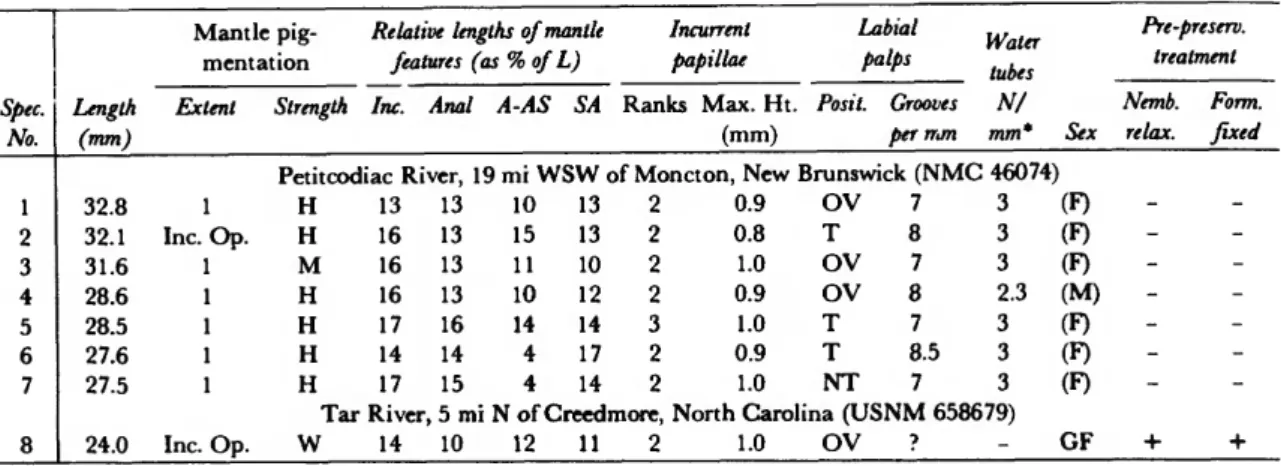
TABLE 4.—Pegias fabula: Variation in topographic anatomy (abbreviations: Extent = anterior extent of posterior pigmentation (0 = none, Inc. Op. = confined to area of incurrent opening,
1 = beginning at posterior ventral margin, 2 = beginning at mid-ventral margin, 3 = beginning at anterior margin); Strength (A -= absent, H = heavy, M = moderate, W = weak); Inc = incurrent opening; Anal = anal opening; A-SA = distance between anal and supra-anal opening; SA — supra-anal opening; Posit. = position of distal end relative to inner demibranchs (NT = not touching, T = touching, OV = overlapping); (F) = female (inferred); GF *• gravid female; (M) = male (inferred) (sexes inferred from number of water tubes per mm); Nemb.
relax = relaxed with nembutal; Form, fixed = fixed with formalin)
Spec.
No.
1 2 3 4 5 6 7 8
Length (nun)
26.4 24.3 23.6 23.5 21.6 20.0 20.0 17.0
Mantel pig- mentation Extent
Inc. Op.
1 1 1 1 1 Inc. Op.
1
Strength
Relative lengths of mantle features (as % of L) Inc. Anal A-SA SA
Incurrent papillae Ranks Max. Ht.
(mm)
Labial palps Posit.
North Fork, Holston River, Nebo, Virginia (OSUM M
H H H H H M H
15 17 17 21 16 16 14 19
22 22 22 21 22 16 20 21
0 0 0 0 0 0 0 0
19 21 21 20 23 26 24 18
1 1 1 2 2 1 1 1
0.4 0.4 0.5 0.8 0.8 0.5 0.6 0.6
OV T OV OV OV T OV OV
Grooves per mm 33310)
10 19 12 14 11 11 12 16
Water tubes
N/
mm*
3 - 3 2 _ 3 - -
Sex (F) GF (F) (M) GF (F) GF GF
Pre-preserv.
treatment Nemb. Form.
relax. fixed
- - _ - - - - -
* Refers to outer demibranchs of non-gravid specimens.
also has a broken band of dense brown pigment running at the edge from the posterior ventral region posteriorly and dorsally to the dorsal end of the supra-anal opening. A band of dark purple- brown pigment is also present along the inner margin of the mantle in the same area; it is particularly wide in the region of the incurrent and anal mantle openings. The incurrent opening is 4 mm long and has a single (partially double) row of tiny rounded papillae just within the edge.
The largest of these are about 0.4 mm long and 0.1 mm wide. The separation of the incurrent and anal openings appears to be achieved entirely by the diaphram. Further, the anal opening (3.5 mm long) is not separated from the supra-anal opening (7 mm long) by any permanent mantle connection, although appression of mantle edges for separation of the openings may occur during life. The anal and supra-anal openings are with- out papillae but a narrow, laminate, internal lip projects from the inner side of the anal opening below the edge.
The demibranchs of preserved specimens are gray-brown. The outer demibranch is 14.5 mm long, 5.5 mm high, with an irregular, openly- curved ventral margin that sweeps anteriorly (in- terrupted by a rather large marginal indentation) and posteriorly to acute junctions with the at- tachment line. The outer tissue of the outer demibranch has about 12 double radial filaments per mm and about 5 cross filaments; there are about lVfe underlying water tubes per mm. The inner demibranch is about 17 mm long and 9 mm high, truncated anteriorly, flatly curved ven- trally, sharply rounded posteriorly, and projects far beyond the outer demibranch, especially in the anterior-ventral region (5 mm beyond). The outer surface of the inner demibranch also has about 12 double radial filaments per mm and 5 cross filaments, but the specimen is poorly pre- served and water tubes are obscure. The inner lamina of the inner demibranch is not attached to the visceral mass. The diaphragm is therefore incomplete and opens into the interlaminar space
of the inner demibranchs and also into the mantle cavity posterior to the foot, because the inner laminae of the two inner demibranchs are not fused together in that region.
The labial palps are short and triangular and overlap the inner demibranchs. The lower margin is bent in an open sigmoid curve, the upper margin is short, straight, and rolled outward, and the distal junction of these margins is round, not pointed. The outer surfaces are smooth and the inner surfaces are deeply furrowed and ridged (about 7 furrows per mm); the inner furrows are also visible through the outer surface. The outer member is attached to the mantle, and subdor- sally attached to its inner member, for about 60%
of its length.
VARIATION.—The material available (Table 4) shows little variation in most characters. Mantle pigmentation is continuous or broken into square spots; it is confined to the posterior region in all specimens. The anal and supra-anal openings are approximately equal in length and tend to be slightly longer than the incurrent opening. No mantle fusion is seen between the anal and supra- anal opening, an observation in agreement with Simpson (1900:661) but in disagreement with Ortmann (1914:66). The incurrent papillae are small and the labial palps touch or overlap the inner demibranchs in all specimens. The labial palps are more finely ridged and grooved than in other species, but substantial variation occurs.
Other characters examined were the extent of fusion of the inner laminae of the inner demi- branchs with the visceral mass (free in all speci- mens) and the shape of the mantle margin. The single (presumed) male specimen, as described above, has an abruptly and acutely pointed pro- tuberance in both mantle edges in the anterior- ventral region and a rounded lobe posterior to it.
In the females (See Fig. 2d) and presumed females the mantle edge in that region is irregular and locally thickened but no acute point is present.
Relative dimensions of the demibranchs, ex- pressed as percentage of body length, are: outer demibranch, length 55% to 69%, height 24% to 29% (two specimens were anomalous, i.e. height
19% and 39%); inner demibranch, length 60% to 76%, height 35% to 41%. The presumed male had intermediate values for these measurements.
GLOCHIDIUM FIGURE 3
DESCRIPTION.—Glochidium oval, with hinge flattened, apex acentric and slightly protuberant, and valves flatly convex. Shell 0.309 mm high, 0.354 mm long, and about 0.100 mm in single valve convexity. The posterior margin is more broadly rounded than the anterior and the apex is located about 33% of the distance from anterior to posterior (measured parallel to the hinge axis).
Except for a few curved concentric lines that are approximately parallel with the shell margin and located near the apex, the surface is smooth, i.e.
not malleated and pitted as in other species. The hinge is slightly convex centrally and about 0.150 mm in length.
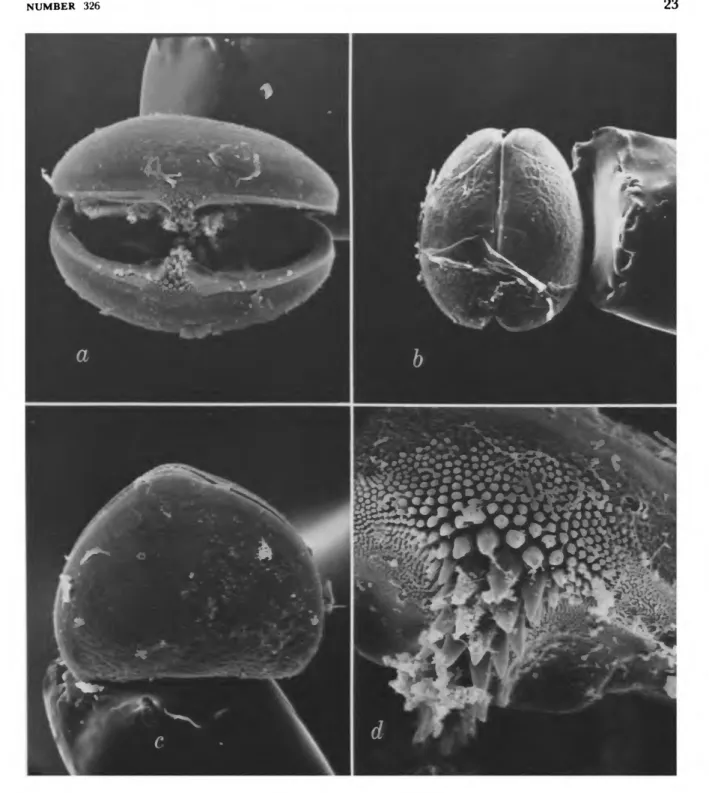
Each apical stylet is flatly folded inward, about 0.130 mm long, about 0.050 mm wide at the base, tapering rapidly in the proximal third of its length to about 0.022 mm wide, and tapering more gradually in the distal portion to about 0.019 mm wide near the tip and to a spatulate extremity. A wide membrane connects the stylet on both sides and for about two-thirds its length with the valve margins. The exposed surface of each stylet is covered with microstylets, the largest about 17 jum long and 8 jum wide, arranged in two parallel rows on the distal two-thirds of the stylet, and distally directed. These microstylets are lanceo- late, with sharp, pointed apices and longitudinal ridges. The microstylets become much more nu- merous and gradually smaller near and on the base of the stylet and extend onto the membrane near the base of the stylet and along the ventral edge of the valve, for about one-third of its length, as micropoints <0.2 jum long.
The glochidium described is from an adult collected from the North Fork Holston River at Nebo, Smyth Co., Va. on 27 September 1971 by D. H. Stansbery and W. J. Clench (OSUM
f
FIGURE 3.—Glochidia of Pegias fabula: a-d, OSUM 33310 (location same as 190; * X 475.)
(a, c, rf, X
33310). Another glochidium from the same adult is 0.310 mm high and 0.380 mm long. Still an- other glochidium from the same adult has irreg- ularly arranged distal microstylets. Many of the glochidia were still enclosed in a vitteline mem- brane and appeared to be in various advanced stages of development.
It should be noted that the measurements of these, and all other glochidia described in this paper, have been taken from SEM photographs.
During operation the SEM provides a digital read-out of the degree of magnification shown in the photographs. This read-out may be up to 5%
inaccurate, however, so the glochidial dimensions given should be considered reliably accurate only to within 5%.
LIFE HISTORY
BREEDING DATES.—Specimens have been re- ported to be gravid when collected in the North Fork Holston River on 17 September 1912 (Ort- mann, 1914:65) and on 27 September 1971 (this study). The specimens reported herein were in various advanced stages of development but were not fully mature. It is probable that the breeding season extends from September to the following spring.
NATURAL HOST.—Unknown.
HABITAT.—Blankenship (1971:61) reported P.
fabula from a creek (Horse Lick Creek, tributary to the Rockcastle River) and stated that "Not one specimen was found to be 'dug in,' but all were free to be moved by the churning water causing additional wear." No additional pub- lished data are available but all specimens have been taken from rivers or creeks. The species is now very rare.
GEOGRAPHIC RECORDS
FIGURE 4
CUMBERLAND RIVER SYSTEM.—Rockcastle River Drainage,
Kentucky: Rockcastle River at Livingston, Rockcastle Co.
(MCZ; USNM; 1963-64, D. H. Stansbery! (OSUM); and 1967, R. A. Tubb! (OSUM)) and Laurel Co. (MCZ).
Cumberland River Drainage: Little South Fork Cumberland River at Freedom Church Ford, 2 mi (3.2 km) ENE of Ritner, Wayne Co., Ky. (1977, W. and L. Starnes! (OSUM)).
Caney Fork, Sweetgum, 4.6 mi (7.4 km) NE of Spencer, Van Buren Co., Tenn. (QSUM). Stones River at Murfreesboro, Rutherford Co., Tenn. (ANSP) and 2.0 mi (3.2 km) W of Murfreesboro at Tenn. Hwy. 96, Tenn. (ANSP and 1966, D. H. Stansbery! (OSUM)).
Red River Drainage, Kentucky: Watts Cove in West Fork Red River, 3.5 mi (5.6 km) W of Trenton, Todd Co. (D. H.
Stansbery! (OSUM)).
TENNESSEE RIVER SYSTEM.—Holston River Drainage: North Fork Holston River at Nebo, 9.5 mi (15.2 km) NE of Marion, Smyth Co., Va.; 1.5 mi (2.4 km) SW of Chatham Hill, Smyth Co., Va.; Rt. 91 bridge at Saltville, Smyth Co., Va (all 1971, D. H. Stansbery and W. J. Clench! (OSUM));
Saltville, Va.; Mendota, Washington Co., Va. (both Ort- mann, 1918). Middle Fork Holston River at Chilhowie, 9.5 mi (15.2 km) WSW of Marion, Smyth Co., Va. (1968, D. H.
Stansbery and W. J. Clench! (OSUM)). South Fork Holston River at Wright Bridge, 1.9 mi (3.0 km) NW of Damascus, Washington Co., Va. (1974, D. H. Stansbery and W. J.
Clench! (OSUM)) and Pactolus, Sullivan Co., Tenn. (Ort- mann, 1918).
French Broad River Drainage, Tennessee: French Broad River
(MCZ).
Powell River Drainage, Virginia: Flag Pond, Jonesville, Lee Co. (ANSP). Wallen's Creek, Lee Co. (MCZ, ANSP; Ort- mann, 1918). Powell River, Dryden, Lee Co. (Ortmann, 1918). Big Mocassin Gap, Scott Co. (Ortmann, 1918).
Clinch River Drainage, Virginia: Clench River, 6 mi (9.6 km) of Cedar Bluff, Tazewell Co. (1965, D. H. Stansbery and J.
J. Jenkinson! (OSUM)), 0.2 mi (0.3 km) E of Cliffield, Tazewell Co. (1970, J. M. Condit and M. B. Trautman!
(OSUM)), and Jonesville, Lee Co. (USNM). Copper Creek, 1.6 mi (2.6 km) SW of Nickelsville, Scott Co. (1970, D. H.
Stansbery and W. J. Clench! (OSUM)).
Hiawassee River Drainage, North Carolina: Valley Creek,
Cherokee Co. (ANSP)
Elk River Drainage: Elk River at Estill Springs, Franklin Co., Tenn. (MCZ, USNM, and ANSP) and "in Ala" (MCZ).
Blue Water Creek Drainage, Alabama: Blue Water Creek, Lauderdale Co. (USNM).
Duck River Drainage, Tennessee: Duck River (USNM).
Genus Alasmidonta Say, 1818
Monodonta Say, 1817, no pagination. [Type-species: Unio undulata Say, 1817, by original designation. Not Monodonta Lamarck, 1799; 74 (Gastropoda).]
Alasmidonta Say, 1818:459. [Replacement name for Monodonta Say, 1817 (not Lamarck, 1799).]
Alasmodonta Say, 1819, no pagination. [Error for Alasmidonta Say, 1818.]
16
V
FIGURE 4.—Geographical distribution of Pegias fabula.
Alasmodon Thompson, 1820:110. [Unjustified emendation for Alasmodonta Say, 1819.]
Alasmisodonta Blainville, 1825:639. [Error for Alasmidonta Say, 1818.]
Alasmadonta Jay, 1835:18. [Error for Alasmidonta Say, 1818.]
Uniopsis Swainson, 1840:289, 382. [Species included are Uniopsis radiata Swainson, 1840 and Uniopsis mytiloides Swainson, 1840, both based on the same figure (Swain- son's figure 62, which is of Unio undulata Say).]
Hemiodon Swainson, 1840:288, 381. [Species included are:
" / / . undulatus [Say?], An. rugosus, purpurascens, areolata" (all nomena nudd).\
Anelasmodonta Herrmannsen, 1846:54. [An unjustified emen- dation of Alasmodon Thompson (1820) and Alasmodonta Say (1819).
Alasmedonta Gray, 1847:196. [Error for Alasmidonta Say, 1818.]
Alasmesondonta Gray 1847:1%. [Error for Alasmidonta Say, 1818.]