525,600 MINUTES: A STUDY ON THE KNOWLEDGE AND PERCEPTIONS OF COLLEGE STUDENTS ABOUT HIV/AIDS
by Olivia Griffis
A thesis submitted to the faculty of The University of Mississippi in partial fulfillment of the requirements of the Sally McDonnell Barksdale Honors College.
Oxford May 2017
Approved by
____________________________________
Advisor: Dr. Meagen Rosenthal
____________________________________
Reader: Dr. Erin Holmes
____________________________________
Reader: Dr. Josh Gladden
ii
©2017 Olivia Lindsey Griffis ALL RIGHTS RESERVED
iii DEDICATION
This thesis is dedicated to the people around the world that are living with HIV/AIDS, and to those working tirelessly to put an end to this disease. It is dedicated to the Jonathan Larsons of the world that seek to help people understand that HIV/AIDS is just a disease state, not a character flaw. Thank you for all you do.
iv
ACKNOWLEDGEMENTS
I would like to thank the members of the University of Mississippi School of Pharmacy, particularly the Department of Pharmacy Administration for their help and
encouragement. I would like to thank my committee members, Dr. Meagen Rosenthal, Dr. Erin Holmes, and Dr. Josh Gladden for their endless kindness, patience, and support.
They were there every step of the way and kept me sane in ways that they aren’t even aware of. Thank you so much. Thank you to Dr. Mark Hamann, Dr. Robert Doerksen, Dr.
Melissa Jacob, and Dr. Meagan Brown for all of their guidance throughout the past three years. Thank you to all who participated in my survey, because with five minutes or less, you made my thesis possible. I would also like to thank my parents and my friends who encouraged me throughout this process and told me to keep going. Without them, this thesis would not have existed. And a special thank you goes to Libby Tyson, who has been there for the highs and lows of this thesis. I honestly would not be here without her, and I am eternally grateful. Lastly, thank you to the faculty and staff of the Sally McDonnell Barksdale Honors College for this opportunity. This has been such a learning experience and an opportunity for self-improvement. I am so appreciative for the things I’ve learned and for the ways I’ve grown.
v ABSTRACT
OLIVIA LINDSEY GRIFFIS: 525,600 Minutes: A Study on the Knowledge and Perceptions
of College Students about HIV/AIDS (under the direction of Dr. Meagen Rosenthal)
Human Immunodeficiency Virus (HIV), which subsequently leads to the disease Acquired Immune Deficiency Syndrome (AIDS), is a highly prevalent virus throughout the world, yet it is a commonly misunderstood disease. HIV/AIDS comes with a stigma that can hinder the prevention, diagnosis, and treatment of the disease. This study evaluated the knowledge and perceptions of the students at the University of
Mississippi. A sample of University of Mississippi students was randomly selected and asked through email to participate in a 26-item survey assessing their knowledge, awareness, and empathy towards people with HIV/AIDS through true/false, multiple choice, and Likert scale questions. The 850 student responses were then analyzed. In the knowledge quiz results, a large portion of the students answered most of the questions correctly. Results indicated that the questions that were more evenly distributed between correct and incorrect answers were questions concerning more specific transmission or technical information about HIV/AIDS that is less commonly discussed in classes briefly covering basic HIV/AIDS information. Analysis of the differences in the demographics across the total knowledge, awareness, and empathy scores revealed that the “Other” or “Black or African American” ethnic groups had the
vi
highest mean scores for all three categories, the most significant difference being that the “Black or African American” group received a total mean empathy score of 79.26, which was a much better score than any other group. Health professions students appeared to have higher mean knowledge, awareness, and empathy scores when compared to non-health professions students, but the empathy scores had the only statistically significant difference with health professions students getting a total mean empathy score of 70.53% as opposed to the non-healthcare profession total mean score of 69.30%. It was also discovered that there is a correlation between total mean
knowledge score and total mean empathy score. Further studies are needed to strengthen the correlation between knowledge and perceptions, but this study does reflect the findings of other studies similar in nature.
vii
TABLE OF CONTENTS
LIST OF ABBREVIATIONS……….…..viii
LIST OF FIGURES……….ix
LIST OF TABLES……….x
INTRODUCTION………1
ABOUT HIV/AIDS………...1
HIV/AIDS HISTORY………3
HIV/AIDS STATISTICS………..4
HIV/AIDS MISCONCEPTIONS……….7
PREVIOUS RESEARCH ON MISCONCEPTIONS AND BIASES………..9
METHODS……….11
RESULTS……….17
DISCUSSION……….29
CONCLUSIONS………35
REFERENCES………...36
viii
LIST OF ABBREVIATIONS
AIDS Acquired Immune Deficiency Syndrome ART Antiretroviral therapy
DR Congo Democratic Republic of Congo HIV Human Immunodeficiency Virus IDU Intravenous drug users
IV Intravenous
KS Kaposi’s sarcoma
MS Mississippi
PCP Pneumocystis carinii pneumonia PLWHA People living with HIV/AIDS SIV Simian Immunodeficiency Virus
US United States
ix
LIST OF FIGURES
Figure 1 HIV Prevalence around the World………..5
Figure 2 Rates of HIV Diagnoses in the US……….6
Figure 3 Rates of HIV Diagnoses in MS……….7
Figure 4 Gender Distribution for Survey vs. Campus………...19
Figure 5 Classification Level Distribution for Survey vs. Campus………19
Figure 6 Ethnicity Distribution for Survey vs. Campus………19
Figure 7 School Distribution for Survey vs. Campus……….20
Figure 8 Knowledge vs. Empathy Scores………..27
x
LIST OF TABLES
Table 1 Demographics……….18-19 Table 2 Total Score of Knowledge Section………21 Table 3 Frequencies of Knowledge Answers ………..22-23 Table 4 Results of Questions for Health Professions Students…………...23 Table 5 Total Score of Awareness Section……….25 Table 6 Total Score of Empathy Section………...25 Table 7 Awareness, Empathy, and Knowledge Scores Across
Demographics……….25-26 Table 8 Comparison of Awareness, Empathy, and Knowledge Scores between
Health Professions and Non-Health Professions Students………..27
1
INTRODUCTION
“It’s bad enough that people are dying of AIDS, but no one should die of ignorance.”
These are the infamous words of the actress and life-long Acquired Immune Deficiency Syndrome (AIDS) activist, Elizabeth Taylor. While this statement is true for ignorance regarding most things, it has often been observed that the lack of education, and the resultant stigma, surrounding Human Immunodeficiency Virus (HIV) are
hindrances in the treatment and management of the disease. However, we also know that the best way to combat this lack of knowledge is by educating the public, not just in our nation, but worldwide.
ABOUT HIV/AIDS
HIV is a retrovirus that attacks the body’s T-cells (otherwise known as the CD4 cells), which are an integral part of the body’s immune system. The virus acts by incorporating its own viral RNA into the host CD4 cell’s DNA. Once this is complete, the host cell will then create more viral cells. This infiltration of the CD4 cell damages it, and causes it to die.9 As the viral load increases in the body, the number of CD4 cells
decreases, which lowers the body’s ability to fight infections.5
2
There are three stages of HIV. The first stage is the acute HIV stage where a person becomes infected with the virus.5 At this stage, symptoms may or may not be present. Some people experience flu-like symptoms two to four weeks after initial infection; however, other people never exhibit any symptoms. At this point in the infection, the viral load is high, and the HIV-positive person is incredibly contagious, regardless of whether or not he or she exhibits symptoms.5 The second stage of HIV has many names, including the clinical latency stage, the asymptomatic HIV infection stage, and the chronic HIV infection stage.5 This stage occurs when the virus is barely
detectible and only reproduces at very low levels. The reason that the virus becomes latent is to avoid detection from the host’s immune system. The virus uses its latency as a survival mechanism of sorts.11 Even though the virus lies low during the latency stage, it can still be transmitted from person to person. The duration of the latency stage is variable. If the right medication is taken, this stage could last for many years or decades, but without treatment, the virus will progress to the next stage much more quickly.5
Once the latency period ends, the virus quickly becomes active again, infecting and killing numerous CD4 cells. Without treatment, CD4 counts can decrease to
dangerously low levels.1 The normal CD4 count in a person without HIV is between 500 and 1600 cells/mm3. The third stage of HIV officially begins once the CD4 levels have fallen below 200 cells/mm3.At this point, the infection is clinically considered AIDS.
People with AIDS who go untreated are not expected to live longer than three years.5
3
Most people living with HIV/AIDS don’t die from the virus, but rather they die from opportunistic infections. Opportunistic infections are diseases that are not
normally an issue because the body’s immune system is able to defend the body against them. However, when the immune system is compromised and weak, for example, when the body’s CD4 level is below 200 cells/mm3, the body cannot fight off these infections, and they can become fatal.5 There are many different types of opportunistic diseases, some of the ones most commonly associated with AIDS include candidiasis of the bronchi, trachea, esophagus, or lungs; encephalopathy; certain rare cancers, like Kaposi’s sarcoma (KS); tuberculosis; and pneumocystis carinii pneumonia (PCP).1
HIV/AIDS HISTORY
While understanding the nature and progression of the disease are important, it is equally important to understand the history of the disease. In particular, gaining insight into the history of the disease can help us to understand the stigma associated with HIV/AIDS and how it has developed and changed over the years. HIV is closely related to another virus called Simian Immunodeficiency Virus (SIV). SIV has many different variations that infect different types of apes and monkeys. The SIV strain that is most closely related to HIV-1, which is the most common type of HIV found most people living with HIV/AIDS around the world, is found in chimpanzees. The strain that is more closely related to HIV-2, which is the second most common type of HIV, infects sooty mangabeys.3
4
Although there is no definite answer, most scientists accept the theory that HIV crossed from chimpanzees to humans due to the hunter-prey relationship that existed between humans and chimpanzees long ago. It is believed that when humans hunted and killed chimpanzees for food, the virus was transmitted to humans through the humans’ consumption of the meat or through blood getting into a hunter’s wound.
Usually, the body is able to fight off infections like these, but the virus adapted, forming HIV-1. Although it is rarer, the strain of SIV that is more closely related to HIV-2 is thought to have adapted in the same way, just from a different type of monkeys.
Though it is thought that HIV occurred in humans much earlier, HIV was first documented from a man who lived in the Democratic Republic (DR) of Congo.3 A blood sample was collected from this man in 1959, and it was later analyzed and found to be HIV-positive. It is thought that HIV spread from DR Congo through transport, migration, and sex trade.3
HIV/AIDS STATISTICS
Today, HIV/AIDS is still an issue around the world. In 2015, 36.7 million people globally had an HIV diagnosis, and global prevalence was around 0.8%.12 Around 1.1 million people in 2015 died from AIDS, and there were 2.1 million new HIV infections in the same year.12 The death rates from AIDS have decreased by 45% in the ten years since 2005, when death rates from this disease were at a peak.12 Figure 1 shows the prevalence of HIV around the world. Africa still has a high prevalence rate due to the
5
lower income levels and to the lack of education about HIV/AIDS prevention and treatment.12
Figure 1: HIV prevalence around the world. Reprinted from The Henry J. Kaiser Family Foundation, 2017, Retrieved April 9, 2017, from http://kff.org/global-health-policy/fact-sheet/the-global-hivaids-epidemic/. Copyright 2017 by
Kaiser Family Foundation. Reprinted with permission.
While the US has done well in tackling the issue of increasing HIV/AIDS
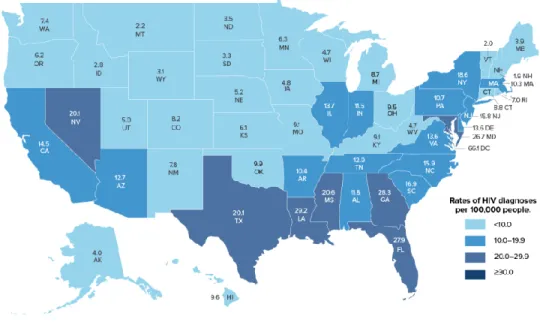
infections, it is still a prevalent disease throughout the nation. In 2015, over 1.2 million people in the US were living with HIV.6 In the same year, the US had 39,513 new diagnoses of HIV.6 This number has decreased 19% since 2005.6 Due to the progress made in improving HIV medications and therapies, there were as few as 6,721 deaths due to AIDS in 2014.6 Figure 2 shows the rates of HIV diagnoses in the US in 2015. This figure shows that HIV is most prevalent in the Southeast, likely due to lower-incomes and to poorer healthcare access.6
6
Figure 2: Rates of HIV diagnoses in the US. Reprinted from The Centers for Disease Control and Prevention, 2016, Retrieved April 9, 2017, from https://www.cdc.gov/hiv/statistics/overview/geographicdistribution.html. Copyright
2017 by Centers for Disease Control and Prevention. Reprinted with permission.
As seen from Figure 2, Mississippi (MS) has one of the highest rates of HIV
diagnoses in the US. In 2013, 9,036 people were living with HIV in MS.2 In 2014, 519 new cases of HIV were diagnosed.2 In addition, 198 deaths due to AIDS were reported in 2013 in MS.2 Figure 3 shows that MS as a whole has a pretty high prevalence of
HIV/AIDS. It is clear that the western area of MS has higher rates of the virus, which may be a result of lower income rates and the more limited access to healthcare.
7
Figure 3: Rates of HIV prevalence in Mississippi. Reprinted from AIDSVu, 2014, Retrieved from April 9, 2017, from https://aidsvu.org/state/mississippi/. Reprinted with permission.
It was reported in 2016 by the CDC that only 1 in 5 teenagers that are sexually- active have been tested for HIV.1 Futhermore, CDC studies suggest that approximately 50% of young adults in the US living with HIV are unaware of their infection.1
HIV/AIDS MISCONCEPTIONS
The general public holds many misconceptions about HIV/AIDS. One of the aspects of the virus that people often have misconceptions about is the transmission of the disease. Although many people are unaware, HIV cannot be spread through the air or water, through kissing or touching, through sharing toilet seats or food/drink, or through saliva or sweating.5 HIV is transmitted only through bodily fluids like blood, semen, pre-seminal fluid, rectal fluids, vaginal fluids, or breast milk.5 More specifically, one of these fluids infected with the virus must come into contact with the mucous
8
membranes or directly through the blood stream of another person through an open wound, scratch, or sore.5 HIV can be and is most commonly spread through anal sex, vaginal sex, and shared needle use.5 Although it is less common, HIV/AIDS can also be transmitted from mother to child during pregnancy, childbirth, or breastfeeding.5
Another misconception about the transmission of HIV is that a person with HIV/AIDS doesn’t need to protect him- or herself because he or she cannot get HIV again.3 There are actually many different strains of HIV, so it is possible to be infected with more than one strain. When this occurs, it is called a HIV superinfection, and it can sometimes increase the rate of progression of the virus.5 Superinfection can result in increased viral load and further decreased CD4 levels.4 In addition, a superinfection can increase the chances of drug resistance in people living with HIV/AIDS.4 For example, a person infected with HIV may become immune to certain antiretroviral treatments due to the resistance of the strains of HIV.4
Another important misconception has been that HIV/AIDS is a “gay man’s”
disease. Around 1981, health professionals began noticing the occurrence of rare cancers and opportunistic infections among homosexual men. Initially, the origin of these occurrences of rare infections were unknown. In fact, many people in the 80s believed that the beginning of the HIV/AIDS epidemic in the US could be attributed to one person, who became known as “Patient Zero”. After years of speculation about the
“Patient Zero” hypothesis, an article came out in Nature in 2016 showing that HIV/AIDS was in fact present in the US before the 1980s. Moreover, this condition also affects
9
people who use intravenous (IV) drugs and people with hemophilia.3 However, the initial assumptions about the origins of this disease continue to this day.
PREVIOUS RESEARCH ON MISCONCEPTIONS AND BIASES
One of the many issues with the biases associated with an HIV-positive disease state is that they hinder the prevention and treatment of HIV/AIDS. There have been some interesting studies done on the stigmatization of HIV/AIDS. One study done in China looked at the intricacies of the stigma by presenting medical students with different hypothetical patient profiles. These profiles described patients that either had an HIV/AIDS diagnosis or did not. These hypothetical patients either had certain
personal behaviors or characteristics, such as being an intravenous drug user (IDU) or participating in commercial sex (CS), or they did not.8 The study found that the stigma was more rooted in the behaviors than it was in the disease itself. For instance, the study found that people were more biased towards people who participated in commercial sex or IDU than they were towards people with HIV/AIDS without a stigmatized behavior.8 According to this study, this aspect of the stigma towards
HIV/AIDS makes the destigmatization process of much more difficult.8 This study argues that in accordance with these findings, one would have to destigmatize the behaviors associated with HIV/AIDS (IDU, CS, being gay or bisexual, etc.) in order to destigmatize the disease itself.8
10
Another study compared the knowledge and perceptions of medical school students at New Jersey Medical School in Newark, New Jersey and at Benin Medical School in Nigeria.10 Although some of the questions were answered correctly by students at both universities, there were some interesting misconceptions and some interesting differences between the students at the two medical schools. Both students in New Jersey (25%) and students in Nigeria (50%), believed that all pregnant mothers that are HIV positive pass the virus on to their children.10 Likewise, both groups of students (13% of students in New Jersey and 29% of students in Nigeria) were unaware that not every person living with HIV shows symptoms, but these HIV-positive people can still infect others with the virus.10 A small, but significant portion of the medical students from Nigeria had misconceptions about the transmission of HIV, believing that HIV could be spread through kissing, donating blood, or sharing bathrooms.10 In
addition, the Nigerian students were less concerned with the possible spread of HIV to them or their families, less interested in the use of condoms, and less concerned about the HIV epidemic in general.10 The researchers of this study found it interesting that although the prevalence of HIV/AIDS is much higher in Africa than it is in North America, the medical students from New Jersey showed more concern about the possibility of getting HIV.10 In general, the study found that students who knew more about HIV/AIDS were more willing to treat people living with HIV/AIDS.10
The current study examines the University of Mississippi students’ knowledge of HIV/AIDS. In addition, the study assesses students’ perceptions of people with HIV/AIDS.
11
MATERIALS AND METHODS
DESIGN:
This study employed a cross-sectional survey design to address the research objectives. This study was reviewed and approved by the Institutional Review Board (IRB) at the University of Mississippi (Protocol #17x-160).
SAMPLE:
The students asked to participate in the survey were chosen at random from the total student population at the University of Mississippi. Out of a total student
population of over 20,000, 10,000 students (about half of the student population) were asked to complete the survey. Students of all classifications (freshman, sophomore, junior, senior, graduate students, and professional students) were included in the selection pool. The majority of students at the University of Mississippi are
undergraduate students. There are slightly more females on campus than there are males.13 Most of the students are Caucasian, with the next prominent group being African American students.13
DATA COLLECTION:
The Institutional Research department at the University of Mississippi can construct survey panels for researchers wanting to release surveys to the student
12
population. An application was filled out to explain what the survey was about, when the survey was to be released, how long the survey would take to complete, and that this survey needed 10,000 student participants from all class levels (undergraduate, graduate, and professional programs). The sample of students was chosen at random.
Any of the students who received an email to participate were eligible to participate if they were over the age of eighteen. All students had to do was click the link to the survey. The survey was also set up to send out reminders through emails to the survey participants. One was set to send one week after the release of the survey, and the second set to send two weeks after the release of the survey. The survey was open to participants for a total of three weeks.
SURVEY:
The survey was created and conducted through Qualtrics, which is an online survey-hosting program that the University provides to students and faculty. The survey did not collect any personally identifying information about the students. The survey contained five sections. Section one asked questions to assess the students’ prior exposure to HIV/AIDS education. More specifically, the first question asked the students if they had ever been in a health professions program, because these students were more likely to have had a better exposure to HIV/AIDS education than most or all other student programs. If they answered “yes”, three additional questions were opened to them. These three questions were intended to assess the perceptions of these health professions students of people with HIV/AIDS.
13
Would you feel uneasy treating a person with HIV/AIDS?
Would you feel uncomfortable giving an injection to or collecting blood from people with HIV/AIDS?
Would you feel comfortable discussing safe sex practices with people with HIV/AIDS?
These three questions were not available for the students who answered “no” to the first question. This section also asked all participants, regardless of their answer to the health professions program question, whether or not they had had a class that
previously discussed the topic of HIV/AIDS.
In section two, the questions asked were used to assess awareness of the virus.
These questions were available to all participants.
Which ethnicity do you think is most likely to be diagnosed with HIV/AIDS?
Which gender do you think is most likely to be diagnosed with HIV/AIDS?
Which sexual orientation do you think is most likely to be diagnosed with HIV/AIDS?
How high do you think the prevalence of HIV/AIDS in Mississippi is compared to other states in the US?
How much do you agree or disagree with the following statements?
“I am concerned with the spread of HIV/AIDS in Mississippi.”
“I think that the areas of Mississippi that have the highest rates of HIV/AIDS are the poorer areas of Mississippi.”
“I am concerned with the spread of HIV/AIDS on college campuses in Mississippi.”
“I feel confident in my knowledge of HIV/AIDS.”
14
In section three, the questions asked were used to assess the knowledge of the participants. In particular, respondents were asked to respond to a series of fact-based yes/no questions.
Is HIV/AIDS transmitted…
through sexual contact?
only through anal sex?
through shared needle use?
through pregnancy to the child?
through breast milk?
through kissing?
through toilet seats?
Is HIV/AIDS a bacterial infection?
Is there a vaccine for HIV/AIDS?
Is there a cure for HIV/AIDS?
Is there medication to help stabilize disease progression in people with HIV/AIDS?
Does HIV/AIDS always show symptoms from the start of infection?
Are there multiple types of HIV/AIDS?
Can a person get two different types of HIV at one time?
In section four, questions were asked to assess the participants’ empathy. All of these questions were asked using a Likert scale to gauge students’ level of agreement with the statements.
How much do you agree or disagree with the following statements?
15
“I think that a stigma against people with HIV/AIDS exists in today’s society.”
“I feel comfortable interacting with people with HIV/AIDS.”
“I feel that people with HIV/AIDS are often to blame for their disease state.”
“I think isolating people with HIV/AIDS is a good way to prevent the spread of the disease to healthy individuals.”
“I think that people with HIV/AIDS should receive federal aid (if needed) for their medications and medical bills.”
“I think that free HIV/AIDS testing should be given to college students that want it or have high risk behaviors for the disease.”
“I think people with HIV/AIDS should have to tell everyone around them about their disease state in order to prevent the spread of HIV/AIDS.”
“I think that because people don’t like to talk about HIV/AIDS, it is more likely to be spread due to lack of awareness.”
The fifth section contained questions asking the students for their demographic information. These questions asked for the students’ gender, age, ethnicity, and classification level at the university.
ANALYSIS:
All data analysis was completed using SPSS data analysis software provided from the University of Mississippi. After the data was collected, I undertook an examination of the survey responses and determined that all participants who completed less than fifty percent of the survey would be removed from further data analysis. Then, all participants that did not complete the questions assessing knowledge, the primary
16
objective of the study, were removed from the data. Then I combined some of the demographic characteristics that had low response rates. For example, if there were very few responses from people of two different ethnic groups, those groups were combined into a group called “other” in order to provide better representation and cleaner data. These deletions and combinations cleaned up the data in order to make everything more easily understandable.
Most of the data was analyzed using descriptive statistics. For the comparisons between the awareness, empathy, and knowledge scores against different
demographics, a t-test was used to measure the difference between scores for gender, ethnicity, and classification, and a one-way ANOVA was used to measure the difference between demographics for total knowledge, awareness, and empathy scores.
17 RESULTS
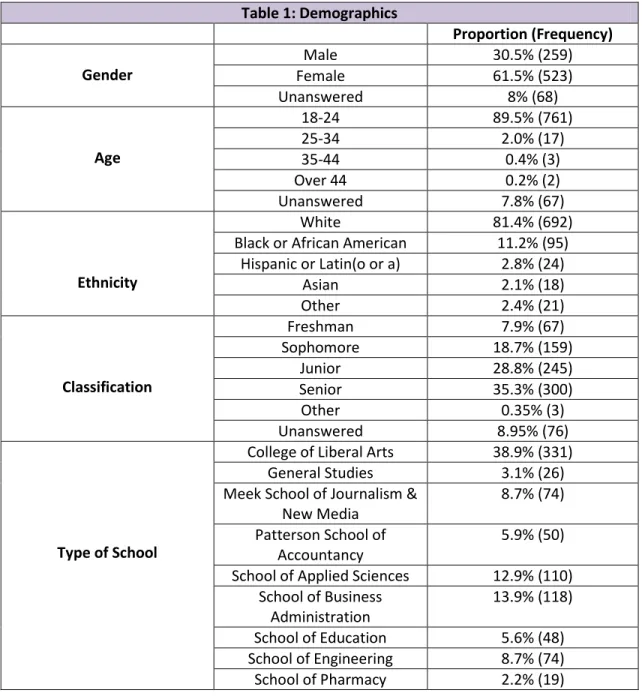
Of the 10,000 students asked to participate in the survey, 945 students, or 9.45%, actually took the survey. Of these 945 responses, 850 replies (8.50% of the total population asked to complete the survey) were usable. The 95 responses that were thrown out either had a survey completion rate of less than 50% or had not completed the knowledge-assessing portion of the survey. Though expected, there are several significant differences in the demographics of survey respondents and the larger
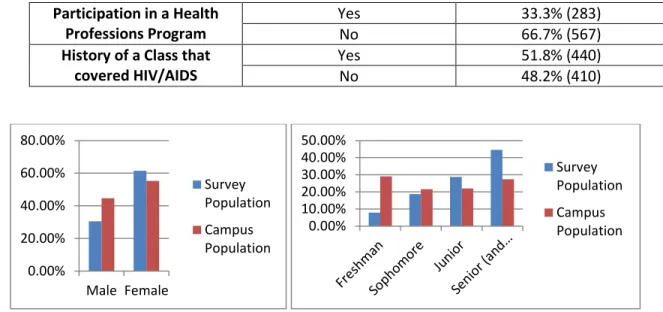
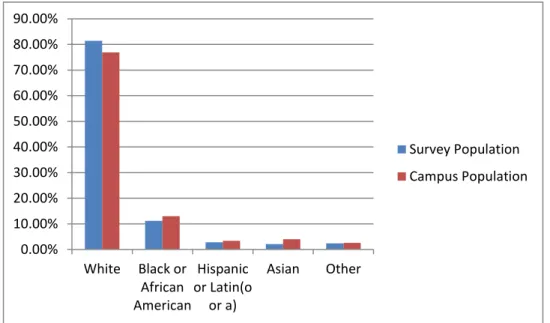
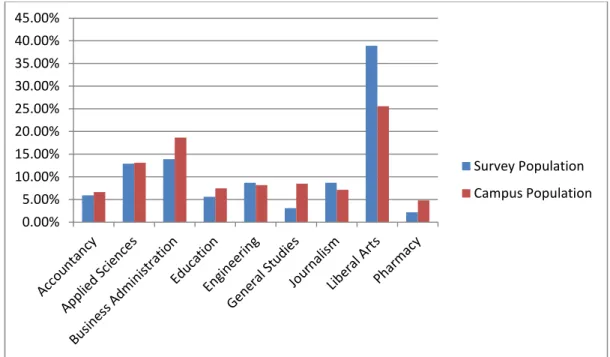
University student population. Of the students that replied to the survey, the majority of them were female (61.5%) (Table 1). The majority of students that replied were also between the ages of 18 and 24 (89.5%) and were white (81.4%). This is most likely because the student population at the University of Mississippi is more white, more female, and mostly between the ages of 18 and 24.13 Figures 4, 5, 6, and 7 show the demographics of the University. From comparing the data from this survey and the University of Mississippi’s demographics, it is clear that the survey mirrors the University’s demographics.
Though the distribution was closer, more of the responses came from students who were seniors (35.3%) and were a part of the College of Liberal Arts (38.9%). While a little over half of the students who participated in the survey had previously taken a class that covered the topic of HIV/AIDS to some degree (51.8%), only 33.3% of the
18
participants were a part of a health professions program. In Table 1, the “Other”
category contains responses from students who identified as American Indian or Alaskan Native, Native Hawaiian or Pacific Islander, or a combination of two or more races. The grouping of these ethnicities into one group was not intended to diminish the importance of these ethnicities, but to make the data cleaner and to better represent all groups included since there were so few participants from each group included.
Table 1: Demographics
Proportion (Frequency) Gender
Male 30.5% (259)
Female 61.5% (523)
Unanswered 8% (68)
Age
18-24 89.5% (761)
25-34 2.0% (17)
35-44 0.4% (3)
Over 44 0.2% (2)
Unanswered 7.8% (67)
Ethnicity
White 81.4% (692)
Black or African American 11.2% (95) Hispanic or Latin(o or a) 2.8% (24)
Asian 2.1% (18)
Other 2.4% (21)
Classification
Freshman 7.9% (67)
Sophomore 18.7% (159)
Junior 28.8% (245)
Senior 35.3% (300)
Other 0.35% (3)
Unanswered 8.95% (76)
Type of School
College of Liberal Arts 38.9% (331)
General Studies 3.1% (26)
Meek School of Journalism &
New Media
8.7% (74) Patterson School of
Accountancy
5.9% (50) School of Applied Sciences 12.9% (110)
School of Business Administration
13.9% (118) School of Education 5.6% (48) School of Engineering 8.7% (74) School of Pharmacy 2.2% (19)
19 Participation in a Health
Professions Program
Yes 33.3% (283)
No 66.7% (567)
History of a Class that covered HIV/AIDS
Yes 51.8% (440)
No 48.2% (410)
Figure 4: Gender Distribution for Survey vs. Campus Figure 5: Classification Level Distribution for Survey vs. Campus
Figure 6: Ethnicity Distribution for Survey vs. Campus 0.00%
20.00%
40.00%
60.00%
80.00%
Male Female
Survey Population Campus Population
0.00%
10.00%
20.00%
30.00%
40.00%
50.00%
Survey Population Campus Population
0.00%
10.00%
20.00%
30.00%
40.00%
50.00%
60.00%
70.00%
80.00%
90.00%
White Black or African American
Hispanic or Latin(o
or a)
Asian Other
Survey Population Campus Population
20
Figure 7: School Distribution for Survey vs. Campus
*All Campus Demographics were gathered from Reference 13.
The questions assessing knowledge were scored out of 14 points. Scores greater than 12 (85.71%) were considered above average, Scores 9 (64.29%) through 11
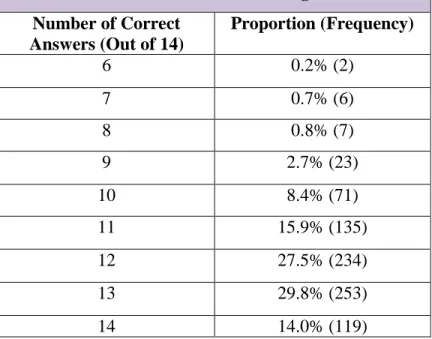
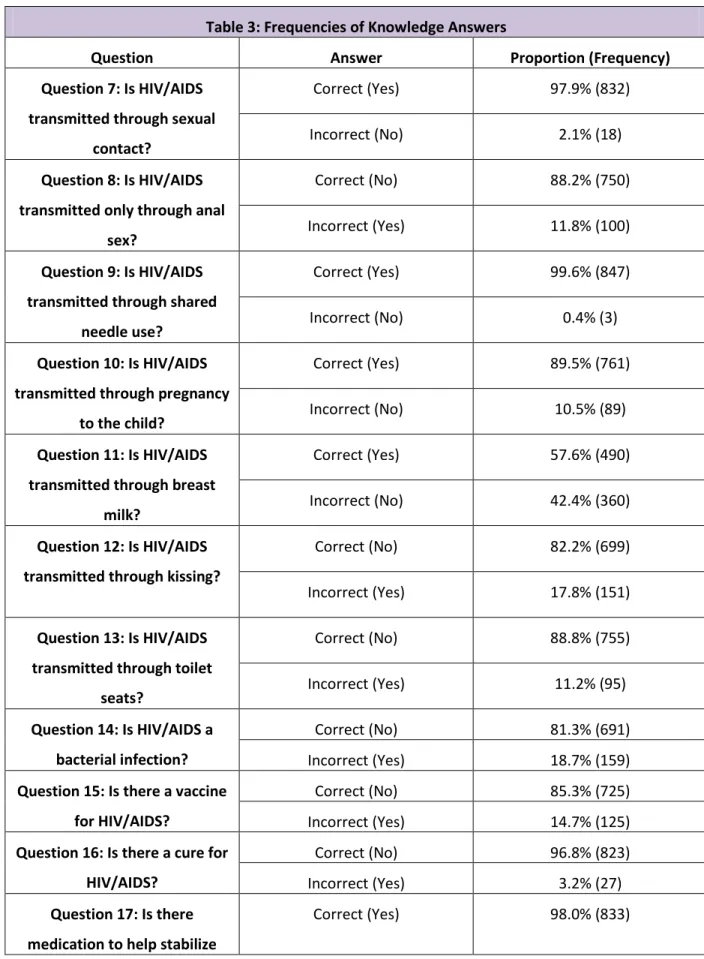
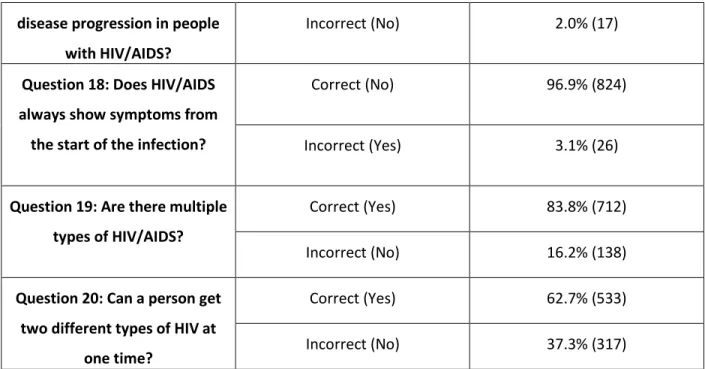
(78.57%) were considered average, and scores less than 8 (57.14%) were considered below average. Most of the participants received scores that fell in the average to above average range (Most scores were greater than 11 out of 14 or 78.57% correct. – Table 2). However, a few of the questions received a greater diversity of responses (Table 3).
For example, question 11 (Is HIV/AIDS transmitted through breast milk?) had an almost even distribution of answers with almost 58% answering “yes” and around 42%
answering “no”. Additionally question 20 (Can a person get two different types of HIV at one time?) also had a smaller difference in the people who answered “yes” (62.7%) and the people who answered “no” (37.3%). Finally, for question 14 (Is HIV/AIDS a bacterial
0.00%
5.00%
10.00%
15.00%
20.00%
25.00%
30.00%
35.00%
40.00%
45.00%
Survey Population Campus Population
21
infection?), the majority of people chose the right answer with 81.3% choosing “no,” but 18.7% of the participants still chose “yes”.
Table 2: Total Score of Knowledge Section Number of Correct
Answers (Out of 14)
Proportion (Frequency)
6 0.2% (2)
7 0.7% (6)
8 0.8% (7)
9 2.7% (23)
10 8.4% (71)
11 15.9% (135)
12 27.5% (234)
13 29.8% (253)
14 14.0% (119)
*Scores >12 were considered good, scores 9-11 were considered average or decent, and scores <8 were considered poor or below average.
22
Table 3: Frequencies of Knowledge Answers
Question Answer Proportion (Frequency)
Question 7: Is HIV/AIDS transmitted through sexual
contact?
Correct (Yes) 97.9% (832)
Incorrect (No) 2.1% (18)
Question 8: Is HIV/AIDS transmitted only through anal
sex?
Correct (No) 88.2% (750)
Incorrect (Yes) 11.8% (100)
Question 9: Is HIV/AIDS transmitted through shared
needle use?
Correct (Yes) 99.6% (847)
Incorrect (No) 0.4% (3)
Question 10: Is HIV/AIDS transmitted through pregnancy
to the child?
Correct (Yes) 89.5% (761)
Incorrect (No) 10.5% (89)
Question 11: Is HIV/AIDS transmitted through breast
milk?
Correct (Yes) 57.6% (490)
Incorrect (No) 42.4% (360)
Question 12: Is HIV/AIDS transmitted through kissing?
Correct (No) 82.2% (699)
Incorrect (Yes) 17.8% (151)
Question 13: Is HIV/AIDS transmitted through toilet
seats?
Correct (No) 88.8% (755)
Incorrect (Yes) 11.2% (95)
Question 14: Is HIV/AIDS a bacterial infection?
Correct (No) 81.3% (691)
Incorrect (Yes) 18.7% (159)
Question 15: Is there a vaccine for HIV/AIDS?
Correct (No) 85.3% (725)
Incorrect (Yes) 14.7% (125)
Question 16: Is there a cure for HIV/AIDS?
Correct (No) 96.8% (823)
Incorrect (Yes) 3.2% (27)
Question 17: Is there medication to help stabilize
Correct (Yes) 98.0% (833)
23 disease progression in people
with HIV/AIDS?
Incorrect (No) 2.0% (17)
Question 18: Does HIV/AIDS always show symptoms from
the start of the infection?
Correct (No) 96.9% (824)
Incorrect (Yes) 3.1% (26)
Question 19: Are there multiple types of HIV/AIDS?
Correct (Yes) 83.8% (712)
Incorrect (No) 16.2% (138)
Question 20: Can a person get two different types of HIV at
one time?
Correct (Yes) 62.7% (533)
Incorrect (No) 37.3% (317)
Table 4: Results of Questions for Health Professions Students
Question Answer Proportion (Frequency)
Question 1: Would you feel uneasy treating a person with
HIV/AIDS?
Yes 11.0% (31)
Maybe 38.5% (109)
No 50.5% (143)
Question 2: Would you feel uncomfortable giving an injection to or collecting blood samples from people
with HIV/AIDS?
Yes 23.3% (66)
Maybe 40.3% (114)
No 36.4% (103)
Question 3: Would you feel comfortable discussing safe sex practices with people with
HIV/AIDS?
Yes 62.5% (177)
Maybe 11.7% (3)
No 25.8% (73)
24
The questions posed solely to students who were in one of the health professions programs (33.3% of respondents) revealed a number of interesting observations. As outlined in Table Four, 11.0% of the participants reporting that they were in a health professions program stated that they would feel uncomfortable treating a person with HIV/AIDS. Furthermore, 38.5% answered that they might feel uncomfortable in the same situation. These same students were asked if they would be uncomfortable giving an injection to or drawing blood from a person with HIV/AIDS. Of these participants, 23.3% said “yes”, 40.3% said “maybe”, and 36.4% said “no”. Lastly, these students were asked if they would feel comfortable explaining safe sex to people with HIV/AIDS. Of these students, 62.5% said that they would be comfortable, 11.7%
said that they might be comfortable, and 25.8% said that they would not be comfortable explaining this topic to patients.
The questions assessing awareness and empathy were scored similarly to the questions posed to just the health professions students. They were both scored on a scale where the answers regarded as “most aware” or “most empathetic” were given a score of four, answers regarded as “aware” or “empathetic” were given a score of three, answers regarded as neutral were given a score of two, answers regarded as “less than aware” or “less than empathic” were given a score of one, and the answers regarded as
“not aware” or “not empathetic” were given a score of zero. For the awareness and empathy scores, scores at and below 60% were considered below average, scores between 61 and 80% were considered average, and scores 81% and above were considered above average. For the participants of this survey, the most common
25
awareness score range was between 61 and 70%, which is considered average within the context of this survey (Table 5). The most common score range for empathy was between 81 and 90%, which is considered above average within the context of this survey (Table 6).
Table 5: Total Score of Awareness Section Percentage of Answers Correct
(Out of 100%)
Proportion (Frequency)
50% and Below 18.14% (129)
51% - 60% 19.97% (142)
61% - 70% 20.82% (148)
71% - 80% 19.97% (142)
81% - 90% 17.44% (124)
91% - 100 3.66% (26)
*139 participants did not complete this portion of the survey, so all percentages are out of 711 students instead of the overall response number of 850.
Table 6: Total Score of Empathy Section Percentage of Answers Correct
(Out of 100%)
Proportion (Frequency)
50% and Below 14.13% (107)
51% - 60% 16.65% (126)
61% - 70% 16.91% (128)
71% - 80% 21.40% (162)
81% - 90% 23.78% (180)
91% - 100% 7.13% (54)
*93 participants did not complete this portion of the survey, so all percentages are out of 757 students instead of the overall response number of 850.
Table 7: Awareness, Empathy, and Knowledge Scores Across Demographics
Demographic
Total Awareness Score
Total Empathy Score
Total Knowledge Score Mean P-value Mean P-value Mean P-value
Gender Male 66.01%
0.213 66.96%
0.006 86.52%
0.432
Female 65.67% 71.14% 86.66%
26 Ethnicity
White 64.70%
0.003
68.58%
<0.000
86.84%
0.001 Black or
African American
72.43% 79.26% 83.01%
Hispanic 65.77% 66.62% 84.82%
Asian 64.58% 66.36% 82.54%
Other 75.98% 67.05% 87.01%
Classification
Freshman 65.57%
0.100
66.33%
0.012
86.57%
0.001
Sophomore 65.80% 69.05% 85.54%
Junior 65.45% 68.51% 86.36%
Senior 66.48% 71.96% 87.38%
In Table 7, there are some significant differences between the different demographic groups when analyzed for total awareness, empathy, and knowledge scores. All of the scores were significantly different for ethnicity. For awareness, the
“Other” ethnic group had the highest mean score at 75.98%, with the “Black or African American” ethnic group following closely behind with a mean score of 72.43%. For empathy, the “Black or African American” ethnic group far surpassed all of the other ethnic groups with a mean score of 79.26%, whereas all other ethnic groups maintained mean scores in the mid- to high 60% range. Lastly, for knowledge, the “Other” ethnic group had the highest mean score of 87.01%, with the “White” ethnic group following with a mean score of 86.84%.
For classification level, awareness and empathy scores were not statistically significantly different, but the knowledge scores were. “Senior”-level students had the highest mean knowledge score at 87.38%, and “Juniors” and “Freshman” had close
27
scores of 86.36% and 86.57%, respectively. “Sophomores” had the lowest mean score at 85.54%.
Table 8: Comparison of Awareness, Empathy, and Knowledge Scores between Health Professions and Non-Health Professions Students
Demographic Total Awareness Score
Total Empathy Score Total Knowledge Score Mean P-value Mean P-value Mean P-value Health Professions
Student 67.45%
0.168
70.53%
0.003
87.66%
0.757 Non-Health
Professions Student 64.79% 69.30% 85.69%
In Table 8, it’s clear that there is no statistically significant difference between
“health professions” students and “non-health professions” students when analyzing the mean awareness and knowledge scores. However, the mean empathy scores were significantly different between the “health professions” and “non-health professions”
students. The mean empathy score for “health professions” students was 70.53%, whereas the mean score for “non-health professions” students was 69.30%.
Figure 8: Total Knowledge Score for Participants vs. Median Total Empathy Score for Participants
28
Over all demographics, there is a trend showing that the higher the knowledge score, the higher the total empathy score (Figure 8).
29 DISCUSSION
INTERPRETATION OF RESULTS:
The results show that the majority of students at the University of Mississippi have a relatively good level of knowledge about HIV/AIDS. While education about HIV/AIDS could always be improved overall, it seems that the areas of HIV/AIDS that need more attention are HIV/AIDS transmission and specifics on types and strains of HIV/AIDS. Educating students, and people in general, about the transmission of
HIV/AIDS is particularly important, because the more one knows about protecting his- or herself from a disease, the less likely the disease is to be acquired. It is also likely that the more people know about the transmission of HIV/AIDS, the more comfortable they are going to feel interacting with people who are living with HIV/AIDS.
There were a lot of “maybe” answers on the questions asking health professions students how comfortable they felt with the prospect of treating patients with HIV/AIDS in the future. Though not all may be uncomfortable with this potentiality, the number of
“maybe” answers indicates that they have not had enough education and experience to determine their feelings on the subject. If HIV education for health professions students included anonymous patient testimonies about their experiences, it is possible that these students would better understand what HIV/AIDS patients go through and what they need, therefore, making them better health professionals in the process.
30
From the data, it appears that the students were somewhat lacking in their awareness of HIV/AIDS, particularly in Mississippi. Though Mississippi doesn’t have the highest HIV rate of all US states, it is in the top ten for HIV rates. As a result,
Mississippians need to be more aware of how prevalent HIV/AIDS is in their area to better avoid infection and to better interact with the people around them living with HIV/AIDS. More outreach programs and free HIV screenings, particularly on college campuses, could increase awareness about HIV/AIDS. The empathy scores were surprisingly high, and they will increase more with further expansion of awareness and education about HIV/AIDS.
The differences between awareness, empathy, and knowledge scores across different demographics showed some interesting results. The ethnicities identifying in the “Other” group had the highest mean awareness score, followed by the “Black or African American” group. In addition, the “Black or African American” group scored the highest in the empathy questions, surpassing the other ethnic groups by far. Though it is unclear, these trends could be due to increased exposure of these groups to people with HIV/AIDS or increased outreach to these groups. For the knowledge scores, the “Other”
and “White” groups had the highest mean scores. This is likely due to increased
exposure to education about HIV/AIDS. It is intriguing that although the “White” ethnic group had a higher knowledge score than some of the other groups, it also showed that the same group had somewhat lower scores for awareness and empathy. Further analyzing the demographic differences, the “Seniors” classification group had higher mean knowledge scores over the other classifications. This makes sense because the
31
longer one is in school, the more likely he or she is to encounter a class that discusses HIV/AIDS to some degree.
When comparing health professions students to non-health professions students in awareness, empathy, and knowledge scores, results show that health professions students scored higher across all three variables. The most significant difference was the higher score in empathy among health professions students, though. This supports the idea that the more education received about HIV/AIDS, the more likely a person is to be empathetic.
By comparing knowledge scores to empathy scores, there is a trend that implies that the more one knows about HIV/AIDS, the more empathetic one will be towards people living with HIV/AIDS.
RELATION TO PREVIOUS FINDINGS:
In the study discussed earlier, measuring the knowledge and biases of medical students in China, the researchers identified that the stigma surrounding HIV/AIDS seems to be attached more to the behaviors that are associated with potentially contracting HIV/AIDS, rather than with the disease itself.8 Some of the results from this study support that theory. When asked if they thought that people with HIV/AIDS were to blame for their disease state, the participants of this survey answered evenly across the board. Though fewer participants chose that they strongly agreed with the
statement, a large portion of the students chose that they somewhat agreed or that they didn’t agree nor disagree. This shows that people still place blame on people
32
diagnosed with HIV/AIDS. This is not only contributing to the current stigma that exists, but it could also prevents proper diagnosis, treatment, and research to help people with HIV/AIDS.
Like another study that assesses the differences in knowledge and perceptions of medical students in New Jersey vs. in Nigeria, this study showed that students were fairly knowledgeable about the basic information about HIV/AIDS.10 However, they were less accurate when answering specific detailed questions about the virus.10 Unlike the students from New Jersey in the previous study, the students of Mississippi seem less concerned about the spread of HIV/AIDS in Mississippi and on college campuses. This also contributes to the interesting discovery that even though the Nigerian students and the Mississippian students are surrounded by a higher prevalence of HIV, they were less concerned because HIV/AIDS. In addition, the study previously discussed found that students that had more knowledge were more willing to treat people living with HIV/AIDS. In a similar way, this study discovered that students who knew more about the disease were more empathetic towards people with HIV/AIDS. There is an
implication here that the more empathetic and understanding one is towards a person, the more likely he or she is to be willing to interact and communicate with that person.
STUDY LIMITATIONS:
This study has a few limitations. Firstly, the demographics of this survey are not representative of all college campuses across the United States, or even of all college campuses in Mississippi. The University of Mississippi’s demographics aren’t
33
representative of many minority groups, which makes the responses to this survey hard to generalize to other situations and environments.
One of the biggest limitations involves the scoring of empathy. It is incredibly difficult to measure empathy, so the empathy scores we measured don’t necessarily mean that those with low scores are not empathetic. In the same way those with high empathy scores are not always necessarily the most empathetic people. The scores measured for awareness are similar in that it is difficult to measure awareness.
In conjunction with the other limitations, it is also likely that the students that replied to the survey are more interested or already more knowledgeable or more empathetic about HIV/AIDS than the students asked to participate but chose not to. This would skew the results and make it look like the students at the University of Mississippi are more knowledgeable, aware, and empathetic than they actually are.
Another study limitation of this study lies in social pressures. It is likely that some or all of the survey participants could have chosen socially acceptable answers instead of choosing the answer that they most closely agreed with. This could have caused the empathy scores to appear higher than they actually would have been had the
participants chosen what they identified with better.
There are a number of future research directions that this study may facilitate.
To begin with, it would be interesting to do a study testing the knowledge, empathy, and awareness scores before and after a seminar about HIV/AIDS. This study design would provide a more controlled atmosphere. It would also be interesting to do a study
34
comparing the perceptions of HIV/AIDS from people with and from people without HIV/AIDS. This study could help compare what people with HIV/AIDS have experienced and what people without HIV/AIDS think that people with the disease experience.
Putting people in a situation where they have to put themselves in the position of the person with HIV/AIDS might increase empathy further. To further investigate the perceptions of health professions students, a study evaluating the empathy of these students before and after a face-to-face patient interaction with a person living with HIV/AIDS would most likely be enlightening.
35 CONCLUSIONS
Knowing about the spread of HIV is the first step to preventing transmission. It has been shown that education correlates with higher empathy scores, so it stands to reason that the more educated the public is about HIV/AIDS, the more understanding and open people will be towards people with this disease. HIV is a complicated virus that has a complex history. The ascension of HIV/AIDS to the forefront of the public’s attention in the 1980s shrouded the topic of HIV/AIDS in condescension, disgust, and stigma. However, the more that the public is educated and the more HIV/AIDS is separated from the taboo behaviors that increase the risk of acquiring HIV, the more progress can be made towards creating an empathetic and cure-oriented society.
Though much progress has already been made, HIV/AIDS prevalence is still high throughout the world, and Mississippi has a high rate compared to the other states in the US. With increased knowledge about HIV/AIDS, not only can better health
professionals be produced, but better people in society can exist.
36 REFERENCES
1. AIDS.gov Staff. (2016). CD4 count . Retrieved February 10, 2017, from
https://www.aids.gov/hiv-aids-basics/just-diagnosed-with-hiv-aids/understand- your-test-results/cd4-count/
2. AIDSVu Staff. (2014). AIDSVu maps: Mississippi. Retrieved April 9, 2017, from https://aidsvu.org/state/mississippi/
3. AVERT HIV and AIDS Staff. (2017). Origin of HIV and AIDS. Retrieved 13 March 2017, 2017, from https://www.avert.org/professionals/history-hiv-aids/origin 4. Center for AIDS Prevention Studies. (2006). University of California, San Francisco
AIDS Research Institute. Retrieved April 10, 2017, from http://caps.ucsf.edu/library/superinfection/
5. Centers for Disease Control and Prevention Staff. (2016). HIV/AIDS. Retrieved February 6, 2017, from https://www.cdc.gov/hiv/basics/whatishiv.html 6. Centers for Disease Control and Prevention Staff. (2016). HIV in the United States
statistics. Retrieved April 9, 2017, from
https://www.cdc.gov/hiv/statistics/overview/ataglance.html
7. Centers for Disease Control and Prevention Staff. (19 September 2016). Pre-exposure prophylaxis (PrEP). Retrieved April 2, 2017, from
https://www.cdc.gov/hiv/risk/prep/
8. Chan, K. Y., Yang, Y., Zhang, K. L., & and Reidpath, D. D. (5 October 2007). Disentangling
37
the stigma of HIV/AIDS from the stigmas of drugs use, commercial sex and commercial blood donation – a factorial survey of medical students in china.
BMC Public Health, 7(280). DOI: 10.1186/1471-2458-7-280.
9. Department of Health and Human Services. (13 September 2016). The HIV life cycle.
Retrieved April 2, 2017, from https://aidsinfo.nih.gov/education-materials/fact- sheets/19/73/the-hiv-life-cycle
10. Najem, G. R., & and Okuzu, E. I. O. (1998). International comparison of medical
students' perceptions of HIV infection and AIDS. Journal of the National Medical Association, 90(12), 765-774.
11. Siliciano, R. F., & and Greene, W. C. (2011). HIV latency. Cold Spring Harbor Perspectives in Medicine, 1(1). DOI: 10.1101/cshperspect.a007096.
12. The Kaiser Family Foundation Staff. (19 January 2017). The global HIV/AIDS
epidemic. Retrieved 9 April, 2017, from http://kff.org/global-health-policy/fact- sheet/the-global-hivaids-epidemic/
13. University of Mississippi Office of Institutional Research. (2017). Enrollment data trends. Retrieved April 11, 2017, from http://irep.olemiss.edu/wp- content/uploads/sites/98/2017/01/Mini-Fact-Book-2016-2017.pdf