NHEJ is an imprecise repair method because it rejoins the two DNA strands independently of the 3′ terminal sequences; in other words, fracture repair is random and error-prone. The HR pathway is also important in that it can use a donor sequence (a sequence provided by an injected DNA fragment) to complete cleavage if there are similar sequences at the ends of the donor sequence and on either side of the break2 . Part of the binding energy of ZFP depends on contact with phosphates in the DNA backbone.
Eighty percent of the time, this contact is made by the histidine residue at position 7 in the α-helix with the phosphate just 5' to the binding site7. If we follow the convention of reading 5'3' in DNA and NC end in proteins, we can say that ZFPs bind DNA in an antiparallel way: the C-end of the protein points in the 5' and N- direction. Progress continued relatively quickly in the creation of new ZFPs; the goal was to develop a new zinc finger motif to recognize each of the 64 possible DNA triplets, one for each possible combination of four nucleotides (A, G, C, and T) and sets of three.
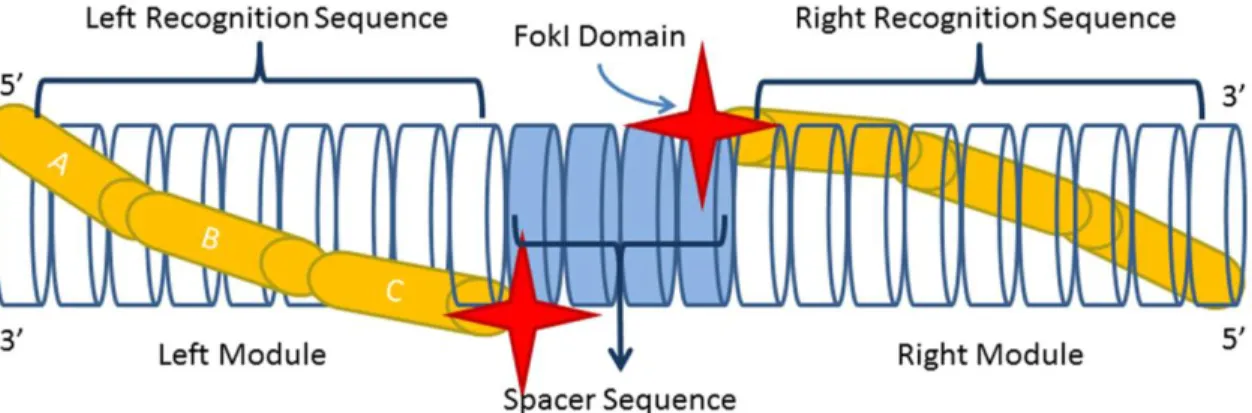
Unlike scissors, the two FokI molecules must be oriented in antiparallel fashion across the DNA strand, and their nicks in the phosphate backbone of the DNA result in overhangs. Because of the gap between the aforementioned recognition and cleavage sites, there is a gap of several bases between the recognition sequences of the two monomers.

Zinc-Finger Nucleases
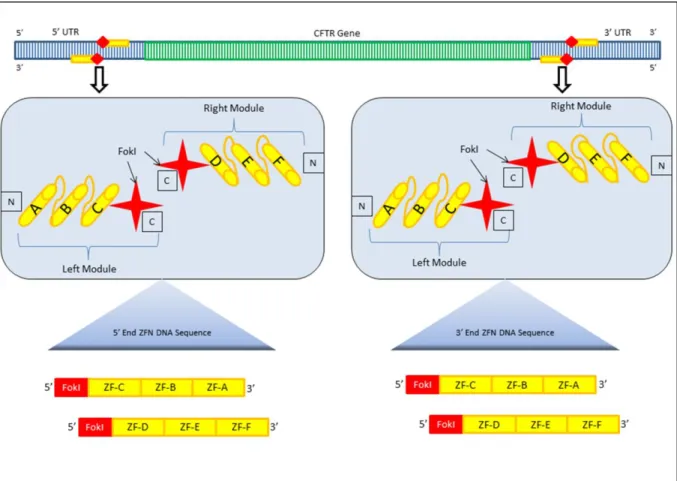
The ZFN design and assembly process takes almost a month in the lab, assuming everything goes smoothly the first time. First, a specific genetic target must be selected and possible zinc finger binding sites must be found: both the left and right modules must be considered, and an appropriately large spacer sequence must be present, as previously explained (Figure 5). Second, Zinc-Finger arrays must be selected for the selected site and their own coding sequences determined.
These first two steps were done manually at the time of the first publication of universal protocols, with. More recently, the Zinc Finger Consortium has brought together several online databases to make this process much easier 21. The yellow cylinders are Zinc-Finger Proteins, and the Red star represents the FokI nuclease domain.
The third step in constructing ZFNs is to obtain the coding sequences for. This is one of the longest and most complicated steps in the custom ZFN assembly process. First, remember that there is more to a zinc finger than just the part that binds DNA; there is also the conserved framework made up of the β-sheets that are a major part of the finger structure.
Another scaffold option is human Sp1C, based on the consensus sequence from human transcription factor 17. The fourth step in ZFN production is to clone the Zinc-Finger sequences in-frame with the sequence for the FokI nuclease domain. The fifth step follows logically: ZFN must be expressed and purified to test the viability of the protein.
This step also requires the selection of the delivery method, depending on the use of the ZFNs.
Current Research
The change in size of the deleted DNA segment was due to the imprecise nature of repair by NHEJ. Interestingly, ZFN disruptions were not detected at any of the predicted off-target sites elsewhere in the genome (reanalyzed by PCR and DNA sequencing techniques) 25. This study was a major success and clearly opened the door to many new developments in the field of genetics research.
Due to the high mutation rate of the virus, it has been almost an impossible feat to develop an effective vaccine. Expression of ZFNs within successfully transduced cells resulted in permanent disruption of the CCR5 gene as predicted. However, another version of the experiment was repeated using primary CD4+ T cells collected from a variety of donors (instead of an identical cell line to provide a more diverse sample), again using an adenoviral vector (Ad5/35) to transduce the cells with the ZFN 31 expression plasmid.
Given the limited lifespan of T-cells in circulation, it is also hypothesized that this is not an absolute "cure" for study participants; eventually the assigned resistance should disappear. Normal T-cell levels in the treated mice remained unchanged long after infection, while the control group experienced the severe drop in T-cells typically seen in HIV infection. In collaboration with the Department of Hematology at the Children's Hospital of Philadelphia, PA, High et al.
Because of the wide stretch of DNA that may contain the mutations, it was not possible to target a single section of the gene: all affected exons had to be replaced. To manage this, the team designed and produced four-finger ZFNs that would cut within the first intron of the F9 gene 27. This is because the mice lack the target site in the first intron of hF9 that the ZFNs were designed to recognize .
Recombination Mechanism (HR): after the attack of the ZFNs created a DOUBLE-STRANDED break in the genome, the donor DNA would be incorporated into the genome.
Cystic Fibrosis: A Theoretical Approach
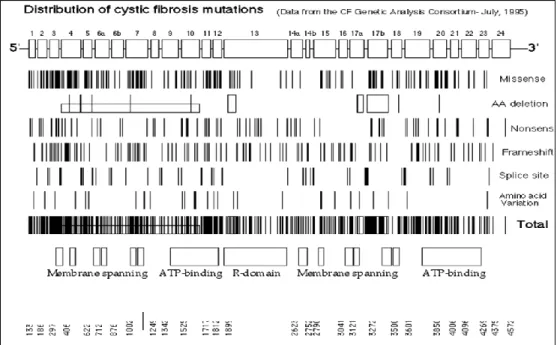
In the respiratory tract, the mucus can disrupt gas exchange in the tissues of the lungs; However, this is not what makes this disease often fatal. CF is inherited as a recessive trait, meaning that a person must possess two copies (alleles) of the defective CFTR gene to develop the disease 34. Part of the challenge facing gene therapies for this disease is that there is 1906 several disease-causing mutations are known. in the CFTR gene.
These mutations may concern either protein functionality at the membrane or trafficking during processing in the endoplasmic reticulum (see Figure 7) 35; functional mutations affect the channel's ability to perform its function, while trafficking mutations affect the protein during processing and packaging in the endoplasmic reticulum, causing the molecule to be degraded before it can be transported to the cell membrane 34. The length of the sequence to is inserted, and the idea of completely removing the defective gene leaves open the question of whether complete gene replacement is possible. They used an adenoviral vector to deliver the normal copies of the gene directly into the airway epithelium and syringe.
Another problem seen was that repeating the dose of the vector eventually no longer produced detectable expression. The availability of wild-type CFTR DNA, and the ability of the gene to be delivered to the lung endothelium by an adenoviral vector (as demonstrated in the Harvey study described above) make the application of ZFNs a logical next step; Adenoviruses have already been shown to be effective vectors for ZFN delivery to tissues, and the wild-type CFTR DNA can act as a donor gene to be incorporated by HR. In theory, ZFNs could be used to stimulate complete replacement of the CFTR gene.
First, the goal must be determined; in this case, due to the size of the proposed insertion, I suggest looking for the cut site on both sides of the gene, in both 5'. After locating the potential ZFN cut sites in the 5' and 3' UTRs, the ZFP sequence can be determined. The first was located in exon 27 of the CFTR gene and was therefore not viable.
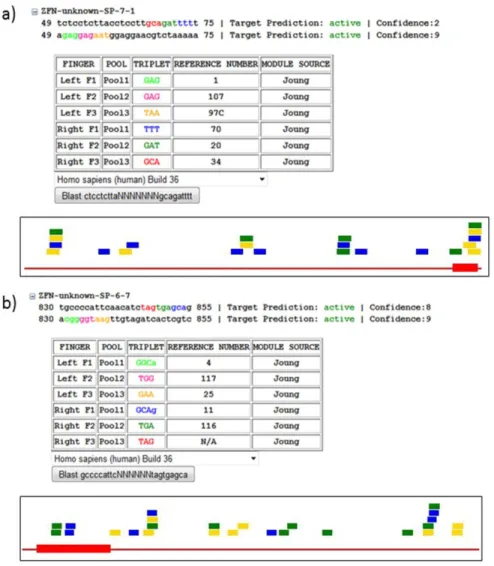
However, due to unknown technical problems, the ZiFDB was down for the last half of this study, so the rest of the proposed procedure cannot be continued at this time. The results given by the search of the 5' and 3' UTR of the CFTR include a representation of the potential sequence with the triplets to be recognized by known ZFPs each represented by a different colored text. The second piece of data is the graphical analysis of the query sequence with the thin red line representing the 5' and 3' UTR, the thick line representing exons.

Conclusion
Zinc Finger Database (ZiFDB): a repository for information on C2H2 zinc fingers and engineered zinc-finger arrays. Gene editing in human stem cells using zinc finger nucleases and integrase-defective lentiviral vector delivery. Insights into the mechanisms underlying CFTR channel activity, the molecular basis of cystic fibrosis, and strategies for therapy.
Airway epithelial CFTR mRNA expression in patients with cystic fibrosis after repeated administration of a recombinant adenovirus.
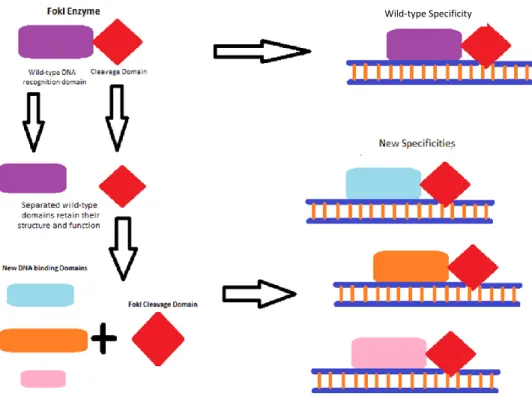
Appendix A: Mutagenesis Studies and Novel Zinc-Finger Specificities
Appendix B: Glossary
Epithelium: Tissue that lines organs connected to the external environment (i.e. the respiratory tract, digestive tract and skin). Ex vivo: Referring to an experiment in which a tissue or cell sample is taken from an organism and then processed outside the body. Heterozygous: Refers to possessing two or more different alleles for the same gene.
Homologous chromosomes (also "homology"): During fertilization, an individual receives one of each chromosome from each parent. The same chromosomes received from each parent are referred to as "homologous chromosomes." Homology refers to the same gene sequence in different locations (ie, the same sequence on the other chromosome in a homologous pair). Introns: The parts of a gene that do not code for the protein product (note: also known as "junk DNA").
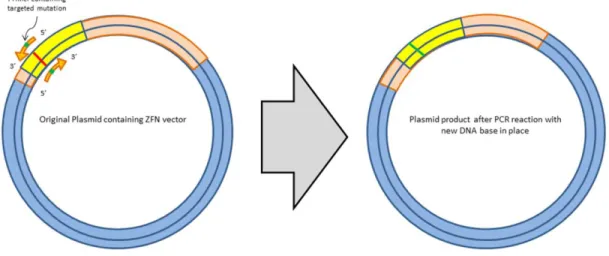
In vitro: Term for an experiment that takes place entirely outside the body (also referred to as a . "test tube experiment"). In vivo: Term for an experiment that takes place entirely within a body, usually studying the activity of one or more tissues under different experimental conditions. Polymerase chain reaction (PCR): A technique for amplifying a specific section of DNA or for assembling a longer DNA sequence from several shorter ones.