
This study is the result of a joint effort between the Afghanistan Research and Evaluation Unit (AREU), the United Nations High Commissioner for Refugees (UNHCR), the European Commission (EC) and two partner research institutions, the Faculty of Social Sciences of the University of Tehran and the Karachi-based Collective for Social Science Research. To create a formal yet flexible credit system in Afghanistan to help rebuild the Afghan economy.
Research context, definitions and methodology
Network is an intersection of the social relations that are potentially or actually mobilized in particular situations, rather than an integrated community with precise spatial and social boundaries. Data reliability was established by cross-checking and comparing the data collected.
Political context
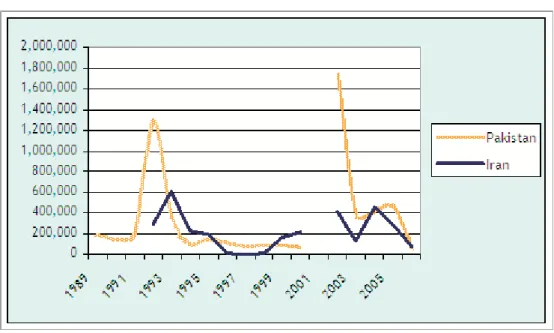
For the government of Afghanistan, such a large-scale and rapid return represents a vote of popular support, and for Pakistan and Iran, as well as UNHCR and the donor community, it represents a reduction in the burden of waiting and supporting a great refugee. population. For example, Turton and Marsden5's assessment of the repatriation operation, reintegration opportunities and the role and interests of the international community is that many registered returnees may be recyclers who are repatriated to Afghanistan, receive the aid package and then return to Pakistan or Iran. .
Multidirectional population movements
In the 1980s, the majority of refugees came from rural areas, fleeing bombing and fighting. First, the presence of refugees in such large numbers changed the demographics of the city.
Iran
Ethnicity was the primary reason many of the refugees chose to move to Quetta from Afghanistan, particularly for Pashtuns, Baluch and Hazaras, who all have host communities in the city. When Iranian men went off to fight in Iraq in the 1980s, Afghan labor filled a large gap in the informal labor market. Many follow in the footsteps of others who preceded them, and in this way transnational networks are continued despite the difficult context.
In this way, the employment structures in Iran enable young Afghans to diversify their social networks, so that they are not defined solely by kinship and residence in the country of origin. Sakhteman's occupational structure is similar to Golshahr's, except that there are fewer shopkeepers in the former. The clear majority of Mashhad respondents planned to return to Afghanistan as intact family units, but the majority of respondents did not intend to return to Afghanistan in the medium term, but had planned to do so.
Most Afghans are located in the eastern, northern and western fringes of the city and work mainly in the informal economy as labourers, construction workers and grocers.
Afghanistan
Since the Soviet occupation, more than half of the male respondents in this study area have gone to Iran at least once, with almost a quarter reporting repeat moves. In general, they migrate because of the difficulties in finding well-paid work and the need to save money for their marriage. With the arrival of the Taliban, Arabs left in large numbers, fearing harassment, looting, rape, taxation and imprisonment.
Such a result is explained by the proximity of the Pakistani border, existing cultural ties and a long history of cross-border relations. 24 The Durand Line, established by the British in 1893, separated Afghanistan from British India and effectively divided the Pashtuns who lived on both sides of the border. One of the main attractions of Pakistan was the existence of refugee camps close enough to facilitate the participation of men in jihad.
This appears to have continued after the Soviet invasion period and well into the Taliban era.
The Causes and Motivations of Migration
- War and migration
- Mixed motivations
- Population growth
- Drought
- Uneven economic development
- Limited rule of law
- Migration as a way of life
A few kilometers outside the city limits, however, overall job opportunities remain limited due to years of drought, relatively small land holdings and population growth, and the fact that. Those with traditional skills in small local industries such as leather production face difficulties in obtaining credit and selling their products due to poor infrastructure and the impact of the global economy. Links between Afghanistan and Pakistan have been intense due to the cultural and linguistic ties of the Pashtun populations living on both sides of the Durand Line.
After men migrate for the first time, the chances of returning are higher: going a second time is made easier based on the previous migration experiences. Since 1978, ongoing insecurity, along with the destruction of much of the country's infrastructure, has made travel a potentially dangerous endeavor. There is a thriving black market that reflects this and exploits potential migrants, poverty and lack of knowledge of official processes.
The main difficulties in obtaining passports and visas are related to the centralist policies of the Afghan administration and the fact that the system is very bureaucratic.
The Experience of Migration and Decisions about Return
Border crossings, smuggling networks and deportation
There are many obstacles in the way of Afghans who intend to go to Iran, Pakistan or the Arab Gulf countries. The fact that the smuggler is often closely related to the migrants he is accompanying, whether from the same village, area or ethnic group, establishes a certain level of trust in the transaction. The smuggler sometimes joins the group as far as Iran and is likely to be well connected in some neighborhoods of the destination city.
The money is either paid at the end of the journey, by relatives or acquaintances of the migrant in the country of destination, or the migrant is brought to an employer known to the smuggler to enable him to start earning money. It was seven in the evening when they took the first emigrants.. the rest of us waited and stayed there until one in the morning. Sometimes people stayed a whole day in the grain, and some died of hunger and thirst.
On the Pakistani side of the border, tractors or cars were rented to take them to their destination in the Northwest Frontier Province, where relatives often waited anxiously to receive them.
Remittances and the circulation of commodities
This problem was particularly acute in the 1980s and 1990s when no banks were operational in Afghanistan. The hawaladar passed a letter to his partners stating the details of the transaction (letter b in figure 2) and gave another (letter a) to the kargar, which he sent to his family in Afghanistan through a friend who went back home. Migration as a livelihood strategy and the receipt of remittances are crucial for households in Afghanistan.
Women in Afghanistan are sent as brides for Afghan men living in Iran, while Afghan women living in Iran are sent as brides for Afghan men living abroad (Europe, USA, Canada and Australia). Third, and perhaps most importantly, there was a general concern about the economic opportunities offered by the labor market in Afghanistan. In general, uneducated Afghans in Iran appear reluctant to return.34 Repatriation was seen as easier and more likely to be successful for those with capital or with education and professional skills due to the widespread presence of UN agencies and international NGOs in Afghanistan.
It is widely believed that such services will not be available to the same extent in Afghanistan.

Transnational networks as key livelihood strategies
Many Afghans in Pakistan and Iran, despite the difficulties they face, have access to some social services, including education, medical facilities, water supply, electricity and gas. The image this conjures is a far cry from the image of the refugee forced to flee his or her homeland in the face of great threat, with the vague hope of one day being able to return. Under the 1951 Convention Relating to the Status of Refugees and the 1967 Protocol, international law distinguishes refugees and internally displaced persons from migrants.
Case studies conducted in Afghanistan, Pakistan and Iran address the topic more broadly, from the perspective of transnational networks, and acknowledge the complexity of the experience of the people of Afghanistan. Case studies have documented many cases of people traveling back and forth between their homelands in Afghanistan, Pakistan or Iran, despite the fact that Afghans have been increasingly exposed to police harassment in these host countries since late 2001 and the fall of the Taliban. . The reasons for returning to Afghanistan are not just the reverse reasons for leaving.
The refugee perspective that informs the current policy paradigm of Iran, Pakistan and UNHCR is too simplistic a framework to encompass the multiple dimensions and complexities of the Afghan migration experience.
Conclusion and Key Policy Implications
Implemented at any cost, it could destabilize the fragile equilibrium of the resurgent Afghan state and have negative effects on neighboring countries. Even if the causes of migration are addressed to the fullest extent possible in Afghanistan, and the government of Afghanistan is gradually able to provide more effective, authoritative and democratic leadership, migration will undoubtedly continue due to population growth, underdevelopment, localized lack of governance. law and potential natural disasters, as well as the corresponding demands of the Pakistani and Iranian economies. Unrest is one of the most serious constraints to economic development, and it is a motivating factor for ongoing migration.
Further strengthening of Afghanistan-Iran and Afghanistan-Pakistan bilateral relations should include the establishment of a legal framework for labor migration and an increased presence of the Afghan government (Ministry of Labor and Social Affairs) in Iran and Pakistan. Raise awareness of the contribution of Afghans to the Iranian and Pakistani economies in labor and other fields. Create a formal but flexible credit system in Afghanistan to facilitate the contribution of remittances to the reconstruction of the Afghan economy.
June 2006 Management, Livestock and the Opium Economy: Opium Cultivation in Kunduz and Balkh by Adam Pain.
