Dr. S. K. Malhotra
ADG (Hort.) ICAR, and Horticulture Commissioner , DAC
Strategies to Enhance Productivity and
Production in Vegetable Crops
Fruits and vegetables account for 92 % of production of horticultural crops
Fruits 31.13%
Spices 2.2%
Mushroom, honey
0.04%
Plantations 4.99%
Vegetables 60.93%
Flowers
0.42% A&M crops
0.25%
Horticulture Scenario in India
Horticulture has paid rich dividend
• Income security
• Nutritional security
• Employment opportunities
• Production >> 2.5 folds in 20 years (1991-2011) 96.5 mil MT -- 240.53 mil MT
• Export earnings - 20 fold increase (1991-2011) Rs 482 - to Rs 9960/- Crore
Horticulture growth (per annum)
Area: 3.8 %
Production: 6.8%
Productivity: 2.4%
Vegetable Area Production Productivity
Brinjal 2 2 8
Cabbage 2 2 8
Cauliflower & Broccoli 2 2 5
Okra 2 1 4
Onion 1 2 7
Potato 3 2 4
Tomato 2 2 11
All vegetables 2 2 10
India’s global ranking for vegetables
Vegetables
• These states account for 83.4% of production
Main Producers
West Bengal 15%
Uttar Pradesh 12%
Bihar 10%
Andhra Pradesh 8%
Madhya Pradesh 7%
Gujarat 6%
Tamil Nadu 6%
Maharashtra 6%
Karnataka 5%
Haryana 3%
Veg Snapshot
# State of Indian Agriculture 2012-13,, NHB
Potato, 27%
Tomato, 12%
Onion, 11%
Brinjal, 8%
Cabbage, 5%
Cauliflower, 5%
Okra, 4%
Peas, 3%
Others, 25%
Veg
Total Production 162.4 mill MT (2013-14)
Average productivity 17.52 MT/ha (up 21.6% from 2001-02)
Growth in vegetable crops
AREA: 4.09% PRODUCTION: 6.32% PRODUCTIVITY: 2.14%
GROWTH RATE, 2001-2010 (% per annum)
• Growth in production is more due to expansion in AREA than productivity
What we need?
• We need to sustain growth
– Growing demand
– Enhance returns per unit of area – Harness existing potential
• We need to address critical issues & challenges
Critical Issues
• Low productivity
• Poor quality of the produce including food safety issues
• Inadequate availability of quality seed & planting material of improved varieties
• Emergence of diseases & pests – climate change
• Slow pace in adoption
• Inadequate infrastructure facilities for post harvest management
• Environmental concerns due to indiscriminate use of inputs
• Climate change- hailstorm, drought, high moisture, frost
• Lack of adequate trained manpower
Vegetable Highest
productivity
Productivity In India
Average world
productivity Brinjal Egypt(49.2t/ha) 17.5t/ha 25 t/ha
Cabbage Japan (66 t/ha) 21.5t/ha 27.7t/ha
Cauliflower/
brocolli
Pakistan(24.8t/ha) 18.3t/ha 16.9t/ha
Okra S.Arabia(13.3t/ha) 11.6t/ha 6.9t/ha
Onion Turkey(30.3t/ha 14.2t/ha 19.1t/ha
Potato USA(44.3t/ha) 22.7t/ha 17.7t/ha
Tomato Spain(74t/ha) 19.5t/ha 32.8t/ha
Productivity of different vegetables in India and world
Productivity (t/ha) States
25-30 TamilNadu
20-25 Kerala,J&K,UP,Punjab
15-20 Karnataka, West Bengal, HP, AP, Gujarat, Bihar, Delhi
Jharkhand
10-15 Tripura, Odisha, Haryana, MP, Chhattisgarh, Maharashtra,
Uttarakhand,Assam,Manipur,Goa
<10 Arunachal Pradesh, Meghalaya, Nagaland, Mizoram, Rajasthan, Sikkim
Vegetable productivity in different states
World Productivity of Vegetables (2012-13)
(19.6MT/ha)
Enhancement of productivity in the range of 6.25–
40.34 % .
Kashi Kanchan in cowpea, Kashi Pragati in okra and Kashi Anmol in chilli recorded 20% increase in productivity.
Garden Pea (Kashi Nandani, Kashi Udai and Kashi Mukti), Pumpkin (Kashi Harit), Brinjal (BR-14) and sponge gourd (Kashi Divya) show an average increase of more than 10% yield
Impact of high yielding varieties
Keshav Prasad, a vegetable grower from Jamalpur block of Mirzapur, Uttar Pradesh grows IIVR cowpea variety Kashi Kanchan. From an area of 1.5 ha he earns Rs. 1.50 lakh by selling green pods by September. Later, due to decline in the market price on cowpea pods, he keeps the crop in the field for seed production and earns about Rs.
50,000 from seed sales. Thus, with a single crop of cowpea, Keshav Prasad earns a net return of Rs.
1.60 lakh from an area of 1.5 hectare.
Arka Rakshak: Triple disease resistant
(Bacterial wilt, Leaf curl virus and early blight)First early blight resistant variety
Yield ~ 90 t/ha in farmers field Season: Summer
Net profit: > Rs. 10 lakh/ha
Best performer across hybrids
RIL mapping population development programme at IIVR
Crop Trait Parents
Tomato Leaf curl virus Punjab Chuhara x EC520180 Punjab Chuhara x H-88-78-1 Punjab Chuhara x Fla-478 Lycopene VRT-32 x BL1208
H-86 x EC538380 Early blight NCEBR-4 x Co3
Co3 x EC520061 Pea Powdery mildew VRP-16 x VRP-22
VRP-16 x VRPPMR-9
Muskmelon Downy mildew C. melo (Kashi Madhu) x C. melo var.
momordica (B-159)
Vegetable seed requirement vs production in India
Crop Requirement
(t)
Production (t) (organized sector)
Other quality seeds (t)
Shortage (t)
1 Tomato 360 190 80 90
2 Brinjal 465 85 50 330
3 Chilli 200 68 80 52
4 Cauliflower 280 130 35 115
5 Cucumber 70 37 20 13
6 Muskmelon 110 37 40 33
7 Watermelon 320 135 100 85
8 Bottle gourd 615 105 100 410
9 Onion 1200 200 400 600
10 Okra 4250 1350 800 2100
11 Radish 650 300 200 150
12 Carrot 700 200 250 250
13 Beet root 400 100 120 180
14 Peas 6000 1500 2000 2500
15 Cabbage 200 80 60 60
Total 15820 4517 4335 6968
Global vs Indian seed market
Total global seed market: 42 billion US $
Major players: Monsanto (7.5 bn), Dupont-Pioneer (4.9 bn), Syngenta (2.8 bn), Limagrain (1.2 bn), KWS (1.1 bn), Bayer (0.68 bn), DOW (0.64 bn), Sakata (0.55 bn)
All companies in India 0.14 bn US $
Global vegetable seed market: 8.4 billion US $
Vegetable seed market in India: 0.56 billion US $
Indian seed market is dominated by OPs
Hybrids are gaining popularity in India.
There are about 200 private players and 14 Govt. organization in seed industry.
Public sector is mainly dominated by high volume-low value seeds of cereals, pulses and oil seeds.
Current market for OP vegetable seeds (t)
Okra 3000
Onion 4000
Peas 5500
Radish 4000
Cucumber 1000
Beans 9850
Chilli 400
Cauliflower 400
Gourds 1124
Others 10726
Total 40000
Current sale of OP seeds in India is about 260 million US $ (Rs. 1300 crores)
20
ADVANCES IN SEED PRODUCTION
• Isolation
• Seed growing/ certification standards
• Hybrid seed production technology
– Male sterile lines – Line x Testers
• Packaging and labelling
• Seed storage technology
AEROPONICS – HEALTHY SEED POTATO
• Plants are grown in
troughs, tubes or other type of chambers
• Roots are hung in air and are sprayed with nutrient mist
• Easily absorb nutrients
• Easily absorb oxygen
• Less chance of root diseases
22
In crops like potato, ginger, turmeric and a few tuber crops, micro rhizome technology is very efficient in production of disease free clonal planting material of elite genotypes.
Ginger
Micro rhizomes – disease free plants & germplasm exchange
Turmeric- rhizomes harvested using microrhizomes as planting material
23
Arka Navneet VRTH-611
HYBRID TECHNOLOGY
Tomato
Brinjal
Chilli
Okra
Potato
Cucurbits
Cabbage
Cauliflower
Peas
Petunia
Marigold
Carnation
China Aster
Mango
Ber
Public private partnership
Basic germplasm improvement
Seed production &
marketing Development of
hybrids Development of
inbred lines
Public sector
Private sector Conventional breeding
Discovery research
Seed production &
marketing Biosafety
evaluation Technology
development
Public sector
Private sector Biotechnology (Transgenics & MAS)
Breeding &
product development
Major Achievements: Vegetable Production
Vegetable Organic manure
NPK (Kg/ha) Biofertilizer Yield
enhancement (%)
Tomato Poultry manure (5 t/ha)
60:30:40 - 21
Cowpea FYM
(10 t/ha)
30:30:30 Phosphate solubilizing bacteria
13
Bottle gourd Vermicompost (2.5 t/ha)
120:60:60 Micronutrient mixture
18 Capsicum Poultry manure
(5 t/ha)
150:80:100 - 26
Brinjal Vermicompost (5 t/ha)
120:60:60 Azospirillum 77
Integrated plant nutrient management (IPNM) modules developed at IIVR increase profit, quality and reduce use of chemical fertilizers by 15-20%
Balanced use of nutrients
Leaf and soil test based fertilizer recommendations
Use of amendments and micronutrients
Understanding nutrient dynamics
Integrated Nutrient Management
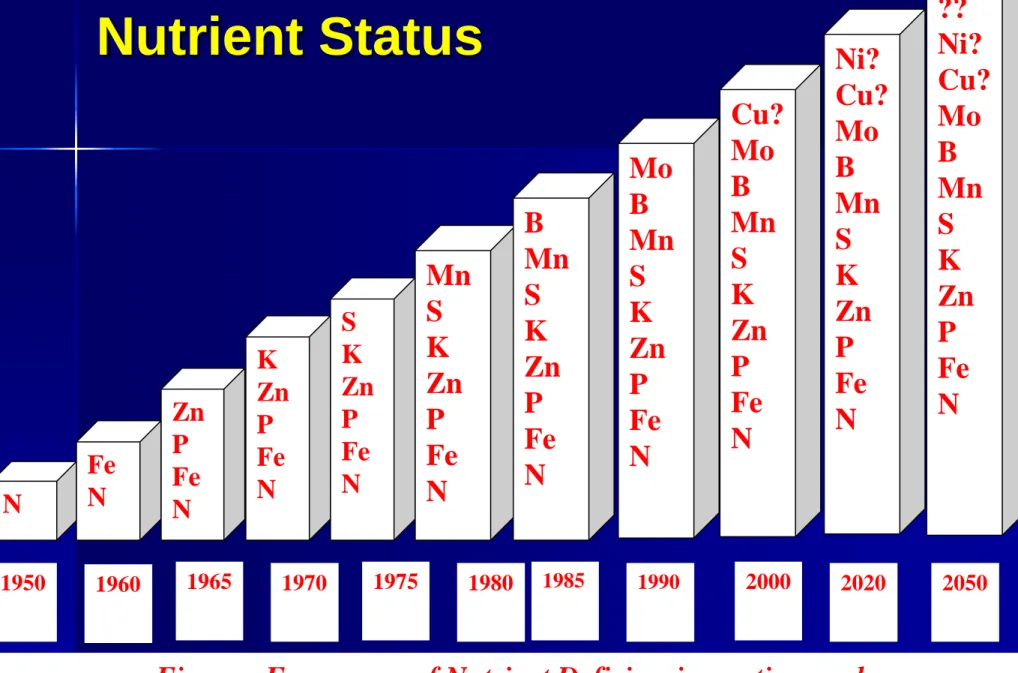
N
Fe N
Zn P Fe N
K Zn P Fe N
S K Zn P Fe N
Mn S K Zn P Fe N
B Mn S K Zn P Fe N
Mo B Mn S K Zn P Fe N
Cu?
Mo B Mn S K Zn P Fe N
Ni?
Cu?
Mo B Mn S K Zn P Fe N
??
Ni?
Cu?
Mo B Mn S K Zn P Fe N
Figure : Emergence of Nutrient Deficiencies on time scale
1950 1960 1965 1970 1975 1980 1985 1990 2000 2020 2050
Nutrient Status
Micro -irrigation
Water saving up to 40-60%
Yield increase 60-100%
Saving in fertilizers and chemicals (40 - 60%)
Improved produce quality and Higher returns
Less pests and diseases incidence
FERTIGATION IN VEGETABLE CROPS
PROTECTED CULTIVATION
Tomato (300 t/ha/year) Capsicum (200 t/ha/year)
Cucumber and Muskmelon
27-05-2014 32
L E T U
C E
27-05-2014 33
IPMs for shoot and fruit borer in brinjal (82% protection) and fruit fly in cucurbits (70% protection).
Trap crops: Marigold for tomato leafminers and the fruit borer and Chinese cabbage DBM.
Biocontrol: Trichoderma (seed treatment/seedling root dip and soil application) for management of soil borne pathogens in tomato and chilli. Bacillus isolates (BS-2 &
BA-1) against soil borne pathogens of tomato and foliar spray @ 1.0 % against leaf spot pathogens of cowpea.
Diagnostics: Serological and PCR based diagnostics were standardized for detection of groundnut bud necrosis virus (GBNV), watermelon bud necrosis virus (WBNV), squash leaf curl China virus (SLCCV), bhendi yellow vein mosaic virus (BYVMV) and tomato leaf curl New Delhi virus (ToLCNDV).
Major Achievements: Vegetable Protection
Crop loss savings per acre : 4 quintals Farm gate sale price : Rs.16/- kg
Economic impact : Rs 25.46 crores
Fruit fly pheromone trap
No. of trap sold: 2,38,687 No of traps /ac : 6
Area covered : 39,781 ac
Integrated Pest Management
CABBAGE
TOMATO MANGO
Trap crops
Post- harvest handling and management
• Maturity standards worked out
• Harvesting and handling
• Physiology of fruits and vegetable
• Packing for enhanced shelf life
• Storage system to enhance shelf life
• Diversified products
Increased availability of horticulture produce
Adoption of technologies
Increased exports of horticultural crops
Attraction for corporate in horticulture
India emerged as a major player in horticulture – Golden revolution
Increased availability for processing
Provide food, feed, fibre, biofuel, nutrition and health care to 9.5 billion human population by 2050 from declining land and water
Safeguarding the environment and natural resources
Manage the uncertainties due to climate change - drought, flood, high temperature, salinity and new pathogens
Food safety
RESEARCH
Genetic resource management and enhancement
Enhancing the productivity of water and nutrients
Efficient utilization of resources
Use of frontiers in science & technology
More investment in research
DEVELOPMENT
Use of new seeds and technologies
Quality assurance of seed, plants and produce
Linking farmer’s with market
Infrastructure for production and marketing
Investment in development.
Approaches
Horticulture Divisions of ICAR and DAC
• RESEARCH
• Basic & strategic research
• CRP and Challenge programs
• Extra murals fund
• Flagship programs
• AICRP
• International programs
Schemes: 10 institutes, 7 Directorates, 6 NRC
• DEVELOPMENT
• Area based annual & perspective plans
• Applied research with focus on region & crop
• Demand driven production
• Best quality seed & planting material
• Technology driven program to improve productivity-quality
• Post harvest management
• Market infrastructure dev.
Schemes: NHM, HMNEH, NBM, CDB, CIH, DCCD,
DASD, NBB, NVIUC (RKVY)
Important Challenge Programs (13) ICAR Horticulture Division
• Inter-specific hybridization for multiple disease resistance (IIVR)
• Exploitation of male sterility in vegetable crops (IIHR)
• Breeding for resistance to YVMV in okra (IIVR)
• Leaf spot diseases in horticultural crops (IIHR)
• Canopy management and architectural engineering in fruit crops (CITH)
• Pomegranate nodal blight (NRCP)
• Papaya ring spot virus (IIHR)
• Management of Phytophthora, fusarium and ralstonia wilt (IISR)
• Borers in cashew, citrus (NE), apple, banana, coffee (IIHR)
• Sucking pests - thrips, white fly, mealy bugs & vectors (IIHR)
• Micronutrient management in horticulture crops (IIHR)
• Protected horticulture (IIHR)
• Tissue culture in date palm (CIAH)
MIDH--
Mission Interventions• Production & productivity improvement
• Production & distribution of planting material
– Nurseries, TC units, vegetable seed production, import of planting material, seed infrastructure
• Establishment of new gardens
• Mushroom production
• Rejuvenation/replacement of senile orchards/canopy management
• Creation of water resources
• Protected cultivation
• Precision farming development
• INM, IPM
MIDH-
Mission Interventions……..• Organic farming
• GAP
• COE in Horticulture
• HRD
• Pollination support through bee keeping
• Horticulture mechanization
• Technology dissemination/FLD
• Integrated Post harvest management
• Creation of market infrastructure
• Processing & value addition
• Enhanced Production & Productivity
• Better Quality
• Greater Resource Use Efficiency
• Higher returns
• Improved Access to Markets
• Value Addition & Longer Shelf Life
• FPOs for economies of scale & scope
Outcomes: XII Plan Period
Holistic development across horticulture sector, empowering marginal & small stakeholders
46
Rain Deficit Moisture Stress
Management in Vegetable crops
IMD Report- Rain deficit monsoon
• Probability of a normal monsoon is 35%,
• Below normal monsoon is 33%.
• Aberrant monsoon may lead to moisture deficit
• Preparedness - advisory plan for
horticultural crops have been developed.
• General and specific recommendations
General recommendations
• Selection of suitable crops and varieties:
• Improved method of seedling production:
• Adoption of soil and moisture conservation techniques:
• Enhancing soil organic matter content:
• Application of foliar nutrition:
• Use of drip irrigation:
• Use of micro sprinkler irrigation:
• Moisture saving methods under limited water resource conditions:
• Water saving irrigation method
• Mulching Practices in Vegetable
• Wind breaks, hedges and intercropping:
• Use of protected cultivation for vegetables:
• Control of leaf miner and mite during high temperature stress.
•
Other recommendations
• In crop like Onion, drum seeder may be used for direct sowing.
• Postpone transplanting of seedlings in the main field and also fertilizer application till the favorable soil moisture is prevailed.
• Resorting to foliar application of (water soluble) major nutrients.
• Protection of young plants with partial
shade.
Other recommendations
• In the inter spaces of crops weeding and inter- culture practices may be followed.
• Thinning may be taken up to reduce the plant population.
• Alternate furrow Irrigation may be taken up based on the availability of water.
• Drip Irrigation may be followed. Pitcher irrigation wherever drip is unavailable for protective maintenance.
• Plastic mulching and drip irrigation may be
followed for better soil and moisture
conservation and weed control.
Other recommendations
• Adopting the conjunctive use of surface and ground water as well as the use of non- conventional sources such as brackish water
• Waste water should not be utilized without pre treatment and safe reuse may be ensured.
• Minimise use of those fertilizers which promote vegetative growth like nitrogen, use K and B as foliar spray to maintain plant turgor.
• Use of super absorbent polymers such as
Luquasorb for water absorption and slow
release.
If monsoon is delayed by 15 days
• Grow short duration varieties
• Raise crop - ridge-furrow or furrow irrigated raised bed planting system
• Two spraying of water soluble mixed
fertilizers (19:19:19 NPK) @ 5-7 g/lit, 30 days after crop establishment ensure early and
vigorous plant growth
• Ensure staking of crop wherever required.
Short duration varieties
Vegetable Variety
Cluster bean Pusa Sadabahar, Pusa Mausami, Pusa Navbahar, Durga Bahar, Sharad Bahar, Durgapur Safed
Cowpea Kashi Kanchan, Kashi Unnatil, Kashi Gauri, Pusa Barsati, Pusa Rituraj
Dolichos bean Kashi Haritima, Pusa Early prolific, Pusa Sem-2, Pusa Sem-3, Rajni, Konkan Bhusan, Arka Jay, Arka Vijay, Drumstick PKM-1, PKM-2, Kokan Ruchira
Brinjal Kashi Sandesh, Kashi Taru, Pusa Purple Long, Pusa
Kranti, Pusa Anmol, Punjab Sadabahar, Arka Sheel, Arka Kusumakar, Arka Navneet, Arka Shirish
Amaranth Chhoti Chaulai, Badi Chaulai, CO-1, CO-2, CO-3, Pusa Keerti, Pusa Kiran, Arka Suguna, Arka Arunima.
• Use of organic mulch such as paddy straw, dry grass, etc @ 7-10 tones/ha
• Use of organic manures (FYM 15 tones/ha or vermicompost 10 tones/ha) to enhance water holding capacity of soil
• Ensure life saving irrigation at least during critical growth stages
• Water shortage - alternate furrow irrigation should be practiced
• Do not allow weeds to grow during plant’s early growth stage
• Tillage operations only in upper 5 cm soil layer.
If monsoon is delayed by 30 days
Rain deficit during vegetative phase &
reproductive phase
• Raise crop on raised beds with drip irrigation.
• Harvest rain water by making storage ponds -two to three life saving irrigations during drought.
• Spray anti-transparent Kaolinite @ 5% to reduce water loss
• Cover soil surface with organic mulch
• In case of poor crop growth- foliar application of water soluble NPK fertilizer
• Foliar application of sulphur 85% WP @ 1.5-2.0 g/liter for quick recovery during active vegetative growth stage.
• Foliar application of micronutrient mixture containing Zn, Mn, Fe, Cu, B at 30, 45 and 60 DAT for better crop stand (5 ml/liter).
• During dry spell, thrips population may increase - spray
Profenophos 1ml/L or Carbosulfan 2ml/L or Fipronil @
1.5ml/l
Terminal drought
• Water harvesting / alternate arrangement
• Life saving irrigation
• Mulching
• Use drip/ fertigation
http://nhm.nic.in/Archive/Adv13052014.pdf
http://agricoop.nic.in/imagedefault/whatsnew/advhort.pdf