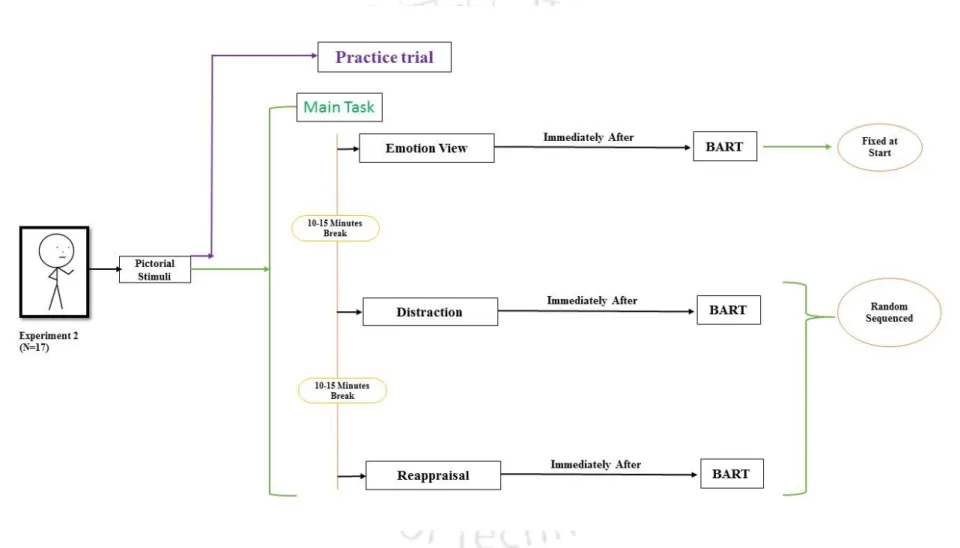
Furthermore, the study also evaluates the role of sleep on affect-regulated decision-making under risk. Experiment 1 tested the effectiveness of emotion regulation strategies across different emotion induction methods and valence on decision making under risk.
Page No
CHAPTER 1: INTRODUCTION AND REVIEW OF
CHAPTER 2: GENERAL METHODOLOGY AND
In Text Figures
Represent the comparative Stimuli-locked Grand Average waveform in the Cz electrode evoked by P300 in the BART during sleep deprivation in the first and second half. 5 Mean and SD of FRN amplitude for sleep and sleep deprivation 112 6 Mean and SD of P300 amplitude for sleep and sleep deprivation 113 7.
List of Tables
Introduction and Literature Review
In our initial experiments, we attempt to examine the effect of emotion regulation strategy on risky choice behavior. In the first experiment, the effect of different types of emotion regulation strategy (situation selection, distraction, distraction, cognitive reappraisal, and suppression) on risk-taking behavior was examined.
Theoretical Foundation and Review of the Literature
Emotions
The overall aim of the thesis was to study the impact of the effectiveness of emotion regulation on risk behavior by manipulating stimuli and sleep duration. Furthermore, studying not only the type of emotion regulation strategy, but also its effectiveness (in what circumstances) on risk behavior is also a much-needed topic in emotion regulation and decision-making.
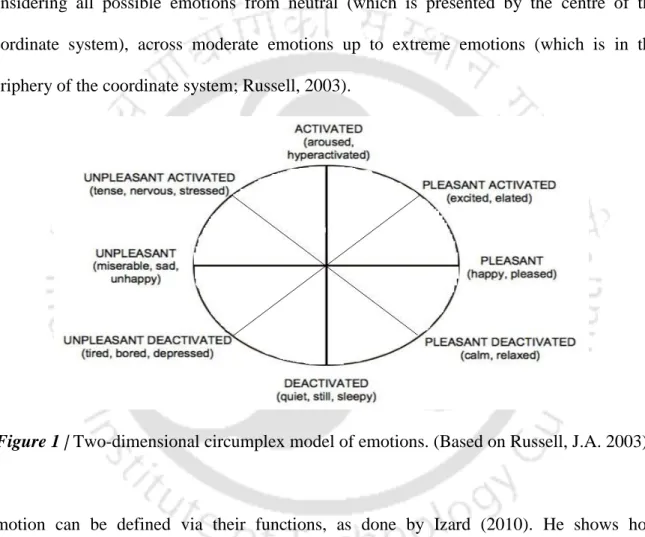
Emotion Regulation: General Overview
In the last decade or so, the field of emotion regulation has grown as an independent field (Gross, 1998a). For example, Gross's process model of emotion regulation (Gross, 1998a) emphasizes the time course of emotion regulation.
Explicit Emotion Regulation
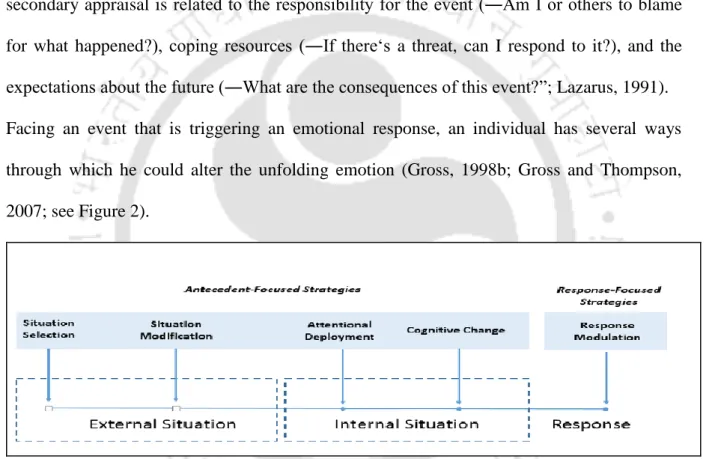
Process Model of Emotion Regulation
A process model of emotion regulation shows how specific strategies can be differentiated along the time course of the emotional response (Gross, 1998b; 2001). In our exam example, response modulation may take the form of hiding your embarrassment after failing miserably on the exam.
Decision Making - Definition and Function of Decision Making
Finally, response modulation refers to attempts to influence emotional response tendencies after they have already been elicited.
Role of Emotion in Decision Making
Immediate emotions are experienced at the moment of choice and fall into one of two categories. Incidental emotions' are also experienced at the moment of choice, but arise from available or situational sources, objectively unrelated to the task at hand'.
Expected Emotions and Immediate Emotions
Positive emotions draw attention to potential benefits and increase their salience, resulting in an increase in risky behavior (Knutson et al., 2008). In contrast, immediate negative emotions (e.g., fear) reduce the likelihood of risky behavior (Gasper and Clore, 2000; Winkielman et al., 2007).
Neural Mechanisms of Decision Making
Rationality
Others argue that emotions play a significant role in decision making (Damasio, 1994) and benefit personal well-being (Aspinwall and Taylor, 1997). For example, Damasio (1994) argued that emotions increase the conscious attention and continuous working memory required for any reasoning or decision making.
Emotion Regulation and Decision-Making
It has been concluded that the induction of subliminal emotions affects the evaluation process in decision-making (Winkielman, Berridge, & Wilbarger, 2005). Furthermore, acute stress modulates financial decision-making (Porcelli and Delgado, 2009) and may put those unable to cope with stress at risk of poor decision-making, as shown in addiction relapse (Sinha, 2007).
Sleep
Sleep and Emotion
Differences between these studies may be due to different amounts of sleep deprivation (Motomura et al., 2013). Gujar et al., (2011) reported that wakefulness increases ratings of anger and fear, while napping decreases it.
Relevance and Potential Impact of Present Research Topic
Recent literature suggests that people use emotion regulation to weaken the influence of emotional states on choice behavior (Gross, 2002). Despite widespread interest in the concept of emotion regulation within the sleep literature, emotion regulation, as defined by Gross, lacks concrete experimental validation.
Experiments
- RESEARCH AIMS AND GENERAL METHODOLOGY 1 Research Aims
- Effectiveness of emotion regulation on risky decision making
- Role of Sleep on affect regulated risky Decision making
- General Methodology
- Emotion view: in this condition, participants after completing the mood questionnaire were asked to view affective stimuli containing pleasant and unpleasant pictures/ videos (as
- Situation Selection Strategy: In this emotion regulation strategy participants viewed the combination of three pictorial stimuli on a single slide and were asked to select a picture
- Distraction: This time participants were asked to minimize their emotion by using distraction strategy, in which participant had the choice to alter elements within the situation
- Cognitive Reappraisal strategy: In this emotion regulation strategy participants were instructed to use standard emotion regulation instruction of reappraisal, in which participants
- Suppression Strategy: This is a response focused emotion regulation strategy in which participants are required to minimize their experiential, physiological and behavioural states
- Participants
- Tools
- General Design
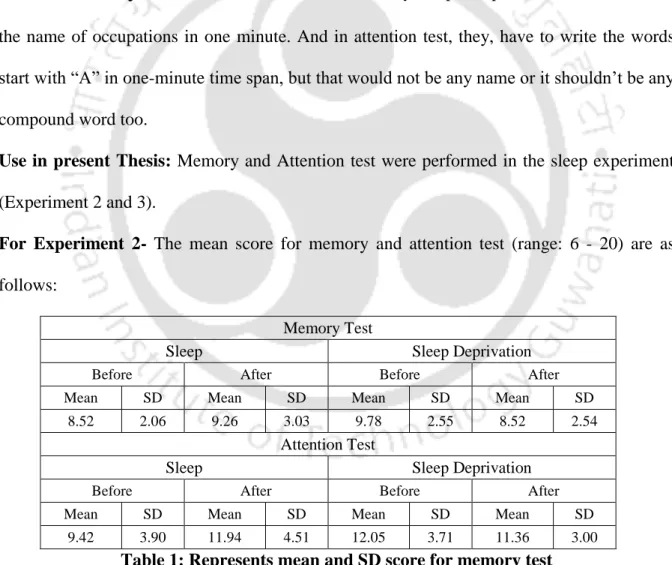
Application in this thesis: A test of memory and attention was performed in a sleep experiment (Experiments 2 and 3). Use in this thesis: In this thesis, the CERQ is used to identify subjective preferences for cognitive affective regulation strategies.
Behavioral Studies
Experiment 1A: Effectiveness of Affect Regulation in Terms of Stimuli Type and Affect
- Objective
- Hypothesis
- Methodology
- Results
- Emotion regulation effectiveness across nature of stimuli (picture/video)
- Positive Affect -
- Negative Affect -
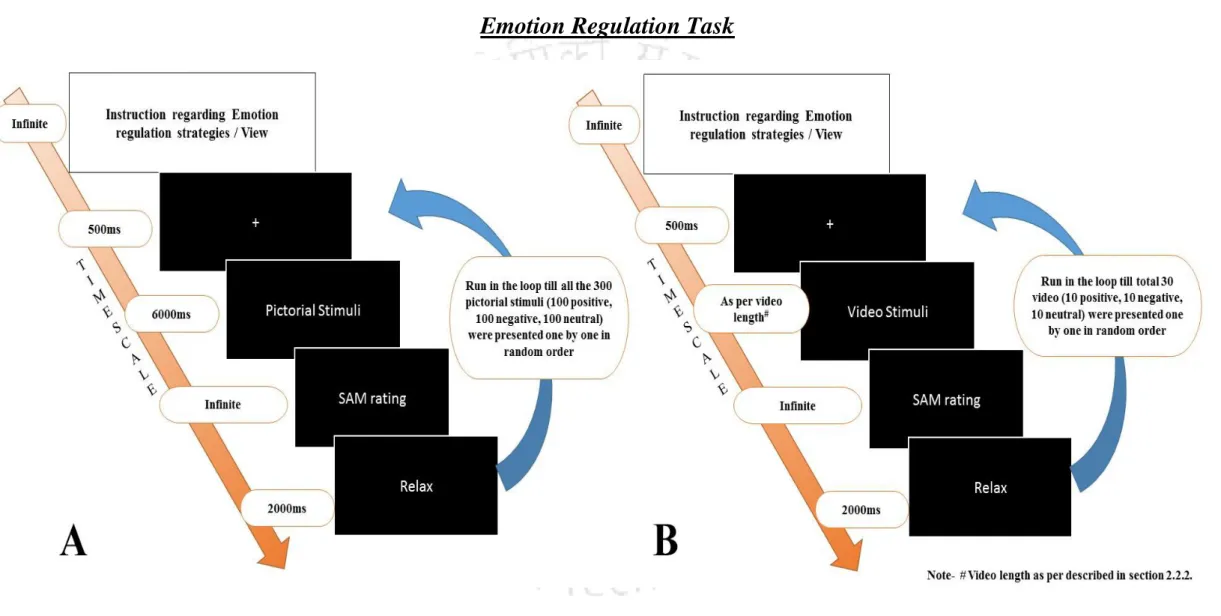
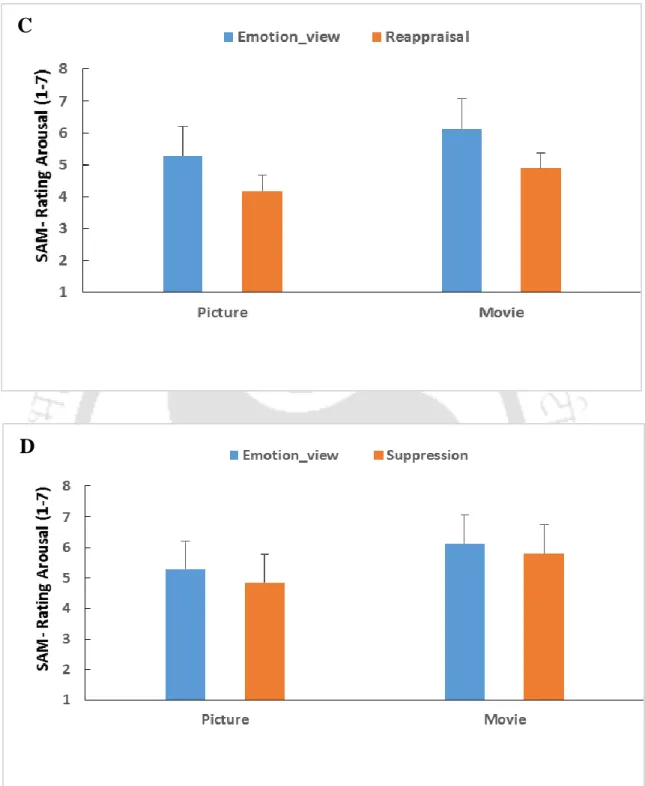
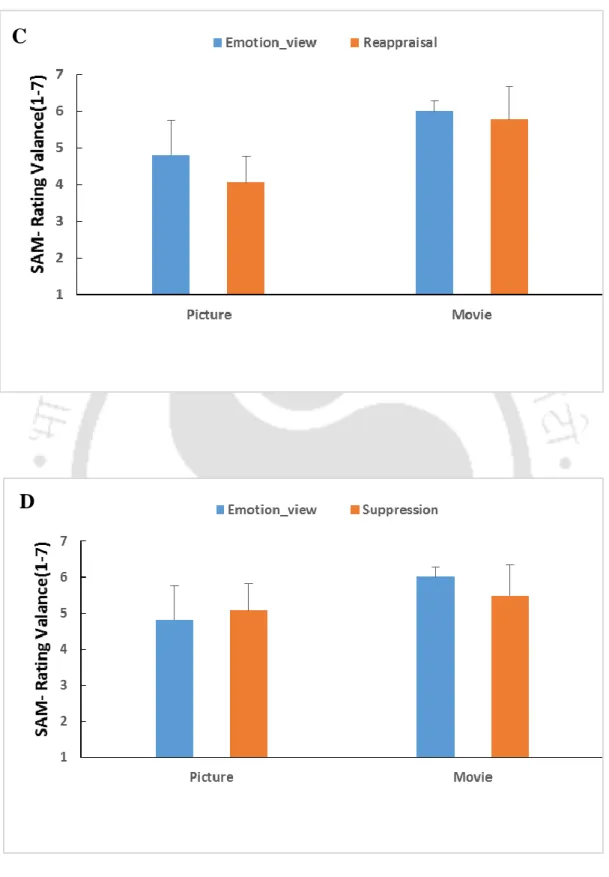
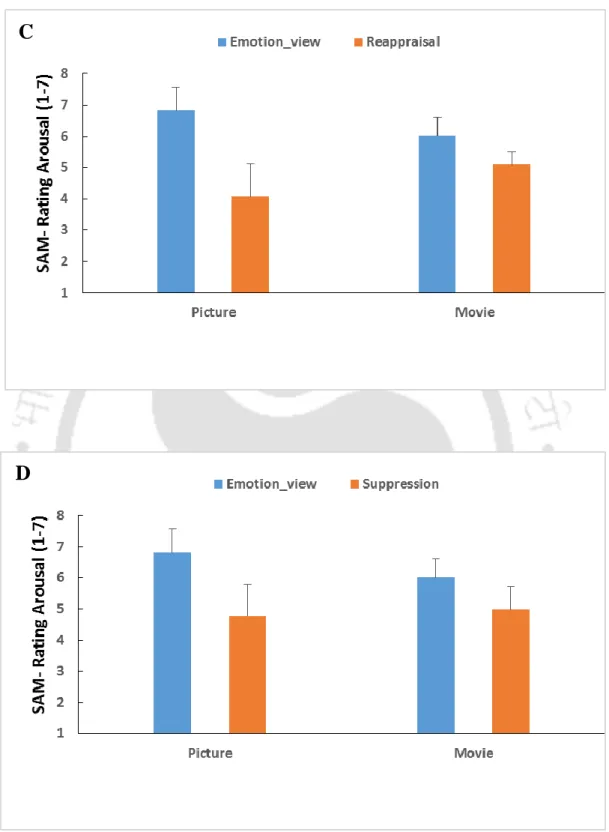
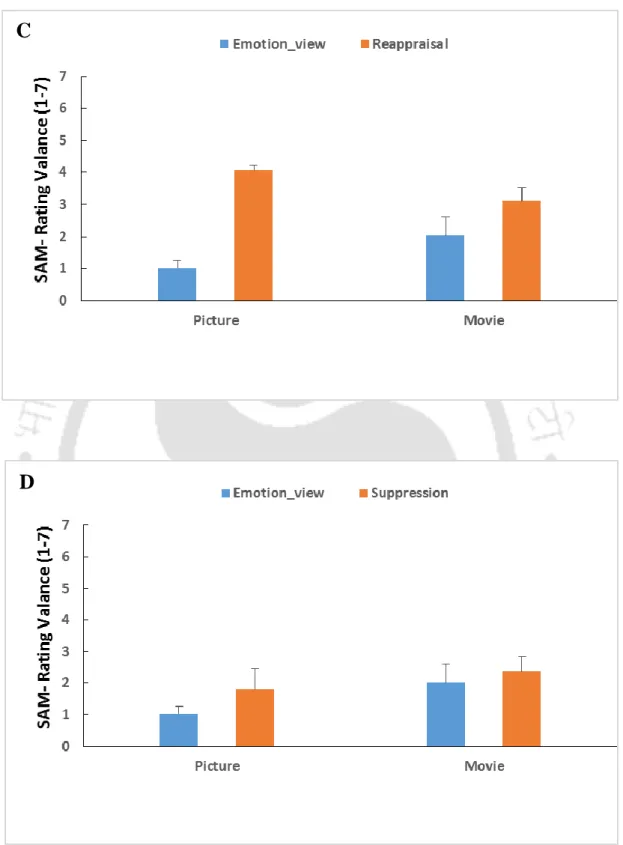
Participants (N = 40) were trained according to standard instructions for emotion regulation (Gross, 2002) in exercises to perform an emotion regulation task. The experiment begins with the presentation of affective pictures to the subjects, which the subject must passively view for 6000 milliseconds, followed by a rating of each displayed picture on a self-rating scale of arousal and valence. Four separate repeated-measures ANOVAs were conducted to examine whether the participant followed the emotion regulation instructions, measuring subjective ratings of valence and arousal for both positively and negatively valenced stimuli.
This indicates that the choice of situation did not significantly moderate the positive emotions produced by the pictorial stimuli. Significant interaction effects were reported. The mean difference for the picture stimuli in the emotion group is and there is a similar mean difference in the emotion regulation group. showing no significant main effect between emotion versus emotion regulation.
- Conclusion
- Experiment 1B: Effect of Emotion Regulation Strategies on Risky Decision Making
- Objective
- Hypothesis
- Variables
- Design
- Methodology
- Results
- Conclusion
In the next experiment, we will compare the effect of all emotion regulation strategies of the process model on risky decision making using the Balloon Analogue Risk Task. Emotion regulation will lead to changes in risky choice behavior (in terms of Balloon Analogue Risk Task results). In this experiment, we compared the effectiveness of different emotion regulation strategies in decision making under risk.
Experiment 1 was conducted to assess the effectiveness of emotion regulation in risky decision making using behavior analysis. The mean difference in adjusted pumps for the pictorial stimuli in the emotion group is in the emotion adjustment.
Electrophysiological studies
- Objectives
- Hypothesis
- Variables
- Design
- Methodology .1 EEG/ERP
- Polysomnography
- Procedure
- Measures
- Results
- Behavioural
For standard polysomnography, electroencephalographic (EEG) activity was recorded continuously with (Ag/AgCl) electrodes of C3 and C4, related to coupled electrodes attached to the mastoids. The participant recruitment and inclusion tests were similar to those ever followed in the behavioral experiments. All subjects underwent a mandatory adaptation and baseline night, during which they were introduced to the sleep laboratory settings and the calibration of their sleep architecture was performed.
Before all nights, subjects were called to the lab at 9 a.m. in the morning and given an ActiWatch (to monitor their daily activity and to ensure they didn't nap during the day), which they had to wear at all times. day and return back to the experimenter while arriving at the start of the night sessions. The following morning, both groups were allowed to leave the sleep lab with the ActiWatch and were asked to return to the lab after three hours.
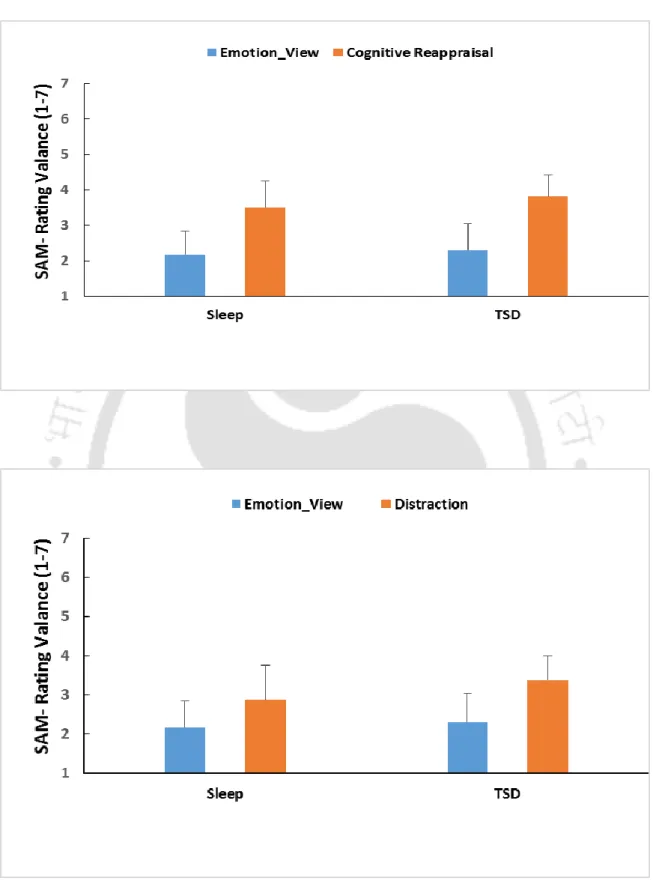
Cognitive reappraisal Strategy: ANOVA with 2 Sleep condition (sleep, deprivation) x 2 Affect (view/ reappraisal) as within subject factor and Self- Assessment Manikin rating for
Thus, emotion regulation of negative affect arousal by distraction strategy was not significantly affected by sleep manipulation. Thus, emotion regulation of negative affect by distraction strategy was significantly influenced by sleep manipulation. Thus, emotion regulation of negative affect by cognitive reappraisal strategy was not significantly affected by sleep manipulation, but the mean value showed better regulation after a full night of sleep compared to a full night of sleep deprivation.
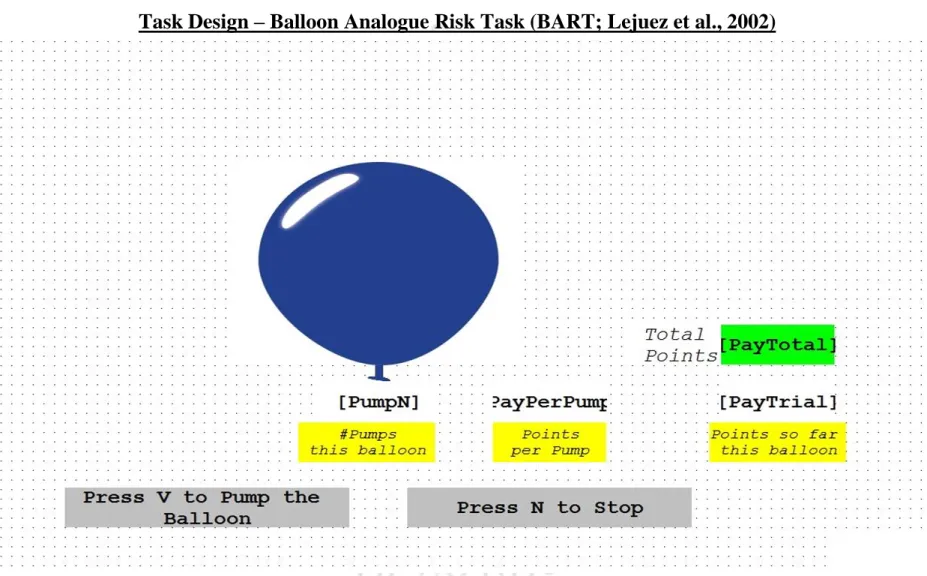
Consistent with previous uses of the Balloon Analogue Risk Task (Lejuez et al., 2002), the average number of pumps on balloons that did not explode was used as an index of risk. One for the cognitive reappraisal strategy of emotion regulation and the other for the distraction strategy of emotion regulation during the sleep and sleep deprivation states.
- Electrophysiological- Feedback-related negativity and Feedback-related P300
- Conclusion
- Experiment 3 – Assess the Role of First or Second Half Sleep Deprivation in Affect Regulated Risky Decision Making
- Objectives
- Hypothesis
- Variables
- Design
- Methodology
- Results
These results showed that subjects tended to inflate the balloon less often during full nighttime sleep compared to sleep deprivation, especially after negative feedback from balloon bursting (loss). When comparing the emotion regulation strategy, subjects tended to inflate the balloon more often with the distraction strategy than with the emotion vision. When comparing the emotion regulation strategy, subjects tended to inflate the balloon significantly more in the reappraisal strategy compared to the emotion view.
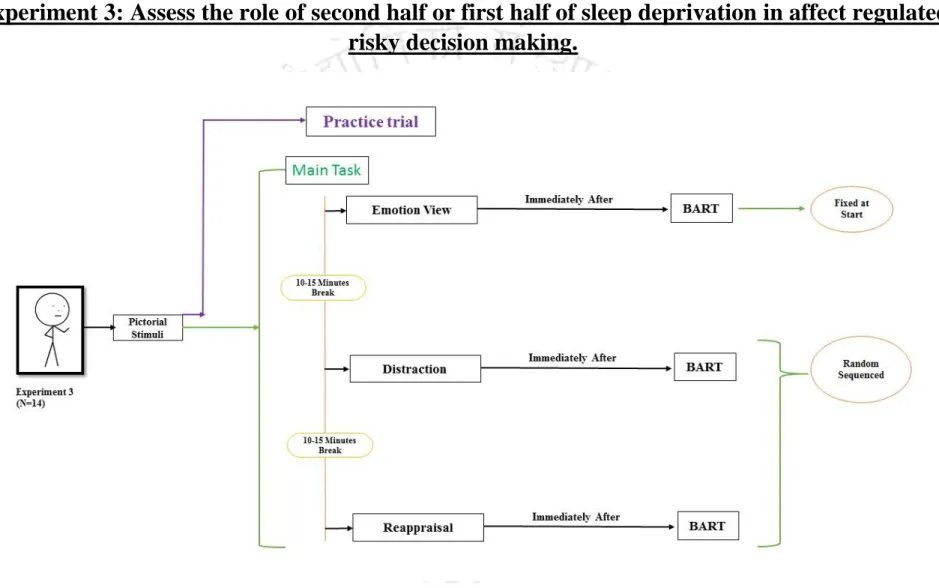
To examine the role of the first or second half of sleep deprivation in regulated risky decision making. After the first or second half hours of sleep deprivation, subjects completed the emotional behavioral task and the BART.
Four separate repeated measures ANOVAs were conducted to check whether the participant followed the emotion regulation instructions, we measured the subjective rating for the emotion regulation strategy and arousal. a). Thus, arousal emotion regulation of negative affect by the cognitive reappraisal strategy was not significantly affected by the sleep manipulation. The mean difference for sleep deprivation in the second half on emotion display is and in emotion regulation is similarly the mean difference for sleep deprivation in the first half on emotion display is 4.8 ±. Thus, emotion regulation of negative affect valence by the distraction strategy was significantly affected by the sleep manipulation.
Thus, emotion regulation of negative affect valance through cognitive reappraisal strategy was significantly influenced by manipulation of sleep. During affect analysis, subjects pumped the balloon fewer times in the distraction strategy compared to no emotion regulation strategy (see vs.
Cognitive Reappraisal Strategy: A 2 Sleep condition (second half of sleep deprivation/
- Electrophysiological - Feedback-related negativity and Feedback-related P300 Two major ERP components have been described that are particularly sensitive to feedback
- Conclusion
Further analysis showed that during the trials immediately after a negative feedback, subjects inflated the balloon more often in the sleep deprivation condition in the second half than in the sleep deprivation condition in the first half (second half sleep deprivation vs. However, during the trials immediately after a positive feedback, the number of balloon pumps did not differ significantly between sleep conditions (sleep deprivation in the second half).Each participant completed the preliminary tests and practiced the emotion regulation task before starting sleep/sleep deprivation.
Experiment 3: Assess the role of second-half or first-half sleep deprivation in affect-regulated risk decision-making. Each participant completed pretest and emotion regulation task trials before starting the second half of sleep deprivation/first half of.

Task Design – Balloon Analogue Risk Task (BART; Lejuez et al., 2002)
Emotion regulation effectiveness across sleep and total sleep deprivation
A higher value represents riskier behavior for the emotion perspective versus distraction and cognitive reappraisal. Figure 22| Represent comparative stimulus-locked grand-average waveforms in the Cz electrode evoked by the P300 in the BART task across all emotion regulation strategies during sleep and sleep deprivation.
Sleep
Emotion regulation effectiveness across second half sleep deprivation and first half sleep deprivation
BART- Mean Adjusted No. of Pumps
Discussion
- Answers to the overall research questions
- The Findings in relation to previous research .1 Effectiveness of emotion regulation strategies
- Stimuli type and emotion regulation
- Emotion regulation strategies and Decision making
- Sleep and Emotion Regulation: Effect on risky Decision-making
- Emotion regulation and Partial Sleep: Effect on risky decision-making
- Electrophysiological correlates of risk and regulation
The first part of the question was to examine whether the emotion regulation of negative pictorial stimuli had. The result showed that sleep deprivation in the first half leads to better emotion regulation compared to the second half of sleep deprivation for both emotion regulation strategies. The thesis attempts to evaluate the differential effect of emotion regulation strategies on risky decision making.
Process model of emotion regulation (Gross, 2002), which distinguishes emotion regulation strategies into four subtypes: antecedent-focused strategies (situation selection, distraction, and cognitive reappraisal) and response-focused strategies (suppression). The results of the experimental manipulation showed better emotion regulation in the sleep state compared to the sleep deprivation state for both emotion regulation strategies (distraction and reappraisal).
Conclusion
- CONCLUSIONS AND IMPLICATIONS
- Conclusions
- Significance
- Limitations
- External Validity of the outcomes
- Original contributions of the thesis
- Implications for future research
The aim of the current diploma thesis was to investigate the role of sleep duration on the effectiveness of emotion regulation from the perspective of decision-making behavior. The present thesis also suffers from the external validity of the results of other laboratory studies in the field of emotion regulation and decision making. This study thus helps to elucidate the role of the nature of induction in the performance of emotion regulation.
Most studies on emotion regulation have focused on the effectiveness of different strategies and subtypes of emotion regulation. Most study designs used to date use two emotion regulation strategies (cognitive reappraisal and suppression) or (distraction and reappraisal).