INTRODUCTION
Generalities
It is estimated that about 2% of the total milk processed in the industry is wasted as wastewater (Munavalli and Saler, 2009), which therefore predominantly contains milk and milk products (e.g. protein, fat, carbohydrates and lactose) (Omil et al., 2003). Dust: Emissions of dust during dairy processing activities include fine milk powder residues in the exhaust air from spray drying systems and bags of product.
Sources of wastewater in dairy industry
Exhaust gases: Exhaust emissions (carbon dioxide [CO2], nitrogen oxides [NOx] . and carbon monoxide [CO]) in the dairy processing sector result from the combustion of gas and fuel oil or diesel in turbines, boilers, compressors and other engines for power and heat arousal. The amount of fine particles in the wash water increases if mechanical washing processes are used by industry.
Treatment of dairy wastewater
However, the main disadvantages of these methods were the high cost of the process or the low efficiency of fat and oil removal. Furthermore, by in situ biosurfactant production using a suitable organism, pre-treatment of dairy wastewater can be achieved mainly to remove high fat and oil content.
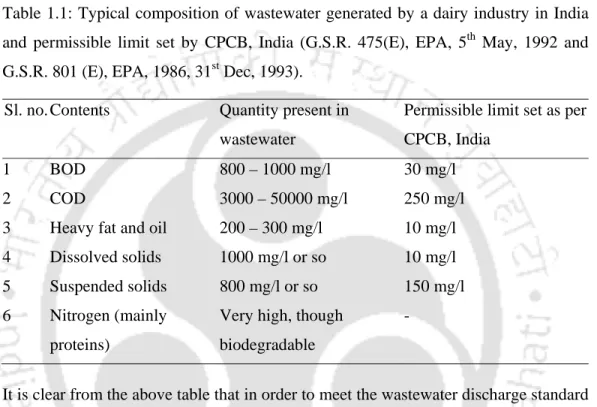
Objective and scope
Therefore, these variable levels were found to be optimal for maximum SL production in the medium (Saudagar and Singhal, 2007). However, SL production remained constant (2-3 g/l) throughout the experiment due to the insufficient hydrophobic carbon source (fat and oil) in the wastewater.
Organization of the thesis
LITERATURE REVIEW
Wastewater
Water that has been used by humans and discharged into the environment with altered physical and/or chemical parameters is defined as wastewater. However, if the water is contaminated with soluble or insoluble organic or inorganic material, a combination of mechanical, chemical and/or biological treatment procedures may be necessary to protect the environment from periodic or permanent pollution or damage.
Dairy wastewater
- Issues with biological treatment of effluents with high fats and oils
- Effect of long chain fatty acids on biological treatment…. 15
- Physical pretreatment
- Chemical and physical-chemical pretreatment
- Biological pretreatment methods
- Use of hydrolytic enzymes
- Use of hydrolytic enzyme producing microorganisms
- Use of biosurfactants
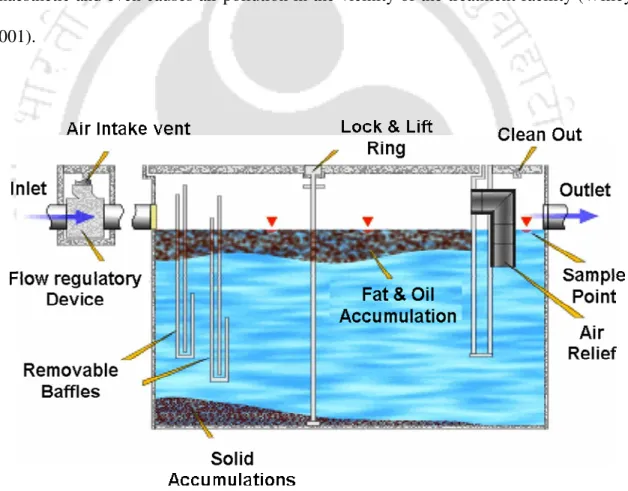
During aerobic wastewater treatment, fats and oils block the transfer of oxygen necessary for biological degradation. The main technique for separating fats and oils from wastewater is the fat trapping method.
Biosurfactants
- Types of biosurfactants
- Glycolipids
- Lipopeptides
- Fatty acids and neutral lipids
- Important properties of biosurfactant
- Formation of micelle/ reverse micelle and reduction of
- Emulsification and de-emulsification activity
- Biodegradability
- Low toxicity
- Environmental applications of biosurfactants
- Hydrocarbons
- Pesticides and herbicides
- Heavy metal
Corinomucolic acid is another example of complex fatty acid biosurfactants produced by Rhodococcus erythropolis (Kretschner et al., 1982). This represents a major limitation in their removal using current on-site remediation technologies (Juwaker et al., 2008).

Sophorolipid
- SL structure
- Biosynthetic pathway of SLs
- Physiological role of SLs
- Fermentative production of SL
- Effect of physical parameters
- Effect of different carbon sources
- Effect of nitrogen sources
- Effect of bioreactor operation mode
- Surfactants properties of SLs
- Applications of SLs
- Environmental applications
- Pharmaceutical and medical applications
- Other applications
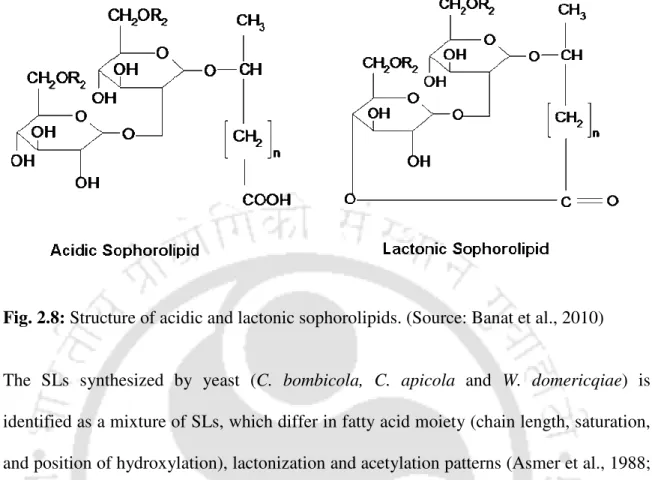
The production of SLs by the yeasts was found to be very low when the yeast cells were supplied with only one type of carbon source, such as n-alkanes (Jones and Howe, 1968) or glucose (Hommel et al., 1994). A concentration of 1 g/l mainly induces the lactonic form, while 20 g/l leads to the synthesis of acidic SLs (Van Bogaert et al., 2007). The risk of contamination is also much greater than with batch or fed-batch systems (Saudagar et al., 2008).
Other authors have also studied the production of SLs by the resting cell method (Gobbert et al., 1984; Casas and Garcia-Ochoa 1999).
Statistical design of experiments
The components of the medium are known to play a key role in the production of SL by yeast C. The next section discusses the properties of the biosurfactant produced using inexpensive raw materials in the study. However, the amount of SL produced by the yeasts was very less (1 – 2 g/l) due to the low amount of hydrophobic carbon source (fat and oil) present in the wastewater.
The low level of production with deproteinized whey was observed mainly due to the inability of the yeast to utilize the lactose present in the whey.
MATERIALS AND METHODS
Chemicals and Reagents
Sugarcane molasses, powdered milk (Amulya, Amul, India), fats (Ghee, Britania, India), soybean oil, sunflower oil, olive oil and petroleum oil used in the study were purchased from the local market in Guwahati, India. All other chemicals and solvents used in the study were of analytical grade and supplied by either Hi-Media Pvt.
Microorganism and its Maintenance
Seed Culture Preparation
SLs Production using the Yeast C. bombicola NRRL Y – 17069
- Production using deproteinized whey 68
- Batch shake flasks experiments
- Optimization of medium constituents – one variable at a
- Bioreactor experiments
- Production using sugarcane molasses
- Preparation of sugarcane molasses
- Batch shake flasks and bioreactor experiments
- Screening and optimization of process parameters and
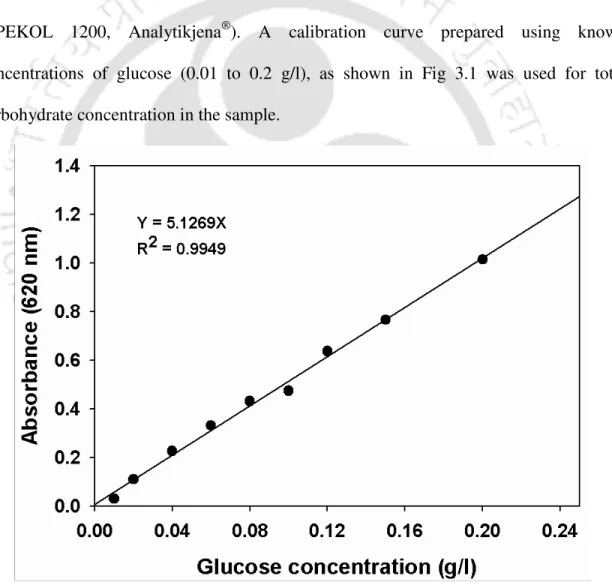
Initial experiments were carried out to study the effect of deproteinized whey on SL production and yeast growth, in which its concentration was varied from 25 to 125 g/l. Bioreactor experiments for SL production were carried out in a 3L fermenter (Biotron, Spectrochem, India) with 1 L working volume under batch and batch mode of operation. For comparison, SL production experiments by yeast using glucose as a carbon source were also carried out in batch shake flasks.
Experimental data obtained from batch shake flasks and batch fermenter (with and without pH) performed under an optimized environment based on sugarcane molasses were used for the evaluation of the kinetic parameters involved in the production of SLs.
Properties of SLs Produced by the Yeast C. bombicola
- Minimum surface tension, CMC and interfacial tension
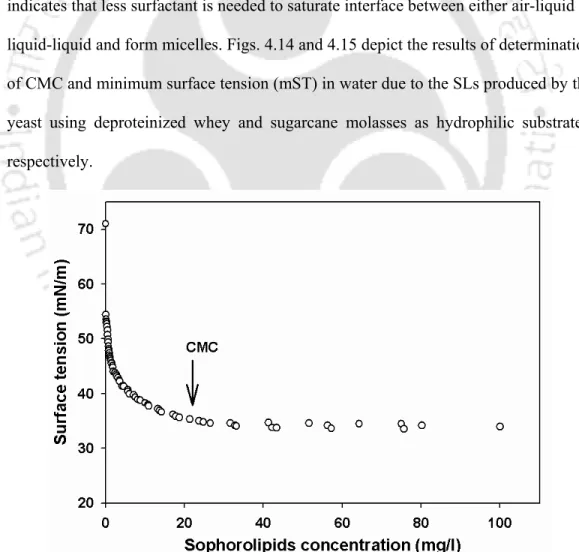
The effect of environmental parameters such as salt concentration, pH and heat on the surface activity of the SLs produced by C. To observe the heat stability of the biosurfactant, aqueous solutions of the SLs (200 mg/l SLs in MilliQ water) were heated to 100ºC in boiling water bath for various time intervals ranging from 0 to 120 minutes and then allowed to cool to room temperature before measuring the surface tension. 40 ml of the surfactant-rich phase was collected and its oil/fat was extracted using n-hexane.
Stability of the emulsions formed was also analyzed by letting the emulsions stand for about 30 min at room temperature and measuring their absorbance at 600 nm every 5 or 10 min for about 1 hour.
Purification and Structural Characterization of SLs Produced by C
- Purification of SLs produced by the yeast using medium based on
- Structural characterization
To test the effect of pH on the emulsification activity and stability due to the produced SLs, 1 ml of SLs solutions (0.5 mg/ml) were prepared in buffer solutions with desired pH values in the range of 4.0 – 8.0 and incubated for 1 hour at 30. °C. Similarly, to observe the effect of temperature, 1 ml of SLs solution (0.5 mg/ml) was incubated for 30 minutes at different temperatures in the range of 20 - 100 ºC and the emulsification activity and stability were investigated using soybean oil. as a substrate. Further structural characterization was performed by proton nuclear magnetic resonance (1HNMR) spectroscopy using Mercury Plus 400 NMR spectrometer, Varian, USA and mass spectroscopy (MS) (Q-TOF PremierTM, Waters, USA).
For MS analysis, electrospray ionization ESI probe connected to a Micromass ZMD served as negative ion mode.
Feasibility Study Using Synthetic Dairy Wastewater for SLs Production
- Preparation of synthetic dairy wastewater
- SLs production using synthetic dairy wastewater in batch shake
- Pretreatment of synthetic dairy wastewater in a laboratory scale
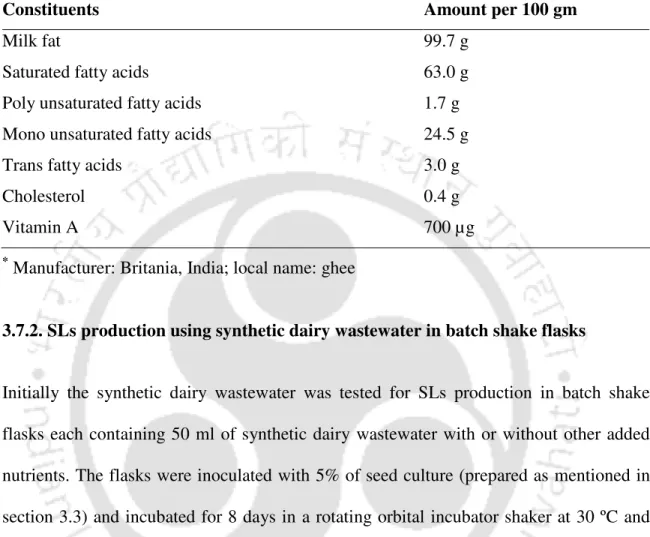
Initially, the synthetic dairy wastewater was tested for the production of SLs in batch shake flasks each containing 50 mL of synthetic dairy wastewater, with or without other added nutrients. Pretreatment of synthetic dairy wastewater in a laboratory-scale bioreactor under batch, fed-batch, and continuous operation modes under batch, fed-batch, and continuous operation modes. All experiments to investigate the efficiency of the yeast in pretreating the synthetic dairy wastewater to remove fats were carried out in a 3 liter fermenter (Applikon, Holland) with a working volume of 1 liter.
After the final volume of the reactor reached 2 L, the reactor was run in batch mode for 62 h.
Characterization and Pretreatment of Real Dairy Wastewater by the
- Wastewater characterization
- Pretreatment of dairy wastewater
In the fed-batch experiments, the fermenter was operated in batch mode with 1 L of wastewater for the first 48 h and later the wastewater feed was started. For continuous experiments, the fermenter was first operated in batch mode for up to 72 h and then switched to continuous mode with a wastewater retention time (HRT) of 28.5 h corresponding to a dilution rate of 0.035 h -1. Samples taken during the experiments were analyzed for fats, yeast biomass, sophorolipids, total carbohydrate concentration and COD.
Samples taken during the experiments were analyzed for fats and oils, yeast biomass, SL, total carbohydrate concentration and COD.
Analytical Methods
- Estimation of SLs, oleic acid and vegetable oils
- Estimation of fats and oils
- Estimation of suspended solids, dissolved solids and total solids…. 91
- Estimation of BOD
The inability of the yeast to utilize the lactose present in the whey can be cited as a likely reason for the reduced production of SLs in the present study (Daniel et al., 1998a). Compared to the hydrophilic carbon source, the hydrophobic carbon source in the medium has a great influence on the production of SLs by the yeast (Casas and Garcia-Ochoa, 1999; Van Bogaert et al., 2007). To further improve the production of SLs using the medium containing sugarcane molasses and soybean oil, process parameters were optimized and the results are discussed in the next section.
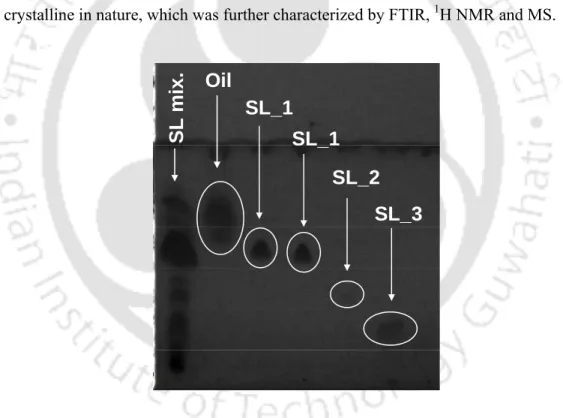
In the present study, SL-1 obtained by column chromatography of the SLs mixture was initially identified and characterized by FTIR.
RESULTS AND DISCUSSIONS
SLs Production by the Yeast C. bombicola NRRL Y-17039
- Production using deproteinized whey
- SLs production and yeast growth in batch shake flasks…. 96
- SLs production in fermentor
- Production using sugarcane molasses
- SLs production in batch shake flasks and in fermentor…
- SLs production using only sugarcane molasses and a
- Screening and optimization of process parameters and
- Kinetics of SLs production, yeast biomass growth and
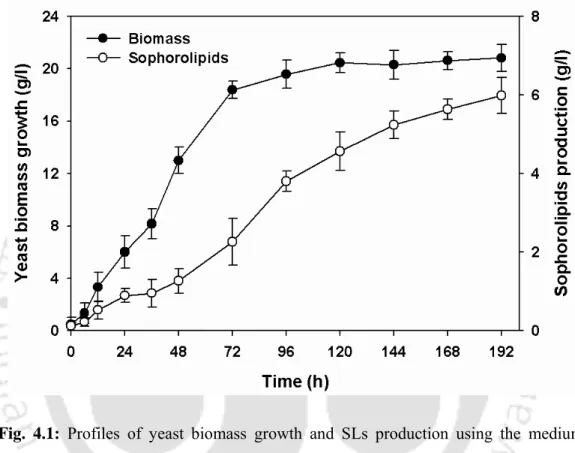
To increase SLs production, yeast optimization of the intermediate components was carried out. Compared to this literature report, the production of SL in this study is slightly less, which may be due to the hydrophobic carbon source soybean oil used instead of olive oil. SLs production was also significantly high compared to that obtained with deproteinized whey and oleic acid.
This observation is also found to be consistent with our previous results on yeast biomass growth and SLs production with deproteinized whey.
Properties of Produced SLs
- Minimum surface tension, CMC and interfacial tension of the
- Solubilization of fat and oil
- Emulsification activity and stability
- Effect of pH and temperature on emulsification activity and
All these results showed that the emulsifying activities and stabilities of the SLs produced by the yeast using deproteinized whey and oleic acid were found to be slightly better than the values obtained with the SLs produced by the same yeast using sugarcane molasses and soybean oil (Table 4.10) . ). Difference in the emulsifying activity and stability of the SLs produced using two different carbon sources could be the reason, as the composition of SLs changes with different lipophilic carbon sources. On the other hand, Figure 4.20 (b) revealed that the stability of the SLs was found to increase with temperature up to 60°C.
The results of the structural characterization of the SLs produced using two different cheaply available raw materials are discussed below.
Purification and Structural Characterization of SLs
- Purification by silica gel column chromatography 137
- SLs production in batch shake flasks
- Pretreatment of synthetic dairy wastewater
- Pretreatment under batch mode of operation
- Pretreatment under fed-batch mode of operation
- Pretreatment under continuous mode of operation
4.26: 1H NMR spectra of partially purified SLs from yeast grown on sugarcane molasses and soybean oil. On the other hand, about 60% of the carbohydrates remained unutilized when the synthetic wastewater was supplemented with sugarcane molasses. The results of an initial batch fermenter experiment conducted using synthetic dairy wastewater showed that the yeasts could only remove a maximum of 50% of the initial COD even after 120 hours with very little use of the fats present in the wastewater (Figure 4.32). ).
Furthermore, the yeast showed a very high COD removal efficiency of more than 93% in the system (Fig. 4.33).
Pretreatment of Real Dairy Wastewater by the Yeast C. bombicola
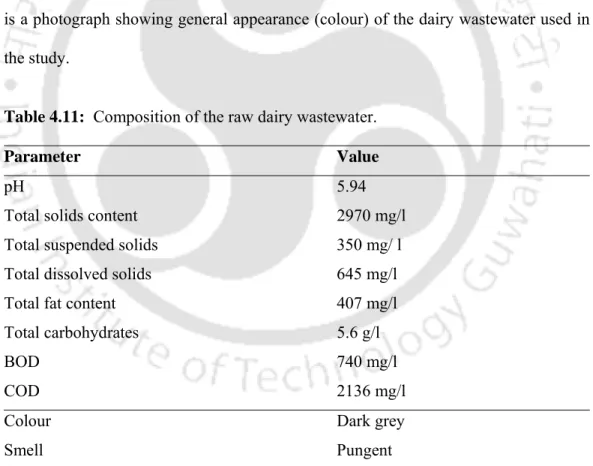
- Composition of dairy wastewater 157
- Pretreatment under batch mode of operation
- Pretreatment under fed-batch mode of operation
- Pretreatment under continuous mode of operation
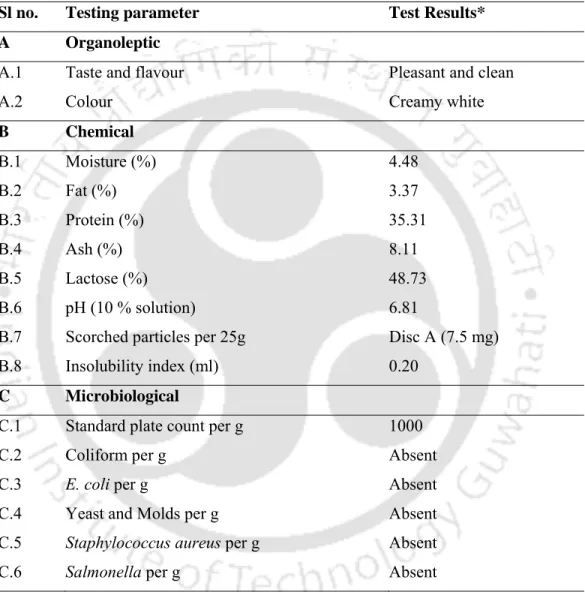
These aspects clearly demonstrate a very good potential of the biosurfactant-producing yeast in the removal of fats and oils and biological load from real dairy wastewater. Thus, in the present study, COD instead of BOD was analyzed to determine the efficiency of the SLs producing yeast in the pretreatment of the wastewater. These results confirmed the potential of the biosurfactant producing yeast in the pretreatment of real dairy industry wastewater.
Thus, the study proved very good potential of yeast-producing SLs in removing fats and oils and to a considerable extent COD from contaminated wastewater.
SUMMARY AND CONCLUSIONS
BIBLIOGRAPHY
APPENDIX
A general wastewater treatment scheme adopted in a dairy industry
Schematic diagram of fat trap method
Schematic diagram of tilted plate separator
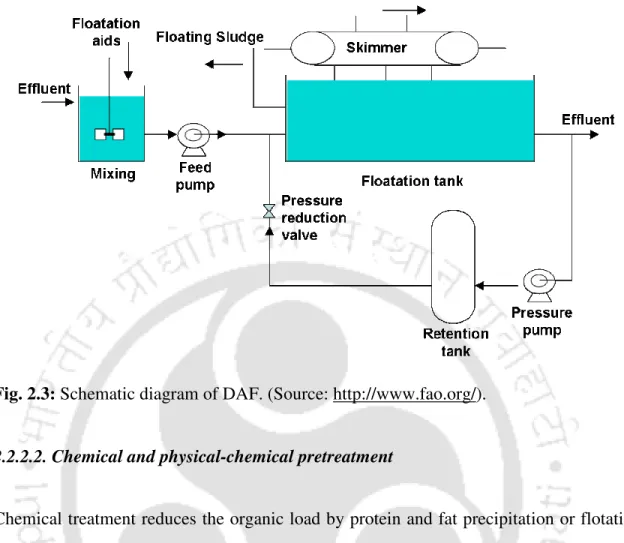
Schematic diagram of DAF
Chemical structure of most studied biosurfactants from each class
General structures of biosurfactant, micelle and reverse micelle
Mechanism of PAH degradation by microorganisms in presence of
Three step mechanisms for metal removal by biosurfactant (adopted
Structure of acidic and lactonic sophorolipids
Proposed SL biosynthetic pathway. 1, cytochrome P450
Influence of (a) pH and (b) temperature on emulsion stability with the
FTIR spectra of the purified SL-1
MS spectra of the purified SL-1
FTIR spectra of the partially purified SLs from the yeast grown on
Mass spectra of the partially purified SLs from the yeast grown on
Time course of SLs production by the yeast employing the different