C ROP P RODUCTION S CIENCE IN H ORTICULTURE
S ERIES
Series Editors: Jeff Atherton, Professor of Tropical
Horticulture, University of the West Indies, Barbados, and Alun Rees, Horticultural Consultant and Editor, Journal of Horticultural Science.
This series examines economically important horticultural crops selected from the major production systems in temperate, subtropical and tropical climatic areas. Systems represented range from open field and plantation sites to protected plastic and glass houses, growing rooms and laboratories. Emphasis is placed on the scientific principles underlying crop production practices rather than on providing empirical recipes for uncritical acceptance. Scientific understanding provides the key to both reasoned choice of practice and the solution of future problems.
Students and staff at universities and colleges throughout the world involved in courses in horticulture, as well as in agriculture, plant science, food science and applied biology at degree, diploma or certificate level will welcome this series as a succinct and readable source of information. The books will also be invaluable to progressive growers, advisers and end-product users requiring an authoritative, but brief, scientific introduction to particular crops or systems. Keen gardeners wishing to understand the scientific basis of recommended practices will also find the series very useful.
The authors are all internationally renowned experts with extensive experience of their subjects. Each volume follows a common format covering all aspects of production, from background physiology and breeding, to propagation and planting, through husbandry and crop protection, to harvesting, handling and storage. Selective references are included to direct the reader to further information on specific topics.
Titles available:
1. Ornamental Bulbs, Corms and TubersA.R. Rees 2. CitrusF.S. Davies and L.G. Albrigo
3. Onions and Other Vegetable AlliumsJ.L. Brewster 4. Ornamental Bedding PlantsA.M. Armitage 5. Bananas and PlantainsJ.C. Robinson
6. CucurbitsR.W. Robinson and D.S. Decker-Walters 7. Tropical FruitsH.Y. Nakasone and R.E. Paull 8. Coffee, Cocoa and TeaK.C. Willson
9. Lettuce, Endive and ChicoryE.J. Ryder
10. Carrots and Related Vegetable UmbelliferaeV.E. Rubatzky, C.F. Quiros and P.W. Simon
11. StrawberriesJ.F. Hancock
12. Peppers: Vegetable and Spice CapsicumsP.W. Bosland and E.J. Votava 13. TomatoesE. Heuvelink
Edited by Ep Heuvelink
Wageningen University, The Netherlands
CABI Publishing
CABI Publishing is a division of CAB International
CABI Publishing CABI Publishing
CAB International 875 Massachusetts Avenue
Wallingford 7th Floor
Oxfordshire OX10 8DE Cambridge, MA 02139
UK USA
Tel: +44 (0)1491 832111 Tel: +1 617 395 4056
Fax: +44 (0)1491 833508 Fax: +1 617 354 6875
E-mail: [email protected] E-mail: [email protected]
Website: www.cabi-publishing.org
© CAB International 2005. All rights reserved. No part of this publication may be reproduced in any form or by any means, electronically, mechanically, by photocopying, recording or otherwise, without the prior permission of the copyright owners.
A catalogue record for this book is available from the British Library, London, UK.
Library of Congress Cataloging-in-Publication Data Tomatoes / edited by Ep Heuvelink.
p. cm. -- (Crop production science in horticulture ; 13) ISBN 0-85199-396-6 (alk. paper)
I. Heuvelink, Ep. II. Title. III. Series.
SB349.T678 2005 635⬘.642--dc22
2004022555 ISBN 0 85199 396 6
Typeset by Columns Design Ltd, Reading, UK.
Printed and bound in the UK by Cromwell Press, Trowbridge.
C
ONTRIBUTORSvii
P
REFACEix
1
I
NTRODUCTION:
THET
OMATOC
ROP ANDI
NDUSTRY1
J.M. Costa and E. Heuvelink
2
G
ENETICS ANDB
REEDING21
P. Lindhout
3
D
EVELOPMENTALP
ROCESSES53
E. Heuvelink
4
C
ROPG
ROWTH ANDY
IELD85
E. Heuvelink and M. Dorais
5
F
RUITR
IPENING ANDF
RUITQ
UALITY145
M.E. Saltveit
6
I
RRIGATION ANDF
ERTILIZATION171
M.M. Peet
7
C
ROPP
ROTECTION199
A.A. Csizinszky, D.J. Schuster, J.B. Jones and J.C. van Lenteren
v
8
P
RODUCTION IN THEO
PENF
IELD237
A.A. Csizinszky
9
G
REENHOUSET
OMATOP
RODUCTION257
M.M. Peet and G.W.H. Welles†
10
P
OSTHARVESTB
IOLOGY ANDH
ANDLING305
M.E. Saltveit
I
NDEX325
vi Contents
†Deceased before publication.
J.M. Costa, Instituto Superior da Agronomia, Dep. Botânica e Engenharia Biológica, Universidade Técnica de Lisboa, Tapada da Ajuda, 1349-017 Lisbon, Portugal
A.A. Csizinszky, University of Florida, IFAS, Gulf Coast Research and Education Center, 5007-60th Street East, Bradenton, FL 34203, USA
M.A. Dorais, Horticulture Research Centre, Envirotron Building, Room 2120, Laval University, Quebec G1K 7P4, Canada
J.B. Jones, Department of Plant Pathology, University of Florida, 2553 Fifield Hall, PO Box 110680, Gainesville, FL 32611-0680, USA
E. Heuvelink, Department of Plant Sciences, Horticultural Production Chains Group, Wageningen University, Marijkeweg 22, 6709 PG Wageningen, The Netherlands
P. Lindhout, Laboratory of Plant Breeding, Wageningen Agricultural University, PO Box 386, 6700 AJ Wageningen, The Netherlands
M.M. Peet, Department of Horticultural Science, North Carolina State University, Box 7609, Raleigh, NC 27695-7609, USA
M.E. Saltveit, Department of Vegetable Crops, Mann Laboratory, University of California, Davis, CA 95616-8631, USA
D.J. Schuster, University of Florida, IFAS, Gulf Coast Research and Education Center, 5007-60th Street East, Bradenton, FL 34203, USA
J.C. van Lenteren, Laboratory of Entomology, Wageningen University, PO Box 8031, 6700 EH Wageningen, The Netherlands
G.W.H. Welles, Applied Plant Research, PO Box 8, 2670AA Naaldwÿk, The Netherlands
vii
This page intentionally left blank
Tomatoes are one of the most widely produced and consumed ‘vegetables’ in the world, both for the fresh fruit market and the processed food industries.
Furthermore, tomato fruits or plants are occasionally used for decoration (ornamental value), but perhaps the most exceptional use we find in Spain.
Every year, the tiny village of Buñol in Valencia hosts the largest tomato war in the world: ‘La Tomatina’. In this festival, at the peak of the tomato season, for 2 hours, participants pelt each other with ripe, red fruit and the streets turn into rivers of tomato juice.
There is a vast amount of literature on tomato resulting from its economic importance, but also because it is seen as a model crop in plant genetic, physiological and pathological studies. In 1986, Jeff Atherton and Jehoshua Rudich did an excellent job as editors bringing, for the first time, fundamental and practical knowledge on field-grown and greenhouse-grown tomatoes together in a 661-page ‘tomato bible’ (Atherton and Rudich, 1986). Now, almost 20 years later, our knowledge on tomato has greatly extended, and completely new areas have developed, like genetic modification and biological pest control. Hence, the present book attempts to give an update – however, more compact – so as to fit in the CABI Publishing Series Crop Production Science in Horticulture. Most of the books in this series are monographs or have two or three authors. This volume on tomato has one editor, and ten additional authors contributing to one or more chapters. Maybe this reflects the vast knowledge present in all fields for this crop, such that no single author could cover the subject with authority. Contributing authors are experts in their particular subject areas, and come from different regions of the world, hence giving the book a more international nature than would have been possible with just one or two authors.
I thank the authors of the different chapters sincerely for their time spent on this book, as well as for their patience. I am grateful to CABI Publishing for giving me the opportunity to be the editor of the tomato volume in their series. Tim Hardwick should be mentioned particularly: without his patience and stimulating words and e-mails, this book would never have been finished.
ix
I hope readers will find in this book the information they were looking for.
I hope they enjoy reading this new book on tomato and I look forward to comments and suggestions for improvement.
I wish to dedicate this book to the late Prof. Hugo Challa, who has been my teacher in science.
Ep Heuvelink Wageningen, September 2004
REFERENCE:
Atherton, J.G. and Rudich, J. (eds) (1986) The Tomato Crop. A Scientific Basis for Improvement. Chapman & Hall, London, 661 pp.
x Preface
I NTRODUCTION : THE T OMATO C ROP
AND I NDUSTRY
J.M. Costa and E. Heuvelink
THE CROP
Classification and taxonomy
The tomato belongs to the family Solanaceae (also known as the nightshade family), genus Lycopersicon, subfamily Solanoideae and tribe Solaneae (Taylor, 1986). The Solanaceaefamily includes other important vegetable crops such as chilli and bell peppers (Capsicum spp.), potato (Solanum tuberosum), aubergine (Solanum melongena), tomatillo (Physalis ixocarpa) and tobacco (Nicotiana tabacum). The taxonomic classification of the tomato is still debated. In 1753 the Swedish botanist Linnaeus named it Solanum lycopersicon, but 15 years later Philip Miller replaced the Linnaean name with Lycopersicon esculentum(Taylor, 1986). Although taxonomists have recently reintroduced its original name, Solanum lycopersicon(Heiser and Anderson, 1999), the commonly accepted and still valid name of Lycopersicon esculentumwill be used in this book.
Genetic variation within the Lycopersicon genus
The Lycopersicongenus includes a relatively small collection of species: the cultivated tomato L. esculentum Mill. and several closely related wild Lycopersiconspecies, namely L. esculentumvar. cerasiforme,L. pimpinellifolium (Jusl.), L. cheesmannii, L. parviflorum, L. chmielewski, L. hirsutum Humb., L.
chilenseDun. and L. peruvianum(L.) Mill. (Taylor, 1986).
The genus was initially divided into two major subgenera regarding the colour of the fruits: Eulycopersicon(for colour-fruited species) and Eriopersicon (for green-fruited species) (Müller, 1940). A more comprehensive and objective division was proposed by Rick (1976), which included two major complexes: (i) the esculentum complex, for the species that cross easily with the commercial tomato; and (ii) the peruvianum complex, for the species that could not be easily crossed with the commercial tomato.
1
© CAB International 2005. Tomatoes (ed. E. Heuvelink) 1
The cultivated tomato reached its present status after a long period of domestication. The improvement of the crop started with the selection of preferred genotypes. Because tomato is a predominantly inbreeding species the genetic variation tends to decrease, even without selection. Thus cultivated tomato species have an extremely limited genetic variation. This lack of variation at the DNA level contrasts with the large morphological variation observed among tomato accessions in genebanks. Specific traits from the wild Lycopersiconspecies have been extensively studied and used to improve tomato, e.g. fruit size, disease resistance, taste and colour (Stevens and Rick, 1986).
Origin, history and uses
All related wild species of tomato are native to the Andean region that includes parts of Chile, Colombia, Ecuador, Bolivia and Peru (Sims, 1980).
The most likely ancestor is the wild L. esculentum var. cerasiforme (cherry tomato), which is indigenous throughout tropical and subtropical America (Siemonsma and Piluek, 1993). Although the ancestral forms of tomato grew in the Peru–Ecuador area, the first extensive domestication seems to have occurred in Mexico (Sims, 1980; Harvey et al., 2002).
The Spanish introduced the tomato into Europe in the early 16th century (Harvey et al., 2002). European acceptance of the tomato as a cultivated crop and its inclusion in the cuisine were relatively slow. Tomatoes were initially grown only as ornamental plants: the fruits were considered to be poisonous, because of the closely related deadly nightshade (Solanum dulcamara). Since the mid-16th century tomatoes have been cultivated and consumed in southern Europe, though they only became widespread in north-western Europe by the end of the 18th century (Harvey et al., 2002). In the 17th century, Europeans took the tomato to China, South and South-east Asia, and in the 18th century to Japan and the USA (Siemonsma and Piluek, 1993).
The production and consumption of tomatoes expanded rapidly in the USA in the 19th century, and by the end of that century processed products such as soups, sauces and ketchup were regularly consumed (Harvey et al., 2002).
Tomatoes are one of the most widely eaten vegetables in the world. Their popularity stems from the fact that they can be eaten fresh or in a multiple of processed forms. Three major processed products are: (i) tomato preserves (e.g. whole peeled tomatoes, tomato juice, tomato pulp, tomato purée, tomato paste, pickled tomatoes); (ii) dried tomatoes (tomato powder, tomato flakes, dried tomato fruits); and (iii) tomato-based foods (e.g. tomato soup, tomato sauces, chilli sauce, ketchup).
Tomatoes are commonly used as a ‘model crop’ for diverse physiological, cellular, biochemical, molecular and genetic studies because they are easily grown, have a short life cycle and are easy to manipulate (e.g. by grafting,
2 J.M. Costa and E. Heuvelink
cuttings) (Kinet and Peet, 1997). They are used as model plant species to study the physiology and biochemistry of seed development, germination and dormancy (Suhartanto, 2002). Therefore, the tomato is an excellent tool to improve knowledge on horticultural crops (Taylor, 1986; Kinet and Peet, 1997).
General characteristics of fresh and processed tomato
The cultivated tomato is a perennial diploid dicotyledon (2n= 24). It is grown as an annual in temperate climates, as plants and fruit suffer physiological injury when exposed to non-freezing temperatures below 12°C. Varieties of processing and fresh-market tomatoes have different growth habits. The major traits of processing tomatoes are determinate growth, dwarf habit, concentrated and uniform fruit set and ripening, tough skins, and a high soluble solids content (George, 1999). Processing tomatoes are grown in open-field systems and are usually direct drilled, but transplants are commonly used in more advanced production systems. They do not require trellising or staking and are harvested mechanically.
Fresh-market varieties grown in greenhouses are generally indeterminate and require trellising, but varieties grown in the field are determinate. In both, plants are started as transplants. Staking is beneficial, to keep fruit away from the soil, and pruning (removal of several or all side shoots) is used to increase fruit size. Harvesting is done by hand. There is a large number of varieties and cultivars for fresh production. They range from small, sweet- tasting cherry tomatoes to large beefsteak tomatoes with different colours, shelf-life and flavours (Dorais et al., 2001). Five major types can be distinguished (http://www.britishtomatoes.co.uk/facts/varieties.shtml):
● Classic round tomatoes – The most popular varieties, with a round shape, containing two to three locules and with an average fruit weight of 70–100 g and diameter 4.7–6.7 cm. Used in salads, or for grilling, baking or frying and as ingredient for soups or sauces.
● Cherry and cocktail tomatoes – Smaller than the classic tomatoes, with weight varying between 10 and 20 g and diameter 1.6–2.5 cm.
Cherry tomatoes are smaller than cocktail tomatoes, but both are very sweet. Cherry tomatoes are generally red, but golden, orange and yellow varieties exist. Eaten whole and raw or cooked. Cocktail tomatoes can be halved for salads, or skewered whole for grilling. Currently almost all cocktail varieties are sold attached to the stem (‘on the vine’; not in USA).
● Plum and baby plum tomatoes – Typical oval shape but the baby plum tomatoes are smaller. The flesh is firm and less juicy in the centre. Used for barbecues, and processed for pizzas and pasta dishes.
● Beefsteak tomatoes – Larger than the traditional round tomato, weighing 180–250 g and containing five or more locules. Used for
stuffing and baking whole, and sliced for salads and sandwiches. Wide range available, varying in shape, colour (red, pink), texture and flavour.
● Vine or truss tomatoes – These may be any of the types mentioned above, but are marketed still attached to the fruiting stem, as it is the stem that gives the distinct tomato aroma, rather than the fruits themselves.
WORLDWIDE OVERVIEW OF TODAY’S TOMATO INDUSTRY
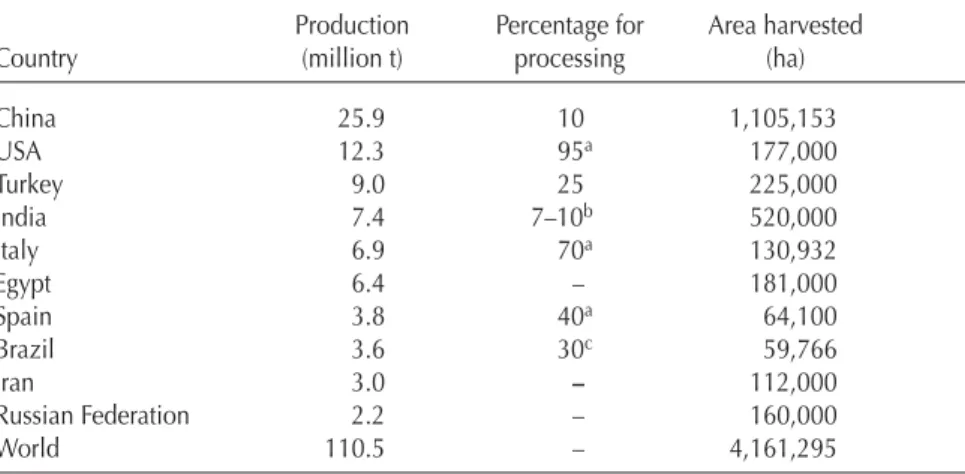
The global production of tomatoes (fresh and processed) has increased by about 300% in the last four decades. The annual worldwide production of tomatoes in 2003 has been estimated at 110 million t with a total production area of about 4.2 million ha (Table 1.1). It is possible that these figures underestimate the real production area and tonnage, considering that tomatoes are also grown on very small plots and gardens throughout the tropics and subtropics with a large total production that is consumed locally and is an important food source for the population. The global trade of tomatoes and tomato products reached US$4.2 billion, which represents a 33% increase relative to the beginning of the 1990s (FAS/USDA, 2003). The three leading producers are China, the USA and Turkey. China accounts for about 25% of the world’s total production and cultivated area (Table 1.1) and it is also the largest consumer (Wijnands, 2003).
The USA, Italy, Spain and Turkey dominate the world processing tomato industry. The Netherlands is the world leader in intensification of fresh tomato production in glasshouses, with annual yields above 55 kg/m2.
4 J.M. Costa and E. Heuvelink
Table 1.1. The top ten tomato-producing countries, with estimated percentages dedicated to processing in 2003 (source: FAO).
Production Percentage for Area harvested
Country (million t) processing (ha)
China 25.9 10 1,105,153
USA 12.3 95a 177,000
Turkey 9.0 25 225,000
India 7.4 7–10b 520,000
Italy 6.9 70a 130,932
Egypt 6.4 – 181,000
Spain 3.8 40a 64,100
Brazil 3.6 30c 59,766
Iran 3.0 – 112,000
Russian Federation 2.2 – 160,000
World 110.5 – 4,161,295
aUnited States Department of Agriculture (USDA).
bDhaliwal et al., 2003.
cMediterranean International Association of the Processing Tomato (AMITOM).
The tomato industry is one of the most advanced and globalized horticultural industries. Most production is located in temperate zones (http://www.tomatonews.com) that have long summers and mainly winter precipitation. However, cultivation practices, the ratio between production for processing or fresh consumption (Table 1.1) and the organization and structure of the industry and markets differ widely among countries.
Europe and Turkey
European tomato production can be divided into two major production systems. The Northern system is capital intensive (Fig. 1.1), using modern technology (greenhouse structures, climate control, crop protection). It is highly productive and focused on fresh tomato production. The Southern (Mediterranean) system produces fruit in the open field for processing, and in plastic-covered structures for fresh consumption (Harvey et al., 2002).
Fig. 1.1. Training and side-shoot removal in a greenhouse crop grown according to the high-wire system in The Netherlands (photo: PPO, Naaldwijk).
Italy
Italy is the leading tomato producer in Europe, with a production of 6.9 million t, of which 70% is for processing (Table 1.1). The main producing areas for processing tomatoes are located in the south, namely in Puglia (> 50% of the total production) and Campagnia (8% of total production). In the north, Emilia Romagna is the main producing area with 30% of the total Italian production for processing tomatoes (AMITOM, 2003; Santella, 2003).
Cultivation in the north is highly mechanized and uses hybrid seeds and transplants, resulting in higher yields (75–100 t/ha) than in the south (about 65 t/ha) (AMITOM, 2003). Planting starts in early May, harvest commences in mid July and the season ends by the middle or end of September (Santella, 2003). Regarding fresh-market tomatoes, the total production in greenhouses was 547,000 t in 2000, which represented one-third of Italian vegetable production in greenhouses (La Malfa, 2003). Also relevant is the fast expansion of cherry tomatoes in Sicily (La Malfa, 2003).
Spain
Spain is the second largest producer of tomatoes in Europe, with 3.8 million t in 2002 (Table 1.1). In contrast to Italy, a large part of Spanish production is for the fresh market (Pazos, 2003). Extremadura, in western Spain, produces 80% of the country’s total crop of processing tomatoes (Pazos, 2003), and the Ebro river valley is another important production area. Mechanization and new varieties contribute to yields of about 60 t/ha (Pazos, 2003).
The south-eastern part of Spain, in particular the provinces of Almería and Murcia, have emerged as important and competitive areas for production and export of fresh greenhouse tomatoes. In 2001/02, Almería exported 229,000 t of greenhouse tomatoes, of which 70% went to France, Germany, The Netherlands and the UK (Cajamar, 2002; Eurosur Consultores, 2002). In Almería, the area dedicated to protected tomato cultivation in 2000/01 was slightly larger than 8000 ha (Eurosur Consultores, 2002). In general, growers use simple plastic structures called parral(Fig. 1.2) but fast changes are occurring and the area of modern plastic multi-tunnels is increasing. The area of glasshouses remains minor (Costa and Heuvelink, 2000). The area of integrated crop protection has also been increasing in recent years.
Cultivation in greenhouses is mostly in enarenado: a 30 cm layer of soil put on top of the natural soil, then 2–3 cm of organic compost and a top layer of around 10 cm of sand. The production peak is achieved in December/January.
Cooperatives have a strong position in the production and marketing of both fresh and processing tomatoes (Costa and Heuvelink, 2000; Pazos, 2003).
Fresh tomatoes for export are also cultivated on about 3100 ha on the Canary Islands (more than half on Gran Canaria island). The production is 13 kg/m2 and production methods are similar to those used in southern Spain (Rodríguez, 2002).
6 J.M. Costa and E. Heuvelink
Greece and Portugal
Greece and Portugal are also important tomato producers in Europe. In 2002, Greece produced a total of 1.5 million t, of which 860,000 t were processed (Sekliziotis, 2003). In the same year Portugal produced 830,000 t, and the anticipated production for 2003/04 is 1.2 million t (Monte Gomes, 2003).
Ribatejo and Baixo Alentejo (southern Portugal) are the main production regions for processing tomato, whereas Algarve is the most important region for fresh tomato production in greenhouses (mostly under plastic). In 2001, the production of fresh tomato was 79,000 t and occupied an area of 1450 ha (Anuário Vegetal, 2002), of which about 40–50% was produced in greenhouses (A. Monteiro, personal communication).
The Netherlands and Belgium
Regarding the Northern tomato regime in Europe, The Netherlands leads in production in greenhouses. In 2002, about 1200 ha were dedicated to tomato production, with a total production of 550,000 t of fresh tomato (CBS, 2003).
Fig. 1.2. Tomato production in a plastic greenhouse (parral) in Almería (Spain).
This makes The Netherlands the world leader in intensification, with an annual average of 50 kg/m2, and in many cases production is > 60 kg/m2. Crops are started in December; harvest starts in March and continues up to November.
The use of modern technology (100% glasshouse, computerized climate control, CO2enrichment, integrated crop protection) characterizes this Dutch production system. Some growers use assimilation light to make year-round production possible. Growers are well-educated and organized and innovation is promoted by research that is often initiated by the companies themselves. The main export market is Germany, even though Spanish tomatoes have gained a market share from the Dutch (Wijnands, 2003). Growers in The Netherlands focus on high quality segments and selling their produce more by contract than by auction, in order to attain the quality requirements of supermarket chains.
The Netherlands also re-exports fresh tomatoes.
Tomato production in Belgium expanded very quickly from the mid- 1980s and tomatoes became the most important vegetable produced in Belgium (Taragola and Van Lierde, 2000). Like The Netherlands, Belgian growers focus on the production of fresh-market tomatoes in greenhouses and Belgium has about the same level of technology as its northern neighbour. At present the total greenhouse area is estimated at about 690 ha (Cantliffe and Vansickle, 2003a). Like the Dutch, the Belgian tomato industry is export driven (Harvey et al., 2002), but competition with Spanish tomato growers became very fierce and resulted in a serious crisis in 1995 (Taragola and Van Lierde, 2000).
France
In 2003, total tomato production in France was close to 900,000 t, of which about 70% was for the fresh market and the remaining 30% was for the processing industry (Hénard, 2003). France, with its 300,000 t of processing tomatoes, is a small producer compared with neighbouring Mediterranean countries. However, it has 2057 ha of greenhouses for fresh tomato production which produced about 560,000 t in 2003 (Hénard, 2003). According to the same source, field production for fresh consumption was about 40,000 t.
France is a net importer of canned tomatoes, tomato paste and fresh tomatoes (Hénard, 2003), coming mostly from Spain and Morocco.
Germany and the UK
Both of these countries have experienced a decrease in production area in recent decades. Germany produces tomatoes in about 280 ha of greenhouses (mostly glasshouses) and the greenhouse area in the UK is even smaller (only 200 ha).
Due to the population size of these two countries (together 140 million inhabitants), both are large-scale importers of European fresh tomatoes, mainly from Spain and The Netherlands. There are differences between the British and German markets: Germany is strongly price oriented, whereas the British market is quality oriented (Harvey et al., 2002; Wijnands, 2003).
8 J.M. Costa and E. Heuvelink
Turkey
Turkey is the third-largest tomato producer worldwide (Table 1.1). One- fourth of the 9 million t produced annually are for processing (Sirtioglu, 2003). The main regions for processing tomatoes are in Marmara (the townships of Balikesir and Canakkale), producing 2 million t (Yoltas et al., 2003) and in Aegean (townships of Bergama and Turgutlu) and Central Anatolia (Tokat). Small family farms, using a lot of hand labour (e.g. for planting and harvesting), characterize the production system but there are also large growers producing under contract (Sirtioglu, 2003). Seedlings are normally started in mid-March and are transplanted after mid- to late April when there is no risk of frosts. Harvest is between late July and early October (Sirtioglu, 2003). Paste is the most exported item and Japan and Russia are the main markets. Production of tomatoes for fresh consumption is expanding in southern Turkey. Tomatoes are the main greenhouse vegetable, with a production of about 1.2 million t, and 80% of the greenhouse producing area is in the province of Antalya, close to the Mediterranean Sea (Öztürk et al., 2001). Greenhouse cultivation takes place during winter and early spring (Sirtioglu, 2003).
South Asia
China
Worldwide, China is the largest producer of tomatoes with its 25.8 million t (Table 1.1). In 2002, China became also the third largest producer of processed tomato products, just behind the USA and Italy, as a result of the establishment of a huge processing operation in the province of Xinjiang which processes the crop from about 46,700 ha (Deloitte & Touche, 2003).
The production of tomatoes for processing represented 10% of total production in 2002 and was expected to reach 3.0 million t in 2003 (http://www.tomatonews.com).
Xinjiang is the most important province for the production of tomato paste (about 90% of China’s total) but tomatoes for processing are also grown in Inner Mongolia and Gansu province. Xinjiang’s cultivation calendar is very similar to that of California: in March, fields are prepared for planting, the growth period is April to July, and harvest and processing occur between August and October. Several multinational companies are already present in Xinjiang and processing technology has been imported from the USA and Italy. The high competitiveness of China regarding the processing tomato industry resides in low production costs (mostly low labour costs). This is causing concern among growers from other countries and it has already affected world prices.
Tomatoes for fresh consumption are mainly produced in the provinces of Shandong (Fig. 1.3), Henan and Sichuan and also the peri-urban areas of
Shanghai and Beijing (Ma et al., 2000). Shandong (north-east China) is the most important province for tomato production in greenhouses. Production is based on small farms (600–2000 m2) and growers use mainly plastic tunnels or the so-called solar greenhouse, which uses the sun as the unique source of energy and possesses three non-transparent walls (the back and two side walls built of clay soil or brick in order to retain heat). The roof structure is of wood or metal and the covering material is polyethylene (PE) or polyvinylchloride (PVC) (Costa et al., 2004). F1hybrids are already in use (Ma et al., 2000) but better greenhouse cultivars (e.g. better adapted to low light and temperature conditions, disease-resistant) are needed to improve yields (Costaet al., 2004).
India
India is the fourth largest tomato producer worldwide (Table 1.1). Tomatoes are the second largest vegetable crop in India. The most important production states are Bihar, Karnataka, Uttar Pradesh, Orissa, Andhra Pradesh, Maharashtra, Madhya Pradesh and Assam. The expansion of tomato production in India was to a great extent attributed to the private seed sector,
10 J.M. Costa and E. Heuvelink
Fig. 1.3. Tomato production in a solar greenhouse in Shandong (China) using organic substrate (eco-soilless system).
which developed high-yielding cultivars (Nagaraju et al., 2002). Tomatoes are normally grown in rotation with other vegetables. The use of hybrid seeds is increasing and enables yields of 24.5 t/ha, which is double the yield of non- hybrid varieties (Nagaraju et al., 2002). Staking is a common procedure for growing hybrids. The processing industry is not well developed and only a minor proportion (6–10%) is used for processing into products such as purée, paste, ketchup, sauce and pickles. The lack of suitable varieties for processing may be one of the reasons for this situation (Dhaliwal et al., 2003). The processing technology is also outdated.
Japan and South Korea
The Japanese tomato processing industry is small in world terms, with 60,000 t processed in 2002 (AMITOM, 2003; Ito, 2003). However, production of fresh tomatoes is very important. The production area in 2002 was 13,300 ha and the total output was 780,000 t (Ito, 2003). Cherry tomato production reached more than 85,000 t (Ito, 2003). Japan also imports tomato paste from China (Ito, 2003) and South Korea is the largest supplier of fresh tomatoes to Japan (3200 t in 2002).
South Korea focuses on greenhouse production of fresh tomatoes. In 2000, according to official statistics, the total planted area of tomatoes was 4916 ha, of which greenhouse cultivation occupied 4700 ha with a total production of 269,500 t (Ho-Shin, 2001; NRHI, 2004).
North America
USA
The USA, besides being the world’s second largest tomato producer (Table 1.1), is the world’s leader in the production and export of processed tomatoes.
Almost the totality of its production is for processing. The state of California produces 95% of the processing tomatoes and 30% of the fresh tomatoes grown in the USA (AMITOM, 2003). California combines a good climate (long, warm and dry growing seasons) with the use of hybrids, transplants and modern technology (e.g. laser levelling of fields, precision planting, advanced irrigation, fertilization, crop protection systems and modern fruit sorting systems) (Mitchell et al., 2001; Murray et al., 2001). Moreover, research and extension institutions have close ties with the industry, which favours innovations (Murray et al., 2001; AMITOM, 2003), and the breeding industry is very competitive (Murray et al., 2001). In California, processing tomatoes are grown in rotation with other crops such as cotton, garlic, onions, melons and wheat in San Joaquin valley, or with wheat and edible dry beans in the Sacramento valley (Mitchell et al., 2001).
Fresh tomatoes are mainly produced in California and Florida and to a lesser extent in Michigan, Pennsylvania, Virginia and Illinois. Fresh tomatoes were
initially grown in open-field systems and close to the markets but imported greenhouse tomatoes from The Netherlands, Israel, Canada and Spain are also available on the market (Cantliffe and Vansickle, 2003b). Mexico is a major supplier of field-grown fresh tomatoes to the USA (83% of total US fresh tomato imports in 1999). Imports compete directly with field-grown tomatoes from Florida and the greenhouse product (Cantliffe and Vansickle, 2003b). The production of greenhouse tomatoes was 159,000 t in 2001, produced on a greenhouse area of 340 ha located mainly in California, Florida, Colorado, Arizona, Texas and Pennsylvania (USDA, 2002; Cantliffe and Vansickle, 2003a).
Canada
Canada is a relevant producer of tomato for processing and for fresh consumption. The glasshouse production of fresh tomatoes is located in Ontario (about 70% of the area), British Columbia and Quebec (USDA, 2002), because these provinces are close to the US market and have good climate (Agrifood-Canada, 2001). In 2001, the greenhouse area for tomato production was 468 ha and total production in 2002 was 217,747 t (Statistics Canada, 2002). The greenhouse production system is modern and comparable to that of the northern European countries, with intensive use of capital and technology (modern greenhouse structures, computer-controlled systems, hydroponics, supplementary lighting, integrated pest management). In 2001, Canada produced about 450,000–500,000 t of tomatoes for processing. The most important areas are the counties of Kent and Essex in Ontario.
Transplants are used and the harvest is fully mechanized (AMITOM, 2003).
Only 5% of the cultivated area is irrigated, because rainfall in spring and summer is adequate. Growers sell their produce by contract with processors.
Central and South America
Chile and Mexico
Chile and Mexico are important tomato producers in Central America.
Tomatoes are the most important vegetable crop in Chile and occupy a total area of 20,000 ha (Krarup, 2002). About 12,000 ha are for processing and the remaining 8000 are for fresh consumption. Fresh tomatoes are produced in open-field systems (6000 ha) or in plastic greenhouses (2000 ha) (Krarup, 2002). The total yield of processing tomatoes in 2002 was 600,000 t and is mainly exported as tomato paste.
According to the Food and Agriculture Organization of the United Nations (FAO), the area of tomato cultivation in Mexico was 70,000 ha in 2003, with a total production of 2.14 million t. Red, green and cherry tomatoes are produced. Mexico is at present the most important supplier of field-grown fresh tomatoes to the USA and the greenhouse area is expanding in order to supply the North American market (Agrifood-Canada, 2001). At
12 J.M. Costa and E. Heuvelink
present the greenhouse area is estimated at 720 ha (Cantliffe and Vansickle, 2003a). The production of processing tomatoes is estimated at 100,000 t (AMITOM, 2003).
Brazil
Brazil produced about 1.1 million t of processing tomatoes in 2001, which represented about one-third of total production. The cultivated area in 2001 was 15,130 ha (AMITOM, 2003). The central part of Brazil, due to its mild climate, flat topography and good soils, is the major producing area for processing tomatoes (Washington et al., 2001). The main producing areas are the north-eastern states of Pernambuco and Bahía in Cerrado and the state of São Paulo (AMITOM, 2003). Cerrado represents > 80% of total production and the tendency is for this to continue to increase (AMITOM, 2003).
Mechanization (of transplanting and harvesting), the use of new hybrid varieties and the use of drip irrigation enables yields to reach 100 t/ha in some cases (Washington et al., 2001). The tomatoes are sold by contract with the processors and the majority are processed into paste. Regarding the production of fresh tomatoes, long shelf-life tomatoes and cherry tomatoes are increasing in importance. The marketing of fresh tomatoes occurs via wholesale markets, so-calledentrepostosorCentrais de Abastecimento(CEASAs).
Oceania
Australia
In Australia, tomatoes are the second most important vegetable crop after potatoes. In 2001/02 the total area was 8500 ha with a production of 425,000 t (Australian Bureau of Statistics, 2003). The three main tomato- growing states are Victoria (about 50% of the cultivated area), Queensland and New South Wales. The Australian processing industry is relatively small but very competitive. In 2002, the planted area was about 4500 ha (AMITOM, 2003) and the overall production was 260,000 t (http://www.entapack.com.au). The main production areas are located in northern Victoria and southern New South Wales (in the south-east part of the country). The production system is similar to that of California and US varieties are used (AMITOM, 2003). Drip irrigation is used on half of the production area, which results in higher yields (about 80–90 t/ha) and saves water and labour (Ashcroft et al., 2003). Transplants are used on about 40%
of the total cropped area and harvest (from January to April) is done by machine (AMITOM, 2003). In 2002, 64% of the crop was processed into tomato paste, 21% into whole peeled tomato and 15% into sauce, juice, soup, dried and other uses.
New Zealand
In New Zealand, fresh tomatoes are predominantly grown in greenhouses but a small volume is grown outdoors. Tomatoes are the most important vegetable produced in greenhouses and they occupy an area of about 150 ha (production 40,000 t). Production is mostly for the internal market but about 5% is exported to Australia and the Pacific Islands (Nederhoff, 2003).
Africa and the Middle East
The major tomato producers (fresh or for processing) in the Middle East and North Africa are Egypt, Tunisia, Morocco and Jordan. Egypt is the largest producer of tomatoes on the African continent with a total production of slightly over 6 million t (Table 1.1). The tomato production is mainly located in the bordering areas of the Nile Delta. Another important tomato producer in North Africa is Tunisia, with a total production of 810,000 t in 2002 (FAO, 2003), of which about 75% is for processing (AMITOM, 2003). The main producing area for processing tomato is Cap-Bon in the north-east part of the country (AMITOM, 2003).
In the Middle East, Israel is a relevant producer of processing tomato (about 140,000 t in 2001) (AMITOM, 2003). Tomatoes are grown on collective farms and the production system is mechanized and uses drip irrigation; yields can reach up to 100 t/ha (AMITOM, 2003). The production area for fresh tomatoes in greenhouses (plastic) is about 300 ha (http://www.e-campo.com/media/news/nl/althorticultura23.htm).
In Morocco, fresh tomatoes are the most important early-season vegetable produced in greenhouses, with an estimated area of about 5000 ha located along the Atlantic coast and in the Souss-Massa Valley (east of Agadir) (Anonymous, 2003). Total production in 2001 was estimated at 765,000 t, of which about 150,000 t was processed tomatoes (http://www.interex.be).
Tomatoes for processing are mostly produced in the regions of Gharb (4700 ha) and Tangiers/Tetouan (800 ha) (AMITOM, 2003).
South Africa has a relevant production of processing tomato with 200,000 t (AMITOM, 2003). About 70% of the area is still harvested by hand, because the cultivars used are not adapted to mechanized harvest. The average yield varies between 65 and 87 t/ha. Sub-Saharan Africa hardly produces tomatoes but the area is a major importer of tomato paste (AMITOM, 2003).
FUTURE PERSPECTIVES FOR THE TOMATO INDUSTRY
Global production is expected to increase for both fresh-market and processing tomatoes. Based on investments made in the processing sector and improvements
14 J.M. Costa and E. Heuvelink
in production systems and cultivars, China may be the main source of such increases. Expansions in relatively inexpensive production areas, together with increasing production costs in more industrialized countries, are a concern to many growers, especially those producing processing tomatoes.
Spain and The Netherlands will probably continue to be the leading suppliers of fresh tomatoes to the European markets, although more competition is expected from outside the European Union. Fresh tomato production in Turkey and in African countries on the Mediterranean may increase, and will compete with Dutch and, in particular, Spanish production.
For example, since early October 2003, Morocco has been able to export more fresh tomatoes (up to 175,000 t from October to May) to the European Union as a result of a bilateral agreement that granted greater European market access for Moroccan tomatoes and in turn the liberalization of the Moroccan market for EU grains (Hénard, 2003). Nevertheless, Spain (especially Almería and Murcia) will keep actively developing its greenhouse technology, quality control and marketing (Goméz-Escolar, 2002; Wijnands, 2003). In turn, The Netherlands will continue to play a leading role in technological innovation and product quality (e.g. closed greenhouse systems, efficient logistics, and trace and tracking systems), aiming for more sustainable production with regard to energy and pesticide inputs. Increased sustainable production (regarding the use of water, fertilizers and pesticides), an increase in the area of organic production, product quality (safety) and more efficient supply chains should be among the most important items to be considered in European tomato production in the future.
In the Americas, expansion of production in Mexico to supply North American fresh markets may be an important future development. American and Canadian investors (often large tomato producers in their own countries) are expanding Mexico’s greenhouse capacity to complement their own production schedules, and to take advantage of Mexico’s lower production costs. Expansion of free-trade zones in the Americas promises to provide lower- cost tomato products and fruit to consumers while increasing competition among producers, processors and marketers. However, food safety concerns among consumers may limit trade with markets perceived to be lax in implementing proper controls. As an example, Canada is researching food safety, fruit quality (flavour and nutritional value) and environmentally responsible production (sustainable production systems) to increase consumer confidence in Canadian products and to increase the industry’s ability to meet or exceed market requirements. More emphasis will be put on organic farming (M. Dorais, personal communication). The same trend can be observed in the USA. In fact, the higher demand for quality may imply that in future the major competitor to the North American tomato is not the Mexican but rather the Spanish tomato, as suggested by Cantliffe and Vansickle (2003a).
The European market may remain closed to genetically modified (GM) tomatoes for some time, but GM tomatoes will become increasingly important
in the Americas, China and other countries. Even if GM tomatoes are not actually produced commercially, information arising from genetic modification will be translated into the breeding of better tomato varieties through conventional means.
Protectionism is expected to continue in the European and American tomato markets, even though markets can become more open based on multilateral agreements. Until now, Latin American exports to the EU have faced tariffs that are five times higher for tomato sauce than those levied on fresh tomatoes (White et al., 2002). Simultaneously, fresh tomatoes may face prohibitive tariffs in the EU during several months of the year, to protect mainly Italian and Spanish producers from Latin American and less so from African producers (e.g. Morocco), who benefit from the EU’s ACP (African, Caribbean and Pacific Group of States) agreement (Watkins and Von Braun, 2003). However, ‘new ways’ of protectionism may arise from the product quality requirements imposed by different countries.
REFERENCES
Agrifood-Canada (2001) Profile of the Canadian Greenhouse Tomato Industry. Available at: http://www.agr.gc.ca/misb/hort/
AMITOM (Mediterranean International Association of the Processing Tomato) (2003) Available at: http://www.amitom.com/
Anonymous (2003) HighTech Ag in Morocco. NewAG InternationalSeptember 2003, 42–60.
Anuário Vegetal (2002) Crop Production Year Book. GPPAA, Ministério da Agricultura, do Desenvolvimento Rural e das Pescas, Lisbon, Portugal, 253 pp.
Ashcroft, W.J., Fisher, P.D., Flett, S.P. and Aumann, C.D. (2003) The effects of grower practice and agronomic factors on the performance of successive tomato crops.
Acta Horticulturae613, 123–129.
Australian Bureau of Statistics (2003) Agricultural Commodities, Australia. Available at:
http://www.abs.gov.au/Ausstats/
Cajamar (2002) Análisis de la Campana Hortícola de Almería 2001/2002. Informes y Monografias. Instituto de Estudios Cajamar, Almeria, Spain, 38 pp.
Cantliffe, D. and Vansickle, J. (2003a) Mexican Competition: Now from the Greenhouse.
Tomato Institute, Florida, pp. 2–3. Available at: http://gcrec.ifas.ufl.edu/
TOMATO%202003.pdf
Cantliffe, D. and Vansickle, J. (2003b) Competitiveness of the Spanish and Dutch Greenhouse Industries with the Florida Fresh Vegetable Industry. Available at:
http://edis.ifas.ufl.edu/CV284
CBS (2003) Statistiek Jaarboek 2003. Central Bureau voor de Statistiek, The Hague, The Netherlands, 559 pp.
Costa, J.M. and Heuvelink, E. (2000) Greenhouse Horticulture in Almería (Spain: Report on a Study Tour 24–29 January 2000). Horticultural Production Chains Group, Wageningen University, Wageningen, The Netherlands, 119 pp.
16 J.M. Costa and E. Heuvelink
Costa, J.M., Heuvelink, E. and Botden, N. (2004) Greenhouse Horticulture in China – Situation and Prospects (Report on a Study Tour 11 October–2 November 2003).
Horticultural Production Chains Group, Wageningen University, Wageningen, The Netherlands, 168 pp.
Deloitte & Touche (2003) Express China News. Available at: http://www.deloitte.com/
dtt/cda/doc/content/Issue_03–3(5).pdf
Dhaliwal, M.S., Kaur, P. and Singh, S. (2003) Genetic analysis of biochemical constituents in tomato. Advances in Horticulture Science17(1), 37–41.
Dorais, M., Papadopoulos, A.P. and Gosselin, A. (2001) Greenhouse tomato fruit quality. Horticultural Reviews26, 239–319.
Eurosur Consultores (2002) Estadísticas y Gráficos. In: Martinez, J.L. (ed.) Anuario de la Agricultura Almeriense 2002. La Voz de Almeria, Almeria, Spain, pp. 109–162.
FAO (2003) Homepage. Available at: http://apps.fao.org/
FAS/USDA (2003) Processed Tomato Products Outlook and Situation in Selected Countries.
Available at: http://www.fas.usda.gov/htp
George, R.A.T. (1999) Vegetable Seed Production, 2nd edn. CAB International, Wallingford, UK, 328 pp.
Goméz-Escolar, J.M.P. (2002) Los retos de futuro del sector hortofrutícola español. In:
Álvarez-Coque, J.M. (ed.) La Agricultura Mediterránea en el sieglo XXI. Mediterraneo Economico, Instituto de Estudios Cajamar, Almeria, Spain, pp. 140–158.
Harvey, M., Quilley, S. and Beynon, H. (2002) Exploring the Tomato. Transformations of Nature, Society and Economy. Edgar Publishing, Cheltenham, UK, 304 pp.
Heiser, C. and Anderson, G. (1999) ‘New’ solanums. In: Janick, J. (ed.) Perspectives on New Crops and New Uses. ASHS Press, Alexandria, Virginia, pp. 379–384.
Hénard, M.C. (2003) France: Tomatoes and Products. Semi-Annual 2003. USDA Foreign Agricultural Service, Gain Report, December 2003. Available at:
http://www.fas.usda.gov/gainfiles/200312/146085520.doc
Ho-Shin, H. (2001) Vegetable seed industry in the Republic of Korea. Chronica Horticulturae41(3), 13–15.
Ito, K. (2003) Japan: Tomatoes and Products. Annual 2003. USDA Foreign Agricultural Service, Gain Report, July 2003. Available at: http://www.fas.usda.gov/gainfiles/
200307/145985581.pdf
Kinet, J.M. and Peet, M.M. (1997) Tomato. In: Wien, H.C. (ed.) The Physiology of Vegetable Crops. CAB International, Wallingford, UK, pp. 207–258.
Krarup, C. (2002) Chile: counter season to Mediterranean horticulture. Chronica Horticulturae42(1), 31–35.
La Malfa, G. (2003) Origine, fisionomia e sviluppo dell’orticoltura protetta. Italus Hortus10(3), 14–26.
Ma, S., Huang, J., Wang, D. and Qu, D. (2000) China. In: Ali, M. (ed.) Dynamics of Vegetable Production, Distribution, Consumption in Asia. Asian Vegetable Research Center, Shanhua, Taiwan, pp. 69–97.
Mitchell, J.P., Lanini, W.T., Miyao, E.M., Brostrom, P.N., Herrero, E.V., Jakso, J., Roncoroni, E. and Temple, S.R. (2001) Growing processing tomatoes with less tillage in California. Acta Horticulturae542, 347–351.
Monte Gomes, M. (2003) Portugal: Tomatoes and Products. Annual. USDA Foreign Agricultural Service, Gain Report, May 2003. Available at: http://www.fas.usda.
gov/gainfiles/200305/145885763.pdf
Müller, C.H. (1940) A Revision of the Genus Lycopersicum. USDA Miscellaneous Publication No. 382, USDA, Washington, DC.
Murray, M., Cahn, M.D., Miyao, G., Brittan, K. and Mullen, R.J. (2001) The University of California processing tomato workgroup: an example of ongoing effective collaborations. Acta Horticulturae542, 253–259.
Nagaraju, N., Venkatesh, H.M., Warburton, H., Muniyappa, V., Chancellor, T.C.B. and Colvin, J. (2002) Farmer’s perceptions and practices for managing tomato leaf curl virus disease in Southern India. International Journal of Pest Management 48(4), 333–338.
Nederhoff, E. (2003) Scaling-up greenhouses in New Zealand. Fruit&VegTech 3(5), 18–19, 21.
NRHI (2004) Agricultural Overview in Korea. National Research Horticultural Institute.
Available at: http://www.nhri.go.kr/english/main.htm
Öztürk, A., Deviren, A. and Özçelik, A. (2001) Methyl bromide in Turkey. Available at:
http://www.un.org.tr/unido/documents/METHYL%20BROMIDE%20IN%20TUR KEY1.doc
Pazos, D. (2003) Spain: Tomatoes and Products. Annual (2003). USDA Foreign Agricultural Service, Gain Report, June 2003. Available at: http://www.fas.usda.
gov/gainfiles/200306/145885865.pdf
Rick, C.M. (1976) Tomato (family Solanaceae). In: Simmonds, N.W. (ed.) Evolution of Crop Plants. Longman Publications, New York, pp. 268–273.
Rodríguez, R.R. (2002) Tomato growing in the Canary Islands. In: Ferre, F.C. (ed.) Espana: Orchard of Europe. Ministerio de Agricultura, Pesca y Alimentación of Spain/SEEI, Madrid, Spain, 229 pp.
Santella, R. (2003) Italy: Tomatoes and Products. Annual 2003. USDA Foreign Agricultural Service, Gain Report, June 2003. Available at: http://www.fas.usda.
gov/gainfiles/200306/145985168.pdf
Sekliziotis, S. (2003) Greece: Tomatoes and Products. Annual 2003. USDA Foreign Agricultural Service, Gain Report, June 2003. Available at: http://www.fas.usda.
gov/gainfiles/200306/145885860.pdf
Siemonsma, J.S. and Piluek, K. (1993) Prosea: Plant Resources of South-East Asia, No. 8: Vegetables. Pudoc Scientific Publishers, Wageningen, The Netherlands, pp. 1199–1205.
Sims, W.L. (1980) History of tomato production for industry around the world. Acta Horticulturae 100, 25.
Sirtioglu, I. (2003) Turkey: Tomatoes and Products. Annual 2003. USDA Foreign Agricultural Service, Gain Report, May 2003. Available at: http://www.fas.usda.
gov/gainfiles/200305/145885672.pdf
Statistics Canada (2002) Greenhouse, Sod and Nursery Industries. Catalogue no. 22–202-XIB, 26 pp.
Stevens, M.A. and Rick, C.M. (1986) Genetics and breeding. In: Atherton, J. and Rudich, G. (eds) The Tomato Crop. A Scientific Basis for Improvement. Chapman &
Hall, New York, pp. 35–109.
Suhartanto, M.R. (2002) Chlorophyll in tomato seeds: marker for seed performance?
PhD Thesis, Wageningen University, The Netherlands, 150 pp.
Taragola, N. and Van Lierde, D. (2000) Competitive strategies in the sector of greenhouse tomato production in Belgium. Acta Horticulturae524, 149–155.
Taylor, I.B. (1986) Biosystematics of the tomato. In: Atherton, J. and Rudich, G. (eds)
18 J.M. Costa and E. Heuvelink
The Tomato Crop. A Scientific Basis for Improvement. Chapman & Hall, New York, pp. 1–34.
USDA (2002) International Agricultural Trade Report. January 2002. Available at:
http://www.fas.usda.gov/htp/horticulture/fresh vegetables/grntomIATR.PDF Washington, L.C.S., Giordano, L.B., Silva, J.B.C.S. and Marouelli, W.A. (2001) The use
of drip irrigation for processing tomatoes in Brazil. Acta Horticulturae 542, 103–105.
Watkins, K. and Von Braun, J. (2003) Time to Stop Dumping on the World’s Poor.
2002–2003 IFPRI Annual Report Essay. Available at: http://www.ifpri.org/
pubs/books/ar2002/ar02e1.pdf
White, G.B., Nelson, L.B. and Schluep, I. (2002)Impacts of Trade Liberalization on the New York Horticultural Sector. Staff Paper, Department of Applied Economics and Management, Cornell University, Ithaca, New York, 25 pp. Available at:
http://aem.cornell.edu/research/researchpdf/sp0204.pdf
Wijnands, J. (2003) The international competitiveness of fresh tomatoes, peppers and cucumbers. Acta Horticulturae611, 79–90.
Yoltas, T., Aydin, M., Seferoglu, S., Seker, G. and Topcu, N. (2003) The nutritional status of processing tomato production areas in Marmara Region. Acta Horticulturae613, 173–176.
This page intentionally left blank
G ENETICS AND B REEDING
P. Lindhout
INTRODUCTION
Tomato breeding is a success story, as illustrated by the many cultivars now available that are grown all over the world in a variety of conditions and that harbour a wide range of traits such as vigorous growth, resistances to pests and diseases, and high fruit quality. Tomato breeding follows the classical approach of identifying superior genotypes, crossing and progeny selection.
Nowadays molecular marker techniques facilitate breeding and genetic transformation is possible, though rarely used for commercial breeding as yet.
The new developments are in the area of genomics.
GENETIC VARIATION WITHIN THE GENUS LYCOPERSICON
The cultivated tomato (L. esculentum) reached its present form and place in the human diet after a long period of domestication. Initial development was probably, in part, from selection for preferred genotypes in the existing germplasm. In a predominantly inbreeding species such as tomato, genetic variation tends to decrease, even without selection. The species also suffered from severe genetic bottlenecks in the past 500 years as the crop was carried from the New World to Europe and then back to North America. As a consequence, genetic variation in the cultivated tomato is extremely limited.
It is likely that there was no deliberate crossing with wild related species until the 20th century.
The lack of diversity can be visualized using DNA technologies: very few polymorphisms are identified even with the most sensitive DNA techniques.
The lack of genetic variation detectable at the DNA level is in contrast to the wealth of morphological variation observed among tomato accessions in genebanks. This can easily be explained: tomato has been a major vegetable crop in the 20th century and, until recently, was maintained as self-pollinated varieties. Spontaneous or induced mutants creating unusual phenotypes are
2
© CAB International 2005. Tomatoes (ed. E. Heuvelink) 21
readily detected in self-pollinated species. Such mutants in tomatoes have been carefully documented, preserved and propagated. Most of these will have been caused by recessive point mutations, which are often associated with obvious deviating phenotypes. A large population of deviating phenotypes as observed in a genebank or in the genetic stock of a breeder gives the impression of abundant variation (Rick, 1991). However, at the DNA level, only point mutations are present, which may easily remain unnoticed among the nearly one billion base pairs in the total tomato genome. A number of these mutants have been used for crop improvement. Linkage relationships of many of the mutants were studied from the 1950s to the 1980s, resulting in the creation of the tomato morphological map. This, and the more recent molecular maps discussed below, can be accessed on the Solanaceae Genomics Network database (http://www.sgn.cornell.edu/).
DIVERSITY AMONG AND WITHIN WILD SPECIES OF THE GENUS LYCOPERSICON
The lack of diversity within tomatoes is not a barrier to breeding progress, due to the variation readily available from the species’ wild relatives. The variation among species within the genus Lycopersiconis tremendous, especially within the self-incompatible species (Fig. 2.1). Numerous investigators have studied specific traits present in wild Lycopersiconspp. and are exploiting this variation for tomato improvement. Nearly all of the wild species have contributed valuable traits for crop improvement, from the closely related red-fruited self- pollinated L. pimpinellifoliumto the more distantly related green-fruited self- incompatible species L. pennellii and L. peruvianum. Crosses between L.
esculentum and its closer relatives, such as L. pimpinellifolium and L.
parviflorum (Fig. 2.2), are readily successful. Crosses between L. esculentum and L. chilense or L. peruvianum are more challenging and often require embryo rescue to obtain the F1 progeny. In later generations, additional barriers that are caused by genetic interactions may further impede progress.
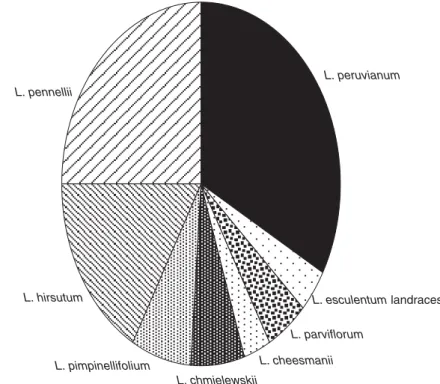
As a consequence of their self-incompatibility and outcrossing mode of reproduction, accessions of the outcrossing species may harbour a higher level of genetic variation than the largely self-pollinating species. Miller and Tanksley (1990) assessed this variation using restriction fragment length polymorphisms (RFLPs) as molecular markers (Fig. 2.3). It is striking that more genetic variation was observed within a single accession of the self- incompatible species than in all accessions of tomato.
In addition to the species within the genus Lycopersicon, introgressions have been made with Solanum lycopersicoidesandS. sitiens(Jiet al., 2004). The set of introgression lines from this wild relative of tomato is described, and can be requested from the Genetic Stock Center in Davis, California (http://tgrc.ucdavis.edu; e-mail: [email protected]).
22 P. Lindhout
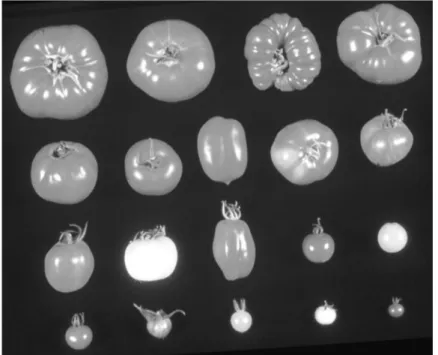
Fig. 2.1. Genetic variation in fruit colour, shape and size in the genus Lycopersicon. The top three rows are L. esculentumcultivars. The bottom row represents some wild species.
Fig. 2.2. Some wild Lycopersiconspecies: (a) L. pimpinellifolium; (b) L. parviflorum.
In conclusion, there is limited genetic variation in tomato itself but considerable genetic variation among and within the wild Lycopersiconspp.
that can be exploited, with varying degrees of difficulty, for crop improvement.
Breeders would naturally use the sources closest to tomato, for ease, efficiency and rapidity of the transfer. However, none of the species is out of reach for breeding when sufficient time, labour and space are available.
(a) (b)
COLLECTION AND PRESERVATION OF GENETIC RESOURCES
The collection, description, propagation and distribution of genetic material are of the utmost importance if the variation it contains is to be used successfully in tomato breeding. In the latter half of the 20th century, numerous expeditions were made to the Andes region to collect accessions of various wild Lycopersiconspp. It is noteworthy that Dr Charlie Rick, from the University of California, understood the importance of germplasm collection and he collected and described numerous accessions of the wild Lycopersicon spp., which are still maintained at the Genetic Stock Center in Davis, California (Rick, 1991). These materials are freely available upon request for the scientific community and for the commercial breeding industry. Tomato germplasm is maintained in several other world genebanks and is available on request.
Within a genebank, the accessions should be fully and accurately described. In addition to information on location site, full passport data, and taxonomic classification, this includes data about the native habitat and
24 P. Lindhout
L. pennellii
L. hirsutum
L. pimpinellifolium
L. chmielewskii
L. cheesmanii L. parviflorum
L. esculentum landraces L. peruvianum
Fig. 2.3. Relative genetic variation in the genus Lycopersicon(revised from Miller and Tanksley, 1990).
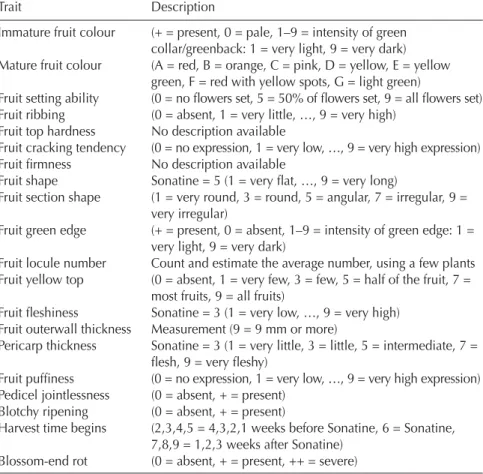
geographical and climatic characteristics. In addition, evaluations about the morphology (e.g. leaf shape, plant growth habit, fruit size and shape) should be described (Table 2.1). Curators must be concerned with maintaining variability within accessions. More plants and a means of genetic isolation are needed for propagation and maintenance of outcrossing self-incompatible accessions for comparison with self-compatible plants. Data on the reactions of accessions to abiotic and biotic stressors such as fungal pathogens or insect pests are important. However, these evaluations are labour, time and space consuming, and genebanks are generally underfunded for performing their primary tasks of germplasm maintenance and distribution. Therefore these data are lacking, or must be gathered after the accessions have been obtained from the germplasm bank by researchers.
Table 2.1. A descriptors list for some fruit traits evaluated at the Centre for Genetic Resources, Wageningen, The Netherlands.
Trait Description
Immature fruit colour (+ = present, 0 = pale, 1–9 = intensity of green collar/greenback: 1 = very light, 9 = very dark) Mature fruit colour (A = red, B = orange, C = pink, D = yellow, E = yellow
green, F = red with yellow spots, G = light green)
Fruit setting ability (0 = no flowers set, 5 = 50% of flowers set, 9 = all flowers set) Fruit ribbing (0 = absent, 1 = very little, …, 9 = very high)
Fruit top hardness No description available
Fruit cracking tendency (0 = no expression, 1 = very low, …, 9 = very high expression) Fruit firmness No description available
Fruit shape Sonatine = 5 (1 = very flat, …, 9 = very long)
Fruit section shape (1 = very round, 3 = round, 5 = angular, 7 = irregular, 9 = very irregular)
Fruit green edge (+ = present, 0 = absent, 1–9 = intensity of green edge: 1 = very light, 9 = very dark)
Fruit locule number Count and estimate the average number, using a few plants Fruit yellow top (0 = absent, 1 = very few, 3 = few, 5 = half of the fruit, 7 =
most fruits, 9 = all fruits)
Fruit fleshiness Sonatine = 3 (1 = very low, …, 9 = very high) Fruit outerwall thickness Measurement (9 = 9 mm or more)
Pericarp thickness Sonatine = 3 (1 = very little, 3 = little, 5 = intermediate, 7 = flesh, 9 = very fleshy)
Fruit puffiness (0 = no expression, 1 = very low, …, 9 = very high expression) Pedicel jointlessness (0 = absent, + = present)
Blotchy ripening (0 = absent, + = present)
Harvest time begins (2,3,4,5 = 4,3,2,1 weeks before Sonatine, 6 = Sonatine, 7,8,9 = 1,2,3 weeks after Sonatine)
Blossom-end rot (0 = absent, + = present, ++ = severe)
In considering the use of wild germplasm for crop improvement, it should be noted that useful genes of the wild Lycopersicon spp. might be masked in accessions of the species. For example, the small-fruited wild species L.
pimpinellifolium has genes that increase the fruit size when these genes are introgressed into a cultivated tomato background. A series of papers from Steven Tanksley describes the method of using advanced backcross lines to detect and transfer such variation (Monforte and Tanksley, 2000, and references therein).
CYTOGENETICS
Investigations into tomato cytogenetics were initiated at the beginning of the 20th century, when the genetic constitution of the tomato was determined: it has a diploid genome with 12 chromosome pairs and a nuclear genome DNA content of about 900 Mb. At the pachytene stage, tomato chromosomes are very distinct, and the length and physical features of the chromosomes are sufficiently distinctive that the different chromosomes can be identified. The total length of the tomato chromosomes at the metaphase stage is about 50m. Haploid plants can be obtained at low frequencies in several ways, such as by X-ray treatment of pollen grains before fertilization and from polyembryonic seeds, although the latter occurs at an extremely low rate.
Haploids are sterile, but homozygous diploids derived from haploids are highly fertile. Haploids are useful for fast screening of recessive characters, since at the diploid level several generations of selfing are required to uncover the recessive traits. However, the success of haploids in tomato is very low and hence haploidization is rarely used.
Crossing a diploid with a tetraploid genotype can produce triploids.
Although 12 trivalents are expected at diakinesis, bivalents and univalents are frequently observed. Trisomics and tetrasomics, as well as other aneuploids, are produced from the progeny of triploids. Tetraploids are generally obtained after colchicine treatment. Alternatively, a high frequency of tetraploids can be obtained from tissue or cell culture regenerants.
Tetraploids are characterized by thicker and darker leaves, reduced internode length, increased stem thickness, reduced fertility and reduced fruit set and fruit quality. Consequently tetraploid tomatoes are not commercially useful.
This is also true for all other non-diploid tomatoes.
Large collections of aneuploids were generated in the 1960s, some of which are maintained in the Genetic Stock Center. Triploids are the best source for trisomics, since almost all trisomics can be expected from the triploid progeny.
Trisomics have been used to assign linkage groups to chromosomes. The addition of extra chromosomes to the diploid set has already a huge effect on the tomato phenotype and meiosis. It is accepted that three extra chromosomes is the limit that can be added to the diploid set. A very limited number of monosomics have been obtained. Generally, monosomics are very unstable,
26 P. Lindhout
again confirming the strict diploid nature of tomato. Tomato monosomics have been obtained by fusion of tomato and potato somatic cells, followed by a series of backcrosses to the potato genome (48 chromosomes) as recurrent parent. By using DNA markers and genomic in situhybridization (GISH), a complete set of 12 monosomic lines was obtained, each carrying a different tomato chromosome in a potato background (Fig. 2.4) (Ali et al., 2001).
Nowadays the location of unique DNA sequences can be visualized by fluorescentin situhybridization (FISH). If the positions of these sequences on the genetic map are known, the physical distance between genetic markers can be measured. In this way the relation between physical and genetic distances over the tomato genome can be determined (Budiman et al., 2004).
MOLECULAR LINKAGE MAPS
Originally, the tomato morphological map was generated using visually distinguishable morphological traits. It was therefore constructed from data
Fig. 2.4. Monosomic addition of tomato chromosome 6 in potato (4n= 48) (from Hans de Jong, Wageningen University, The Netherlands).
from numerous linkage analyses, most of which are based on segregation of three to six markers. Aneuploids were used to assign the linkage groups constructed to specific chromosomes. Later, isozymes were identified, predominantly in wild taxa, and added to the morphological map (Tanksley and Mutschler, 1990). These isozymes are considered to be the first generation of molecular markers. The advantages of these molecular markers are codominance, unambiguous phenotypic expression, lack of epistasis, lack of effects on plant vigour and morphology and hence the possibility of accumulating markers in a single line. The limitation of isozymes as molecular markers is that there is a limited number of them available – certainly not enough for a dense map.
With the advent of DNA-based molecular markers, complete genetic maps could be generated using data from only one segregating population.
The first high-density map was established in 1991 by Tanksley et al. (1992).
It comprised mainly RFLP markers and some morphological markers to anchor the genetic linka