THE STUDY OF THE CHARACTERISTICS OF THE REGULATION OF THE FLY-WATER FLIES AND THE DESIGN OF A PLACEMENT PEN. It is concluded that the settling rate of fly ash in power plant ash pond can be increased by adding polymer with optimum concentration.
INTRODUCTION OBJECTIVE
OBJECTIVE
- SPECIFIC OBJECTIVES
The purpose of this study is "study of the settling characteristics of fly ash-water slurry and design of a settling pond". Use of a polymer solution to improve the settling rate of fly ash and calculate the rate of settling of fly ash by gravity methods.
LITERATURE REVIEW
- Physical
- Chemical
- CLASSIFICATION
- HOW IS FLY ASH HAZARDOUS
- MANAGEMENT OF FLY ASH .1 Recycling of fly ash
- Difficulties in handling of fly ash
- Problems associated with disposal of fly ash
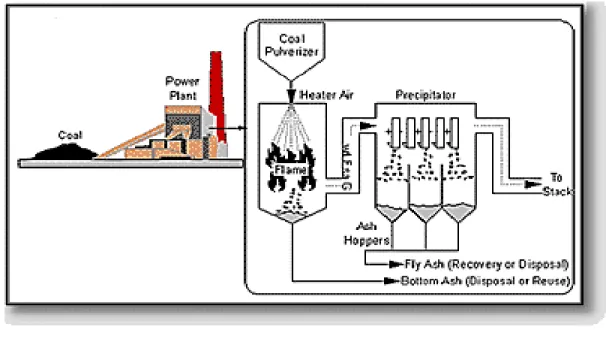
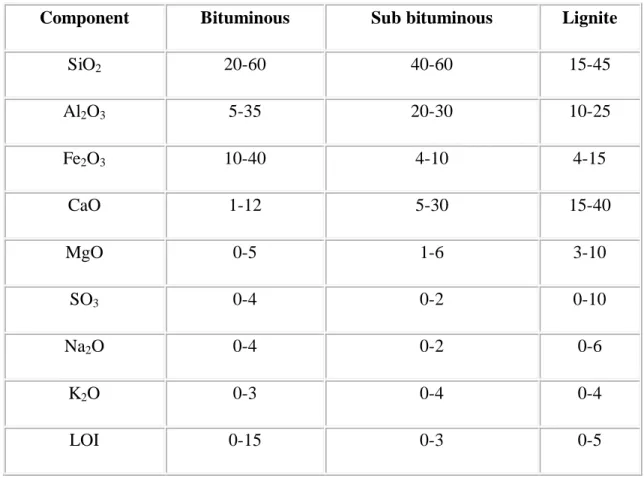
Depending on the source and composition of the coal being burned, the composition of fly ash and bottom ash varies considerably. Fly ash is a fine glass powder extracted from the gases released when burning coal during the production of electricity. The particle size distribution of raw fly ash often fluctuates continuously due to changing coal mill performance and boiler performance.
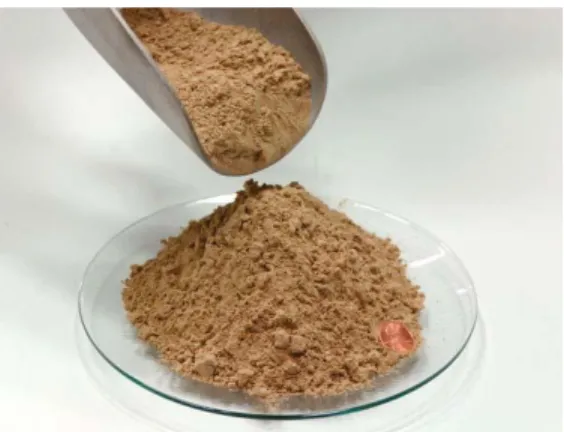
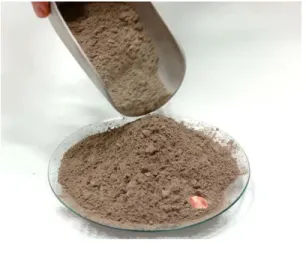
The color of fly ash can vary from tan to gray to black, depending on the amount of unburned carbon in the ash. The chemical properties of fly ash are largely influenced by the properties of the coal and the techniques used for handling and storage. Two classes of fly ash are defined by ASTM C618: Class F fly ash and Class C fly ash.
The chemical properties of fly ash are largely influenced by the chemical content of the burnt coal (ie anthracite, bituminous and lignite). In the presence of water, Class C fly ash will harden and gain strength over time. So the customer cannot be sure of the quality of fly ash available from a particular source.
The lack of testing, labeling and packaging facilities for fly ash results in unnecessary costs for customers.
STUDY OF SETTLING CHARACTERISITICS OF FLY ASH
- SAMPLE COLLECTION
- EXPERIMENTAL PROCEDURE .1 Requirements
- RESULTS
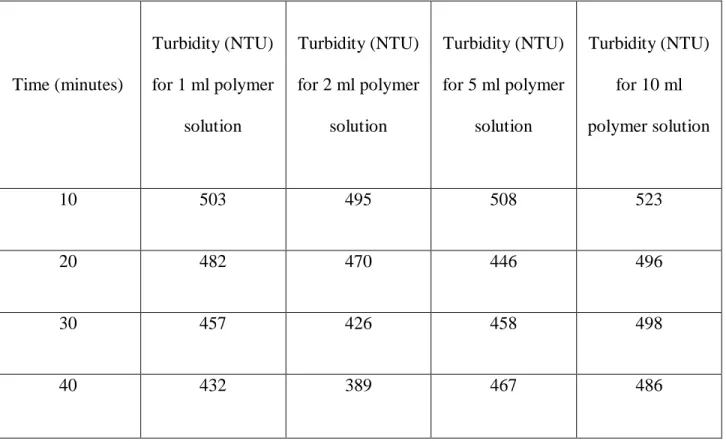
- Turbidity of the clear solution at an interval of 10 minutes
- DISCUSSION
For this purpose, a polymer solution is added to the mixture, which causes flocculation of fly ash particles and allows them to settle more quickly. In most power plants, the sampling tubes are installed at locations near the discharge point or near the ash sampling storage. The sample used in this study was fly ash collected from the bottom of the electrostatic precipitator of NTPC Kaniha, Talcher, Orissa.
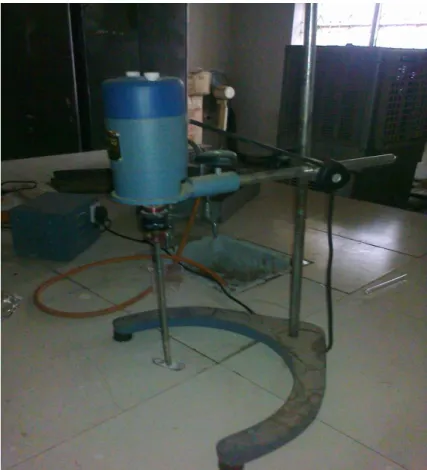
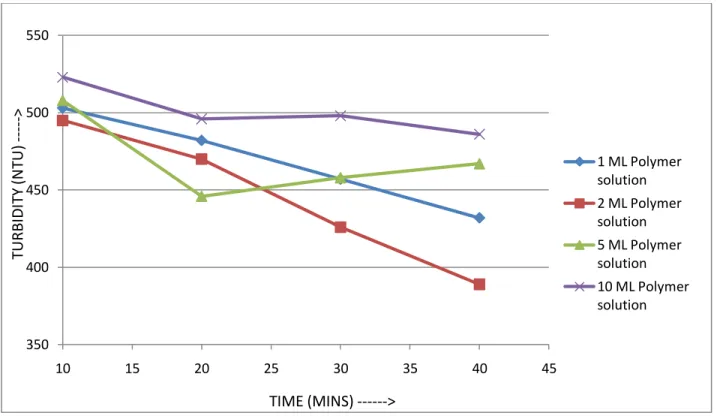
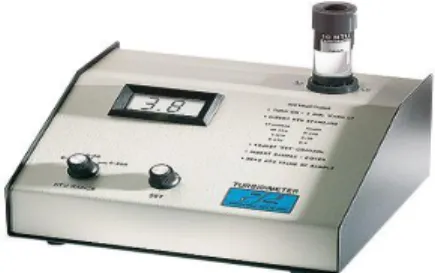
1 ml of the prepared polymer solution was pipetted off and added to the aqueous solution of fly ash, and the resulting solution was mixed using the apparatus in a glass for 5 minutes. The solution was then allowed to stabilize for the next 5 minutes and. The clear liquid at the top of the solution was withdrawn using a dropper to determine its turbidity using a Nephelo turbidity meter at regular intervals of 10 minutes. The added polymer causes the fly ash particles to flocculate, resulting in fly ash settling.
But for higher concentrations of polymer added, instead of decrease in turbidity, it will promote increase in turbidity of the clear liquid. Adding a higher concentration of polymer adds to the turbidity of the solution instead of reducing the turbidity of the solution.
SETTLING RATE OF FLY ASH
SEDIMENTATION
Sedimentation involves the separation of a suspension or slurry into a clear liquid essentially free of particles and a thick sludge containing a high concentration of solids. The sedimentor is called thickener when the concentrated sludge is our main desired product and it is called settling agent when the purpose is to recover the clear liquid from the suspension. Industrial sedimentation is carried out as a continuous process in thickeners or gravity sedimentation tanks, usually shallow tanks with a diameter of several meters, which collect the slurry in the center or on the side, allow overflow of the supernatant liquid (over weirs) and create a thick producing sludge from the bottom.
The tank bottom is often made conical to facilitate the discharge of the underflow sludge. The tanks are also equipped with rakes (which are rotating railings with fixed vertical plates) placed slightly above the tank bottom. These rakes scrape or sweep the tank floor and thereby direct the sludge towards the central discharge.
The speed can be artificially increased by adding an electrolyte, which causes precipitation of colloidal particles and the formation of flakes. Slow mixing of the slurry can also help reduce the apparent viscosity of the suspension and help solidify the sediment.[18]
PROCEDURE
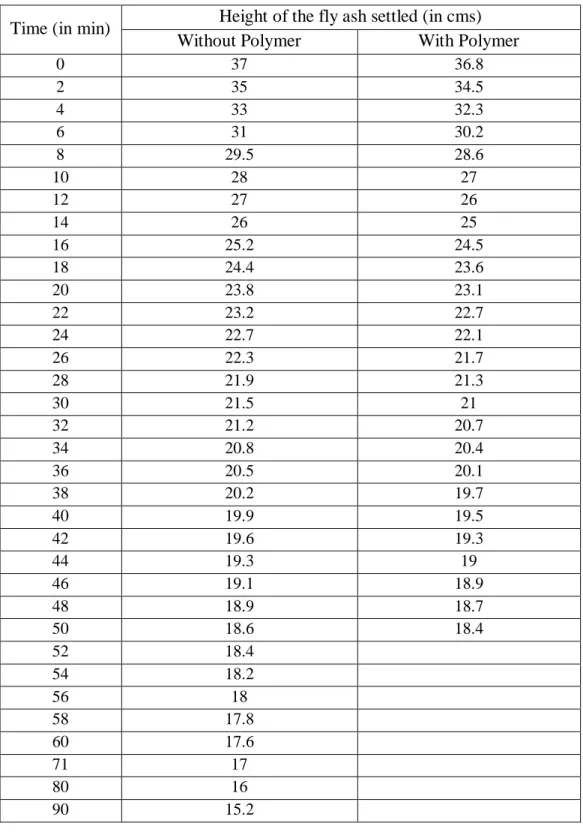
If the densities of the suspended solids and the suspending liquid are close, the sedimentation will not take place effectively. Thus, the decrease in height of the precipitated fly ash is faster after the addition of the polymer of 2 ppm concentration. Over time, as the settling process continues, the concentration of the fly ash particles in the settled slurry increases continuously.
There are several ways to dispose of the fly ash produced in thermal power plants. In these ways, disposing of the fly ash in ash ponds in the form of slurry with water is one of the best alternatives. Fly ash from the electrostatic precipitator and bottom ash from the bottom of the boiler are mixed together and then mixed with water in a ratio ranging from 1 part ash to 4 to 20 parts water.
There are several examples of failures in ash dams that have resulted in the leakage of fly ash slurry into the surrounding areas, including water bodies and creating environmental hazards. Hydrostatic pressure over the full height of the bundle is minimized by discarding the water that moves away from the bundle and forms an inclined beech and only the ash that is deposited near the bundle.
ASH POND LAYOUT
The thermal power plants do not always pay much attention to the maintenance of ash ponds because it is a waste. The slurry is then pumped into the ash ponds located inside or outside the thermal power plant. No well design procedure or codal provision exists for the construction and maintenance of the ash dam.
The ash pond is designed economically and proper procedures are followed to prevent any kind of leakage from the ash ponds. Provisions should be made for vertical and horizontal expansions taking into account the service life of the power plant. In coastal areas where the groundwater is already salty, the water from the ash pond should preferably be drained through the bottom of the ash pond. This type of pond has greater stability.
In most ash ponds, the total area can be divided into compartments, and while one is in operation, the other can be evacuated from the deposited ash for reuse. The deposited fly ash can be used to increase the height of the embankment, ultimately increasing the amount of fly ash-bearing capacity in the pond.
DESIGN OF BUND
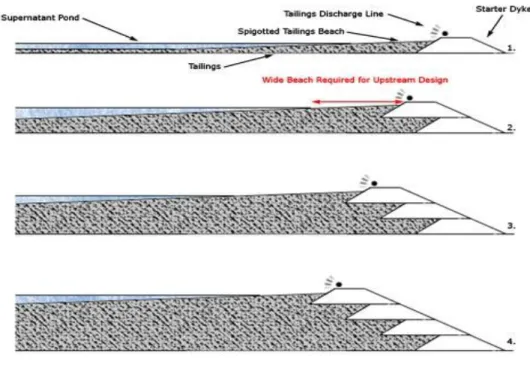
- Upstream construction method
- Downstream construction method
- centre line construction method
This is the best model of raising the height of the dam as it involves the least amount of earthworks. Since the total weight of the new construction is supported by the deposited ash, the ash deposit must be perfect in order to have sufficient bearing capacity. As the height of the dam increases, the area of the ash pond continues to decrease and beyond a certain stage, it becomes uneconomical to increase the height of the dam further.
The ash pond cannot function during the dam height increase with this construction method. After the pond is filled to the first stage, the height of the pond is increased by depositing fly ash or soil at the bottom of the dam, as shown in the figure. The advantage of this method of construction of the ash pond is that the height of the dam can be increased even if the pond is.
In this method, after the pond is filled up to the first stage, soil or fly ash is deposited on both sides of the center line of the dam so that the center line of the dam remains in the same place as shown in the figure above. The amount of material required to raise the height of the dam is less compared to the downstream construction method.
MAINTENANCE OF ASH POND
The upstream face must be sloped or rock-covered or precast to prevent erosion due to wind. Adequate decanting facilities should be provided to prevent the free water inside the pond from accumulating to a great height. The quality of the decanted water must be satisfactory with total suspended solids of less than 100 ppm.
A pond already filled with ash should be allowed to dry without further discharge of slurry for at least 1 month until the construction work to raise the height of the embankment begins. This type of pond should be regularly equipped with water sprinklers to prevent dust pollution. Wet spots on the downstream slope caused by inadequate bank length or blocked drain should be avoided.
The area around the Essendijk must be fenced and unauthorized access must be prohibited. A site office should be built with a full-time engineer responsible for inspecting and monitoring the dike.
STABILISTION OF SOILS
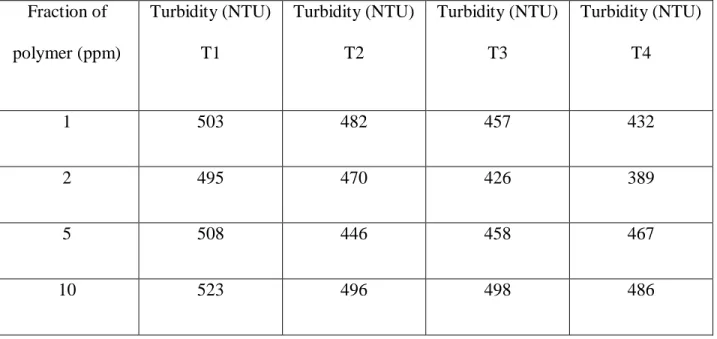
An attempt to determine the degree of reduction in the turbidity of the clear liquid on top of a solution of fly ash and water after the addition of the appropriate polymer showed the following: -. The rate of decrease in clear liquid turbidity was greatest at a concentration of 2 ppm of polymer solution added to a solution of fly ash and water. Thus, it can be concluded that 2 ppm is the optimal concentration of polymer solution to be added, which results in faster settling of fly ash particles.
From the experiment for determining the rate of settling of fly ash after the addition of 2 ppm polymer solution, it can be concluded that the rate of settling was faster compared to the usual gravitational settling of fly ash in ash ponds. The report consists of the experiment conducted on one sample of fly ash from NTPC, kaniha and using one polymer sample (CMC). Kumar Hemant, Mishra D.P., Das samir kumar, “Occupancy characteristics of fly ash from Talcher thermal power station”.
ORAM PRADEEP, "Flow Behavior of Fly Ash Slurry" , e-Thesis NIT Rourkela, Department of Mining Engineering, 2008-2009. Behera Rakesh kumar, “Characterization of fly ash for their efficient management and utilization”, e-thesis NIT Rourkela, Department of Mining Engineering, 2009-2010.
![Table 2.6.1 fly ash construction related applications (recycling) [16]](https://thumb-ap.123doks.com/thumbv2/azpdfnet/10557787.0/24.918.211.712.215.593/table-fly-ash-construction-related-applications-recycling-16.webp)