Weeds and Weed Management on Arable Land
An Ecological Approach
1
Z:\Customer\CABI\A4431 - Hakansson\A4520 - Hakansson - Voucher Proofs #A.vp 31 March 2003 12:13:54
2
Z:\Customer\CABI\A4431 - Hakansson\A4520 - Hakansson - Voucher Proofs #A.vp 31 March 2003 12:13:54
Weeds and Weed Management on Arable Land
An Ecological Approach
Sigurd Håkansson
Department of Ecology and Crop Production Science Swedish University of Agricultural Sciences
Uppsala Sweden
CABI Publishing
3
Z:\Customer\CABI\A4431 - Hakansson\A4520 - Hakansson - Voucher Proofs #A.vp 31 March 2003 12:13:54
CABIPublishingis a division of CABInternational CABI Publishing
CAB International Wallingford Oxon OX10 8DE UK
Tel: +44 (0)1491 832111 Fax: +44 (0)1491 833508 E-mail: [email protected]
Website: www.cabi-publishing.org
CABI Publishing 44 Brattle Street 4th Floor Cambridge, MA 02138 USA Tel: +1 617 395 4056 Fax: +1 617 354 6875 E-mail: [email protected]
©CABInternational2003. All rights reserved. No part of this publication may be reproduced in any form or by any means, electronically, mechanically, by photocopying, recording or otherwise, without the prior permission of the copyright owners.
A catalogue record for this book is available from the British Library, London, UK.
Library of Congress Cataloging-in-Publication Data Hakansson, Sigurd.
Weeds and weed management on arable land : an ecological approach / Sigurd Håkansson.
p. cm.
Includes bibliographical references (p. ).
ISBN 0-85199-651-5 (alk. paper)
1. Weeds. 2. Weeds--Ecology. 3. Weeds--Control. 4. Weeds--Sweden.
5. Weeds--Ecology--Sweden. 6. Weeds--Control--Sweden. I. Title.
SB611 .H35 2003
632′.5--dc21 2002010487
ISBN 0 85199 651 5
Typeset by AMA DataSet Ltd, UK.
Printed and bound in the UK by Biddles Ltd, Guildford and King’s Lynn.
4
Z:\Customer\CABI\A4431 - Hakansson\A4520 - Hakansson - Voucher Proofs #A.vp 31 March 2003 12:13:54
Contents
Preface x
Background and Focus of the Book x
Guide to Central Topics Covered in Chapters 1–13 xi
Acknowledgements xiv
1. Introduction 1
Comments on the book 1
The concept of weeds 1
Some definitions and descriptions 3
2. Classification of Plants Based on Traits of Ecological Significance 4
Life Form, Growth Form, Lifespan 4
Raunkiær´s Life-form System 5
Classification Using the Term ‘Life Form’ in a Wide Sense 6
Overview 6
Seed banks and germination of weed seeds in the soil in different seasons 6
Classification of weeds 7
Annuals 8
Biennials, monocarpic perennials (pluriennials) 9
Stationary perennials 9
Creeping perennials 10
Perennials with other or modified regenerative structures 12 Classification Problems with Species Distributed over Wide Geographical Areas 12
3. Annual and Perennial Crops 14
4. Weed Communities Looked Upon as Early Stages in Secondary Vegetation
Succession 16
5. Weeds with Diverse Life Forms in Various Types of Crops 20
Overview in a North-European Perspective 20
Comments on crops and cropping systems in the Nordic countries 20 Relationships of weeds to crops largely depend on times and types of tillage 21 Changes in tillage and other measures selectively affecting weeds 27 v
5
Z:\Customer\CABI\A4431 - Hakansson\A4520 - Hakansson - Voucher Proofs #A.vp 07 April 2003 15:35:15
Scandinavia and Finland – Field Surveys and General Observations 28
Summer annuals 32
Winter annuals (facultative) 33
Biennials (monocarpic perennials) 34
Stationary perennials 35
Creeping perennials with stolons or prostrate above-ground stems 35 Creeping perennials with rhizomes sensitive to soil cultivation 35 Creeping perennials with rhizomes tolerant to soil cultivation 35 Creeping perennials with plagiotropic thickened roots 36
Changes in weed flora after the 1940s 36
Northern and Southern Europe 39
Global Perspectives 44
Life forms of weeds 44
C4plants among arable weeds 49
Plants of different families as arable weeds 52
Parasitic weeds 54
Which Crops in a Crop Sequence Favour the Population of a Specified Weed? 55 6. Germination, Emergence and Establishment of Crop and Weed Plants 56
Introduction 56
Seed Dormancy and Germination and Soil Seed Banks 56
From Seed Swelling to Plant Establishment 60
Experiments Exemplifying Influences on Plant Emergence and Establishment 61
Experimental conditions 61
Dry matter losses before plant emergence 61
Plant establishment 62
Examples representing cultivated plants 62
An example representing annual weeds 64
Plant emergence and early mortality among emerged plants 65 Overview of Factors Influencing Plant Emergence and Establishment 67 Seed size and depth location in soil, light intensity and temperature 67
Water conditions in the soil 69
Soil Moisture Content – Seed Germination – Plant Growth 71 Effects of the relative time of emergence of neighbouring plants in a cereal
stand 71
Sowing depth and growth of crop and weed plants 72
Sowing depth – principles regarding crop and soil in the field 73 Seedbed Preparation and Sowing Considering Relative Times of Crop and
Weed Emergence 75
Ordinary spring sowing – examples regarding different soils 75
‘Delayed’ spring sowing 76
Autumn sowing 76
Effects of rolling 77
Late Emergence of Weeds – Consequences in Differently Competitive Crops 78
Fertilizer Placement 78
7. Competition in Plant Stands of Short Duration 81
The Concept of Competition 81
General 81
Impacts of allelochemicals – allelopathy 83
Competition and Phenotypic Plasticity 83
Intraspecific and Interspecific Competition 85
6
Z:\Customer\CABI\A4431 - Hakansson\A4520 - Hakansson - Voucher Proofs #A.vp 31 March 2003 12:13:55
Relative Competitiveness 85 Competition as Influenced by Plant Spacing and Relative Time of Emergence 86
Effects of Plant Density 87
General characteristics of production–density relationships 87
Production in crop stands 90
Yield in different crops 90
Plasticity of crop plants and quality of harvested products – examples 92
Crop–weed interactions 93
Effects of the Spatial Distribution of Plants 100
Theory 100
Row spacing and plant distribution in the row 101
Effects of the Relative Time of Emergence 106
General 106
Experiments with cereals and weeds 107
Competition Modifies the Response of Plants to Various Factors – Examples 111
Response to nitrogen 111
Growth of plants from seeds of different sizes placed at various depths
in the soil 113
Regrowth after breakage and burial of regenerative structures of perennial
weeds with an example of nitrogen influences 114
Response to temperature 115
Response to infections – example, discussion 117
8. Weed Flora and Plant Adaptation to Environment and Competitive
Conditions 119
Extremely Complex Causalities 119
Changes in the Weed Flora as Related to Increased Fertilizer Use –
Some Scandinavian Examples 119
Competitive Conditions in Different Crops 121
Competitive Ability of Weeds 123
The importance of plant traits 123
Reasons for variation often hard to identify in the field 124 Phenotypic Adaptation to Environments Exemplified by Weeds in Lawns 125 9. Measurements of Competition and Competitiveness in Plant Stands of
Short Duration 128
Introduction: Stands of Short and Long Duration 128
Unit Production Ratio (UPR) 129
UPR in Measuring the Relative Competitiveness of Plants 129 Use of UPR and Percentage (or Relative) UPR – Examples 132 Selective Effects of Competition within Heterogeneous Components in Mixed
Stands 136
Determination of Production–Density Relationships in Mixed Stands 137
Reference Models 138
Reference Models in Evaluating Relationships and Indices Aimed at
Characterizing Relative Competitiveness – Examples 139 Plant Growth as Influenced by Density and Relative Time of Emergence 144
Growth Reduction Rate (RR) 149
Changes in UPR and Percentage UPR Over Time – Comparing Growth Rates
and Competitive Conditions in Mixed Stands 151
The Relative Crowding Coefficient (k) and the Relative Yield Total (RYT)
Observed Over Time 153
7
Z:\Customer\CABI\A4431 - Hakansson\A4520 - Hakansson - Voucher Proofs #A.vp 31 March 2003 12:13:55
‘Critical Periods’ of Weed Control in a Crop Stand 154
Early Predictions of Yield Loss Due to Weeds 155
10. Soil Tillage Effects on Weeds 158
Introduction 158
Uncultivated land brought into cultivation 158
Selective effects of tillage 159
No more tillage than necessary 159
Tillage Effects on Weed Seeds in the Soil Seed Bank 160
Tillage Effects on Seedlings 162
Seedlings of annuals 162
Seedlings of perennials 163
Tillage Effects on Perennial Plants with Fully Developed Vegetative Structures 164
General statements 164
Plants with low tolerance to tillage 165
Plants with higher tolerance to tillage 165
Factors affecting the response of growing plants to tillage – an overview 166
Perennials with rhizomes or plagiotropic roots 167
Undisturbed growth and response to a single soil operation 168
Response to repeated tillage 178
A Cropping System Approach to Effects of Tillage 183
Periods when the field is free of growing crops 183 Seedbed preparation – effect on weed seeds in the soil 183 Tillage considering the growth rhythm ofElymus repens 185
Tillage between harvest and winter 186
Tillage between harvest and autumn sowing 189
Harrowing and hoeing in growing crops 190
Reduced Tillage 193
11. Chemical Weed Control as an Element in the Cropping System 197
Introductory Comments 197
Intended Effects of Herbicides 198
The importance of a uniform herbicide distribution 198 Joint effects of herbicides and competition in a crop stand 199 A reduced herbicide dose – a proportionally less reduced effect 200
Herbicide application techniques 203
Compounds mixed with herbicides in commercial formulations or
added to the spray liquid 203
Systemic and contact herbicides 204
Pre-emergence soil application of herbicides 205
The persistence of herbicides 206
Measurements of herbicide effects 206
Unintended Effects of Herbicides 207
General 207
Toxicity 208
Persistence – movements 208
Harm of pesticide pollution 209
Problems in handling herbicides 210
Resistance in response to recurrent use of similar herbicides 210 Herbicide and Tillage Problems in Efforts to Develop Sustainable Cropping
Systems 211
8
Z:\Customer\CABI\A4431 - Hakansson\A4520 - Hakansson - Voucher Proofs #A.vp 31 March 2003 12:13:55
12. Special Management Measures 214 Various Methods of Mechanical or Physical Weed Control 214
Cover Crops and Mulches 215
Harvesting – Timing and Methods 217
Combine harvesting 217
Harvesting of root crops 218
Breeding for Increased Competitive Ability of Crops 218
Biological Control 219
13. Important Points for Understanding the Occurrence and Rational
Management of Weeds 222
General Views 222
Illustrations: Case Studies in Sweden 222
Allium vineale– a bulb-forming perennial 223
Introductory remarks 223
The study and its results 223
Morphology and reproduction (Fig. 66) 224
Annual rhythm of growth and development (Fig. 67a) 224
Population structure 225
Sensitivity to tillage 225
Occurrence in autumn-sown cereals 225
Growth in years with and without spring tillage (Table 44) 227 Occurrence on heavier and lighter soil and in winter rye and
winter wheat 227
Interpretation of results 231
Effects of herbicides 231
Occurrence and management ofA. vinealediscussed on the
basis of the investigation 232
Sinapis arvensis– a summer annual 233
Avena fatua– a summer annual in the Nordic countries 234 Elymus repensandAgrostis gigantea– perennial rhizomatous grasses 236 Cirsium arvense– a perennial dicot with plagiotropic roots 242
References 248
Species Index 269
Subject Index 272
9
Z:\Customer\CABI\A4431 - Hakansson\A4520 - Hakansson - Voucher Proofs #A.vp 31 March 2003 12:13:55
Preface
Background and Focus of the Book
This book may in the first instance be of interest to teachers, postgraduate students and researchers in weed science, but will, I hope, also prove useful to undergraduate students who are specializing in this and related subjects. Discussions and illustrations in the book also relate to issues that are of interest in other fields of agriculture, horticulture and plant ecology. There are also concepts in the book that I hope will attract other categories of readers interested in biology and ecology.
As a researcher and teacher in weed science and crop production ecology for almost 40 years, I have had the opportunity to follow developments in these subjects during a period of great change. In weed research, the interest has gradually shifted from a strong focus on chemical weed control in the 1950s and 1960s to an increasing accent on integrated weed management during the 1980s and 1990s.
Investigations with a broader biological and ecological approach to weed management received proportionally little financial support in most countries from the 1950s to the late 1970s. This also applies to Sweden, although such investigations were awardedrelatively more money in Sweden than in many other countries.
In 1954, I had the opportunity to start research on wild garlic (Allium vineale L.) occurring as a weed on arable land in South-eastern Sweden. In discreet opposition to demands from above for experiments focusing on chemical control, I was able to give my investigation a broader ecological approach. My youthful ambition was to present a case study illustrating the minimum knowledge needed for understanding the possibilities and difficulties of a plant growing and persisting as a weed in different cropping systems – which is, at the same time, the minimum knowledge needed for rational combinations of direct and indirect control of the weed.
When I became a university lecturer in the 1960s, the period of early, almost unreserved enthusiasm over modern herbicides had not yet passed. A discussion on weed management was largely synonymous with a discussion on chemical weed control. Like the bodies funding research, students were influenced by the prevailing circumstances, most of them expecting weed science courses to be focused on chemical weed control.
In spite of this, I persisted with presenting weed science courses with a wider, more ecological approach. The courses were on the whole accepted and appreciated by the majority of my students, although protests also arose against ‘wasting time on economically unimportant issues’. However, general opinions gradually changed in favour of broader
x
10 Z:\Customer\CABI\A4431 - Hakansson\A4520 - Hakansson - Voucher Proofs #A.vp 31 March 2003 12:13:55
ecological approaches to weed management. The proportions between different subject areas in my courses may have varied more or less from year to year, but the overall structure of the courses has remained unchanged over the years. This structure is reflected in the present book.
The strong focus on chemical control in weed research and weed management practices for about three decades resulted in an overuse of herbicides, which indeed deserves criticism. However, my personal opinion is that this criticism must not lead to a complete rejection of chemical weed control. Pluralism is always fruitful; at the same time as the development of cropping systems without any use of chemical weed control should be supported, a cautious and restricted use of herbicides will certainly do well in many cropping systems seriously structured to minimize negative environmental impacts.
Verdicts on adverse side effects of herbicides should be based on comprehensive herbicide tests, which are now being increasingly performed and reported. Like other cultural measures in a cropping system, chemical weed control should be based on broad biological and ecological knowledge and considerations.
Many herbicides are positive tools in the control of vegetation since they allow a reduction in tillage where soil erosion is a problem. This is particularly important in warm areas with high precipitation, on sloping ground and in dry, windy areas, but intensive tillage and passes with heavy machinery have negative impacts everywhere. Soil compac- tion is one of the persistent problems in modern agriculture and intensified soil tillage can never be a satisfactory means of replacing chemical weed control. Minimum and zero tillage are being practised or attempted in many agricultural areas for the purpose of minimizing soil tillage disadvantages.
A one-sided focus on the short-term effects of weed control measures, either chemical or mechanical, should thus be avoided. In harmony with intentions that are generally recognized today, different control and cultural measures should be combined into systems of integrated weed management. I hope that the facts and viewpoints in my book will contribute to a balanced development of such systems.
Guide to Central Topics Covered in Chapters 1–13 Chapter 1
All plants occurring in an arable field in a given situation without the grower’s intention are termed ‘weeds’ in that situation; thus also ‘volunteer’ crop plants.
Chapters 2 and 3
Classification of plant species into life forms on the basis of ecologically significant traits is discussed. For species occurring as arable weeds, the classification here considers traits with primary influence on the appearance of the species in crop stands differing as to times and means of establishment and harvesting, and with various geometry, annual developmental rhythm and duration (1 or more years). The importance of dormancy of weed seeds, resulting in soil seed banks, is discussed. Seasonal variation in the germination readiness of seeds in the weed seed banks is illustrated (e.g. Fig. 1) and its influence on the appearance of weeds in different situations is dealt with. Perennial weeds are classified according to properties of vegetative structures determining their establishment and persistence as arable weeds.
11 Z:\Customer\CABI\A4431 - Hakansson\A4520 - Hakansson - Voucher Proofs #A.vp 31 March 2003 12:13:55
Chapters 4 and 5
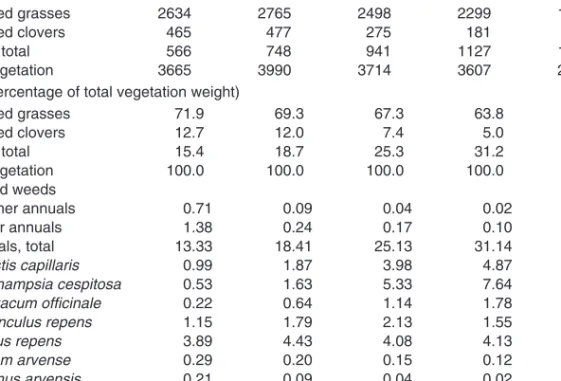
Arable weeds (non-parasitic) can be looked upon as plants in early stages of secondary vegetation succession (Tables 1–4). Relationships between plants with different life forms and their ability to establish as weeds in different crops (considering associated cultural measures) are therefore found to present essentially similar patterns in Scandinavian, European and global perspectives (Tables 3–15).
The occurrence of plants with C4 photosynthesis as arable weeds is illustrated (Tables 12, 14 and 15) and differences are discussed. Particular attention is devoted to the geographical distribution of rhizomatous C4 species. The distribution is discussed comparing the occurrence of the C3speciesElymus repens.
A weed with better possibilities to establish, grow and reproduce in a given crop than in the others in a crop sequence when its growing plants are not subjected to direct control may often be more strongly restricted in that crop than in the others when its growing plants are effectively killed by direct control and its reproduction thus prevented. This may apply even if plants of the weed are effectively controlled when emerged in the other crops. Though important and easily explained, this is too often overlooked in general discussions on the growth and reproduction of weeds in crop sequences.
Chapter 6
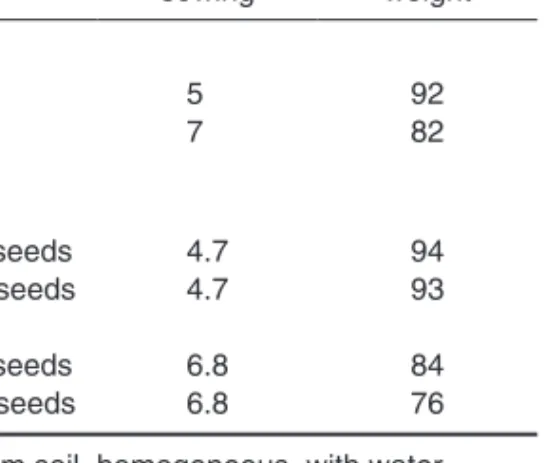
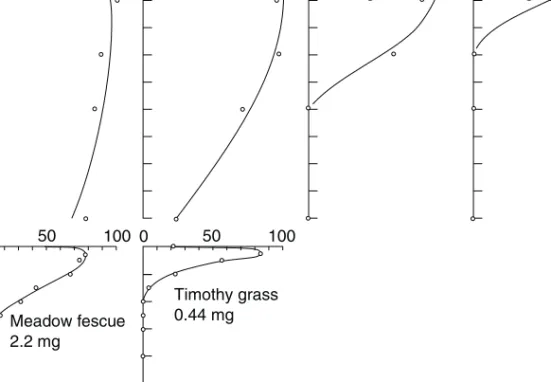
The early growth of plants from seeds is illustrated, considering influences of soil conditions, seedbed preparation and means of sowing. Both crops and weeds are regarded (Tables 18–21; Figs 3–12). The conditions for their germination (or bud activation) and their emergence and further early growth largely determine their competitive position in the future growth of the crop–weed stand (Tables 22–24).
Chapters 7 and 8
The concept of plant competition and factors affecting the competitive outcome in plant stands of short duration are analysed regarding both crop–weed stands and pure crop stands. Phenotypic plasticity enables plants to adapt to different environments, including competitive conditions. Differing plasticity is one of the reasons for differences in the relative competitiveness of plants. Variation in properties (‘quality’) of harvested crop products is, to a great extent, caused by the plastic responses of the crop plants to differences in their environment, including their competitive situation.
Competition in a plant stand always modifies, sometimes very drastically, the response of plants to external factors. This also means that the relative competitive abilities of genetically identical plants may be strongly affected by changes in the external environment.
This applies to their competitive ability in terms of both effects on other plants and responses to competition from them (e.g. Tables 31, 32 and 36; Fig. 34). The ranking order of crops or weeds as to their relative competitiveness may thus differ strongly with the environment.
Weakening of plants caused by mechanical or chemical means, diseases, etc. leads to an increased suppressive effect of competition from surrounding plants, when these plants are not weakened or are less weakened (Tables 26, 27, 34, 35 and 37). The importance of interactive effects of weed control measures and crop–weed competition is emphasized here and further stressed in Chapters 10 and 11.
12 Z:\Customer\CABI\A4431 - Hakansson\A4520 - Hakansson - Voucher Proofs #A.vp 31 March 2003 12:13:55
Chapter 9
Methods, difficulties and pitfalls in measuring results of competition in plant stands of short duration are dealt with. ‘Reference models’ are described. They have been derived both to deduce reasonable characters of various relationships between production and density of different plants in mixed stands, and to test the usefulness of various ratios or indices for characterizing the relative competitiveness of plants and to specify restrictions in their usefulness. Thus, for instance, UPR, which is a central ratio in my own work, has been evaluated in this way. Reference models are based on production-density equations of pure stands of identical plants. The pure stands are then assumed to represent mixtures of different plant categories (A, B, etc.) uniformly distributed in the stands at varying densities (see Eqns 4–6, p. 138).
Chapter 10
Soil tillage is studied considering both indirect effects on weed populations and direct effects on growing weed plants. Life history and annual developmental rhythm largely determine the response of the weeds to different kinds of tillage at different times of the year. Principles are discussed and illustrated on the basis of experiments. Effects of tillage in interaction or combination with effects of other measures and situations in a cropping system are dealt with. Under the motto ‘no more tillage than necessary’, various forms of
‘reduced tillage’ are reviewed.
Chapter 11
Chemical weed control measures are discussed as elements in cropping systems, con- sidering intended and unintended effects. By weighing desired and adverse effects, the justification for chemical weed control is debated. Considering both positive and negative effects, comparisons with tillage are of great interest.
Chapter 12
A number of management methods, applied or hypothetical, are surveyed regarding experienced or possible effects. These methods include mechanical or physical measures, the use of cover crops and mulches, timing and methods of harvesting, breeding for increased competitiveness of crops and biological weed control.
Chapter 13
Issues requiring knowledge for the guidance of rational integrated weed management in a cropping system are listed.
The importance of these issues is illustrated in case studies on the appearance of a number of plants with different traits as arable weeds in Sweden (e.g. Tables 42–44;
Figs 66–71). Differences in the occurrence of these plants in diverse agricultural situations are described and changes over periods of years are discussed in relation to changes in the cropping systems. Difficulties in interpreting causalities expose gaps in current knowledge.
13 Z:\Customer\CABI\A4431 - Hakansson\A4520 - Hakansson - Voucher Proofs #A.vp 31 March 2003 12:13:55
Acknowledgements
This book would not have been written without positive encouragement and support from my friends at the Department of Ecology and Crop Production Science in Uppsala. This Department, one of the major departments of the Swedish University of Agricultural Sciences, has changed names and fields of responsibility several times during the past five decades, but weed science and related crop production ecology have always been central fields. My successor, Professor Håkan Fogelfors, has always encouraged me and strongly supported my writing this book. I am sincerely indebted to him and to his co-workers for providing me with excellent opportunities to continue working at the Department, not only according to the traditional rights of a professor emeritus but also as a member of the team.
There are a number of people to whom I am indebted and whom I would like to thank here. First I want to mention Karl-Gustav Ursberg, who has been my skilled technical assistant for more than 30 years and who has more recently given me invaluable help with many computer problems. He has, among other things, scanned all my graphs and given them a uniform style. I am also very grateful to all those at the University who have read different chapters in my manuscript and given me valuable criticism. I mention them in alphabetical order: Dr Lars Andersson, Dr Tommy Arvidsson, Dr Bengt Bodin, Dr Ullalena Boström, Professor Sten Ebbersten, Professor Inge Håkansson, Dr Erik Hallgren, Dr Margareta Hansson and Dr Lars Ohlander.
From colleagues in neighbouring countries, I have had many valuable viewpoints and strong encouragement and support in writing my book. I express my sincere gratitude to all of them: Dr Angelija Buciene and Dr Virginijus Feiza in Lithuania, Professor Haldor Fykse in Norway, Dr Jukka Salonen in Finland and Professor Jens C. Streibig in Denmark.
As Swedish is my mother tongue, my text would have had too much of a Swedish flavour without competent revision. I am very indebted to Dr Mary McAfee, Wiltshire, England, for her many improvements of my language.
The Swedish Research Council for Environment, Agricultural Sciences and Spatial Planning has financially supported the publishing of this book, which I gratefully acknowl- edge. I also acknowledge with sincere gratitude direct and indirect financial support from the Department of Ecology and Crop Production Science and the Royal Swedish Academy of Agriculture and Forestry.
Last but not least, I want to thank my wife Kerstin for having supported my writing by her tolerance and constant encouragement. I also want to thank my daughters and their families for stimulating me by showing keen interest in the progress of the project. I dedicate this book to the three generations of my family.
Sigurd Håkansson Uppsala, October, 2002
14 Z:\Customer\CABI\A4431 - Hakansson\A4520 - Hakansson - Voucher Proofs #A.vp 31 March 2003 12:13:56
1
Introduction
Comments on the book
This book deals with the appearance and management of plants with different traits occurring as weeds on arable land.
It describes and discusses matters and relationships that are important as a basis for understanding the varying occurrence of weeds in different crops and cropping sys- tems and, at the same time, understanding the response of different weeds to specified management measures. This understanding is particularly crucial in planning systems of weed management measures over long periods of time; in other words, in planning
‘integrated weed management’.
Principles are stressed before details.
Although the matters discussed are often illustrated by experimental results repre- senting conditions in temperate humid areas, the illustrations exemplify principles of general interest. Some illustrations directly treat global questions (e.g. Tables 14 and 15). Most of the illustrations are based on previously published material, although not always material published in English.
Some previously unpublished illustrations, based on experiments devised for the author’s university lectures, are also pre- sented. The need for increased knowledge and understanding of certain relationships is stressed and experimental and measure- ment methods are discussed in many cases.
The book focuses in particular on issues that have been emphasized in the author’s lecturing and experimental work.
New approaches to certain issues may make the book a useful complement to other books on weeds and weed managements, such as those by King (1966), Altieri and Liebman (1987), Radosevich et al. (1996) and Liebmanet al. (2001). In addition, tables and diagrams in this book are largely based on material representing areas that are very seldom discussed in international text- books. Principles emphasized in research from these areas underlie many approaches to weed management problems in tropical agriculture (e.g. Alström, 1990; Åfors, 1994).
Any procedure in a cropping system has some effect on weed populations, either directly on growing weed plants or indi- rectly through influences on weed seeds or other propagules in the soil, etc. Definitive distinctions can therefore not be made between weed management procedures and other cropping procedures. This should, of course, go without saying in discussions on integrated weed management, when long- term effects of procedures and conditions in a cropping system are to be considered.
When, for instance, seedbed preparation and sowing are discussed in the following, effects on crops and weeds are evaluated at the same time.
The concept of weeds
The term ‘weed’ is given many meanings in the literature, although it usually refers to plants occurring in situations where
©CABInternational2003.Weeds and Weed Management on Arable Land:
an Ecological Approach (S. Håkansson) 1
15 Z:\Customer\CABI\A4431 - Hakansson\A4520 - Hakansson - Voucher Proofs #A.vp 31 March 2003 12:13:56
they are unwanted. The word is usually understood as a term limited to herbaceous plants, but it sometimes also includes shrubs and trees. According toThe Shorter Oxford English Dictionary, the word usually represents ‘a herbaceous plant not valued for use or beauty, growing wild or rank, and regarded as cumbering the ground or hindering the growth of superior vegetation’. Outside the scope of this book, ‘weed’ is a word frequently used figuratively, characterizing creatures of various kinds regarded as unprofitable, sickly, troublesome or noxious.
As this book focuses on arable land,
‘weeds’ are discussed within the definition of plants occurring on arable land without the grower’s intention. The term ‘weed’
therefore includes volunteer plants of culti- vated species established in arable fields in situations where they are not intended.
Even when restricted to plants on arable land, numerous definitions of ‘weed’
are found in the literature. However, they largely fit into the descriptions above. (For examples of definitions, see Rademacher, 1948; Salisbury, 1961; Holzner, 1982;
Radosevichet al., 1996.)
Weeds on arable land are frequently calledarable weeds. This brief and conve- nient designation has been widely used in the literature and is also used here. Arable weeds may be synonymously calledagrestal weeds(Holzner, 1982).
A plant species, as such, is not a weedin the meaning given above. Weeds are those plants of the species that occur in situations where they are unwanted. This should be kept in mind when weed plants representing different species are named ‘weed species’ for the sake of brevity, in this book as in other literature. Characteristic features and various origins of arable weeds are well described by Baker (1965).
Within many species, certain biotypes have become cultivated plants whereas other biotypes occur as weeds. An example is Daucus carota. Even genetically rather similar plants within one and the same species occur as troublesome weeds under
certain conditions with respect to climate, soil and/or stages of agricultural develop- ment, but are, or have been, grown as culti- vated plants under other conditions.Avena strigosais an example.
Volunteer plants of cultivated species may originate from seeds or vegetative plant parts (e.g. potato tubers) lost from previous crops or sown with contaminated seed, etc.
Plants of this kind may cause great harm, particularly when they resemble the present crop plants to the extent that they can neither be controlled nor separated from the harvested product. When they represent a previously grown cultivar of the same species as the present crop, volunteers with unwanted properties may lower the quality of the harvested product.
Arable land includes agricultural and horticultural fields where tillage is a regular measure. The present book is structured pri- marily to consider agricultural conditions, but the fundamentals dealt with here are naturally valid for parallel conditions in horticulture.
Although weeds are, on the whole, understood to be unwanted plants, all plants other than the intended crop plants are usually termed weeds. This even applies to plants causing little harm. It should be emphasized that many plants termed weeds can in fact be favourable from various aspects when they occur at low densities.
Extensive experience indicates that only a minority of the plant species inhabit- ing a geographical area as wild plants are able to become persistent weeds in intensively cultivated agricultural or horti- cultural fields. It will be seen in the following that there is no simple biological definition characterizing an arable weed with universal validity. Not unexpectedly, the significance of a specified plant trait is conditional. Traits such as life form, annual rhythm of development and growth, dormancy pattern of seeds and/or other propagules, competitive ability of plants, etc., are discussed in the following with respect to their influences on the ability of a plant to become a weed in a given situation.
16 Z:\Customer\CABI\A4431 - Hakansson\A4520 - Hakansson - Voucher Proofs #A.vp 31 March 2003 12:13:56
Some definitions and descriptions A few words and concepts are listed in alphabetical order below, and defined and commented on regarding their use in this book.
•
Control: see ‘Weed control’.•
Cropping system: The concept com- prises a crop rotation or a period of years embracing a typical crop sequence with associated measures for the establishment, growth and harvest- ing of the crops. It thus also includes measures for managing weeds and pests. Typical cropping systems in Scandinavia and Finland are discussed on pp. 20–21.•
Fallow: The word stands for an arable field temporarily set aside from plant production in order to control weeds, to make the soil richer by growing plants for green manuring, etc.•
Latin names of plants: Unlessotherwise stated, names are used according to Flora Europaea (Tutin et al., 1964–1980).
•
Ley: Particularly in Scandinavian liter- ature, the word is used in the meaning of an arable field with a (fodder) crop consisting of one or more grasses, mostly mixed with some leguminous plant, largely red clover (seldom clover or lucerne solely). From the 19th century on, perennial (usually grass–clover) leys with a duration of 2–3 (1–5) years have been regularly alter- nated with annual crops, mainly cere- als, sometimes also other crops and/or tilled fallows, etc., in more or less fixed rotations. The leys are usually under- sown in cereals. From the following year, the ‘first ley year’, it is cut for fodder. In recent decades, however, an increasing number of farms have
discontinued livestock farming and growing of leys for fodder.
•
Management: See under ‘Weed management’.•
Names of plants: See under ‘Latin names of plants’.•
Rhizomes: Underground shoot (stem) branches, growing plagiotropically to various lengths until they change to orthotropic growth, forming aerial shoots.•
Scientific names of plants: See under‘Latin names of plants’.
•
Seed: The word is used here in a broad sense, comprising an entire dispersal unit containing a seed. It does not only mean a seed in its strictly organographic meaning.•
Seed bank: Here understood as the soil seed bank, representing seeds sur- viving in the soil for longer or shorter periods of years due to dormancy.•
Stolons: Shoot (stem) branches creep- ing on the soil surface, rooting from their nodes.•
Weed: see under the heading ‘The concept of weeds’ p. 1.•
Weed control: Activities and modifica- tions of measures or conditions in the cropping system intended to reduce weed populations.•
Weed management: A general term for activities, procedures and modifica- tions of conditions in the cropping system that are intended to influence weed populations. The term thus includes ‘weed control’. The word‘management’ stresses the intention of regulating weed populations to appropriate levels, considering both short-term economic and long-term ecological aspects. ‘Weed management’
may thus also include measures with the aim of preserving weed populations at some low or moderate level.
17 Z:\Customer\CABI\A4431 - Hakansson\A4520 - Hakansson - Voucher Proofs #A.vp 31 March 2003 12:13:56
2
Classification of Plants Based on Traits of Ecological Significance
Plants have been classified in many ways and with various aims. We have the taxo- nomic groupings with taxa on different levels: families, genera, species, subspecies and varieties. However, even species that are closely related in a taxonomic classifi- cation may differ greatly in characteristics of ecological importance. A woody plant, a bush or a tree, may be found in the same genus as a herb, which may, in turn, be a short-lived annual or a long-lived perennial plant. Plants diverging in those ways differ strongly in respect of their ability to estab- lish and build up persistent populations in different environments. Plants have there- fore also been classified with regard to traits of ecological significance, such as ‘life form’, ‘growth form’ and ‘lifespan’ (for an overview of definitions and classification proposals, see Krumbiegel, 1998). The following discussions are restricted to vascular plants.
Life Form, Growth Form, Lifespan The term ‘life form’ and its well-known def- inition by Raunkiær (1934) are discussed below as an introduction to the classifica- tion of arable weeds into ‘life forms’ such as this term is understood in this book.
‘Growth form’ is a term frequently used for characterizing genetically fixed morpho- logical structures of vegetative plant parts.
The term considers structures in a wider
sense than ‘life form’ according to the above.
It has reference to the structure recognized as the basis behind modifications into dif- ferent ‘growth types’, which describe types of morphological adaptations of plant indi- viduals to the environment, enabled by the phenotypic plasticity of the individuals.
Krumbiegel (1998) has discerned 20 growth forms among annual plants. Perennial weeds have been grouped by Korsmo (e.g. 1930) on the basis of the traits of their perennating vegetative structures, without distinguishing them in terms of ‘life form’
and ‘growth form’ as these terms are defined above.
The ‘lifespan’ of plants, from their early growth through germination or sprouting of individuals, may be defined here as the length of time of their survival by vegetative structures adapted to enduring winters or dry seasons and their subsequent growth.
For perennial plants, the lifespan of a given genet (individual or clone: e.g. Harper, 1977) may be related either to separate individuals or to clones. The lifespan of a clone may be very long even in cases when the life length of individuals or individual perennating structures is short, often as short as about 1 year.
Different ‘growth types’ of the same genotype developing under different envi- ronmental conditions may be easily con- fused with genetically determined ‘growth forms’. Some weed species appear with morphologically dissimilar plants. In many cases, we have an insufficient knowledge of
©CABInternational2003.Weeds and Weed Management on Arable Land:
4 an Ecological Approach (S. Håkansson)
18 Z:\Customer\CABI\A4431 - Hakansson\A4520 - Hakansson - Voucher Proofs #A.vp 31 March 2003 12:13:56
what is due to genetic variation (growth forms) or to modifications in response to the environment (growth types). It is also often difficult or inconvenient to distinguish the terms ‘life form’ and ‘growth form’ as defined above. Even a ‘growth type’, repre- senting a common adaptation to environ- mental conditions in a larger area, is difficult to distinguish from ‘growth form’ without thorough studies of genetic conditions. The term ‘life form’ is therefore often used in a wide sense, comprising ‘growth form’. Of necessity, ‘life type’ frequently must also be considered a ‘life form’. Thus, ‘life form’ is used in that wide sense in this book.
However, the classification according to Raunkiær’s (1934) life-form system will first be presented briefly, because it is often used or referred to in literature on weeds.
Raunkiær´s Life-form System Vascular plants are classified by Raunkiær (1934) into life forms with regard to their ways of surviving unfavourable seasons, i.e.
winters in temperate climates and dry sea- sons in warmer areas. The classification is based on the position of surviving meri- stematic tissues in vegetativebuds,includ- ing shoot apices, or inseeds. The meristems in these structures are the initiators of new plant units or individuals growing in the subsequent vegetation period.
The following main groups of plants are distinguished.
•
Phanerophytes. Vegetative buds are sit- uated on stem structures reaching high levels above ground; trees and bushes and, in warm climates, sometimes also tall plants with non-woody stems.•
Chamaephytes. Vegetative buds are positioned above, but near, the ground surface; plants with woody or non- woody stems.•
Hemicryptophytes. Vegetative buds are situated at the soil surface, from slightly above to slightly below; plants with taproots, with above-ground orshallow below-ground runners, with surviving stem bases or shallow rootstocks, etc.
•
Cryptophytes. Vegetative buds are situated on underground structures.Geophytes and helophytes are dis- tinguished as subgroups. Geophytes are terrestrial plants with more deep- growing rhizomes or creeping roots, with stem or root tubers, bulbs, etc.
Helophytes are plants in swamps, at shores, etc., with their perennating buds situated in waterlogged soil or in water.
•
Therophytes. The only meristems normally surviving from one growing season to the following are the seed embryos; annual plants, whose vegeta- tive parts do not survive adverse peri- ods (winters or dry periods) between two growing seasons.•
Comments regarding parallel or alter- native survival through vegetative and generative units. Most phanerogams that survive adverse periods between growing seasons by vegetative organs can do this also by seeds. Individuals of facultative winter annuals (see below), which, after germination in late summer or autumn, survive the winter as young plants, appear as hemicryp- tophytes, whereas those developed from seeds in the spring perform as therophytes.The plant categories distinguished in Raunkiær’s system naturally differ in their ability to establish and persist under differ- ent abiotic (edaphic, climatic) and biotic (e.g. competitive) conditions (e.g. Crawley, 1986). They therefore also have different abilities to appear in different successional stages of plant communities (see below).
Raunkiær’s classification system can be used for comparing the life-form composi- tion of weeds in various crops and/or agroecosystems. For this purpose, however, a classification where the term ‘life form’ is used in a wider sense seems better suited and more convenient and is therefore used in this book, as described below.
19 Z:\Customer\CABI\A4431 - Hakansson\A4520 - Hakansson - Voucher Proofs #A.vp 31 March 2003 12:13:56
Classification Using the Term ‘Life Form’
in a Wide Sense
As stated above, it is frequently difficult, or inconvenient, to distinguish between the terms ‘life form’ and ‘growth form’. ‘Life form’ has therefore sometimes been used for both of them (cf. Krumbiegel, 1998). Many authors (including Håkansson, 1995a,b,c) have used the term in a wider meaning, including both ‘growth form’ and ‘lifespan’.
Consequently, ‘annuals’, ‘biennials’, ‘peren- nials’, etc. are ‘life forms’ in the meaning in which ‘life form’ is used here.
Overview
Before more details of the classification of arable weeds are presented, terms for a superordinate grouping level are defined below. Synonyms to the terms chosen as first-hand terms are added in parentheses.
1. Monocarpic plants (hapaxanthic plants, semelparous plants). Plant individu- als normally die entirely following the for- mation of generative reproduction organs, seeds in phanerogams. Seed formation is started and completed within one growing season.
•
Annuals (monocyclic plants). Phanerogams with seed produc- tion. In temperate areas with real winters, annuals are traditionally subdivided into two categories:–
Summer annuals. Plant spe- cies with individuals that nor- mally complete their growth and development, including seed production, within one growing season.–
Winter annuals. Plant species with individuals that can sur- vive winter, mostly in early stages of development, after germination in late summer or autumn, and then continue growth and set seed in the fol- lowing growing season. Most annuals of this category are‘facultative winter annuals’, germinating more or less fre- quently also in the spring, in which case the plants have a summer annual performance.
•
Biennials (bicyclic plants). Plant individuals reach their generative phase, set seed and die in their second growing season.•
Monocarpic perennials (plurien- nials, polycyclic plants). Plant individuals need more than two growing seasons to reach their generative phase.2. Polycarpic plants (pollacanthic plants, iteroparous plants). Genets (individuals or clones) survive winters or dry seasons by means of vegetative structures (perennating organs) and can repeat vegetative develop- ment and growth and form organs for genera- tive reproduction (seeds in phanerogams) in more than 1 year.
•
Perennials (=polycarpic peren- nials)–
Stationary perennials. Slight, or slow, horizontal extension of individuals or clones through shoots or roots. These are also known as simple perennials.–
Creeping perennials. Horizon- tal extension of individuals and clones through plagio- tropic (‘creeping’) shoots or roots. These are also known as running or wandering perennials.‘Perennials’ are usually understood to be herbaceous plants, whereas woody plants (trees and bushes) are considered additional groups, although they could be seen as groups among the perennials. Unless other- wise stressed, discussions in this book concern herbaceous vascular plants.
Seed banks and germination of weed seeds in the soil in different seasons
Long survival of dormant seeds enables a plant population to build up a bank of seeds
20 Z:\Customer\CABI\A4431 - Hakansson\A4520 - Hakansson - Voucher Proofs #A.vp 31 March 2003 12:13:57
of different ages in the soil. Germination of these seeds in portions over a period of years is a prerequisite for the persistence of populations of annual wild plants and weeds. Unless seeds are imported from out- side, these populations would otherwise be eliminated in years when environmental conditions obstruct plant growth and repro- duction. Some perennials largely rely on continuous vegetative survival (by ‘bud banks’), but sexual reproduction by seeds is usually of importance, particularly for their long-term survival, and, in fact, most perennial weeds build up seed banks in the soil.Tussilago farfarais an example of an exception. Its seeds germinate or die in a few weeks following maturation.
There is extensive literature on the dormancy of seeds, the build-up of soil seed banks, the conditions under which seed dormancy can be broken and the prerequisites of germination (further, see Chapter 6). The seasonal variation in the germination among seeds in soil seed banks is briefly commented on here.
In temperate areas, these seeds exhibit a more or less distinct seasonal variation between dormant and non-dormant states, largely determined by the seasonal tempera- ture variation. There is thus a seasonal variation in the intensity of germination and seedling emergence. Different plants perform differently. Figure 1 illustrates variations typical of summer- and winter- annual weeds, looked upon as entire groups, in South and Central Sweden. Attention should be paid to differences exhibited when the soil is undisturbed and disturbed by shallow tillage, respectively. Possible flushes of germination and seedling emer- gence following heavy rain cannot be seen in Fig. 1, as the curves there average different years, fields and species.
Classification of weeds
The following classification is largely based on works by Korsmo (e.g. 1930, 1954) in Norway, though modified in some details (Håkansson, 1975a, 1982, 1983a, 1992).
Only phanerogams occur among the monocarpic plants, whereas vascular cryptogams, such as species ofEquisetum, are represented among the polycarpic perennials.
A plant species sometimes appears in more than one life form. The appearance may differ within a species, even in a small geographical area. However,for agronomic purposes, it seems reasonable to classify a species within a restricted climatic area on the basis of its most typical appearance there. Plant species presented in this chapter as examples of different life forms
Summer annuals
Winter annuals
L.Wi E.Sp L.Sp M.Su L.Su L.Au Fig. 1. Seasonal variation in seedling emergence from weed seeds in arable soil in South and Central Sweden. Average appearance of summer- and winter-annual weeds common in Sweden, as found in two investigations (Håkansson, 1983a, 1992).
Solid lines: Emergence in a short period (2 or 3 weeks) following shallow soil tillage (harrowing or simulated harrowing) carried out at different points in time as the only soil operation in the study year.
Broken lines: Corresponding emergence from soil not tilled in that year. L.Wi, late winter; E.Sp, early spring; L.Sp, late spring; M.Su, mid-summer;
L.Su, late summer; L.Au, late autumn. There were differences between species, sites and years, but the general pattern was similar. A few species, considered summer annuals in Sweden, e.g.
Chamomilla suaveolens,Spergula arvensisand Urtica urens, germinated more readily than other summer annuals after soil tillage in summer and early autumn. They are excluded here. Possible
‘secondary emergence flushes’ are averaged out in the curves.
21 Z:\Customer\CABI\A4431 - Hakansson\A4520 - Hakansson - Voucher Proofs #A.vp 31 March 2003 12:13:57
are classified on the basis of their typical, or most common, appearance in North- European countries.
Annuals
The plants normally reproduce solely by seeds. In temperate climates with cold winters, summer and winter annuals are distinguished.
1. Summer annuals. Seeds in their soil seed banks germinate mainly in spring or early summer (Fig. 1). Plants then emerge in the early part of the growing season, flower and set seed in the year of emergence. When seeds germinate in the autumn – which also happens – the resulting plants normally die in the winter. Soil tillage stimulates germi- nation, the stimulation being quantitatively most pronounced in the spring. Later in the growing season, the stimulation can also be relatively strong, but lower in absolute terms.
Examples of weeds: Avena fatua, Chenopodium album, Polygonum per- sicaria,Sinapis arvensis.
2. Winter annuals (facultative). Typical of most winter annual weeds in Northern Europe is the fact that seeds in the seed banks may germinate in any season under suitable temperature and moisture con- ditions. Germination is strongly favoured by soil tillage, especially in summer and autumn. In these seasons, extensive germi- nation mainly occurs after tillage (Fig. 1;
Håkansson, 1983a, 1992). It may also be triggered by heavy rain (Roberts and Potter, 1980). Plants having emerged in the early part of the growing season flower and set seed in the same year, like those of summer annual species. Plants from seeds that have germinated later in the growing season sur- vive winter to a large extent in young stages.
In typical cases, they flower and set seed in the following growing season. Annual species flowering both in their first and in their second year of life, depending on the time of germination, are here calledfaculta- tive winter annuals. Milberg et al. (2000) characterize plants with a flexible time of germination as germination generalists.
Certain winter annuals (e.g. Apera spica- venti) germinate predominantly in late sum- mer or autumn, although to a lesser extent also in spring (Avholm and Wallgren, 1976).
No major weeds in Scandinavia areobligate winter annuals by the definition that all plants develop from seeds germinated in the later part of the summer or in the autumn and therefore do not set seed until the next growing season. (On biotype diversity, see pp. 12–13.)
As tillage strongly triggers seed germ- ination of winter-annual weeds in late summer and early autumn (Fig. 1), it should be stressed that discussions on the occur- rence of these weeds in autumn-sown crops apply to situations where seedbed prepara- tion by tillage precedes autumn sowing – unless otherwise stated. To what extent the occurrence of winter-annual weeds will be changed by exclusion of this tillage is not well understood. One question is to what extent such exclusion will be compensated for, or even counteracted, by the conse- quences of more seeds remaining in the superficial soil, if deep tillage by ploughing is excluded in the cropping system.
The strong effect of tillage on germina- tion in late summer and autumn applies to all winter annuals observed in the Swedish experiments. The main reasons for this effect may vary with species and with the conditions in the soil closely surrounding the seeds. Seed age and previous environ- mental influences are of great importance.
Depending on all these factors, light will be more or less influential. In any case, a suddenly improved gas exchange caused by tillage will facilitate germination (cf.
Håkansson, 1983a). An example of the influence of seed age is that newly shed, fresh seeds of Matricaria perforata germi- nate much better in the presence of light than in darkness, whereas the response of older seeds to light is weaker (Kolk, 1962). It has also been often observed that fresh seeds of M. perforata germinate much more fre- quently on the soil surface than after shallow burial by tillage.
Based on certain observations of my own, it may be suspected that the emergence of winter-annual plants in spring seedbeds
22 Z:\Customer\CABI\A4431 - Hakansson\A4520 - Hakansson - Voucher Proofs #A.vp 31 March 2003 12:13:57
(Fig. 1) to some extent – or in some cases – is a continuation of germination started in the autumn (see discussion on p. 34).
Koch (1969) grouped annual weeds with regard to their germination seasonality on the basis of observations in Germany. He points out that there is often a great variation within the same species even within a small area. None the less, his grouping seems to be reasonably valid for temperate climates characteristic of Central and Northern Europe and is presented as follows.
•
Germination mainly in early spring:e.g. Galeopsis speciosa, G. tetrahit, Polygonum aviculare, Bilderdykia convolvulus.
•
Germination mainly in spring: e.g.Chenopodium album, Polygonum lapathifolium, P. persicaria, Urtica urens(often rather late).
•
Germination mainly in late spring: e.g.Amaranthus retroflexus, Galinsoga parviflora, G. ciliata, Setaria viridis, Solanum nigrum, Sonchus asper, S.
oleraceus.
•
Germination mainly in autumn and spring: e.g. Alopecurus myosuroides, Chamomilla recutita, Fumaria officinalis,Galium aparine,Matricaria perforata,Viola arvensis.•
Germination throughout the year:e.g. Capsella bursa-pastoris, Lamium amplexicaule,L. purpureum,Myosotis arvensis,Poa annua,Senecio vulgaris, Spergula arvensis, Stellaria media, Thlaspi arvense,Veronica persica.
•
Germination mainly in autumn:e.g. Apera spica-venti, Centaurea cyanus, Lapsana communis, Veronica hederifolia.
•
Germination mainly in winter: e.g.Ranunculus arvensis.
Biennials, monocarpic perennials (pluriennials)
Like annuals, these plants normally repro- duce only by seed. Although their seeds mainly germinate in spring or early sum- mer, they rarely flower and set seed in their first year, unlike winter annuals that have
emerged in the spring. After an individual has flowered and set seed, in the second year or later, it normally dies entirely. The plants mostly remain in the vegetative phase for one or more years, strengthening their vegetative structures and accumulat- ing food reserves before entering the genera- tive phase. Plants classified as biennials usually flower in the second year in their typical habitats. Examples are Cirsium vulgare, Arctium spp. and Daucus carota. However, depending on both genetic diver- sity and environmental conditions, their vegetative phase may last over 2 years or more, and they may even flower in the first year under conditions extremely favourable to their growth.
Many monocarpic perennials (or pluriennials) usually grow vegetatively for several years until they flower.Cirsium palustre and Angelica silvestris are exam- ples of species that may need a period of 5–7 years of strengthening their vegetative structures before flowering (Sjörs, 1971). In the genus Agave there are species whose individuals build up a very strong leaf rosette for 20–30 years before they flower and set seed; after that they die completely within a few months.
Stationary perennials
The individuals of a stationary perennial plant extend only slightly or slowly from the spot where they originally established.
With increasing age and size, their peren- nating parts may become fragmented due to attacks of herbivores or fungi or to death of tissues with age or for other reasons. Genets such as grass tufts may therefore gradually become more or less partitioned, forming crowds of separate units. A big grass tus- sock may thus consist of several auto- nomous individuals. If not mechanically dispersed by soil tillage, these individuals crowd in very dense clones. Their winter- ing buds are usually situated from slightly above to slightly below the ground surface.
In most cases, the stationary perennials can be characterized ashemicryptophytesin Raunkiær’s life-form system. They comprise species with very different morphological
23 Z:\Customer\CABI\A4431 - Hakansson\A4520 - Hakansson - Voucher Proofs #A.vp 31 March 2003 12:13:57
habits. These may be distributed into two main subgroups depending on whether their perennating regenerative organs are:
(1) short stems or (2) taproots.
1. Perennating organs are short stems or stem parts, branched or unbranched, from which adventitious roots and aerial shoots develop. New orthotropic aerial shoots annually develop from meristems (buds) on the perennating stems. Adventitious roots develop from these stem parts and mostly also from lower parts of the new orthotropic shoots. In many cases, for instance among grasses, the primary roots rapidly become replaced or complemented by adventitious roots from the stem bases. The size of the perennating system and the number of aerial shoots usually increase from year to year.
Examples:
•
Tufted grasses and sedges.Perennating stems are the basal parts of aerial shoots, vertical or almost vertical: e.g. Agrostis capillaris, Arrhenatherum elatius, Deschampsia flexuosa, Holcus lanatus.
•
Dicotyledonous plants with short vertical or almost vertical peren- nating stems close to the soil sur- face: e.g. Leontodon autumnalis, Plantago major,Ranunculus acris.•
Dicotyledonous plants with a usually oblique or horizontal perennating stem close to the soil surface, in some species connected with persistent primary roots dev- eloping as more or less branched taproots: e.g. Alchemilla spp., Artemisia vulgaris, Centaurea jacea, Leucanthemum vulgare, Plantago lanceolata, Senecio jacobaea.2. Taproots, more or less branched. In undisturbed plants, new aerial shoots normally develop from buds situated near the soil surface on the upper part of the taproot. This part is a stem, becoming more or less vertically split or branched with age. Examples of species: Anchusa officinalis, Bunias orientalis, Centaurea scabiosa, Rumex crispus, R. longifolius,
R. obtusifolius, Taraxacum officinale, Symphytum officinale.
The regenerative ability of the various parts of a fragmented taproot differs between species. In Taraxacum officinale, for instance, all parts of the taproot and its branches exceeding a few millimetres in thickness are regenerative (Korsmo, 1930;
Kvist and Håkansson, 1985). Healy (1953) and Hudson (1955) report that, in Rumex crispusandR. obtusifolius, only the upper 5–7 cm of the taproot can develop new shoots. Fykse (1986) reports similar observa- tions in these species and inR. longifolius. However, Cavers and Harper (1964) noted plant development from lower parts of the taproot inRumexin early spring, otherwise not. In laboratory experiments with R.
crispus, new shoots only developed from buds on the upper stem part of the taproot, the ‘crown’, but in the spring, shoots devel- oping from lower parts of the taproot were seen in the field, on plants with dead crowns (Kvist and Håkansson, 1985).
Creeping perennials
The plants extend horizontally by means of creeping vegetative organs. These are either plagiotropic lateral stems or plagiotropic thickened roots. The plagiotropic stems are either: (1) above-ground prostrate stems, rooting from their nodes, sometimes morphologically specializedstolons, or (2) underground stems,rhizomes. (3) Creeping roots, originally thin, become regenerative after secondary growth in thickness.
By means of the creeping stems or roots, new plants gradually develop at various distances from the position of an original plant. Fragmentation, caused by ageing, fungi, animals, soil cultivation, etc., results in clones with increasing numbers of separate individuals. Plants may disperse over wide areas by means of cultivation implements or other agents.
1. Dispersal and regeneration by stolons or prostrate above-ground stems. Stolons are plagiotropic shoots developed from buds at lower nodes of orthotropic shoots. The stolons may branch both plagiotropically
24 Z:\Customer\CABI\A4431 - Hakansson\A4520 - Hakansson - Voucher Proofs #A.vp 31 March 2003 12:13:57
and orthotropically (forming assimilating green shoots). It seems that they do not grow out until orthotropic primary shoots have reached a stage when they produce a surplus of photosynthates (S. Håkansson, unpub- lished data). The stems of the stolons often markedly differ from those of the orthotropic shoots. They have often long distinct internodes. In many species, on the other hand, longer or shorter parts of the basal stems of the aerial shoots lie on the ground but are otherwise morphologically rather similar to the vertical stems.
New individuals arise through the development of roots and shoots from the nodes of the creeping stems. They become separate individuals with the death of the joining stolon internodes. Lower parts of these individuals become perennating organs, enabling a continued growth and vegetative spread and multiplication. Stolon internodes usually do not survive the winter. Examples of North-European species with stolons or prostrate stems are Agrostis stolonifera, Glechoma hederacea, Poa trivialis,Potentilla anserina,P. reptans, Prunella vulgaris, Ranunculus repens, Veronica serpyllifolia.
2. Dispersal and regeneration by under- ground plagiotropic stems, rhizomes. The following description of rhizomes applies more directly to those with distinct nodes, well separated by comparatively long, slender internodes. These are typical of rhizomatous grasses such asElymus repens (Fig. 50) but are also represented in many other plant families. Principles also apply to corresponding underground stem structures with short and stout internodes (according to the definition of a ‘rhizome’ in the above).
Rhizomes originally grow out from basal underground stem bases of aerial shoots when these have developed a foliage large enough for producing a surplus of photosynthates (Håkansson, 1967, 1982;
Håkansson and Wallgren, 1976). Lateral buds develop from superficial tissues in the axils of scale leaves at the nodes of the rhizomes. Rhizome branches of various orders may develop within a season and penetrate the soil to different depths.
New aerial shoots develop both by formation of orthotropic shoots from nodes near the soil surface of earlier aerial shoots (tillering) and/or by formation of orthotropic shoots from the rhizomes. In the latter case, the new aerial shoots are mostly a result of rhizome apices changing from plagiotropic to orthotropic growth. In undisturbed plants, they usually only develop to a minor extent from lateral rhizome buds. When these are activated, they mostly grow plagiotropically forming rhizome branches. However, the apices of these sometimes rather soon bend upwards forming new orthotropic shoots.
Not only the plagiotropic rhizome parts are regenerative but also the underground vertical stem bases of aerial shoots. Frag- ments of these have proved to develop new plants (Håkansson, 1969a). The proportion of buds developing aerial shoots is enhanced with an increased degree of fragmentation, until the fragments have become too small to contain enough food reserves and/or too many of them lack viable buds.
•
Rhizomes sensitive to soil cultivation.–
Rhizome system shallow:e.g. Achillea millefolium, A.
ptarmica, Cerastium arvense, Galium mollugo, Lamium album,Urtica dioica.
•
Rhizomes tolerant to soilcultivation.
–
Rhizome system shallow;branches with spool-shaped swellings: e.g. Mentha arvensis,Stachys palustris.
–
Rhizome system shallow; bran- ches without spool-shaped swellings: e.g. Agrostis gig- antea,Elymus repens, Holcus mollis,Polygonum amphibium.–
Rhizome system reaching greater depths: e.g.Equisetum arvense (lateral tubers fre- quently formed at the nodes), Phragmites australis, Tussilago farfara.Comments: ‘Rhizome system shallow’
means that rhizomes normally grow within the topsoil layer; the great majority of them mostly in the upper 10-cm soil layer at
25 Z:\Customer\CABI\A4431 - Hakansson\A4520 - Hakansson - Voucher Proofs #A.vp 31 March 2003 12:13:58
undisturbed growth. For species with rhizome branches reaching greater depths, the rhizome system may penetrate the soil from shallow layers to depths far below the topsoil layer. The maximum depth depends on species and soil properties. The degree of tolerance of the rhizome structures to soil cultivation is far from being strictly correlated with the morphological robust- ness (when rhizomes representing different species are compared).