School counselors and other mental health professionals who work with young people can use skills development modules in school. Stress is a common problem among adolescents and is generally considered to be a contributing factor to many mental health problems, so ch.
Contributors
Monica Mongia Lady Shriram College, University of Delhi, Nieu-Delhi, India Usha Naik Osmania Medical College, Hyderabad, India.
Introduction
Magnitude of Mental Health Problems in Adolescence
- Introduction
- Adolescence—A Work in Progress
- Risk Factors
- Risk Taking
- Peer-Group Influence
- Demographic Data
- Magnitude of Mental Health Problems and Disorders
- Areas of Concern
- Adolescents Are not Created Equal
- Violence Against Young People
- Suicide—Indian Figures
- Non-suicidal Self-injury
- Bridging the Gap
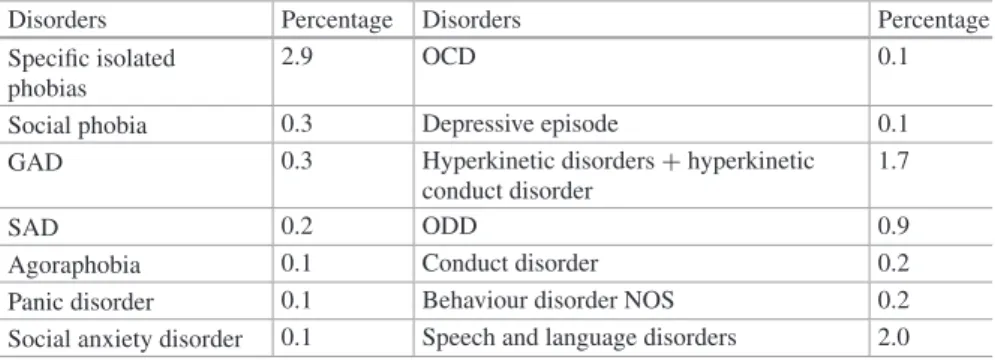
In a review of epidemiological studies from 51 Asian countries, the prevalence of child and adolescent mental health problems and disorders was in the range of 10–20 % (Srinath et al. 2010). Even in developed countries, the mental health needs of adolescents are going unmet (Patel et al. 2007).
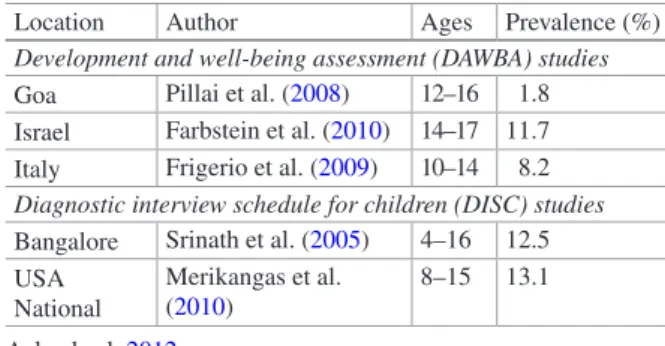
Prevalence and correlates of mental disorders in Israeli adolescents: results from a national mental health survey. Lifetime prevalence of mental disorders in US adolescents: results from the National Comorbidity Survey Replication-Adolescent Supplement (NCS-A).
Cognitive Behaviour Therapy with Adolescents
Introduction
A Brief Overview of Psychological Treatments for Adolescents
Psychological interventions in children and young people are of three types, therapeutic, preventive or focused on strengthening specific skills (Kendall 2006). Another challenge lies in the fact that young people are often referred by significant others such as teachers, parents and health professionals, making participation and decision-making in therapy different from that of adults.
Cognitive Behaviour Therapy as an Effective Treatment in Adolescents
Although CBT appears to be a unified therapeutic approach, CBT is actually diverse in its components. This is due to the fact that CBT is flexible and includes a variety of behavioral and cognitive strategies that the therapist can adopt while continuously monitoring the client's progress.
CBT for Adolescents and Adults Same or Different?
CBT developed within the framework of learning theories and gradually moved on to incorporate the mediating role of cognitions in the maintenance of emotional disorders, while behavior therapy focuses more on non-mediating models, that is, the direct relationship between the stimulus. and answer. CBT is becoming the treatment of choice for young people with various psychological problems with reviews providing evidence for this type of psychological intervention.
The Need to Adopt a Developmental Perspective in CBT
Therefore, there has long been hesitation in using CBT with younger clients, especially children and adolescents. Despite its emphasis on cognitive mediation, CBT is flexible and can also involve behavioral and cognitive strategies.
Assessment and Case Formulation in CBT—Cognitive Theory Versus Case Formulation
In an attempt to understand the applicability of CBT to younger clients, researchers have referred to theories of cognitive development (Inhelder et al. 1958; Vygostsky 1988). Therefore, there is a need for the clinician to consider the developmental stage of the child (O'Connor and Creswell 2005).
Assessment
Case Conceptualization
A detailed interview that guides the adolescent through various possible experiences and factors is the most reliable method. Often significant others also need to be interviewed because the adolescent cannot provide much information about early development.
Therapeutic Relationship in CBT for Adolescents
Despite the emphasis on early experiences, CBT is believed to take a here-and-now approach to dealing with problems. When working with adolescents, it is important to involve parents in the intervention at various times and to keep the adolescent informed.
Homework in CBT
This is particularly relevant in anxiety management, where parents are either co-therapists, facilitators or part of the intervention due to their role in maintaining anxiety.
Ethical Practice in CBT for Adolescents
Cognitive Behavioural Strategies
They are further described in the later sections of this chapter, in the context of conditions for which they have been found to be effective. It is the treatment of choice in the management of specific phobia, panic disorder, social phobia and other anxiety disorders.
Depression in Adolescents
Anxiety Disorders in Adolescents
Cognitive Behavioural Strategies in the Management of Anxiety and Depression
Behavioral strategies are also useful in reducing anxiety and are based on learning principles such as habituation and extinction and social learning. The behavioral model of depression highlights skill deficits as an important aspect in the maintenance of depressive symptoms (Lewinsohn and Clarke 1999).
Treatment Modules and Research on CBT in Adolescents with Depression
There is limited evidence that cognitive behavioral therapy is more effective than active controls or TAU or medication at follow-up (James et al. 2013). Therefore, there is a need for controlled research with active treatment controls and longer follow-up to further establish the efficacy of CBT for adolescent depression.
Programmes Based on Cognitive Behavioural Framework for Other Anxiety Disorders
Reviews of CBT for adolescents indicate mixed results for the effectiveness of CBT (Compton et al. 2004; James et al. 2013).
CBT for Specific Anxiety Disorders
While it is the most recommended treatment for OCD, clinicians document difficulties in implementing CBT for this disorder, due to poor compliance, attrition, difficulty modifying beliefs, and family accommodation that maintains symptoms. However, the effectiveness of EX/RP increases with the inclusion of cognitive interventions (Soechting and March 2002).
Cognitive Behavioural Management for Problems Related to Anger and Aggression
This is achieved through the practice of strategies such as random contracting, parent management training or even cognitive restructuring where cognitive distortions may interfere with or inhibit social interactions (Spence 2003). Deficits in self-esteem have been identified as an important factor in substance use disorders, high-risk sexual behaviors, aggression, and internalizing disorders such as anxiety and depression.
Parental Involvement
Problems such as attention-deficit/hyperactivity disorder, conduct disorders, and other externalizing disorders involve interventions with both the adolescent and the parents. Conflict resolution skills and dealing with negative self-talk influence regulation skills such as learning to relax or using social problem-solving skills used in dealing with problems related to anger (Novaco 1979).
Varied Forms of CBT Delivery
Recent advances in this field include the application of mindfulness-based interventions for adolescents in the management of anxiety (Urvashi 2013), conduct disorder, aggressive behaviors (Singh et al. 2007) and attention deficit/. Mindfulness-based interventions, considered the third wave in behavioral therapy, are considered to be a promising approach in the management of adolescent psychological problems (Burke 2009).
Conclusions
Cognitive-behavioral psychotherapy for anxiety and depressive disorders in children and adolescents: an evidence-based medicine review. Ollendick (Eds.), Handbook of interventions that work with children and adolescents: Prevention and treatment (pp. 3–25).
Community-Based Mental Health Interventions in Adolescents
Manjula
- Need for Community-Based Interventions
- Community-Based Interventions for Adolescents
- Interventions Carried Out in Community Health Clinics
- Early Intervention, Prevention, and Promotion Interventions Carried Out in the Community
- Preventive Interventions
- Indian Scenario
- Conclusions
Several interventions have been identified as evidence-based for the treatment of mental health problems in adolescents. Examples of such programs are Beyondblue, Mindmatters and First Aid in mental health care (Davis et al. 2000).
Building Skills
Study Skills
Introduction
The most comprehensive approach to study skills comes from the information processing model (Adams and Hamm 1994; Gettinger and Nicaise 1997; Harvey and Goudvis 2000; Schunk 2000). Within the information processing framework, the development of study skills is conceptualized as strengthening cognitive processes in a number of information processing systems (Schunk 2000).
Importance of Developing Good Study Skills
Reviewing Your Learning Style (Scales Included in Annexure)
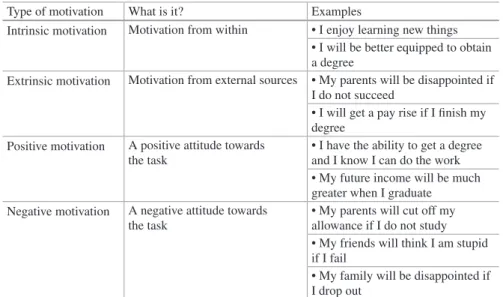
The Role of Motivation in Developing Effective Study Skills
Study Strategies for Different Learning Styles (Cottrell 2008)
- Auditory
- Visual
- Kinaesthetic
- Multi-sensory
However, a combination of using all the senses is the best way to learn. Multisensory learning involves activating as many senses as possible simultaneously to aid in comprehension and recall.
Classroom Applications of Study Skills Research
The most effective study strategy instruction helps children develop strategies that work for them. Future research is needed to identify instructional conditions most conducive to the successful integration of study strategy instruction with classroom learning.
Study Schedule: How to Make One and Stick to It
In a study by Scanlon et al. 1996), for example, taught teachers to incorporate intensive and explicit study strategies into the context of their social studies teaching. In developing awareness of different strategies, students should be encouraged to explain the suitability of each study strategy for different tasks.
How to Study .1 Goal Setting
- Long-term Goals
- Short-term Goals
Successfully completing three units in the next study period, achieving an average in each of your subjects during the year or completing your studies by the end of the following year are all short-term goals. Mini-goals related to your studies are results you want to achieve the next day, week or at the end of the semester.
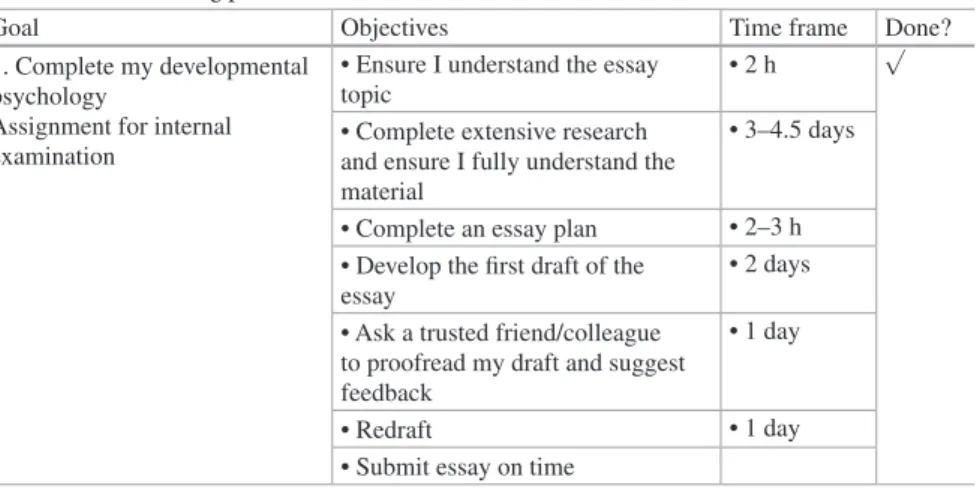
Effective Time Management and Organization (Cottrell 1999)
- Prioritization (or “It is as Simple as ABC”)
- Constructing a Time Management Plan
- Strategies to Manage Procrastination
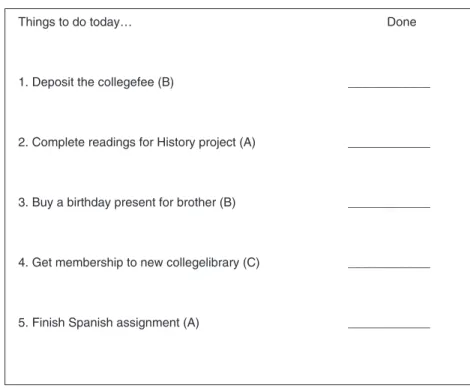
It's a good idea to time yourself to see how long different tasks actually take. It is also good to plan your daily tasks and one way to do this is to write a.

Specific Study Techniques
- Memory and Learning Techniques
- Active Learning
- Deep Approach to Learning
- Acronyms
- Acrostics
- Chunking
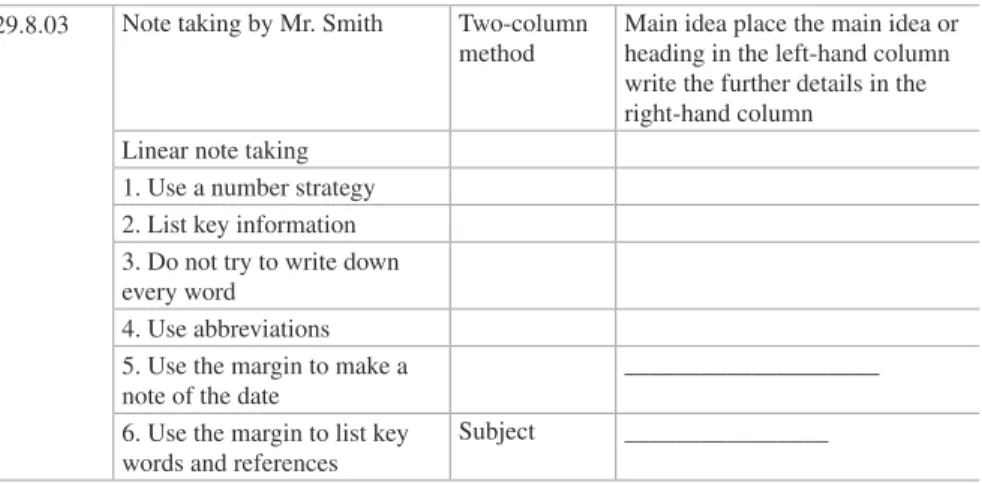
- Note Making
- Spider Diagrams
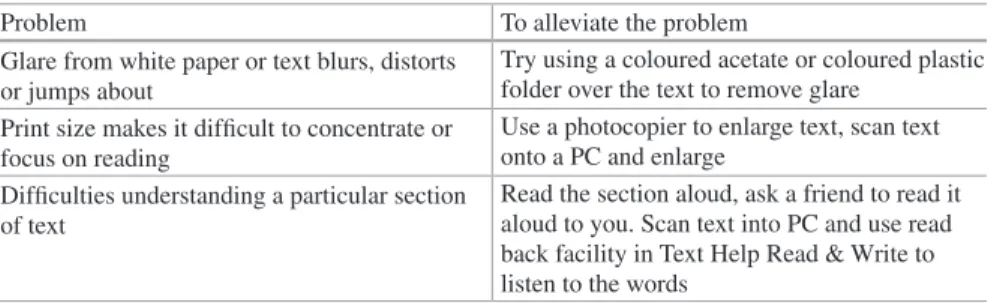
- Reading Skills
You are more likely to be effective in your studies if you take a deep approach to learning. It is also very unlikely that you will be able to write coherently without a plan.
Coping with Examination Anxiety .1 Before the Examination
- Prepare Notes with the Examination in Mind
- Managing Your Time
- Getting Started
- Practice
- Studying with Others
- Memory
- Abdominal Breathing Exercise
- Calming Breath Exercise
Plan your answers to all remaining questions to avoid panic towards the end of the exam. Relaxation can help you manage your anxiety so that you can perform to the best of your ability on the exam.
Conclusion
It is helpful to have a daily schedule that includes not only the study schedule but also some enjoyable activities. Effects of interactive vocabulary instruction on vocabulary learning and reading comprehension of students with learning disabilities in secondary school.
Interpersonal Skills
- Introduction
- Significant Relationships in the Life of Adolescents .1 Siblings
- Parents
- Peers
- Romantic Relationships
- Case Vignette
- Cognitive Behaviour Therapy Sessions
- Intake Session
- Assessment
- Beginning Phase
- Mi+ddle Phase
- End Phase
- Specific Issues in Adolescence
- Conflicting Relationship with Parents
- Romantic Relationships: Creating the Balance and Dealing with Break-Up
- Beyond ‘Normal’ Defiance: Oppositional Defiance Disorder
- Tips to Build Healthy Relationships
- Barriers to Treatment .1 Practical Barriers to Care
- Client Focused Barriers to Change
- Therapist Focused and Therapeutic Setting Based Barriers to Change
- Summary
Engaging in intimate dyadic relationships provides the adolescent with the opportunity to explore their own sexuality. It is helpful for the adolescent if the therapist can create an environment for discussion about these relevant topics.
Anger Management
Anger
Problems Caused Due to Unmanaged Anger
Anger and Adolescents
Anger and Psychopathological Conditions
Prevalence of Anger in Adolescents
Determinants of Anger Among Adolescents
Case Vignette
Measuring Anger
Management of Anger
CBT-Based Anger Management Training Module
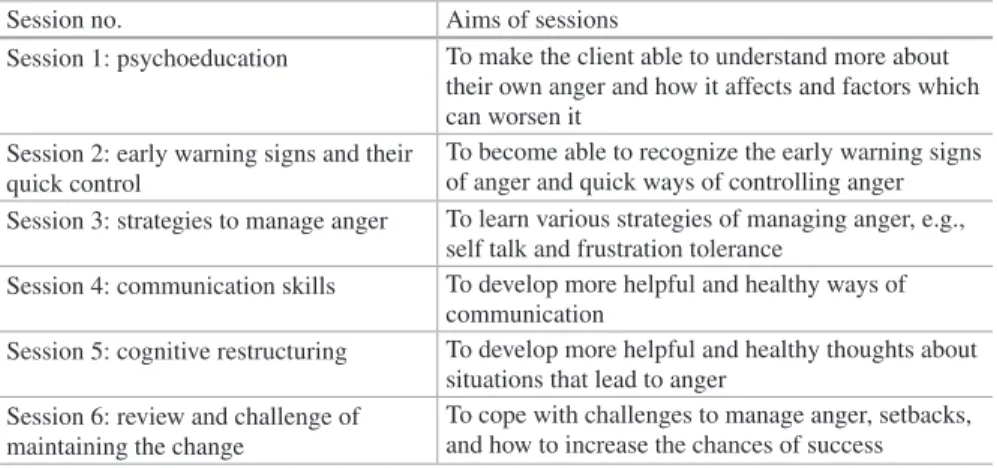
Sessions
- Session 1: Psychoeducation: Understanding Anger
- Anger Effects the Body
- Anger Effects Behavior
- Anger Effects Thought Process
- Homework Assignment 1: Breaking up the Anger
- Triggers for Anger
- Homework Assignment 2: Getting to Know Your Anger Triggers
- Session 2: Early Warning Signs and Quick Anger Control
- Bodily Sensations
- Stop, Think, Go
- Time-Out
- Deep Breathing
- Session 3: Strategies to Manage Anger
- Homework Assignment 1: Are There Things that You Already Do?
- Homework Assignment 2: My Calming “Positive Self Talk”
- Session 4: Communication Skill
- Coping with Criticism
- Session 5: Cognitive Restructuring: Challenging Angry Thoughts and Beliefs
- Our Thoughts Affect Our Anger
- Homework Assignment 1: Do You Agree with This Statement? Why?
- Homework Assignment 2: Try to Recollect in Your Mind the Last Time You Remember Feeling Angry
- Behavioral Analysis: Learning Our ABCs for Anger
- ABC Form—Example
It is not possible to jump from 0° to 100° without going through all the other temperatures. It is important to stop any attack; we must find out whether the criticism is justified or unjustified.
Some Common Themes in Angry Thoughts
- Strategies for Changing Our Automatic Responses
Anger is not caused by an event itself, rather it stems from how we think about those events. Developing a very clear ABC of the problem can make it much easier for us to realize how our thoughts at "B" lead to our emotional and behavioral responses at "C".
Self-awareness
Often we get angry not so much about the event itself, but about our individual response to it. Problems can come when we start automatically reacting to our anger triggers, which means we limit our options.
Recognize the Most Unhelpful Thoughts
Challenge the Unhelpful Thoughts
Helpful Strategies: Coping by Self Talk
- Session 6: Review and Challenge of Maintaining the Change
- Barriers to Change
Many people don't even expect their uncontrolled anger to be a problem with them; they turn to a counselor because people around them suggest it, such as their parents, friends, and teachers. Anger is inherited: A common myth about anger is that the way a person expresses anger is inherited and cannot be changed, and that anger expression is fixed and unchanging.
Conclusion
These adolescents are in denial, and this attitude can be a barrier to the anger management process. Myths About Anger – Certain myths related to anger act as an obstacle towards anger management and management.
Management of Sleep Problems
- Introduction
- What Is Sleep?
- Consequences of Sleep Deprivation
- Adolescent Sleep Struggles
- Adolescent Sleep Research in India
- Case Vignette
- Assessment
- Clinical Interview and History Taking
- Scales and Questionnaires
- Sleep Log/Sleep Diary
- Sleep Management in Adolescents
- Cognitive Behaviour Therapy—Treatment Rationale
- Collecting Pre-treatment Data
- Session I: Sleep Education: “Miles to Go Before I Sleep”
- Session II: Sleep Hygiene: “Sleep Smart for Sweet Dreams”
- Session III: Stimulus Control
- Session VI: Follow-up: “May You Sleep Happily Ever After”
- Barriers to Treatment
- Conclusions and Future Directions
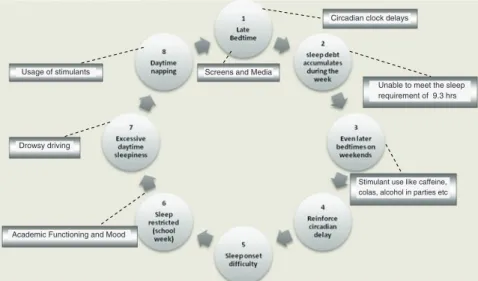
Time in Bed During the last part of the day, the adolescent went to bed to sleep. The following statement can be used to spark adolescent interest in sleep education.
Stress Management
What is Stress
Prevalence of Distress Among Indian Adolescents
Causes of Stress in Adolescents
How Does Body React to Stress
Signs of Stress Among Adolescents
Implications of Untreated Stress
Coping with Stress and Building Resilience
Two main types of coping styles have been extensively reviewed—problem-focused (approach-focused) coping and emotion-focused (avoidance-focused) coping. Adolescents can learn healthier ways to manage stress by learning more effective and problem-focused coping strategies.
Need for Management of Stress Among Adolescents
Young people often use less effective coping strategies such as wishful thinking, self-blame, complaining, excuses, not communicating, bullying, being withdrawn, smoking or drinking. Poor coping strategies used by young people can have significant short- and long-term consequences for their physical and emotional health.
Case Vignette
Learning various coping strategies, such as seeking social support, cognitive restructuring, positive self-talk, problem solving, relaxation, physical activity, sleep and diet regulation, cognitive restructuring and self-talk, can be successful in combating adolescent stress and promising a solution for the future. healthy lifestyle.
Assessment of Stress
- Interview-Based Assessment
- Self-monitoring
- Questionnaires and Inventories
Stress Management Interventions
- Avoid Stressors
- Assertiveness Training
- Conflict Management
- Time Management
- Alter the Stressor
- Progressive Muscle Relaxation Technique
- Diaphraghmic Breathing
- Mindfulness Meditation
- Guided Imagery
- Visualization
- Expressing Thoughts and Feelings
- Adapt to the Stressor
- Distraction
- Worry/Rumination Postponement
- Cognitive Restructuring
- Practising Positive Thinking
- Using Positive Affirmations
- Problem Solving
- Accept the Stressor
- Lifestyle Modification
They may be asked to stagger time so that they have time to complete important tasks as well as free time for relaxation. Youth may be asked to use these techniques to challenge their unhelpful thoughts that result in the experience of stress.

Barriers to Treatment
Regular exercise can also serve as an effective distraction technique and can directly neutralize the harmful effects of stress on blood pressure and the heart. Extremely high levels of stress can also have a major impact on developing stress management skills.
Summary and Conclusion
Available at: http://www.articlesbase.com/mental-health-articles/prevalence-of-stress-among- schoolchildren-in-kerala-1868702.html. A cross-sectional study of stress among rural college students in Sangli District, Maharashtra.
Pain Management
- Introduction
- Cognitive Behavioral Model of Pain
- Case Vignette
- Assessment
- Pain Management Sessions
- Initial Sessions
- Middle Sessions
- Termination Sessions
- Follow-Up
- Barriers to Treatment and How to Overcome Them
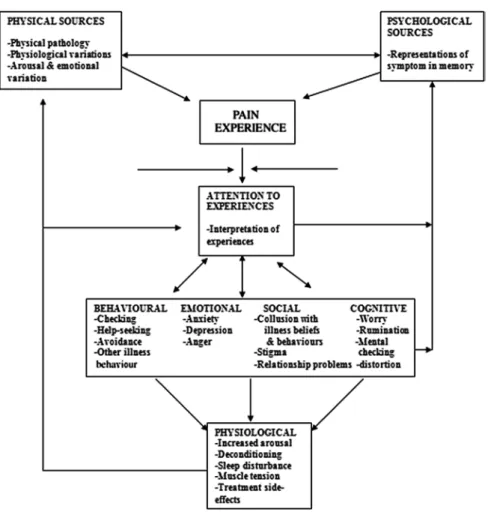
Experience of illness in childhood - Children with a history of physical illness in childhood, reinforced by anxious parents, may increase focus on bodily symptoms, anxiety and illness behaviors in adulthood, and resort to maladaptive coping behaviors. As a result, you may avoid doing activities (eg not going to school) for fear of increased pain. The therapist can draw a pain cycle diagram to show the young person the connection between pain, anxiety, negative thoughts and avoidance behaviour.).
Interventions
Anxiety Management
Introduction
- Presentation of Anxiety Symptoms