Kyoto University,
Graduate School of Economics Discussion Paper Series
Applications of Agent-Based Modeling and Simulation in Organizational Behavior and Human Resource Management:
A Bibliometric Mapping Study, 2001-2019
Jiunyan Wuand Tomoki Sekiguchi
Discussion Paper No. E-19-008
Graduate School of Economics Kyoto University Yoshida-Hommachi, Sakyo-ku
Kyoto City, 606-8501, Japan
November, 2019
Applications of Agent-Based Modeling and Simulation in Organizational Behavior and Human Resource Management: A Bibliometric Mapping Study, 2001-2019
Jiunyan Wu1* and Tomoki Sekiguchi2
1 Graduate School of Economics, Kyoto University, [email protected]
2 Graduate School of Management, Kyoto University, [email protected]
Abstract
Despite still a small number of publications on the applications of agent-based modeling and simulation (ABMS) in organizational behavior and human resource management (OB/HR), associated research has grown steadily over the past years. This study aims to review existing OB/HR research that applies ABMS. First, using the Web of Science database, we systematically identify 81 relevant OB/HR articles published between 2001 and 2019, which applied ABMS in their studies. Second, we analyze the characteristics of ABMS reported in 81 articles. The results illustrate that the focal
research makes the extensive use of ABMS as a means of theory development and the enhancement of AMBS transparency is demanded. Third, we use an approach of bibliographic mapping to objectively analyze 81 articles. We draw on this analysis to answer two questions: a) What key terms the 81 articles of ABMS applications in OB/HR frequently built over 19 years?, and b) what key clusters and trends occurred during the period? The results reveal the focal research consists of four clusters.
Lastly, we suggest opportunities which are promising to be continued or yet to be addressed by applying ABMS in OB/HR. Based on the analysis of bibliometric mapping, we find that the research terms such as teams and emergence are evolved as research fronts and the terms such as behavior and innovation are emerging. In addition, we recognize that many key constructs and the associated
theories in OB/HR have not yet been incorporated in ABMS reported. As a promising additional or supplementary technique to the existing methods (e.g., a variable-based approach), the applications of ABMS can offer valuable insights to enrich our understanding in OB/HR.
Keywords: Literature review, agent-based modeling and simulation, bibliographic mapping
* Corresponding author
Introduction
The study of organizational behavior (OB) concentrates on the behavior, attitudes, and performance of people in organizations, where there are two or more persons working together to achieve a goal (Champoux, 2010). Human resource (HR) management focuses on facilitating the relationships among people (i.e., employees) in organizations and engaging in specific functions, such as recruiting, performance evaluation, and training. The field of OB/HR thus deals with the most complex and “unpredictable” (in some way) actors: people. In any modern organizations, people have to interact with dynamic internal and external stakeholders/environments in order to perform, just as Porter and Schneider (2014) said “in complex organizations, no single group is an island unto itself!”
(pp. 16). Ultimately, being a whole of a set of interdependent parts, a complex organization can demonstrate unintended and non-linear behavior (Anderson, 1999), let alone to further conceptualize its interconnection with larger contexts (e.g., inter-organizational processes within an industry). In order to unpack such complex systems in OB/HR, most quantitative research follows a variable-based approach in social psychology (Smith & Conrey, 2007) and an equation-based modeling in
management science (Sabzian, Shafia, Naeini, Jandaghi, & Sheikh, 2018). However, there has been a growing call to advance research design towards a direct quantitative method, largely signified by agent-based modeling and simulation (ABMS), to capture and understand the dynamics of phenomena within and across individual, group and organizational levels (Kozlowski & Chao, 2012; Kozlowski, Chao, Grand, Braun, & Kuljanin, 2013).
ABMS, a bottom-up computational technique, is being recognized and used by researchers from a variety of disciplines in studying a range of emergent behaviors or phenomena (Hughes, Clegg, Robinson, & Crowder, 2012) and simulating dynamic large-scale complicated systems, such as organizational behavior (Abar, Theodoropoulos, Lemarinier, & O'Hare, 2017). Through building three core blocks in ABMS: a) Agents (e.g., individuals, groups, or organizations), b) environments (e.g., tasks, policies, social networks, or organizational structures), and c) interactions (e.g., self-governing or adaptive behavior due to learning from others), ABMS can simulate generative outcomes to yield higher-level phenomena to meet the research purposes.
One of the main advantages of ABMS is that the method allows researchers to create a
theoretically-based model and systematically vary a great number of built-in parameters/assumptions operating under different scenarios and running over a period of time, namely virtually unconstrained simulations, which are challenging to proceed using traditional approaches (e.g., field studies and lab experiments) (Davis, Eisenhardt, & Bingham, 2007). Thus, ABMS is suitable when the theoretical focus is longitudinal, processual, or when empirical data are challenging to obtain (Davis et al., 2007).
Additionally, while the process of emergence is barely examined directly but rather an inference based on cross-sectional data (Kozlowski, 2015), ABMS offers advantages over traditional research design for capturing emergence. By modeling simple behavioral rules (e.g., a set of mathematical equations and logic) originating from a lower level of individuals, ABMS helps trace the non-linear development directly to elaborate why/how a target phenomenon emerges and evolves at a higher level. Clearly ABMS also has potential limitations, such as difficulty of identifying the correct balance between simplicity and complexity (Smith & Conrey, 2007), the issue of external validation (Davis et al., 2007;
Hughes et al., 2012), or making false assumptions in modeling (Davis et al., 2007).
ABMS has enabled OB/HR researchers to explore certain aspects of research areas, for examples, in leadership (e.g., Serban et al., 2015), team cognition (e.g., Dionne, Sayama, Hao, &
Bush, 2010; Palazzolo, Serb, She, Su, & Contractor, 2006), and organizational design (e.g., Rivkin &
Siggelkow, 2003). However, the adoption of ABMS in OB/HR and other related fields is still in a nascent stage (Gómez-Cruz, Loaiza Saa, & Ortega Hurtado, 2017). We thus believe that a systematic review on the status quo of ABMS applications in OB/HR is necessary, so that to offer insights on ways that the focal research might have to proceed to be successful.
A bibliometric mapping, defined as a quantitative study of bibliographic data, is a powerful method for examining a large volume of literature objectively (Cobo, López‐Herrera, Herrera‐
Viedma, & Herrera, 2011). For example, Markoulli, Lee, Byington, and Felps (2017) used a bibliometric approach to objectively review 12,157 human resource management articles and identified 100 topics and seven key themes for future research. Byington, Felps, and Baruch (2018) used the approach to analyze 1,490 articles published in Journal Vocational Behavior and drew a co- citation and topic map. Overall, the mapping of bibliometric data through visualization and networks has experienced the largest growth (e.g., Cobo et al., 2011; van Eck & Waltman, 2009). We thus
employ the analysis of a bibliometric mapping to our review study and aim to objectively provide researchers with insights into the status quo and future trajectories of ABMS applications in OB/HR.
This study reviews the articles of applying ABMS in OB/HR published during 2001-2019 through the bibliometric mapping technique. On one hand, our study can be complementary to earlier studies of the ABMS applications in other related fields. These include business process management (Halaška & Šperka, 2018), human systems (Bonabeau, 2002), management science (Sabzian et al., 2018), organization science (Fioretti, 2013), organizational psychology (Hughes et al., 2012), and the organizational and management research (Gómez-Cruz et al., 2017; Harrison et al., 2007). On the other hand, our study is specifically different from prior work that we demonstrate how a bibliographic mapping, a structured, evidence-driven and visualization-rich method, can supplement a conventional literature review to identify the current status and shed light on future research opportunities. The results reveal that the focal articles (= 81 articles) consist of four clusters: Complex organizations;
micro-dynamics and emergence; dynamically co-evolved relationships; and inter-organizational processes. Key research terms such as teams and emergence are evolved as research fronts and the terms such as behavior and innovation are emerging. Our analysis also shows that the continuity of integrating ABMS in OB/HR can benefit to complementing empirical studies and adding measurement precision to existing theory; a well-described and replicable ABMS presentation is demanded; the use of ABMS helps overcome methodological challenges; additional value will also come from research that incorporates ABMS with the influential OB/HR constructs and their associated theories. The review offers the implications that help researchers better understand the promising progress of ABMS applications in OB/HR.
Methodology Samples
Following Markoulli et al.’s (2017) four-stage process of identifying target articles through searching the Web of Science (WoS) database, we conducted a similar process to identify the literature for our review. First, we searched the WoS database for articles which contained at least one of the following search terms in their titles, abstracts, or keywords: Multi agent (including any suffix), and agent-based (including any suffix). This initial search returned 7,054 articles published in 2,111
journals between May 1992 and July 2019. Second, we restricted to the journals broadly related to the OB/HR field. According to the SCImago Journal and Country Rank (2018), we selected relevant journals in the following way: (a) The whole journals ranking in the category of OB/HR (= 204 journals); and (b) the top 100 journals ranking in the categories, such as business management,
decision science, psychology, and strategy management. Third, we intersected two sets of data derived from above two steps and collected 268 articles. Fourth, we manually screened 268 articles, for example, excluded literature review articles or the research context irrelevant to OB/HR. The final step retained 81 articles published in 38 journals between 2001 and 2019. In other words, only around 1%
(= 81 / 7,054) of published ABMS relevant articles are fallen in the field of OB/HR while most ABMS articles are related to the disciplines of computer science, engineering and economics. This
observation is consistent with that of Harrison et al.’s (2007), which also concluded that computer simulation studies in management and sociology fields lag behind those in economics and political science fields in leading journals.
The 81 articles presented a variety of categories based on the WoS definition, such as
management (64.2%), operations research management science (38.3%), and business (23.5%) just to name a few. The number of articles published per year has been increasing with a compound annual growth rate of 9.9% from 2001 to 2018 (see Figure 1). The most active discussion on this focal topic takes place in Organization Science journal (i.e., published nine articles of ABMS applications in OB/HR, accounting for 11.1% of total publications), that aims to “publish fundamental research about organizations, including their processes, structures, technologies, identities, capabilities, forms, and performance.” (Organization Science, n.d.).
--- Insert Figure 1 about here --- Bibliometric Mapping
To conduct a systematic and objective review, we employed the VOSviewer bibliometric mapping (van Eck & Waltman, 2009). There are advantages of employing this mapping approach over prior reviews, such as broader scope, detail with less bias, and visual presentation (Byington et al., 2018). First, a bibliometric mapping facilitates literature reviews of broader scope as argued above.
Markoulli et al. (2017) used the approach to review 12, 157 human resource management articles and identified 100 topics for future research. Without a bibliometric mapping method, such a large volume of literature reviews and resultant implications would be difficult to be achieved. Second, a
bibliometric mapping enables reviews with more detailed and evidence-driven information about the literature analyzed, such as the co-occurrence of key words, reducing the potential for a biased representation of a literature. Third, a bibliometric mapping has the advantage of being visual. For example, VOSviewer bibliometric mapping can create bibliometric networks and provide overlay visualization to show literature developments over time (van Eck & Waltman, 2009).
Mapping Procedure
To identify key terms, clusters, and trends in the 81 articles sampled, we uploaded the article records, including their titles, abstracts and key words into VOSviewer. Terms with similar meaning were grouped together using the VOSviewer thesaurus (e.g., “strategies” and “strategy”). VOSviewer applies the technique of natural language processing to objectively identify the primary terms of 81 articles. For example, VOSviewer systematically identifies nouns and noun phrases – i.e. multi-noun phrases (e.g. “decision-making”) and adjective + noun phrases (e.g. “organizational design”). To ensure reliable assessment of term relations, we included a primary term occurred in at least four articles in our co-occurrence analysis. This threshold resulted in the identification of 41 terms. We further excluded highly generic noun phrases that do not constitute any specific research meaning (e.g., “perspective” or “framework”) and concluded with 31 key terms. Then, we ran a VOSviewer co- occurrence analysis to identify a) the number of times each of 31 key terms was occurred, and b) the association strength to which these key terms co-occurred. The relations between key terms were spatially drew by the VOSviewer algorithm such that the distance between key terms in the map indicates their degree of co-occurrence (Waltman, van Eck, & Noyons, 2010). Based on this bibliometric mapping, VOSviewer further identified a number of clusters. Figure 2 shows the co- occurrence map of 31 key terms referenced in the 81 articles and four clusters identified (each color represents one cluster).
--- Insert Figure 2 about here ---
Results
The Characteristics of Agent-Based Modeling and Simulation Applications in OB/HR In this section, we focused on how ABMS was applied in OB/HR but not offering formal guidance for the development or assessment of ABMS (for a detailed description, see Davis et al., 2007; Fioretti, 2013; Harrison et al., 2007; Smith & Conrey, 2007). We observed three characteristics of ABMS usage in OB/HR. First, 75.3% of the examined articles applied ABMS for theory
development and a growing trend in integrating ABMS with other analytic approaches. Second, research used different formats to describe the study models (e.g., equations, illustrations, and flowcharts), and there is much room for improvement, for example, some details of the models are missing or not well structured. Third, while 29.6% of the reviewed articles used the NK model fitness landscapes (Kauffman, 1993) to address organizational-level questions, researchers theorized and developed the customized models per research interest by utilizing various ABMS platforms to resolve more complex scenarios in OB/HR.
ABMS research objectives. In general, a research aims for either theoretical purpose (i.e., theory development, and theory testing) or methodological purpose (i.e., generalizability, precision in control and measurement, and authenticity of context) or mixed purpose (Turner, Cardinal, & Burton, 2017). About 75.3% (= 61/81 articles) of the examined articles were to build a model to explain the behavior of agents (being proxy for individuals, teams or organizations) and its consequence to extend the existing models/theories (e.g., Siggelkow & Levinthal, 2003), namely for the purpose of theory development. For this objective, researchers essentially use ABMS to model hypothetical cases, systematically vary the values of parameters/assumptions, allow for rigorous experimentation and draw conclusions based on the simulation results. As ABMS permits “unconstrained” simulations to generate rather than deduct the consequences of these processes (Harrison et al., 2007), it can serve as an ideal tool for such an explorative study. In some research, due to the experimentation power of ABMS, it can even generate unexpected results to challenge old wisdom (e.g., Levine & Prietula, 2012; Siggelkow & Rivkin, 2006).
As ABMS is being recognized as a novel approach to add value to traditional techniques (e.g., Kozlowski et al., 2013; Smith & Conrey, 2007), we also noted a growing trend in integrating ABMS
with other analytic methods (e.g., case study, archival records, field data, or empirical studies) in OB/HR (e.g., Kogut, Colomer, & Belinky, 2014; Levine & Prietula, 2012; Li & Xiao, 2006). Therein, ABMS was applied to validate the research hypothesis (i.e., theory testing), generalize for the external validity, or use as a “neutral” tool for the purpose of verifying competing models to generate
theoretical implications (Debove, Baumard, & André, 2016; Levinthal & Workiewicz, 2018). We highlight more details in the section of future directions.
ABMS presentation. A good representation of a computational model is important for the mutual understanding between stakeholders which contributes to the credibility and usefulness of a model (Onggo, 2013). More importantly, it is critical to ensure that the model can be replicated and further built upon by other researchers. For example, many studies have adapted Kauffman's (1993) NK model, a model originally developed in the context of evolutionary biology, to study the organization’s strategy (Rivkin, 2001), organizational design (e.g., Rivkin & Siggelkow, 2003), alliances (Aggarwal, Siggelkow, & Singh, 2011), and inter-organizational processes in the context of supply chain management (Giannoccaro, Nair, & Choi, 2018), just to name a few. Miller, Zhao, and Calantone (2006) extended March’s (1991) classic model on exploration and exploitation to study organizational learning.
With regards to the format of the ABMS presentation, equations, illustrations, flowcharts, tables, pseudo-code, Unified Modelling Language, and Overview Design and Details protocol (ODD) (partially included) (Grimm, Berger, DeAngelis, Polhill, Giske, & Railsback, 2010) are the most prevalently used techniques to describe a model representation. However, our review raised the concern of methodological transparency defined as “the degree of detail and disclosure about the specific steps, decisions, and judgment calls made during a scientific study” (Aguinis, Ramani, &
Alabduljader, 2018, pp. 84). For example, about 28.3% (= 23/81 articles) of examined articles didn’t clearly describe the initialization or the generative development of the model: What is the initial state (at time t = 0) of the model space? How are the values of variables varied during simulations and within what ranges? Without a clear explanation of the initial or boundary conditions of ABMS, researchers cannot understand the processes properly and thus the models/results cannot be accurately replicated and learned from. About 3.7% (= 3/81 articles) of the examined articles described the model
in plain text, which may make it even difficult to capture the precise sequence of modeling procedures.
We believe that the importance of a structured model presentation can equal to the critical role of descriptive statistics playing in any empirical studies, which enables researchers to present the data in a more meaningful and standardized way. We urge future researchers in OB/HR to cautiously report the details and increase transparency of their computational models. We offer the recommendations in the section of future directions.
ABMS framework and platform. About 29.6% (= 24/81 articles) of the reviewed articles used the NK model fitness landscapes (Kauffman, 1993) to resolve their research questions. The NK model was firstly developed in evolution biology to study genetic systems (Kauffman, 1993) and then has contributed greatly to the organization design literature (Davis et al., 2007). Common research questions, such as “how long does it take to find an optimal point (e.g., high-performing strategy)?”, or “what is the performance of the optimal point?” can be suitable to apply the framework of NK fitness landscapes (Davis et al., 2007). In our review, we observed that most researchers applied the NK model to address organization-level questions, for example, “how should firms organize to explore and search such an altered performance landscape?” (Siggelkow & Levinthal, 2003), and
“how do environmental turbulence and complexity affect the appropriate formal design of organizations?” (Siggelkow & Rivkin, 2005).
In addition to using NK model, OB/HR researchers often need to conceptualize specific interactions/processes and develop customized computational models to answer different research questions (e.g., “how does the pattern emerge and change?”), or design environmental jolts (e.g., membership turnover). According to research needs, model development effort, model’s scalability level, or model scope, various ABMS platforms have been chosen to tackle complex research
questions and overcome methodological challenges. Chae, Seo, and Lee (2015) used NetLogo toolkit (Wilensky, 1999) to examine task difficulty and team diversity on team creativity. Wang, Gwebu, Shanker, and Troutt (2009) used Repast toolkit (North, Collier, & Vos, 2006) to model knowledge sharing. Swarm toolkit (www.swarm.org) developed at the Santa Fe Institute was applied for studying inter-organizational processes in supply chain networks (e.g., He, Wang, & Cheng, 2013; Lin, Sung, &
Lo, 2005). In particular, we experienced that NetLogo platform stands out as the most user-friendly,
best documented platforms for ABMS (Fioretti, 2013; Smith & Conrey, 2007), and easier
development effort for modeling a medium- to large-scale of agents’ interactions (Abar et al., 2017). A detailed comparison of various ABMS tools can be found in Abar et al.’s (2017) work. We discuss more details in the section of future directions.
The Characteristics of Four Clusters
To identify the themes in each of four clusters, we firstly classified 81 articles that belonged to one of four clusters. An article was deemed to "belong" to a certain cluster if a) the majority of the key terms mentioned in an article's title/abstract/keywords belonged to a single cluster, and b) an article's title/abstract/keywords included at least one of 31 key terms (approximately 90.1% of 81 articles contained at least one key terms). We then labeled four clusters based on the themes of the associated publications.
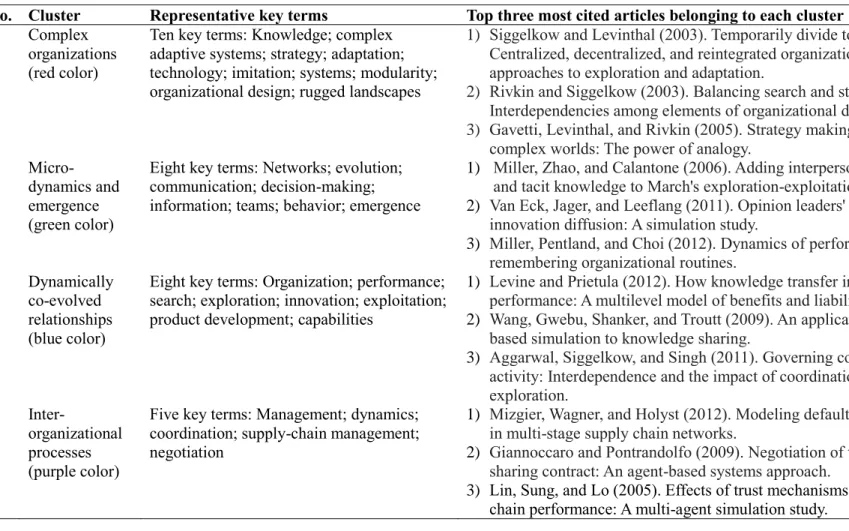
Table 1 shows four clusters, identified key terms in each cluster, beginning with the highest impact (i.e., the highest occurrence rate) terms and the top three most cited articles belonging to each cluster. Figure 3 reveals the comparative growth of each of the four clusters in terms of number of articles published from 2001 to 2019. We would note that overall literature has grown steadily over the past years, at a compounding growth rate of 9.9% (also see Figure 1); the body of research was characterized by continuously evolving and shifting perspectives, implying no single cluster
completely dominated; and several rounds of rapid turnaround of publications (e.g., 2008-2011, 2013- 2016, 2017-2018), which could be attributed by few highly cited review articles related to the
applications of ABMS (e.g., Gómez-Cruz et al., 2017; Harrison et al., 2007; Hughes et al., 2012;
Kozlowski et al., 2013).
--- Insert Table 1 and Figure 3 about here
---
Cluster #1: Complex organizations. This cluster focuses on understanding the complex interdependencies within the organizations under various settings (e.g., different organizational structure, hierarchies, incentive systems, or environmental changes), which can exhibit non-linear, non-equilibrium, or even surprising behavior at organizational level. Key topics developed to understand complex relationships in organizations include a temporary decentralization of an
organizational structure both to avoid low-performing activity configurations in the short run and to coordinate across its divisions to reach the long-term benefits of higher performance (Siggelkow &
Levinthal, 2003); a balance of search (i.e., to continuously search for good combinations of decisions) and stability (i.e., to stabilize around good decisions once discovered) to design an effective
organization (Rivkin & Siggelkow, 2003); and by examining management and structural
characteristics, the usage of analogical reasoning to transfer useful wisdom from similar settings experienced in the past (Gavetti, Levinthal, & Rivkin, 2005).
The publications in this cluster were emerged in the very beginning stage with the first article about a firm’s strategy to deal with knowledge replication and imitation (Rivkin, 2001) and continued to draw research attention (see Figure 3). Therein, more than half (55.6%) of articles in the cluster modeled their organizational problems by adapting Kauffman's (1993) NK model. For example, Siggelkow and Rivkin (2006) adapted the NK model to study the effects of low-level exploration on firm-wide exploration. In their model, each simulated firm must resolve N (= 8) decisions with K (=
0~7) degree of interdependence among a firm’s decisions. For example, at the extreme case, if K equals to 7, the contribution of each decision depends on how all other decisions are resolved. Their results, contrary to the old belief, showed that in multilevel organizations the increase of exploration at lower levels can reduce overall exploration and thus result in lower performance in environments where broad search is required.
By defining the fundamental logic (e.g., when to trigger what event by how), or mathematical rules that govern the interactions of the agents, ABMS can simulate generative outcomes to yield higher-level and non-linear phenomena to meet the research purposes (Billari, Fent, Prskawetz, &
Scheffran, 2006). In Miller and Lin’s (2010) study, they showed by adding pragmatists (learning beliefs from better performers) to organizations with coherentists (learning beliefs that fit together) or conformists (adopting beliefs that are popular) produces a non-linear (S-shaped) effect on knowledge achieved. As be imagined, such non-linear effect could be difficult to be detected and verified through empirical study. In addition, “simulation is a way of doing through experiments” (Axelrod, 1997b).
ABMS can better facilitate the experimentation processes by systematically varying
parameters/assumptions built in the model at no cost and thus serve as an ideal tool for an explorative
study, which can sometimes generate unintended results and challenge old wisdom. For example, Siggelkow and Rivkin (2006) used ABMS and challenged a belief saying that unleashing low-level employees of an organization to explore extensively will expand the firm-wise exploration. As the result of simulations, Siggelkow and Rivkin (2006) contended that the organization needs to set boundary conditions for search and displayed the relationship between team performance and communication (low-level exploration) as following an inversely U-shaped form.
Cluster #2: Micro-dynamics and emergence. The second cluster, micro-dynamics and emergence, primarily consists of topics associated with individual behavior, networks, information flow and the emergence of phenomena. The featured articles associated with this cluster deal with extending March's (1991) model by further modeling three factors: Face-to-face interpersonal
exchanges, the spatial dimension, and tacit knowledge in organizational learning (Miller et al., 2006);
the role of opinion leaders who have a more central network position and influential power, playing in the adoption process of new products (Van Eck, Jager, & Leeflang, 2011); and modeling three forms of memory of individuals: Procedural, declarative and transactive memory and discuss their roles in the formation of organizational routines and the resultant change due to loss of personnel or any environmental turbulence (Miller, Pentland, & Choi, 2012).
Although the publications in this cluster were also emerged in the very beginning stage (i.e., the study examining the effect of incentive schemes on new product development process for various types of organizations (Natter, Mild, Feurstein, Dorffner, & Taudes, 2001)), the research gained more momentum after 2010 (see Figure 3) with a research by Dionne, Sayama, Hao, and Bush (2010), which modeled the role of leadership, either leader–member exchange (LMX) or participative leadership, in shared mental model convergence and its impact on team performance.
ABMS is regarded as a viable technique that enables theorization about bottom-up emergent processes (Harrison et al., 2007). Specifically, ABMS has the advantage of specifying micro-level dynamics: modeling individual behaviors or heterogeneous agents (e.g., with a different level of capabilities, motivation, or response behaviors) working in complex networks (Sabzian et al., 2018).
Over time, micro-level dynamics can exhibit emergent proprieties (e.g., a shared mental model, or team trust) at either meso- or macro-level as “Emergence is the result of bottom–up processes whereby
phenomenon and constructs that originate at a lower level of analysis, through social interaction and exchange, combine, coalesce, and manifest at a higher collective level of analysis” (Kozlowski, 2012, pp. 267). Research on diffusion of knowledge has adopted this approach (e.g., Miller et al., 2006).
Grand et al. (2016) proposed a four-step framework for developing and evaluating theories of emergence. Following their framework, Grand et al. (2016) constructed a computational model to examine the dynamic processes through which collectively held knowledge emerges from the individual- to the team-level. Dionne et al. (2010) modeled leadership and team properties in three experimental parameters, namely social network structure, heterogeneity of agents' domains of expertise, and level of their mutual interest and found that participative leadership promoted the development of shared mental model, a convergent bottom-up cognitive process (Kozlowski & Chao, 2012).
Compared to the studies in the cluster #1, we observed two differences. First, different from constructing ABMS based on Kauffman's (1993) NK model dominantly in the cluster #1, most of the articles in this cluster involved more complicated concepts and agents’ interactions to model
heterogeneous agents working in complex environments. It thus requires researchers to create own customized workflow, which cannot be fully realized by NK model. Second, more research begins to integrate ABMS method with empirical data. For example, Kogut et al. (2014) used the estimates from the Norwegian experiment and applied it to build parameters in ABMS to simulate American board data. Chandrasekaran, Linderman, Sting, and Benner (2016) conducted their study in two steps: (a) Multiple case studies for internal validity, and (b) the use of ABMS for external validity.
Chandrasekaran et al. (2016) firstly did a cross-case comparison of data from 142 informants in 12 R&D projects at three high-tech business units and developed the grounded theory, referring as responsive search, to understand how high-tech organizations manage R&D projects. They then built ABMS to explore the conditions under which the responsive search can outperform other strategies.
Cluster #3: Dynamically co-evolved relationships. The cluster - dynamically co-evolved relationships - primarily focuses on how and when changes of research interest happen and evolve over time. Highly cited articles published in this cluster include: Levine and Prietula (2012) aimed to examine how knowledge transfer impacts organizational performance. By combining field data with
ABMS approach, Levine and Prietula (2012) argued the impact of knowledge transfer to performance is contingent depending on specific characteristics (e.g., the knowledge exchange interacting within multi-level) and circumstances (e.g., environmental turbulence); Wang et al. (2009) used ABMS to simulate knowledge sharing: employee's decisions to share knowledge resulted from the complex interactions between organizational interventions and employee behaviors; Aggarwal et al. (2011) used ABMS to unpack the interplay between interdependencies, governance structures, and firms’
search capabilities and the resultant performance. Figure 3 shows the publications related to this cluster were firstly sporadic. Only 12% (= 3 articles) of articles were published before 2009.
Gradually, the themes in this cluster have drawn much research attention and mounted. For example, the spike occurred in 2018 with six articles being published.
ABMS can unpack dynamic relationships by generating them (Epstein, 1999), not through deductive or inductive reasoning (Hughes et al., 2012). In other words, ABMS can offer researchers deeper insights of the underlying mechanism of research interest to answer “why, how, and when”
research questions. For example, in Rivkin and Siggelkow’s (2006) study, they used ABMS to explore why and when organizations may benefit from unnecessary overlap between functions; how and when organizations can increase firm-wide search; and how and when a change in organizational structure may reflect an effective sequence of organizing.
We thus argue ABMS can be a suitable approach to study the complex co-evolved relations of research interest, for example, team dynamics in organizations. The topic of team dynamics has largely been treated as static in research (Kozlowski, 2015) although many scholars call for developing multi-level and longitudinal perspectives on team study (e.g., Cronin, Weingart, &
Todorova, 2011; Gilson, Maynard, Jones Young, Vartiainen, & Hakonen, 2015). Different from previous studies, Martynov and Abdelzaher (2016) adapted the NK modeling framework to model iterative problem-solving by teams to answer the research question of how problem complexity interacts with knowledge in the team and the search process to affect team performance. Through their simulations, Martynov and Abdelzaher (2016) found that the co-evolved relationships among
knowledge overlap, search width and problem complexity jointly impact the optimal solution in the problem-solving process of teams.
By systematically varying parameters in the model, ABMS can carry out sophisticated conceptual experiments to help extend theories that are not yet fully developed (Epstein, 1999), refine existing theories by offering specific boundary conditions (Levine & Prietula, 2012), or provide models to balance conflicting effects (Knudsen & Srikanth, 2014). As also delineated above, ABMS can easily incorporate all kinds of non-linear effects or co-evolved relationships among agents, teams, organizations, and environments, which are technically difficult to handle within variable-based modeling (Smith & Conrey, 2007), hence unpredictable and counterintuitive outcomes might occur so that to challenge the status-quo. For example, Levine and Prietula (2012) suggested when
organizations operate in turbulent environments, to invest in knowledge exchange may sabotage performance rather than enhance it. Rivkin and Siggelkow (2006) found that "unnecessary overlap across departments" can sometimes help an organization to explore a broader range of choices, prohibiting premature lock-in to suboptimal performance.
Similar to the cluster #2, there are few studies combined the empirical experiments with ABMS. For example, Levine and Prietula (2012) combined field data from a global consulting firm with an agent-based model. Tarakci, Greer, and Groenen (2016) employed both a field study and a multi-round laboratory study to corroborate the simulation results.
Cluster #4: Inter-organizational processes. The cluster primarily focuses on applying ABMS to understand the dynamic processes of inter-organizations and the resultant organization performance. Two thirds of the examined articles in the cluster #4 used the business context of supply- chain management where each entity has a clear role to act, defined business processes to perform and the associated metrics to measure (Supply Chain Operations Reference, 2017), thus implying that the application of ABMS can be relatively straightforward in this business context. Essentially, a supply chain network, consisting of different entities including suppliers, manufacturers, distributors, retailers and customers is a typical case of complex adaptive system to feature dynamics, uncertainty, and non- linear development over time (Long & Zhang, 2014). The philosophy of ABMS is to adopt a bottom- up approach starting from modeling the individual agents or entities, which is aligned with the concept of the complex adaptive system being thought of as sets of interacting agents or entities (Philip, 1999).
At first glance, it may seem odd to include the studies in the review. We chose it with the
following consideration in mind: First, the topic focuses on the inter-organizational business processes and examines the associated influence on organizational outcomes, which is in accordance to a
broader definition of OB; second, organizational boundaries become blurred because of mutual dependence (Baraldi, Proença, Proença, & De Castro, 2014), for example, a highly integrated supply chain network created by Toyota, working collaboratively to achieve joint goals; third, the selected articles centrally treat people as key drivers to perform business processes; lastly, the implications of the external supply-chain management could provide insight to the internal supply-chain processes within an organization, which also addresses material or information flows and a better integration of siloed operations.
Major themes in the cluster are related to examining the defaults of organizations in a supply chain network; and the influence of local processes on the global economic behavior by using ABMS approach to describe the interactions among heterogeneous entities (Mizgier, Wagner, & Holyst, 2012); designing revenue-sharing contracts to assure the channel coordination as well as modeling the negotiation process in a two-stage supply chain (Giannoccaro & Pontrandolfo, 2009); and through the simulations of ABMS in four different market environments, demonstrating the effect of trust
mechanisms on supply chain performance and facilitating better selection of suppliers (Lin et al., 2005). Moreover, He et al. (2013) proposed an ABMS retail model, grounded in complex adaptive systems and studied the optimal strategy to respond to competition in multi-product supply chains.
Tong, Chen, Zhu, and Cheng (2018) developed a multi-period behavioral model to simulate a complex system consisting of multiple buyers and suppliers with a risk management consideration, for
example, the government can conduct spot-check on suppliers’ corporate social responsibility performance. Figure 3 shows the publications in the cluster have a smaller volume (= 12 articles in total), and therein published three articles in 2012.
Due to the nature of interconnections in a supply chain network, a disruption may propagate and worsen and ultimately have a severe impact to the focal entities without being aware of (Fiksel, Polyviou, Croxton, & Pettit, 2015). The disruption originated from numerous interactions of
heterogeneous entities, small events (e.g., minor shipment delays), or even distorted information, can make the disruption difficult to predict and may lead to network inefficiencies (Fiksel et al., 2015). In
other words, a small change in the downstream supply chain can cause amplified effects in upstream supply chain phases (Choi, Dooley, & Rungtusanathamal, 2001), referred to as bullwhip effect (Lee, Padmanabhan, & Whang, 1997). From the multi-level perspective, likewise, Kozlowski and Klein (2000) suggested that over time, small changes in individual behaviors or dyadic interactions can be amplified by team interactions and yield big changes to manifest as a higher-level and collective phenomenon. As such the disruption triggered by small changes is difficult to be operationalized in empirical studies, ABMS would be an ideal option to overcome the practical constraints by providing modeling/simulations at scales unreachable by traditional methodologies. For example, Mizgier et al.
(2012) studied the dynamics of default processes in supply chain networks, which is hard to be manipulated on the fields. Mizgier et al. (2012) applied ABMS to describe the interactions among heterogeneous agents and attested ABMS is a powerful tool for optimization of supply chain
networks. We will come back to this point of overcoming the methodological challenges in the section of future directions.
Other subthemes in the cluster focus on modeling/simulations to investigate the effectiveness of effectuation relative to causation in uncertain and risky contexts (Welter & Kim, 2018) and manage negotiations (e.g., Aknine, 2012).
Future Directions
Future Research Should Continue to Integrate ABMS to Complement Empirical Studies and Add Precision to Existing Theory
Our results show that as of now, the mainstream of ABMS applications in OB/HR is for theory development along with a growing trend of integrating ABMS with other analytic methods.
Computer simulation is recognized as the third way of doing science (Axelrod, 1997a) in addition to either theoretical analysis (i.e., deduction approach) or empirical analysis (i.e., induction approach).
ABMS, as one type of computer simulation, allows the simulations to generate rather than deduct the consequences of these processes (Harrison et al., 2007). Nevertheless, despite the contrasting
conceptions between computational methodology and traditional techniques, in most cases, both can be complementarities (Hughes et al., 2012; Smith & Conrey, 2007) and integrated into research designs (Kozlowski et al., 2013). As delineated above, we confirmed the trend of knitting ABMS with
traditional techniques in the OB/HR field (e.g., Chandrasekaran et al., 2016; Li & Xiao, 2006).
For example, Li and Xiao (2006) firstly proposed a multi-agent virtual enterprise (VE) model and then presented a case study using this platform in Chinese VE practices. Levine and Prietula (2012) combined field data from a global consulting firm with ABMS to examine how knowledge transfer impacts performance. Kogut et al. (2014) used the estimates from the Norwegian experiment and applied it to build parameters in ABMS to simulate American board data. Serban et al. (2015) used ABMS and proposed the degree of team virtuality moderates the relationships of cognitive ability, personality, and self-efficaicy to leadrship emergence; conducted the quasi-experimental study to support the moderating role of density of network ties. Chandrasekaran et al. (2016) designed a multi-method study: a) Multiple case studies for theory develpment, and b) ABMS for theory augmentation and theory refinement.
Essentially, ABMS can generate “unconstrained” simulations across all theoretically relevant conditions (e.g., heterogeneous agents, team diversity, the complex of tasks undertaken by agents) of a model space to capture why/how/when changes occur (Billari et al., 2006). ABMS can then fit in the conditions of a) when seeking to find out why, how and when behaviors emerge and evolve over time, and b) where the behavior and boundary condition is (Hughes et al., 2012). Turner et al. (2017) argued computer simulation is well suited for enhancing precision in control / measurement of variables and can serve as an effective tool in maximizing generalizability (i.e., for the external validity). For example, in Rivkin and Siggelkow’s (2003) work about organizational design by using the NK model, they extended the conventional wisdom about interdependencies among organizational design
elements by identifying the boundary conditions, such as when vertical hierarchies can lead to inferior long-term performance. Levine and Prietula (2012) set boundary conditions to answer when the performance benefits of knowledge transfer decrease.
One of interesting approaches of applying ABMS in OB/HR is to use it as a “neutral” tool for the purpose of comparing various theoretical models (e.g., verifying competing models to explain a phenomena) to generate theoretical implications. For example, Debove et al. (2016) reviewed 36 theoretical models of the evolution of human fairness and broadly classified into six families. They modeled and compared five of mainstream models through ABMS and identified a variety of
theoretical, terminological, and conceptual issues. Levinthal and Workiewicz (2018) developed an ABMS which compares the performance of three types of organizational forms: A traditional hierarchy, an autonomous form, and a multi-authority structure to help address conflicting empirical findings.
Future Research Should Continue to Enhance Transparency of Model Representation
As pointed above, our analysis noted some deficiencies of the model representation exist in the reviewed literature, for example, an insufficient transparency regarding the model design concepts, model initialization or generative stages. Low methodological transparency has a negative impact on the credibility of research results and is deemed as a “research performance problem” (Aguinis et al., 2018). Even worse, unlike descriptive statistics tables in empirical studies which are familiar to OB/HR researchers, many existing representation methods for ABMS are less friendly to non- technical users (Onggo, 2013), thereby making ABMS subject to criticism for being irreproducible (Grimm et al., 2010). Therefore, in order to advance knowledge by building on the works of others, OB/HR researchers should continue to enhance transparency of model representation, allow their computational models to be well understood and analyzed by other researchers involved in a similar work, and learn new model representation methods from other expertise.
An example of high transparency regarding model representation is the study by Grand, Braun, Kuljanin, Kozlowski, and Chao (2016), who examined a process-oriented theory of team knowledge emergence. The authors systematically specified how they identified key concepts and mechanisms of emergence within teams, translated the narrative theory into a computational model with procedural rules and algorithms, instantiated the model and conducted simulations to generate insights, and finally tested the theoretical predictions/insights from simulation with real data. In addition, they were highly transparent about what they coded to develop by not only detailing necessary assumptions, flowcharts, figures, as well as a programming logic and pseudo-code for inferential reproducibility (Goodman, Fanelli, & Ioannidis, 2016). Another study by Coen and Maritan (2011), who examined the dynamic capability of resource allocation to invest in operational
capabilities, offers a good illustration of well communication of a model representation. Besides their well-description, Coen and Maritan (2011) provided a clear example of project selection in the
simulation by using three firms to invest in six projects. We believe that their work will be paid off by allowing more researchers in future to replicate and build on their efforts to extend the knowledge.
Moreover, we recommend OB/HR researchers, who are interested in applying and reporting ABMS in their work, refer to the ODD protocol (Grimm et al., 2010). The primary purpose of ODD is to standardize the published descriptions of ABMS, thus making writing and reading model
description more efficient and AMBS easier to replicate (Grimm et al., 2010). Although the ODD protocol may seem daunting to use in the beginning (i.e., seven elements grouped in three categories:
Overview, design concepts, and details), we strongly believe that doing a rigorous reporting to
communicate ABMS in a common way can facilitate future researchers to reach a better understanding of model descriptions and its potential applications in OB/HR.
Future Research Should Continue to Apply ABMS to Overcome Methodological Challenges Faced in Empirical Studies
OB/HR researchers confront with many methodological challenges, such as the multi-waves of data collection/procession in a longitudinal study, or fine-tuning team compositions/interactions implicitly. ABMS is deemed as a potential approach to overcome certain methodological challenges in particularly, a) when time factor is considered to be critical in generating behavior, and b) where getting it wrong is costly or there are operational restrictions (e.g., for ethical reasons) associated with carrying out the empirical studies (Hughes et al., 2012). First, the time construct plays as the catalyst for emergent phenomena to be manifested at a higher level (Kozlowski & Klein, 2000), yet many studies have been conducted in setting of cross-sectional manner (Cronin et al., 2011; Kozlowski, 2015). Researchers in OB currently deal inadequately with time and dynamics (Ilgen, Hollenbeck, Johnson, M., & Jundt, 2005). As Jehn and Mannix (2001) concluded in their longitudinal study of intragroup conflict and group performance, “If we had used a one-time measure of conflict, the results and their interpretation would have been very different” (pp. 248). As a consequence, researchers may neglect any small effects triggered by certain phenomena that are potentially magnified over time to have a longer impact on team/organizational functioning (Kozlowski & Klein, 2000). Nevertheless, while building ABMS, most research requires to already include the time factor (e.g., being proxy for days, months, years, or virtual periods) and explore the development of research interest over time
(e.g., Miller & Lin, 2010). ABMS also allows researchers to directly observe or trace phenomena of interest over a period of time and to overcome the issues of inadequate sampling rates (Kozlowski, 2015) or daunting data collection and processing facing in multi-period research (Humphrey & Aime, 2014).
Second, ABMS simulates in a virtual setting where it provides a “safe” environment to be modified without worrying about causing the risks/sensitivity for individuals/teams/organizations. For example, Mizgier et al. (2012) studied the influence of local processes on the global economic
behavior of the system. They modeled defaults of companies in supply chain networks, which will be risky to conduct similar experiments in practice. Likewise, it is challenging to operationalize the research regarding to team membership change although today’s workforce is becoming mobile and team members in dynamic organizations can move in and out of project teams frequently. ABMS can help researchers directly study the research of interest to unpack such team/organization dynamics operating under various scenarios (e.g., different team sizes and diverse demographic compositions).
For example, Miller et al. (2006) considered the implications of personnel turnover for learning over time to extend March’s (1991) conclusions and modeled to simulate the formation of organizational routines and its changes due to downsizing 20 personnel.
Future Research Could Target Research Ideas in Hot/Emerging Topics
To follow a review study and its trend analysis by Ávila-Robinson and Wakabayashi’s (2018), we charted a similar analysis of 31 key terms (see Figure 4) in terms of their cumulative number of publications (x-axis), namely the level of quantity, and the cumulative normalized citations (y-axis), namely the level of quality, between 2001–2015 and 2001–2019. The red dotted lines give the average values of both axes and the size of the bubbles represent the total number of the publications
associated with each of 31 key terms.
Three main blocks can be discerned from Figure 4. First, in the “hot topics” block, there are six research terms with an above-average level of growth rate in both quantity and quality dimensions such as “emergence”, “teams”, and “exploitation”. The size of the bubbles (i.e., the total publications as of now) of six terms are yet smaller, implying a promising future growth of the topic area. Second, in the “emerging topics” block, a group of five research terms are displayed, such as “behavior”,
“innovation”, and “performance”. It is to be noted that total 11 research terms shown in the two mentioned blocks all belong to either the cluster #2 or #3, where we suggest future research start with.
Such growth pattern of the cluster #2 and #3 can be also found in Figure 3. Third, 18 research terms are in the “traditional topics” block, implying a below-average level of growth rate in both quantity and quality dimensions. In general, the research terms (or topic areas) associated to this block become matured as the size of their bubbles are also larger than other two blocks. In the meanwhile, we acknowledge that most identified key terms are highly interlinked and are less likely to stand alone.
For example, the term “knowledge” in the “traditional topics” block has 25 linkages in total connecting to other terms, such as “teams” in the “hot topics” block and “innovation” in the “emerging topics”
one (see Figure 2). However, we believe that the trend analysis can be used as a roadmap for guidance where to shift the research agenda.
--- Insert Figure 4 about here --- Future Research Could Focus on the Influential Constructs in OB/HR
Based on our review and previous studies (e.g., Gómez-Cruz et al., 2017), the applications of ABMS in OB/HR remain underutilized and thus the coverage of existing OB/HR constructs/theories is limited. For examples, only few OB/HR constructs (e.g., negotiation, team performance) were
identified by a bibliometric mapping. To add value to the OB/HR field and leverage the potential power of ABMS method, we suggest researchers start with applying ABMS to address the “most influential constructs in OB/HR”. To review key constructs involved in construct mixology, Newman, Harrison, Carpenter, and Rariden (2016) conducted a systematic method, including a survey of all the micro-oriented Academy of Management Journal editorial board members, to compile a provisional list of 26 most influential constructs in OB/HR and further categorized it into seven cardinal construct domains. Even though the list is not meant to be an exhaustive list (Newman et al., 2016), we believe that it can provide a good starting point for future work: Which relevant influential constructs and the associated theories can be connected, modeled, simulated and explored to create an impact on the field.
To properly conceptualize and model the influential OB/HR constructs/theories in ABMS,
ABMS requires researchers to specify their assumptions explicit and likely integrate data from different sources (Hughes et al., 2012). It implies that the selected constructs/theories have been well described or established by existing academic research (Hughes et al., 2012), in other words, with fewer assumptions or ambiguous judgment calls to be made the better the validity of the established model. Out of 26 OB/HR constructs compiled by Newman et al. (2016), many are well established by existing academic research as well as empirical studies. Such constructs then can be relatively
straightforward to be translated into ABMS applications. For example, by searching the keyword of
“negotiation” in Web of Science database, there are over 35,000 articles returned, and thus therein eight articles found related to our focus. Nevertheless, some latent variables in the list such as job satisfaction, self-esteem, or Big Five personality traits would be difficult to be directly modeled into ABMS unless the constructs can be inferred by observable individual characteristics, dyadic
interactions or team processes.
Moreover, many OB/HR constructs can be conceived from the multi-level perspective and theorized as emergent phenomena, originating at a lower level to be manifested at higher level over time (Kozlowski & Klein, 2000). For example, researchers gradually deem intragroup conflict as a dynamically multi-level interplay (Greer, Jehn, & Mannix, 2008; Korsgaard, Jeong, Mahoney, &
Pitariu, 2008) rather than a macro-level construct only. Fundamentally, the concept of ABMS, a bottom-up computational technique, is aligned with the core criteria for conceptualizing multi-level emergent phenomena. Therefore, it is a natural choice to adopt ABMS in studying OB/HR constructs and enables researchers to explore how the whole (e.g., a higher level phenomena) becomes different to the sum of its parts (e.g., a lower-level individual behavior). For example, McHugh, Yammarino, Dionne, Serban, Sayama, and Chatterjee (2016) modeled ABMS to examine collective decision making at multiple levels (individual and organizational) of analysis.
Notably, ABMS is not commonly used in human resources (HR) (Gómez-Cruz et al., 2017), a domain dealing with specific functions, such as recruiting, performance evaluation, and training.
Among the few studies, Rachid, Mohamed, Khouaja (2018) used the Netlogo platform in modeling the HR structure evolution. They modeled both effects of endogenous conditions (e.g., workload) and the exogenous shocks (e.g., new government laws) and the associated impacts on employee behaviors,
choosing to either stay or leave. Chau, Liu, and Lam (2009) modeled the selection process of projects by considering the human resources factor and found it to enable efficient and effective project management. We contend the promising work of ABMS applications specifically in HR domain is justified by “unpredictable” behaviors of employees facing with dynamic internal and external factors, thus resulting in the growing complexity of the HR processes/systems nowadays. We believe it is a big omission to continue to neglect the applications of ABMS in HR domain.
Conclusions
The applications of ABMS in OB/HR has experienced growth in the number of articles published each year, suggesting that ABMS has gradually gained acceptance and being applied to add value in OB/HR. In reviewing 81 articles through a systematic and objective analysis (i.e., the WoS database search and a bibliometric mapping technique), we offer researchers the status quo of the research with three characteristics of ABMS applications, four clusters, and 31 key terms within it.
More importantly, we provide five directions for future work to depict a promising possibility of ABMS applications in OB/HR.
Among the potential future directions, we suggest researchers continue to utilize ABMS to complement empirical studies and add theory precision; enhance transparency at each stage of modeling and simulation; apply ABMS to overcome methodological challenges faced in empirical studies; target on the 11 identified hot/emerging areas, such as emergence; focus on the influential OB/HR constructs and their associated theories and in specifically use ABMS to address questions in HR field. In presenting these findings, we aim to encourage more researchers to embrace this exciting paradigm shift which synthesizes ABMS technique to answer tough, complex questions in OB/HR.
References
Abar, S., Theodoropoulos, G. K., Lemarinier, P., & O'Hare, G. M. P. (2017). Agent based modelling and simulation tools: A review of the state-of-art software. Computer Science Review, 24,13–
33.
Aggarwal, V. A., Siggelkow, N., & Singh, H. (2011). Governing collaborative activity:
Interdependence and the impact of coordination and exploration. Strategic Management Journal, 32(7), 705-730.
Aguinis, H., Ramani, R. S., & Alabduljader, N. (2018). What you see is what you get? Enhancing methodological transparency in management research. Academy of Management Annals, 12(1), 83-110.
Aknine, S. (2012). A multi-agent model for overlapping negotiations. Group Decision and Negotiation, 21(6), 747-790.
Anderson, P. (1999). Perspective: Complexity theory and organization science. Organization Science, 10(3), 216-232.
Ávila-Robinson, A., & Wakabayashi, N. (2018). Changes in the structures and directions of
destination management and marketing research: A bibliometric mapping study, 2005–2016.
Journal of Destination Marketing & Management, 10, 101-111.
Axelrod, R. (1997a). The complexity of cooperation: Agent-based models of competition and collaboration (Vol. 3). Princeton University Press.
Axelrod, R. (1997b). Advancing the art of simulation in the social sciences. In Simulating social phenomena (pp. 21-40). Springer, Berlin, Heidelberg.
Baraldi, E., Proença, J. F., Proença, T., & De Castro, L. M. (2014). The supplier's side of outsourcing:
Taking over activities and blurring organizational boundaries. Industrial Marketing Management, 43(4), 553-563.
Billari, F. C., Fent, T., Prskawetz, A., & Scheffran, J. (Eds.). 2006. Agent-based computational modelling: Applications in demography, social, economic and environmental sciences. Taylor
& Francis.
Bonabeau, E. (2002). Agent-based modeling: Methods and techniques for simulating human systems.
Proceedings of the National Academy of Sciences, 99 (suppl 3), 7280-7287.
Byington, E., Felps, W., & Baruch, Y. (2018). Mapping the Journal of Vocational Behavior: A 23-year review. Journal of Vocational Behavior. doi:10.1016/j.jvb.2018.07.007.
Chandrasekaran, A., Linderman, K., Sting, F. J., & Benner, M. J. (2016). Managing R&D project shifts in high‐tech organizations: A multi‐method study. Production and Operations Management, 25(3), 390-416.
Chae, S. W., Seo, Y. W., & Lee, K. C. (2015). Task difficulty and team diversity on team creativity:
Multi-agent simulation approach. Computers in Human Behavior, 42, 83-92.
Champoux, J. E. (2010). Organizational behavior: Integrating individuals, groups, and organizations.
Routledge.
Chau, K. Y., Liu, S. B., & Lam, C. Y. (2009). Multi-agent modeling in managing Six Sigma projects.
International Journal of Engineering Business Management, 1, 6.
Choi, T. Y., Dooley, K. J., & Rungtusanatham, M. (2001). Supply networks and complex adaptive systems: Control versus emergence. Journal of Operations Management, 19(3), 351-366.
Cobo, M. J., López‐Herrera, A. G., Herrera‐Viedma, E., & Herrera, F. (2011). Science mapping software tools: Review, analysis, and cooperative study among tools. Journal of the American Society for Information Science and Technology, 62(7), 1382-1402.
Coen, C. A., & Maritan, C. A. (2011). Investing in capabilities: The dynamics of resource allocation.
Organization Science, 22(1), 99-117.
Cronin, M. A., Weingart, L. R., & Todorova, G. 2011. Dynamics in groups: Are we there yet?.
Academy of Management Annals, 5(1), 571-612.
Davis, J. P., Eisenhardt, K. M., & Bingham, C. B. (2007). Developing theory through simulation methods. Academy of Management Review, 32(2), 480-499.
Debove, S., Baumard, N., & André, J. B. (2016). Models of the evolution of fairness in the ultimatum game: A review and classification. Evolution and Human Behavior, 37(3), 245-254.
Dionne, S. D., Sayama, H., Hao, C., & Bush, B. J. (2010). The role of leadership in shared mental model convergence and team performance improvement: An agent-based computational
model. The Leadership Quarterly, 21(6), 1035-1049.
Epstein, J. M. (1999). Agent‐based computational models and generative social science. Complexity, 4(5), 41-60.
Fiksel, J., Polyviou, M., Croxton, K.L., Pettit, T.J.. (2015). From risk to resilience: Learning to deal with disruption. MIT Sloan Management Review, 56 (2), 79-86.
Fioretti, G. (2013). Agent-based simulation models in organization science. Organizational Research Methods, 16(2), 227-242.
Gavetti, G., Levinthal, D. A., & Rivkin, J. W. (2005). Strategy making in novel and complex worlds:
The power of analogy. Strategic Management Journal, 26(8), 691-712.
Giannoccaro, I., Nair, A., & Choi, T. (2018). The impact of control and complexity on supply network performance: An empirically informed investigation using NK simulation analysis. Decision Sciences, 49(4), 625-659.
Giannoccaro, I., & Pontrandolfo, P. (2009). Negotiation of the revenue sharing contract: An agent- based systems approach. International Journal of Production Economics, 122(2), 558-566.
Gilson, L. L., Maynard, M. T., Jones Young, N. C., Vartiainen, M., & Hakonen, M. (2015). Virtual teams research: 10 years, 10 themes, and 10 opportunities. Journal of Management, 41(5), 1313-1337.
Gómez-Cruz, N. A., Loaiza Saa, I., & Ortega Hurtado, F. F. (2017). Agent-based simulation in management and organizational studies: A survey. European Journal of Management and Business Economics, 26(3), 313-328.
Goodman, S. N., Fanelli, D., & Ioannidis, J. P. (2016). What does research reproducibility mean?.
Science translational medicine, 8(341), 341-353.
Grand, J. A., Braun, M. T., Kuljanin, G., Kozlowski, S. W., & Chao, G. T. (2016). The dynamics of team cognition: A process-oriented theory of knowledge emergence in teams. Journal of Applied Psychology, 101(10), 1353.
Greer, L. L., Jehn, K. A., & Mannix, E. A. (2008). Conflict transformation: A longitudinal investigation of the relationships between different types of intragroup conflict and the moderating role of conflict resolution. Small Group Research, 39(3), 278-302.
Grimm, V., Berger, U., DeAngelis, D. L., Polhill, J. G., Giske, J., & Railsback, S. F. (2010). The ODD protocol: A review and first update. Ecological modelling, 221(23), 2760-2768.
Halaška, M., & Šperka, R. (2018). Is there a need for agent-based modelling and simulation in business process management? Organizacija, 51(4), 255-269.
Harrison, J. R., Lin, Z., Carroll, G. R., & Carley, K. M. (2007). Simulation modeling in organizational and management research. Academy of Management Review, 32(4), 1229-1245.
He, Z., Wang, S., & Cheng, T. C. E. (2013). Competition and evolution in multi-product supply chains: An agent-based retailer model. International Journal of Production Economics, 146(1), 325-336.
Hughes, H. P., Clegg, C. W., Robinson, M. A., & Crowder, R. M. (2012). Agent‐based modelling and simulation: The potential contribution to organizational psychology. Journal of Occupational and Organizational Psychology, 85(3), 487-502.
Humphrey, S. E., & Aime, F. (2014). Team microdynamics: Toward an organizing approach to teamwork. The Academy of Management Annals, 8(1), 443-503.
Ilgen, D. R., Hollenbeck, J. R., Johnson, M., & Jundt, D. (2005). Teams in organizations: From input- process-output models to IMOI models. Annu. Rev. Psychol., 56, 517-543.
Jehn, K. A., & Mannix, E. A. (2001). The dynamic nature of conflict: A longitudinal study of
intragroup conflict and group performance. The Academy of Management Journal, 44(2), 238- 251.
Kauffman, S. A. (1993). The origins of order: Self-organization and selection in evolution. Oxford University Press, Oxford.
Knudsen, T., & Srikanth, K. (2014). Coordinated exploration: Organizing joint search by multiple specialists to overcome mutual confusion and joint myopia. Administrative Science Quarterly, 59(3), 409-441.
Kogut, B., Colomer, J., & Belinky, M. (2014). Structural equality at the top of the corporation:
Mandated quotas for women directors. Strategic Management Journal, 35(6), 891-902.
Korsgaard, M. A., Jeong, S. S., Mahony, D. M., & Pitariu, A. H. (2008). A multilevel view of