To expand the implementation mechanism of Blockchain solutions in general supply chain cases, especially in food supply chain. To provide a detailed analysis of advantages and disadvantages of using Blockchain in food supply chain.
Introduction
Problem scenario
- What is Blockchain?
- Potential Blockchain application areas
According to Don & Alex Tapscott, authors Blockchain Revolution (2016), "the Blockchain is an incorruptible digital ledger of economic transactions that can be programmed to record not only financial transactions, but virtually everything of value." This spreadsheet database is not stored in a single headquarters or server room, but is shared publicly by the nodes, members of the Blockchain network.
Objectives
Supply Chain Auditing – People these days are very interested in the origin of products they buy. To expand the implementation mechanism of BC solutions in general and in the supply chain concept in particular.
Background and related work
Food Supply Chain
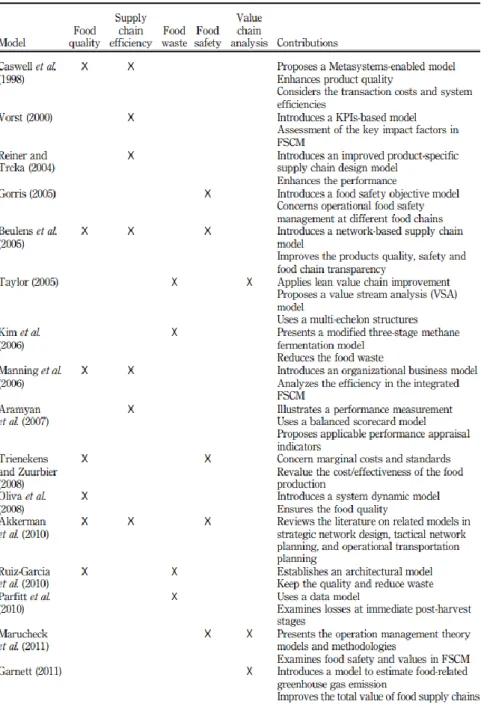
- Literature on food supply chain framework
- Worldwide outlook on FSC
The increased use of automation and robots were significantly adopted in food and beverage supply chain warehouses. Different types of sensors are used to facilitate different operations within the entire food supply chain (Park et al., 2016).
Blockchain in Food Supply Chain
- Blockchain key principles
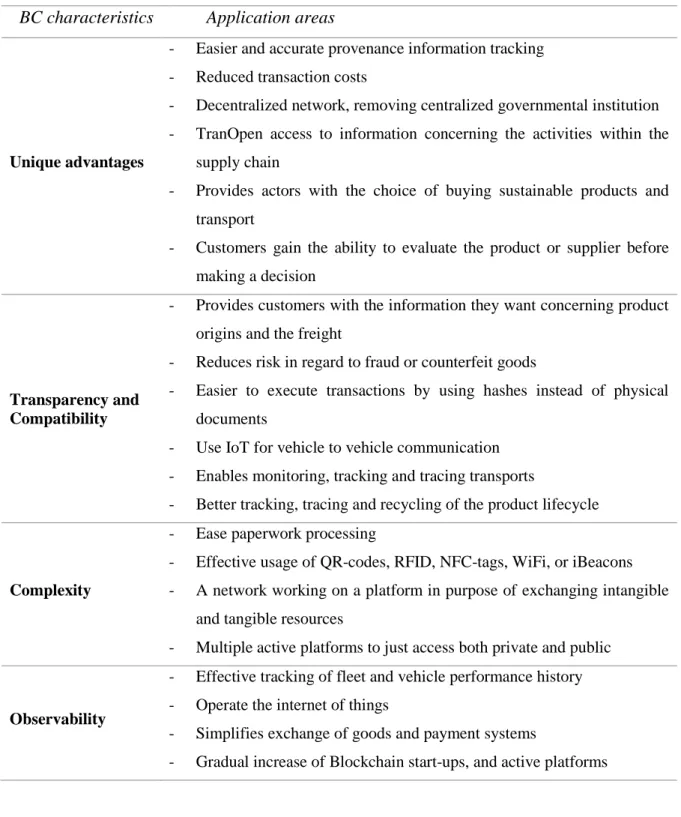
- Blockchain application areas in FSC
- Traceability
The entire database including all transactions made between nodes will be visible to anyone on the FSC network. Building on the improvement of the above basic tasks, more detailed areas of application arise from the potential of Blockchain in the supply chain industry.
BOAT Framework
- BOAT framework and its four dimensions
- Types of BOAT frameworks (stack or wheel)
Architecture (A): the architecture aspect includes the conceptual structure or plan (ie, the architecture) of the automated information systems required to operate the organizations defined in the organization aspect. But in the field of network business, the relationship between business and technology is not likely to be linear.
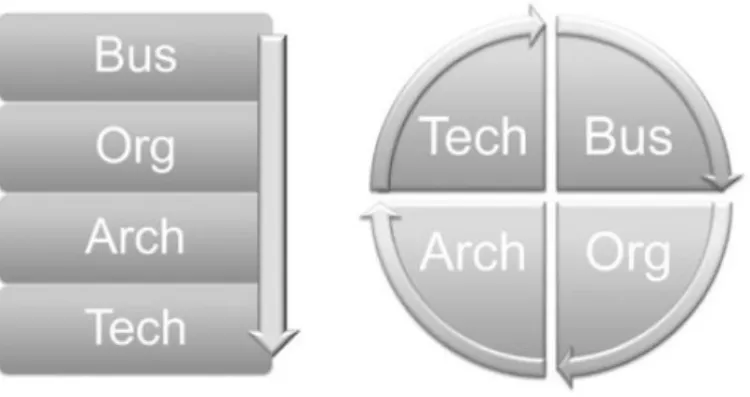
What is reference architecture?
- Targeted audience
Due to the practical rather than academic implications, findings of this thesis are mainly directed to those industrial practitioners who are in charge of designing or evaluating the overall scheme/quality of the blockchain system. Those targeted users are usually system designers, software product managers, quality assurance engineers, and systems consultants. Main duties of these practitioners are designing overall architecture of the system, managing and communicating with relevant external and internal parties, building system evaluation test, and tracking quality assurance metrics respectively.
The secondary audience of this thesis will be academic researchers in the field of Blockchain development for the supply chain. We believe that the dimensions of the reference architecture will be useful knowledge to develop further research topics in this area. To build the dimensions, we researched 24 currently top-tier Blockchain supply chain companies and compared their service specifications to the thesis.
Case studies
- Banana supply chain
- Fish supply chain
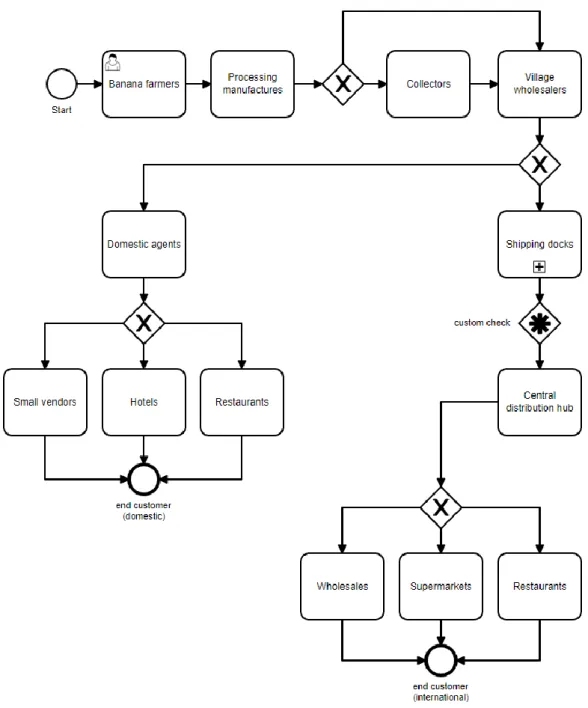
After the harvest, processing production on the agricultural land takes care of cleaning, marking, packaging. Objects Physical goods (bulk goods) Tangible goods, bananas in the case, are physically exchanged between parties. Time scale A static, semi-dynamic customers in BSC are long-term partners and rarely switch.
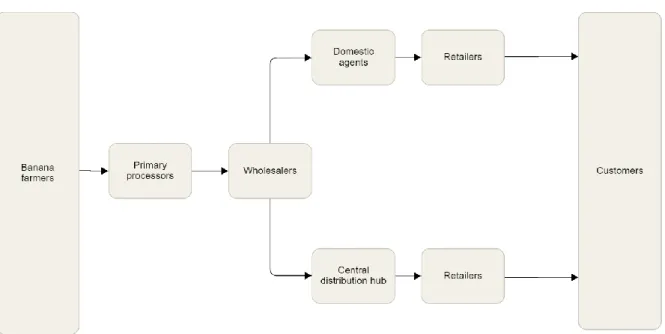
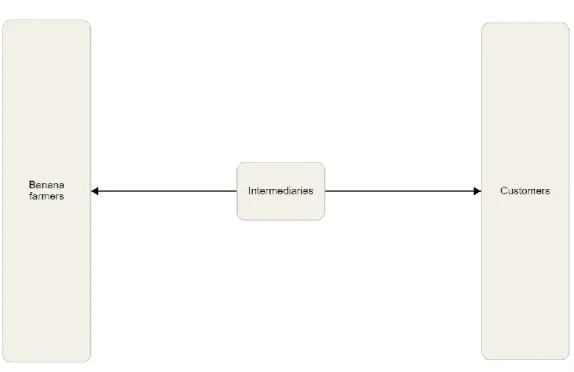
However, due to physical distances, product handling requirements and other regulatory issues, there are multiple intermediaries between the parties in the FSC. Figure 3.4 shows the architecture of BSC at the party level in detail, focusing on the key functions of the network and how they pass through major parties in the chain. Breaks in the cold chain can lead to irreversible damage to food quality.
In terms of time span, it is both static and semi-dynamic because many of the partner restaurants and hotels change periodically, although base brokerage partners essentially stay in the FSC for a long time. In most western markets, demand for safe, high quality fish is increasing and they are willing to pay extra for insurance costs. Collectors, minorista, local seafood buyers, local wholesalers, mayorista are the main domestic intermediaries in FSC.
Technology Dimension: In the case of FSC, the parties use various small SCMS tools for their day-to-day operations.

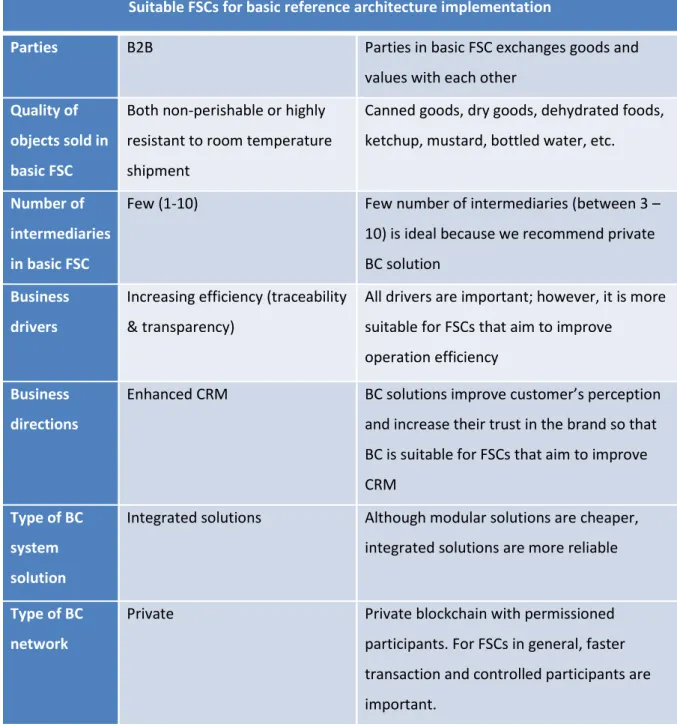
- Reference architecture for basic FSC
- Reference architecture for cold chain FSC
In order to provide some details about the listed startup companies, below we provide brief introductions of some of the big startups. The Ambrosus international group of experts was one of the most successful ICOs in 2017, raising USD 36 million. It is created with a combination of RFID and blockchain technologies, promoting the integration of blockchain + IoT.
When a change of ownership occurs, the collected data is checked against a specific smart contract in the blockchain. CargoX's goal is to disrupt the container shipping industry through the creation of decentralized and open protocols, tools and utilities for the exchange of Bill of Lading documents in the logistics industry. Highly perishable foods are considered cold chain FSC, while other non-perishable (resistant to long-term shipping below room temperature) products are classified as basic FSC.
Enhanced CRM BC solutions improve customer perception and increase their trust in the brand so that BC is a good fit for FSCs looking to improve CRM. BC solutions improve customer perception and increase their trust in the brand, so BC is a good fit for FSCs looking to improve CRM and automate their operations.
Components and requirements of smart food ledger RA
- Food supply chain parties, components and duties
- Drivers for provenance of food supply chain
- Required qualities of smart food ledger management system
- Required components of smart food ledger
- General required qualities of smart food ledger architecture
- General food standards required by regulators
- BC role in supply chain management system
- Comparison analysis of IoT devices used for product info
- Comparison analysis of well-known Blockchain platforms
Before we dive into the key system requirements, the next section reflects the fundamental drivers why provenance and traceability are important in the food supply chain. The BC network for supply chain management must be extensive enough to integrate all stages of parties. To ensure smooth product transactions and user interactions, it must provide an adequate user interface that is available to all parties in the supply chain network.
In the case of relatively small supply chain networks, smartphone scanning applications can be integrated into the BC system. Internet network (i.e. wireless network) at supply chain management stations - tag scanners must be connected to the network to update the smart food ledger in real time. Completeness – it is one of the most important qualifications to build a successful BC-supported food supply chain reference architecture.
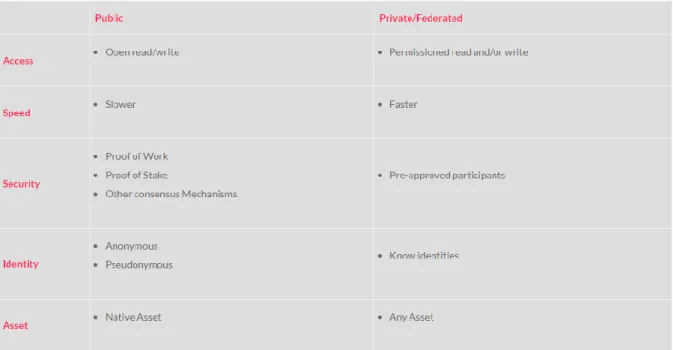
Smart food ledger should cover general guidelines that can be used to build any type of supply chain model, regardless of the business type, so components of this reference architecture should be complete. Based on our findings, none of the cases or companies propose public blockchain for supply chain cases.

Case study evaluation for RA
Case study of Mongolian meat trade supply chain
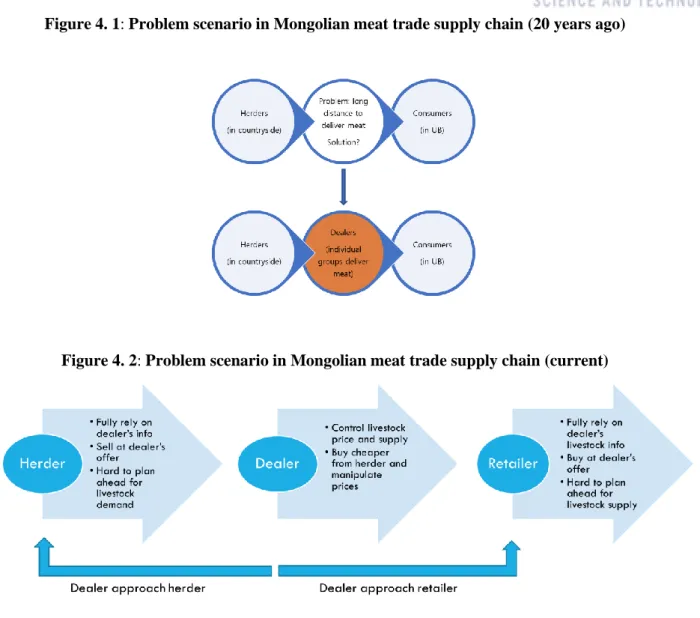
The dealer only has it if he has it, and it's not transparent. Business Dimension: MMSC is a B2B supply chain because essentially livestock is exchanged between intermediaries for value in this network. In terms of time scale, it is mainly semi-dynamic, as most traders (mainly smaller groups) stay in this chain for a short time and abandon their activity due to bad weather in winter and poor infrastructure. A few large retailers in this chain operate stably and stay in business for a long time.
In terms of drivers, parties in this chain do not have a strong interest in expanding into international markets. Therefore, current parties in this chain are more focused on improving the operational quality within the domestic market. Features of transparency and tracking are the most important in this chain and they are open to welcome.
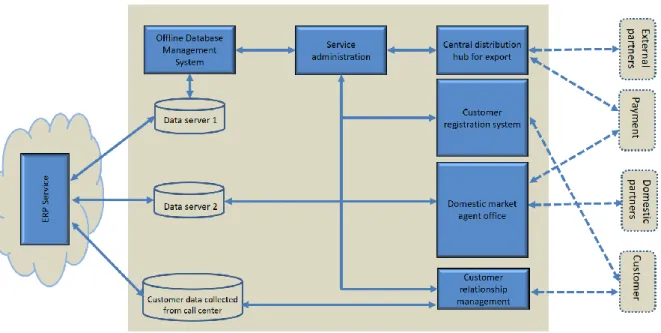
Outsourcers (companies), private traders and wholesalers are the three main intermediaries in this supply chain. Furthermore, CRM collects relatively limited data due to the lack of dedicated CRM headquarters and less attention from regulators in this network.
- Basic RA solution
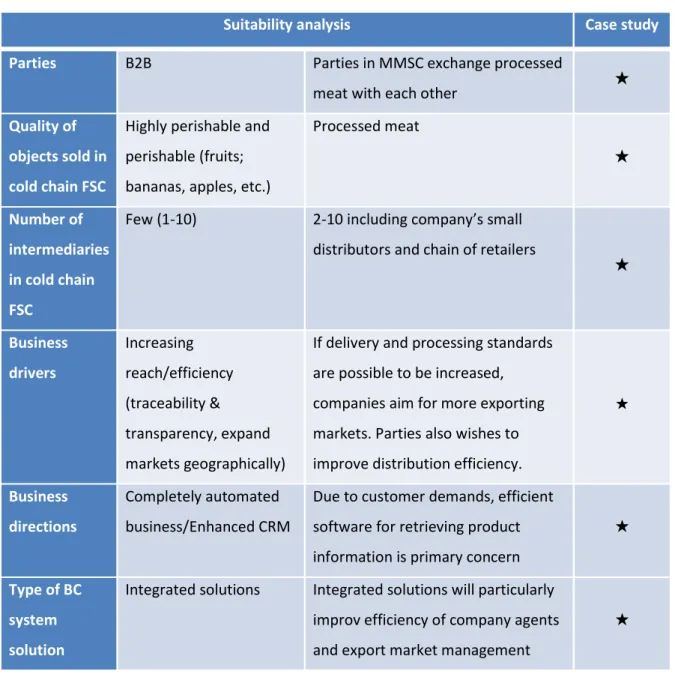
- Cold chain RA solution
- Possible implementation tactics
It will be adapted by intermediaries (wholesalers, companies, retailers) who manage the delivery of processed meat between the farmer and the trader. Although RFID tags are slightly more expensive than barcodes, effective use of RFID (one RFID tag on a pallet, cooler, etc.) will reduce costs and generally allow for smooth data management and distribution efficiency. Effective integration between actors requires integration of processes and information in the supply chain.
Proposed solution 1: To create separate regional offices primarily responsible for managing asset information of all parties and assisting parties to update their transactions. The main reason for having these offices is due to lack of network connectivity in remote provinces, and lower technology adoption by all parties. This solution ultimately helps to create precise transparent database ledger, to which all parties can access the same information whenever and wherever they are.
Such distributed, shared databases using Blockchain technology provide highly secure and immutable access to supply chain data. Proposed Solution 2: This solution can be implemented either by replacing intermediaries as separate delivery companies or retaining intermediaries but enabling them to use Blockchain-enabled application through all transactions.
Expert evaluation
The database from the National Statistics Office of Mongolia (NSO, http://www.en.nso.mn) was used extensively to analyze historical statistical information related to herders, price volatility of meat products, and middlemen. . Major national news websites (news.mn, medee.mn, news.gogo.mn) were used to extract archival news about various changes in the meat trade industry, such as blockage of meat supply due to brokers, dramatic increase in demand for meat, incidents related to brokers, etc. Overall, experts were enthusiastic about the solution and use of Blockchain in this RA.
Interoperability and usability issues are highly likely the result of immaturity of Blockchain technology in general and low trust in currently developed software.
Discussion
Therefore, this immature regulatory system is hampering the implementation of Blockchain-enabled applications in many industries. In a broader sense, there should be some educational programs that should be considered to provide reliable information about Blockchain technology. Many challenges mentioned above are the potential expected, so they may not be actual challenges in reality.
We believe that the general knowledge gathered from the case studies alone has become a really useful insight into the literature. As such, we reflected comparable attributes in the specifications of our RA cold chain solution. A New Blockchain-based Product Ownership Management System (POMS) for Anti-Counterfeiting in the Supply Chain after.
Traceability in agriculture and the food supply chain: An overview of basic concepts, technological implications and future perspectives. An agri-food supply chain traceability system for China based on RFID and blockchain technology.