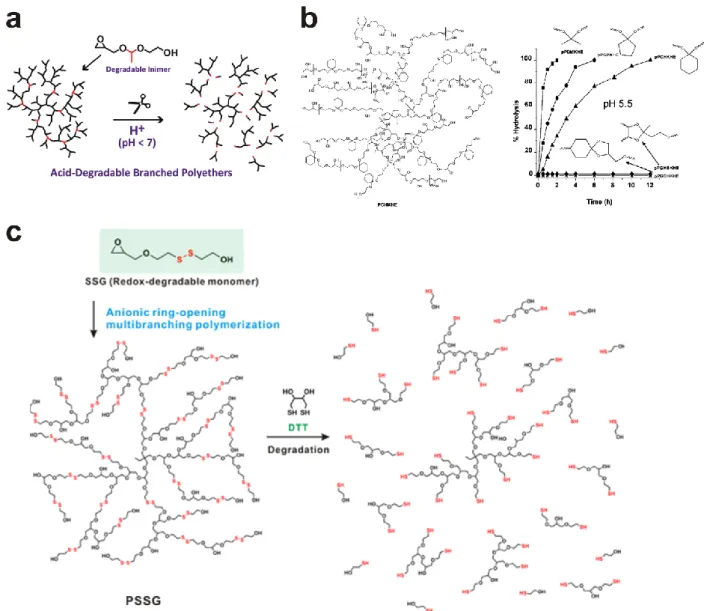
The inset in Figure 3b shows the detailed molar mass and assignments of the copolymer in the range 2600–2700 g/mol. Enlarged spectra showing the signals for the methine carbons of the epoxide at 53 and 55 ppm corresponding to the G and SSG monomers, respectively (no solvent, 150 MHz, 323 K). The direction of the incoming monomer into the two different hydroxyl groups determines the structures of the degradation products.
Hyperbranched polymer
In this sense, a theory about the degree of branching was studied and established in 1997 by Frey et al.7. Glycidol which is the type of oxiranes is considered as a monomer with a structure of latent AB2 monomer. Mechanism of the base-catalyzed ROMBP of glycidol and structure of the resulting hbPG, illustrating small fragment of the large polymer.
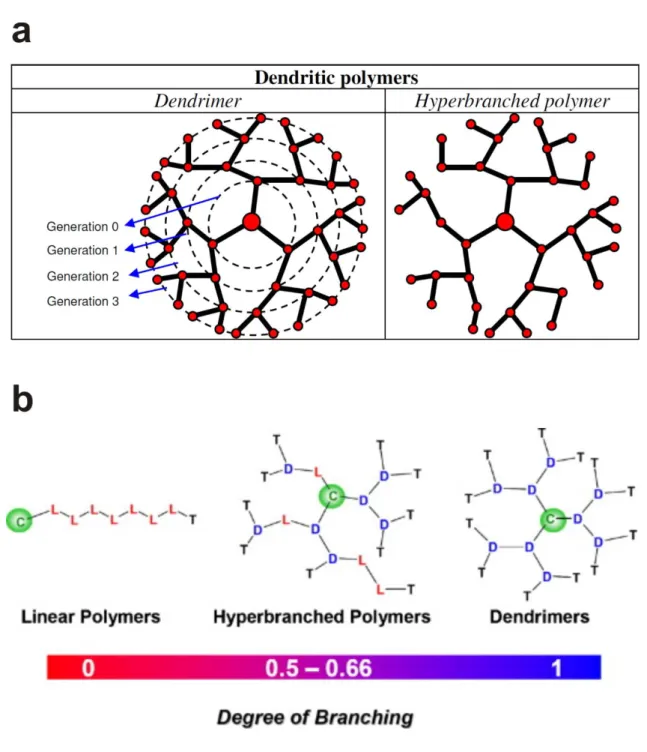
Hyperbranched polyglycerols and linear polyglycerols
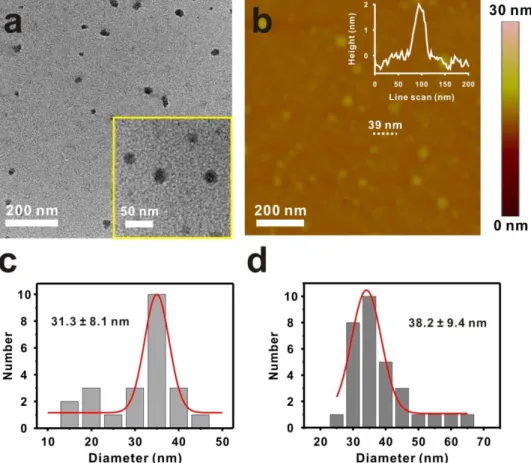
Furthermore, the 1H NMR spectrum of the copolymer (polymer 8) shows similar chemical shifts to that of the homopolymer (Figure 3b). The morphology of the SP-hb-PG micelle was investigated by transmission electron microscopy (TEM, JEM-2100, JEOL, Japan) and atomic force microscopy (AFM, Dimension 3100, Veeco, USA). Size distribution analysis of SP-hb-PG micelles was performed using dynamic light scattering (DLS, BI-APD, Brookhaven Instrument, New York, USA).
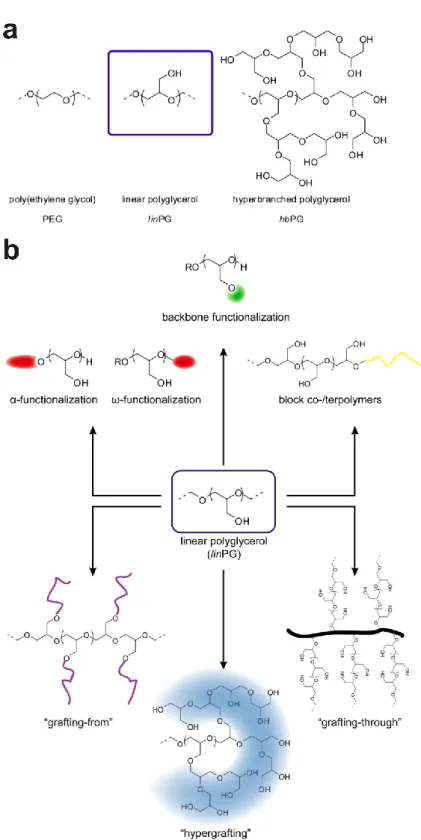
Polyglycerols with complex polymer architectures and heterofunctionalities
Variation of functional initiator
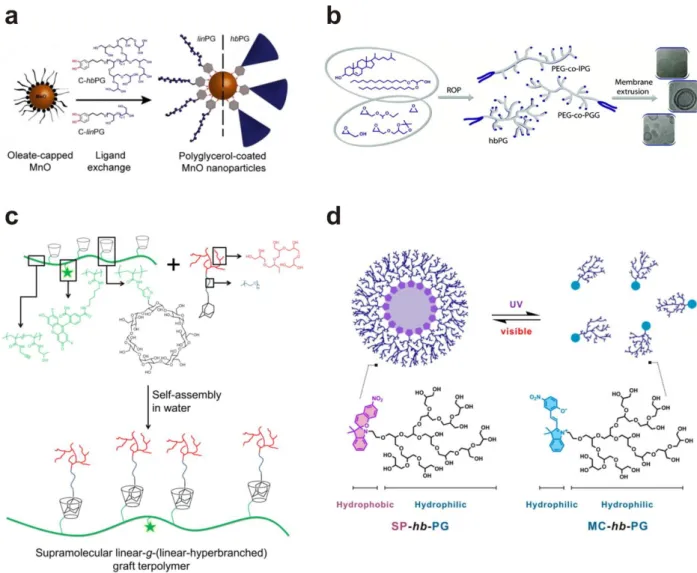
This concept can be used for a wide range of nanoparticle types to impart water solubility and antifouling properties. Due to the presence of a hydroxyl group in cholesterol, cholesterol can be easily used for anionic ROP without further modification. This polymer can therefore be assembled into a micelle in aqueous solution, but the micelle formed can be disassembled upon UV irradiation.
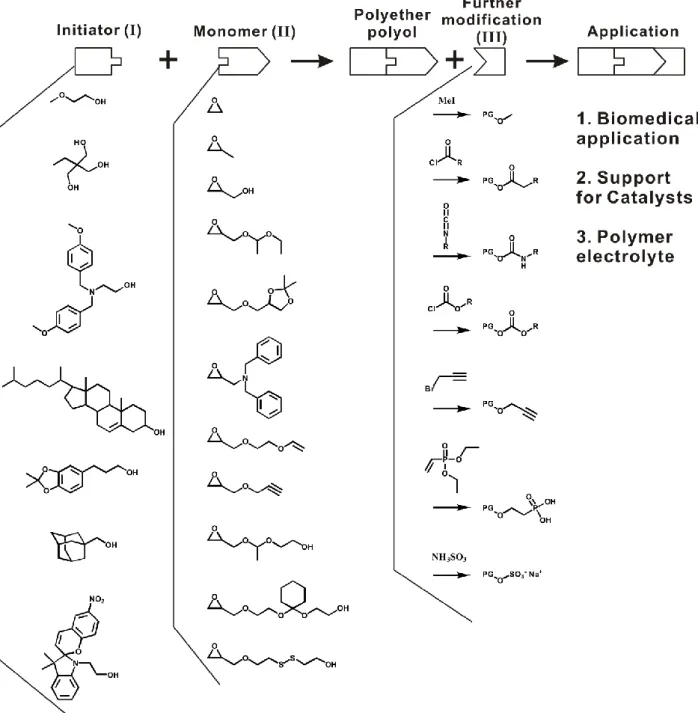
Random copolymers with functional epoxide monomer
With recent interest in degradable polymer, stimuli-degradable PGs and its monomers are actively developed by various groups. Frey and co-workers developed pH-degradable hbPG by polymerizing acetal bond-bearing epoxide monomer with glycidol (Figure 7a). With this method, the acid-labile acetal bond can be incorporated into hbPG backbone, leading to degradation of polymer under acidic condition.43 Another approach used by Kizhakkedathu et al.
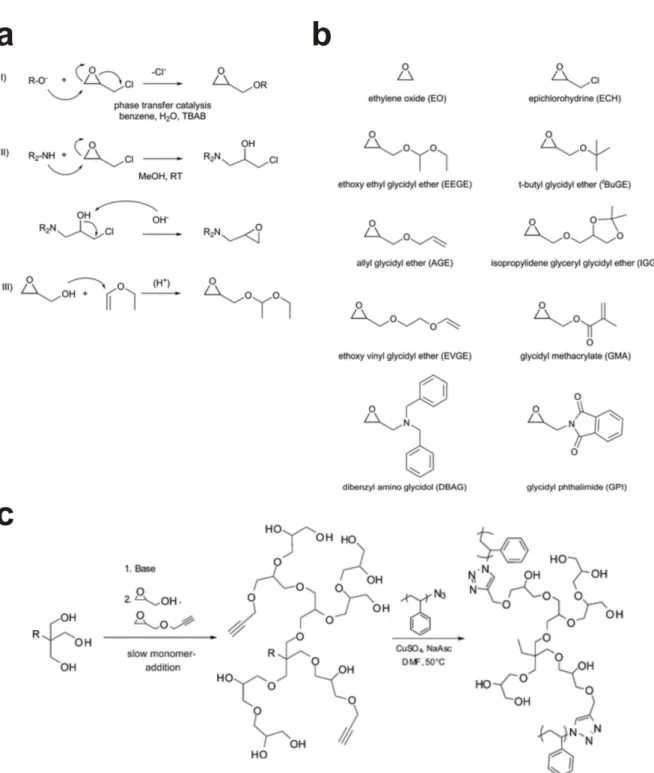
Further modification strategy
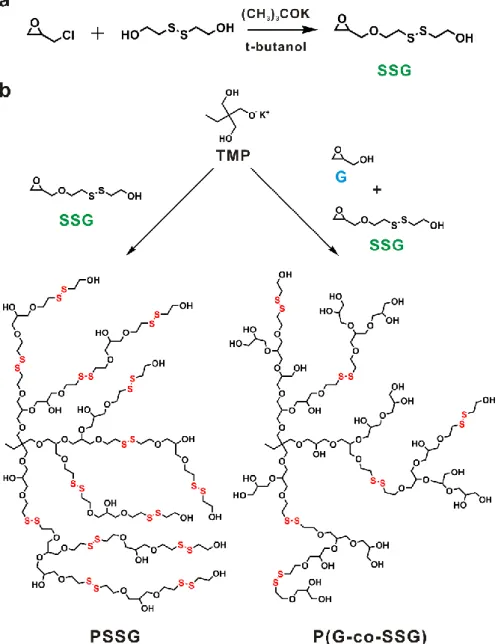
The presence of the TMP initiator and functional monomer segments in PSSG and P(G-co-SSG) polymers was clearly confirmed via MALDI-ToF spectroscopy (Figure 6). The presence of the large core segment was attributed to the TMP initiator bearing three hydroxyl groups. Furthermore, we evaluated the potential of the SP-hb-PG polymer micelles in carrying a hydrophobic therapeutic model, pyrene.
Application of PG in various field
Biomedical application
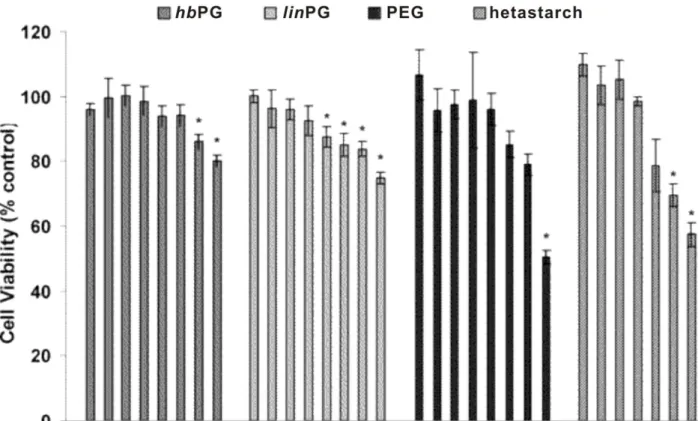
The major motivation for the significant interest in PGs is their excellent biocompatibility and the diverse synthetic route to their derivatives. These fascinating characteristics may come as a result of their structural similarity to the more biocompatible PEG, which is practically applied in the biomedical and pharmaceutical fields to conjugate proteins or drugs (PEGylation). , linPG and hbPG was performed by Brooks et al.21 Both in vivo and in vitro assays showed excellent biocompatibility. These basic studies were extended to high molecular weight PGs, which prove the potential of PGs for biomedical applications.56-58 For these reasons, hbPGs and their derivatives have attracted increasing interest for macromolecular drug delivery therapy,61, 62 proteomics,63 human. serum albumin substitutes64 and other biomedical applications.
Biocompatible polymers have attracted much interest as carriers for drug or protein delivery.60,65 Conjugation of an anticancer drug to polymer results in increased drug accumulation in tumor tissues, which is known as the enhanced permeation and retention effect ( EPR), which is the result of improved permeability. to the leaky tumor vasculature and limited lymphatic drainage of polymer-drug conjugates.66, 67 The hbPG is a very promising candidate as a drug delivery carrier due to its many hydroxyl groups, which may provide many opportunities for chemical modification with drugs and other biomolecules.68, 69 In 2012, our group reported doxorubicin, an anticancer drug, conjugated PG for drug delivery (Figure 9a).60 This polymer demonstrates efficient conjugation of hydrophobic doxorubicin and improvement in targeting ability to the solid tumor. In an experiment, we confirmed the burst release of doxorubicin via the cleavage of hydrazone bonds under acidic conditions and its significant cytotoxicity to cancer cells. Recently, Haag groups reported a new class of polycations consisting of biocompatible PG core and star-like oligoamine shell (Figure 9b).70,71 These polymers carry positive charges at physiological pH and have the high biocompatible polyether core unlike polyethyleneimine ( PEI) and other polyamines, which are used for gene delivery.
In addition, these materials show excellent transfection/toxicity ratio, resulting from favorable primary amines that are key functions for a high degree of siRNA/DNA binding. Due to their excellent biocompatibility, these materials are considered as potential candidates for in vivo applications. a) Illustration of doxorubicin-conjugated poly(ethylene oxide)-hb-PG drug-polymer conjugate and self-assembled micelle formation for intracellular pH release of anticancer drug. In order to develop a synthetic substitute for human serum albumin, hbPG was modified with hydrophobic C18 alkyl chains and MPEG-350 to form hbPG-C18-PEG.64 These materials can bind hydrophobic molecules such as fatty acids, paclitaxel, pyrene in aqueous solution due to alkylation.
In addition, in evaluation in animal tests, these materials show excellent biocompatibility and non-immunogenicity with a long and controllable circulation half-life of ~30 hours.
Hyperbranched polyglycerol as a support for a variety of catalysts
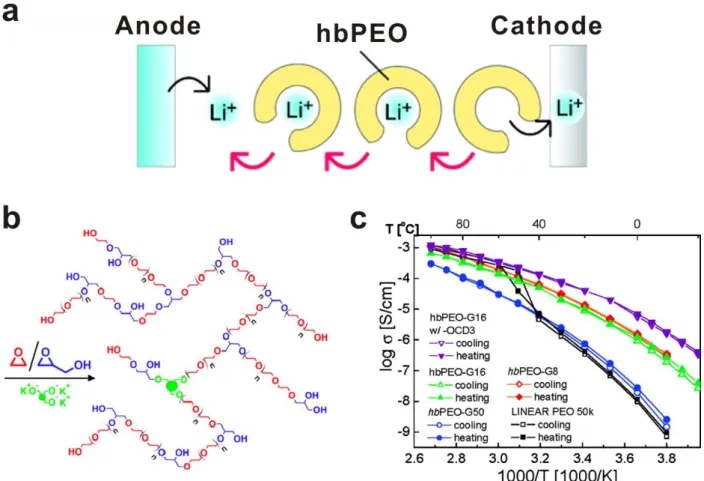
Polymer electrolyte for lithium-ion batteries
Redox-Degradable Biocompatible Hyperbranched Polyglycerols: Synthesis,
Experimental section
- Materials
- Characterization
- Synthesis of SSG (Monomer)
- Synthesis of PSSG homopolymer
- Synthesis of P(G-co-SSG) copolymer
- Polymer degradation
- Cytotoxicity assay …
A solution of 10 g/L of the polymer in methanol and a solution of 10 g/L of the matrix solution were prepared separately. The two solutions were then mixed, 1.0 μl of the mixture was applied to a target plate, and the solvent was evaporated. The salt formed was removed via filtration and the filtrate was removed using a rotary evaporator, yielding a mixture of the product, the by-product (diepoxide) and unreacted diol.
Excess methanol was removed using a rotary evaporator and the remaining product was dried in a vacuum oven (90 °C, 3 h) to give a white salt of the initiator. Excess methanol was removed using a rotary evaporator and the resulting product was dried in a vacuum oven (90 °C, 3 h) to give a white salt of the initiator. The degradation of PSSG through disulfide reduction was investigated using NMR spectroscopy and GPC as follows: For the NMR analysis, the redox-dependent degradation of the polymers was investigated by comparing the chemical shift values before and after treatment with a solution of two equivalents (against disulfide bond in polymer backbone) of dithiothreitol-d10 (DTT-d10)-containing D2O.
For the NMR study, approximately 15 mg of PSSG polymer was dissolved in 0.60 mL of DTT solution. Disulfide reduction and polymer degradation were monitored by 1H and 13C NMR spectroscopy, respectively. The absorbance of the solution was recorded at a wavelength of 540 nm using 620 nm as a reference.
After incubation for 4 h, the plates were gently stirred for 15 min at room temperature and the absorbance of the solution was recorded at a wavelength of 450 nm.
Results and discussion …
- Polymer synthesis and characterization
- In situ Copolymerization kinetics
- Degradation study …
- Biocompatibility assay
In addition, to confirm the branched structure of PSSG polymers, we used 1H NMR and 13C NMR with opposite gates. As shown in Figure 6a, two scattering modes were observed due to the coordination of different ions, such as H+ and K+. In addition, the spacing between the signals (210.31 g/mol) matched well with the SSG functional unit incorporated into PSSG, which confirmed the presence of SSG monomer.
The distance between the signals corresponds to the mass of a linear combination of the respective monomers in the homopolymer and the copolymer (G: 74.08 g/mol, SSG: 210.31 g/mol). During bulk polymerization, a quantitative 13C NMR spectrum could be obtained within minutes due to the sufficient natural abundance of 13C isotope. With this method, we could observe the microstructure of the growing polymer at any time during the reaction.
It should be noted that the conversions of the monomers in the first 13C NMR spectra were set to 0% and the conversion ratio was calculated from the integration values of the methine group of each monomer against the signal of the two carbon atoms adjacent to the disulfide moiety, which remained constant during polymerization. As shown in Figure 7b, the molar ratio of SSG units in the polymer chain was significantly lower than the monomer feed during the initial stage and increased rapidly with the consumption of G monomer near the final stages of the reaction; for example, at a total conversion of 51%, the conversions of G and SSG were 80 and. Therefore, degradation products were divided into small and large segments; the molecular weight of the large segments was almost twice that of the small segments.
In short, the degradation products were divided into three structures due to the initiator and the two different reaction sites of the monomer.
Conclusion
Light-Responsive Micelles of Spiropyran Initiated Hyperbranched Polyglycerol
Synthesis of a spiropyran derivative …
Polymerization of SP-hb-PG
Preparation of SP-hb-PG micelle
Pyrene fluorescence measurement and CMC study …
Cytotoxicity assay …
Synthesis and characterization of spiropyran Initiated hyperbranched polyglycerol
MALDI-ToF spectrum of SP-hb-PG15 (Entry 1 of Table 1 ), confirming each segment of SP-hb-PG.
Micelle formulation and reversible micelle system
To measure the excitation band shift, the ratio of fluorescence intensity at 339 and 332 nm (I339/I332) was plotted as a function of SP-hb-PG concentration, with a clear crossover point observed in the low concentration range of 10 to 20 mg/L, which corresponds to the CMC value. As summarized in Table 1, the CMC values of all polymers show that increasing the mass of the hydrophilic segment of SP-hb-PG from 1500 to 3000 effectively increased the CMC values from 13 to 20 mg/L (Table 1). This observation can be attributed to the reduced hydrophobicity, which effectively reduced the separation of polymer blocks to accommodate the model of hydrophobic therapeutics.
This result is also consistent with our previous report.26 Because a longer glycerol segment reduces the amphiphilicity of the SP-hb-PG polymer, it is reasonable that the micelle formation of the amphiphilic polymer is established at a higher concentration up. Regardless of the DLS measurement, the reversible nature of micelle assembly and disassembly with pyrene can be characterized. As shown in Figure 8, the intensity of the fluorescence excitation band decreases depending on the time of UV irradiation; this change is saturated after ca.
This observation is attributed to the re-encapsulation of the released pyrene back into the micelle core, leading to the broadened fluorescence band of the incorporated pyrene. However, this increase in excitation intensity ends at 120 minutes and the recovered intensity is only about 40% of the initial intensity. This result implies that some of the released pyrene is not completely reloaded into the SP-hb-PG micelle core (Figure 8a).
It should be noted that 254-nm UV irradiation was used in this case due to the improved release kinetics of pyrene from the micelle core compared to 365-nm irradiation (Figure 9).
Biocompatibility assay …
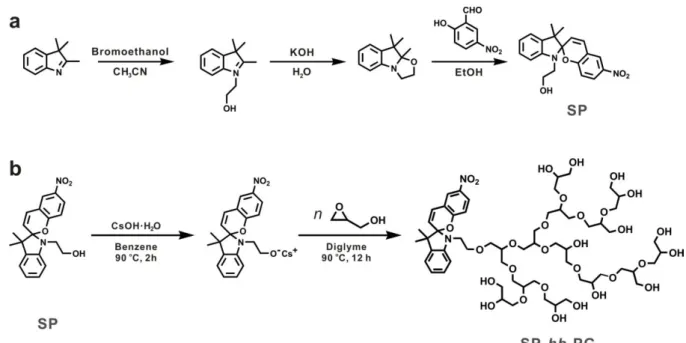
Due to its considerable amphiphilicity, SP-hb-PG formed self-assembled polymeric micelles in aqueous medium. However, upon exposure to UV radiation, the initially hydrophobic SP was isomerized into zwitterionic MC, leading to the disassembly of the micelle structures. The potential of the SP-hb-PG micelle for use as a smart drug delivery system was investigated using pyrene as a hydrophobic therapeutic model.
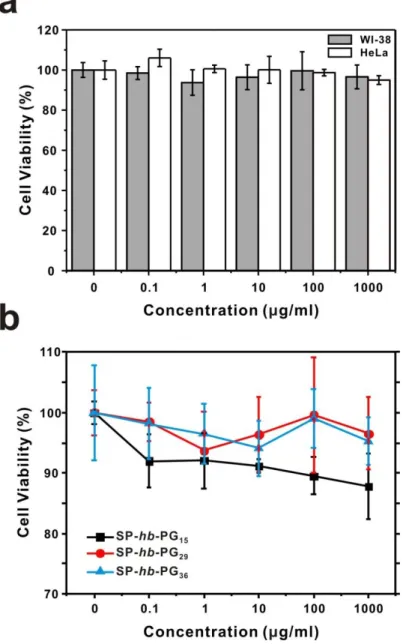
In addition, the in vitro cytotoxicity of SP-hb-PG polymers was evaluated using WI-38 and HeLa cells, demonstrating the excellent biocompatibility and nontoxicity of SP-hb-PG micelles. We envision that this intelligent light-responsive drug delivery system will provide a new means for the sophisticated delivery of active therapies in a time- and stimuli-specific manner.