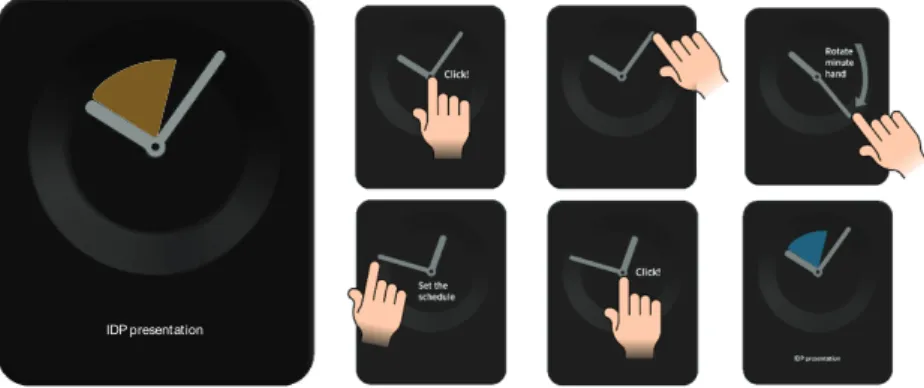
In this research I introduce Quietto: an interactive timepiece cast in concrete that displays calendar information over time. First, I proposed a design approach for guiding a deep interaction between calendar information and the user through related work studies.
Background 2
Research Aim and Method 3
Research Scope 3
Thesis Structure 4
This research mainly focused on developing a device for presenting calendar information in the form of an independent product, and understanding its effect and value through user experience evaluation. In chapter two, I conducted a literature review to find the strategies that can create a deep interaction between calendar information and the user.
Tangible Interface Connecting Digital Information and Physical World 6
Displaying Calendar Information 8
Schedule representation on the analog clock face 8
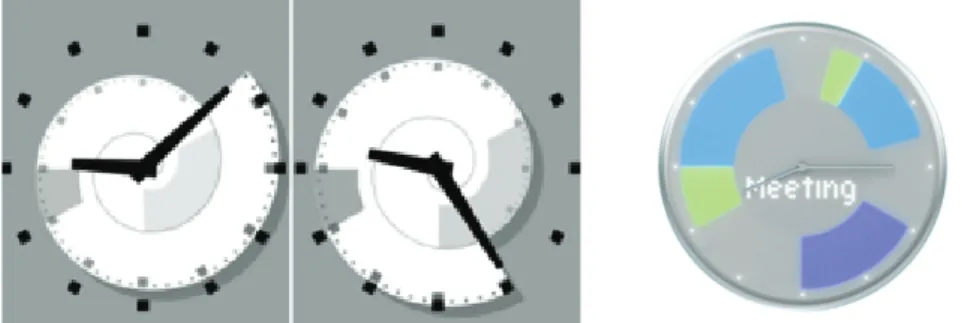
As research on the effective expression of various digital information, calendar information, which is mainly expressed by the GUI method, was no exception. SpiraClock (Dragicevic et al., 2002) (Figure 4, left) is a computer screen that displays nearby schedules in the form of an analog clockwork and fills the calendar user interface with a continuous spiral design. Glance Clock (Glance Clock, 2015) (Figure 4, right) is a commercialized smart wall clock that displays various information such as schedule, weather and personal health information on the surface of an analog clock via an LED display.
However, there is a limitation in expressing the calendar information depending on the computer screen (SpiraClock) or the light screen (Glance Clock), and there is a risk of privacy exposure in public places.
Tangible Interface to representation schedule 8
Protecting Privacy on Calendar 9
Material and Interaction Form 10
Material and Interaction Form in Interaction Design 10
Current Cases Using Unique Materials 10
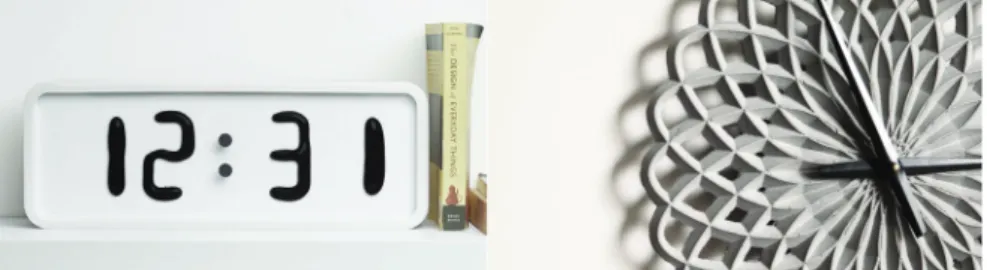
In particular, since recent smart devices require excellent visual-tactile interaction with users, we can see that the unique texture and aesthetic quality represented by the materials has a significant relationship with the formation of constant value and attachment to the product ( Wiberg, 2014). . In addition, the manufacture of some products' forms has been attempted with wood (Rhei, 2015) (Figure 8, Left) or fabric (Glance Colck, 2015); thus it seems to add new sensibility to the products by naturally harmonizing with the furniture in the home and providing the users with pleasant interactive experiences.
Concrete as an Interactive Material in HCI 11
Summary and Reflections 12
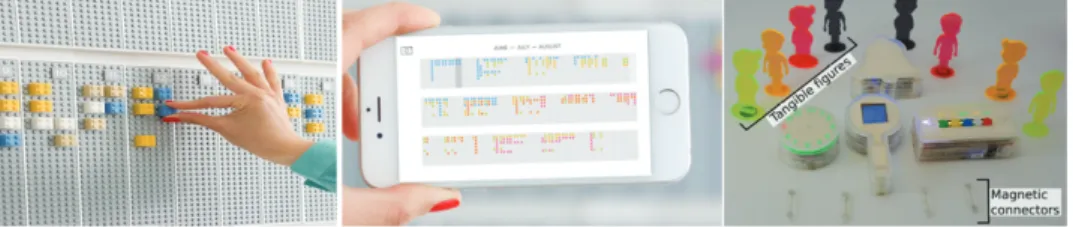
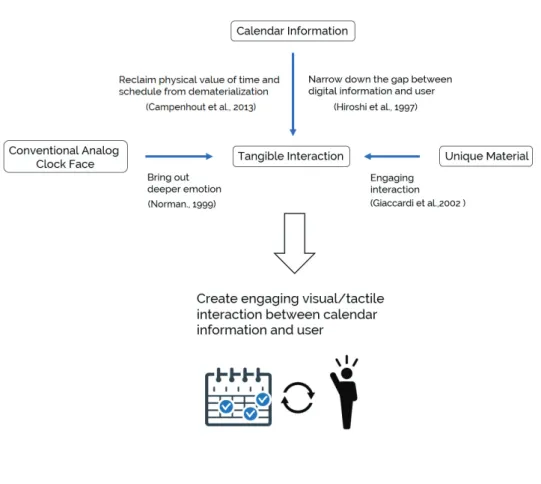
Through the previous two studies, it was confirmed that when the calendar information is expressed through the tangible interface, it has the possibility of extensive interaction with the user compared to the conventional GUI-dependent expression. HCI research has also been explored to overcome the limitations that the presentation of calendar information in public places may violate privacy. In this chapter, I explored the previous studies that display calendar information through the tangible interface, the privacy issues that need to be considered for it, and the importance of external materials.
Some studies use the familiar watch face to represent calendar information, which added more value to the device. Other examples of research have suggested that a tangible interface can evoke rich interaction between the user and the calendar information.
Iterative Design Process 14
Design Approach 14
Initial Concept to Input Schedules 15
Second Concept to Display Schedules 15
Final Prototype: Quietto 18
Design Features of Quietto 19
Tangible Interaction with Time and Schedule 19
I thought the purpose was not only to know the current time, but also to plan according to it. For this reason, I presented the schedules through the interval between the current time and the upcoming schedule (Figure 17). As a result, Quietto shows the remaining time from the current time to upcoming events by physically moving the hour hand and LED light.
Concrete and Wood Interface 19
Quiet and Ambient Interaction 19
Interaction Techniques 20
Implementation 21
Hardware 21
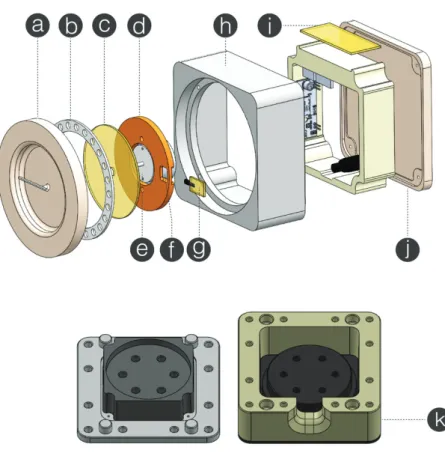
When I designed the mold, I added a one-degree gradient to the assembly parts, and a lubricant was sprayed inside the mold for easy removal of the solidified concrete mold (Figure 19, h). In the middle of the concrete body I worked the natural wood in a circular shape (Figure 19, a). To place the LED strip, grooves were carved into the back of the wood (Figure 21).
To perform capacitive touch sensing on concrete and wood, I cut two copper plates (Figure 19, c, i) (Figure 22, right) into appropriate shapes and placed them on top of each material. As a result, the Hall sensor (Fig. 19, g) (Fig. 22, middle) detects the location of the magnets in the bracket and recognizes the correct position of the hour hand.
Software 23
Study Goal 25
Methodology 25
Participants 25
Method 25
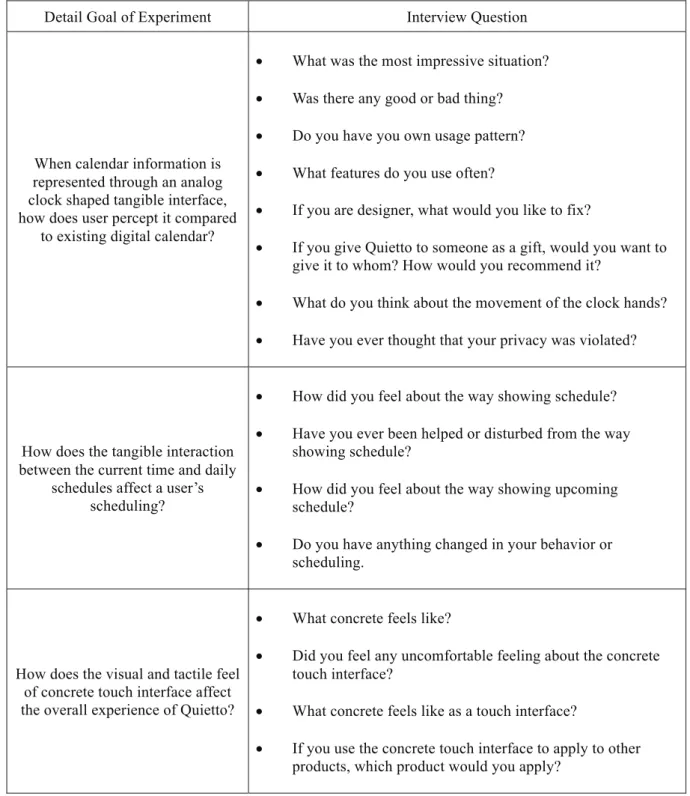
When calendar information is represented through a tactile interface in the form of an analog clock, how does the user perceive it in comparison. If you give Quietto to someone as a gift, who would you like to give it to? How the visual and tactile feel of the concrete touch interface affects the overall Quietto experience.
If you use the specific touch surface to apply to other products, which product will you use.
Data Collection and Analysis 27
Findings 28
Intuitive and Effective Representation of Daily Schedule 28
- Calendar of a Day 28
- Engaging Movement Inducing Repetitive Interaction 29
- Representing Schedule with Continuity of Time 30
Private and Ambient Personal Schedule Clock 30
Eight out of ten participants explained the reason that there is no numerical index on the surface of the watch. Also, depending on the touch of the material to be used as a touch interface, it is necessary to consider about the position to be touched. As a watch that displays the schedule, I suggest the application method of the Quietto as follows.
First, I proposed the requirements for the device that can effectively express calendar information through a tangible interface. In Proceedings of the 2017 CHI Conference Extended Abstracts on Human Factors in Computing Systems (CHI.
Concrete as an Attractive and Unexpected Tangible Interface 31
Summary of Findings 31
Six out of ten participants, including P8, responded that it was cool to know at a glance how much time they spent each day. This confirmed that the participant felt pleasure moving the hour and minute hands without rejection. We anticipated that privacy issues might arise if personal scheduling information were displayed in a public office space, even if it was located on someone's desk.
P9 said: "When I saw the concrete with my eyes, it looked rough, but when I touched it, it was very soft, so I wanted to touch it again." It was soft and warm.” In particular, P3 proposed a new product that exploits the conflicting sense of visual and tactile quality of concrete.
Discussion Points 33
Tangible Interaction Created by Physical Representation
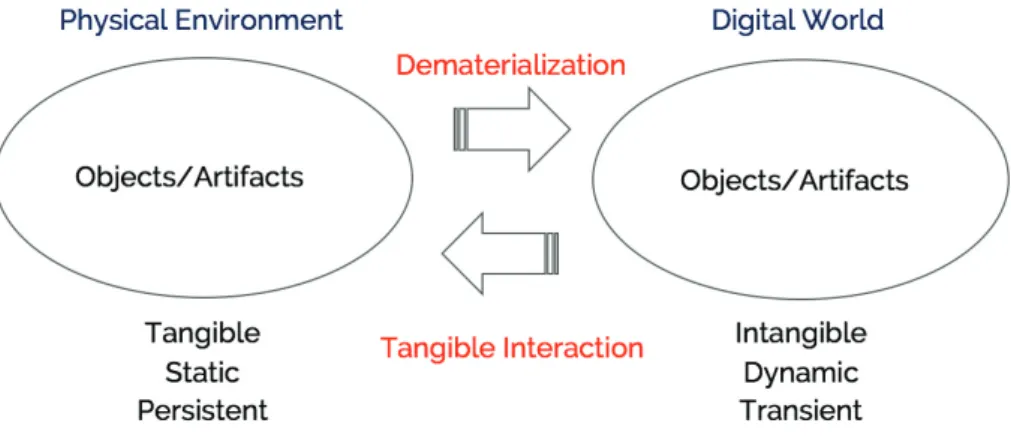
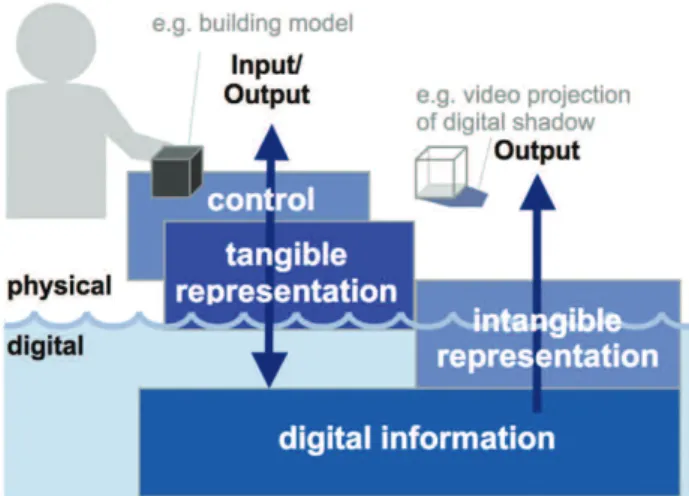
In this study, digital calendar information is reinterpreted as a physical amount of time and represented by time interval. Since the intangible calendar information is represented as physical movements of the tangible hour hand, it brings the dematerialized calendar information into the physical environment. In addition, in this study, while pushing Quietto between user and digital calendar information, it not only accepts the dynamic change of calendar information, but also allows the user to interact with calendar information more frequently.
This is the role of the tactile user interface proposed by Ishii's research group (Ishii et al., 1997). Therefore, this research confirmed that it is possible to create a tangible interaction between the user and digital information through the physical representation of digital information, and this method can be applied to other non-material digital domains.
Concrete as an Interaction Medium 33
Limitation 34
Need of Additional Research on Various Type of Schedule Expression 35
The schedule representation can be expressed in a wide variety of forms by moving away from the movement of the clock hands, and several ideas have already appeared during the iterative development of the Quietto. Quietto was developed with a focus on utilizing the movement of the original clock hands so that it could add more value (Norman, 1999). It is therefore necessary to research the experience of the Quietto in various contexts to guide more systematic and in-depth user experience.
It is especially required to conduct the research in the context of more engaging considering that many participants repeatedly touch the hands of the watch because they have fun with the user's movement according to the user's touch. In addition, since time and schedule information is usually frequently checked on the go, it is necessary to study the context of moving by developing different versions of Quietto with portability.
Importance of Accurate Information Delivery 35
Through the design case development and user experience evaluation of other types of schedule presentation methods, it is necessary to understand how each method can affect user scheduling and time management, and what value can be created with it. The user study of this study was mainly carried out in the undergraduate/graduate student's office or the laboratory. Through the feedback from these participants, I realized the necessity of clear presentation of time and schedule information.
When designing a device that expresses a time schedule, it is important to convey accurate time and schedule information, even if it adopts an ambient expression method for the sake of beauty of appearance or privacy. In the case of Quietto, the addition of a numerical index, the minimization of light blur, and the method of distinguishing colors corresponding to each schedule are necessary, so that Quietto can provide a lot of clear information.
Touching Material Itself and Feedback 36
Application Proposals 37
Quietto as a Wall Clock Displaying Common Schedules 37
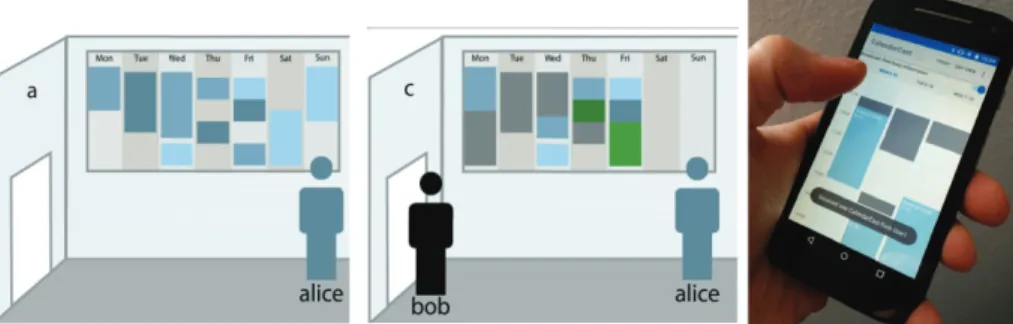
However, there are cases where they share their calendars in the office, as also in the case of previous studies. So, Quietto can be developed as an interactive wall clock in the office that displays shared calendar. There are also possibilities that some materials and objects on the desk, such as wooden block or cement flower pot, can be used as a remote control interface to control the wall clock (Figure 25).
Quietto as a Portable Watch 37
Summary and Contribution 40
Quietto는 콘크리트를 상호작용 매체로 사용하여 시침과 LED 분침의 물리적 움직임을 통해 현재 시간부터 다음 일정까지 남은 시간을 표현합니다. 이에 따라 GUI의 한계를 넘어 사용자와 디지털 정보 간의 긴밀한 소통에 대한 관심이 높아지고 있다. Quietto는 구체적인 터치 인터페이스를 통해 작동하고 시계 바늘의 물리적 움직임을 통해 시간 간격을 표시하여 다가오는 이벤트와 남은 시간을 표시하는 데스크톱 대화형 시계입니다.
Quietto의 독특한 디자인을 통해 디지털 정보를 물리적인 움직임을 통해 표현함으로써 사용자와 디지털 일정 정보 간의 유형적인 상호 작용이 가능하다는 것을 확인할 수 있었습니다. 첫째, 관련 문헌 연구를 통해 디지털 스케줄링 정보와 사용자 간의 체감적인 상호작용을 유도하는 디자인 방법을 제안하였다.