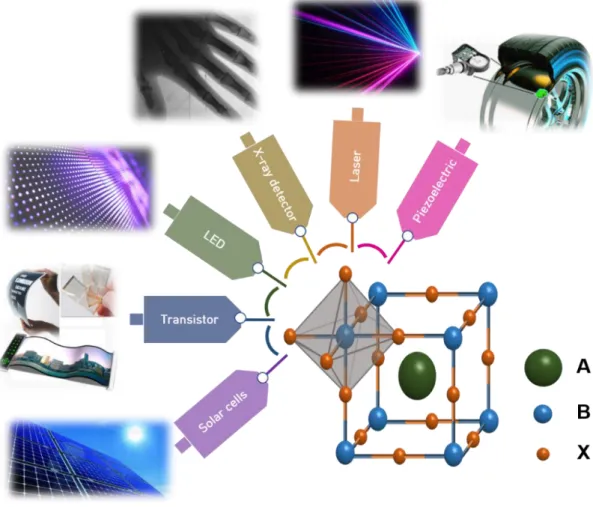
As next-generation solar cells to solve these shortcomings, organic and dye-sensitized solar cells have been studied, but it is still difficult to commercialize due to low efficiency. Each category of these materials has its own unique physical and chemical properties with a variety of applications such as transistors, light emitting diodes (LEDs), x-ray detectors and solar cells. In particular, perovskite solar cells (PSCs) show unique promise to meet low costs, flexibility and high efficiency.
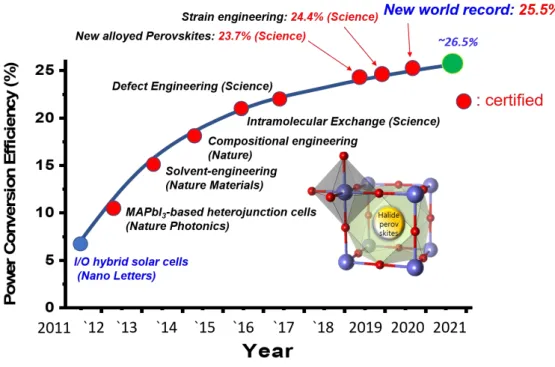
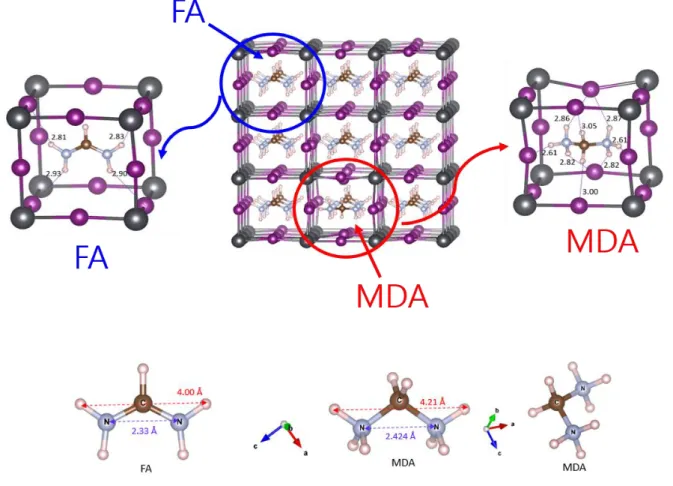
Currently, PSCs in the laboratory have already achieved a PCE comparable to silicon, namely 25.5%, with low production costs compared to silicon solar cells. During my PhD, I focused on improving the efficiency and stability of PSCs by designing the composition, additive and device. From this view, I have successfully investigated the introduction of a very new additive (methylenediammonium dichloride, MDACl2) to stabilize the α-phase while minimizing the bandgap variation of FAPbI3.
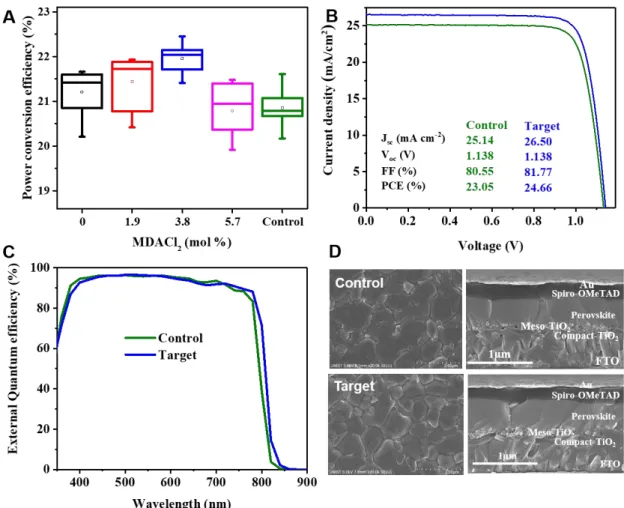
Using this new compound, we achieved the world's highest certified current density (JSC) and efficiency based on publication date, and the results were published in the journal Science.
List of Tables
Introduction
- Needs for solar cells
- Perovskites: Emerging electrical functional materials
- Next-generation perovskite solar cells
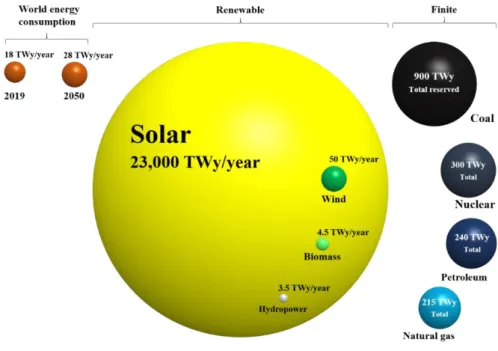
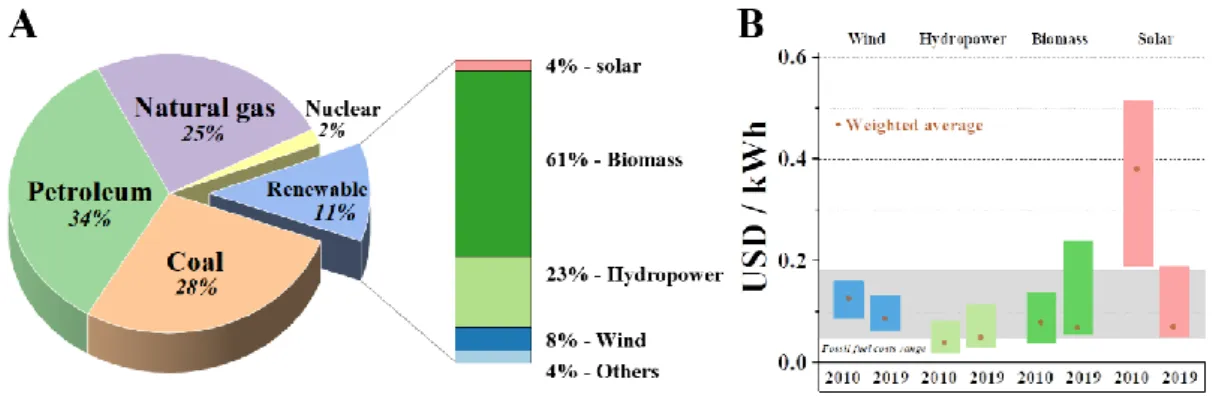
It is indispensable to develop renewable energy sources for a sustainable future to replace fossil fuels, which are finite and emit greenhouse gases that contribute to climate change. As of 2019, the consumption of renewable energy is only 11% of the total energy consumption (Fig. Historically, the cost of electricity from solar cells has been expensive compared to other options (Fig. 1.2B).3 Recently, however, with the development of silicon solar cell manufacturing technology and efficiency have increased, prices have fallen within the range of other renewable sources.
The potential for further reductions is real, which is why research into emerging solar cells is one of the best options for solar photovoltaics to become an increasingly large part of the renewable energy ecosystem (and the overall energy ecosystem). B) Renewable energy generation costs in 2010 and 2019, with the reach of fossil fuels shown by the gray band. Each category of these materials has its unique physical and chemical properties with a variety of applications, such as transistors, light-emitting diodes (LED), X-ray detectors and solar cells (Fig. 1.3). Crystalline silicon solar cells, which are the most widely deployed, perform excellently with an energy conversion efficiency (PCE) of 26.1% in the laboratory (deployed modules have a cell PCE of 17-22%).ref However, because a large amount energy is required to manufacture high purity silicon, the price is high and due to the nature of the material it is not flexible.
Currently, perovskite solar cells (PSCs) in the laboratory have already achieved a PCE comparable to silicon, of 25.5%,4 with low production costs compared to silicon solar cells (Fig. 1.4).
Perovskite Precursor Solution
- Solution processibility of perovskite solar cells
- Properties of perovskite precursor solution .1 Iodoplumbates
- Degradation of the solution
- Stabilization of perovskite precursor solution .1 Elemental sulfur
- Results
- Conclusion
Another factor that changes the properties of the perovskite precursor solution with time is the deprotonation of MA ions (Fig. 2.4). Thus, as postulated in chemical equilibrium reactions (Fig. 2.6B), sulfur dissolved in the perovskite precursor solution forms a complex with methylamine and then inhibits its volatilization. FAI and MABr dissolved in the mixed solvent and in the perovskite precursor solution showed the same trend as MAI in a DMF solution (Fig. 2.7C).
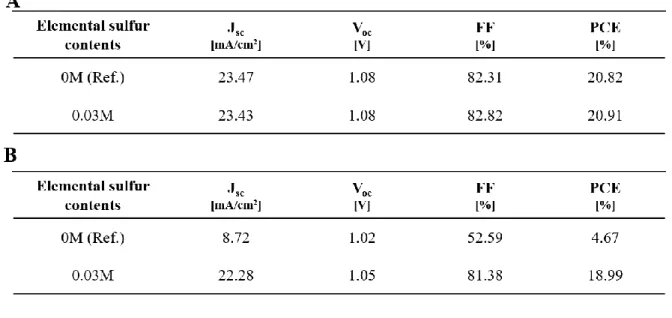
Similarly, in the sulfur-free perovskite precursor solution, the volatile methylamine was lost over time and the excess HI was readily oxidized to I2. The J-V characteristics and PCE distribution of the solar cells depended on the aging time of the precursor solution. Sulfur in the precursor solution formed a complex with MA, thus keeping MA in solution, thereby increasing the stability of the perovskite solution.
Although the sulfur added in the precursor solution remained in the perovskite film, the efficiency of the obtained PSC did not decrease significantly, while the chemical stability of the PSC increased.
![Fig. 2.2 Typical iodoplumbate species [PbI m X n ] 2-m (X = solvent) with most stable coordination](https://thumb-ap.123doks.com/thumbv2/123dokinfo/10497882.0/22.892.118.762.212.599/fig-typical-iodoplumbate-species-pbi-solvent-stable-coordination.webp)
Highly Efficient and Stable Perovskite Solar Cells
- Efficiency increases of perovskite solar cells
- Maintaining bandgap
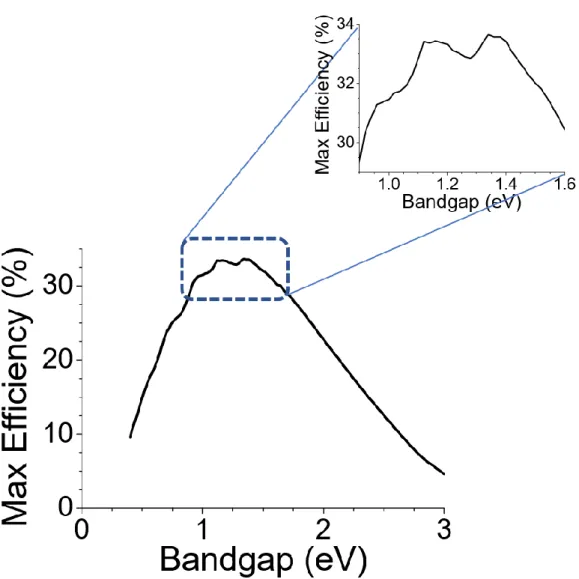
- Shockley-Queisser limit
- New additive: MDACl 2
- Results
- Relieving unwanted strain
- Strain of the perovskite layer
- Results
- Conclusion
The structural stabilization of the phase in FAPbI3 with added cations can be explained by several factors. We passivated the surface of the target and control layers using previously reported methods.22 Fig. Because the PCE of PSCs depends on the surface morphology of the perovskite layers, we compared the surface roughness and grain sizes of the target and control using scanning electron microscopy (SEM).
We compared the long-term humidity, thermal and photostability of the unencapsulated control and the target in Fig. Tsai et al. One of the most common strain compensation strategies is to introduce larger and smaller ions together to reduce the local tensile and compressive strain in the perovskite lattice.
Interestingly, the diffraction intensity of the two peaks increased, and no new peaks appeared, as x increased. The preferred crystal orientations for α-FAPbI3 were observed from the plane in the direction [100]c and [200]c. We concluded that the diffraction intensity increased with increasing x due to the highly oriented crystal domains, and not the improvements in the crystallinity.
In the same crystal, since the diffraction angle (2θ) reflected the expansion and contraction of the lattice, the diffraction angle could shift according to the proportion. Regardless of the additive amounts, all the films showed similar grain size with no obvious holes on the surface. These results show that the incorporation of small amounts of Cs+ and MDA2+ cations did not affect the morphological characteristics of the perovskite layers, such as grain size and surface roughness.
The EQE onset of the target is slightly blue-shifted, which was consistent with the tuned band (Fig. 3.13D). A lower Eu of the perovskite film indicates a higher structural quality of the film as well as a lower loss of voltage between Voc and bandgap voltage. Interestingly, the change in Eu of FA1-3xMCxPbI3 perovskite films shows a similar trend to the change in micro-strain of the films.
The trap density, NT,TSC of the control device cm-3) was the largest, indicating that the deformation in the perovskite structure caused an increase in defects.
Wide-bandgap Perovskites
- Candidates for wide-bandgap perovskites
- Improving morphology of CsPbI 3
- Morphologies of CsPbI 3
- Results
- Conclusion
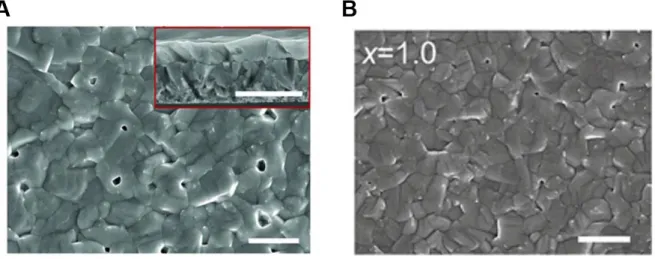
UV-vis absorption spectra (Figure 4.3B) of control and CsPbI3/xMACl samples confirmed that SDMS did not change the band gap of CsPbI3, probably due to the complete removal of MACl after 5 min of heat treatment at 210°. C. Crystallinity of CsPbI3/45MACl was slightly higher than other film samples, but still comparable. SDMS did not affect the crystal structure and band gap of CsPbI3/xMACl; however, it caused significant changes in the surface morphology of the CsPbI3/xMACl films.
The surface morphology of the perovskite layers greatly affects the photovoltaic performance, and especially the Voc and fill factor (FF). The PCE distributions of PSCs fabricated using the control and CsPbI3/xMACl (x = 15, 45, and 75 mM) perovskite films are shown in Figs.
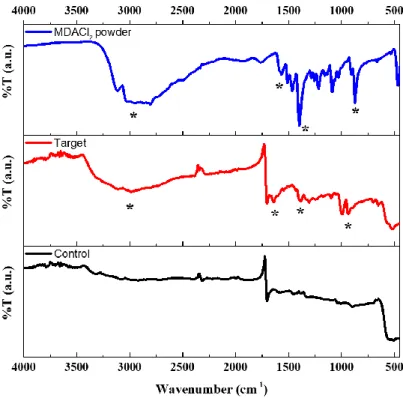
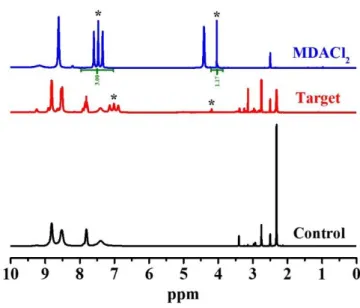
No notable differences were observed in the shapes of the external quantum efficiencies (EQEs) of the control and target (Fig. 4.5C). Furthermore, we observed that the total weight of the control and target decreased by 0.5% at 128 and 181 °C, respectively. To elucidate the interphase-induced crystallization, we compared Fourier-transform infrared (FT-IR) and 1H nuclear magnetic resonance (1H-NMR) spectra of the control and target samples.
Therefore, the experimental results showed that SDMS accelerated the sublimation of DMAI by disrupting the coordination intermediate state. This resulted in simultaneous and rapid crystallization, thus leading to an improvement in the morphology of the perovskite layers. The presence of Cl- was not observed in the ToF-SIMS profile of the control sample, but was detected in the TOF-SIMS profiles of the CsPbI3/xMACl films.
These Cl ions remaining at the perovskite/TiO2 interface are expected to contribute to the surface passivation of the perovskite. MACl facilitated the removal of DMAI from the intermediate phase, allowing the rapid crystallization of the CsPbI3 perovskite.
Summary, Future Perspectives and References
- Summary
- Future perspectives
- References
5.3 (A) Comparison of cost, efficiency and lifetime of silicon (Si) and perovskite (PVSK) solar cells. B) Schematic diagram of a perovskite solar cell and possible factors causing degradation. M.; Tres, W.; Abate, A.; Hagfeldt, A.; Grätzel, M., Cesium triple cation perovskite solar cells: improved stability, reproducibility and high efficiency. Turren-Cruz, S.-H.; Hagfeldt, A.; Saliba, M., Methylammonium-free, high-performance and stable perovskite solar cells in a planar architecture.
G.; Kim, G.; Shin, H.-W.; Il Seok, S.; Lee, J.; Seo, J., A fluorene-terminated hole transport material for highly efficient and stable perovskite solar cells. E.; Huang, J., Strained hybrid perovskite thin films and their impact on the intrinsic stability of perovskite solar cells. Xiang, S.; Chen, H.; Chen, P.; Bai, Y.; Zhou, H.; Li, Y.; Chen, Q., Interfacial Residual Stress Relaxation in Perovskite Solar Cells with Enhanced Stability.
N.; Segawa, H.; Hayase, S., Strain Relaxation and Light Management in Tin-Lead Perovskite Solar Cells for High Efficiency. J.; Petrozza, A., Carrier trapping and recombination: the role of defect physics in improving the open circuit voltage of metal halide perovskite solar cells. L.; Docampo, P., Understanding the role of cesium and rubidium additives in perovskite solar cells: trap states, charge transport and recombination.
Mr.; Even, J., Anharmonicity and disorder in cesium lead iodide black phases used for stable inorganic perovskite solar cells. Huang, J.; Wang, M.; Ding, L.; Yang, Z.; Zhang, K., Hydrobromic acid-assisted crystallization of MAPbI3−xClx for improved power conversion efficiency in perovskite solar cells. Ho, K.-C.; Chu, C.-W., Synergistic improvements in stability and performance of lead iodide perovskite solar cells containing salt additives.
Xie, F.; Chen, C.-C.; Wu, Y.; Li, X.; Cai, M.; Liu, X.; Yang, X.; Han, L., Vertical recrystallization for highly efficient and stable formamidinium-based inverted-structure perovskite solar cells. Huang, Y.; Pan, X., Large-grained formamidinium-based films via a 2D–3D conversion mechanism for high-performance perovskite solar cells without antisolvent.